The Artifact Vault
238 finds spanning 2,300 years of mystery
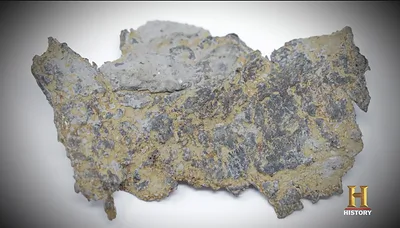
Leather book binding fragments
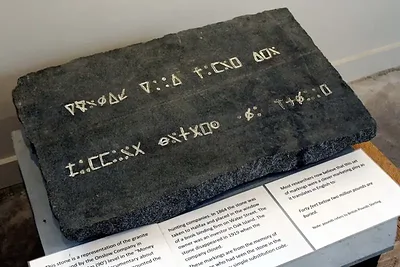
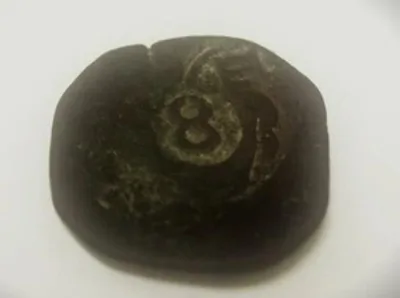
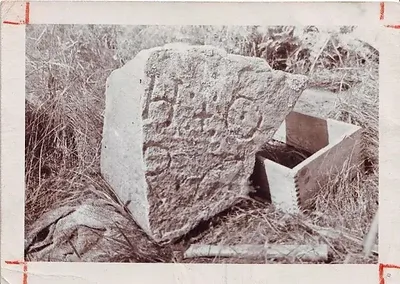
H+O stone
Coin - Portuguese Tornês (Pitblado coin)
Roman Coin Claudius II
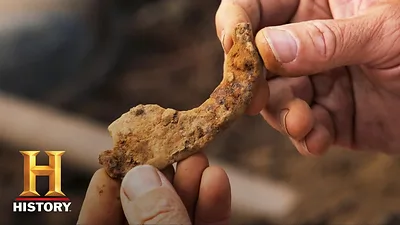
Hand-forged rose head spike
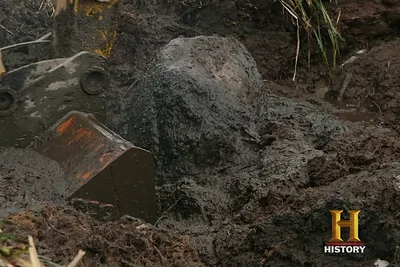
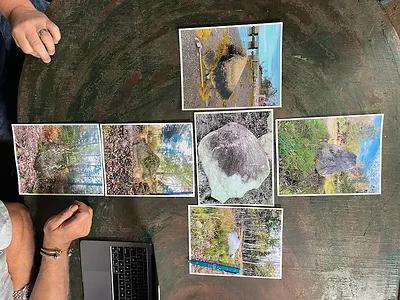
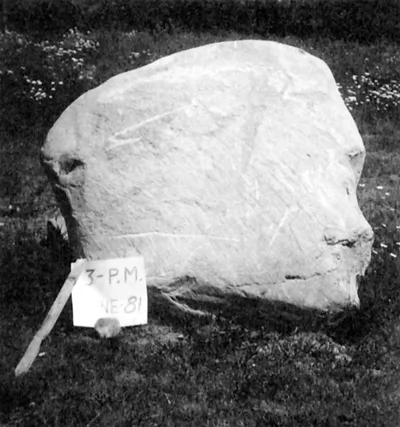
Lot 8 Giant Boulder
Coconut fibre (Smith's Cove)
Coconut fibre (Money Pit)
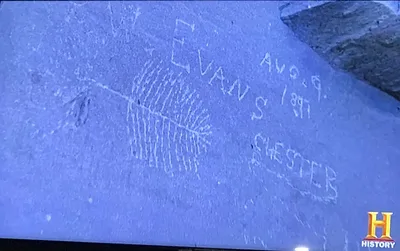
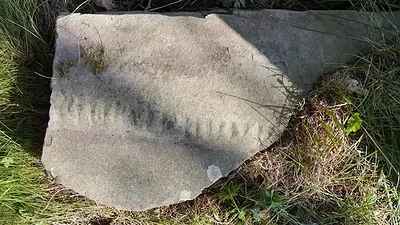
Evans Stone - 13-branched tree carving in rock
Masonic 'G' stone
Kingdom Stone (Malkuth)
Goose Paw symbol (Brooklyn, NS)
Ardoise Hill Gravestone (C. Manulis, 1558)
McGinnis Gold Cross
Masonic Stone of Port Royal (1606)
Brooklyn Symbols
Yarmouth Runic Stone
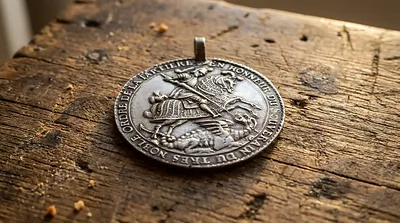
1671 Order of the Garter Medallion
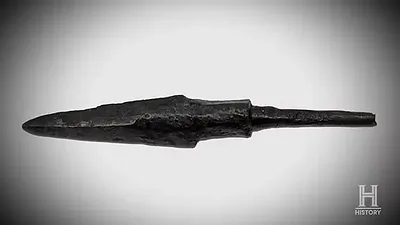
Iron projectile (Lot 26, possible Roman pilum)
Crossbow bolt (Wroclawski/Dunfield)
Iron hinge (massive)
Axe Head
Parchment fragment
Ancient trade weight
Silver Spanish ring
Gold-plated brooch (leaded glass gem)
Silver tassel piece (90% silver)
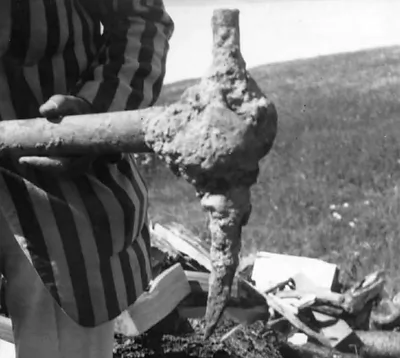
Hand-wrought iron spike (12th-13th century)
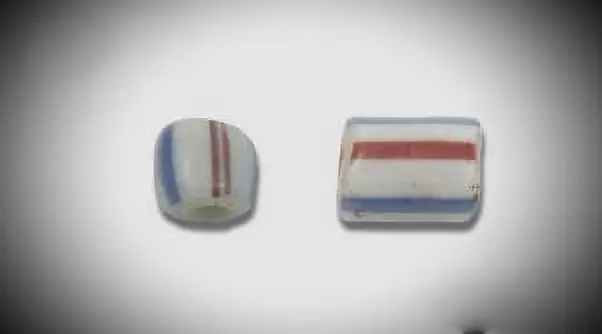
Venetian glass beads (multiple)
Gold-gilded copper button
Swivel Gun Metal
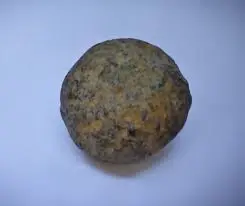
Stone Shot (Money Pit)
Divider Compass
Wooden ship's railing
Possible box drain entrance
Paved area / stone wharf
Stone pathway / road
Square-shaped hatch
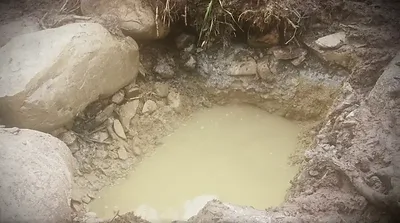
Stone well (never freezes)
Head Stone (human face/sword)
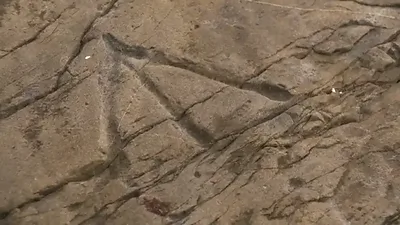
Stone Triangle
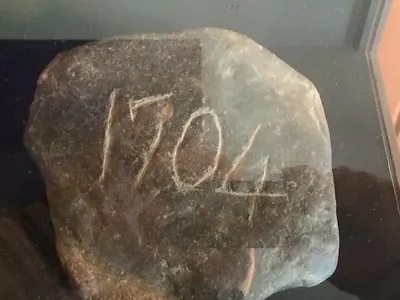
1704 stone
Half Roman coin
Roman coins (multiple, Season 11)
Folded copper/brass piece (decorated)
Lead Bag Seal - London, I. Lloyd Army Packers
Lead cross
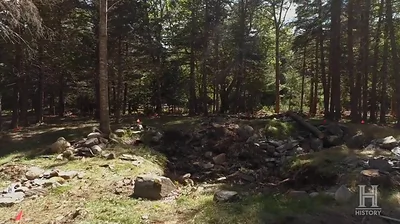
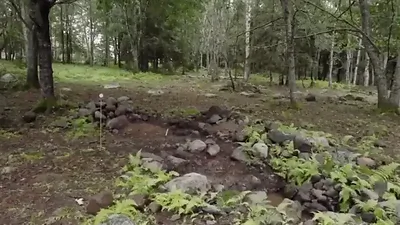
Stone Cairns
Inscribed stone (90-foot stone)
Human bone fragments (2 individuals)
Parchment scrap (H8)
Stone Shot (Lot 16)
Garden Shaft
U-shaped wooden structure
Slipway (wooden)
Jewelled brooch (rhodolite garnet)
Spanish 8 Maravedis coin
Skeleton key
Tory Martin Stone
Barrel of a hand cannon
Overton Stone
Ramrod Guide
Musket Flintlock Mechanism
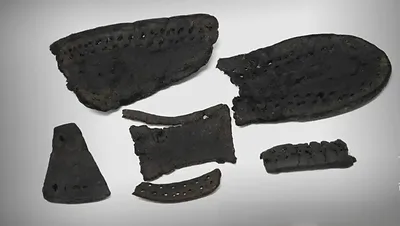
Leather Boot Sole
Clay Pipe Stem with "O" Inscription
Lead Decorative Piece
Lead Bag Seal - Norwich Cloth
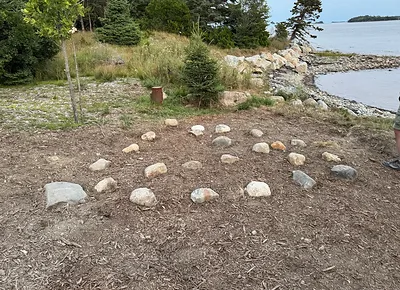
Quadrilateral boulder formation
Iron Staple (Quadrilateral)
Ornate Facted Glass Jewel
Flat Stone with Hooked X
Iron cargo hook (Lot 11 well)
Stone well (Lot 11)
Trapezoid-Shaped Wood Piece
Bush Scythe Fragments
Adze Head
New Ross Well Symbol
Hornfels Rock
George III "Cartwheel" twopence coin
Coin with possible cross design
Submerged coin (possibly Chinese)
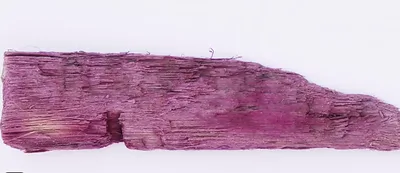
Purple-stained wood fragment
Leaf/Fern Brooch
Ornate Floral Button
Musket Ball (Lead Shot)
Lead Bag Seal - Leeds, with Golden Fleece
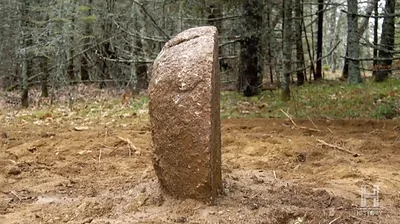
Large boulder (TEFERET location)
Ramrod (musket rifle)
Metal bits with fleur-de-lis design
Iron swages (2 blacksmith tools)
Copper ship nails (pair, 1720-1760)
Pick Axe
14th-century barter token
Metal fragment with gold traces
Large log with Roman numerals (65 ft)
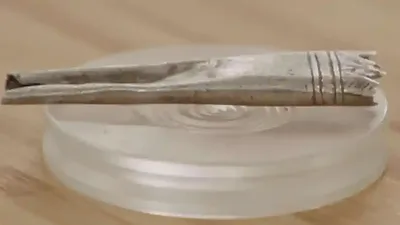
Boatswain's whistle (bone/ivory)
Wrought iron scissors
'Ball' name tag
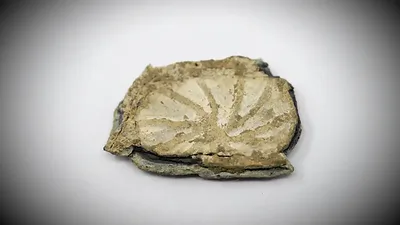
Starburst button (lead-tin)
Flower Button
Decorative keyhole plate
Iron barrier
Crib spikes (multiple)
Spike (1700s wrought iron)
Gold-colored knob
Wrought iron spike (swamp)
Ship spikes (numerous)
Wooden T-square / masonic tool
Ox shoes (multiple)
Ring bolts
Drilled rocks (survey stones)
Gold traces in water samples
Silver traces ('dump-truck load')
Red dye emerging at Smith's Cove
Knights of Malta uniform button
Wound glass bead (forest glass, Normandy)
Peat deposits (Beach Pits 2 & 8)
Gold-Copper Alloy Fragments (Tumbaga)
Barrote Nail (Spanish Galleon)
Chain with oval hand-forged links
Iron chopping knife
Hand-forged iron pintle
Staffordshire slipware pottery
Mi'kmaq pottery
Cast-iron cooking pot fragment
Wooden keg barrel pieces
Bone-handled knife
Marlinespikes (pair)
Possible booby trap spike
Iron box or chest strap
Rock stake (ship anchor)
Keg bottom (wooden)
Handwrought iron hinge (small, chest)
Block and tackle hook
Folding skeleton key (cross-shaped)
Decorative iron hinges (pair, Spanish-style)
Oak leaf and acorn (Restall collection)
Flat decking wood (carbon dated)
Toe tap (leather and copper)
Barrel hoop (iron, large)
Pottery shard with raised leaf design
Lead spoon handle
Decorative brass boat fitting
Ship's wooden pin
Carved wood piece (possible tool handle)
Wharf pin (large iron)
Adze-marked wood
Pottery shards (mercury traces, Hedden find)
Charcoal layer
Putty layer
Eelgrass layer
Wooden cargo barrel fragments
Blackened/burnt wood
Oak stumps (Mercy Point)
Blue clay layer
Axe
Lead tag (Mediterranean origin)
Flagstone layer
Oak log platforms (multiple)
Paving stone ramp/incline
Stone circle structure (13 ft diameter)
Buried structure (14 ft, swamp)
Smith's Cove timber structures (Blankenship, 1969-70)
Gold chain links (3)
Gold-plated coin
Copper coin (swamp)
Roman coin (Season 12)
British copper coin
Metal object from 171-foot void
Dandy button
British naval officer's button
Pipe stem
Metal in pieces
Pottery shards (Staffordshire pearlware)
1850 Cofferdam remains
Concrete/cement wall
Ruler/set square
Sticks/organic matter (Eye of the Swamp)
1781 Spanish half-real silver coin
Grapeshot (iron cannon ball)
Glass fragments
Porcelain fragments
Metal pieces (200 ft depth)
Wood, clay, charcoal (various boreholes)
Stone and cement foundation (Smith's Cove)
Wood slat and wooden stake (Triton Alliance, 1981)
Seaweed sample - modern control (Smith's Cove, 1995)
Forest Axe Heads (3)
King George II coins (multiple)
Spanish 11 Maravedis coin
Britannia coins: 1673 (Charles II) and 1694 (William III)
17th-century small coin
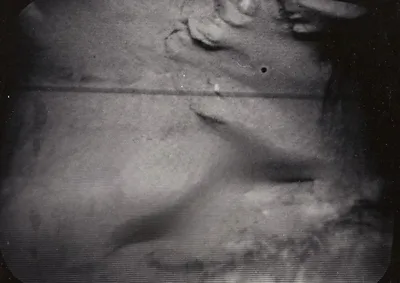
Borehole 10-X camera images
Spruce platform
Cement/concrete vault layer
Fluke anchor
Cornish miner's pick
Miner's oil lamp (whale oil)
Piece of chain + bone
Leather boot heel
Unknown tunnel (east-west)
Box drains (fan-shaped)
Ring bolt in rock
L-shaped wooden structure
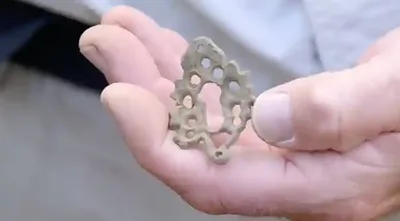
Lead artifact (scalloped, Sardinian lead)
Square nails
Professionally cut gemstone
Pottery (18th century)
Copper sheeting (decorative)
Lead ingot (musket ball making)
Metal pistol tag with name
Man-made stone tunnel
1700s spike
Rusty hook
Small horseshoe (mule/pony)
Pottery pieces (Lot 12 dump site)
Metal token (copper, mysterious symbols)
Spike coated in limestone/concrete
Brass fragment (Borehole 21)
Pink glass bead (17th century)
Handmade nail (barrel or treasure chest)
Rectangular structure (Lot 30)
Chain link (Lot 5)
Copper shards (decorative box)
Iron and lead strap (chest/box)
Large-diameter pipe stem (Shaft 6)
Ashbury ware ceramic shard
Wharf pin nail (1700s)
Hand-forged nail (pre-1795)
English nail (1750s, Shaft 6)
Hand-wrought nail + nut/washer
Treasure chest hinge
Silver button
18th-century wharf nail
Ornate metal ring (flowered)
Lifting chain (wharf cargo)
Cast iron stove (starburst design)
Ancient
Artifacts dating to the Classical world — evidence that someone crossed the Atlantic centuries before the Vikings.
Ancient trade weight
500 BC – 500 AD (low) The SwampTraditionally used to measure and distribute precious metals
Rick Lagina & Doug Crowell
View details →
Mi'kmaq pottery
500 BC – 1500 AD (medium) The SwampFragment of delicate pottery discovered by archaeologist Laird Niven in the southeast corner of the swamp, identified as Mi'kmaq in origin and estimated at 500 to 2,500 years old. The discovery triggered a work stoppage as CCH (Culture and Heritage) required consultation with the Acadia First Nation and the Mi'kmaq Rights Initiative before excavation could continue. Four acres of the island were subsequently designated as requiring special permission before work could proceed. Laird noted he did not believe the nearby stone structures were constructed by the Mi'kmaq.
Laird Niven; The Curse of Oak Island Season 9 Episodes 3-4
View details →Peat deposits (Beach Pits 2 & 8)
425 BC – 50 AD (high) South ShorePeat samples from two beach pits along the south shore barrier beach of Oak Island, dated by the Woods Hole Oceanographic Institute (WHOI) using AMS (Accelerator Mass Spectrometry) in 1995-1996. These represent the oldest reliably dated organic deposits from the island. • Beach Pit 2 (OI-BP-2, receipt 10169): Peat from approximately 8 feet below mean sea level (MSL), along the south shore barrier beach across from the swamp. Dated to 1940 ±40 years before present → approximately 10 AD (range 30 BC to 50 AD). This corresponds roughly to the time of Alexander the Great's childhood in Macedonia. • Beach Pit 8 (OI-BP-8, receipt 10170): Peat from approximately 10 feet below MSL, same barrier beach area. Dated to 2340 ±35 years before present → approximately 390 BC (range 425-355 BC). These peat layers were deposited at or above sea level in a marsh/sediment water interface environment. Their depths below current MSL provide critical data for calculating the rate of relative sea-level rise at Oak Island: • Beach Pit 2 yields a minimum relative sea-level rise of 1.25 mm/year (approximately 0.4 feet per century) • Beach Pit 8 yields a relative sea-level rise of 1.3 mm/year (approximately 0.43 feet per century) Both samples indicate consistent rates of relatively sea-level rise, suggesting that at the time the coconut fibres were deposited (some 800-1100 years ago), Smith's Cove was at a sea level approximately 3.4 to 5 feet below present levels. This means evidence left by people working at the site during this period must be referenced to a substantially lower shoreline, and the area that searchers know as Smith's Cove would have been above water during the period 800-1100 AD. The WHOI researchers concluded that flood tunnel outlets and inlets should be sought farther seaward than where the search has traditionally focused.
Sources: Les MacPhie, "Summary of Documents and Results for Carbon Dating at Oak Island" (compiled July 2006). WHOI draft report (8 April 1996), Table 6, receipts 10169 (OI-BP-2) and 10170 (OI-BP-8). WHOI report discussion of peat samples and sea-level implications, pp. 36-37 of draft (MacPhie compilation pp. 50-52).
View details →Half Roman coin
300 BC – 600 AD (medium) Island GeneralFound by Gary Drayton; numismatist Sandy Campbell determined Roman origin; possibly Constantius II (337-355 AD); oldest coin-type artifact on island at time. Numismatists were Sandy Campbell and Umberto Moruzzi (Italy). Metallurgical analysis showed it was arsenical bronze whose chemical make up matched ancient Roman mines in Spain and Sardinia.
Gary Drayton & Rick Lagina; Sandy Campbell analysis
View details →
Roman coins (multiple, Season 11)
300 BC – 1599 AD (low) Island GeneralFour coins found in single day; two confirmed Roman; one possibly Indian (unprecedented); one Tudor English
Gary Drayton, Rick & Marty Lagina; Sandy Campbell
View details →
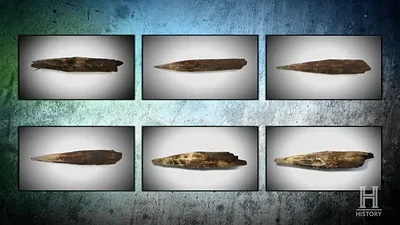
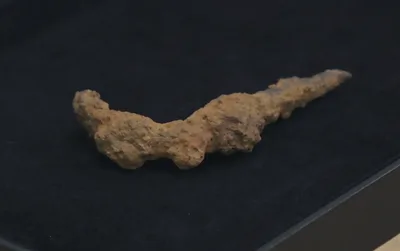
Iron projectile (Lot 26, possible Roman pilum)
100 BC – 500 AD (low) Shoreline<p>A hand-forged iron object with a tapered point, recovered roughly ten inches below the surface on the Lot 26 beachfront by Gary Drayton, Jack Begley, and geophysicist Mike West. The beach was once the property of 18th-century privateer Captain James Anderson, who fled the United States after spying for the British and faced treason charges from Governor Thomas Jefferson. The team was surveying with an EM61 deep-scanning detector capable of sensing metal up to 20 feet underground.</p> <p>Gary initially identified the artifact as a crossbow bolt, dating it between 1000 and 1500 AD. Archaeologist Laird Niven noted the piece was finely made with hardened iron showing minimal rust. Marty Lagina argued that a weapon, unlike a cross or keepsake, indicates actual activity on the island when it was lost. At St. Mary's University in Halifax, Dr. Christa Brosseau and Dr. Xiang Yang performed scanning electron microscope analysis confirming the metal is iron with manganese, an element used in iron production since as early as the ninth century BC.</p> <p>California antiquities expert Gabriel Vandervort then re-examined the artifact. After initially suspecting a medieval European origin, he found the long neck inconsistent with crossbow bolts and reclassified the object as a Roman pilum, a throwing javelin carried by legionnaires from the first century BC through the fifth century AD. The thin iron neck was designed to penetrate armor and break off inside the target. Vandervort noted such artifacts are rare even in Europe and virtually unheard of in North America. A strikingly similar tapered iron object was later recovered at Smith's Cove among the slipway spoils.</p>
Found by Gary Drayton, Jack Begley, and geophysicist Mike West during EM61 deep-scanning survey of Lot 26 beach. SEM analysis by Dr. Christa Brosseau and Dr. Xiang Yang at St. Mary's University, Halifax. Reclassified from crossbow bolt to Roman pilum by California antiquities expert Gabriel Vandervort.
View details →
Wood slat and wooden stake (Triton Alliance, 1981)
170 AD – 350 AD (medium) Other LotsTwo wood samples submitted to the Brock University Geological Sciences Radiocarbon Lab by Triton Alliance Ltd. for the Oak Island Project, analysed in March 1981 by technician Howard Melville. These returned remarkably ancient dates: • Wood slat #1 (BGS-677): 1670 ±70 years before present → approximately 280 AD (range 210-350 AD) Analysed 4 March 1981. Benzene produced: 4.2162g. Counting time: 3000 minutes. Disintegrations: 102,750. • Wooden stake #2 (BGS-678): 1700 ±80 years before present → approximately 250 AD (range 170-250 AD) Analysed 6 March 1981. Benzene produced: 4.0357g. Counting time: 3000 minutes. Disintegrations: 98,960. Both samples received full pretreatment: removal of foreign material, removal of humic acid, distilled water wash, and acid leach. Unused portions were dried and stored. Howard Melville's cover letter to David C. Tobias of Triton Alliance (23 March 1981) noted: "The age reported for carbon dating represents the age for that portion of the tree from which your sample came. I have dried your samples and put them into storage. If you wish them returned, please notify me and I will gladly do so." The Les MacPhie summary table notes these samples had "no details on location" with a query mark next to "Nolan?" suggesting they may have been recovered from Fred Nolan's property. If these dates are accurate and the samples represent worked wood (the designation "slat" and "stake" implies deliberate shaping), they would represent some of the oldest evidence of human woodworking activity on or near Oak Island, contemporary with the late Roman Empire. However, significant caveats apply: (1) the provenance is uncertain; (2) the "old wood effect" means the trees could have been much older than when they were worked; (3) no information exists about whether these were clearly tool-worked specimens or naturally shaped wood. The confidence level is set to medium due to these uncertainties.
Sources: Les MacPhie, "Summary of Documents and Results for Carbon Dating at Oak Island" (compiled July 2006), pp. 1-2 (summary table), 30-32. Brock University Geological Sciences Radiocarbon Lab reports: BGS-677 (p. 31) and BGS-678 (p. 32). Letter from Howard Melville (Brock University) to David C. Tobias (Triton Alliance Ltd., 6200 Grande Allee, St. Hubert, P.Q.), 23 March 1981 (p. 30).
View details →Roman coin (Season 12)
200 AD – 300 AD (high) Island GeneralAdditional Roman coin; expert analysis confirmed Roman origin
Lagina team
View details →Roman Coin Claudius II
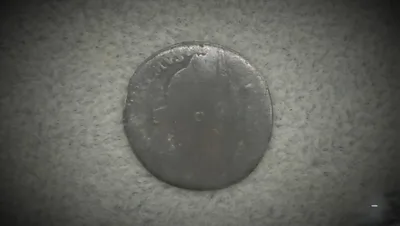
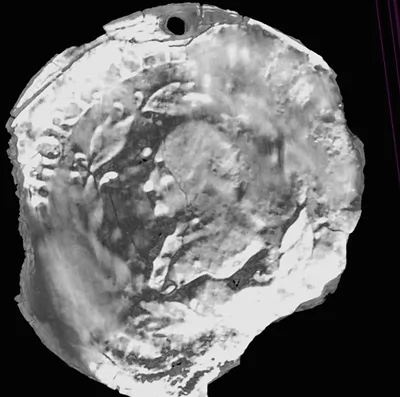
268 AD – 270 AD (high) Island GeneralA copper-alloy coin bearing the image of Roman Emperor Claudius II, discovered on Lot 5 during Season 13 of The Curse of Oak Island. The coin was unearthed by metal detectorist Katya Drayton in the southern portion of Lot 5, in an area where several Roman-era coins had previously been recovered. In the lab, archeometallurgist Emma Culligan performed an XRF scan revealing a composition of copper, iron, calcium and silver - a mix she noted was consistent with an older coin. A CT scan of the heavily worn surface revealed what appeared to be a Roman portrait, which she identified as Claudius II and dated to approximately 250-270 AD. Culligan observed that the coin appeared to have been in its location for a considerable period of time. Numismatist Sandy Campbell subsequently examined the coin at the research centre and confirmed the identification. He noted that the CT scan appeared to show a figure holding an oak leaf on the reverse - an iconographic detail consistent with known Claudius II coinage. Campbell described it as the most remarkable of all the Roman coins discovered on the island to date, and confirmed the 3rd-century dating, consistent with Culligan's findings. He also noted that coins of this type continued to circulate as currency well into the 1500s, making the question of when the coin was actually deposited on Oak Island - as team member Tom Nolan pointedly observed - the real million-dollar question. Claudius II, known as "Gothicus" for his decisive victories against Gothic invaders, ruled during the Crisis of the Third Century from 268 to 270 AD. His antoninianus coinage - originally a silver denomination that had been debased to copper-alloy by his reign - was minted in enormous quantities across the empire and remained in wide circulation for centuries after his death from plague in 270 AD. The coin is the sixth Roman-era coin recovered from Lot 5, an area of Oak Island with no known history of habitation. The concentration of Roman coinage in a single uninhabited lot remains one of the more puzzling patterns in the Oak Island archaeological record.
View details →
Tory Martin Stone
Unknown Money PitTory Martin’s stone refers to a flat rock he discovered near the Money Pit site that bears unusual, seemingly carved markings which is potentially non-natural as it resembles runic script. The crew brought it into the war room for laser scanning and comparison with other inscribed stones.
Money Pit area
View details →
Hornfels Rock
Unknown Island GeneralCarved stone found by Robert Young on Lot 5
Photo copyright Robert Young https://oakislandlotfive.com/
View details →
Medieval
Finds from the Templar era through the late Middle Ages — coconut fiber, lead crosses, and construction dated 800–1400 AD.
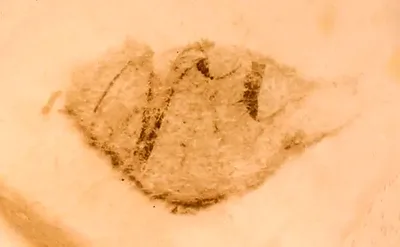
Parchment scrap (H8)
500 AD – 1700 AD (low) Money PitAdditional parchment fragment found in same borehole spoils as bone and leather
Lagina team
View details →
Coin with possible cross design
500 AD – 1400 AD (low) Money PitCoin embedded with what appears to be a cross symbol.
Found by Gary Drayton
View details →
Professionally cut gemstone
500 AD – 1400 AD (low) Island GeneralHigh-quality cut gemstone implying presence of wealthy individuals; unlike everyday pocket-change finds
Lagina team
View details →Metal token (copper, mysterious symbols)
625 AD – 825 AD (low) Island GeneralHigh copper content with iron and zinc; possibly connected to 16th-century European religious leaders or Viking explorers per Dr. Edwin Barnhart
Gary Drayton & Jack Begley
View details →Wooden ship's railing
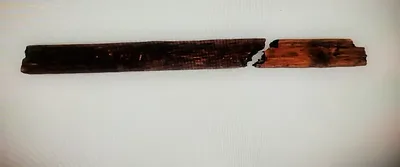
660 AD – 770 AD (high) The SwampOldest artifact found on Oak Island at time of discovery; strong evidence of ancient maritime presence
Lagina team; carbon dating
View details →
Smith's Cove timber structures (Blankenship, 1969-70)
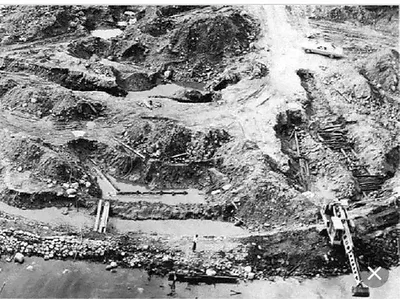
720 AD – 1245 AD (high) Smith's CoveDuring Dan Blankenship's excavation of Smith's Cove in 1969-1970, a complex of wooden structures was uncovered inside the cofferdam area. These structures were meticulously documented and multiple samples were submitted for carbon dating, yielding medieval dates that stunned the researchers. The excavation work began in August 1969 when Blankenship and Gerald Dorey dug with pick and shovel at extreme low tide to expose flood tunnel workings. After finding one tunnel entrance, they extended the search and at the next low tide discovered additional structures approximately 8 feet below the surface. --- STRUCTURES UNCOVERED --- Item #1: An inclined ramp approximately 9' wide and 90' long. The logs forming this ramp were described as "very old" and when followed toward shore, the remains of a higher dock (of much newer construction) were found on top. Rocks 2-3' thick were placed over the lower ramp. Item #2: A "U"-shaped structure alongside the ramp and just south. The northern side extended over 45' long with a front of about 65'; the southern side over 30' but had been destroyed toward shore. This structure was built primarily from a large spruce log 12-20 inches in diameter, notched with a 6" × 7" spruce timber secured by a 2" thick oak peg. Timbers were spaced about 4'10" on center. Across this log on one end were found 2 timbers lying loose with 2 notches in one end. A sketch was enclosed. Roman numerals are cut into the log at each location. Heavy 2" planks (hardwood) were secured to the bottom of the angle pieces. These timbers were sawn by hand. Item #3: A neat row of 2" timbers approximately 3' long, in good condition - identified as an attempt at building a dam. Item #4: A row of 1-3/4' boards laid horizontally and tight together, about 5' high - apparently an attempt to stop water. Item #5: Two or three horizontal boards laid 6" apart with clay in between - another apparent attempt to stop water. Item #6: A searchers' shaft only 18" behind Item #5, about 4' wide and 8' long. Item #7: A piece of metal pipe found about 6' deep below the original beach level, approximately 3" diameter and 14" long. Item #8: Two pieces of pottery/dish taken from the vicinity of Item #1. Item #9: A nail dug out of the loose-laying timber on Item #2. (Stelco analysis pending.) Item #10: A piece of dish and a piece of mug found under the ramp. Item #11: A wooden box 18" wide and 24" long. The sides are 4" × 6" oak, the bottom is 2" oak, and the ends are 1" spruce. One end of the oak sides is beveled and an oak dowel is in one side only. Found at least 2 feet below the bottom of the large log on the inside corner of Item #2, apparently hidden. --- CARBON DATING RESULTS --- • Oak peg from timber structure (sent by McCabe to Geochron, October 1969): Geochron GX-1692: 1090 ±140 C-14 years BP → A.D. 860 (range 720-1000) Sample identified as "wood, probably cedar" by Geochron. • Inclined beam from timber structure (sent by McCabe to Geochron, October 1969): Geochron GX-1691: 815 ±110 C-14 years BP → A.D. 1135 (range 1025-1245) Sample identified as "wood, probably pine" by Geochron. Kerry Ellard's 15 September 1970 letter to Dr. Terasmae confirms: "As far as the samples are concerned, I should point out that they were taken from a wooden structure uncovered below water level in an area which we have recently enclosed with a coffer dam. We think that the timber is spruce and that the peg is oak. The log is almost certainly spruce. Both samples have probably been thoroughly saturated with sea water, since further along the log toward the water, there was considerable damage by sea worms." The Smith & Coles law firm letter of 14 October 1969 provides additional context: the wood structure was uncovered embedded about 5-6 feet below the seabed, beyond the perimeter of the original coffer dam, generally in line with the so-called cave-in shaft and Money Pit. The wood had been submerged in sea water for 7 years and the find was considered sufficiently significant to warrant testing. Two of the four pieces enclosed were believed to be oak and the other two spruce. Harold Kruger of Geochron cautioned that both samples gave ages around 1000 years and that the wood fragments came from rather large trees which "may have had a rather substantial age at the time of fabrication." He emphasized that radiocarbon dating measures when the tree formed, not when the wood was worked.
Sources: Les MacPhie, "Summary of Documents and Results for Carbon Dating at Oak Island" (compiled July 2006). Blankenship "Results of digging done in Smith's Cove, November 1969" (pp. 7, 9-10). Blankenship "Summary of Work Performed at Smith's Cove, August 31 - September 18, 1970" (pp. 16-19). Smith & Coles letter to Helix Investments (14 October 1969, p. 11). Ellard to Terasmae (15 September 1970, p. 23). Geochron reports GX-1691, GX-1692 (19 December 1969, pp. 14-15). Kruger to McCabe (19 December 1969, p. 13). Blankenship 'Resume of operations' (14 October 1970, pp. 24, 26-28). Sketch of Item #11 (p. 20). Smith's Cove Grid System map by George Bates, surveyor (p. 18). Structure plan drawings (p. 19).
View details →Coconut fibre (Smith's Cove)
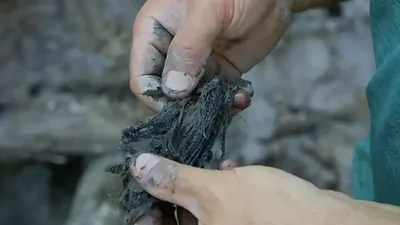
780 AD – 840 AD (high) Smith's Cove<p>Coconut fibre excavated from just below low tide level within Smith's Cove on 27 July 1995. The sample was recovered by Dan Henske - who knew the fibre's location from prior experience - in the presence of D. Aubrey and others from the Woods Hole Oceanographic Institute (WHOI). Henske dug down approximately 8 inches to reach the fibre after the site was dewatered. The WHOI NOSAMS AMS (Accelerator Mass Spectrometry) facility dated this sample at 1140 ±30 years before present (receipt 10167, sample ID OI-5-CF3). This places the fibre at approximately 810 AD, with a date range of 780-840 AD - making it significantly older than the three other coconut fibre samples tested from the island, which clustered around 1130-1220 AD (a difference of approximately 330 years). This age discrepancy is notable. The WHOI researchers hypothesized that they may have dated a subsample of the same material previously tested by Beta Analytic (receipt 10168 / OI-3-CF2, which dated to 765 ±35 BP / ~1185 AD), as the ages are indistinguishable from the Beta Analytic results for the other sample provided by Blankenship. However, the Smith's Cove beach sample (OI-5-CF3) is distinctly older. The fibre was heavily decomposed, consisting of only about 5% carbon by weight - a low percentage for most vegetative materials. Despite this decomposition, AMS technology (which requires only very small samples) enabled accurate dating. The WHOI team conducted Scanning Electron Microscope (SEM) analysis through the U.S. Geological Survey in Woods Hole, Massachusetts. The SEM photo-micrographs were sent to two palm experts for identification: • Dr. Scott Zona of the Fairchild Tropical Garden in Miami suggested the fibres might be husk fibres of a coconut, but noted his comparison with modern fibres was inconclusive. • Prof. (Emeritus) Natalie Uhl of Cornell University concluded that the SEM photo-micrographs resemble fibrous bundle sheaths in palm stems. However, without the full bundle (including the xylem vessel structure), she could not make a conclusive genus and species identification. She is working with a colleague, Dr. Francisco Guanchez from Venezuela, a specialist on the genus Leopoldinia, which has long been exploited for fibre. For comparison, the WHOI team also obtained SEM photo-micrographs of mesocarp coconut fibre from Cocos nucifera, a coconut commonly found in the tropics. Notable similarities exist between the Oak Island fibre and the reference coconut fibre, though final confirmation from palm and coconut specialists was still pending at the time of the April 1996 draft report. The WHOI report identified four possible pathways by which coconut fibre may have reached Oak Island: (1) planted by previous searchers, (2) natural transport by Gulf Stream and inshore currents, (3) dunnage discharged at Oak Island by a previous ship involved in the oak wood trade, or (4) brought and used by ancient voyagers for flood tunnel filtration purposes. The researchers noted that Triton Associates' claim of finding the fibre could not be discounted, and that the possibility of previous searchers or others planting the material also could not be excluded. They were actively researching Gulf Stream transport with Natalie Uhl and her colleagues.</p> <p> </p> <p>Recent research by David H. Neisen, Robert W. Cook, and Christopher L. Boze has proposed a specific identification for the fibre. Based on micro and macro botanical examination, their analysis concludes the material is trunk fibre from the Judean Date Palm (Phoenix dactylifera), specifically the mesh and sheath material that surrounds the trunk, rather than coconut coir. This aligns with the caution expressed by both Zona and Uhl in the original WHOI study, where neither expert could make a conclusive coconut identification. The C14 dates remain valid regardless of species, and the pre-Columbian age of the material is not in dispute. If the revised identification is correct, it points directly to the Levant, where the Knights Templar cultivated date palms near Jericho from 1116 until the Battle of Hattin in 1187.</p>
Sources: Les MacPhie, "Summary of Documents and Results for Carbon Dating at Oak Island" (compiled July 2006), pp. 49-58. WHOI draft report "Analysis of wood and vegetation samples" (8 April 1996), Table 6, receipt 10167 / sample ID OI-5-CF3. NOSAMS AMS Facility, National Ocean Sciences, Woods Hole, MA. SEM analysis by U.S. Geological Survey, Woods Hole. Expert consultation: Dr. Scott Zona (Fairchild Tropical Garden, Miami, FL), Prof. (Emeritus) Natalie Uhl (Cornell University), Dr. Francisco Guanchez (Venezuela, specialist on Leopoldinia). WHOI report discussion of coconut fibre origins and pathways, pp. 39-42 of draft.
View details →
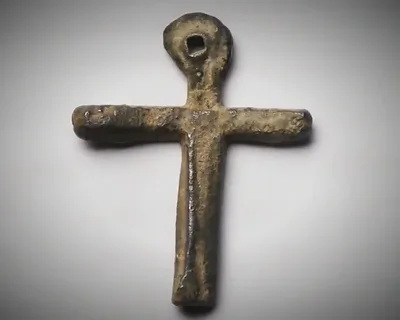
Lead cross
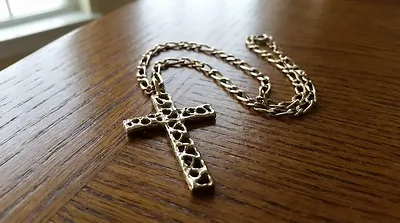
900 AD – 1300 AD (low) Smith's Cove<p>Lead with square hole at top; isotope analysis matched medieval lead mines in southern France (Cévennes/Montagne Noire near Rennes-le-Château); resembles Templar crucifix carving at Domme Prison, France</p>
Gary Drayton find; Tobias Skowronek (German Mining Museum) isotope analysis
View details →
Yarmouth Runic Stone
1000 AD – 1812 AD (low) Off-IslandA 400-pound slab of quartzite measuring roughly 79 cm by 51 cm, featuring a 13-character inscription on its naturally smooth face. Discovered in 1812 by retired British Army surgeon Dr. Richard Fletcher in a salt marsh at the head of Yarmouth Harbour, Nova Scotia, near the Tusket River. The inscription has been interpreted as Norse runes, early Basque, Old Japanese, Hungarian, and Mycenaean Greek, among other theories. The most persistent reading comes from Henry Phillips Jr., who in 1884 translated it as "Hako's son addressed the men," linking it to Thorfinn Karlsefni's expedition of c. 1007 CE. Olaf Strandwold offered the alternative: "Leif to Eric raises this monument." Skeptics, including Norway's leading runic expert Dr. Liestol (1966) and University of Toronto archaeologist A.D. Fraser, have argued the markings are not genuine runes. Fletcher's own descendants believed he carved it as a practical joke. The stone traveled internationally before World War I, exhibited in Oslo and stored in London at the Canadian Pacific Railway offices during the war. It returned to Yarmouth in 1918 and has been housed at the Yarmouth County Museum since the 1960s. Alex Lagina visited the museum in the summer of 2018 to examine the stone firsthand. Museum director Nadine Gates and historian Terry Deveau presented it alongside other regional artifacts suggesting pre-Columbian European contact with Nova Scotia, strengthening the case for Norse activity in the region explored in the show's Viking theory.
The Curse of Oak Island, Season 6, Episode 3 (aired February 3, 2019). Yarmouth County Museum & Archives permanent collection.
View details →
Crossbow bolt (Wroclawski/Dunfield)
1000 AD – 1299 AD (medium) Island General<p>A hand-forged iron crossbow bolt recovered from Oak Island by Robert Dunfield during his excavation in the 1960s. The artifact's exact find location was never recorded. It passed to Oak Island researcher Paul Wroclawski, who had established a relationship with Dan Blankenship in the 1990s and spent years researching the island's earliest inhabitants. After Paul's death in 2014, his son Eric preserved the piece.</p> <p>Eric Wroclawski met Rick Lagina and Doug Crowell in Halifax and presented the bolt. Doug identified it as one of three crossbow bolts found on the island over the years, noting the other two had been lost. The crossbow was documented as early as 500 B.C. but revolutionized warfare 1,500 years later in Europe and the Holy Land during the Crusades. Doug's first reaction on seeing the artifact in person was that it was much smaller than he had expected from photographs.</p> <p>The team brought the artifact to Denmark, where Ladby Viking Museum curator Ane Jepsen Nyborg examined it alongside a replica from her collection. She confirmed the bolt matches pieces from local archaeological digs and dated it to the early medieval period through the Viking Age, pre-1300s. The Oak Island Compendium had previously argued the artifact was a peavey pike, a removable point from a logging tool common on the island, but Doug's observation that the piece was smaller than expected may have undermined that identification.</p>
Found by Robert Dunfield during his 1965-66 excavation. Given to Oak Island researcher Paul Wroclawski, who had worked with Dan Blankenship since the 1990s. After Paul's death in 2014, his son Eric preserved the artifact and presented it to Rick Lagina and Doug Crowell in Halifax. Doug identified it as one of three crossbow bolts found on the island, with the other two now lost. Validated at the Ladby Viking Museum in Denmark by curator Ane Jepsen Nyborg.
View details →
Coconut fibre (Money Pit)
1036 AD – 1374 AD (high) Money Pit<p>Massive quantities of coconut fibre were found at various depths in the Money Pit, beginning with the earliest excavations in the 1800s. Coconut palms (Cocos nucifera) do not grow within 1,500 miles of Nova Scotia, making this one of the most compelling pieces of evidence for deliberate human engineering at Oak Island. Three separate C14 tests on coconut fibre from the island consistently date the material to the 11th-14th century: • Beta-39897 (tested October 1990): 770 ±60 BP → calibrated 1σ: 1225-1290 AD; 2σ: 1168-1374 AD. Fibre recovered by Dan Henske from Smith's Cove beach, Summer 1990. Previously identified as coconut fibre by the Smithsonian Institution (1919, 1930) and the Botanical Museum of Harvard University (1937). • Beta-66584 (tested October 1993): 820 ±70 BP → calibrated 1σ: 1168-1282 AD; 2σ: 1036-1298 AD. Sample physically obtained by David Tobias from behind an old board wall at Smith's Cove (first section, north side), where it had been stored approximately 20 years in the Oak Island museum as sample 'S-2'. • WHOI receipt 10168 / OI-3-CF2 (tested 1995-96): 765 ±35 BP → approximately 1185 AD (1150-1220 AD). Provided by Dan Blankenship to the Woods Hole Oceanographic Institute. No detailed recovery information recorded. Beta Analytic confirmed that coconut fibre is an ideal substance for C14 dating because coconut is a growth that occurs annually, unlike tree wood which can have a significant 'old wood' effect. Dr. Murry Tamers of Beta Analytic stated the 770 BP coconut fibre result is scientifically reliable and can be depended upon within the 95% probability range (2 standard deviations). Richard C. Nieman of St. Louis coordinated the initial Beta Analytic testing in 1990. He first consulted Mendel Peterson of the Smithsonian Institution, who advised that C14 dating was the most productive approach for the fibre. Nieman also consulted a graduate student at the Art and Archaeology Department of Washington University of St. Louis, who confirmed C14 would be best but cautioned it would only provide a range of dates with limited usefulness. Nieman was shocked by the medieval result, having anticipated a colonial-era date around 1585 AD. Dr. Tamers assured him the procedures were correct and he had high confidence in the result. Nieman concluded: "I can visualize no other reason for the presence of coconut fiber other than its incorporation as part of the original project and until evidence is presented to the contrary, I can only believe that it was used as a filtration mechanism by the original constructors when the project was executed."</p> <p> </p> <p>Recent research by David H. Neisen, Robert W. Cook, and Christopher L. Boze has proposed a revised identification of the fibre. Based on micro and macro botanical examination, their analysis concludes the material is not coconut coir but trunk fibre from the Judean Date Palm (Phoenix dactylifera), specifically the mesh and sheath material that surrounds the trunk. The C14 dates remain unchanged regardless of species identification, and the core implication holds: the fibre is medieval, pre-Columbian, and foreign to Nova Scotia. If the revised identification is correct, it opens a direct connection to the Levant, where the Knights Templar cultivated date palms and sugarcane near Jericho from 1116 until the Battle of Hattin in 1187.</p>
Sources: Les MacPhie, "Summary of Documents and Results for Carbon Dating at Oak Island" (compiled July 2006), pp. 33-50. Primary lab reports: Beta Analytic report Beta-39897 (4 October 1990), Beta Analytic report Beta-66584 (6 October 1993). WHOI draft report (8 April 1996), Table 6. Correspondence: Richard C. Nieman to Oak Island participants (7 October 1990, pp. 35-39; 27 September 1993, p. 45; 6 October 1993, pp. 48-50). Beta Analytic letters: Dr. Murry Tamers to Nieman (4 October 1990, p. 33; 22 September 1993, pp. 39-42). Calibrations per Stuiver, M. and Pearson, G.W., 1993, Radiocarbon 35, 1-23. Earlier identifications: Smithsonian Institution (1919, 1930); Botanical Museum of Harvard University (1937).
View details →
Blackened/burnt wood
1050 AD – 1150 AD (medium) The SwampBurnt wood from swamp centre; evidence of very early human activity
Ian Spooner analysis
View details →Hand-wrought iron spike (12th-13th century)
1100 AD – 1330 AD (medium) Island GeneralLarge hand-wrought iron spike found by Helen Sheldon in the Lot 5 stone foundation. Metallurgist Emma Culligan determined that the high sulphur content, lack of manganese, and purity of the iron dated it to the 1100s-1300s. Too thin to be a nail and not a file - function remains unknown.
The Curse of Oak Island Season 11; Emma Culligan analysis
View details →
Lead Decorative Piece
1100 AD – 1400 AD (high) Island GeneralA long, narrow piece of lead with a slight curve, discovered alongside a smaller fragment that fits together as part of a larger object. Both ends feature square-shaped terminals reminiscent of the square hole on the Smith's Cove lead cross. The surface bears a raised floral pattern identified by geochemist Tobias Skowronek of the German Mining Museum as evidence of cloisonné - a medieval metalwork technique in which artists soldered strips of metal onto an object's surface, then filled the compartments with colored glass or gemstones. Skowronek's chemical analysis revealed that the lead isotope data from this artifact is identical to that of the lead cross found at Smith's Cove, meaning both objects originated from the same ore deposit in France and date to before the 15th century. The two pieces were found on opposite sides of the island - this fragment on Lot 21 in the west and the cross at Smith's Cove in the east - yet share the same pre-1400s provenance. Significance is High - the second piece of lead confirmed to match the Smith's Cove lead cross isotopically, establishing that pre-15th-century European material was distributed across multiple locations on Oak Island, not concentrated in a single deposit site.
The Curse of Oak Island, Season 6, Episode 18, "Heavy Metal" (History Channel). Analysis by Tobias Skowronek, German Mining Museum.
View details →
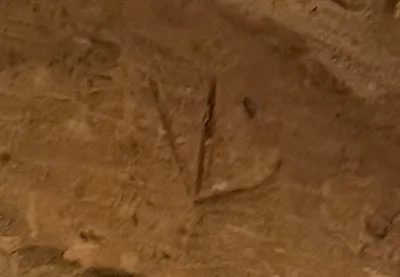
Nolan's Cross (5 boulders)
1125 AD – 1275 AD (medium) Island General<p>A formation of six large cone-shaped boulders arranged in the shape of a cross, discovered in 1981 by Fred Nolan, a surveyor and Oak Island landowner. Nolan, who surveyed every feature of his property with precision, noticed emerging geometric patterns along his sight lines and investigated the intersection points, where he uncovered the boulders. The cross measures 360 feet wide by 867 feet tall, oriented northeast to southwest. Five boulders were labelled Cones A through E, with a sixth boulder at the centre bearing features described as a carved human face and sword image, traits associated with Templar tomb effigies. None of the boulders were found seated in glacial till, indicating they are not in natural positions deposited by glaciers but were deliberately placed by human hands. Fred Nolan found items beneath Cone B, including pieces of a wrought iron stove and cutlery, though their current whereabouts are unknown. In Season 10, the team visited archaeoastronomer Professor Adriano Gaspani in Italy.</p> <p>Gaspani identified six stars that aligned with the positions of the Nolan's Cross boulders and dated their placement to approximately 1200 AD. In Season 11, Gaspani extended his analysis to the five stone cairns on Lot 15, concluding they were likely constructed by the same group of people around the same period. The dating coincides with the carbon dating of the paved area in the swamp, also dated to the 1200s, and with Zena Halpern's theory that Templar knights made voyages to Oak Island beginning in 1179 AD. The formation is not unique. At Temple Beeld on the North York Moors in Yorkshire, England, five megaliths stand in a configuration that mirrors the Oak Island boulders. The Temple Beeld formation measures approximately 100 feet by 57 feet, with the central stone offset from the geometric centre, exactly as on Oak Island. The land on which Temple Beeld stands was held by the Templar knight William de Villiers, documented Templar property.</p> <p>The arm angles of the Temple Beeld formation have been measured: the vertical axis runs at approximately 150 degrees from north, with the arms opening at approximately 60 and 150 degrees from the axis. These measurements are, within the margin of error imposed by centuries of weathering, identical to the corresponding angles of the Oak Island formation. Two megalithic formations on opposite sides of the Atlantic, same number of stones, same angular geometry, same off-centre placement of the central stone, one on confirmed Templar land in England.</p> <p>Researcher Brian Pharoah identified sacred numbers in the cross's proportions: 144, 288, 360, 432, 740, and 864. He demonstrated that these figures appear in the construction measurements of Chartres Cathedral, Rosslyn Chapel, and the Temple Mount in Jerusalem. Pharoah concluded that the cross functions as an astronomical calendar aligned with equinoxes and solstices, with the constellation Cygnus and its Northern Cross asterism playing a prominent role. Norwegian researcher Petter Amundsen projected the Kabbalistic Tree of Life onto Nolan's Cross and found the distances between boulders matched the corresponding Sephirots, discovering buried flat stones at the Kingdom (Malkuth) and Victory (Netzach) points.</p> <p>Norwegian researcher Petter Amundsen proposed in 2003 that the five boulders of Nolan's Cross correspond to five of the ten Sephirots on the Kabbalistic Tree of Life. In his projection, Cone A aligns with Kether (Crown), Cone B with Chokmah (Wisdom), Cone C with Binah (Understanding), Cone D with Tiphereth (Beauty), and Cone E with Yesod (Foundation). The remaining five Sephirots would occupy positions beyond the visible cross. With permission from David Tobias of the Triton Alliance, Amundsen visited the island and found buried flat stones at the positions corresponding to Malkuth (Kingdom) and Netzach (Victory), stones that had not been previously recorded. He concluded that the cross and the Tree of Life are a single unified design, a symbol consistent with the Rosicrucian tradition of merging Christian and Kabbalistic imagery. Amundsen identified the Chesed (Mercy) point, located in the swamp, as the most significant position on the projected Tree, a conclusion he connected to coded references in the works attributed to Shakespeare. His research was first published in 2006 through the book <em>Organisten</em> (The Organist) by Norwegian novelist Erlend Loe, later republished in English as <em>The Seven Steps to Mercy</em>.</p>
Fred Nolan
View details →
Paved area / stone wharf
1150 AD – 1250 AD (medium) The SwampMassive stone feature determined to be at least 300 years old; further evidence swamp is man-made; extends toward Money Pit
Tony Sampson discovery; Ian Spooner analysis
View details →
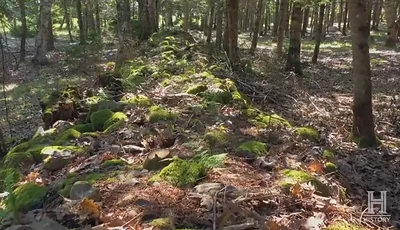
Stone Cairns
1150 AD – 1275 AD (medium) Island GeneralFive pyramid-shaped stone constructs arranged on Lot 15, originally dubbed "Pirate Piles" by the late Fred Nolan. The cairns point toward the swamp. In Season 11, archaeoastronomer Professor Adriano Gaspani analyzed the positioning of the cairns and determined they were built in alignment with the stars, sun, and the moon's position in the night sky. By calculating how long ago those alignments were exact, Gaspani dated their construction to approximately 1250 AD - the same period he attributes to Nolan's Cross (dated 1200 AD). Gaspani concluded that both monuments were built by the same group and attributed the work to the Knights Templar. Metal detecting near the cairns by Gary Drayton recovered a decorated lead strip suspected to be medieval. Analysis revealed similarities to a twisted lead artifact from Lot 13 with Scandinavian origins, raising the possibility of Viking involvement alongside the Templars.
Season 11, Episodes 16-17. Professor Adriano Gaspani (archaeoastronomy). Gary Drayton (metal detection survey). Emma Culligan (metallurgical analysis).
View details →
Gold-plated brooch (leaded glass gem)
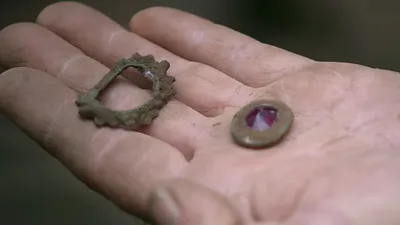
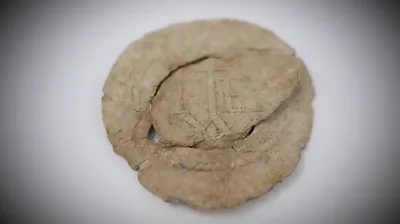
1200 AD – 1399 AD (medium) Island GeneralGold-plated brooch with a leaded glass gemstone, found by Gary Drayton and Rick Lagina while metal detecting near the home of Daniel McGinnis - one of the three boys who discovered the Money Pit in 1795. This was the team's second brooch find after the rhodolite garnet brooch from Season 5. Gemologist Charles Lewton-Brain identified the stone as leaded glass rather than a genuine gem, but noted that a threaded technique used on the brooch dates the jewelry to the 14th century or earlier. Subsequent electron microscope analysis by Dr. Christa Brosseau and Dr. Xiang Yang confirmed that part of the brooch is made of actual gold.
S06E01 "Rick's Big Bang Theory" (discovery); S06E02 "Gold Rush" (analysis). Lewton-Brain, Brosseau & Yang analysis.
View details →
Iron Staple (Quadrilateral)
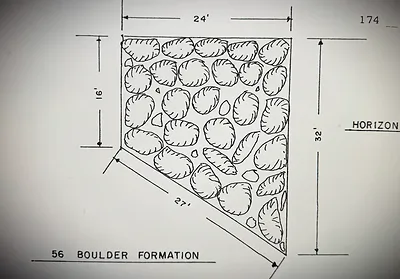
1200 AD – 1600 AD (medium) Island GeneralA large hand-forged iron staple discovered embedded in the wall of the Quadrilateral excavation on Lot 13 during Season 10 of The Curse of Oak Island. The staple was found while the team excavated the buried 32-foot boulder formation first documented by Fred Nolan in 1993. Blacksmithing expert Carmen Legge examined the staple and identified it as a fastener used in a rope and pulley system for moving massive boulders into position. Staples of this type have been used throughout history in the assembly of large stone and wooden structures. Legge assessed the piece as ancient, possibly dating to the medieval period - a conclusion that, if correct, would place the construction of the Quadrilateral well before the 1795 discovery of the Money Pit. Archeometallurgist Emma Culligan performed an XRF analysis confirming the staple was 98% iron, with trace amounts of silicon, aluminium, manganese, calcium, sulphur, and phosphorous. She described this composition as indicative of the furnace type and smelting technology used in older metalworking, consistent with Legge's medieval assessment. The staple's context is significant. It was found within a deliberately constructed feature consisting of three layers of stacked multi-ton boulders sealed with blue clay - the same waterproofing material found at 40 feet in the Money Pit and at the Eye of the Swamp. Burnt sticks recovered from the same site matched charred material found beneath the Stone Road. The staple provides direct evidence of the mechanical effort involved in building the Quadrilateral and, if its dating holds, places organised heavy construction activity on Oak Island centuries before the first known treasure hunters arrived.
View details →
Starburst button (lead-tin)
1200 AD – 1300 AD (low) Island GeneralFragile button with distinctive starburst design, made of an unusual lead-tin alloy. Laird Niven identified examples dating back to the 13th century. Later compared side-by-side with Knights of Malta uniform buttons (S12E20), suggesting a possible connection to the military order. A cast iron stove found nearby on Lot 5 bore a similar starburst design, dated mid-17th to mid-18th century.
Found by archaeologist Moya MacDonald during Lot 5 excavation. Featured S11E22. Stove with matching starburst design examined S12E6. Knights of Malta uniform comparison S12E20.
View details →
Stone well (never freezes)
1220 AD (high) Other LotsA crudely built stone well on Lot 26, on the south side of Oak Island, first noticed by Rick Lagina during a winter walk years before its investigation. Despite snow and ice covering the ground, the well remained unfrozen - a peculiarity that prompted further study. In Season 10, geoscientist Ian Spooner investigated the well by extracting water samples and a piece of wood from the bottom that he believed had been used in its construction. The wood was carbon dated to approximately 800 years old (~1220 AD), placing it squarely within the medieval period alongside the coconut fibre deposits (1036-1374 AD) and the Smith''s Cove timber structures (720-1245 AD). The water sample returned with elevated silver content, making the Lot 26 well one of the few locations outside the Money Pit area where silver has been detected. Spooner noted that the well's crude and rough construction style was itself consistent with significant age, contrasting with the more refined stonework typical of 18th- and 19th-century Nova Scotian construction. The well's location on the south side of the island, far from the Money Pit and Smith's Cove, suggests that activity during the medieval period was not confined to the northeastern corner of the island. Combined with the elevated silver readings, the well raises the possibility of a broader operational footprint by whoever was working on Oak Island 800 years ago. Subsequent episodes saw archaeologist Laird Niven and his team expand their investigation to include a nearby stone wall on Lot 26 with a massive oak tree growing out of it. The reasoning was that the wall must pre-date the tree, so dating the tree would provide a minimum age for the wall. An expert consulted by the team suggested that if someone wanted to hide evidence of underground digging, the middle of a wall would be an ideal concealment location.
Historical; Lagina team investigation
View details →
Barrel of a hand cannon
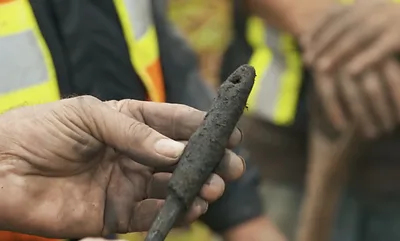
1225 AD – 1525 AD (medium) The SwampA corroded iron tube identified as the barrel of a hand cannon - one of the earliest forms of firearms, originating in 12th-century China and widely used across Europe from the 1200s through the early 1500s. Gary Drayton initially suggested the artifact could be a petronel (an early muzzle-loading firearm), while archaeologist Laird Niven proposed it was a hand cannon. Archaeometallurgist Emma Culligan analysed the artifact and found its mineral content to be clean, dating it to the 1700s or older and confirming its European origin. A CT scan revealed a touch hole - the small aperture through which a flame or slow match would ignite the powder charge - confirming its identification as a hand cannon rather than a simple tube or ferrule. Maltese military historian Matthew Balzan, who had worked with the team during their visit to Malta the previous season, examined the piece and confirmed it appeared to be a hand cannon consistent with examples used in Europe from the 1200s to the early 1500s. Balzan also raised the intriguing possibility that it may have been repurposed as a tool for directing gunpowder to fracture rock - a technique that would predate conventional blasting. The team suggested this could connect to the construction of the nearby Stone Road Feature. The find adds to a growing body of evidence suggesting a Portuguese presence on Oak Island, alongside previously discovered artifacts including a piece of a Portuguese breech swivel gun, other cannon fragments, and shot made from volcanic rock sourced from Portuguese colonies. Portuguese colonists are known to have been active in Nova Scotia until the mid-to-late 1500s.
Season 13, Episode 5 ("Keep On Rockin'")
View details →
Iron swages (2 blacksmith tools)
1300 AD – 1399 AD (medium) Island GeneralTunnelling tools used to sharpen rock drills; evidence of intense mining operations
Gary Drayton & Dan Henskee; Carmen Legge
View details →
Coin - Portuguese Tornês (Pitblado coin)
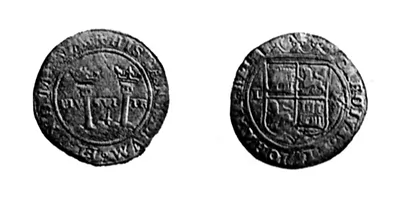
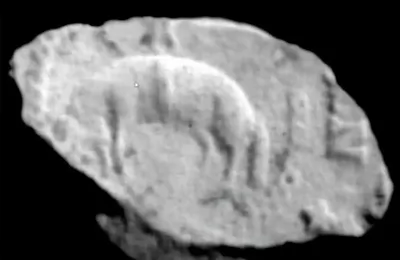
1369 AD – 1370 AD (high) Money PitA billon (.375 silver) Tornês coin from the reign of Portuguese King Ferdinand I (Fernando I, "O Formoso"), minted at Miranda do Douro between 1369 and 1370. Value: 1 Tornês = 72 Dinheiros. Obverse: Portuguese royal shield flanked by roses with mint letter "M" above. Latin inscription: FERNANDVS D G REX PORTVGALIE AL ("Ferdinand, by the Grace of God, King of Portugal and the Algarve"). Reverse: Latin inscription from Psalm 118: SI DOMINVS MICHI AVDIVTOR NON TIMEBO QVID FAVIT ("If the Lord is my helper, I shall not fear what man can do to me"). Features a cross design identified by researcher Judi Rudebusch as resembling a Templar cross, and a six-pointed star similar to symbols at Fonte Arcada Church in northern Portugal. Presented to the Oak Island team in Season 13, Episode 1 ("The Comeback") by Steve Salomon, who identified himself as a relative of James Pitblado and members of the Archibald family. Salomon claimed the coin is a family heirloom that may be the object Pitblado was witnessed pocketing from an auger bit during Truro Company drilling operations in 1849. The original Pitblado incident is one of Oak Island's most enduring mysteries. During the Truro Company's fourth drilling of the Money Pit, fellow crew member John Gammel witnessed foreman James Pitblado wipe dirt off an object retrieved by the auger and slip it into his pocket. When confronted, Pitblado promised to present the item at the next directors' meeting but left the island that night and never returned. He and Charles Dickson Archibald (manager of the Acadian Iron Works at Londonderry, Nova Scotia) subsequently attempted to purchase the eastern end of Oak Island where the Money Pit is located, but were denied. Pitblado lived to age 81, dying in 1903 without ever publicly revealing what he found. Emma Culligan's archaeometallurgical report noted the coin is in excellent condition with little wear and no abrasive marks.
Season 13, Episode 1 "The Comeback" (November 2025). XRF analysis by archaeometallurgist Emma Culligan. Numismatic identification: Numista catalog. Historical context: The Oak Island Compendium S13E01 analysis by Daniel Spino.
View details →
Wooden cargo barrel fragments
1400 AD – 1499 AD (medium) The SwampFound by Rick Lagina while investigating stone wharf; possible treasure container
Rick Lagina
View details →Lead tag (Mediterranean origin)
1400 AD – 1499 AD (medium) Smith's CoveImpure lead with 2% tin, 2% antimony; highest tin ratio seen by analyst; lead not of North American origin; mined in Mediterranean (Italy/France/Spain)
Gary Drayton; Dr. Chris McFarlane laser ablation
View details →Venetian glass beads (multiple)
15th-16th century Island GeneralMultiple colorful beads recovered from Lot 5, identified as Venetian glass. Expert analysis confirmed they are very old and were once considered a precious commodity. Venetian glass beads were widely traded across Europe and the Americas from the 15th century onwards.
The Curse of Oak Island Season 11; glass expert analysis
View details →
14th-century barter token
14th century Island GeneralA barter token dated to the 14th century, found on Lot 5 alongside Roman coins and Venetian beads. This is in fact a children's toy, used with a piece of string to produce a sound.
The Curse of Oak Island Season 11 finale
View details →
Knights of Malta uniform button
Centuries old (estimated pre-18th century) Island GeneralMilitary-style button uncovered on Lot 5 that closely resembles uniform buttons worn by the Knights of Malta. Side-by-side comparison with historical Maltese uniforms showed striking similarity. Researchers John Edwards and Scott Clarke presented 18th-century texts and maps suggesting a link between the Knights Templar, the Knights of Malta, and Oak Island.
View details →Wound glass bead (forest glass, Normandy)
As early as 10th century Island GeneralWound glass bead found by archaeologist Fiona Steele on Lot 5. Metallurgist Emma Culligan confirmed it is made from forest glass, characterized by high potassium and low sodium content, and likely originated in Normandy, France. Forest glass production was common in medieval Northern France.
The Curse of Oak Island Season 12 Episode 21; Emma Culligan analysis
View details →Colonial
Objects from the Age of Exploration and the colonial period — Spanish coins, Portuguese stone shot, and cargo remains.
Hand-forged iron pintle
2000 BC – 1700 AD (low) Island GeneralHand-forged iron pintle, a type of pivot pin used for door and gate hinges, recovered by Gary Drayton on Lot 8 near the massive boulder feature. The design type dates as far back as 2000 BC. Blistering on the metal suggests considerable age. A similar pintle was found on Lot 15 earlier in Season 13. The proximity to the boulder adds to the growing body of evidence that the feature was deliberately constructed.
Gary Drayton; The Curse of Oak Island Season 13 Episode 14
View details →Swivel Gun Metal
1400 AD – 1600 AD (low) Lot 4 Hole Under The HatchA fragment of metal unearthed by Gary Drayton on Lot 4, in an area marked on Zena Halpern's map as "The Hole under the Hatch." Dr. Christa Brosseau of Saint Mary's University in Halifax analysed the piece and identified it as bell metal, a copper alloy historically used in the manufacture of cannons and bells. Brosseau noted that the composition was consistent with cannon material, possibly of Portuguese origin. The find was later referenced in Season 10 when a similar piece of bell metal was discovered on Lot 8. The artifact adds to a growing body of evidence suggesting Portuguese activity on Oak Island, alongside volcanic stone shot traced to the Azores, a stone road with Portuguese construction characteristics, and a hand cannon fragment found in the western swamp.
Dr. Christa Brosseau, Saint Mary's University, Halifax; History Channel interactive artifact map
View details →
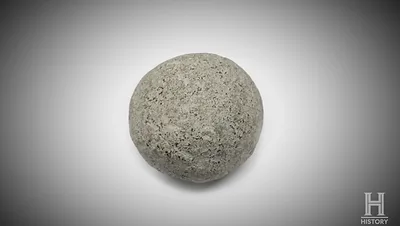
Stone Shot (Money Pit)
1400 AD – 1600 AD (medium) Money PitA small stone cannonball unearthed from more than 100 feet deep in the Money Pit area. Treasure hunter Michael John and surveyor Steve Guptil discovered the projectile in 2020 while searching spoils excavated from the E-5.25 shaft.\r\n\r\nAnalysis confirmed the stone was volcanic in composition, matching material commonly found in the Azores islands of Portugal. The depth at which it was found, well below the surface and within the Money Pit excavation zone, suggests it was deposited long before the 1795 discovery and may have been part of the original works.\r\n\r\nThe find was significant as it placed Portuguese-linked material not just on the surface of Oak Island but deep within the Money Pit itself, connecting the growing body of Portuguese evidence on the surface to whatever lies below.
Michael John, Steve Guptil; History Channel Season 8
View details →
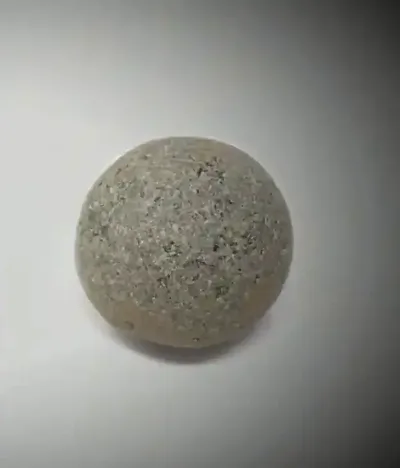
Stone Shot (Lot 16)
1400 AD – 1600 AD (medium) Other LotsA small round stone ball spotted by metal detectorist Gary Drayton on Lot 16, near the swamp. Drayton recognised it immediately as an old gun stone, a type of projectile fired from small deck-mounted cannons.\r\n\r\nGeologist Dr. Robert Raeside analysed the composition and identified it as an olivine-bearing rock containing olivine gabbro and basalt, confirming it was volcanic in origin and could not have come from Nova Scotia. Raeside concluded the stone most likely originated from the Canary Islands or the Azores, both heavily associated with early trans-Atlantic voyages by Spanish and Portuguese navigators.\r\n\r\nA second, nearly identical gun stone was found the following year along a possible pathway between the swamp and the Money Pit, with the same volcanic composition. The Portuguese were among the first to use these types of small shipboard cannons, and the Azores were a Portuguese territory and a key staging point for Atlantic crossings.
Dr. Robert Raeside, geologist; History Channel Season 9
View details →
Lead Bag Seal - Leeds, with Golden Fleece
1400 AD – 1600 AD (medium) Island GeneralLead bag seal, found by Katya Drayton on Lot 8. The seal features the sheepskin of the Golden Fleece, which was only used by the City of Leeds, known for its wool trade.
View details →
Gold-colored knob
1400 AD – 1800 AD (low) The SwampSandy Campbell believes it to be far from modern; possibly from a jewel chest
Lagina team; Sandy Campbell analysis
View details →Axe
1400 AD – 1699 AD (low) Money PitFound during William Chappell excavation of 163-ft shaft
Chappell expedition
View details →Lead artifact (scalloped, Sardinian lead)
1400 AD – 1800 AD (low) Island GeneralOrnate lead piece with scalloped edges and two holes; XRF shows lead not from North America; consistent with southern European/Sardinian origin
Gary Drayton & Jack Begley; XRF analysis
View details →Stone pathway / road
1425 AD – 1625 AD (low) The SwampStone-lined roadway connecting swamp wharf to Money Pit area; possibly used for transporting heavy cargo Carbon-14 dating of wood taken from the pathway revealed it dates back approximately 1200 years to ~800 AD, making it one of the oldest dated structures on Oak Island. This date was revealed in the Season 11 finale.
Lagina team; GPR scan by Alex Lagina
View details →
Oak stumps (Mercy Point)
1450 AD – 1640 AD (high) The SwampAppear rooted to swamp floor; tree expert Joe Peters determined they could not have grown submerged, suggesting prior dry land
Tony Sampson; Joe Peters analysis
View details →Overton Stone
1460 AD – 1580 AD (low) Off-IslandThe Overton Stone is a large glacial boulder located on the Atlantic coast near Overton, Nova Scotia, split into two halves each roughly the size of a small car. On the vertical, south-facing surface of the inland half, a deeply carved inscription combines Christian and Mi'kmaw symbols: a stylised cross with outward-flaring arms enclosed in an oval with four dots, a pair of crossed Native tobacco leaves overlaid by an eagle feather, and a three-day-old evening crescent moon. The carving was cut into the stone's thick weathering patina using what appears to be a hard steel chisel, and repatination has begun in the deepest cuts, suggesting significant age. The stone was first reported around 2009 by local resident Beverly Wells-Pinkney and subsequently investigated by historian Terry J. Deveau, who introduced it to Rick Lagina and Charles Barkhouse in Season 3, Episode 4 - an episode that took its title from the stone. Deveau's analysis identified the cross as stylistically consistent with padrão crosses left by Portuguese explorers during the Age of Discovery, particularly the cross carved at Yellala Rock on the Congo River by Diogo Cão's expedition in 1485. Portuguese padrão crosses were closely associated with the Order of Christ, the Portuguese successor to the Knights Templar, whose cross adorned Portuguese sails throughout the era of global exploration. Deveau proposed that the carving commemorates a friendship treaty between Portuguese explorers and the local Mi'kmaq people. The tobacco leaves and eagle feather carry deep spiritual significance in Mi'kmaw culture, while the crescent moon corresponds to their tradition of observing the lunar cycle. Historical evidence supports sustained Portuguese-Mi'kmaq contact: Lopo Homem's 1554 map shows Mi'kmaw place names on the Cape Breton coast, and explorer Joam Alvares Fagundes conducted expeditions and founded a colony in Nova Scotia as early as the 1520s. The Bay of Fundy itself takes its name from the Portuguese "Rio Fundo." A separate, later carving of the initials "HT" and the date "06/07" appears one metre below the main inscription, likely carved by someone attempting to calibrate the weathering rate in order to estimate the age of the original work. Deveau also noted an area below the main carving where the stone surface appears to have been deliberately removed - possibly to destroy a date that would have validated a Portuguese territorial claim. The stone's relevance to Oak Island lies in the broader pattern of evidence for pre-colonial Portuguese activity in Nova Scotia connected to the Knights Templar's successor order, consistent with theories that Templar-linked Europeans operated in the Mahone Bay region centuries before the Money Pit's 1795 discovery.
Investigated by Terry J. Deveau (2009-present). Featured S3E4, referenced S4E10, S5E14. Research paper: "The Overton Stone" (Deveau, 2015).
View details →
Paving stone ramp/incline
1475 AD – 1575 AD (low) The SwampConnects 800-year-old paved area to 500-year-old stone pathway; builders had foreknowledge of existing paved area
Lagina team
View details →Leather boot heel
1492 AD – 1692 AD (low) Money PitBelieved to have come from boot of a prominent individual
Lagina team
View details →Silver Spanish ring
1500 AD – 1699 AD (medium) The SwampOrnate flower design; determined by gemologist Charles Lewton-Brain to be possibly Spanish silver
Gary Drayton & Rick Lagina
View details →
Divider Compass
1500 AD – 1700 AD OtherPart of a divider, used for building and alignments.
View details →
Folded copper/brass piece (decorated)
1500 AD – 1800 AD (low) Island GeneralFolded brass sheet with intricate repoussé geometric designs, folded three times over. Composition approximately 95% copper and 5% zinc, making it technically brass of European origin. Laird Niven's initial assessment suggested military origin. Archaeologist Andre Costopoulos (University of Alberta) proposed it may be a gorget, a neck ornament worn as part of European military uniforms and also by North American Indigenous warriors. The British gave gorgets to their Mi'kmaw allies after the War of 1812. The decoration suggests possible Indigenous origin rather than European, possibly made from reworked European trade brass or gilding metal (Pinchbeck, manufactured in the UK from the early 1700s). The 5% zinc content rules out native copper and dates the metal source to post-1500s European manufacture. In a follow-up analysis, Dr. Edwin Barnhart of the Maya Exploration Center stated that nothing in the Americas was ever alloyed in this way, making the piece definitively European. He noted the geometric patterns are universal and difficult to attribute to a specific culture or period, but believed it was decorative and possibly a religious object.
S10E06, S10E07. Analysis: Andre Costopoulos, ArcheoThoughts; Dr. Edwin Barnhart, Maya Exploration Center.
View details →
Jewelled brooch (rhodolite garnet)
1500 AD – 1699 AD (medium) Island GeneralFirst confirmed gold found on Oak Island; rhodolite garnet in copper-silver brooch; cloisonné technique; same lead isotope as lead cross (pre-15th c. ore)
Gary Drayton & Rick Lagina; gemologist analysis
View details →
Musket Flintlock Mechanism
1500 AD – 1800 AD (low) Island GeneralFlintlock mechanism from a musket rifle, discovered by Gary Drayton and Marty Lagina while metal detecting on Lot 8. A CT scan by archaeologist Laird Niven revealed the internal workings beneath heavy encrustation. The team concluded the musket was not British in origin - Niven suspected it could be French, though a Portuguese origin was also considered. The find strengthened the theory of pre-colonial European activity on Oak Island, particularly in connection with Portuguese naval expeditions and possible Templar links.
The Curse of Oak Island, Season 9 (2022). Referenced again in Season 10 premiere alongside related finds from Lot 8.
View details →
Leaf/Fern Brooch
1500 AD – 1700 AD (low) Island GeneralA decorative brooch bearing a unique design of twin coils of rope surmounted by a fern-like leaf. Has a Maritime flavour. Conservator Kelly Bourassa stated he had never seen another artifact like it.
Gary Drayton / Charles Barkhouse
View details →
Pick Axe
1500 AD – 1700 AD Money PitFound in borehole RF-1, testing indicates it came from Southeast France, Northern Italy, or parts of Scandinavia.
Season 11, Episode 16
View details →
Wooden keg barrel pieces
1500 AD – 1800 AD (low) The SwampTwo pieces of wooden keg barrel, one a top and the other a bottom, recovered by Gary Drayton from deep in the bog in the northern region of the swamp near sections of cobblestone pathway. Gary noted that the French, English, and Spanish historically used kegs to transport and store treasure coins, and suggested that lab analyst Emma Culligan may be able to determine through XRD testing what the keg once contained.
Gary Drayton; The Curse of Oak Island Season 13 Episode 14
View details →Decorative iron hinges (pair, Spanish-style)
1500 AD – 1800 AD (low) Island GeneralTwo decorative iron hinges recovered by Gary Drayton at the dumpsite on Lot 12, marked on Fred Nolan's survey maps. Gary identified them as the type used on chests or boxes, similar to ones he has found on Spanish shipwreck sites. The hinges raise the possibility of a connection to the three missing chests of privateer Captain James Anderson and to the folding skeleton key Fred Nolan found on the island.
Gary Drayton; The Curse of Oak Island Season 5 Episode 13
View details →Toe tap (leather and copper)
1500 AD – 1800 AD (low) Island GeneralPiece of leather with copper alloy and three nail holes, identified as a toe tap, recovered by Rick Lagina and Gary Drayton on Lot 4. A toe tap is a small metal plate attached to the sole of a shoe or boot to reduce wear.
Rick Lagina, Gary Drayton; The Curse of Oak Island Season 10 Episode 16
View details →Adze-marked wood
1500 AD – 1800 AD (low) The SwampPiece of wood bearing concave scrape marks that Gary Drayton attributed to an adze, recovered from the swamp west of the stone wharf. Found in the same area as a trapezoid-shaped piece Gary thought came from inside a ship and another shaped piece resembling an oar or paddle. Marine archaeologist Dr. E. Lee Spence was called in to evaluate the swamp ship evidence.
Gary Drayton, Michael John; The Curse of Oak Island Season 9 Episode 11
View details →Spike coated in limestone/concrete
1500 AD – 1799 AD (low) Money PitFound in same borehole spoils as human bone fragments
Gary Drayton
View details →Flat decking wood (carbon dated)
1516 AD – 1674 AD (high) The SwampFlat piece of wood resembling decking, exposed by Billy Gerhardt in the southern edge of the swamp, an area where numerous pieces of possible ship components have been found dating as far back as 660 AD. Steve Guptill reported the piece was found twenty feet northwest of where a ship's railing was recovered the previous year. Carbon dating returned a date range of 1516 to 1674, consistent with the many 16th and 17th-century items recovered from the swamp.
Billy Gerhardt, Steve Guptill; The Curse of Oak Island Season 9 Episode 10
View details →McGinnis Gold Cross
1550 AD – 1700 AD (medium) Money Pit<p>A small gold cross, a McGinnis family heirloom allegedly discovered by Daniel McGinnis in the Money Pit over 200 years ago. Composed of 22-24 carat rose gold, cast in the Spanish West Indies 1550-1700. Holes once housed emeralds. Dr. Lori Verderame examined the gold cross in Season 4, Episode 15. She identified it as a Spanish colonial Christian cross cast in rose gold of 22 to 24 carats, dating between 1550 and 1700. The irregularly shaped piece was originally set with emeralds that were pried out, and the casting style places its origin in the Spanish Indies, likely Mexico or Peru.</p>
Mc Ginnis Family, examination by Dr. Lori Verderame.
View details →
Ardoise Hill Gravestone (C. Manulis, 1558)
1558 AD (high) Off-IslandA slate gravestone discovered around 1900 on Ardoise Hill, near Windsor, Nova Scotia - approximately 40 miles northeast of Oak Island. The stone measures twelve inches long, six inches high, and a quarter inch thick. Its face bears a shield with a chevron and sword, an arrow, a skull and crossbones, and a Latin inscription: "C. Manulis, Hic Jacet; A.M.DLVIII" - translated as "Here lies C. Manulis, 1558."Historian Larry Loomer, who published the only known account of the stone in Windsor, Nova Scotia - A Journey in History (1996), described it as the oldest known inscribed gravestone in Hants County. He suggested the deceased may have been a member of a Portuguese fishing party who died and was buried inland. The stone was reportedly still held in private hands at the time of Loomer's writing and is not presently available for detailed study.The gravestone was cited by researcher Terry J. Deveau in his 2015 analysis of the Overton Stone as part of a broader body of evidence for 16th-century Portuguese exploration and settlement in Nova Scotia. A burial dated to 1558 places a named individual of apparent European origin in the Nova Scotia interior during the very period when the Portuguese are documented to have been making territorial claims in Atlantic Canada. The Fagundes colony in Cape Breton may still have been active at this date, and the Barcelos family from the Azores was engaged in settlement activities on the Nova Scotia coast from at least 1508. If authentic, the Manulis gravestone represents rare physical evidence of a Portuguese presence that extended beyond coastal fishing stations into the Nova Scotian heartland - strengthening the case for sustained European activity in the region more than two centuries before the Money Pit's discovery.
Larry Loomer, Windsor, Nova Scotia - A Journey in History (1996, p. 25). Cited in Terry J. Deveau, "The Overton Stone" (2015). Stone in private hands, not available for study.
View details →
Spanish 8 Maravedis coin
1575 AD – 1625 AD (medium) The SwampSimilar to 11 Maravedis; Spanish colonial period
Historical find
View details →
Barrote Nail (Spanish Galleon)
1575 AD – 1600 AD (high) The SwampA large wrought iron nail discovered by Gary Drayton in the north end of the Oak Island swamp. Although it initially resembled a railroad spike, antiquities expert Dr. Lori Verderame identified it as a barrote nail of the type used in the construction of Spanish galleon decks, dated to between 1575 and 1600. Barrote nails were heavy hand-forged fasteners driven through the thick planking of galleon decks and into the underlying beams. Their presence on Oak Island places a Spanish-built vessel or its salvaged timbers in the immediate vicinity during the late 16th century, decades before any recorded European settlement in the area.
The Curse of Oak Island Season 4; Dr. Lori Verderame identification
View details →Possible box drain entrance
1595 AD – 1795 AD (low) Smith's CoveStone formation matching description of original 1850 box drain discoveries; coconut fibre found with it
Lagina team
View details →
Flagstone layer
1595 AD – 1795 AD (low) Money PitCircle of flat stones lining the depression discovered by Daniel McGinnis and friends
Original discovery account
View details →Oak log platforms (multiple)
1595 AD – 1795 AD (low) Money PitCut timber platforms fitted into sides of the pit at regular 10-foot intervals; tool/pick marks visible on clay walls
Onslow Company excavation
View details →Spruce platform
1595 AD – 1795 AD (low) Money PitPlatform hit by Truro Company pod-auger boring; beneath it layers of oak, 'metal in pieces', another spruce layer, and clay
Truro Company drilling
View details →Box drains (fan-shaped)
1595 AD – 1795 AD (low) Smith's CoveFive stone-walled drains in fan shape converging at sump; designed to feed seawater to Money Pit flood tunnel; coconut fibre filter layer above
Truro Company discovery
View details →L-shaped wooden structure
1595 AD – 1795 AD (low) Smith's CoveSecond timber structure discovered adjacent to U-shape; built in two distinct phases
Blankenship; Lagina team
View details →Spanish 11 Maravedis coin
1598 AD (high) Smith's CoveFound by student; one of oldest coins on island
Student find
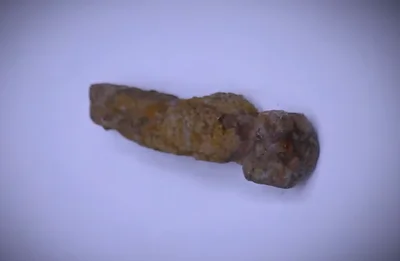
View details →Hand-forged rose head spike
1600 AD – 1780 AD (medium) Money Pit<p>Large hand-forged rose head spike pulled from deep beneath the surface of the GAL-1 spoils pile by Alex Lagina, Jack Begley, Peter Fornetti, and Gary Drayton. Gary identified it as pre-1780 and possibly as old as the 1600s, noting the symmetrical head and petal-shaped hammer marks characteristic of handmade construction. Dan Blankenship, then 94 years old, examined the spike at his home and confirmed it was not a railroad spike, urging the team to have it analyzed and dated.</p>
Gary Drayton, Dan Blankenship; The Curse of Oak Island Season 5 Episode 1
View details →
Iron hinge (massive)
1600 AD – 1630 AD (low) Smith's CoveVery old hinge; Carmen Legge described as 'very, very old'; could relate to flood tunnel construction
Gary Drayton; Carmen Legge analysis
View details →
Skeleton key
1600 AD – 1800 AD (low) Island GeneralShown by Tom Nolan; links to keyhole plate and chest hinge
Tom Nolan
View details →
Ramrod Guide
1600 AD – 1800 AD (low) Lot 5 Stone FeatureMetal ramrod guide found by Gary Drayton and Rick Lagina during metal detection on Lot 5. Initially thought to be a gun sight, lab analysis revealed it to be a ramrod guide - a component mounted on the stock of a muzzleloading firearm to hold the ramrod in place. A scan revealed markings reading "VIIII," which do not form a standard Roman numeral for nine, suggesting they may be counting or tally marks rather than a number. The find adds to growing evidence of military presence on Oak Island.
The Curse of Oak Island Season 11, Episode 3 ("Taking Their Shot")
View details →
Clay Pipe Stem with "O" Inscription
1600 AD – 1799 AD (medium) Island GeneralClay pipe stem fragment discovered during excavation of the round feature on Lot 5. The stem bears an elongated "O" marking that archaeologist Laird Niven noted he had not seen before on any Oak Island pipe fragment. The inscription could be significant for dating activity in this area and identifying the pipe's manufacturer or origin. Pipe maker marks were commonly used in the 17th and 18th centuries to identify workshops, particularly in England, the Netherlands, and France.
The Curse of Oak Island, Season 12, Episode 18 "If the Shoe Phips" (2025). Examined on-site by archaeologist Laird Niven.
View details →
Ornate Floral Button
1600 AD – 1700 AD (low) Lot 5 Stone FeatureCopper/bronze button with apparent floral design, heavily corroded with green patina. Found in close proximity to the Starburst button that was later compared to Knights of Malta uniform buttons by Maltese military heraldry expert Denis Darmanin. Sent to Emma Culligan for lab analysis. Found by Ethan Green.
View details →
Musket Ball (Lead Shot)
1600 AD – 1700 AD (low) Lot 5 Stone FeatureLead musket ball found by Gary Drayton and Rick Lagina during metal detection on Lot 5, recovered alongside the ramrod guide in the same episode. Archeometallurgist Emma Culligan determined the lead to be pure and not modern, estimating it dates to before 1700. Found in the spoils around the circular stone structure on Lot 5, the musket ball adds to a growing collection of military-related artifacts from the lot, supporting theories of a military presence on the island during the 17th or 18th century.
The Curse of Oak Island Season 11, Episode 3 ("Taking Their Shot")
View details →
Decorative keyhole plate
1600 AD – 1800 AD (low) OtherFloral ornate style; unlikely used by farmers; possibly from treasure chest; matches skeleton key and chest hinge found elsewhere
Gary Drayton
View details →
Ship spikes (numerous)
1600 AD – 1799 AD (medium) The SwampFound from Swamp to Money Pit; possibly from docking wharf for unloading cargo
Multiple finds
View details →Chain with oval hand-forged links
1600 AD – 1700 AD (medium) Island GeneralThin chain with oval links recovered by Jack Begley and Gary Drayton on Lot 8. Gary identified the links as hand-forged and old, noting that a thin chain like this could have been used to secure a strongbox or chest.
Gary Drayton, Jack Begley; The Curse of Oak Island Season 10 Episode 6
View details →Cast-iron cooking pot fragment
1600 AD – 1780 AD (high) Island GeneralFragment of a cast-iron cooking pot with a fastener, recovered by Katya Drayton on Lot 5 from soil disturbed when Marty used a skid steer to move a large boulder. Emma Culligan's analysis identified high phosphorous content throughout the iron, a characteristic of pre-Industrial Revolution manufacture that places the piece in the 1700s and possibly the 1600s. Laird Niven confirmed that Nova Scotia had no capacity to cast iron in this period, meaning the pot was made in Europe and brought to the island. Along with trade weights, Knights of Malta buttons, and other artifacts found nearby, the cooking pot adds evidence that someone of European origin was active on Lot 5 and deliberately covered up the features before the discovery of the Money Pit.
Katya Drayton, Emma Culligan, Laird Niven; The Curse of Oak Island Season 13 Episode 2
View details →Marlinespikes (pair)
1600 AD – 1800 AD (medium) The SwampTwo large iron spikes recovered by Gary Drayton near the Eye of the Swamp, initially thought to be cribbing spikes similar to those found at Smith's Cove. Blacksmithing expert Carmen Legge identified them as marlinespikes, tools used by sailors from the early 17th century onward for splicing and tying rope on ships. The finding adds to evidence that a large vessel was once present in what is now the swamp.
Gary Drayton, Carmen Legge; The Curse of Oak Island Season 7 Episode 20
View details →Lead spoon handle
1600 AD – 1800 AD (low) Smith's CoveLead spoon handle recovered by Gary Drayton while searching the intertidal zone at Smith's Cove during low tide, on the same day as the lead cross discovery. Found alongside a decorative brass fitting believed to have come from a boat.
Gary Drayton, Rick Lagina; The Curse of Oak Island Season 5 Episode 11
View details →Decorative brass boat fitting
1600 AD – 1800 AD (low) Smith's CoveDecorative brass fitting recovered by Gary Drayton while searching the intertidal zone at Smith's Cove during low tide. Gary identified it as having come from a boat. Found on the same day as the lead cross and lead spoon handle.
Gary Drayton, Rick Lagina; The Curse of Oak Island Season 5 Episode 11
View details →Wharf pin (large iron)
1600 AD – 1800 AD (low) The SwampLarge metal pin recovered by Jack Begley from the northern swamp near the cobblestone pathway and survey stakes. The team identified it as a possible wharf pin, consistent with other maritime hardware found in the swamp including rock stakes, marlinespikes, and ship components.
Jack Begley; The Curse of Oak Island Season 12 Episode 16
View details →Copper coin (swamp)
1600 AD – 1699 AD (medium) The SwampPossibly Spanish origin; theory that Spanish explorers hid treasure
Lagina team
View details →British copper coin
1600 AD – 1699 AD (medium) Island GeneralCoin recovered by Michael John on Lot 32 that Gary Drayton identified as an old British copper, similar to two 17th-century coins found on Lot 16 four years earlier. The coin was sent to Kelly Bourassa for conservation. Lot 32 has also yielded a wharf spike, lead bag seal, rock stake dated to 1710-1740, and ox shoes.
Michael John, Gary Drayton; The Curse of Oak Island Season 9 Episode 11
View details →Grapeshot (iron cannon ball)
1600 AD – 1799 AD (medium) Island GeneralSmall iron ball fired from ship cannons; clear evidence of naval/military presence
Gary Drayton & Rick Lagina
View details →17th-century small coin
1600 AD – 1699 AD (medium) Island GeneralConsistent with pattern of 17th-century activity finds
Gary Drayton & Rick Lagina
View details →Miner's oil lamp (whale oil)
1600 AD – 1899 AD (low) Money PitFound with unexploded dynamite during Gilbert Hedden's excavation
Hedden expedition
View details →Rusty hook
1600 AD – 1799 AD (low) Island GeneralCould have been used to unload cargo from ships
Gary Drayton
View details →Treasure chest hinge
1600 AD – 1800 AD (low) Island GeneralIron hinge consistent with treasure chest construction
Lagina team
View details →Masonic Stone of Port Royal (1606)
1606 AD (high) Off-IslandA flat slab of trap rock approximately two and a half feet long by two feet broad, bearing the date 1606 and the Masonic square and compasses carved into its natural surface. Discovered in 1827 on the peninsula extending from the Granville shore opposite Goat Island in the Annapolis Basin - the site of the original French settlement at Port Royal established by Champlain and De Monts. The stone was first documented by Judge Thomas Chandler Haliburton, who described the inscription as deeply cut in large Arabic figures, though weathered by more than two centuries of exposure. Dr. Charles T. Jackson of Harvard independently confirmed the find, describing it as a gravestone partly covered with sand on the shore. The prevailing theory, supported by Haliburton and later scholars including Hon. A. W. Savary, identifies it as a gravestone marking the burial of a French artisan who died on or around November 14, 1606 - a colonist fatally wounded by Indians near Cape Cod and buried upon the expedition's return to Port Royal. The square and compasses were a common trade emblem of French craft guilds and the Compagnonnage, used by masons, carpenters, and stone cutters - all trades documented among the Port Royal colonists by Lescarbot. The stone passed from Haliburton to his son Robert Grant Haliburton, then in 1868 was loaned to the Royal Canadian Institute in Toronto via Sir Sandford Fleming. It was exhibited there until 1876, when during construction of a new building a workman inadvertently mortared it into a wall. Despite Sir Sandford Fleming offering a $1,000 reward, the stone has never been recovered. The building, now 58 Richmond Street East in Toronto, has been searched multiple times without success. The stone represents the earliest known trace of craft guild symbolism in North America, predating documented Freemasonry in Canada by over a century.
Reginald V. Harris, P.G.M., "The Masonic Stone of Port Royal 1606," published by the Grand Lodge of Nova Scotia, 1950. Via skirret.com.
View details →
Adze Head
1620 AD – 1740 AD (medium) Island GeneralAn iron adze head unearthed on Lot 4 during metal detection by Gary Drayton and Rick Lagina in 2021 (Season 9). An adze is a wood-finishing tool with roots dating back to ancient Egypt, used to shape timber into smooth, flat surfaces - particularly ship decks and planking. Blacksmith expert Carmen Legge examined the artifact and identified it as an old English design, the kind used specifically for shaping wood into decks and planking. In his opinion, the tool was forged sometime between 1620 and 1740, placing it firmly in the pre-discovery era. The find is notable for both its age and its location. Lot 4 sits in a zone that Zena Halpern's purported Templar map marks as "The Hole under the Hatch" - an area the team has investigated for possible underground features. The presence of a shipwright's tool on this lot suggests skilled woodworking took place on Oak Island centuries before the Money Pit was discovered in 1795. The adze head gained renewed significance during the Season 10 premiere, when wood fragments recovered from borehole K15.5 at a depth of over 100 feet in the Money Pit area showed what appeared to be adze marks - cut patterns consistent with the very type of tool found on Lot 4. Carbon dating on those timbers returned dates ranging from 1640 to 1806, overlapping with the estimated age of the adze itself.
Season 9 (2021 dig season). Referenced in Season 10, Episode 1: "On Their Marks" (November 15, 2022). Analysis by blacksmith expert Carmen Legge. History Channel interactive map description.
View details →
Bush Scythe Fragments
1630 AD – 1670 AD (medium) Island GeneralMultiple iron fragments identified as parts of bush scythes, discovered through metal detection near the mysterious stone well on Lot 26 during Season 10. The fragments were found alongside other artifacts including a pipe tamper, during the team's investigation of the well and its surroundings. Blacksmith expert Carmen Legge examined the fragments and identified them as components of bush scythes - heavy-bladed tools used to clear dense vegetation and brush. Based on their construction style, Legge dated them to the mid-17th century, well before any known permanent settlement of Oak Island and more than a century before the discovery of the Money Pit in 1795. The fragments were subsequently taken to a university laboratory for further analysis. Metal composition testing confirmed the dating, suggesting the scythes were consistent with 17th-century manufacture, though possibly slightly later than an iron nail recovered from inside the well itself, which returned a probable 17th-century date. The presence of bush scythes on Lot 26 is significant. These were practical land-clearing tools, the kind a ship's crew would carry ashore to hack through undergrowth. Their location near the well - which geoscientist Dr. Ian Spooner found to contain elevated silver levels and which may date to considerably earlier - raises the possibility that the well served as a known landmark, and that crews returned to the island to clear brush and locate something previously hidden. Lot 26 was one of several lots later owned by Samuel Ball, a former enslaved man from South Carolina who became one of Oak Island's wealthiest residents. The lot has produced a range of pre-searcher artifacts, fueling long-standing questions about what Ball may have found during his years on the island.
Season 10, Episodes 11-13 (January-February 2023). Fragments identified by blacksmith expert Carmen Legge. Metal composition analysis conducted at university laboratory.
View details →
Carved wood piece (possible tool handle)
1632 AD – 1700 AD (low) The SwampCarved piece of wood discovered by Scott Barlow in the swamp that archaeologist Laird Niven said he had never seen before. Charles Barkhouse suggested it could be part of a tool like the T-square recovered earlier in the swamp that was dated to 1632 to 1668. Tom Nolan noted signs of rope burn on the piece, and Marty observed the wood was already dry and could be a very dense species.
Scott Barlow, Laird Niven, Charles Barkhouse; The Curse of Oak Island Season 9 Episode 9
View details →Lead Bag Seal - Norwich Cloth
1638 AD – 1714 AD (medium) OtherA lead cloth seal bearing guild certification markings consistent with the English textile trade of the 17th and early 18th centuries. The seal features a distinctive motif of the number four atop a cross - a symbol used by English cloth makers' guilds to certify undyed cloth. The initials on the front face identify the specific guild, while the reverse would originally have borne the scratched initials of the individual weaver. The symbol is not associated with the London guild, which used a different mark, suggesting the seal originated from a regional cloth-producing centre. Independent research points to Norwich as a likely source. Norwich was one of England's most important textile cities, home to a thriving weaving guild that certified cloth for domestic use and export. The city discontinued the use of cloth seals around 1705, and the guild's records were destroyed at that time, placing the seal's probable date of manufacture before that year. Cloth seals of this type were pressed onto bales of fabric as quality certification before shipment. Their presence at colonial sites across the Atlantic - including Jamestown, Virginia - is well documented and indicates organised trade in English textiles. The seal's arrival on Oak Island is consistent with British commercial or military supply activity during the colonial period. The find is one of several lead bag and cloth seals discovered on Oak Island, each pointing to different origins and time periods within the broader English textile trade.
https://bramanswanderings.com/2021/10/12/oak-island-lead-seal-thoughts/
View details →
Axe Head
1650 AD – 1730 AD (medium) Island GeneralA broken hand-forged axe head unearthed on Lot 15 by Gary Drayton and Jack Begley during metal detection in the Season 8 premiere. The find was made near the stone walls and the structure later identified as the remains of an English pine tar kiln, dated by blacksmith expert Carmen Legge to 1550-1620. Both Drayton and archaeologist Laird Niven assessed the axe head as dating to the early 1700s. It was presented alongside other Lot 15 finds in a War Room meeting, including a copper coin with a square hole through its centre - a colonial-era artifact that Drayton designated a top pocket find - and ox shoes later dated by Carmen Legge to 1650-1750. Lot 15 proved to be one of the most archaeologically rich areas investigated during Season 8, yielding not only these metal-detected artifacts but also the stone structure that David MacInnes and his team excavated and identified as a tar kiln. Niven suggested the kiln may have been linked to construction of the Money Pit itself, noting that the tar fires could explain the legendary mysterious lights seen flickering on Oak Island at night.
Season 8, Episode 1: "Remote Control" and Episode 2: "The Boys Are Back" (November 2020). Found by Gary Drayton and Jack Begley. Assessed by Gary Drayton and archaeologist Laird Niven.
View details →
Iron cargo hook (Lot 11 well)
1650 AD – 1690 AD (medium) The SwampA wrought iron hook discovered by Gary Drayton in the spoils excavated from an old well on Lot 11, on the north side of the swamp. Billy Gerhardt used his excavator to dig up the well after Oak Island landowner Tom Nolan recalled that in the 1970s, he and his father Fred Nolan had found an old well in this area with pottery in the bottom. The Nolans had refilled the well at the time. Blacksmith expert Carmen Legge examined the hook and determined it was designed for winching heavy cargo - not a simple water bucket hook. He insisted the hook was clearly intended for lifting something much heavier than water. Carmen dated the artifact to between 1650 and 1690, placing it firmly in the pre-discovery period, roughly a century before the Money Pit was found in 1795. Rick Lagina noted that the Lot 11 well was of identical design and construction to the well previously investigated on Lot 26, where geoscientist Ian Spooner had found elevated silver concentrations and wood dating to approximately 800 years old (~1220 AD). The similarity in construction between these two wells, located on opposite sides of the island, suggests they may have been built by the same group or during the same period of activity. The 17th-century dating of the hook is significant in the context of other colonial-era finds on Oak Island, including the William Phips-era iron found on Lot 5 and various artifacts dating to the 1600s recovered across the island. The hook's function as a heavy cargo winch component raises questions about what was being moved on or off the island during this period.
S10E17 "A Well of Secrets" (discovery and analysis). Carmen Legge (blacksmith expert) dating and identification. Tom Nolan recollection of original well discovery with Fred Nolan in the 1970s.
View details →
Crib spikes (multiple)
1650 AD – 1800 AD (high) Smith's CoveUsed to make wharves, derricks, and platforms; identified by blacksmith Carmen Legge
Gary Drayton; Carmen Legge dating
View details →Wrought iron spike (swamp)
1650 AD – 1799 AD (medium) The SwampConsistent with spikes used on Spanish galleons
Gary Drayton
View details →Block and tackle hook
1650 AD – 1690 AD (high) The SwampHand-forged hook recovered by Gary Drayton from the spoils during excavation of the hidden well on Lot 11 that Fred Nolan discovered in the 1970s. Carmen Legge identified the long shank as characteristic of a block and tackle, a device invented by the Greek scientist Archimedes in 250 BC to raise and lower heavy objects. Carmen dated the hook to 1650 to 1690.
Gary Drayton, Carmen Legge; The Curse of Oak Island Season 10 Episode 17
View details →Forest Axe Heads (3)
1650 AD – 1750 AD (medium) Island GeneralThree hand-forged single-bit axe heads discovered in close proximity on Lot 32 by Gary Drayton and Peter Fornetti during metal detection in Season 8. The lot sits near the southwestern corner of the swamp, between a ship's wharf and the rectangular anomaly later identified on neighbouring Lot 30. Archaeologist Laird Niven examined the axe heads and confirmed they were certainly not modern. He identified them as forest axes - lightweight tools used for cutting limbs off trees rather than felling whole trunks. The concentration of three axe heads in such a small area led Gary Drayton to suggest the location was once the site of some sort of work camp. Drayton believed the Lot 32 axe heads were likely the same age as artifacts recently found on nearby Lot 15, including another axe head, ox shoes, and a copper coin with a square hole - all assessed as early 1700s or older. The cluster of finds prompted Niven to note that the number of artifacts indicated significant past activity in the area. The discovery came in the same episode where Corjan Mol and Chris Morford identified two points of interest on the island based on their geometric analysis - one of which, a shallow depression on Lot 11 near the western edge of the swamp, appeared to show evidence of prior excavation. The narrator suggested a possible connection between this feature and the Lot 32 axe heads.
Season 8, Episode 4: "Alignment" (December 1, 2020). Found by Gary Drayton and Peter Fornetti. Examined by archaeologist Laird Niven.
View details →1671 Order of the Garter Medallion
1671 AD (high) Off-IslandA rare knighthood medallion for the Order of the Garter, dated 1671 and inscribed in French in honour of King Charles II, discovered in the soil near New Ross, Nova Scotia, less than 20 miles from Oak Island. Only three knights received this medallion that year: Charles XI of Sweden, John George II of Saxony, and Christopher Monck, 2nd Duke of Albemarle. Author and historian James McQuiston, a Fellow of the Society of Antiquaries of Scotland, argues the medallion belonged to Monck and was given to Sir William Phips as an honorary knighthood token after Phips recovered a fortune from the Spanish treasure ship Nuestra Señora de la Concepción in 1687, a salvage operation in which Monck was the principal investor. Phips later served as governor of Nova Scotia from 1691 to 1695, placing him directly in the area where the medallion was found. McQuiston believes the medallion's presence at New Ross supports the theory that Phips visited the site, possibly in connection with hidden treasure from the Concepción.
James McQuiston, Oak Island Knights (2018). McQuiston appeared on The Curse of Oak Island in Seasons 6, 7, and 9 presenting his Knights Baronet theory. See also oakislandgold.com.
View details →
Britannia coins: 1673 (Charles II) and 1694 (William III)
1673 AD – 1694 AD (high) Money PitGary Drayton find; 100+ years before Money Pit discovery; one had Templar cross on it
Gary Drayton
View details →Sticks/organic matter (Eye of the Swamp)
1674 AD – 1700 AD (high) The SwampFrom possible 300-year-old clay mine in swamp
Ian Spooner analysis
View details →Staffordshire slipware pottery
1675 AD – 1770 AD (high) Island GeneralFragment of Staffordshire slipware pottery unearthed by archaeologist Fiona Steele at the round feature on Lot 5. Laird Niven dated the piece to 1675-1770, representing some of the earliest pottery found in the feature. Staffordshire slipware was a type of lead-glazed earthenware produced in Staffordshire, England, characterized by trailed slip decoration.
Fiona Steele, Laird Niven; The Curse of Oak Island Season 13 Episode 1
View details →Iron box or chest strap
1675 AD – 1799 AD (high) Island GeneralIron strap recovered by Michael John on Lot 22. Carmen Legge identified it as a box or chest strap from the late 1600s to late 1700s, noting the rounded end is typical of straps used on heavy trunks. The thickness indicates it would have held hardware, china, or silverware rather than something like clothing.
Michael John, Carmen Legge; The Curse of Oak Island Season 9 Episode 8
View details →Human bone fragments (2 individuals)
1678 AD – 1764 AD (high) Money PitDNA sequencing: one European (haplogroup H), one Middle Eastern (haplogroup U); soft tissue and hair attached to one fragment
Lagina team; Dr. Timothy Frasier, St Mary's University
View details →
Trapezoid-Shaped Wood Piece
1683 AD – 1735 AD (high) The SwampA deliberately shaped trapezoid piece of wood recovered from the Oak Island swamp during excavation by Gary Drayton and Billy Gerhardt in Season 9. It was found alongside several other worked wood pieces, including planks that may have been oars, a large wooden pin identified as a probable fid (a tool used to splice rope on sailing ships), and assorted lumber. Marine archaeologist Dr. Lee Spence examined the finds in the War Room and confirmed that most of the recovered wood pieces could easily be nautical in origin. While the fid was specifically identified as likely coming from a large sailing vessel, the trapezoid piece resisted definitive identification. Spence could only describe it as a shaped wooden object of unknown specific function. One possibility raised is that it may be part of a forward seat from a small rowing vessel. Radiocarbon dating placed the trapezoid piece between 1683 and 1735 - firmly in the pre-discovery colonial period and consistent with a growing body of evidence pointing to significant activity on Oak Island decades before the Money Pit was found in 1795. A second unidentified wood piece recovered from the swamp around the same time returned a nearly identical date range of 1680 to 1740, reinforcing the pattern. The dating aligns with Dr. Ian Spooner's analysis of the Eye of the Swamp, which indicated the swamp itself was disturbed by human activity between 1674 and 1700. The convergence of these dates across multiple independent finds strengthens the case for organized operations in the swamp during the late 17th to early 18th century.
Season 9, Episode 11: "A Boatload of Clues" (January 18, 2022). Wood examined by Marine Archaeologist Dr. Lee Spence. Radiocarbon dating results presented in the same episode.
View details →
Leather book binding fragments
1690 AD – 1890 AD (low) Money Pit15+ pieces of vegetable-tanned leather; determined to be ancient book binding material
Lagina team
View details →
Lead Bag Seal - London, I. Lloyd Army Packers
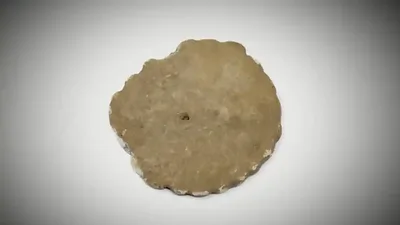
1700 AD – 1808 AD (medium) Island GeneralLead bag seal stamped "I. Lloyd Packers London," identified as army cloth packers. Compositional match with the 14th-century lead cross. Used for half a ton of military cloth. Laird Niven dates the seal to the 1700s but suspects it could be older based on the use of an "I" in place of a "J," a convention that changed around 1524.
Laird Niven; The Curse of Oak Island Season 11 Episode 5
View details →
Metal bits with fleur-de-lis design
1700 AD – 1799 AD (medium) Island GeneralPossibly from cap of French military officer
Peter Fornetti, Jack Begley & Gary Drayton
View details →
Flower Button
1700 AD – 1750 AD (medium) Island GeneralA significant gilded gold button with a floral pattern, discovered near the Lot 5 excavation site. Analyzed by Emma Culligan, the 18th-century artifact shows high phosphorus levels, suggesting it belonged to a British military officer or a gentleman of high status.
The Curse of Oak Island
View details →
Spike (1700s wrought iron)
1700 AD – 1799 AD (medium) Smith's CoveShorter and thicker than other spikes found on island; found with gold-plated coin
Gary Drayton
View details →Stone circle structure (13 ft diameter)
1700 AD – 1799 AD (medium) Island GeneralMan-made circular feature 13 ft across with notches every 4 ft; same dimension as original Money Pit; previously dismissed as old cellar by Laird Niven
Lagina team; Laird Niven re-examination
View details →Gold-plated coin
1700 AD – 1799 AD (medium) Smith's CoveFound alongside wrought iron spike
Gary Drayton
View details →Dandy button
1700 AD – 1799 AD (medium) Island GeneralDecorative button from 18th-century clothing
Gary Drayton & Charles Barkhouse
View details →Pipe stem
1700 AD – 1899 AD (medium) OtherFound among spoils from Shaft 6 near Money Pit
Billy Gerhardt
View details →Pottery shards (Staffordshire pearlware)
1700 AD – 1800 AD (high) Money PitImitation Chinese porcelain; Blue Willow pattern (1810s-1840s); deepest human-made object recovered on island
Lagina team; Laird Niven identification
View details →Glass fragments
1700 AD – 1899 AD (medium) OtherFound with pottery and pipe stem in Shaft 6 spoils
Billy Gerhardt
View details →King George II coins (multiple)
1700 AD – 1799 AD (medium) Island GeneralMultiple coins from reign of George II
Gary Drayton
View details →Pottery (18th century)
1700 AD – 1733 AD (medium) Island GeneralFound within stone circle structure during investigation
Lagina team
View details →Lead ingot (musket ball making)
1700 AD – 1799 AD (medium) Island GeneralUsed for making musket balls; evidence of military presence
Gary Drayton
View details →Metal pistol tag with name
1700 AD – 1799 AD (medium) Island GeneralPossible tag from bottom of pistol with etched name; some believe it was Ball's own
Gary Drayton
View details →1700s spike
1700 AD – 1799 AD (medium) Island GeneralPossibly from fishing wharf of pirate Captain James Anderson
Gary Drayton; Jack Begley; Mike West (EM61)
View details →Silver button
1700 AD – 1799 AD (medium) OtherPossibly from military uniform
Lagina team
View details →18th-century wharf nail
1700 AD – 1799 AD (medium) OtherEvidence of dock/wharf infrastructure
Gary Drayton
View details →1704 stone
1704 AD (high) Island GeneralStone with date inscription; predates Money Pit discovery by 91 years
Historical finds
View details →
Rock stake (ship anchor)
1710 AD – 1740 AD (high) Island GeneralLarge spike with a mushroomed head from repeated use, recovered by Marty Lagina and Gary Drayton on Lot 32. Carmen Legge identified it as a rock stake that would have been used to anchor a ship or drag cargo ashore. He dated it to 1710 to 1740, a range that aligns with the 1746 French ship's log Doug Crowell found in 2019, which describes a deep pit being dug and treasure buried during a mission to retake Acadia.
Marty Lagina, Gary Drayton, Carmen Legge; The Curse of Oak Island Season 9 Episode 10
View details →Iron chopping knife
1725 AD – 1775 AD (medium) Island GeneralSmall iron chopping knife recovered by Gary Drayton near the massive boulder feature on Lot 8. Gary dated the artifact to the mid-1700s. Found in the same area where Billy Gerhardt had plowed topsoil to allow metal detection of artifacts connected to the boulder feature.
Gary Drayton; The Curse of Oak Island Season 13 Episode 14
View details →Ornate Facted Glass Jewel
1734 AD – 1760 AD (medium) Lot 5 Stone FeatureFaceted glass jewel discovered by archaeology assistant Todd Langseth during excavation near the circular stone structure on Lot 5. Initially thought to possibly be a diamond, closer inspection suggested it was glass. The piece was sent to the lab where archeometallurgist Emma Culligan performed XRF analysis, confirming it was glass with high lead content and not modern. Culligan dated it to the early to mid-1700s and identified it as a French artificially simulated gemstone - a technique introduced in France in 1734. Such stones could have been worn by either men or women and likely indicated someone of wealth. The team speculated a possible connection to the Duc d'Anville expedition of 1746.
The Curse of Oak Island Season 12, Episode 13 ("Caissons Ho") - discovery and initial lab analysis; Episode 15 ("Channeling the Solution") - professional analysis presentation
View details →
Garden Shaft
1735 AD – 1935 AD (low) Money Pit82-ft structure initially thought to be searcher shaft; now believed to be key to mystery; predates Money Pit discovery by 60 years; water samples show gold traces
Lagina team; dendrochronology
View details →
Bone-handled knife
1750 AD – 1799 AD (high) Island GeneralBone-handled knife recovered by archaeologist Laird Niven near the bottom of the deep, rock-filled root cellar at the Daniel McGinnis foundation on Lot 21. Laird dated it to the 1750s through end of the 1700s, making it the oldest artifact from the McGinnis home site. The cellar featured a trap door entrance Laird had never encountered before, and the home proved larger and the artifacts older than anticipated.
Laird Niven; The Curse of Oak Island Season 7 Episode 16
View details →Square nails
1750 AD – 1799 AD (medium) Island GeneralHand-forged square nails suggesting 18th-century activity
Gary Drayton
View details →'Ball' name tag
1766 AD – 1799 AD (medium) Island GeneralTag with 'Ball' engraved; likely belonged to Samuel Ball
Lagina team
View details →
U-shaped wooden structure
1769 AD (high) Smith's CoveLarge formation of logs with Roman numeral marriage marks; purpose debated: slipway, crane base, or barn roof; 25 years before Money Pit discovery
Dan Blankenship 1971; Lagina team excavation
View details →
Large log with Roman numerals (65 ft)
1770 AD (high) Smith's Cove2-foot diameter, 65-foot spruce log; Roman numeral carpenter's marks; part of U-shaped structure
Triton Alliance; Colin Laroque dendro
View details →
Slipway (wooden)
1771 AD (high) Smith's CoveLarge wooden structure; possibly a wharf/dock for unloading cargo; predates Money Pit by 24 years
Lagina team; Colin Laroque dendrochronology
View details →
1781 Spanish half-real silver coin
1781 AD (high) Island GeneralFound by previous Lot 5 owner Robert S. Young (1996-2020)
Robert S. Young treasure trove finds
View details →Gold-gilded copper button
Unknown (colonial era or earlier) Island GeneralCopper button gilded with a thin layer of gold, found by archaeologist Jamie Kouba on the same day as the 90% silver tassel piece in the Lot 5 stone foundation. The gold gilding suggests it belonged to someone of status or military rank.
The Curse of Oak Island Season 11
View details →
Stone well (Lot 11)
Pre-1795 (identical construction to Lot 26 medieval well) The SwampAn old stone well on Lot 11, north of the swamp, first discovered by Fred Nolan and his son Tom in the 1970s. At the time, the Nolans found pottery in the bottom of the well and subsequently refilled it. The well was re-excavated in Season 10 by Billy Gerhardt after the team's interest in island wells was reignited by Ian Spooner's discovery of elevated silver and medieval-dated wood in the Lot 26 well. Rick Lagina immediately noted that the Lot 11 well was of identical design and construction to the Lot 26 well - both are crudely and roughly built stone-lined wells, a construction style that Ian Spooner had noted was consistent with significant age and contrasted with the more refined stonework typical of 18th- and 19th-century Nova Scotian construction. Excavation of the well spoils produced several notable finds, including a wrought iron cargo hook dated by blacksmith expert Carmen Legge to 1650-1690. Tom Nolan recalled the pottery his father had found in the well decades earlier, adding to the evidence of pre-discovery activity in this area. The well's location near the former house site of Anthony Graves is notable. Graves was a 19th-century Oak Island landowner who, according to local legend, would row to Chester and pay for goods using gold and silver Spanish coins - leading some researchers to speculate that Graves may have discovered treasure on his property. The proximity of this well to the Graves house, combined with the 17th-century cargo hook found in its spoils, deepens the mystery of what activity was taking place on this part of the island before the Money Pit discovery. No direct C14 dating has been performed on the well structure itself. The date confidence is set to low because, while the identical construction to the Lot 26 well (~1220 AD) and the 17th-century artifacts found within it suggest pre-1795 origins, no lab dating has been applied to the structure. Further analysis of the pottery and wood from the well could help establish a firmer date range.
S10E17 "A Well of Secrets" (re-excavation). Tom Nolan recollection of original discovery with Fred Nolan, 1970s. Carmen Legge analysis of iron hook (1650-1690). Rick Lagina comparison to Lot 26 well construction.
View details →
Ramrod (musket rifle)
Unknown (colonial era) The SwampA ramrod believed to have been used in a musket rifle, discovered by Gary Drayton in the swamp area. The find adds to growing evidence of military presence on the island.
The Curse of Oak Island Season 12 Episode 21
View details →
Copper ship nails (pair, 1720-1760)
1720-1760 (Carmen Legge) Island GeneralTwo copper nails found near the circular stone foundation on Lot 5 by Gary Drayton and Jack Begley. Artifact expert Carmen Legge determined they are ship-related and dated between 1720 and 1760, supporting theories of maritime activity on the island.
The Curse of Oak Island Season 12 Episode 14; Carmen Legge
View details →
Gold-Copper Alloy Fragments (Tumbaga)
Pre-colonial to colonial era Money PitSmall fragments of gold-bearing metal recovered from the Money Pit area. Analysis by geoscientist Dr. Christa Brosseau revealed a composition of approximately 65 percent gold and 26 percent copper, with a small amount of silver. Brosseau identified the alloy as consistent with rose gold, but Marty Lagina noted the chemical composition also matched tumbaga, the gold-copper alloy widely used by Inca and Aztec civilisations and later melted down by Spanish conquistadors into bars. Tumbaga was not a single standardised alloy but an umbrella term for a range of gold-copper compositions, with gold content varying from as little as 3 percent to as much as 97 percent. The presence of a gold-copper alloy in the Money Pit does not confirm a South American origin, as copper-gold alloys also occur naturally and were produced in medieval Europe, but it is consistent with the Spanish Connection theory.
The Curse of Oak Island Season 9; Dr. Christa Brosseau analysis
View details →Pottery shards (mercury traces, Hedden find)
1936 recovery (age unknown) Island GeneralPottery shards with traces of mercury found by treasure hunter Gilbert Hedden at the Lot 12 dumpsite in 1936. The mercury traces connect to the theory that Sir Francis Bacon preserved documents in mercury before burying them on Oak Island, as detailed in his 1620 work Novum Organum. The dumpsite was marked on Fred Nolan's survey maps and confirmed by the Lagina team when they excavated the exact location and recovered additional pottery.
Gilbert Hedden (1936), Doug Crowell; The Curse of Oak Island Season 5 Episode 12
View details →Stone and cement foundation (Smith's Cove)
Undated (pre-1795 based on context) Smith's CoveA large stone and cement foundation discovered by Dan Blankenship during the November 1969 Smith's Cove excavation, shaped like a horseshoe and found approximately 2 feet below the grade and about 150 feet south of the Smith's Cove beach. Blankenship described it as "quite massive." Dimensions: roughly 12 feet wide and 25 feet long, with the open end toward the shore. The width of the footing varied from 20 inches to 30 inches and averaged approximately 3 feet deep. All the stones were cemented together in a mass, with the footing approximately 2 feet deep. The earth inside the horseshoe appeared slightly whiter than outside, and the earth toward the shore showed evidence of extensive heat - burnt deep red with patches of white in layers. Pieces of charcoal and coal were found in this area. Blankenship noted that the remains of a stone-paved road from this area toward the Money Pit were still discernible. He speculated on two possible interpretations: (1) it could have been the site of a steam boiler used by searchers working on the coffer dam, though he personally doubted this as he could not conceive the usefulness of a steam engine for such an operation; or (2) more likely in his view, it was the site of an original open hearth furnace where metalwork - including the manufacture of bricks and clays - could have been performed. This structure was found in the same excavation campaign that uncovered the medieval-dated timber structures (Items #1-#11) inside the cofferdam, and its proximity to those structures, the stone road remnants, and the evidence of industrial-scale heating activity suggests it may be connected to the original depositor's operations on the island.
Sources: Les MacPhie, "Summary of Documents and Results for Carbon Dating at Oak Island" (compiled July 2006). Dan Blankenship, "Results of digging done in Smith's Cove, November 1969" (pp. 9-10 of compilation). Smith's Cove Grid System map established 10 September 1970 by George Bates, N.S.L.S., surveyor (p. 18).
View details →Pink glass bead (17th century)
17th century Island GeneralPink glass bead matching another bead found earlier in Season 12. Experts suggest it dates to the 17th century, reinforcing the theory that European visitors arrived on Oak Island long before modern settlements were established.
The Curse of Oak Island Season 12 Episode 20
View details →Handmade nail (barrel or treasure chest)
1600s-1700s Island GeneralIron artifact identified as a handmade nail, possibly from a barrel or treasure chest. Testing confirmed it dates to the 1600s or 1700s, aligning with the William Phips treasure theory.
The Curse of Oak Island Season 12 Episode 17
View details →Large-diameter pipe stem (Shaft 6)
1680-1710 (Laird Niven) Money PitLargest diameter pipe stem ever found on the island. Recovered from the Shaft 6 tunnel area. Archaeologist Laird Niven dated it between 1680 and 1710. Linked to William Phips theory.
The Curse of Oak Island Season 12 Episode 18
View details →Ashbury ware ceramic shard
Unknown Island GeneralShard of Ashbury ware ceramic found on Lot 5 alongside other historical artifacts including a wharf pin nail.
The Curse of Oak Island Season 12 Episode 19
View details →Wharf pin nail (1700s)
1700s Island GeneralNail thought to be a wharf pin from the 1700s, found on Lot 5. Supports evidence of maritime activity connected to the island.
The Curse of Oak Island Season 12 Episode 19
View details →Hand-forged nail (pre-1795)
Before 1795 (predates Money Pit) Island GeneralNail discovered by archaeologist Fiona Steele on Lot 5, dated to before the 1795 discovery of the Money Pit.
The Curse of Oak Island Season 12 Episode 21
View details →English nail (1750s, Shaft 6)
1750s (English origin, Emma Culligan) Money PitNail confirmed by metallurgist Emma Culligan as English in origin, dating to the 1750s. The team speculated it could be from a 1600s William Phips treasure chest.
The Curse of Oak Island Season 12 Episode 16
View details →Cast iron stove (starburst design)
Mid-17th to mid-18th century ShorelineOld cast iron stove bearing a starburst design similar to a medieval button found in a previous season. Found by metal detectors along the shoreline.
The Curse of Oak Island Season 12 Episode 6
View details →Pre-Discovery
Items pre-dating the 1795 Money Pit discovery — structures, stones, and artifacts left by the original depositors.
Wood, clay, charcoal (various boreholes)
1490 AD – 1970 AD (medium) Money PitMultiple wood samples recovered from deep boreholes and shafts across the Money Pit area, carbon dated between 1969 and 1996 by three separate laboratories. These represent the first systematic attempt to date subsurface structures at Oak Island. --- THE FIRST OAK ISLAND C14 TEST (1969) --- The very first carbon dating of Oak Island material was initiated by Michael J. Needham of T'ang Management Inc., Toronto. On 25 April 1969, Needham wrote to Harold Kruger at Geochron Laboratories, Cambridge, Massachusetts, enclosing three wood samples and requesting dating within a tolerance of ±10 years. He stressed urgency as the results would influence an upcoming drilling program commencing the week of 12 May 1969. Of the three samples, only one (Sample A, GX-1584) was large enough to date. Samples B (GX-1585) and C (GX-1586) were marked "TOO SMALL TO BE DATED." Kruger reported the results on 3 June 1969. • Becker Hole 24, 193 ft depth - Wood chips reported by David Tobias, recovered 29 May 1967: Geochron GX-1584: 375 ±85 C-14 years BP → A.D. 1575 (range 1490-1660) Kruger noted: "Taking into consideration the analytical error associated with the age determination there is a possibility that the wood is very early colonial in age, although it is equally possible that it is just slightly pre-colonial and was emplaced by natural processes. Certainly the wood bears no relationship to glacial deposits since most of these have ages of almost 10,000 years or older." Donald C. Webster forwarded these results to Dan Blankenship on 10 June 1969, noting: "I think the carbon dating is quite interesting as it substantiates that the wood is from the date which we have predicted" - a reference to the time period associated with the publication "Adventures of the Sea." --- GEOCHRON SECOND BATCH (1969) --- Michael J. McCabe of Helix Investments Ltd. sent two additional wood samples to Geochron on 30 October 1969. Kruger reported on 19 December 1969: • Oak peg from timber structure, Dan Blankenship, Oct 1969: Geochron GX-1692: 1090 ±140 BP → A.D. 860 (range 720-1000) Identified as "wood, probably cedar." Comment: "The wood may of course have had a significant age before fabrication." • Inclined beam from timber structure, Dan Blankenship, Oct 1969: Geochron GX-1691: 815 ±110 BP → A.D. 1135 (range 1025-1245) Identified as "wood, probably pine." Comment: "The wood may of course have had a substantial age prior to fabrication." Kruger cautioned McCabe: "As you will see both of these samples give ages in the vicinity of 1000 years... the fragments of wood may have come, in each case, from rather large trees. This means, of course, that they may have had a rather substantial age at the time of fabrication. The radiocarbon age determination does not necessarily date the age of fabrication but rather the time at which each particular tree was formed." --- TERASMAE / BROCK UNIVERSITY (1970) --- Dr. Jan Terasmae of Brock University dated six samples from the Oak Island Exploration project (number 69126), reported 23 October 1970: • Wood (chips) from BH 202, 125 ft: BGS-16A - approximately 25,000 years BP (estimate only). This is glacial deposit material, not human-worked. Terasmae noted the sample could have originated from non-glacial beds of mid-Wisconsinan age incorporated into glacial deposits of late-Wisconsinan age. In the case of sample BGS-16A, only an estimate of age is given because the sample was smaller than the minimum weight required for meaningful reliability. • Wood from BH 103 (Heddon Shaft), 144 ft: BGS-16B - 174 ±85 BP → ~1776 AD (range 1691-1861) • Wood "Off shore": BGS-16C - 305 ±115 BP → ~1645 AD (range 1530-1760) • Wood (chips) from BH 9 (Chappell Shaft), 198-206 ft: BGS-24 - 104 ±124 BP → ~1846 AD (range 1722-1970) Terasmae noted: "In the case of sample B.G.S. 24 there is a suggestion of contamination by modern wood material (presence of small round twigs) during the drilling operation." • Wood "Upright" from 1-T: BGS-25A - 380 ±150 BP → ~1570 AD (range 1420-1720) • Wood "Peg" from 2-T: BGS-25B - 274 ±159 BP → ~1676 AD (range 1517-1835) Terasmae summarized: "It would appear that most of the submitted material has an average age of 250 or 260 years." He cautioned that some variance was caused by uncertainty about whether wood samples came from the inside or outside of logs, and that radiocarbon dates should be refined through comparison with dendrochronology. --- WHOI / NOSAMS AMS (1995-96) --- • Wood from borehole 10X, 165 ft, provided by Dan Blankenship (probably from 1971): WHOI receipt 10165 / OI-W6: 120 ±35 BP → ~1830 AD (range 1795-1865) • Wood from borehole 10X(?), provided by Dan Blankenship (probably from 1971): WHOI receipt 10166 / OI-W7: 75 ±30 BP → ~1875 AD (range 1845-1905) The WHOI draft report (April 1996) noted that the provenance of both wood samples was unclear - whether they came from a log, worked wood, or inner/outer portions of the wood. Both dated to modern times, approximately 100 years old, and were considered of limited interpretive value. --- BROCK UNIVERSITY / MELVILLE (1981) --- Howard Melville at Brock University dated two samples for Triton Alliance Ltd.: • Wood slat #1: BGS-677 - 1670 ±70 BP → ~280 AD (range 210-350) Analysed 4 March 1981. Full pretreatment applied. • Wooden stake #2: BGS-678 - 1700 ±80 BP → ~250 AD (range 170-250) Analysed 6 March 1981. Full pretreatment applied. The summary table notes these had "no details on location" with a query mark suggesting they may be from the Nolan property. If accurate, these dates (~250-280 AD) would represent some of the oldest worked-wood dates from Oak Island.
Sources: Les MacPhie, "Summary of Documents and Results for Carbon Dating at Oak Island" (compiled July 2006), entire compilation. Geochron Laboratories reports: GX-1584, GX-1585, GX-1586 (May 1969), GX-1691, GX-1692 (December 1969). Correspondence: Needham to Kruger (25 April 1969, p. 3); Kruger to Needham (3 June 1969, pp. 4-5); Webster to Blankenship (10 June 1969, pp. 6, 8); McCabe to Webster (22 October 1969, p. 10); McCabe to Kruger (30 October 1969, pp. 12, 14); Kruger to McCabe (19 December 1969, pp. 13, 15-17). Brock University: Terasmae to Ellard (23 October 1970, pp. 22-23); Terasmae table of radiocarbon dates, project 69126 (p. 25). Brock University lab reports BGS-677, BGS-678 (March 1981, pp. 31-32); Melville to Tobias (23 March 1981, p. 30). WHOI draft report (8 April 1996), Table 6, receipts 10165-10166. Schofield to Terasmae (22 March 1971, p. 31) re: spruce identification by Forest Products Laboratory, Ottawa.
View details →Ship's wooden pin
1500 AD – 1795 AD (medium) The SwampPointed piece of wood pulled from the swamp by Billy Gerhardt, identified by Gary Drayton as a ship's pin. The find came from the same area where numerous pieces of possible ship components have been found, including a ship's railing carbon dated to 660-770 AD. The War Room consensus supported identification as a probable ship component.
Billy Gerhardt, Gary Drayton; The Curse of Oak Island Season 9 Episode 9
View details →Keg bottom (wooden)
1600 AD – 1795 AD (medium) Money PitRounded wooden piece with a tapered edge and stave, identified as the bottom of a small barrel or keg, recovered from borehole OC-1 at approximately 147 feet. The find connects directly to the 1861 Shaft Six story, in which a worker narrowly escaped drowning during a sudden flood and grabbed the circular end of a keg as he fled. Hand-hewn timbers from undocumented construction also appeared at this depth.
Rick Lagina, Paul Troutman; The Curse of Oak Island Season 7 Episode 19
View details →Handwrought iron hinge (small, chest)
1600 AD – 1795 AD (medium) Money PitSmall handwrought iron hinge found at the wash table by Jack Begley and Steve Guptill during the 8-A excavation. Archaeologist Laird Niven identified it as non-mining-related and possibly from a chest. Recovered alongside hand-hewn ax-cut wood, leather fragments, and a massive oak timber consistent with the oak-log platforms described by Daniel McGinnis during the original 1804 excavation.
Jack Begley, Steve Guptill, Laird Niven; The Curse of Oak Island Season 7 Episode 20
View details →Barrel hoop (iron, large)
1600 AD – 1795 AD (medium) Money PitPart of a large iron barrel hoop recovered by Ronnie MacKenzie and Bert Marceau during reconstruction of the Garden Shaft. The team noted this was the first hoop recovered despite having previously found barrel staves, and sent the piece to Carmen Legge for examination. The Garden Shaft dates to as early as 1735 based on wood samples, and water and wood from the shaft have tested positive for gold.
Ronnie MacKenzie, Bert Marceau; The Curse of Oak Island Season 10 Episode 20
View details →Pottery shard with raised leaf design
1600 AD – 1795 AD (medium) Money PitFine piece of pottery with a raised leaf design recovered from the spoils of borehole H-8 at around 150 feet, within the ten-foot void where the team believed they had encountered the collapsed Money Pit. The decorative nature of the piece suggests it was not utilitarian ware left by previous searchers.
The Curse of Oak Island Season 5 Episode 10
View details →George III "Cartwheel" twopence coin
1797 AD (high) Island GeneralWell-preserved copper coin found under large boulder. A large copper twopence coin featuring the face of King George III. This specific style of coin was only minted in 1797 and was made of copper instead of the usual silver. This caused the coin to be much larger than its twopence counterparts, which led to the coins being commonly known as a cartwheel.
Gary Drayton & Rick Lagina
View details →
Wrought iron scissors
1800 AD – 1899 AD (medium) Smith's CoveIdentified by Smithsonian as typical Spanish-American manufacture prior to mid-19th century
Triton Alliance; Smithsonian identification
View details →
Leather Boot Sole
1830 AD – 1900 AD (high) The SwampOak-tanned leather boot sole discovered during excavation of a new area in the North Swamp, closer to the shore. Leather expert Joe Landry examined the piece at the Research Center, identifying it as a heavy-weight sole consistent with boots - possibly military issue or civilian boots purchased from military surplus. Landry dated the leather to 1830-1900 based on the tanning method and construction. The show connected the find to Anthony Graves, who reportedly paid for goods in Chester with Spanish silver coins during this period, though such coins were common currency throughout Nova Scotia at the time.
The Curse of Oak Island, Season 12, Episode 18 "If the Shoe Phips" (2025). Leather analysis by expert Joe Landry at the Research Center.
View details →
H+O stone
Unknown Island GeneralStone with H and O inscribed; translated to Greek letters Eta and Theta
Historical finds
View details →
Lot 8 Giant Boulder
Pre-1795 (undetermined age) Island General<p>Massive boulder feature on Lot 8 that has become one of the most significant investigative targets on Oak Island. The boulder was manipulated by human hands and held in place by smaller stones placed evenly around its perimeter, a construction technique reminiscent of megalithic sites in France and northern Spain where large stones were deliberately positioned and supported by smaller keystones. The formation conceals a large void underneath that extends into an extensive network of chambers described as a matrix that would not occur naturally. Dr. Ian Spooner conducted soil analysis of sediment extracted from directly beneath the boulder. Lead levels registered at 140 parts per million, more than eleven times the normal baseline of 12 parts per million measured elsewhere on the island. The lead is migrating through layers of ash and coal consistent with burning or smelting activity. Rick Lagina proposed the boulder may cover a ventilation shaft, citing the ancient practice dating to classical Greece of setting fires at the base of mine shafts to force air circulation while smoke rose through a separate channel. Spooner found the theory plausible and described the boulder as one of the most interesting rocks on the island.</p> <p>A snake camera inserted beneath the boulder captured images of a possible iron stake, what appeared to be a pearl, and at greater depth, lumps with golden, yellowy veins that the team observed had the color and luster of gold. Rick called it potentially the most substantial discovery ever made on the island. The archaeologists, including Laird Niven, gave approval to proceed with lifting the boulder using a crane, setting the stage for one of the most anticipated operations in the history of the Oak Island treasure hunt. Artifacts recovered from the surrounding soil include a hand-forged iron chopping knife dated to the mid-1700s and a hand-forged iron pintle of a type dating as far back as 2000 BC, both found by Gary Drayton after Billy Gerhardt plowed the topsoil to allow metal detection.</p>
Dr. Ian Spooner, Laird Niven, Rick Lagina, Gary Drayton, The Curse of Oak Island Season 13
View details →
Masonic 'G' stone
1967 recovery Smith's Cove<p>Stone carved with the letter "G" inside a rectangle, a symbol associated with Freemasonry and, through it, the Knights Templar. Recovered by Dan Blankenship at Smith's Cove in 1967. Photo copyright by Alessandra Nadudvari.</p>
Dan Blankenship, 1967; The Curse of Oak Island Season 1 Episode 2; Photo: Alessandra Nadudvari
View details →
Kingdom Stone (Malkuth)
Unknown (predates modern search era) Island GeneralLarge flat stone discovered buried just below the surface at the 'Kingdom' (Malkuth) Sephirot point by Norwegian researcher Petter Amundsen during his May 2003 investigation of Oak Island. Amundsen had projected the Kabbalistic Tree of Life onto Nolan's Cross and found that the distances between the conical boulders matched the corresponding Sephirots. The Kingdom Stone was found at the base point of this projected Tree of Life. A similar flat stone was also found at the 'Victory' (Netzach) point. After discovery, the stone was re-buried by Dan Blankenship to hide it from rival treasure hunter Fred Nolan. Featured on The Curse of Oak Island Season 1, Episode 4 (The Secret of Solomon's Temple), where Amundsen guided the Laginas to the general area but inadvertently selected the wrong stone to unearth.
The Curse of Oak Island S1E4; Petter Amundsen research (2003); mysteriesofcanada.com
View details →
Goose Paw symbol (Brooklyn, NS)
Unknown (possibly medieval) Off-IslandStone carving of a goose paw symbol discovered by researcher Corjan Mol in Brooklyn, Nova Scotia, near Oak Island. The goose paw (patte d'oie) was a common marker used by the stonemasons of the Knights Templar and appears on the cornerstones of numerous Templar churches across Europe. The symbol signifies the webbing of a goose's foot. Similar goose paw carvings were also examined by Mol and the Oak Island team in Liverpool, Nova Scotia (Season 10, Episode 11), approximately 50 miles southwest of Oak Island, alongside other carved symbols with possible Christian and Templar connections.
Corjan Mol research; The Curse of Oak Island Season 10 Episode 11
View details →
Silver tassel piece (90% silver)
Unknown - ancient (pre-colonial) Island GeneralHand-forged piece containing 90% silver, part of a decorative tassel. Found by archaeologist Jamie Kouba in the Lot 5 stone foundation. The high silver content meant this was technically classed as actual treasure. Archaeologist Laird Niven stated that in 40 years of work, he had never found anything like it.
View details →
Quadrilateral boulder formation
Before 1795 OtherA 32-foot-long formation of deliberately stacked multi-ton boulders discovered buried beneath the surface of Lot 13 in 1993 by surveyor and treasure hunter Fred Nolan. Nolan documented the feature in his unpublished book but was unable to determine its purpose before his death in 2016. His son Tom later shared the manuscript with the Lagina team, prompting excavation in Season 10. The dig revealed three layers of massive boulders stacked deliberately and buried underground. Beneath the stones, at roughly four feet depth, the team found a thick seam of blue clay - a material that does not occur naturally in that area of the island. Geoscientist Dr. Ian Spooner confirmed the clay could not have formed there geologically. The same distinctive blue clay has been found at 40 feet in the original Money Pit, where it served as a waterproof sealant, and at the Eye of the Swamp. Additional clay layers showed signs of burning or intense heat, and burnt sticks recovered from the site matched charred material previously found beneath the Stone Road in the swamp. A large hand-forged iron staple was found embedded in the excavation wall. Blacksmithing expert Carmen Legge identified it as a fastener from a rope and pulley system used to move massive stones into position, and assessed it as potentially medieval in origin. Archeometallurgist Emma Culligan's XRF analysis confirmed it was 98% iron with trace elements consistent with older furnace technology. The combination of stacked boulders, waterproofing clay, burnt material, and a potentially medieval fastener points to a deliberate, labour-intensive construction predating the 1795 discovery of the Money Pit.
Season 10, Episode 18
View details →
New Ross Well Symbol
Off-IslandPossible carved tripod symbol inside the well at New Ross
Found by Tony Sampson during a dive of the well.
View details →
Boatswain's whistle (bone/ivory)
Unknown; possibly walrus tusk ivory Smith's CoveMade of bone or ivory; could indicate Viking/Norse connections if walrus tusk; craftsmanship suggests ancient seafaring culture
Historical finds; Season 12 revisited
View details →
Ox shoes (multiple)
Various The SwampMultiple finds along stone road; evidence of heavy transport using oxen
Lagina team
View details →Drilled rocks (survey stones)
Unknown OtherDrill holes in stones used for surveying; possibly by original architects
Historical finds
View details →Possible booby trap spike
Unknown (possibly original construction) Money PitPointed metal object recovered from the spoils of borehole 8-A at approximately 114 feet, alongside hand-hewn timbers and leather fragments. Blacksmithing expert Carmen Legge identified it as a possible booby trap spike, designed to injure anyone who stepped on it. If correct, this suggests the original Money Pit builders may have installed physical traps beyond the known flood tunnel system.
Carmen Legge; The Curse of Oak Island Season 7 Episode 20
View details →Folding skeleton key (cross-shaped)
Unknown Island GeneralFolding skeleton key found by the late Fred Nolan on Oak Island. When folded, the blade forms the shape of a cross. Tom Nolan showed the key to Rick Lagina and Charles Barkhouse while granting access to his father's survey maps. The cross shape when folded has led to speculation about connections to religious or fraternal orders active on the island.
Fred Nolan, Tom Nolan; The Curse of Oak Island Season 5 Episode 12
View details →Oak leaf and acorn (Restall collection)
Pre-1795 (recovered circa 1960s) Smith's CoveOak leaf and acorn recovered by treasure hunter Robert Restall Sr. from the Smith's Cove flooding system roughly 60 years before being presented to the team by his daughter Lee Lamb. Botanist Dr. Rodger Evans examined the specimens and confirmed the acorns are markedly different from native red oak, raising the possibility that a non-indigenous species was deliberately brought to the island. Evans noted the acorns would not survive drifting across the Atlantic in salt water, meaning someone had to carry them. The material is too old for DNA testing.
Robert Restall Sr., Lee Lamb, Dr. Rodger Evans; The Curse of Oak Island Season 7 Episode 21
View details →Buried structure (14 ft, swamp)
Unknown (possibly pre-Money Pit) The SwampA 14-foot-long structure detected by scanner, buried approximately 4 feet below the swamp surface. The find potentially matches historical descriptions by the late surveyor Fred Nolan of a submerged wall in the swamp area. Located near the previously identified brick vault-like structure.
The Curse of Oak Island Season 12 Episode 21
View details →Metal object from 171-foot void
Unknown Money PitSmall metal object recovered by Jack Begley from sediment pumped out of a 21-foot void discovered at 171 feet depth in the Money Pit area. The object appears to have three vertical slash marks on one end and what looks like an overlay or plating. Jack detected the non-ferrous object using a Minelab CTX 3030 metal detector. The team noted that the object's shape bears a curious resemblance to the outline of Oak Island itself. Considered potentially significant as it came directly from the deep void.
Jack Begley; The Curse of Oak Island Season 3 Episode 12
View details →Ruler/set square
Unknown Smith's CoveA fragment of a hand-forged wrought iron ruler or framing square, discovered near the buried log structures at Smith's Cove. The numbers and calibrations were engraved by hand and are in English measure, indicating it was made by or for an English-speaking craftsman. Research scientists at STELCO (the Steel Company of Canada) examined the artifact and estimated it was manufactured prior to 1783 - placing it at least twelve years before the discovery of the Money Pit in 1795.The artifact was photographed and documented by Robert Dunfield II, whose father Robert Dunfield conducted major excavation operations on Oak Island in the 1960s.Historical Context: A framing square is a precision construction tool used for measuring and marking right angles in woodworking and structural building. Its presence near the Smith's Cove log structures is significant because it points to organized, skilled construction activity at the cove well before the first known treasure hunters arrived on the island. The hand-forged construction and hand-engraved calibrations indicate pre-industrial manufacture. The use of English measure rather than French metric narrows the origin to a British or colonial English-speaking context. This is consistent with the 18th-century British colonial presence in Nova Scotia, though it does not rule out an earlier English origin. Smith's Cove is the site where an elaborate artificial drainage system was discovered, including fan-shaped box drains constructed from wooden planks, a U-shaped structure, and large quantities of coconut fibre - some of which has been carbon-dated to the medieval period. The ruler fragment adds to the evidence that the cove was the site of a major, engineered construction project requiring precision tools and skilled labour.
Historical finds
View details →Copper sheeting (decorative)
Unknown; not local copper Island GeneralDecorative copper piece; conservator unfolded it carefully; not of local origin
Lagina team
View details →Rectangular structure (Lot 30)
Unknown Island GeneralMassive rectangular feature measuring approximately 100 by 150 feet, detected through surveying by Ian Spooner and Steve Guptill on Lot 30. Too rectangular to be natural. Located close to the ancient ship wharf discovered on Lot 32.
View details →Chain link (Lot 5)
Unknown Island GeneralArtifact appearing to be a link in a chain, possibly used for hauling treasure. Found on Lot 5 during excavation of the stone foundation area.
The Curse of Oak Island Season 11
View details →Copper shards (decorative box)
Unknown Island GeneralCopper shards examined by blacksmith expert Carmen Legge, who speculated they could have come from a decorative jewelry box.
The Curse of Oak Island Season 11; Carmen Legge
View details →Iron and lead strap (chest/box)
Unknown Island GeneralShards made from iron and lead. Carmen Legge suggested it was a strap from an old box or chest. Found in the Lot 5 stone foundation area.
The Curse of Oak Island Season 11; Carmen Legge
View details →Ornate metal ring (flowered)
Unknown; possibly Spanish The SwampFinely detailed design; gemologist confirmed possibly Spanish silver ring
Gary Drayton & Rick Lagina; Charles Lewton-Brain
View details →Lifting chain (wharf cargo)
Very old (pre-colonial, per Carmen Legge) The SwampChain examined by blacksmith expert Carmen Legge, who determined it was used to lift a chest onto a wharf and described it as really, really old. Found in the swamp area near the stone roadway, supporting the theory that the roadway was used to transport heavy cargo from ships.
The Curse of Oak Island Season 11; Carmen Legge analysis
View details →Searcher Era
Finds made by treasure hunters from 1795 onward — tools, tunnel remnants, and clues unearthed during 231 years of searching.
Charcoal layer
148 BC – 372 AD (high) Money PitCharcoal embedded in a large piece of decayed vegetation, recovered from Oak Island in October 1970 by Dan Blankenship. Two fractions of this composite sample were dated separately: • Charcoal fraction (Brock University, BGS-26): 2040 ±58 years before present → approximately 90 BC, with a range of 148-32 BC. • Decayed vegetation - cones and plant detritus (Brock University, BGS-26B): 1660 ±82 years before present → approximately 290 AD, with a range of 208-372 AD. The charcoal represents some of the oldest datable organic material recovered from Oak Island, pre-dating the Common Era by over a century. The approximately 380-year age difference between the charcoal and the surrounding vegetation likely reflects different depositional events or the inherent characteristics of charcoal preservation versus vegetative decay. Dan Blankenship sent this sample to Dr. Jan Terasmae at Brock University along with three other specimens on 16 October 1970. In his accompanying letter, Blankenship described the sample as "a piece of charcoal still imbedded in a large piece of decayed vegetation (called coconut fibre)" and recommended both the charcoal and vegetation for C14 dating, noting that charcoal is considered a reliable material for radiocarbon analysis. Dr. Terasmae reported the results to Kerry Ellard on 24 December 1970, noting that he had dated two fractions of the charcoal and plant matter sample. He confirmed the charcoal date at 2040 ±58 BP and the cones/detritus at 1660 ±82 BP. There was not enough of the suspected coconut fibre in the sample for separate dating. Terasmae also identified a nearby plank (Item #2 on the Smith's Cove Grid Plan) as eastern hemlock with a reasonably sensitive tree-ring record, suggesting it might be possible to cross-date it with a specimen collected from a living hemlock in the Oak Island area - an early proposal for dendrochronological analysis on the island.
Sources: Les MacPhie, "Summary of Documents and Results for Carbon Dating at Oak Island" (compiled July 2006), pp. 1-2 (summary table), 27-30. Brock University Radiocarbon Lab reports BGS-26 and BGS-26B. Letter from Dan Blankenship to Dr. Jan Terasmae, 16 October 1970 (p. 29). Letter from Dr. J. Terasmae (Chairman, Dept. of Geological Sciences, Brock University) to Kerry Ellard, 24 December 1970 (p. 30). Terasmae progress report to Ellard, 23 October 1970 (pp. 22-23). WHOI draft report (8 April 1996), Attachment D.
View details →British naval officer's button
1804 AD – 1825 AD (high) Island GeneralFound by Alex Lagina; raises question of why naval officer visited 'simple cabbage farmer'
Alex Lagina
View details →1850 Cofferdam remains
1850 AD (high) Smith's CoveRemnants of searcher-built cofferdam found by Bowdoin expedition --- CONTEXT FROM CARBON DATING RECORDS --- The 1850 cofferdam at Smith's Cove is attributed to the Truro Company's treasure recovery operations. However, Dan Blankenship's 1969-1970 excavations inside the cofferdam area revealed much older wooden structures beneath and alongside the cofferdam remains. The Geochron Laboratories dating of an oak peg from a timber structure in this area returned 1090 ±140 BP (~860 AD, range 720-1000), and an inclined beam returned 815 ±110 BP (~1135 AD, range 1025-1245). These medieval dates suggest the 1850 cofferdam was built over or near pre-existing structures of considerably greater antiquity. Blankenship's September 1970 report describes finding the remains of a stone-paved road from the cofferdam area toward the Money Pit, a large horseshoe-shaped stone and cement foundation approximately 150 feet south of Smith's Cove beach (roughly 12' wide, 25' long, 3' deep with cemented stones), and evidence of extensive heat and burning along the shore with charcoal and coal deposits. He speculated this could be the site of a steam boiler used by searchers, or alternatively an original hearth furnace for metalwork.
Bowdoin/FDR expedition 1909. Additional context: Les MacPhie compilation (July 2006). Blankenship report "Results of digging done in Smith's Cove, November 1969" (pp. 7, 9-10). Blankenship "Summary of Work Performed at Smith's Cove, August 31 - September 18, 1970" (pp. 16-19). Geochron reports GX-1691, GX-1692 (December 1969).
View details →Parchment fragment
Unknown Money PitTiny piece of parchment with ink markings ('vi' or 'wi'); found on auger bit by Dr. A.E. Porter; grain-of-rice sized
Oak Island Treasure Company
View details →
Stone Triangle
Unknown ShorelineEquilateral triangle of beach stones pointing true north; medial line extends directly through Money Pit 210 ft away; resembles large sextant; discovered by Captain Welling
Captain Welling; 1897
View details →
Inscribed stone (90-foot stone)
Unknown origin Money PitThe stone passed through several hands after its discovery. John Smith, who owned the land containing the Money Pit, used it as a fireback in his chimney for years. It was later taken to A.O. Creighton's bookbindery in Halifax, where it served as a beating stone used to flatten leather. By the time it reached Halifax, the inscription had reportedly been nearly obliterated through years of use. The stone was last seen around 1912 and is now lost. No photographs, rubbings, or tracings of the original inscription survive. The most famous translation was offered by Reverend A.T. Kempton in 1949 and appeared in Edward Rowe Snow's book that same year: "Forty feet below, two million pounds are buried." However, the cipher on which this translation was based cannot be traced back beyond the early 20th century, and modern researchers have raised serious questions about its authenticity. Harvard professor Barry Fell's 1799 examination found no symbols on the stone he inspected, and W.S. Bowdoin reported finding no inscription when he examined the stone in 1909. A separate cipher discovered by Knights Templar researcher Zena Halpern, referred to as La Formule, appears to work with the Kempton cipher when the symbols are transcribed into French. In 2018, gyro survey expert Tory Martin discovered a stone near the Money Pit with unusual markings, dubbed the "Tory Stone," which some believe may be the original inscribed stone. Its identity remains unconfirmed.
J.B. McCully letter 1862; Bowdoin found no symbols on stone he examined 1909
View details →
Iron barrier
Unknown Money PitIron layer encountered during deep drilling operations
Oak Island Treasure Company
View details →Putty layer
Unknown Money PitThick layer of putty (ship's putty/sealant) across a timber platform
Onslow Company
View details →Eelgrass layer
Unknown Money PitBed of eelgrass found alongside coconut fibre
Onslow Company
View details →Blue clay layer
Unknown Money Pit30-foot layer of blue clay (hand-worked watertight mixture of clay, sand and water)
Oak Island Treasure Company
View details →Gold chain links (3)
Unknown Money PitThree small links resembling old watch chain; brought up from boring through supposed chest/chamber area
Truro Company; authenticity debated
View details →Metal in pieces
Unknown Money PitDescribed as loose metal pieces between oak chests/layers; some speculated to be coins ('pieces of eight')
Truro Company auger borings
View details →Cement/concrete vault layer
Unknown Money PitCement-like layer encountered; 7-foot deep cement vault reported
Oak Island Treasure Company
View details →Fluke anchor
Unknown Money PitFound alongside axe and pick at same depth
Chappell expedition
View details →Cornish miner's pick
Unknown Money PitIdentified as Cornish type; could be from original constructors or previous searchers
Chappell expedition
View details →Modern
Discoveries from the Lagina era and modern scientific analysis — DNA, water chemistry, and new excavation finds.
Seaweed sample - modern control (Smith's Cove, 1995)
1950 AD – 1996 AD (high) Smith's CoveA sample of recent seaweed collected from the storm high tide mark along Smith's Cove on 25 July 1995, sampled by DGA and BG during the WHOI field investigation. This fibrous, seaweed-mat material was submitted as a methodological control - if the radiocarbon dating system was working correctly, a recently deposited seaweed sample should return a modern date. The result confirmed expectations: WHOI receipt 10164, sample ID OI-ICF1, returned a modern radiocarbon age, validating the reliability of the AMS dating process used for all other Oak Island samples in the WHOI study. Importantly, comparison of this seaweed with the purported coconut fibre from Smith's Cove showed distinctly different morphology, confirming that the fibre-like material found beneath the beach is not simply misidentified seaweed - a hypothesis that had been raised by some skeptics. The WHOI report noted this comparison was "of no interest in interpreting coconut fibre history" because the two materials were clearly different.
Sources: Les MacPhie, "Summary of Documents and Results for Carbon Dating at Oak Island" (compiled July 2006). WHOI draft report (8 April 1996), Table 6, receipt 10164 / OI-ICF1. WHOI report discussion of seaweed comparison, pp. 38-39 of draft (MacPhie compilation pp. 51-52).
View details →Evans Stone - 13-branched tree carving in rock
Unknown Shoreline<p>Carved tree with 13 branches; matches George Washington's Appeal to Heaven flag design; 13 significant to Knights Templar</p>
Lagina team
View details →
Brooklyn Symbols
Off-Island4 symbols carved into a large boulder on the shoreline near the tripod / goose paw symbol.
Discovered by Isaac Rafuse, Corjan Mol, Charles Barkhouse, Judi Rudebusch
View details →
Square-shaped hatch
Unknown Island GeneralDiscovered after 14th-century map indicated hatch location; possible back entrance to Money Pit
Lagina team; Zena Halpern map
View details →
Head Stone (human face/sword)
Unknown OtherBoulder at centre with carved human face and sword image; traits associated with Templar tombs
Fred Nolan
View details →
Flat Stone with Hooked X
Unknown The SwampA flat stone slab discovered on Oak Island bearing a distinctive hooked X symbol - a marking identified by Charles Barkhouse and later examined by geologist Phil Finck of the Nova Scotia Department of Natural Resources. Finck confirmed that while most markings on the stone's surface are natural glacial striations, the hooked X itself appears to be deliberately carved rather than a product of geological processes. Forensic geologist Scott Wolter has identified the hooked X as a medieval rune adopted by the Knights Templar, a symbol he has documented at multiple sites across North America and Europe in connection with pre-Columbian exploration theories. The presence of a potentially Templar-associated marking on Oak Island adds to a growing body of evidence suggesting medieval European activity on the island centuries before the Money Pit's discovery in 1795. The stone was examined during the same investigation period that produced significant findings in the Oak Island swamp, including a wooden plank carbon dated to 1680-1735 and metallic anomalies detected by Matt Savelle of Canadian Seabed Research Ltd. using a Geonics EM-61 MK IIA metal detector at Mercy Point and the central-western swamp edge.
Season 4, Episode 3 · Category: Historical Stones · Location: Oak Island · Material: Stone · Era: Medieval (if carved origin confirmed) · Expert Analysis: Phil Finck (geologist) confirmed carving is not natural
View details →
Submerged coin (possibly Chinese)
Unknown ShorelineFound by Tony Sampson while diving; provincial law prevented extraction at time
Tony Sampson
View details →
Purple-stained wood fragment
Unknown Money PitColor resembles Tyrian blue dye used by royalty/church; possibly fragment of bookbinding
Lagina team
View details →
Large boulder (TEFERET location)
Unknown The SwampUnnaturally placed boulder at proposed Kabbalistic Tree of Life TEFERET location; suggested by Petter Amundsen and John Edwards
Lagina team
View details →
Metal fragment with gold traces
Unknown Money PitSmall metal piece; XRF analysis revealed traces of embedded gold
Lagina team
View details →
Wooden T-square / masonic tool
Unknown The SwampBelieved to be a masonic tool or T-square; found during swamp investigation
Rick Lagina & Gary Drayton
View details →Ring bolts
Unknown The SwampInterpreted as part of transport/mooring system
Lagina team
View details →Gold traces in water samples
Money PitWater samples from Borehole C-1 and Garden Shaft show gold above natural background levels; wood samples from Garden Shaft also contain trace gold
Dr. Ian Spooner; Dr. Peir Pufahl; Dr. Fred Michael; Emma Culligan
View details →Silver traces ('dump-truck load')
Money PitWater sampling in numerous boreholes provided 'scientific proof' of substantial silver deposit deep underground
Lagina team; scientific analysis
View details →Red dye emerging at Smith's Cove
Money PitRed paint/dye poured into flooded pit allegedly exposed exit holes at beach; fluorescent dye test in Season 6 confirmed red water at Smith's Cove
Oak Island Treasure Company 1896; Lagina team
View details →Concrete/cement wall
Unknown Smith's CoveUnexpected concrete found in cove area; Rick Lagina noted Romans had concrete
Lagina team
View details →Porcelain fragments
Unknown Money PitPieces found at depths suggesting non-natural placement
Blankenship/Tobias/Triton
View details →Metal pieces (200 ft depth)
Unknown Money PitVarious metal fragments brought up from extreme depths
Triton Alliance
View details →Borehole 10-X camera images
Unknown Money PitCameras allegedly recorded possible chests, human remains, wooden cribbing, tools in underwater cave; images unclear and unconfirmed; 2016 divers found nothing
Blankenship & Tobias; Triton Alliance
View details →Piece of chain + bone
Unknown Money PitChain found with bone; linked to theory of chained individuals buried with treasure
Lagina team
View details →Unknown tunnel (east-west)
Unknown Money PitPreviously unknown tunnel detected in 3 different boreholes; runs east-west through 'Baby Blob' area where gold/silver traces detected
Lagina team
View details →Ring bolt in rock
Unknown Smith's CoveReportedly seen by early searchers; Bowdoin found no evidence 1909
Historical accounts
View details →Man-made stone tunnel
Unknown Island GeneralStone-lined tunnel near Ball's property; possibly path to vault
Lagina team
View details →Small horseshoe (mule/pony)
Unknown Island GeneralPart of trio of finds on Lot 16
Gary Drayton & Rick Lagina
View details →Pottery pieces (Lot 12 dump site)
Unknown Island GeneralFound in area marked as 'ancient dumpsite' on Fred Nolan's maps; possibly left by depositors
Lagina team
View details →Brass fragment (Borehole 21)
Unknown Money PitThin brass embedded in putty-like blue clay, 10 ft below surrounding bedrock
Triton Alliance
View details →Hand-wrought nail + nut/washer
Unknown ShorelineFound at bottom of accidentally discovered shaft beneath stone triangle area
Triton Alliance
View details →The search continues
New artifacts are discovered every season. This vault is updated as finds are confirmed and analyzed.