About This Tool
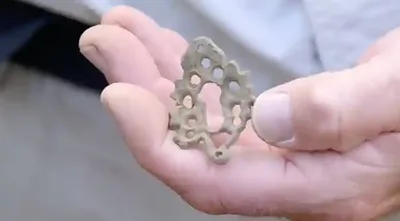
A hand-forged double-sided iron instrument with two arms joined by a pin, recovered on Lot 15 and initially identified by the team as a compass. Emma Culligan's CT scan and compositional analysis revealed no modern alloying elements, placing the tool comfortably in the 1700s with the possibility of the mid to late 1600s. The iron shows extreme chlorine content consistent with prolonged saltwater submersion, not just surface exposure.
Blacksmithing expert Carmen Legge corrected the identification: it is not a compass but a divider, a high-quality engineering tool used for measuring distances, designing structures, and determining circumferences. Carmen called it the most sophisticated item to have surfaced from metal detecting on the island and noted comparable French dividers from 1620 and a British example from 1543. He characterized it as the tool of an upper-level craftsman, expensive and built to last.
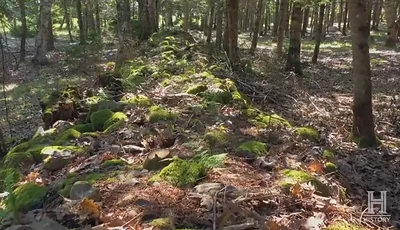
The team speculated the divider may have been lost in the flood tunnel system at Smith's Cove and later brought to the surface in Robert Dunfield's massive 1965 excavation, whose spoils were spread across Lot 15. Rick Lagina connected it to the five stone cairns on Lot 15 that Fred Nolan documented in the early 1960s, which archaeoastronomy expert Professor Adriano Gaspani demonstrated through peer-reviewed research to be aligned with 13th-century star positions. A precision instrument of this kind would have been essential for planning such formations and for any engineering work in the Money Pit.
Where It Was Found
Found at Found in the Dunfield spoils of the Money Pit. Location: Oak Island, Nova Scotia, Canada.