About This Artifact
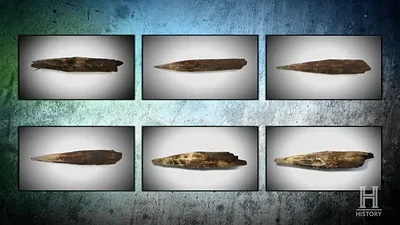
Numerous large hand-wrought iron spikes recovered from locations across Oak Island over multiple seasons, identified by experts as ship construction hardware spanning several centuries. The spikes varied in size and function, but all shared characteristics of hand forging consistent with pre-industrial manufacture.
On the Boulderless Beach along the island's northern shore during Season 5, Gary Drayton recovered a large ship spike that archaeologist Laird Niven dated to the 18th century. At Smith's Cove during Season 6, Carmen Legge examined a group of iron objects and identified them as crib spikes, used to join heavy timbers in shipbuilding and wharf construction, dating them to the mid-1600s. On the beach at Lot 32 during Season 7, Gary recovered a decking spike consistent with 1700s ship construction, similar to a barrote-type spike found in the swamp three years earlier that antiques expert Dr. Lori Verderame had identified as coming from a 17th-century Spanish galleon.
Carmen Legge later reclassified a pair of spikes found near the stone pathway in the swamp as marlinespikes rather than crib spikes, identifying them as tools used by sailors from the early 17th century onward for splicing and tying rope on ships. The distinction was significant: marlinespikes are personal tools carried by working sailors, indicating that crew members, not just cargo, were present in the swamp area. The cumulative evidence from ship spikes, marlinespikes, a ship's railing carbon-dated to 660 to 770 CE, barrel staves, and other nautical hardware supported the theory that at least one large vessel had been present in what is now the swamp before it was artificially flooded.
Historical Context
Multiple finds
Where It Was Found
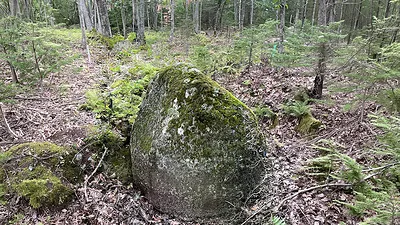
Found at Swamp and across island. Location: the triangle-shaped swamp on Oak Island's southeastern quadrant.