About This Artifact
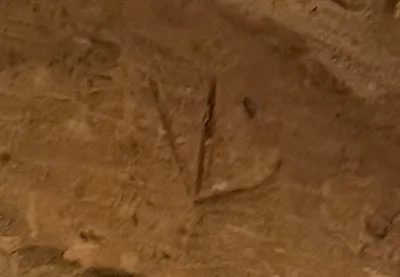
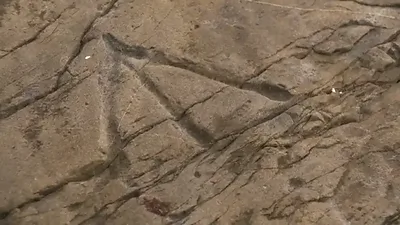
A 400-pound slab of quartzite measuring roughly 79 cm by 51 cm, featuring a 13-character inscription on its naturally smooth face. Discovered in 1812 by retired British Army surgeon Dr. Richard Fletcher in a salt marsh at the head of Yarmouth Harbour, Nova Scotia, near the Tusket River.
The inscription has been interpreted as Norse runes, early Basque, Old Japanese, Hungarian, and Mycenaean Greek, among other theories. The most persistent reading comes from Henry Phillips Jr., who in 1884 translated it as "Hako's son addressed the men," linking it to Thorfinn Karlsefni's expedition of c. 1007 CE. Olaf Strandwold offered the alternative: "Leif to Eric raises this monument." Skeptics, including Norway's leading runic expert Dr. Liestol (1966) and University of Toronto archaeologist A.D. Fraser, have argued the markings are not genuine runes. Fletcher's own descendants believed he carved it as a practical joke.
The stone traveled internationally before World War I, exhibited in Oslo and stored in London at the Canadian Pacific Railway offices during the war. It returned to Yarmouth in 1918 and has been housed at the Yarmouth County Museum since the 1960s.
Alex Lagina visited the museum in the summer of 2018 to examine the stone firsthand. Museum director Nadine Gates and historian Terry Deveau presented it alongside other regional artifacts suggesting pre-Columbian European contact with Nova Scotia, strengthening the case for Norse activity in the region explored in the show's Viking theory.
Historical Context
The Curse of Oak Island, Season 6, Episode 3 (aired February 3, 2019). Yarmouth County Museum & Archives permanent collection.
Where It Was Found
Found at Yarmouth Harbour, Nova Scotia.