About This Carved Stone
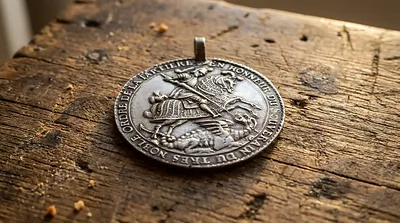
A slate gravestone discovered around 1900 on Ardoise Hill, near Windsor, Nova Scotia - approximately 40 miles northeast of Oak Island. The stone measures twelve inches long, six inches high, and a quarter inch thick. Its face bears a shield with a chevron and sword, an arrow, a skull and crossbones, and a Latin inscription: "C. Manulis, Hic Jacet; A.M.DLVIII" - translated as "Here lies C. Manulis, 1558."Historian Larry Loomer, who published the only known account of the stone in Windsor, Nova Scotia - A Journey in History (1996), described it as the oldest known inscribed gravestone in Hants County. He suggested the deceased may have been a member of a Portuguese fishing party who died and was buried inland.
The stone was reportedly still held in private hands at the time of Loomer's writing and is not presently available for detailed study.The gravestone was cited by researcher Terry J. Deveau in his 2015 analysis of the Overton Stone as part of a broader body of evidence for 16th-century Portuguese exploration and settlement in Nova Scotia. A burial dated to 1558 places a named individual of apparent European origin in the Nova Scotia interior during the very period when the Portuguese are documented to have been making territorial claims in Atlantic Canada.
The Fagundes colony in Cape Breton may still have been active at this date, and the Barcelos family from the Azores was engaged in settlement activities on the Nova Scotia coast from at least 1508. If authentic, the Manulis gravestone represents rare physical evidence of a Portuguese presence that extended beyond coastal fishing stations into the Nova Scotian heartland - strengthening the case for sustained European activity in the region more than two centuries before the Money Pit's discovery.
Historical Context
Larry Loomer, Windsor, Nova Scotia - A Journey in History (1996, p. 25). Cited in Terry J. Deveau, "The Overton Stone" (2015). Stone in private hands, not available for study.
Where It Was Found
Found at Ardoise Hill, Nova Scotia.