About This Coin
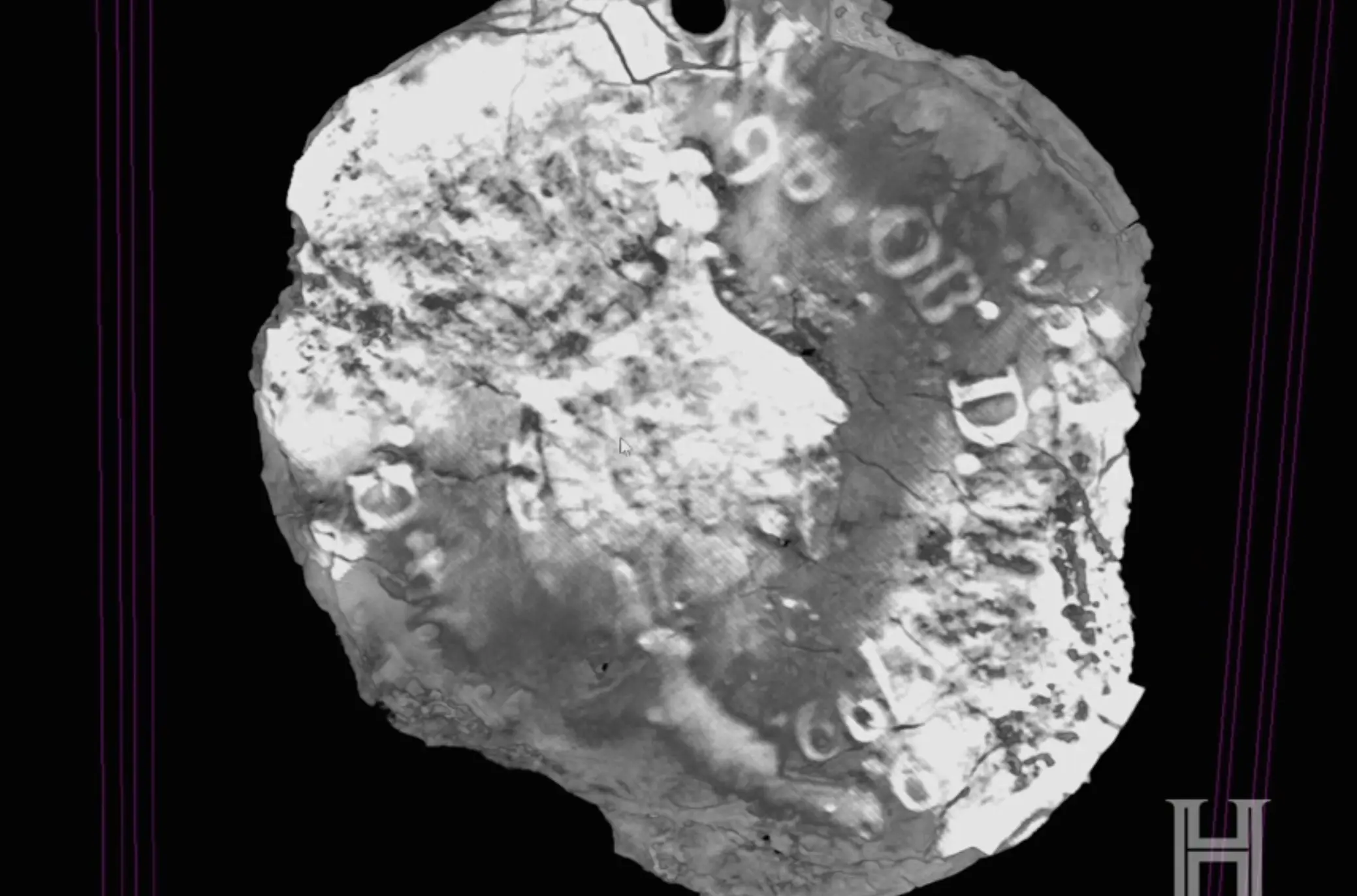
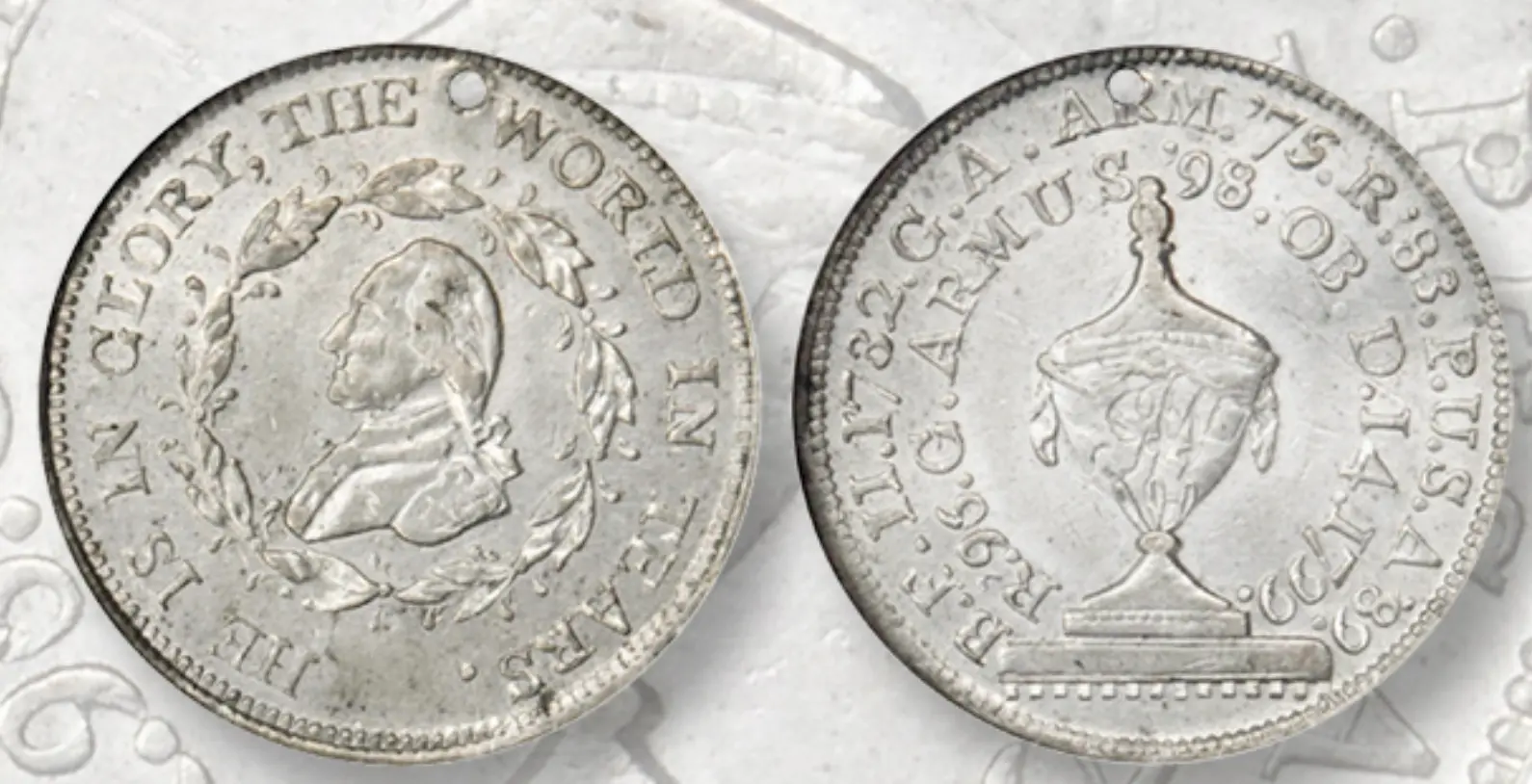
This medal found in the north end of the Oak Island swamp is a Washington Funeral Urn medal, struck in January 1800 by the engraver Jacob Perkins in Newburyport, Massachusetts. The reverse, depicting a classical funerary urn on a pedestal engraved with the initials GW, was designed by Paul Revere. It was one of the first commemorative pieces produced in the United States.
George Washington died on December 14, 1799. The news sent the young republic into a period of mourning unlike anything the country had experienced. In Boston, two formal funeral processions were organised. The first, on February 11, 1800, was conducted by the Masonic Brotherhood. The second, on February 22, Washington's birthday, was a public civic ceremony. Each procession had its own medal. The Masonic version carried a skull and crossbones on the reverse. The public version carried the urn. The Oak Island medal is the urn type, placing it at the February 22 public procession.
The medals were struck in silver, white metal, copper, and a handful in gold. Nearly all were pierced with a hole at the top so they could be worn around the neck on a ribbon or string during the procession. They were not currency. They were personal tokens of grief, purchased by citizens who wanted to be seen honouring the memory of the man who had founded their country. Around three hundred of the white metal variety were produced. They were a Boston product, made for a Boston event, sold to people who were in Boston in the winter of 1800.
One of those people brought this medal to Oak Island and lost it in the swamp.
Nova Scotia in 1800 was British territory, but the maritime connection between Boston and the south shore of Nova Scotia was old and constant. Fishing boats, timber traders, and coastal merchants moved between the two shores regularly. Chester, the town nearest to Oak Island, had been settled by New England families in the 1760s. The McGinnis, Vaughan, and Smith families who reportedly discovered the Money Pit in 1795 were part of that New England diaspora.
The timing is what matters. The medal was made in January 1800. It could not have reached Oak Island before the spring of that year at the earliest. The Money Pit was supposedly discovered in 1795. If someone wearing a Boston funeral medal was in the Oak Island swamp around 1800, they were there during the first years of the treasure hunt, or they were there for another reason entirely. Either way, they were standing in a swamp on a small island in Mahone Bay with a commemorative medal around their neck, five years after three boys allegedly found a depression in the ground under an oak tree and started digging.
The medal does not tell us what they were looking for. But it tells us they were in Boston, and it tells us roughly the earliest moment they could have been there. And it tells us they ended up in the swamp, not on the high ground where the pit was, not on the road, not at the shore. In the swamp.
Historical Context
The medal identification and die varieties come from Neil Musante, Medallic Washington (2016), catalogued as GW-70, and from Russell Rulau and George Fuld, Medallic Portraits of George Washington, 2nd edition (1999), catalogued as Baker-166. The Jacob Perkins attribution and Paul Revere urn design are from PCGS CoinFacts (pcgs.com/coinfacts/coin/1800-ar-medal-washington-funeral-urn/928). The production quantity of roughly 300 white metal pieces is from the Huggins and Scott auction catalogue (lot 1323). The February 11 Masonic and February 22 public procession dates and the distinction between skull-and-crossbones and urn reverses are from PCGS CoinFacts and the APMEX reference article (learn.apmex.com). The inscription "HE IS IN GLORY THE WORLD IN TEARS" and the physical description (silver, 29mm, holed for suspension) are from the Mount Vernon collection record (emuseum.mountvernon.org, object M-1200/A) and the Historic New England collection (historicnewengland.org, object 101680). The Oak Island find location — north end of the swamp — and the on-show identification as "one of the first commemorative pieces made in the United States" are from the Season 13 Episode 16 recap. Found by Gary Drayton and Alex Lagina in the northern party of the swamp on Oak Island.
Where It Was Found
Found at Northern part of the Swamp. Location: the triangle-shaped swamp on Oak Island's southeastern quadrant.
Gallery