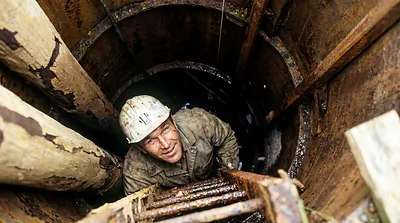
After two weeks of drilling, the team has brought in a 30-ton rig capable of grinding through the layers of wood, stone, and debris that defeated the smaller quarry drill. Marty Lagina and Craig Tester target the Triangle area, a zone identified by Mel Chappell in the 1950s as the most likely location of his father William Chappell's 1897 drill site, where evidence of a large wooden vault covered in a cement-like substance was reportedly found at 153 feet. A new separation system is installed that spins air, water, and sediment apart so the team can examine clean core samples as they come up. The rig reaches 115 feet, still 25 feet short of the 140-foot target.
In the War Room, Rick announces that drainage and digging permits for the swamp have been approved, but the news divides the team. The Lorenz report on the Deepmax X6 data collected from the frozen swamp over the winter is discouraging, concluding that only one or two ferrous metal objects were detected and that all other readings were of no interest. Marty wants to abandon the swamp entirely and concentrate resources on the Money Pit. Rick refuses, insisting they are 90 percent of the way to answers and that walking away now would be premature. The disagreement grows tense before a vote is called. The majority sides with continuing swamp operations. Marty accepts the outcome, stating he will respectfully disagree but wholeheartedly participate.
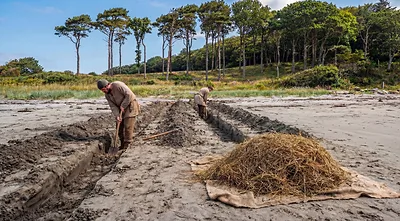
Marty calls in a local tree expert named Joe to examine a large stump that was pulled from the swamp weeks earlier. Joe identifies it as a hardwood that could not have grown while fully submerged in water, meaning the swamp formed around and above the tree after it was already established. The finding supports one of Oak Island's most persistent theories: that the triangle-shaped swamp is man-made, possibly created by building a 250-yard cofferdam between the east and west portions of the island, excavating a vault or tunnel network underneath, burying something of value, and then flooding the area with thousands of gallons of brackish water to make access virtually impossible.
At the drill site, the rig continues past 115 feet when gallons of muddy water suddenly gush from the hole. The platform rocks and the crew steps back as concerns mount that they may have struck one of the legendary flood tunnels, the booby-trapped channels believed to carry seawater from the ocean into the Money Pit whenever an intruder breaches a certain depth. Historical accounts describe the Money Pit flooding with salt water. The team tests the gusher and finds it is fresh water, not salt, meaning it is likely groundwater rather than a triggered flood tunnel. Operations resume.
Dan Blankenship is brought to the drill site to examine core samples recovered from the latest depth. He identifies material with grain running in distinctly different directions, including a vertical piece, characteristics inconsistent with natural soil or backfill. Dan raises the possibility that the drill has contacted the top of the Chappell vault, the same wooden structure his predecessor reportedly found at 153 feet in 1897. If confirmed, it would represent the culmination of nearly 50 years of Dan's own work on the island and would place the team closer to the original Money Pit than anyone has been in over a century. Rick calls it a small victory but an important one, and the team commits to drilling additional holes to narrow down the vault's exact position.