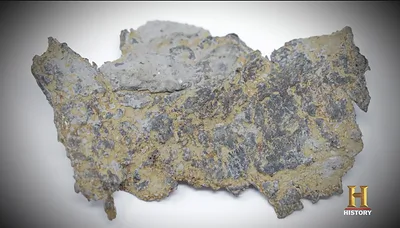
About This Artifact
Pieces of porcelain and china were recovered from the Money Pit area during two distinct treasure-hunting campaigns in the 1960s. Robert Dunfield's 1965 excavation, which used a 70-ton crane and the largest digging equipment ever brought to the island up to that point, produced porcelain fragments in the spoils. Clarke records that examination dated these pieces to the early 1700s, though Dunfield kept the detailed laboratory results private after sending core material to the University of Southern California for testing.
The Becker Drilling programme of 1967, funded by David Tobias and conducted under Dan Blankenship's supervision, sank approximately sixty boreholes in and around the Money Pit using a percussive drill that operated inside a casing pile-driven into the ground. Among the materials brought up from these boreholes was a piece of blue and white china recovered from below 180 feet depth in Hole B24. Graham Harris and Les MacPhie, in their compilation of the Becker drilling records, treated this find together with other deep recoveries as evidence of man-made workings in the lower reaches of the Money Pit.
Steele and Fader urge caution about interpreting any deep recovery as proof of original construction. The Becker programme used a drill that pile-drove its casing through overburden, and material could have been dragged downward from higher levels before being expelled at the surface. The boreholes also showed cavities in the glacial till at depths where natural compression would normally prevent voids from forming, raising the possibility that sinkhole activity had carried surface debris downward over centuries. No photographs of the Dunfield porcelain or the Becker B24 china appear to have been published, and the present location of the fragments is unrecorded in the available source material.
Historical Context
Becker Drilling programme records, 1967, compiled by Graham Harris and Les MacPhie, Oak Island and Its Lost Treasure, 3rd ed. (Formac, 2005). Robert Dunfield 1965 excavation accounts in Charles Barkhouse and others; quoted in Scott W. Clarke, Oak Island Odyssey: A Masonic Quest (Nimbus Publishing, 2023). Joy Steele and Gordon Fader, Oak Island Mystery Solved, 2nd ed. (Halifax: Formac, 2018), discussion of Becker drilling artifacts and downhole disturbance. Originating documentation archived at the Beaton Institute, Cape Breton University.
Where It Was Found
Found at Money Pit area spoils (Dunfield) and Becker Borehole B24 (Lot 18). Location: the original 1795 excavation shaft on Oak Island, Nova Scotia.