With the Valley 3 caisson sitting on what appears to be a wooden structure at roughly 143 feet, Rick and Marty Lagina must decide how to proceed without destroying whatever lies inside. The team first attempts an airlift method, pumping air into the shaft to lower the water level and potentially force artifacts to the surface. The results confirm a direct connection to an enormous source of water: for every gallon pumped out, at least a gallon rushes back in, with an estimated 3,000 gallons refilling in under two minutes. The infiltration rate mirrors the flood tunnel system that has plagued treasure hunters since the Onslow Company triggered it in 1804. Unable to clear the shaft, Marty pushes for cautious hammer grabs while Rick continues to urge restraint.
The hammer grab retrieves several large chunks of wood from the target depth. The timbers match the thickness described in historical records of the Chappell Vault, roughly seven inches, and they appear ancient. The team's excitement turns to concern when Rick spots circular saw marks cutting in both directions across the wood. Circular saws were not widely used in North America until the early 19th century, placing the wood well after any original depositor activity. Rick and Charles Barkhouse bring the samples to Dan Blankenship, who studies them and delivers a sobering assessment: the wood is most likely from Mel Chappell's searcher shaft, built in 1931 when William Chappell's son attempted to construct a lateral tunnel toward his father's lost discovery before cave-ins and flooding forced him to abandon the effort after only ten feet. The team must now decide whether to dig deeper at Valley 3 or shift to their second target.
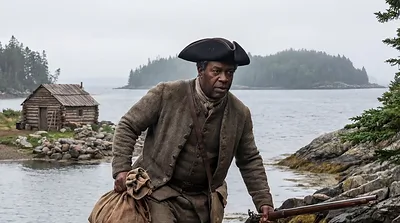
While the Money Pit work pauses, Alex Lagina, Jack Begley, and metal detection expert Gary Drayton search Lot 6, one of the properties once owned by Samuel Ball, the formerly enslaved South Carolinian who settled on Oak Island in 1786 and became one of the wealthiest men in the area by his death in 1845. Gary's detector picks up numerous hits across the lot. Among the finds is a length of chain laid in a straight line, which Gary notes resembles the practice used by pirates to mark a path to buried treasure. The team also recovers a coin that appears to be over 200 years old, reinforcing the pattern of 18th-century artifacts surfacing on Ball's former properties.
The team pivots to Borehole C-1, their second Money Pit target, where an underground camera last season captured a mysterious gold-coloured object with a hooked shape embedded in a void at 170 feet. Craig Tester reviews the camera footage with drilling foreman Andrew and lead operator Kent, and the oscillator begins grinding the first caisson into position. Charles Barkhouse, who originally selected this precise location based on his knowledge of the Money Pit's history, watches as the massive equipment goes to work. If all goes well, the shaft should reach the target depth within days.