01
Pirates & Privateers on Oak Island
A documented pirate haven, one bay over.
17th to 18th century
From pirate gold to Templar treasure to Shakespeare's lost manuscripts.

Knights Templar and Oak Island: 20 medieval-dated artifacts cluster on the year 1212, within the order's active period and a century before its 1307 fall.
New to the mystery: begin with these five.
01
A documented pirate haven, one bay over.
17th to 18th century 02
The trees that named the island were never oaks.
Forensic botany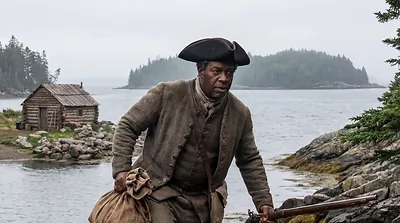 03
From escaped slavery to Oak Island landowner.
18th century 04
Sinkholes, anhydrite caves, and shafts nature may have dug.
The skeptic case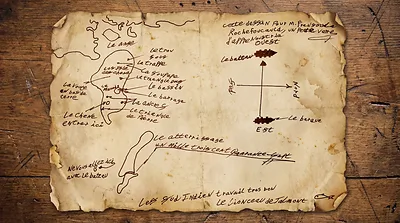 05
A map, a cipher, and a knight's letter.
Primary documentsWarrior monks, early adventurers, and the forensic evidence they left behind
Three documents reshaped the Templar theory: a map, a cipher, and a knight's letter.

The Templar order never died. Portugal renamed it the Order of Christ and sent it to sea.
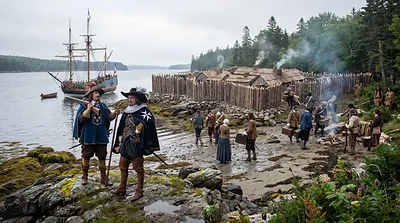
A one-eyed Knight of Malta built his fort fifteen miles away. Two chests vanished from his estate.
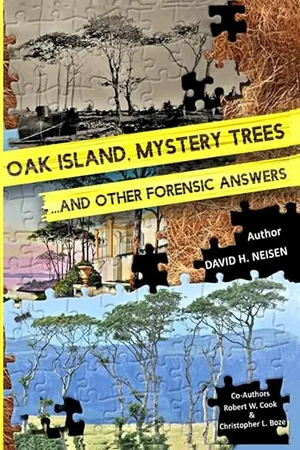
The trees that named the island were never oaks. Forensic botany identifies European Sycamore.
 De Villiers: The Treasure Bloodline
One family. Ten generations. From the Templar escape of 1307 to Nova Scotia in 1632.
 The Knights Hospitaller
The order that inherited everything the Templars owned, by papal decree, in 1312.
 The Irish Monks and Oak Island Theory
The papar crossed the North Atlantic by the eighth century. Their cave crosses echo the lead cross.
From Norse longships to Roosevelt's private letters

The military orders carried Christendom's relics by sea for centuries. Acre to England was the longer run.

France sent 64 ships under orders so secret a masked official boarded the flagship.

Norse explorers reached North America around 1000 AD. L'Anse aux Meadows is 1,200 kilometres away.
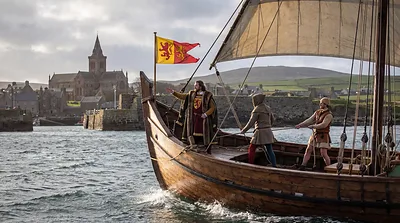
In 1398 a Scottish earl sailed west with Venetian navigators. A family map shows Nova Scotia.
 William Phips, the Treasure of the Concepción
A shepherd boy from Maine raised a sunken Spanish fortune and became governor of Massachusetts.
 The Huguenot Treasure Vault of Oak Island
A family legend carried to Chester in 1928: refugee vaults in Mahone Bay, protected by flood tunnels.
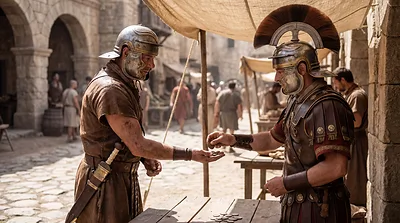 Did the Romans reach Oak Island?
Six genuine Roman coins from a single lot, the oldest struck before the birth of Christ.
Captain Kidd, Blackbeard, and a dying pirate's cryptogram
Oak Island sits in Mahone Bay, a documented pirate haven where crews disappeared for over a century.
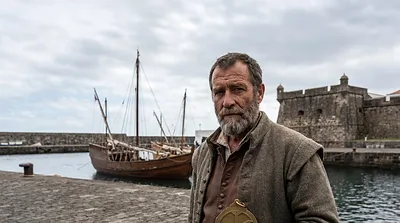
An Azores pirate turned royal navigator scouted this coast for Elizabeth I in 1580.
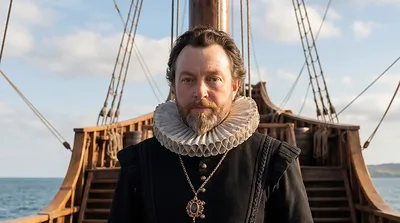
England's greatest privateer buried treasure on three continents before the age of forty.

Forty ships, a captured silver fleet, and a fortune that was never seized or accounted for.
 Henry Morgan: The Lost Panama Treasure and Oak Island
The buccaneer who burned Panama, named as the depositor by a 1932 Halifax editorial.
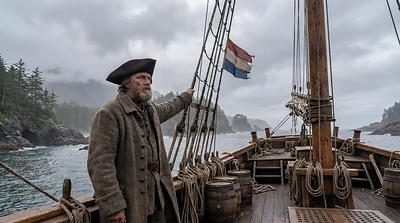 Yankey Willems: Brethren of the Coast and Oak Island
The Dutch buccaneer who sacked Veracruz, whose crew traded off the Nova Scotia coast.
 Captain Kidd and the Hidden Maps
The name that started it all: a dying sailor's confession and treasure east of Boston.
 Blackbeard, the Devil's Bargain
He claimed he buried his treasure where none but Satan and himself could find it.
 La Buse Cryptogram: Levasseur's Unsolved Code and Oak Island
A pirate threw a 17-line cryptogram to the crowd at his hanging in 1730. It remains unsolved.
 Bartholomew Roberts
Black Bart raided Nova Scotia in 1720 and, by tradition, kept a careening yard on the Mira River.
 Captain James Anderson: The Pirate Oak Island Owner
A privateer charged with treason by Thomas Jefferson fled north and lived on Oak Island.
Freemasons, Rosicrucians, and the manuscripts of Francis Bacon
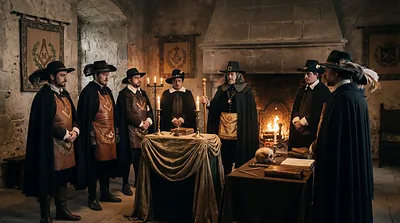
Documented Masonic lot owners before 1795, and a Money Pit that mirrors the vault of nine arches.

He invented the biliteral cipher and described a tidal seawater pit in his published works.

Four researchers, using four different methods, decoded the same destination in the plays.

The 1614 manifestos describe a sealed vault built to survive centuries until its appointed discovery.
French fortunes, British paymasters, and wealth that vanished between empires
 Editors pick
A tunneling engineer was sent to Nova Scotia via Cornwall's mines in 1752, at nearly double pay.

The Surveyor General drew the first map of Mahone Bay and cut Oak Island into 32 lots in 1762.
He escaped slavery, settled on Oak Island in 1787, and came to own more of it than anyone.

A royal charter of 1621 gave Scottish nobles legal authority over the land where Oak Island sits.
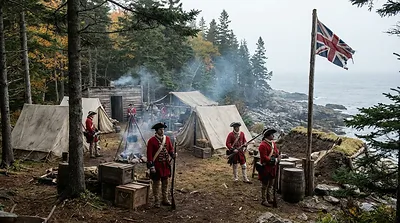 The Secret British Military Bank
The Royal Engineers had the miners, the manpower and the motive, eighty kilometres from Halifax.
 The Treasure of Louisbourg
France spent thirty million livres on its mightiest fortress. When it fell, the treasury was gone.
 The Secret Treasury of the American Revolution
An admiral's widow and son dined with Franklin in Paris while France quietly funded a revolution.
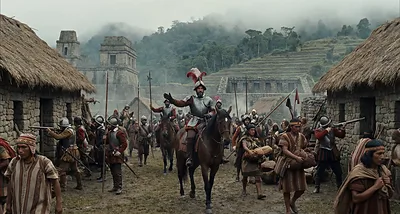 Spanish Galleons full of Inca Gold
Spain shipped 181 tons of New World gold. Storms, pirates and corrupt officials took their share.
 The Sack of Havana
Britain seized the richest port in the Americas in 1762. The king's share never reached the prize papers.
 The Jewels of Marie Antoinette
The queen's diamonds left Paris in a plain wooden chest in 1791. They were never found on her.
 Richard Uniacke, Oak Island Gatekeeper
Attorney General, Admiralty judge and lodge master, he ran the colony while the Onslow Company dug.
 Benjamin Franklin's Nova Scotia Connection
Franklin held 20,000 acres of Nova Scotia, granted by the office that mapped Oak Island.
 The Treasure of St. Andrew's Cathedral
Scotland's greatest cathedral held a thousand years of sacred wealth. In 1559 it all vanished.
Star maps, sacred geometry, and lines drawn across continents
 Editors pick
Five megaliths on documented Templar land in Yorkshire, set at the same angles as Nolan's Cross.

Thirty-four inscribed stones ring an Italian hill village. Their carvings resemble Oak Island finds.

Five researchers, working separately, reached the same conclusion: the island mirrors the sky.

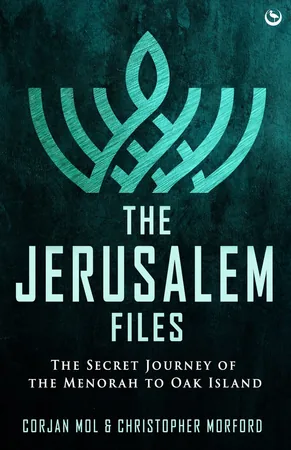
A Menorah hidden in the gardens of Versailles points to the Temple Mount, and to Oak Island.
Tar kilns, salt works, and shafts that may have dug themselves

A timber basin, box drains and a slipway: Smith's Cove read as a colonial ship repair yard.

The finger drains at Smith's Cove as an eighteenth-century salt works for preserving fish.
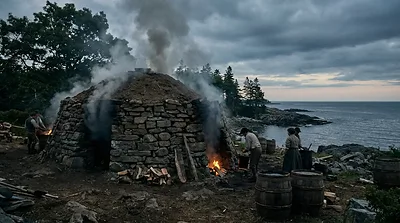
Not a vault but a furnace: a naval stores operation making tar for the Royal Navy around 1720.
 Editors pick
Eleven thousand years in Mi'kma'ki, and pottery recovered from the Oak Island swamp in 2021.
No builders, no vault: a sinkhole in dissolving bedrock could explain the shaft and the floods.
The Ark, the Grail, and the Menorah, relics with named eyewitnesses

The Menorah, the Ark, manuscripts sealed in mercury: an inventory of every proposed prize.

It disappeared twice: from Jerusalem in 586 BC, and from Rome fifty years before the Money Pit.

A chalice, a stone, a bloodline. Every version of the legend leads back to the same guardians.

The only Temple treasure with named eyewitnesses at every stage of its journey.
As an Amazon Associate I earn from qualifying purchases.