About This Structure
The paved area is a massive stone feature in the centre of the triangle-shaped Oak Island swamp, identified underwater by diver Tony Sampson early in Season 7 and progressively excavated through the Season 7 finale (Episode 23, aired 28 April 2020). The feature measures approximately 80 feet by 170 feet, close to half an acre. It is the oldest dated construction in the swamp and one of the earliest dated human-made features on the island.
Excavation was disrupted by Hurricane Dorian, which made landfall over Nova Scotia as a Category 1 storm in Season 7 Episode 11 and flooded the swamp with ocean water. Once the area was pumped dry, heavy equipment operator Billy Gerhardt re-exposed the surface across the second half of the season. Surveyor Steve Guptill measured the main paved surface at roughly two feet below sea level, with some peripheral sections at one foot below.
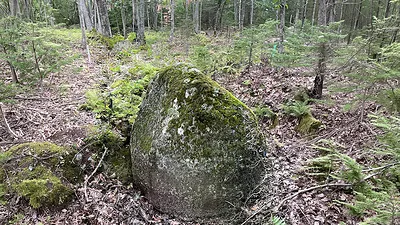
The stones are layered, with smaller rocks at the base and larger rocks on top, a construction technique Dr. Ian Spooner identified in Season 7 Episode 12 as inconsistent with glacial deposit and consistent with roadbuilding. Geologist Terry Matheson observed that the boulder types incorporated into the feature are rock types he would not expect to encounter naturally until approximately 120 feet down in the Money Pit area, indicating that the stones were transported and placed. Archaeologist Laird Niven, examining the feature with Matheson and Spooner, stated he could see no natural process that would have arrived the rocks at this location.
In Season 7 Episode 13, Spooner identified wood crushed beneath the paved stones. No trees existed during glacial periods, which established that the feature could not have been laid down by ice. In Season 7 Episode 18, archaeologist Dr. Aaron Taylor of Saint Mary's University examined both the paved area and the nearby Eye of the Swamp, confirming the paved surface as too level and too uniform to be natural. With five experts across four disciplines now in agreement, Marty Lagina acknowledged that Rick Lagina had been right about the swamp's significance.
The carbon-14 result, reported by Spooner in Season 7 Episode 23, dated tree branches embedded beneath the paved-area stones to approximately 1200 AD. The team has subsequently referred to the feature as dated to "the 1200s" or "the 13th century." It is the earliest scientifically dated human construction in the swamp.
Spooner's working interpretation was that the paved area served as a work surface or dock, with boats brought into what was then open water, offloaded onto the stone platform, and the cargo moved inland. He proposed the surface may have been leveled to allow horse-and-cart access toward the Eye of the Swamp, which he interpreted as a clay extraction site. Probing with a steel bar in Season 7 Episode 13 confirmed that rocks continue underground in the direction of the Eye, approximately 150 feet from the paved area's midpoint. In Seasons 10 through 13, the team uncovered a paving stone ramp connecting the paved area to the stone road along the swamp's eastern edge, establishing the three features as an integrated transport system.
The paved area records organised, large-scale construction in the centre of the swamp roughly six centuries before the Money Pit was discovered in 1795. The carbon evidence places the work in the medieval period. Who built it, why, and what was moved across it remain open.
Historical Context
Tony Sampson, diver; Dr. Ian Spooner, geologist; Dr. Aaron Taylor, archaeologist; Laird Niven, archaeologist; Terry Matheson, geologist; Billy Gerhardt, heavy equipment operator; Steve Guptill, surveyor; History Channel Seasons 7 through 13
Where It Was Found
Found at Centre of triangular swamp. Location: the triangle-shaped swamp on Oak Island's southeastern quadrant.