About This Artifact
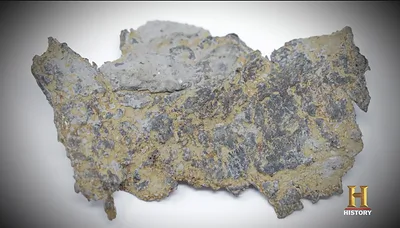
A hand-wrought, square-shanked iron spike recovered from the Karma-1 shaft spoils by Charles Barkhouse and the wash plant team. The spike originated from below 167 feet, deeper than any previous searchers reached in this area of the Money Pit, placing it below the range of known historical search activity.
Originally five to six inches long, the spike had been broken from a larger iron object and reused as an improvised fastener. Its head was not formally shaped but mushroomed from being driven straight down, with the iron fibers splayed outward on impact. Blacksmithing expert Carmen Legge identified it as the type of spike used in planking for large boxes or vaults built to safeguard valuables, consistent with an original depositor working with limited materials brought to the island in secret.
Metallurgist Emma Culligan's XRF analysis classified the iron as cold-short, meaning brittle in cold climates due to exceptionally high phosphorus content. The composition also showed trace manganese and elevated sulfur. Cold-short iron is a reliable indicator of pre-industrial manufacture, as modern smelting controls for phosphorus. Emma placed its most likely date at the mid-1700s or earlier.
Doug Crowell raised the possibility of a connection to the Duc d'Anville expedition of 1746, citing a ship's log he discovered in the Nova Scotia Archives in 2017 that described the burial of treasure in a deep pit on an island in the region. If the spike dates to that period, it could represent material evidence linking the Money Pit to the French naval expedition whose commander's family had ties to the Knights Templar.
Historical Context
Season 13, Episode 18 ("Breaking the Seal"). Found during wash plant sorting of Karma-1 spoils. Examined in the Oak Island lab by Carmen Legge and Emma Culligan.
Where It Was Found
Found at Karma-1 shaft spoils, wash plant. Location: the original 1795 excavation shaft on Oak Island, Nova Scotia.