About This Artifact
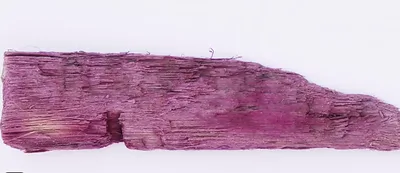
A thin piece of metal was recovered from borehole D-2 at approximately 88 feet in the Money Pit area during Season 9. The fragment appeared to have cement adhering to its surface, a combination that recalled descriptions from 1897 when the Oak Island Treasure Company drilled into the Chappell Vault at 153 feet and encountered metal encased in a cement-like substance. Craig Tester noted at the time that this was the only piece of metal of unknown origin recovered from the Money Pit, as all other metallic finds had been attributed to drill casings, crib spikes, or tools from known searcher expeditions.
Dr. Ian Spooner scanned the fragment with an X-ray fluorescence analyser at the archaeology trailer. The results showed 0.068 percent gold, which Spooner described as equivalent to roughly a thimbleful. He explained that the gold could be on the surface of the metal itself or on sediment still adhering to the uncleaned artefact. Craig subsequently confirmed that XRF testing of two separate samples from the piece both showed gold at seven hundred parts per million. Wood recovered from the same borehole at 91.5 feet was carbon dated to 1488-1650 with 95.4 percent confidence, and wood from neighbouring borehole CD-2.5 at a similar depth returned the same date range.
Borehole D-2 was positioned eight feet west of borehole C-1, within a cluster of boreholes the team designated the C-1 Cluster. Water samples from previously drilled holes in this area had revealed elevated levels of gold and silver that Dr. Spooner was unable to attribute to any natural source. The metal fragment with its gold traces provided the first solid evidence that the gold detected in the water was associated with a physical artefact rather than dissolved minerals in the groundwater.
Historical Context
Lagina team
Where It Was Found
Found at Borehole D-2, Money Pit area. Location: the original 1795 excavation shaft on Oak Island, Nova Scotia.