Rick Lagina, Marty Lagina, Craig Tester, Alex Lagina, and Jack Begley arrive on Oak Island to meet the team in the War Room and lay out the season's priorities. Marty declares the top goal is tracing the gold found in the water back to its source. Doug Crowell reports that last year gold was identified in 20 boreholes, but this year the team has selected 50 new holes to test. Dr. Ian Spooner explains they are trying to map how water travels beneath the Money Pit, and he will use a device called a level logger to determine the flow direction and help locate the gold's origin. Craig confirms the muon tomography devices have been placed in 14 boreholes spanning the Money Pit, the South Shore, and the southern swamp border, with results expected in several months. Discussion then turns to the swamp, where Marty reports the team has reached a "relationship of cooperation" with the Mi'kmaw leadership, though standoff distances remain in place after Mi'kmaw pottery, possibly 2,000 years old, was found the previous season. Laird Niven introduces Emma Culligan, who will run the CT machine and brings a background in engineering and archaeology. Rick reports that research teams are active in France, Portugal, the Azores, Italy, and London, and says more searching is needed on Lot 8.
At the Money Pit, Rick and Marty check on Borehole K15.5. Core samples from a depth of 103.5 and 111 feet both contain wood, including part of a beam. Charles Barkhouse reports no nails, but Rick notices puddled clay. When Mike informs the team the drill dropped at 103 feet, Terry Deveau examines the pieces and determines they have found a structure five feet tall. Scott Barlow notes the team has documentation of tunnels ranging from two to eight feet in height. One piece appears to have been cut with an adze, a tool used until the 18th century. The next day, Borehole M16.25, located 11 feet south of K15.5, encounters a four-foot opening at 103 feet. The team lowers an underwater camera that reveals timbers with what appears to be a dowel in the end of one, a type of fastener used before the discovery of the Money Pit. The footage is sent to Prohawk Technology for enhancement. Sonar run the following day maps a rectangular 35-foot structure with evenly spaced beams that bends and appears collapsed on one side, trending south-southeast before turning northwest toward the Garden Shaft. Steve Guptill will process the data for the team. Drilling then begins on Borehole DN12.5, located 20 feet west of the Garden Shaft, to continue tracking the tunnel.
On Lot 8, Marty and Gary Drayton search for artifacts near the stone feature where finds such as the garnet brooch in 2017 led Scott Clarke to suggest it could be part of a Masonic Arch High Priest breastplate. Gary gets a hit and Marty unearths an ox shoe, which could indicate a hauling operation in the area. A second hit produces an encrusted object from about 12 inches down that Gary identifies as some type of handle. At the Research Center, Carmen Legge examines the piece alongside a CT scan performed by Emma using the Skyscan 1273 scanner. Carmen identifies it as a bunk hook, used on the end of a chain for pulling and hoisting loads of seven to eight tons, and dates the design to the late 1500s.
On Lot 7, Gary and Jack search a newly cleared area. Gary finds a musket ball, used from the late 1500s to the mid-to-late 1800s, followed by what he thinks is an old rectangular coin. At the Interpretive Center, the possible coin is scanned with both the Skyscan 1273 CT scanner and the XRF spectrometer. Laird says the edges are very unusual, and Gary believes the piece was cut with shears. Emma reports the item is mainly copper with high tin content and arsenic, making it arsenical bronze, a material used for coins, swords, and statues but non-existent after the 16th century because the high arsenic content produced dangerous gas during forging.
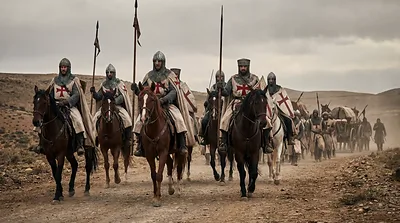
In the War Room, the team reviews the sonar results from Borehole M16.25 and the enhanced video from Prohawk. The tunnel enters from the south-southeast, turns, and heads northwest toward the Garden Shaft. Craig presents carbon dating results from K15.5 wood: a 48.1 percent probability of 1731 to 1806 and a 35.5 percent probability of 1640 to 1687. The team will put sonar down and test more wood to continue narrowing the date. In a later session, Dr. Spooner and hydrogeologist Dr. Fred Michel, who spent most of his career studying groundwater flow to identify mineral deposits, share early water testing results. They have confirmed a flow of water from north of the Garden Shaft toward the south and found gold in two samples taken from the shaft. Dr. Michel recommends continued testing to confirm the pattern. The following afternoon, researcher Gretchen Cornwall joins by video conference to share her work connecting the Knights Templar to Nova Scotia and Oak Island. She describes a Templar cave at Royston, England, with medieval carvings she believes relate to the island, and invites the team to visit. Marty agrees to plan a trip, and Rick suggests that Marty and Alex meet with historian Paul Stewart while in England.