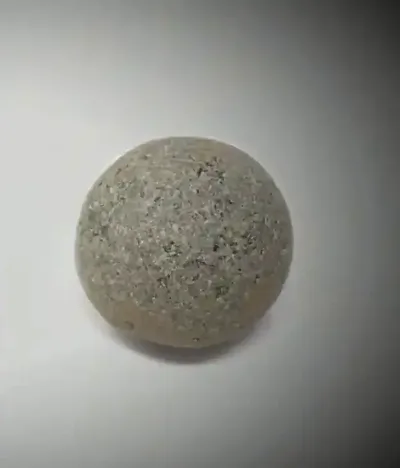
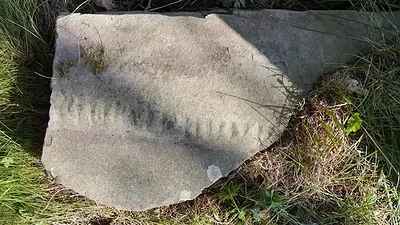
About This Material
Two wood samples submitted to the Brock University Geological Sciences Radiocarbon Lab by Triton Alliance Ltd. for the Oak Island Project, analysed in March 1981 by technician Howard Melville. These returned remarkably ancient dates:
• Wood slat #1 (BGS-677): 1670 ±70 years before present → approximately 280 AD (range 210-350 AD)
Analysed 4 March 1981. Benzene produced: 4.2162g. Counting time: 3000 minutes. Disintegrations: 102,750.
• Wooden stake #2 (BGS-678): 1700 ±80 years before present → approximately 250 AD (range 170-250 AD)
Analysed 6 March 1981. Benzene produced: 4.0357g. Counting time: 3000 minutes. Disintegrations: 98,960.
Both samples received full pretreatment: removal of foreign material, removal of humic acid, distilled water wash, and acid leach. Unused portions were dried and stored.
Howard Melville's cover letter to David C. Tobias of Triton Alliance (23 March 1981) noted: "The age reported for carbon dating represents the age for that portion of the tree from which your sample came. I have dried your samples and put them into storage. If you wish them returned, please notify me and I will gladly do so."
The Les MacPhie summary table notes these samples had "no details on location" with a query mark next to "Nolan?" suggesting they may have been recovered from Fred Nolan's property. If these dates are accurate and the samples represent worked wood (the designation "slat" and "stake" implies deliberate shaping), they would represent some of the oldest evidence of human woodworking activity on or near Oak Island, contemporary with the late Roman Empire.
However, significant caveats apply: (1) the provenance is uncertain; (2) the "old wood effect" means the trees could have been much older than when they were worked; (3) no information exists about whether these were clearly tool-worked specimens or naturally shaped wood. The confidence level is set to medium due to these uncertainties.
Historical Context
Sources: Les MacPhie, "Summary of Documents and Results for Carbon Dating at Oak Island" (compiled July 2006), pp. 1-2 (summary table), 30-32. Brock University Geological Sciences Radiocarbon Lab reports: BGS-677 (p. 31) and BGS-678 (p. 32). Letter from Howard Melville (Brock University) to David C. Tobias (Triton Alliance Ltd., 6200 Grande Allee, St. Hubert, P.Q.), 23 March 1981 (p. 30).
Where It Was Found
Found at Unknown - possibly Nolan's property. Location: Oak Island, Nova Scotia, Canada.