About This Artifact
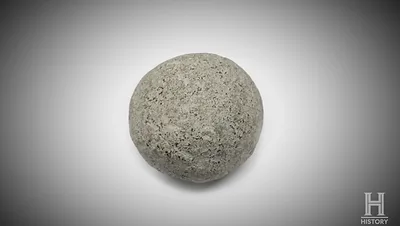
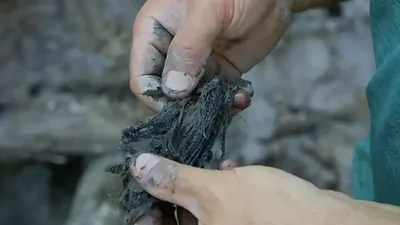
An additional fragment of parchment was recovered from the spoils of borehole H-8 alongside the human bone, leather bookbinding, and pottery during the Season 5 excavation. Jack Begley and Dan Henskee identified it during a painstaking wash-and-sort process that extended over several days. Rick Lagina noted its resemblance to the parchment fragment William Chappell recovered from the suspected vault at 153 feet in 1897.
At Saint Mary's University, Dr. Christa Brosseau examined the material under the scanning electron microscope. The fibre structure revealed collagen and traces of nitrogen, identifying it as animal-skin parchment rather than plant-based paper. Parchment was historically reserved for documents of high importance, including legal charters, religious texts, and royal correspondence, from the early medieval period through to the seventeenth century. Dr. Brosseau also confirmed a separate fragment from the H-8 spoils as cellulose-based cotton rag paper, an older form of paper used in book production from as early as the twelfth century. The presence of both parchment and rag paper in the same borehole spoils pointed to the remains of at least one bound manuscript.
The H-8 parchment is the second confirmed recovery of animal-skin writing material from the Money Pit, following the 1897 fragment bearing the letters "vi" or "wi" in India ink. Doug Crowell described the find as corroboration of William Chappell's drilling results 120 years earlier. The material was recovered from the same depth zone as the human bone fragments carbon dated to the late seventeenth and early eighteenth centuries, though the parchment itself has not been independently dated.
Historical Context
Lagina team
Where It Was Found
Found at Borehole H8 spoils, Money Pit. Location: the original 1795 excavation shaft on Oak Island, Nova Scotia.