About This Structure
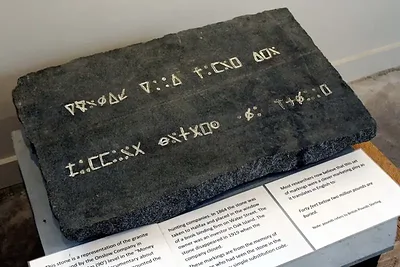
The Chappell Vault is a structure inferred from drilling data collected in 1897 by William Chappell and Frederick Blair during the Oak Island Treasure Company operations. At a depth of approximately 153 feet, the drill bit passed through a sequence of materials that described two wooden chests stacked one on top of the other inside a larger wooden enclosure roughly seven feet tall, sealed in a layer of cement. The drill brought up a scrap of parchment bearing what appeared to be the letters "Vi" in India ink. The work manager, T. Pearly Putnam, privately confirmed that the drill bit showed evidence of having passed through gold. William Chappell signed a sworn affidavit on October 25, 1929, describing the sequence: spruce, then empty space, then four inches of oak, then twenty-two inches of loose metal, then four inches of oak, then more metal, then more oak, then six inches of spruce, and finally clay. Frederick Blair wrote his own account in 1900. When D'Arcy O'Connor compared the two documents, he found discrepancies but concluded Chappell's version was the more accurate. The vault has never been visually confirmed. No camera has photographed it and no human hand has touched it. Its existence rests entirely on what the drill bit passed through and what it brought to the surface. Every major excavation since 1897, from the Chappell Shaft in 1931 through the Hedden Shaft in 1937 to the Lagina brothers' caisson operations from 2016 onward, has oriented itself around the task of reaching this structure. Wood, metal, and cement-like material have been recovered at consistent depths across multiple boreholes in the modern era, but the vault itself has not been opened. The parchment scrap recovered from the drilling passed into Blair's keeping and eventually into the Nova Scotia Archives. Melbourne Chappell, William's son, noted in 1977 that no photographs of his father survived after a fire destroyed his personal collection of Oak Island documents.
Historical Context
William Chappell, sworn affidavit, October 25, 1929. Frederick L. Blair, account of 1897 drilling, written 1900 (Nova Scotia Archives, MG1 Vol. 383). Interview with M.R. Chappell, July 20-21, 1976, Sydney, N.S. T. Pearly Putnam, private confirmation to Blair (referenced in Blair's affidavit, Season 5, Episode 5). Randall Sullivan, The Curse of Oak Island (2018), chapters 7-8.
Where It Was Found
Found at Money Pit, 153 ft depth. Location: the original 1795 excavation shaft on Oak Island, Nova Scotia.