About This Structure
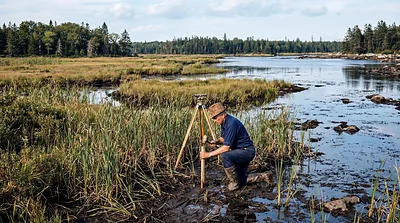
An eighty-two-foot timber-lined shaft in the Money Pit area, originally classified as an 1800s searcher shaft of no particular significance. The structure was redated after wood samples taken from the eighty-foot mark returned a date of approximately 1735, placing its construction roughly sixty years before the discovery of the Money Pit in 1795. Water testing conducted by Dr. Ian Spooner and hydrogeologist Dr. Fred Michel revealed gold in two separate samples collected from the shaft, and a broader water analysis programme confirmed a flow of water from north of the shaft toward the south.
The Garden Shaft became a primary focus beginning in Season 10, when the team tracked a previously unknown tunnel running at a depth of 103 feet that sonar and video confirmed was heading toward the shaft. The tunnel was intercepted at five separate borehole locations. Carbon dating of wood from the tunnel returned a 48.1 percent probability of 1731-1806 and a 35.5 percent probability of 1640-1687, placing the tunnel in the same general period as the shaft itself. Water samples from the boreholes in the tunnel zone showed elevated levels of gold, silver, copper, zinc, and tin, metals consistent with brass and bronze alloys that Dr. Spooner described as highly anomalous for the local geology.
Dumas Contracting was hired to restore and deepen the shaft. Cameron Carter, Vice President of Engineering, presented a plan to build a foundation, remove backfill, reline the shaft with new timber and waterproofing, and install platforms at eight-foot intervals to a target depth of eighty feet. Probe holes drilled sixteen to twenty feet beyond the walls at each level would allow the team to detect voids, tunnels, or anomalous material. Work began in Season 10 but was halted when the Nova Scotia government determined the project required mining permits rather than the rehabilitation authorisation Dumas had originally received. The permits were eventually secured and work resumed in Season 11.
By Season 11, Dumas had reached a depth of sixty-seven feet and was probing twelve feet outside the walls, with corners probed to twenty feet. Wood and water samples from depths of fifty-five and fifty-eight feet tested positive for gold. The shaft sits approximately twenty feet from the area Dr. Spooner and Dr. Michel identified as the Treasure Zone, where they concluded a possible treasure vault could lie at a depth of eighty to 120 feet. Rick Lagina and Scott Barlow descended into the shaft with Roger Fortin during Season 10 for a firsthand inspection, the first time the team had physically stood inside the original eighteenth-century structure. The Garden Shaft remains the deepest human-accessible point on Oak Island and the primary access route for the ongoing underground investigation.
Historical Context
Lagina team; dendrochronology
Where It Was Found
Found at Money Pit area. Location: the original 1795 excavation shaft on Oak Island, Nova Scotia.