In the War Room, the team reviews the discovery of Shaft Two and plans additional drilling to determine the orientation of the tunnel that extends from it toward the original Money Pit. Historian Doug Crowell and surveyor Steve Guptill mark the location for borehole F-14 using GPS data from previous holes. At the Money Pit area, geologist Terry Matheson and Dave Blankenship supervise the drilling. At approximately 100 feet, driller Brennan reports punching through what felt like a void. The core reveals a distinct ceiling or floor feature with chunks of beam, and Terry confirms they have intercepted the Shaft Two tunnel. Rick Lagina arrives and calls it the first definitive find in the area, giving the team a clear reference point from which to trace the tunnel toward the Money Pit. The next hole, F-15, will attempt to establish the tunnel's direction.
Author and researcher Corjan Mol and researcher Chris Morford return to the War Room with an expanded presentation. Building on Mol's Nicolas Poussin theory, they show the team a 1650 self-portrait by Poussin and demonstrate that the center of the pentagram derived from the second Shepherds of Arcadia painting, when projected onto a map of Oak Island using Nolan's Cross as the framework, falls precisely on the Eye of the Swamp. Marty Lagina acknowledges the geometric elegance of the theory while noting the location is the hardest spot on the island to excavate.
At Smith's Cove, Gary Drayton, Peter Fornetti, and Billy Gerhardt continue exploring the bump-out area beyond the slipway. Billy uncovers flat rocks resembling box drain stones, and Peter spots similar flat rocks in his excavation area. Deeper digging reveals a massive log structure with wooden pegs identical to those found in the U-shaped structure the previous year. Rick Lagina and geologist Terry Matheson examine the find and note the logs are saddle-notched, as large as the U-shaped structure timbers, and packed with clay in a manner consistent with the oak log platforms described by Daniel McGinnis during his 1804 excavation of the Money Pit. Doug Crowell and archaeologist Laird Niven observe the structure resembles a wharf or pier, with boulders packed inside the cribwork. The deepest log sits approximately ten feet below sea level, and Terry notes that its greater depth may indicate it is significantly older than the layers above. The team decides to halt and have Laird conduct a proper archaeological assessment.
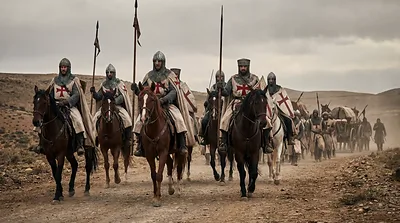
Geoscientist Dr. Ian Spooner and three graduate students from Acadia University, Lauren Ruff, Chelsea Renaud, and Julia Crews, collect vibra-core samples from the Eye of the Swamp while Steve Guptill assists with positioning. In the War Room, Spooner presents his analysis to Rick, Marty, Tom Nolan, Laird Niven, and the team. The core from the Eye shows glacial till at the bottom, then a disturbed zone with interlayered organic matter and till that cannot be explained by natural processes, followed by swamp sediment. A sample from the disturbed zone dates to 1600 to 1700, and a twig from another core at the same site dates to 1674 to 1778, leading Spooner to conclude with confidence that significant excavation and human activity took place at the Eye between 1680 and 1700. Most remarkably, a twig from a second core at a deeper level dates to approximately 1220 AD, suggesting the swamp itself was initiated around that time. Rick connects the date to the Knights Templar era and shows Spooner the Zena Halpern map referencing a 12th-century Templar voyage to Oak Island. Tom reflects that his father Fred Nolan always noted the back pond area would not dry out no matter how much he pumped.