Nicolas Poussin has become one of the most discussed figures in treasure-hunting circles, and not always for the right reasons. Decades of speculation linking his paintings to the mystery of Rennes-le-Chateau, the Priory of Sion, and assorted conspiracy theories have turned his name into something of a red flag for serious researchers. That is unfortunate, because the historical connections between Poussin and Oak Island are grounded in documented facts, verifiable geography, and paintings that still hang in museums where anyone can study them.
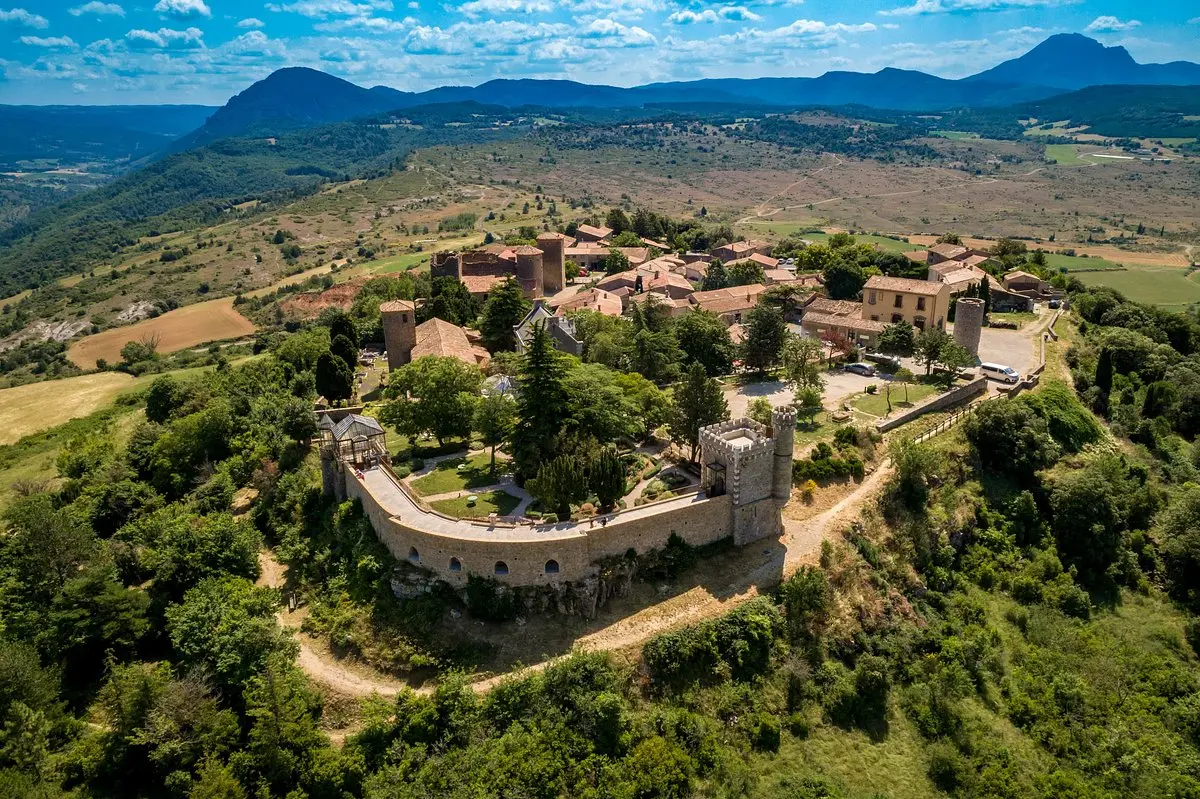 Rennes-le-Château→
Understanding what Poussin may have encoded in his work requires understanding who he was. But first, a disclosure. The Curse of Oak Island production team approached me specifically to ask for my opinion and to develop a theory involving Poussin in 2019. His name had surfaced in several earlier theories and there was a need for someone who could investigate whether the painter could genuinely be linked to Oak Island. After a Friday night video conference, I was invited to Nova Scotia the following Monday. I went, but I went skeptical. I was convinced I would never find a credible connection between a 17th-century French classical painter and a small island in Mahone Bay. What I found surprised me, and what Christopher Morford and I found together surprised us both.
So who was Poussin? Born in 1594 in the village of Villiers-en-Desoeuvre in Normandy, he fled his parents' home at eighteen and found his way to Paris, where he trained under Flemish masters Ferdinand Elle and Georges Lallemand. But it was Rome that Poussin had set his sights on, and in 1624, aged thirty, he finally settled there. His talent attracted the patronage of Cardinal Francesco Barberini, one of the most powerful figures in the Catholic Church. For Barberini, Poussin painted The Destruction and the Sack of the Temple of Jerusalem, a dramatic scene of Roman soldiers looting Solomon's Temple in which a golden menorah can clearly be seen being carried away on the left side of the composition. That painting was destined as a gift for Cardinal Richelieu.
Poussin was known for working alone, a rarity among painters of his era, and his reputation grew to the point where patrons granted him free rein to choose his own themes and compositions. He adopted as his personal motto Tenet confidentiam, Latin for "Keeper of secrets." It was a phrase he would live up to.
The Shepherds of Arcadia
2 min
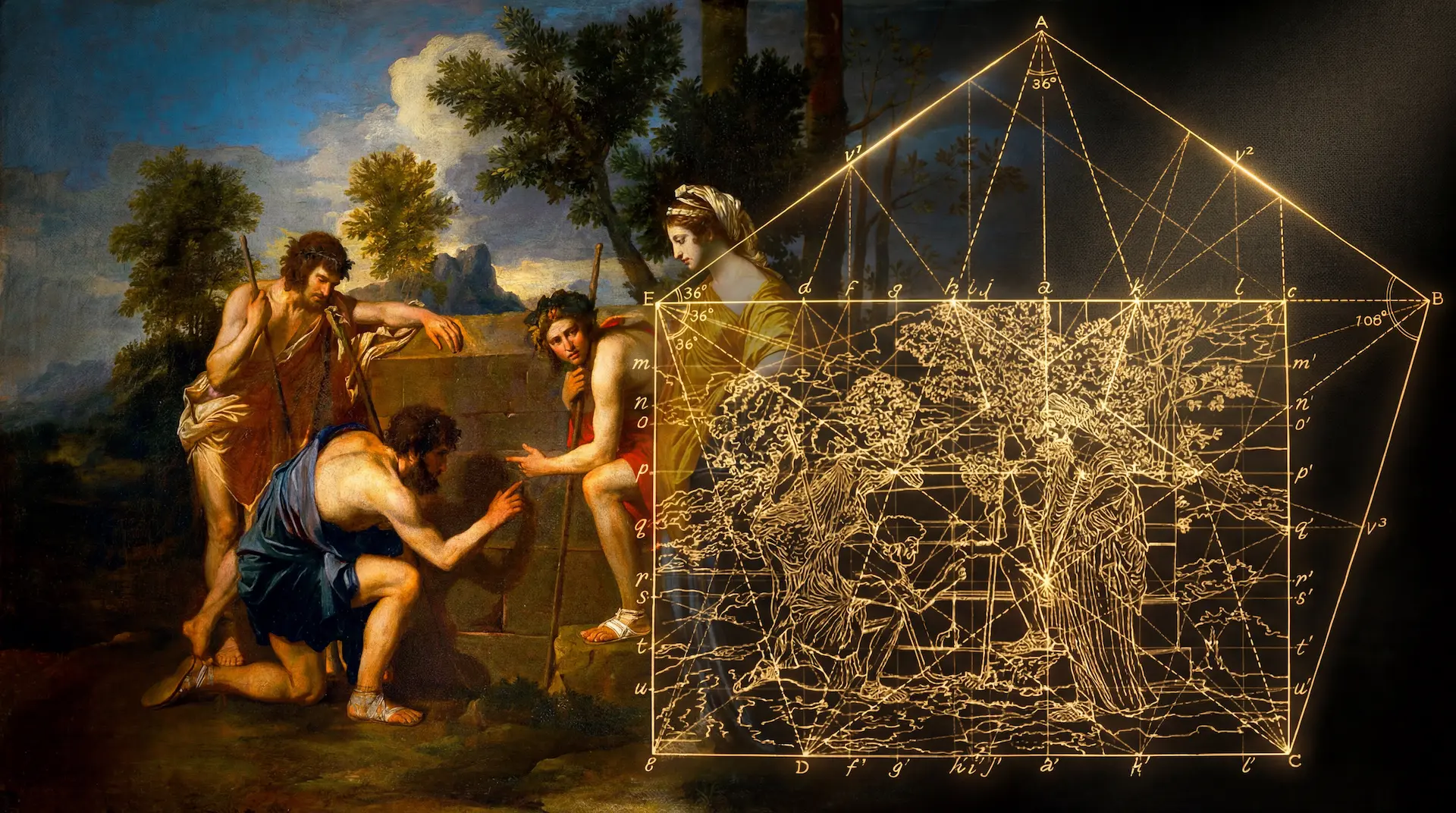
Poussin painted two versions of a scene known as The Shepherds of Arcadia, also called Et in Arcadia ego after the inscription on the tomb depicted in both works. The phrase, which translates loosely as "And in Arcadia, I," is grammatically incomplete Latin, missing a verb. This oddity has prompted centuries of debate about its meaning and led to various attempts to rearrange its letters into hidden messages. The most widely cited anagram is "I tego arcana Dei" ("Begone, I conceal the secrets of God"). Another reading rearranges the letters into "gite neo Arcadia," which is Italian for "take a trip to new Arcadia." When Poussin was painting in Rome, Arcadia was the name used for what is now Nova Scotia, following explorer Giovanni da Verrazzano's use of the term during his voyage along the Atlantic coast in the service of King Francis I of France in 1525.
The first version (The Shepherds of Arcadia I) was painted between 1627 and 1628, commissioned by Giulio Rospigliosi, who would later become Pope Clement IX. Poussin borrowed the theme from an earlier work by the Italian painter Guercino, whose own Et in Arcadia ego had been commissioned by Cosimo II de Medici in 1618. It is thought that de Medici himself coined the inscription. These were private works for exclusive rooms in the Vatican, where only a very small inner circle around Rospigliosi would have had access to them. The thought that they might one day hang in public museums would have been inconceivable.
Crucially, The Shepherds of Arcadia I was not created in isolation. Poussin painted it alongside a pendant, a sister painting intended to hang beside it. That pendant was Midas Washing at the Source of the Pactolus, which depicts the mythological King Midas washing away the curse that turned everything he touched into gold. In the story, the gold flows into the river Pactolus, turning it into a river of gold. Poussin connected the two paintings by including a bearded River God in each composition.
One references Arcadia, the contemporary name for Nova Scotia. The other depicts a river running with gold. Oak Island sits at the mouth of the Gold River in Mahone Bay, Nova Scotia. Combined, the two paintings bring anyone following these clues to within touching distance of the island.
The Self-Portrait and the Third Eye
2 min
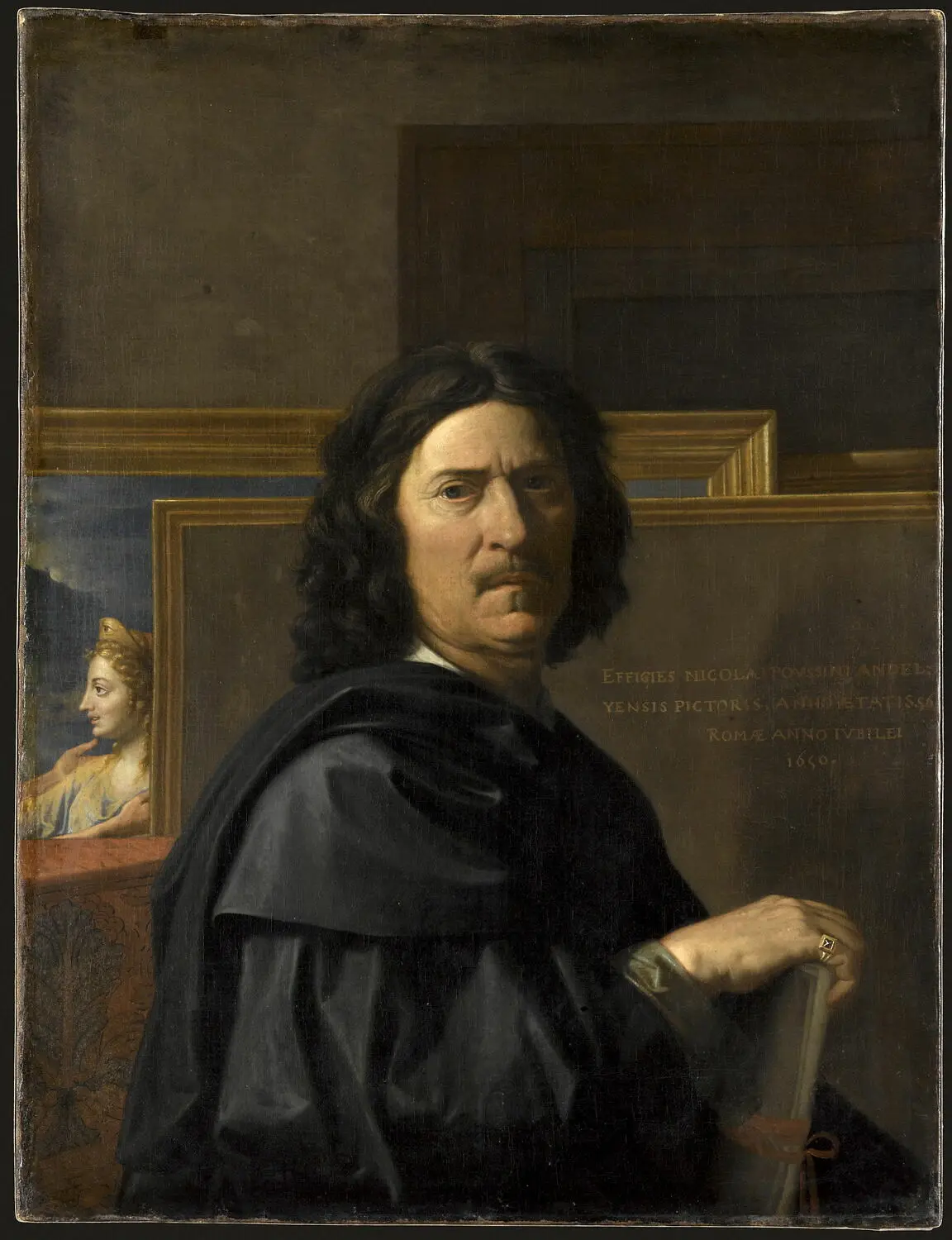
In 1650, five years before painting the second Shepherds of Arcadia, Poussin created a self-portrait that is rich with symbolism. During the summer of 2019, researchers Corjan Mol and Chris Morford studied this painting together at the Oak Island research center and made several observations. The same woman who appears as the shepherdess in The Shepherds of Arcadia II appears in the self-portrait, but instead of the scarf she wears in the later painting, she is depicted with a diadem-like headdress featuring an eye at its center. The third eye, also known as the bindu point, traditionally represents the ability to perceive things beyond ordinary sight. For a painter whose personal motto was "Keeper of secrets," this was compelling symbolism.
The self-portrait contains additional layers. A hidden pentagram is present in the composition, connecting the black pyramid-shaped onyx ring on Poussin's finger, the artist's eyes, and the headdress of the female figure. The door in the background is blocked by three large framed canvases, recalling Masonic rituals in which three veils must be passed. In the foreground, Poussin looks directly out at the viewer from behind his canvas, as if to signal that there is more here than meets the eye.
In the same year, Charles Le Brun, a close friend who had trained under Poussin and who also held the title of First Painter to the King, painted a portrait of Nicolas Fouquet. Fouquet is shown in an austere black robe, holding a folded piece of paper and sitting next to a locked book. Behind him, a curtain has been partially pulled aside to reveal a portion of a hidden painting. In it, two figures stand on a boat. One holds a wooden oar and is instantly recognizable as the same kneeling shepherd from The Shepherds of Arcadia II. The second figure is only partially visible, but he is notable for wearing a single sandal. In Greek mythology, the one-sandaled companion of Hercules is Jason, captain of the Argo, who led the Argonauts on their quest for the golden fleece.
The Fouquet Letter
2 min
The connection between Poussin and the French court goes beyond artistic patronage. In 1655, Nicolas Fouquet, Superintendent of Finances under Louis XIV and one of the most powerful men in France, sent his brother Louis to Rome to purchase works of art. Louis Fouquet enlisted Poussin's help, and the two men became closely acquainted. On April 17, 1656, Louis Fouquet wrote a letter to his brother that has become one of the most discussed documents in treasure-hunting history.
The relevant passage, translated from the original French by bilingual linguist Charlotte Wheatley for The Jerusalem Files, reads: "He and I, we have projected certain things that I may discuss with you entirely in a short time, they will give you, through M. Poussin, advantages (if you do not want to despise them) that kings would have great trouble taking from him, and after him maybe nobody in the world will ever recover in the centuries to come, and furthermore, this would be without much expense and might even turn to profit and these are things so great to search for, that whatever there is on earth right now can not have better fortune or even be equal."
Six months after this letter was written, Nicolas Fouquet signed a contract for the Chateau de Vaux-le-Vicomte for the astronomical sum of 600,000 livres. His display of wealth soon attracted the attention of Louis XIV. In 1661, following the death of Cardinal Mazarin, Louis had Fouquet arrested. His brother Louis wanted to burn Fouquet's library at Saint-Mande, presumably to prevent its contents from being seized. Three Fouquet brothers were exiled. Nicolas himself was imprisoned at the fortress of Pignerol, where he would spend the rest of his life.
Even from prison, Fouquet tried to leverage what he knew. In 1673, he wrote to the Marquis of Louvois seeking a royal pardon in exchange for information, stating that "God has enlightened me regarding certain things in such a significant way and about such important, easy and glorious designs that it would do him a real displeasure if they would be lost without him knowing about it." The French phrase Fouquet uses, "des lumieres d'affaires si grandes et des desseins si importants," is notable for the word "lumieres," meaning "multiple lights," and "desseins," meaning "designs." No pardon was granted. By that time, it appears Louis XIV had already acquired Fouquet's secrets through other means.
Curiously, in 1679, Louis did permit Fouquet's brother Louis to spend four months with him at Pignerol. During that visit, the two brothers received André Le Notre, the royal gardener and mastermind behind the ground plan of Versailles, who was returning from a trip to the Vatican. Whatever was discussed, Louis Fouquet was fully reinstated and granted a royal pension of 35,000 livres just four years after Nicolas's death in 1680.
The Painting's Journey to Versailles
1 min
The Shepherds of Arcadia II had its own remarkable journey. After Rospigliosi's death in 1669, the painting passed through several hands before appearing at a Paris auction in 1685, where it was described as "Shepherds who find the tomb of Igiezy, famous Arcadian shepherd on the shore of the Ladon river." It came into the possession of art dealer Charles Antoine Herault at the precise moment when the Marquis of Louvois had been tasked by Louis XIV to find a Poussin painting. Louvois acquired it for some 6,600 francs.
The painting was hung in the Sun King's Petit Apartment at the Palace of Versailles, at the heart of the palace, on its central axis. This was also the room where, decades later, Louis XV would meet with Thomas Anson during negotiations that led to the Treaty of Aix-la-Chapelle in 1748. After Louis XIV's death, the painting remained at Versailles through the reign of Louis XV. It survived the French Revolution, was restored at the Louvre in 1809, became part of Napoleon I's collection, and was eventually placed in the Louvre, where it hangs today.
Shugborough and the Shepherd's Monument
1 min
The influence of Poussin's painting did not stop at Versailles. In August 1748, Thomas Anson returned to his estate at Shugborough Hall in Staffordshire after the negotiations in France. He had been in the very room where The Shepherds of Arcadia II hung. Anson immediately employed the architect Thomas Wright and Flemish sculptor Peter Scheemakers the Younger and began transforming the grounds of his estate into what he envisaged as a small, idealized version of Arcadia.
The centerpiece was the Shepherd's Monument, a stone portico with Doric columns enclosing a finely sculpted marble relief that is a mirrored copy of The Shepherds of Arcadia II. The same imagery is present: the shepherdess, the three men, and the tomb with the inscription "Et in Arcadia ego." Below the relief sits a stone plaque bearing a ten-letter inscription in two lines: "O.U.O.S.V.A.V.V." and "D." and "M." below. Numerous attempts have been made to decode this inscription over the years, but a conclusive solution has not been found.
The Shepherds of Arcadia became an enduring theme in the Anson family. In September 1750, Thomas's sister-in-law Lady Elizabeth Anson wrote to him about "a very material discovery" and prolonged her stay at Shugborough. In their correspondence, she addressed him as "my shepherd." A year later, she purchased an original sketch of Poussin's first Shepherds of Arcadia from the collection of Jonathan Richardson and had herself painted by Thomas Hudson holding the sketch like a scroll. The original painting from which the sketch was derived was acquired by William Cavendish, 4th Duke of Devonshire, a close friend of the Anson family, and it remains in the family's possession to this day.
Remarkably, Prime Minister Henry Pelham, the man who approved Anson's mission to Versailles, also had a sculpted copy of The Shepherds of Arcadia II on a memorial in the gardens of his estate at Esher Place in Surrey, carved by the same Peter Scheemakers the Younger.
On the Show
1 min
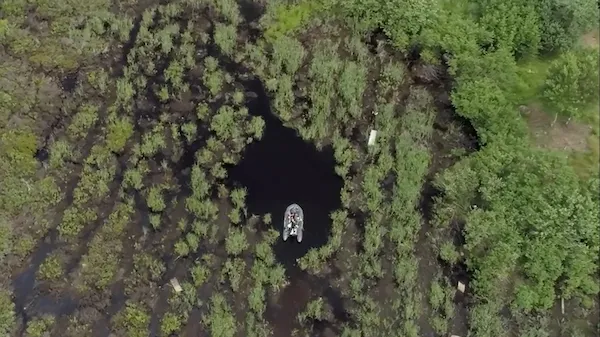
The Poussin research was presented across four episodes of The Curse of Oak Island. In Season 7, Episode 8 ("Triptych"), researcher Corjan Mol introduced the theory in the War Room, connecting the "Et in Arcadia ego" inscription with Acadia, presenting the Midas pendant painting and its Gold River parallel, and proposing that the second Shepherds of Arcadia was modeled on a portion of a pentagram. Christopher Morford had been invited because he had developed a hypothesis around Poussin's work and its astronomical connections. By the time Episode 9 ("An Eye for an Eye") was recorded, Mol and Morford had joined up and returned with an expanded presentation demonstrating that the center of the pentagram, when projected onto Oak Island using Nolan's Cross as the framework, fell precisely on the Eye of the Swamp. Marty Lagina acknowledged the geometric elegance of the theory while noting the location was the hardest spot on the island to excavate.
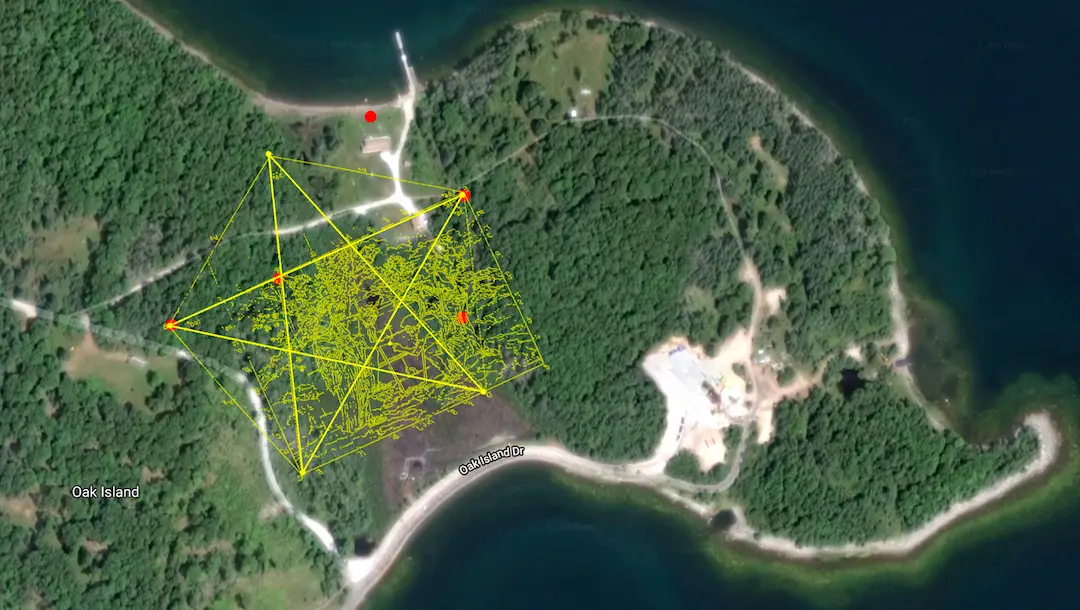
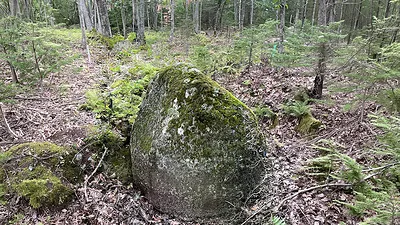
The Eye of the Swamp was subsequently excavated in Season 7, Episode 16 ("Water Logged"). The team drained the area and uncovered a mysterious circle of stones with embedded iron. Blue clay packed onto a large stone at the base recalled the blue clay layer found at forty feet in the Money Pit by Daniel McGinnis and his partners in 1804. Several large oak stumps emerged around the Eye, evidence that the area was once dry land, supporting geoscientist Dr. Ian Spooner's findings of significant human activity at the swamp in the late 1600s. Most striking were boulders as large as those forming Nolan's Cross, stacked together with smaller angular stones beneath and no clay between layers.
In Season 8, Episode 4 ("Alignment"), Mol and Morford presented further research via video link, demonstrating that a line drawn along the column of Nolan's Cross aligns with the Royal Way of the Palace of Versailles and, when extended further, intersects the Temple Mount in Jerusalem.
 Eye of the Swamp→
Assessment
2 min
Poussin's name carries baggage. Decades of association with Rennes-le-Chateau and the Priory of Sion, much of it rooted in the discredited Dossiers Secrets planted by Pierre Plantard, have made any mention of the painter's hidden meanings an invitation for skepticism. That skepticism is understandable and, in many cases, well-earned.
But the connections documented here do not depend on any of that material. They rest on verifiable facts. Arcadia was the historical name for Nova Scotia, used on maps of the period. Oak Island sits at the mouth of the Gold River. Poussin painted two works, side by side, referencing Arcadia and a river of gold. The Fouquet letter exists in the French archives and its contents are a matter of historical record. The Shepherds of Arcadia II hung at the heart of Versailles, and the men who negotiated the Treaty of Aix-la-Chapelle in that very room went home and commissioned stone copies of the painting for their estates.
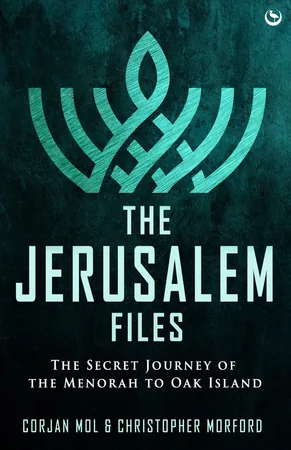
What remains interpretive is the geometric analysis: the pentagram overlay on Nolan's Cross, the alignment between Versailles and the Temple Mount, and the symbolic readings of the self-portrait. These are arguments, not proofs. A skeptic would point out that Poussin never mentioned Nova Scotia in any surviving correspondence, that the Fouquet letter does not specify what the "advantages" were, and that geometric overlays can be calibrated to fit many configurations if the framework is chosen after the fact. These are fair objections, and they should be weighed against the cumulative pattern of connections rather than dismissed. The full geometric detail is laid out in our book The Jerusalem Files, the secret journey of the Menorah to Oak Island, which devotes two chapters to Poussin and his circle. The television episodes could only present a fraction of the evidence. Anyone who wants to evaluate the complete case will find it there.
Poussin died in Rome in 1665 and was buried in the Basilica di San Lorenzo in Lucina. In 1820, the French ambassador Chateaubriand raised a monument above his mausoleum that includes a bas-relief of The Shepherds of Arcadia II and an inscription from an obituary by Giovan Pietro Bellori: "He is silent here now, but you would be surprised if you would hear him speak. He lives and speaks through his paintings."
Whether Poussin was encoding secret knowledge or simply painting beautiful compositions that happen to align with remarkable geography is, ultimately, a question each person must answer for themselves. But the geography is real, the paintings are real, and the connections between the men who owned them and the decisions they made about Nova Scotia are documented history.