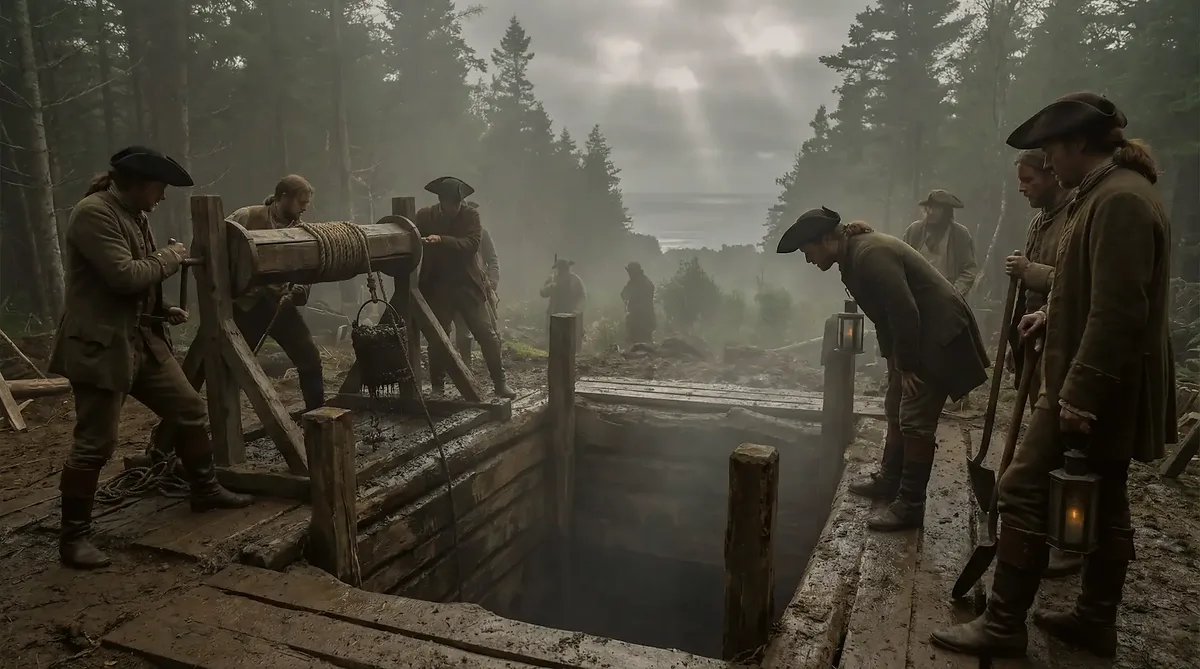
Of all the theories surrounding Oak Island, few are grounded in as much documented history as the case for Sir William Phips. Born on the Maine frontier in 1651, Phips rose from humble origins as a shepherd boy and ship's carpenter to become one of the most remarkable figures in colonial New England. He would recover a fortune in Spanish silver from the bottom of the Caribbean, receive a knighthood from the King of England, lead military campaigns across Nova Scotia, and serve as the first royally appointed governor of the Province of Massachusetts Bay. Along the way, according to a theory first advanced by researchers Graham Harris and Les MacPhie, he may also have built the Oak Island Money Pit.
The Treasure of the Concepción
1 min
The story begins with a shipwreck. On September 20, 1641, the Spanish treasure fleet set sail from Havana bound for Seville. Among its vessels was the Nuestra Señora de la Pura y Limpia Concepción, a galleon of about 650 tons serving as vice-flagship, her hold packed with silver from the mines of Mexico and Potosí alongside silks, porcelain, and jade from the Orient trade. Already leaking from an earlier hurricane and fitted with an undersized rudder, the Concepción was dangerously unseaworthy. Eight days out, a second hurricane struck. The fleet scattered, and the crippled galleon drifted for weeks under a jury-rigged sail before running aground on the Silver Bank reef north of Hispaniola on October 31, 1641. More than 300 of the 496 people aboard died, and the vast treasure sank with the ship.
 The Sack of Havana→
For more than four decades, Spanish, English, and Dutch salvors searched for the wreck without success. Then William Phips entered the picture. A self-taught mariner with a talent for persuasion, Phips convinced Christopher Monck, 2nd Duke of Albemarle, a former favorite of King Charles II, and other English investors to finance an expedition. In January 1687, his divers located the Concepción on the reef. Over the following months, working with local free-divers and improvised salvage equipment, Phips and his crew recovered silver coins, bars and other valuables weighing about 28 tons, recorded as 68,512 troy pounds. The haul was officially valued at over £205,000, a staggering sum for the period. Phips returned to England a hero. King James II knighted him in June 1687, appointed him Provost Marshal General of the Dominion of New England, and claimed a royal share of the proceeds. Phips received roughly £11,000 for himself, enough to make him one of the wealthiest men in the colonies.
Silver for a Revolution
3 min
The politics of the next eighteen months are where the Oak Island theory takes shape. James II, a Catholic monarch deeply unpopular with England's Protestant majority, faced growing opposition from powerful figures determined to remove him from power. Among them was Lord Charles Mordaunt, a political exile living in Holland, who was actively urging William, Prince of Orange, the future William III, to invade England and seize the throne. What Mordaunt needed was money to finance an invasion force of over 600 vessels and 40,000 men.
In September 1687, a return expedition sailed from Portsmouth to the Concepción wreck site. The flotilla included HMS Foresight under Sir John Narborough, a senior admiral and Commissioner of the Navy who was also one of the backers, Phips aboard his vessel the Good Luck, and several other ships. Lord Mordaunt arrived at the wreck in February 1688 with five Dutch men-of-war, stayed for three months, and sailed on May 8, 1688, the same day as Phips. The official record says the second expedition recovered little: the Foresight brought just over 3,200 pounds of silver home to the Crown, and the logbooks blamed hard coral that covered the wreck's stern, where the most valuable cargo would have been stowed. Harris and MacPhie point out that coral does not grow hard enough in forty years to seal a wreck, and read the unusually uniform logbooks as an account written for the Admiralty. The theory advanced by Harris and MacPhie, and later expanded by Oak Island historian Hammerson Peters, argues otherwise. Mordaunt returned to Holland in mid-1688, and within months, the invasion of England was underway. William III's forces landed at Torbay in November 1688, and James II fled the country in what became known as the Glorious Revolution. Mordaunt was soon rewarded with the post of Lord of the Treasury, an appointment Harris and MacPhie considered telling given his well-known inability to manage his own finances.
According to Harris and MacPhie, Phips did not sail home empty. He reached New England on June 1, 1688, bringing the Good Luck into Portsmouth, New Hampshire, rather than Boston, and six weeks later left again, reportedly for England. The records place him in London in late August and September 1688, and then lose him until January 10, 1689. In their reconstruction, those months were spent at Oak Island: the Good Luck, with the bulkier part of the Concepción cargo still aboard, anchored in Mahone Bay while her crew dug a shaft to bedrock and carried the treasure down into chambers at the bottom. They estimate the work would have taken four to six months.
The plan failed on the first attempt to recover the treasure, which they place after Phips returned to Boston on May 29, 1689. The shaft had been sunk through about 167 feet of hard glacial clay into anhydrite, a soft rock that dissolves in water. Bailing and pumping opened channels in that rock faster than any crew of the period could drain them, and the chambers could not be reached again. In their view, attempts continued while Acadia was in English hands, and they point to King William's Corps of Engineers, formed in January 1696 and paid by direct royal warrant, whose activities left no record before it was disbanded four years later. When all recovery failed, the British government eventually chose to put the treasure out of everyone's reach. Between 1752 and 1754, they argue, army engineers and Cornish miners dug the flood tunnel from Smith's Cove so that the sea would fill the shaft whenever anyone dug below about 110 feet.
Phips in Nova Scotian Waters
1 min
What gives the theory weight is the documented record of Phips operating extensively in the waters around Nova Scotia. In 1690, he commanded a Massachusetts force of seven ships and some 736 men against French Acadia, capturing Port Royal on May 21 after its governor surrendered. Later that year, he led a larger but unsuccessful expedition against Quebec. Harris and MacPhie read that campaign differently from most military historians: its lasting effect was that French forces were withdrawn from the Acadian peninsula, leaving the English free to come and go there for the next seven years. These campaigns demonstrate that Phips was thoroughly familiar with the Nova Scotian coastline and had the maritime resources to reach Oak Island. His known movements between Boston, the Caribbean, England, and the Maritime provinces place him in the right waters at the right time. There is also a curious coincidence of names: one of the islands closest to his birthplace on the Sheepscot River in Maine, where he built his first ships, is also called Oak Island. Harris and MacPhie note a further documentary thread. In November 1750, clerks of the Massachusetts government copied thirty-five pages of papers about Phips, his family and his neighbors, and the copies reached London in February 1751, where they were filed in the same volume of correspondence as the planning for the settlement of Lunenburg, ten miles from Oak Island.
Phips went on to become the first royally appointed governor of Massachusetts in 1692, a position secured through the influence of Increase Mather, the leading Boston minister who had lobbied for the colony's new charter in London, and the favor of the new Protestant monarchs. His tenure was marked by the Salem witch trials, which he initially enabled by establishing the Court of Oyer and Terminer but later shut down after the accusations spiraled out of control. He died in London on February 18, 1695, at the age of 44, leaving behind a legacy that intertwines treasure hunting, colonial politics, and religious upheaval.
The Belcher Family and the Masonic Thread
1 min
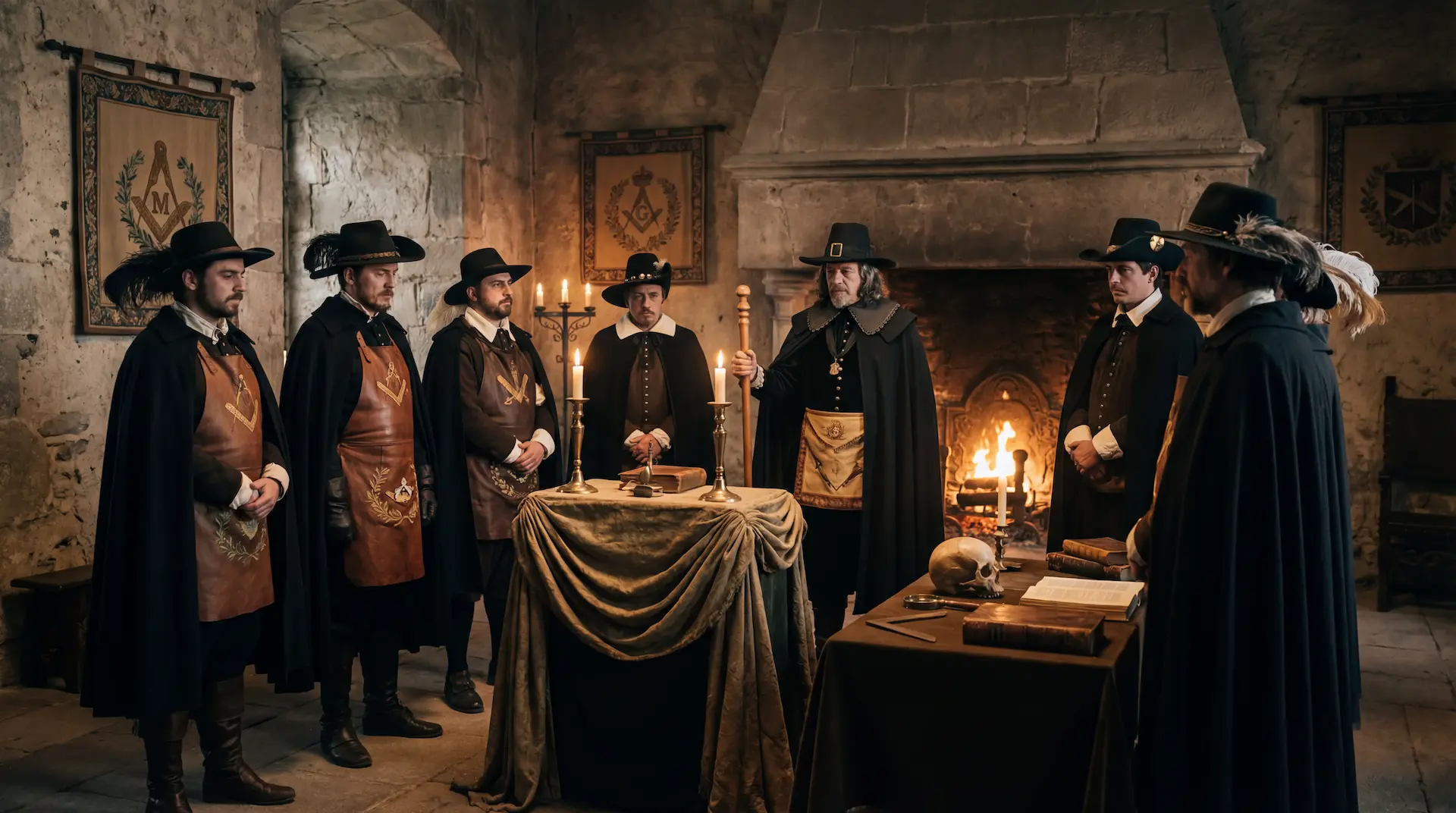
A layer of Masonic connections adds further intrigue. During Seasons 9 and 11 of The Curse of Oak Island, and in his 2023 book Oak Island Odyssey, 32nd-degree Freemason and historical researcher Scott Clarke presented evidence linking Phips to a chain of Masonic figures with direct ties to Oak Island. Clarke noted that Captain Andrew Belcher, a Nova Scotia mariner and Freemason, worked closely with Phips during the Concepción salvage and was later entrusted with inventorying Captain William Kidd's treasure on Gardiner's Island. Belcher's grandson, Jonathan Belcher, served as Lieutenant Governor of Nova Scotia and was himself a Freemason. Jonathan Belcher's subordinate, Chief Surveyor Charles Morris, another Freemason, created a 1762 map of Mahone Bay that divided Oak Island into 32 lots, making it the only island in the bay to be subdivided in this manner. Clarke argued that this chain of Masonic insiders, spanning three generations, may have known about the treasure on Oak Island and taken deliberate steps to monitor or protect it.
 Freemasons on Oak Island→
Iron from Lot 5 and Other Late-1600s Finds
1 min
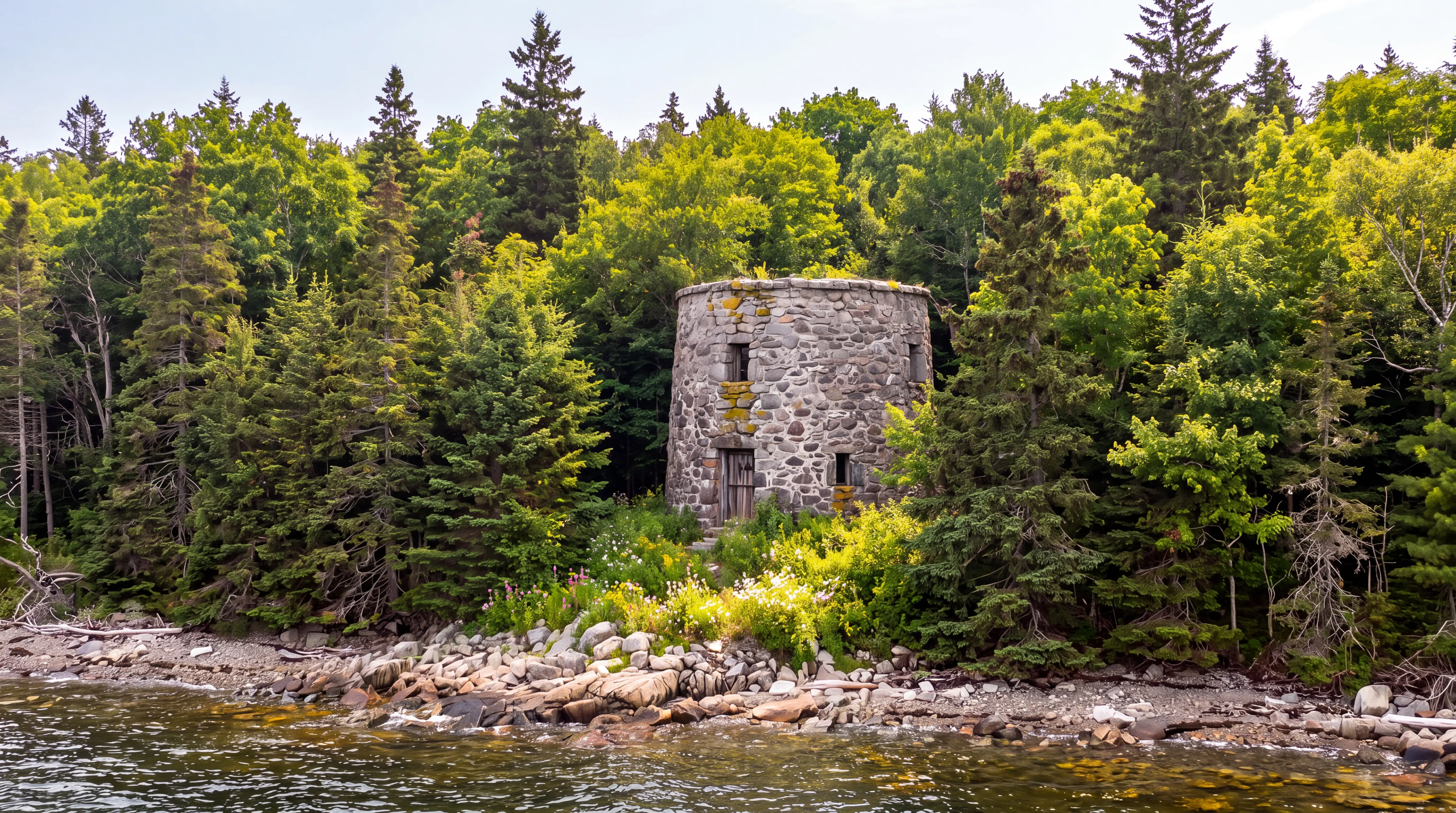
Physical discoveries on Oak Island have lent growing support to the Phips timeline. Archaeometallurgist Emma Culligan, working with the Oak Island team during seasons 11 and 12, identified iron artifacts recovered from Lot 5 whose chemical composition, specifically a high aluminum-to-silicon ratio in trace impurities, matched iron objects from Phips's birthplace and home site in colonial New England. Carmen Legge, the team's blacksmithing expert, examined copper and iron fragments from the same area and dated them to the late 1600s to early 1700s based on their construction and alloy composition. Additional artifacts from Lot 5, including iron straps consistent with a fortified strongbox, copper pieces possibly from a jewelry box or chest, a Tudor-period British coin bearing a portcullis, and 17th-century Venetian trade beads, all fall within the Phips-era window.
Beyond Lot 5, broader evidence from the island aligns with the theory. Several pieces of wood recovered from the Money Pit area have been carbon-dated to the late 1600s and early 1700s. Two human bone fragments found in Season 5, one of European origin and one of Middle Eastern origin, were carbon-dated to the late 1600s through mid-1700s. Core samples from the Oak Island swamp indicate human activity between approximately 1674 and 1700. A 16th or 17th-century English pickaxe has also been recovered. None of these findings prove the Phips theory on their own, but taken together, they establish a consistent pattern of activity on Oak Island during the precise period when Phips was operating in the region.
 Oak Island's Lot 5: From Stone Circle to Buried Complex→
The Right Man In The Right Waters
1 min
The William Phips theory has strengths that many competing explanations lack. It is anchored in a verified historical figure with documented access to enormous wealth, proven familiarity with Nova Scotian waters, and a political motive for concealment. The timeline matches the physical evidence. And the Masonic network connecting Phips to later Oak Island history provides a plausible mechanism for the secret to have been maintained across generations. Whether Phips built the Money Pit or merely passed through the same waters that others used before and after him, his story remains one of the best documented frameworks for understanding what may lie beneath Oak Island. Harris and MacPhie themselves wrote that they could not present incontestable proof, and that the question would only be settled if the treasure itself were found.
Sources
1 min
Books
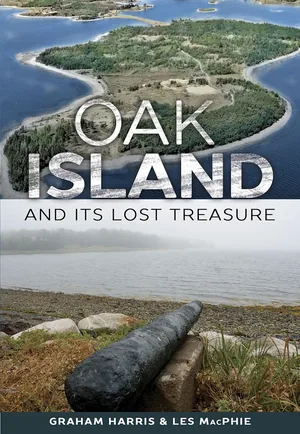
- Graham Harris and Les MacPhie, Oak Island and its Lost Treasure, third edition, Formac Publishing, Halifax, 2013
- Graham Harris, The Golden Reef of Sir William Phips, Booksurge Publishing, Charleston, 2005
- Peter Earle, The Treasure of the Concepción: The Wreck of the Almiranta, Viking Press, New York, 1980
- Scott W. Clarke, Oak Island Odyssey: A Masonic Quest, Nimbus Publishing, Halifax, 2023
- Emerson W. Baker and John G. Reid, The New England Knight: Sir William Phips, 1651-1695, University of Toronto Press, 1998