The Trees That Named the Island
1 min
Oak Island takes its name from the trees that once defined its landscape: tall, sinuous trunks topped with broad, arching canopies, photographed repeatedly between the 1880s and the 1940s at Isaac's Point and the Smith's Cove area. For over two centuries, these trees were assumed to be a species of oak (Quercus genus), and no one looked closer. The name stuck. Maps were drawn. The story was told and retold with "oak" as settled fact.
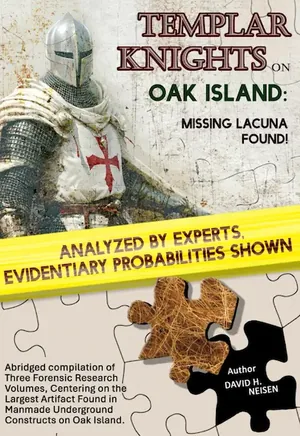
In 2022, researchers David H. Neisen, Robert W. Cook, and Christopher L. Boze published Oak Island Mystery Trees and Other Forensic Answers, the first of four volumes applying forensic botanical methods to the island's vegetation. Their conclusion overturned the oldest assumption in the Oak Island story: the iconic trees were not oaks at all. They were European Sycamore, Acer pseudoplatanus, a member of the maple family native to Central Europe and Western Asia. In North America it is known as Sycamore Maple, a large deciduous broadleaf that can reach 35 metres in height and live for 400 years. Its five-lobed palmate leaves, grey flaking bark, and winged samara seeds distinguish it clearly from any species of North American oak.
The identification matters because Acer pseudoplatanus does not occur naturally in Nova Scotia. It is not part of the region's native flora. The species was introduced to the British Isles around 1500 and later spread to parts of North America, Australia, and New Zealand as an ornamental and windbreak tree, but it requires human agency to cross an ocean. If the trees on Oak Island were European Sycamore, someone brought them there, or brought the seeds from which they grew.
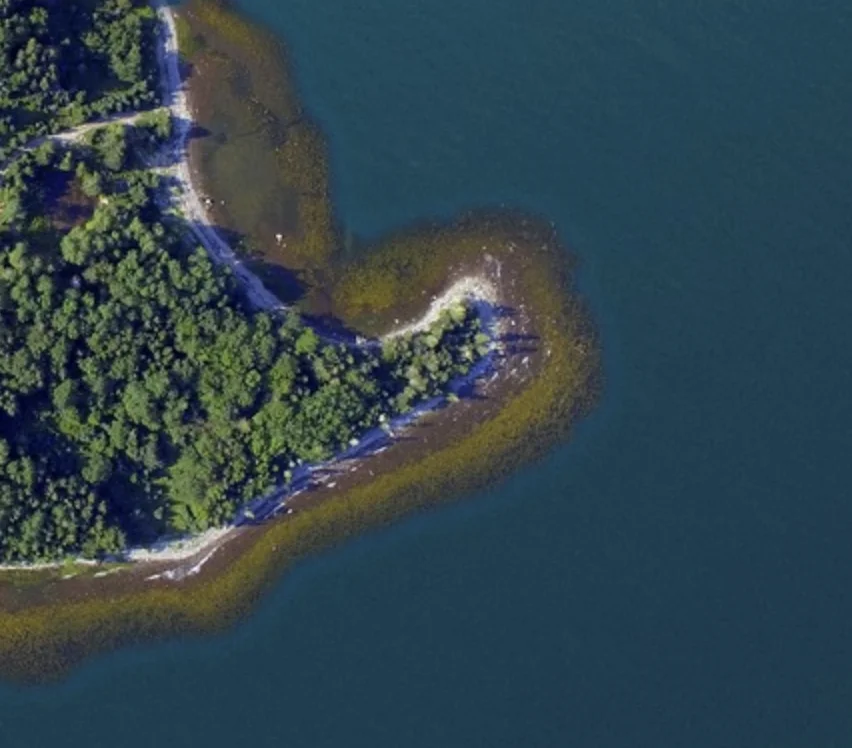 Isaac's Point→
The Raasay Connection
1 min
Neisen and his co-authors identified a stand of trees on the Isle of Raasay in the Inner Hebrides of Scotland that they describe as identical in every respect to the Oak Island specimens. Located on the shoreline of the village of Clachan, on the property of Andrew and Anne Gillies near Raasay House (latitude 57.3518, longitude -6.0808), the trees grow in an almost identical maritime environment: coastal, windswept, salt-exposed.
The Raasay stand was first recorded in print by the Scottish biographer and lawyer James Boswell (1740 to 1795), the ninth Laird of Auchinleck, best known for his biography of Samuel Johnson. On 10 September 1773, Boswell and Johnson visited the Laird of Raasay, Malcolm MacLeod, during their famous tour of the Hebrides. Boswell noted a stand of trees near the house, writing that there were "a number of trees near the house, which grow well, some of them of a pretty good size. They are mostly Plane and Ash." In the Scottish usage of the 18th century, "Plane" referred to what is now classified as Acer pseudoplatanus, the European Sycamore. The Latin name itself means "false plane tree," reflecting the long-standing confusion between the two genera.
The geographical link runs deeper than botany. Settlers from the western Hebrides, including the Raasay area, were among the earliest European inhabitants of the Mahone Bay coastline and the broader Nova Scotia shore. If the Oak Island trees originated as transplants or seed stock carried by Scottish settlers, Raasay and the surrounding islands represent one plausible source. Neisen's team has pursued botanical examination and dendrochronological analysis to establish whether the Raasay and Oak Island specimens share a genetic lineage, though results of that work have not yet been published in full.
The Mystery Fiber
2 min
The trees are only one part of the forensic picture. The second, and arguably more significant, line of evidence concerns the fibrous material found in both the Money Pit and the filtration system at Smith's Cove. Neisen calculates that a minimum of 1.54 metric tonnes of this fiber was recovered from these constructions over two centuries of excavation, an amount equivalent to roughly 2.5 compacted forty-foot shipping containers. Reports from the 19th and early 20th centuries describe the fiber piled in bushels around the top platform of the Money Pit and raked into heaps along the Smith's Cove beach, where locals and tourists helped themselves to souvenir bundles as late as the Restall era in the 1960s.
For decades the material was identified as coconut coir fiber, a classification supported by laboratory analyses from Robert Dunfield's samples tested in 1976 and a broader survey by the Woods Hole Oceanographic Institution in 1995. That identification went largely unchallenged. However, Neisen, Cook, and Boze's more recent micro and macro botanical examination of the evidence has led to a revised conclusion: the fiber is not coconut husk at all, but mesh and sheath trunk fiber from the Judean Date Palm (Phoenix dactylifera). The Judean Date Palm produces a coarse, durable fiber from the mesh-like sheathing that wraps around its trunk, material that was widely used in the ancient and medieval Near East for rope, matting, and construction packing. Like coconut coir, it is a product of retting, a controlled fermentation process that strengthens the fiber and dramatically extends its lifespan in wet or saline environments.
The fiber on Oak Island has been radiocarbon dated to between 1185 and 1330 AD, with 95 percent confidence. That places it squarely in the era of the Crusades, centuries before any documented European activity in Nova Scotia. The fiber was not scattered on the surface or washed ashore. It was found packed inside engineered structures: layered into the Money Pit shaft between oak log platforms and incorporated into the filtration drain system at Smith's Cove. Whatever its origin, it was placed there with purpose.
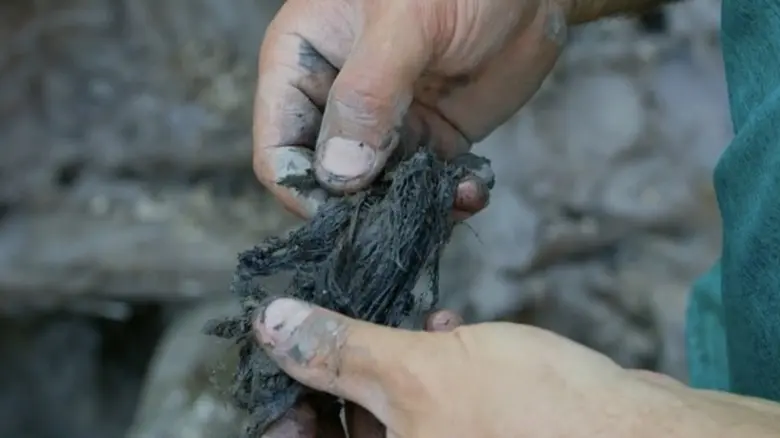 Coconut fibre (Money Pit)→
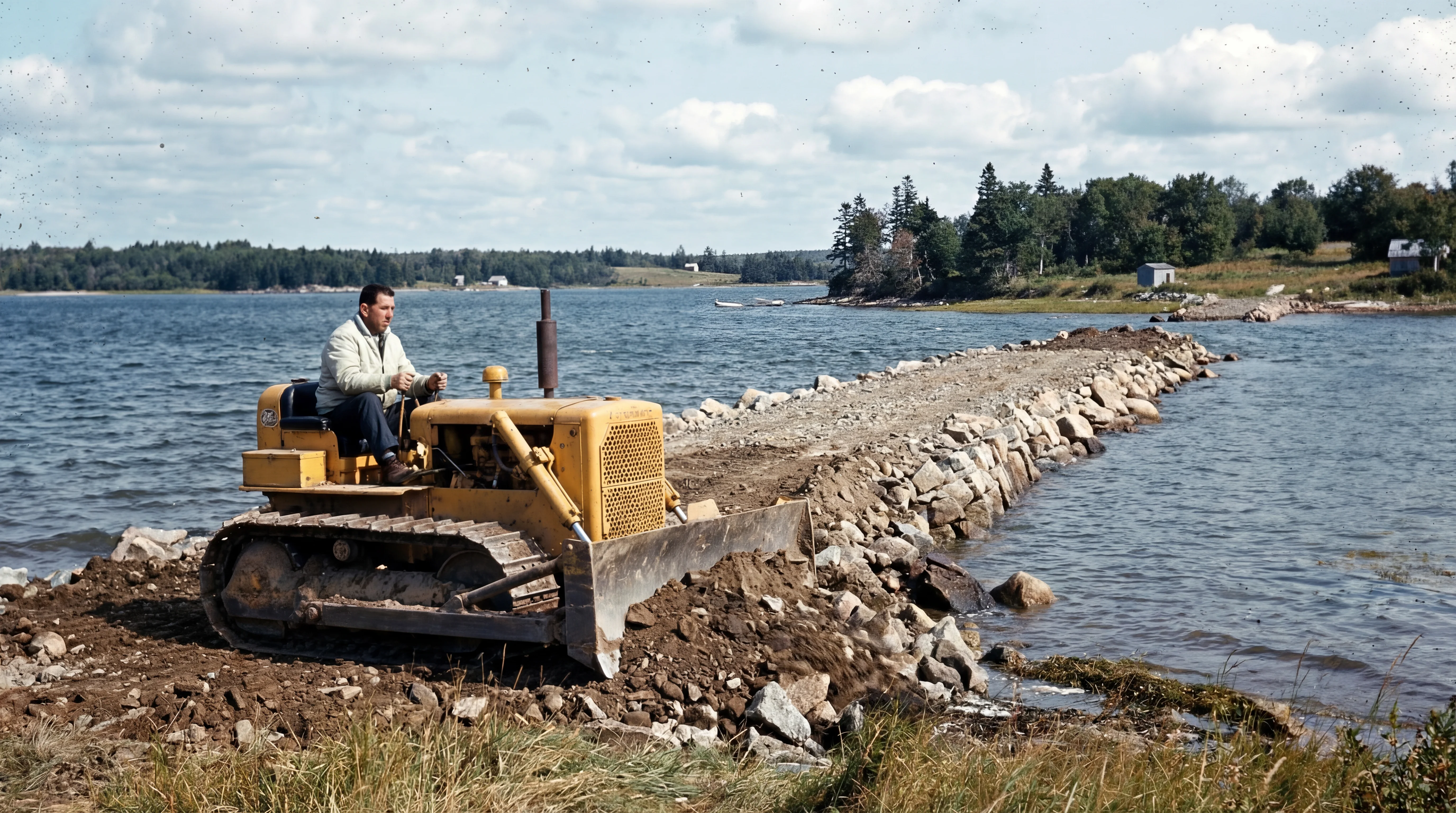 Robert Dunfield and the Destruction of Oak Island→
Fiber from the Holy Land
2 min
The identification of the fiber as Judean Date Palm trunk material narrows the geography considerably. In the medieval period, the Judean Date Palm grew only in a restricted band of the Levant: Jericho, the Jordan River Valley, and the western coast of the Dead Sea. It was not a wild plant left to chance. The palm was cultivated intensively, and its products, including the fruit, the syrup derived from it, and the fibrous trunk sheathing, were commercially valuable. The fiber source, in other words, points to a specific region and a specific agricultural economy.
Between 1116 and 1187 AD, the Knights Templar operated an extensive agribusiness in the Jericho region, cultivating date palms alongside sugarcane. The Templars processed sugarcane into sugar and date fruit into silan, the thick date honey that served as a staple sweetener across the Near East. This agricultural operation generated large quantities of date palm trunk fiber as a byproduct, material readily available to an order that also maintained a fleet of commercial and military vessels and a logistics network stretching from the Levantine ports to the Atlantic coast of France and Portugal. The Battle of Hattin in 1187, when Saladin's forces defeated the Crusader army, forced the Templars to evacuate Jericho and much of the surrounding territory. The radiocarbon dating of the Oak Island fiber, 1185 to 1330 AD, begins precisely at the end of that agricultural operation.
The Templar connection to the fiber's source region is a matter of documented historical record, but it does not exclude other possibilities. The Knights Hospitaller operated in the same territory and inherited all Templar properties and personnel after the order's suppression in 1312. They continued to maintain a Mediterranean fleet and Atlantic reach for centuries afterward. Basque fishermen and whalers, whose deep-sea voyaging in the North Atlantic predates most documented expeditions, had access to Levantine trade goods through Mediterranean commerce. Even the tail end of Norse activity in the North Atlantic, well established by the settlement at L'Anse aux Meadows in Newfoundland around 1000 AD, overlaps with the lower boundary of the carbon dating range. The fiber evidence narrows the field of candidates, but does not reduce it to one.
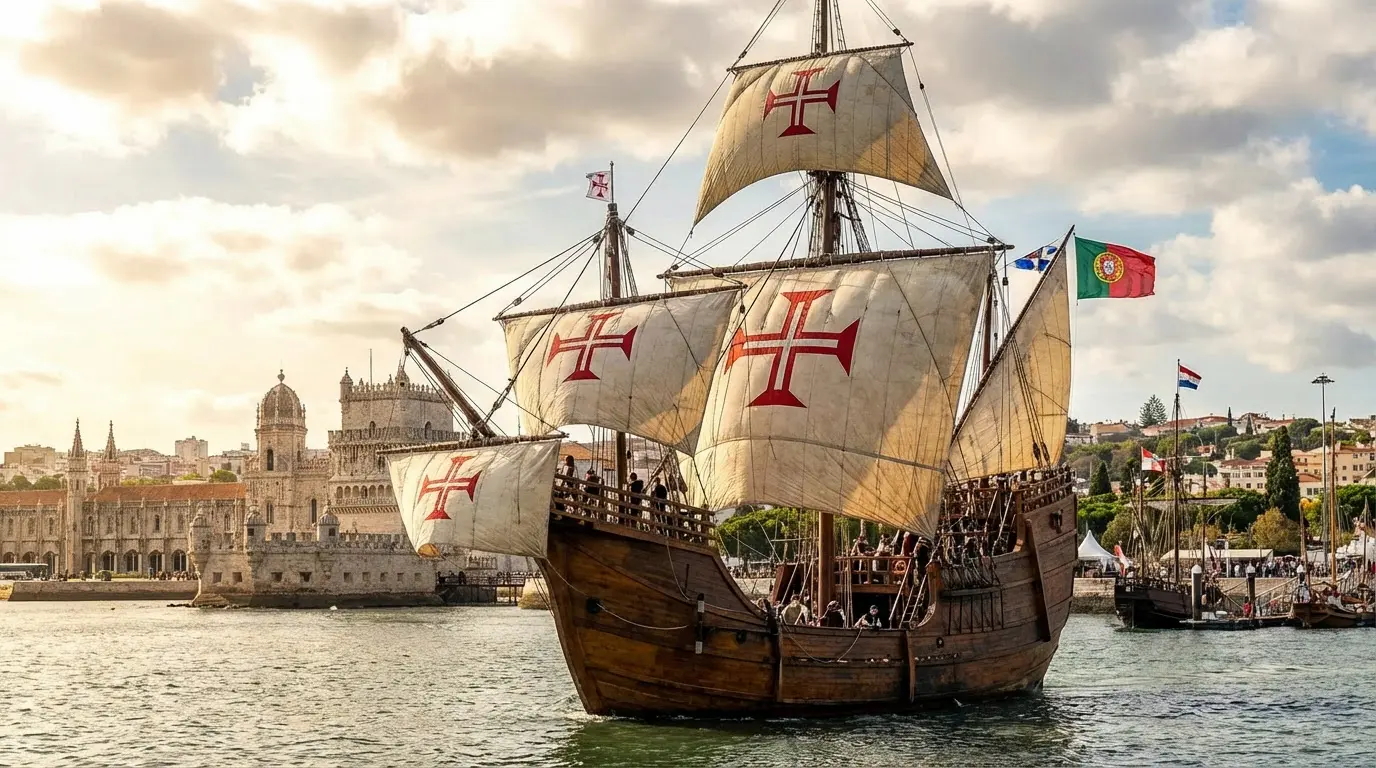 The Portuguese: The Order of Christ→
The Forensic Case
2 min
Taken together, the findings from Neisen, Cook, and Boze's four-volume series present a coherent body of forensic evidence, though one that stops short of definitive proof. The European Sycamore identification challenges the most basic assumption about the island, its name, and by extension the provenance of its earliest visitors. The Judean Date Palm fiber dating places human activity on the island in the late 12th to early 14th century, centuries before any recorded European presence in the region. The sheer volume of processed fiber, over a tonne and a half, rules out accidental deposit or ship's dunnage washing ashore and points instead to planned, large-scale construction.
The series also examines the red clover reportedly found by the Money Pit's original discoverers, the log platforms within the shaft, and connections to Cornwall's tin mining industry, each treated as a separate forensic question with its own evidence base. Volume III focuses on the fiber evidence in detail, while Volume IV examines the Templar connection as one candidate explanation, arguing that the combined botanical, archaeological, and chemical data are consistent with a medieval military order possessing the resources, the seafaring capability, and the motivation to reach Nova Scotia. Across all four volumes, the level of detail and scientific rigour stands out as some of the most thorough independent research produced in the Oak Island field. Where most authors begin with a theory and work backward to fit the evidence, Neisen, Cook, and Boze begin with material samples, laboratory results, and archival records, and let the findings lead. That methodological discipline is rare in a genre often dominated by speculation.
 The Knights Templar on Oak Island→
Independent verification of some of these claims remains ongoing. The dendrochronological work on the Raasay trees has not yet yielded a published genetic comparison with the Oak Island specimens. And the leap from forensic botany to any specific historical attribution, whether Templar, Hospitaller, Basque, or Norse, still depends on circumstantial alignment rather than a single piece of conclusive evidence tying a named individual or documented voyage to the island.
What the research does establish, at minimum, is that someone carried a European tree species and over a tonne of processed Judean Date Palm fiber to a small island in Mahone Bay during the medieval period, and built structures with both. The dating window of 1185 to 1330 overlaps with the operational peak of several groups already linked to Oak Island through other evidence found on the island. The trees and the fibers do not tell us who. They tell us when, and that changes everything else.