The Gold of the New World
1 min
Between 1500 and 1650, Spain extracted an estimated 181 tons of gold and 16,000 tons of silver from the Americas. The wealth flowed from two principal sources: the Aztec Empire of central Mexico, conquered by Hernan Cortes between 1519 and 1521, and the Inca Empire of Peru and Ecuador, conquered by Francisco Pizarro beginning in 1532. The scale of the plunder was without precedent. Gold and silver objects accumulated over centuries by indigenous civilisations were systematically melted down into ingots and loaded onto treasure fleets bound for Seville. The Spanish Crown claimed a fifth of everything, the famous quinto real, but the quantities were so vast and the distances so great that controlling the flow proved impossible.
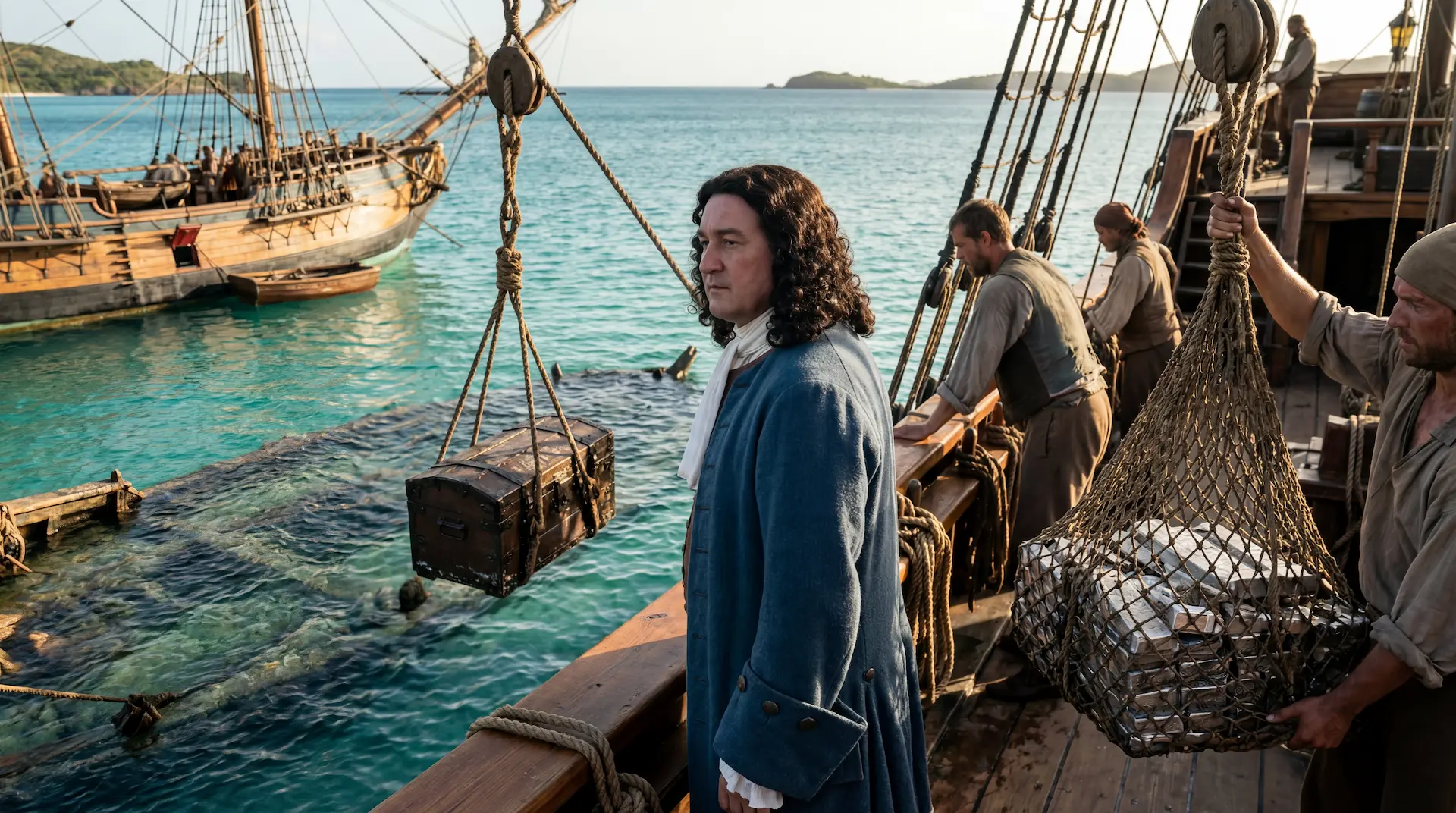
Not all of the treasure reached Spain. Hurricanes sank entire fleets. Pirates intercepted individual galleons. Corrupt captains skimmed cargo. Ships blown off course sought shelter in unfamiliar harbours and sometimes never returned to their routes. The Atlantic seabed from the Caribbean to the Azores is littered with wrecks carrying New World gold. Against this backdrop, the idea that a portion of Spanish treasure ended up buried on a small island off the coast of Nova Scotia is not as far-fetched as it might first appear. It is a premise shared, in different forms, by several of the theories proposed to explain Oak Island, including those involving Sir William Phips and the Sack of Havana.
 William Phips, the Treasure of the Concepción→
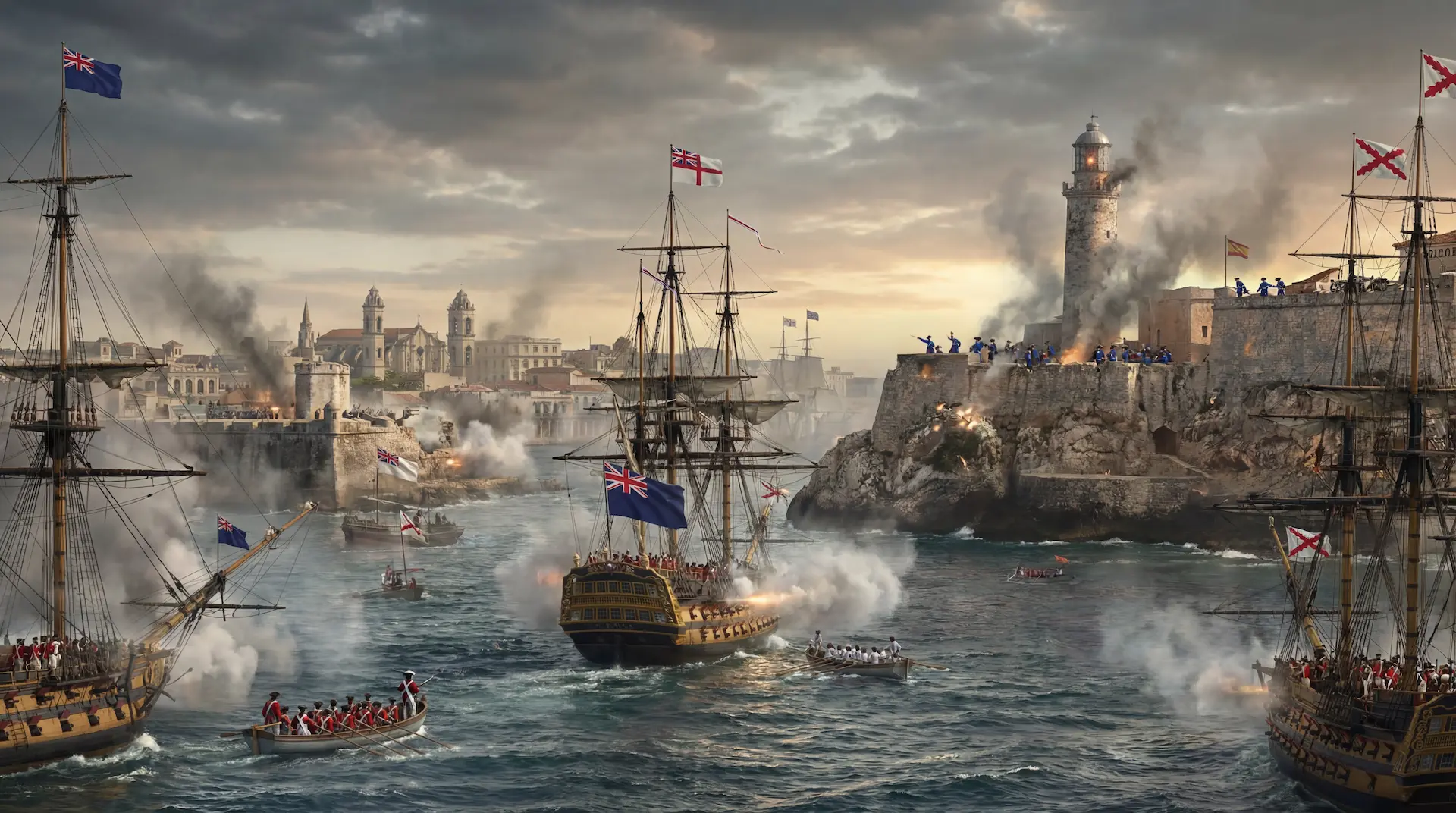 The Sack of Havana→
The Ransom of Atahualpa
2 min
The most dramatic single act of plunder in the conquest of the Americas took place at Cajamarca, in the highlands of Peru, in November 1532. Francisco Pizarro arrived at the Inca city with approximately 168 soldiers and two small cannons. Atahualpa, the Inca emperor, had just won a bloody civil war against his half-brother Huascar and commanded an army of nearly 80,000 men camped in the hills around the town. Confident in his overwhelming numerical superiority, Atahualpa accepted an invitation to meet the Spanish in Cajamarca's central plaza. He arrived on November 16 with several thousand unarmed retainers.
What followed was a massacre. After a Dominican friar named Vicente de Valverde demanded that Atahualpa accept Christianity and the sovereignty of the Spanish king, Atahualpa refused. Pizarro gave the signal. Hidden cavalry and infantry charged from surrounding buildings, artillery fired into the crowd, and within hours the emperor was a prisoner. Perceiving the avarice of his captors, Atahualpa offered to buy his freedom. He would fill the room in which he was held, a chamber measuring roughly 22 feet long by 17 feet wide, with gold to the height of his outstretched arm, approximately nine feet. He would fill two additional rooms with silver. Pizarro agreed.
Over the following months, gold and silver poured into Cajamarca from across the empire. Temple ornaments, ceremonial objects, statues, jewellery, and sacred vessels were stripped from shrines as far away as Cusco. Spanish blacksmiths melted the objects into standard ingots, destroying their cultural and artistic value in the process. By July 1533, the ransom had been delivered in full: nearly 6,000 kilograms of gold and more than 11,000 kilograms of silver. The total was valued at 1,326,539 pesos de oro, a sum worth hundreds of millions of dollars in modern terms. It remains one of the largest ransoms ever paid.
Pizarro did not honour the bargain. On August 29, 1533, after a sham trial on charges of rebellion and fratricide, Atahualpa was executed by garrotte. The Spanish entered Cusco in November 1533 and completed the conquest of the Inca Empire. But the full extent of Inca wealth was never accounted for. Atahualpa had ordered the execution of his rival Huascar during captivity, and with Huascar died knowledge of treasure stores that had not yet been surrendered. Inca generals in the provinces held back gold intended for the ransom. The sacred treasures of temples in outlying regions were hidden or moved before the Spanish could reach them. The question of what happened to the Inca wealth that never reached Cajamarca has occupied treasure hunters for five centuries.
The Lost Treasure of Tumbes
2 min
One variant of the Spanish Connection theory traces a specific path from South America to Oak Island. In 1528, four years before the events at Cajamarca, Pizarro made his first contact with the Inca Empire at the coastal city of Tumbes in northern Peru. He and his crew were welcomed by the local Tumpis people, who called the light-skinned visitors Children of the Sun. The Spanish observed that Tumbes was rich with gold, silver, and precious objects. Pizarro left two of his men behind to learn the language and customs, then sailed to Spain to petition the Holy Roman Emperor Charles V for ships and soldiers to conquer the city.
When Pizarro returned to Tumbes in 1532 with a full complement of conquistadors, he found the city in ruins and its wealth gone. The Inca civil war between Atahualpa and Huascar had reached Tumbes, and the city had been sacked by Huascar's forces. The treasure had been carried away. According to the theory, one of the Spaniards Pizarro had left behind warned the Tumpis of his patron's true intentions. Heeding the warning, the citizens of Tumbes gathered their most precious objects, transported them overland to the Caribbean coast, built a fleet, and set sail. Swept north by storms, they were eventually shipwrecked on Oak Island, where they buried their treasure.
This version of the theory was championed by veteran treasure hunter Dan Blankenship, who discussed it at length on the show. It received an unusual form of support in the 1930s, when Oak Island searchers Frederick Blair and Mel Chappell travelled to Saginaw, Michigan, to meet with a man named John Wicks who claimed to channel spirits. According to Wicks, the spirits of a Spanish priest named Menzies and an Inca priest named Circle described how Inca workers arrived on Oak Island in the 1520s and constructed the underground workings to conceal the treasure of Tumbes. The story is colourful but unsupported by archaeological evidence. There is no documented record of Inca seafaring beyond coastal trade, and no evidence that South American peoples possessed the navigational capability to reach Nova Scotia.
The Evidence
3 min
Several artifacts recovered on Oak Island have been cited in support of a Spanish or South American connection. In Season 9, the team recovered small fragments of gold-bearing metal from the Money Pit area. Analysis by geoscientist Dr. Christa Brosseau revealed a composition of approximately 65 percent gold and 26 percent copper, with a small amount of silver. While Brosseau identified the alloy as consistent with rose gold, Marty Lagina observed that the chemical composition also matched tumbaga, the gold-copper alloy widely used by the Inca and Aztec civilisations and later melted down by Spanish conquistadors into bars. Tumbaga was not a single standardised alloy but an umbrella term for a range of gold-copper compositions, with gold content varying from as little as 3 percent to as much as 97 percent. The presence of a gold-copper alloy in the Money Pit does not confirm a South American origin, as copper-gold alloys also occur naturally and were produced in medieval Europe, but it is consistent with the theory.
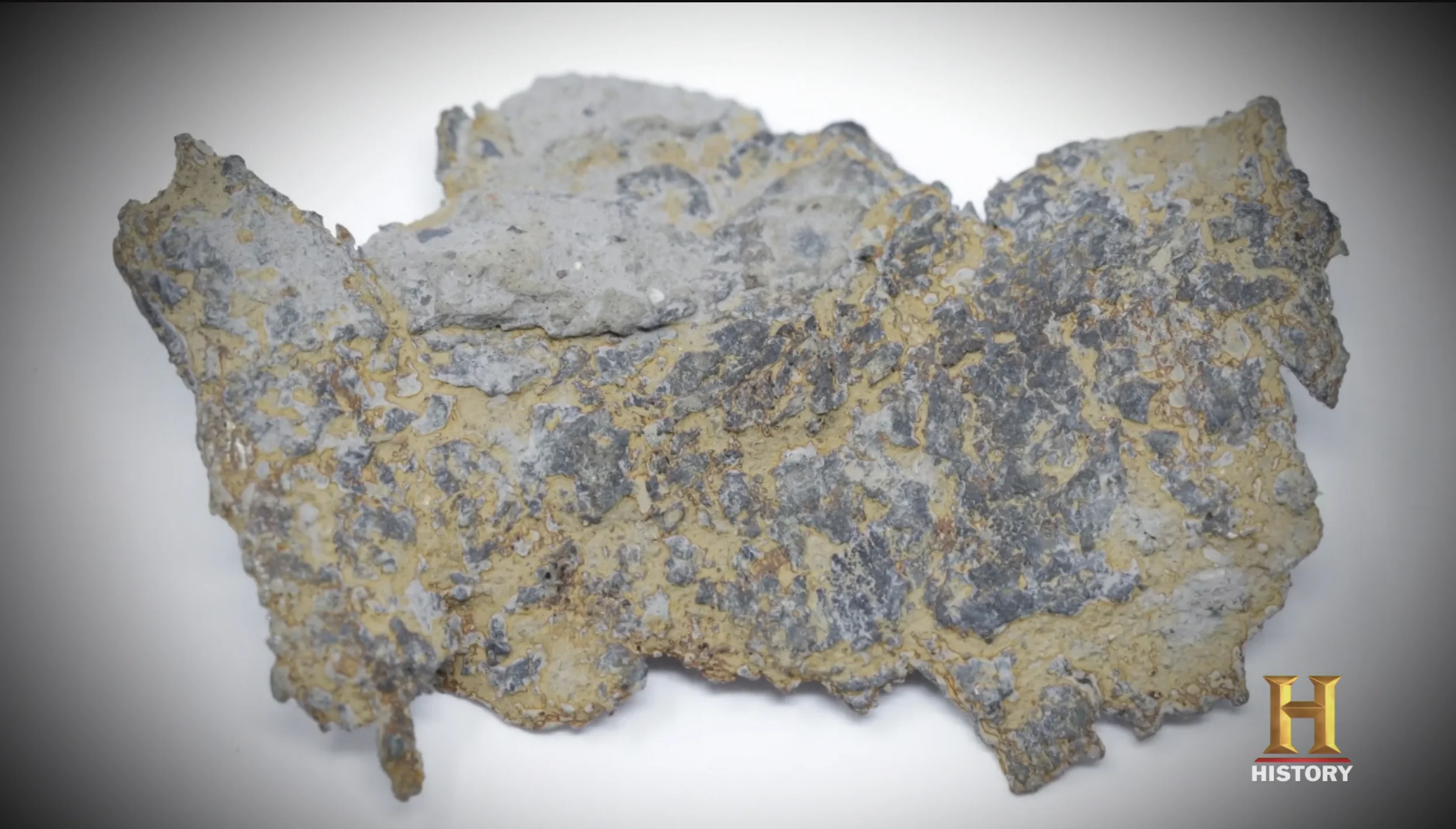 Gold-Copper Alloy Fragments (Tumbaga)→
The swamp has yielded its own Spanish-era artifacts. In Season 4, metal detection expert Gary Drayton discovered a large iron nail in the north end of the swamp. Although it initially resembled a railroad spike, antiquities expert Dr. Lori Verderame identified it as a wrought iron barrote nail of the type used in the construction of Spanish galleon decks, dated to between 1575 and 1600. In Season 1, the team recovered a copper 8 maravedis coin dated to 1652 from the swamp, placing Spanish-associated currency on Oak Island more than a century before the Money Pit's official discovery in 1795. A pair of wrought iron scissors found at Smith's Cove in 1967 was identified as a Spanish-American design predating the mid-1800s.
 Barrote Nail (Spanish Galleon)→
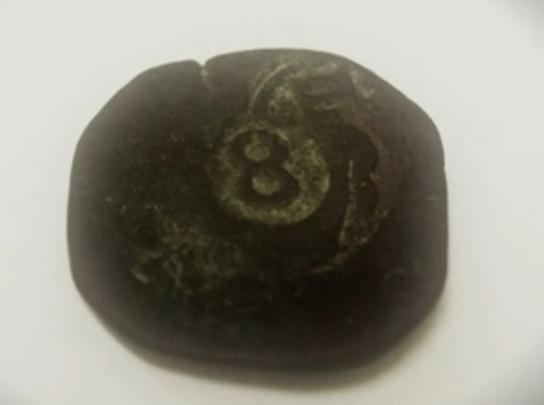 Spanish 8 maravedis copper, 1652 (swamp)→
Seismic testing conducted by Eagle Canada in the swamp during Seasons 6 and 7 revealed a 200-foot-long anomaly beneath the surface whose shape bears some resemblance to a sailing vessel. The late Fred Nolan, who owned land on Oak Island for decades, had long maintained that the triangular swamp was man-made and concealed a buried ship. He recovered what he identified as a ship's mast and scuppers from the swamp in the 1980s. Wood recovered from the swamp has been carbon dated to as early as the late 1400s, and a piece of ship's railing found during Season 8 was dated to between 660 and 770 AD, though this earlier date suggests a possible Viking rather than Spanish origin.
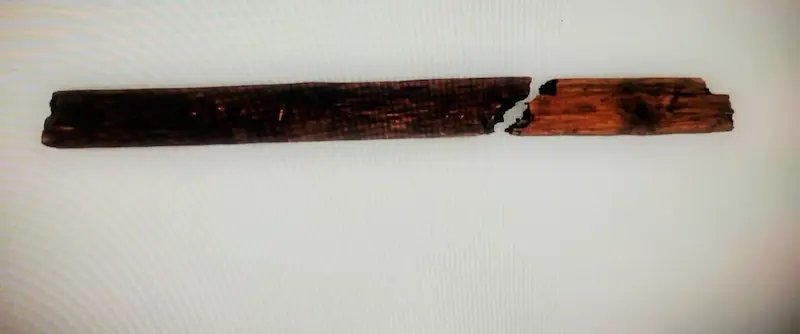 Wooden ship's railing→
The coconut fibre found in vast quantities at Smith's Cove and within the Money Pit itself represents perhaps the most enduring physical link to tropical latitudes. The Smithsonian Institution confirmed in 1916 that the material was genuine Cocos nucifera. Coconuts do not grow anywhere near Nova Scotia; the nearest source in the colonial era would have been the Caribbean, over 2,000 miles to the south. Carbon dating of the fibre has returned dates ranging from the 13th to 14th century, though the reliability of these dates has been questioned due to potential contamination from the marine environment. If the dating is accurate, the coconut fibre predates any known European activity in Nova Scotia by centuries and remains one of the most difficult facts to explain about Oak Island.
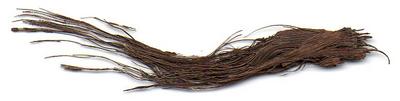 Coconut fibre (Smith's Cove)→
The Theory
1 min
The Spanish Connection is not a single theory but a spectrum of related propositions, all rooted in the same historical reality: Spain extracted a staggering quantity of precious metal from the Americas, and a significant portion of it was lost, stolen, or diverted before reaching its intended destination. The Tumbes variant, with its account of Inca refugees sailing to Nova Scotia, stretches the limits of plausibility. More grounded versions of the theory focus on Spanish galleons lost or captured in the Atlantic, treasure diverted by corrupt officials, or pirate raids on colonial ports. The recovery of the Concepcion treasure by Sir William Phips in 1687 demonstrates that Spanish gold did reach Nova Scotian waters through indirect channels, and the British seizure of Havana in 1762 placed a fortune in captured Spanish wealth within a single voyage of Oak Island.
The theory also accounts for the scale and sophistication of the Money Pit's construction. The Spanish Crown employed military engineers and possessed the organisational capability to design complex underground works. A treasure fleet captain or a well-funded privateer would have had access to the labour, materials, and expertise required to construct the flood tunnel system and the layered shaft. The coconut fibre points to the Caribbean. The tumbaga points to South America. The barrote nail and the maravedis coin point to Spanish ships. Whether the treasure originated from Inca temples, a sunken galleon, or a combination of both, the Spanish Connection remains one of the few theories that provides a plausible source of wealth large enough to justify the extraordinary engineering that went into hiding it. For a broader view of French and British military operations in the same waters during the same century, see the account of the Duc d'Anville expedition of 1746.
 Duc d'Anville's Doomed Fleet→