The Knights Templar arrived in Portugal in 1128, just ten years after the Order's founding in Jerusalem. They came not as visitors but as partners in a national project. Teresa of León, mother of the future first king of Portugal, donated the village of Fonte Arcada to the Order in 1126 and the Castle of Soure in 1127, on the condition that the knights defend the Mondego River line against Muslim assault. Her son, Afonso Henriques, went further. In 1129 or 1130, he confirmed his mother's donations in a document in which he declared himself a frater, an associated brother of the Temple. The Latin is explicit: he stated that he was "in your fraternity and benefit, a brother." He did not take full monastic vows, but the formal attachment was real, and it aligned the interests of the Portuguese crown with those of the Order for the rest of his long reign.
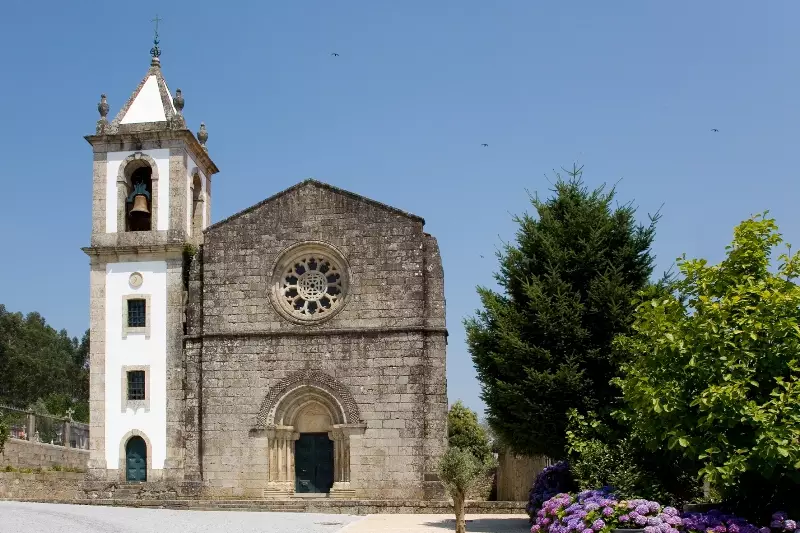 Church of Fonte Arcada→
The bond paid dividends. In 1147, Afonso Henriques conquered both Santarém and Lisbon with Templar support, transforming Portugal from a vulnerable frontier county into a viable kingdom. The fall of Lisbon was a joint operation involving northern European crusaders recruited with the help of Bernard of Clairvaux, the Cistercian abbot whose influence over the papacy and the military orders was without equal. A letter attributed to Bernard (known as Letter 308) addresses Afonso Henriques directly and mentions a Templar named Pedro who had served as a messenger between the king and the abbot, as well as a monk named Roland dispatched to Portugal carrying papal letters granting spiritual privileges to those who would fight on the Portuguese frontier. Jonathan Wilson, writing in the journal Al-Masāq in 2020, argued persuasively that this letter provides evidence of a specific "Lisbon Indulgence" issued to recruit crusaders for the campaign. The conquest of Lisbon gave Portugal its first defensible natural frontier along the Tagus and ensured its survival as an independent kingdom.
In the decades that followed, the Templars became the dominant force in central Portugal. Gualdim Pais, who had spent five years fighting in the Holy Land at Ascalon, Antioch, and Sidon before returning to serve as Master of the Temple in Portugal, led the Order for thirty-seven years. An inscription stone still visible at the Convento de Cristo records his achievements: the founding of the castles of Pombal, Tomar, Zêzere, Almourol, Idanha, and Monsanto. At Tomar, construction of the great castle began in 1160. By the late twelfth century, the Templar network of commanderies across the region between the Tagus and the Mondego functioned as a state within a state, granting town charters, managing farms, operating what amounted to a banking system, and administering justice across vast territories.
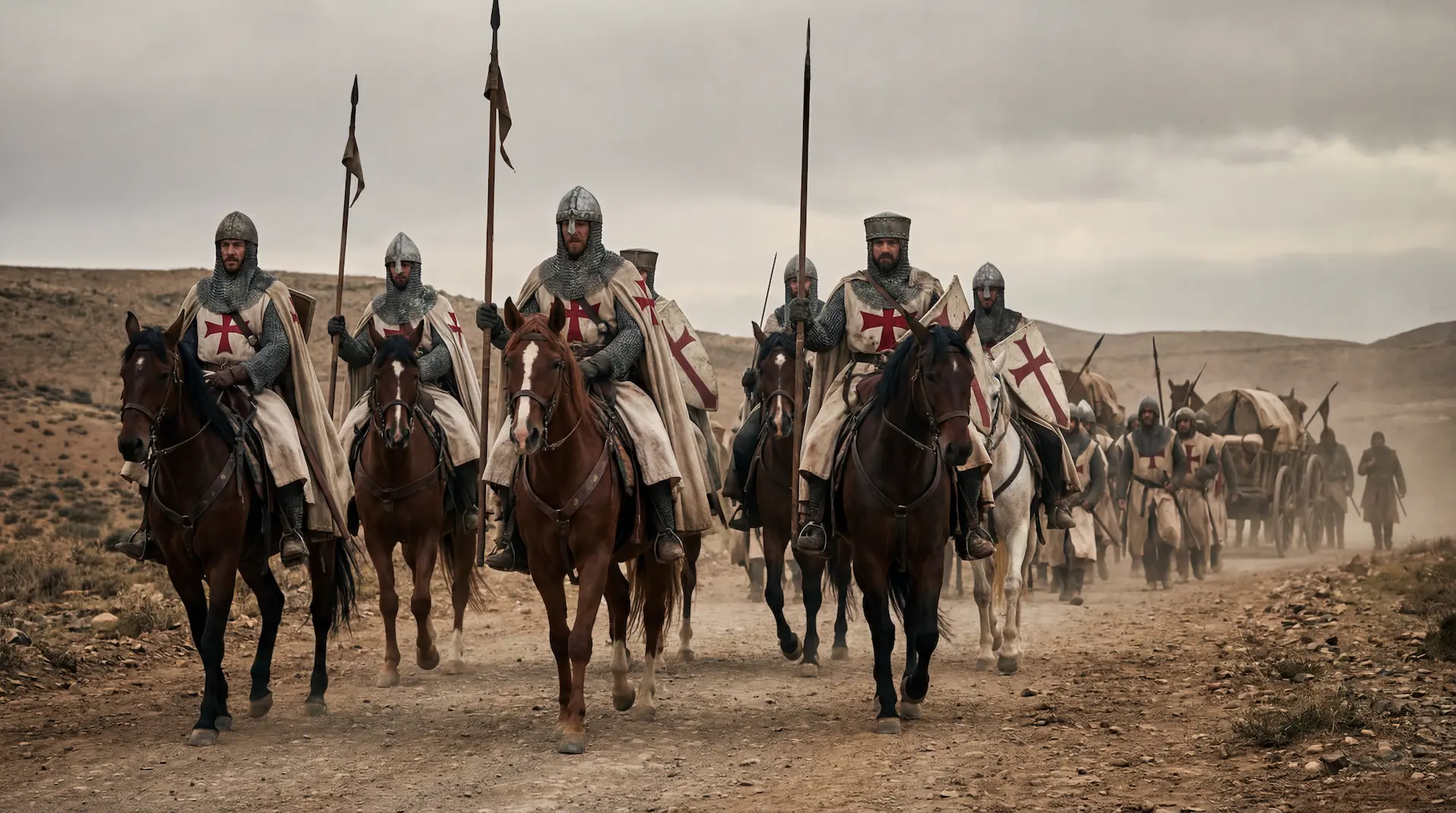 The Knights Templar on Oak Island→
The Order That Never Died
2 min
When Pope Clement V dissolved the Knights Templar in 1312, the suppression was enforced with varying degrees of violence across Europe. In France, where the arrests had begun on Friday, 13 October 1307, knights were tortured into confessing crimes ranging from heresy to financial misconduct. Grand Master Jacques de Molay was burned at the stake. A papal bull ordered all of Christendom to seize Templar assets and transfer them to the Knights Hospitaller.
Portugal refused. King Dinis I negotiated an exception. Rather than surrendering the Order's wealth to a rival institution or to Rome, he incorporated all Portuguese Templar members and property into a new national order: the Ordem Militar de Cristo, the Military Order of Christ, formally established in 1319 with papal recognition from Pope John XXII. The headquarters was initially set at Castro Marim in the south, but in 1356 the Order returned to the Convento de Cristo at Tomar and took possession of the former Templar estates. The personnel were the same. The properties were the same. The fortress was the same. What changed was the branding. The institution itself was continuous.
The Order of Christ still exists today. Secularised by Queen Maria I in 1789, extinguished with the monarchy in 1910, and reconstituted in 1917 as a Portuguese state honorific, it now has the President of the Republic as its Grand Master. Few institutional lineages in Europe can claim an unbroken thread of that length, a continuity rarely emphasised in popular accounts of the Templar story. If you are looking for a modern Knight Templar, call the Portuguese President.
The Order's ecclesiastical authority grew to match its territorial holdings. Santa Maria do Olival in Tomar, the church where Gualdim Pais himself was buried, became the official Mother Church of the Order of Christ. A papal bull issued by Nicholas V in 1454, reinforced by Calixtus III in 1456, placed all overseas Catholic missions under the ecclesiastical jurisdiction of the Prior of Santa Maria do Olival. In practice, this meant that during the Age of Discovery, every church established in Portuguese territories from Brazil to India to the Azores answered to Tomar. The Order of Christ was not simply a military fraternity with Templar roots. It was the administrative and spiritual authority behind Portugal's global expansion.
The Order also inherited the Templars' tradition of protecting religious minorities. The Jewish community in Tomar flourished under the Order's presence, and when the expulsion of Jews from Castile in 1492 sent refugees streaming across the border, Tomar's established synagogue and the Order's protection made the city a haven. Abraham Zacuto, the astronomer and mathematician whose astronomical tables became the standard navigational aids for Portuguese voyages of discovery, reportedly stayed in Tomar on his way to the court of King João II. The synagogue in Tomar still bears his name as a museum. This protection extended to heterodox Christian movements as well: the Order shielded adherents of the Cult of the Holy Spirit, derived from the Joachimite prophecies of a coming Age of the Spirit, from Inquisitorial persecution for centuries.
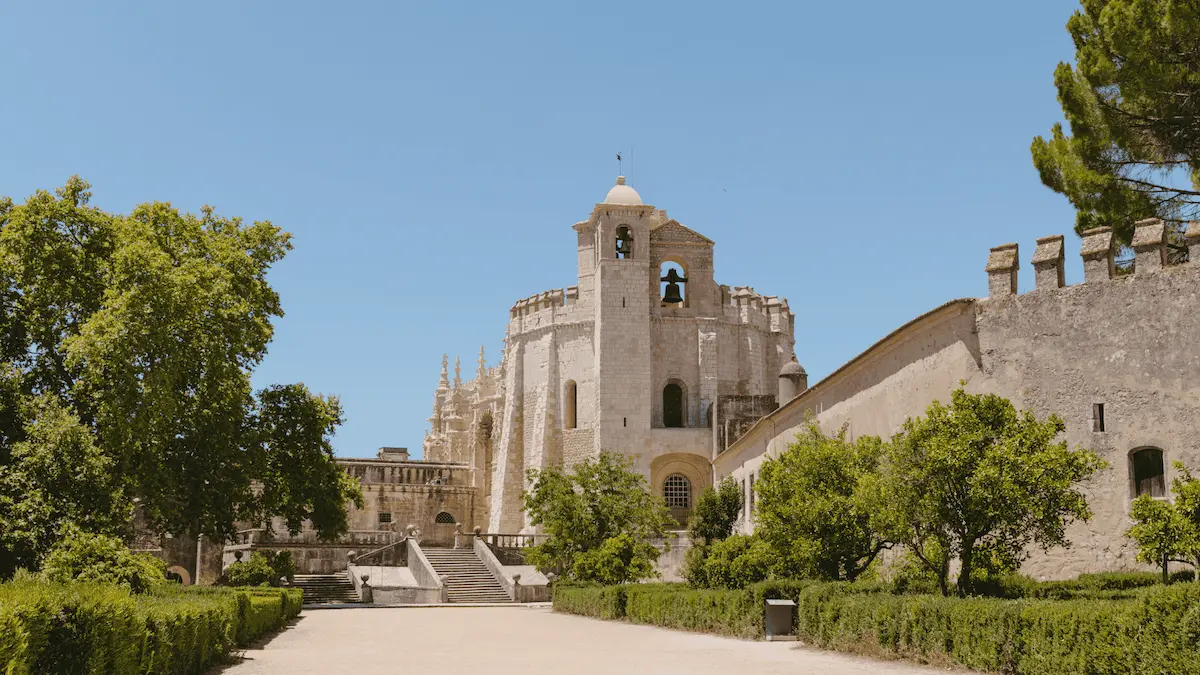 Convento de Cristo→
The Portuguese Reach Nova Scotia
1 min
The Portuguese did not confine their voyages to southern waters. The Treaty of Tordesillas, signed between Spain and Portugal in 1494, established a line of demarcation 370 leagues west of the Cape Verde Islands, dividing the non-European world between the two crowns. Due to errors in cartographic and navigational knowledge, this line intersected the coast of North America at an uncertain point in Nova Scotia. Depending on the mapmaker's nationality, the line shifted: Portuguese cartographers moved it west to claim more territory, Spanish cartographers moved it east. The effect was that Nova Scotia sat in a contested zone where both powers had at least a plausible claim.
Portuguese exploration of the region began at the turn of the sixteenth century. Gaspar and Miguel Corte-Real investigated the coast of Newfoundland and Labrador between 1499 and 1502. João Fernandes Lavrador gave his name to Labrador. Around 1520, João Álvares Fagundes, a ship owner from Viana do Castelo, explored the Nova Scotia coast and charted Sable Island, Cape Breton, and the Gulf of St. Lawrence. King Manuel I granted him exclusive rights to the lands he discovered. By 1521, approximately 200 settlers, most of them from the Azores, had established a fishing colony on Cape Breton Island, possibly at Ingonish. The historian A.R. Disney, in his two-volume A History of Portugal and the Portuguese Empire, confirms the settlement's existence and dates its abandonment to around 1526, attributing its failure to pressure from hostile Amerindians and European fishing rivals. Fagundes was not the only Azorean with a stake in the region, and he was not the most persistent.
The Barcelos Family and the Mahone Bay Colony
5 min
Three generations of one Azorean family worked the same coast for far longer, and the documentary record of their efforts is the most detailed of any Portuguese North Atlantic enterprise. The Pinheiro de Barcelos family of Terceira pursued the North Atlantic for nearly a century, from the earliest Portuguese voyages to the Labrador coast to the Spanish conquest of the Azores. Their involvement is documented in royal charters, notarial records, wills, and contemporary Portuguese maps. The record begins with Pero de Barcelos, a settler from Terceira who sailed with João Fernandes Lavrador between 1492 and 1495 on a voyage commissioned by King João II to the North-West Atlantic. Pero made his will on 9 April 1507 and died shortly afterward in Vila da Praia. On 7 June 1508, King Manuel I granted Pero's son Diogo de Barcelos a Letter of Grace acknowledging his father's role in "the armament and discovery of the North," exempting Diogo's ships from royal requisition. The grant was formal royal recognition that the family had participated in Portugal's earliest North Atlantic operations.
Under a later royal charter from King João III, Diogo de Barcelos and his son Manuel discovered "certain islands and lands" across the North Atlantic between 1521 and 1531, at Diogo's own expense. On 7 October 1531, Diogo wrote to his brother Afonso inviting him to join a new expedition with two rented ships. The stated purpose was to "winter there and experiment with settlement." Refusal would mean forfeiting all rights. Afonso and his wife Anna Lopes declined, and their renunciation was formally recorded. The 1531 directive is the earliest surviving document in which a member of the Barcelos family describes the aim of the voyages as permanent settlement rather than exploration or seasonal fishing. Diogo wrote his own will on 8 October 1533, noting ownership of at least one ship docked at Vila da Praia. The following month, King João III granted him a Coat of Arms charter in Évora. Diogo died at Vila da Praia on 10 May 1544, and his will was recorded in the parish of Santa Cruz, the main church of the town.
Diogo's son Manuel de Barcelos Machado continued the project across the next generation. In 1562 or 1563, Manuel sent two ships to "Barcellona" carrying cattle and pigs to initiate colonisation. In 1565 or 1566, he dispatched another ship with additional livestock including sheep and goats. Contemporary witnesses testified that the animals were thriving. On 8 January 1568, Manuel petitioned João da Silva do Canto, the King's Purveyor, protesting the requisition of his ship A Vera Cruz, which he had acquired on São Jorge Island to support the colonisation of "Ilha Barcellona de Sam Bardão" (a variant of Sam Bernaldo, the Portuguese name for Saint Bernard, patron of the Templars). Manuel stated that he and his late father had already invested over 5,000 cruzados in the project and that they had established breeding herds of cattle, sheep, goats, and swine. Witnesses including João Cordeiro, Diogo de Vieira, Gaspar Rodrigues, and Manuel's cousin Marcos de Barcelos confirmed the claims. Manuel planned another voyage that spring, to be led by him or his son. Additional documents from the same period show the family raising livestock for trade with whalers off Labrador and mining lime for use as mortar, shipped back to the Azores.
Contemporary Portuguese maps place the island precisely. Between 1560 and 1561, the royal cosmographer Bartolomeo Velho depicted "Ilha Barcellona" in a gulf on the coast of Nova Scotia, inside the Gulf of Sam Barnaldo, the Gulf of Saint Bernard, at approximately 44.5 degrees north latitude. This latitude is the latitude of Mahone Bay. Paul Wroclawski, writing in the NEARA Journal in 2010, observed that Mahone Bay and St. Margaret's Bay are the only two bays of matching proximity and dimensions on the Nova Scotia coast to correspond to the paired bays shown on the Velho maps. One of Velho's charts also names the discoverers directly: a legend reads "I. barselonas por serem de barçelos hos q as descobrirão", translating as "Barcelona Islands because those who discovered them were from Barcelos." The family's association with the coast from at least 1508 is confirmed by court documents studied by Manuel C. Baptista de Lima, Chief Archivist of the Azores, first published in 1960 in the Boletim do Instituto Histórico and later translated by L.-A. Vigneras for Terrae Incognitae in 1973.
The documentary record is consistent and unbroken. For seventy-five years, from 1508 to 1583, a Portuguese settlement originating in the Azores persisted around Mahone Bay under royal charter, across three generations of one family, on an island they had named for the patron saint of the Knights Templar.
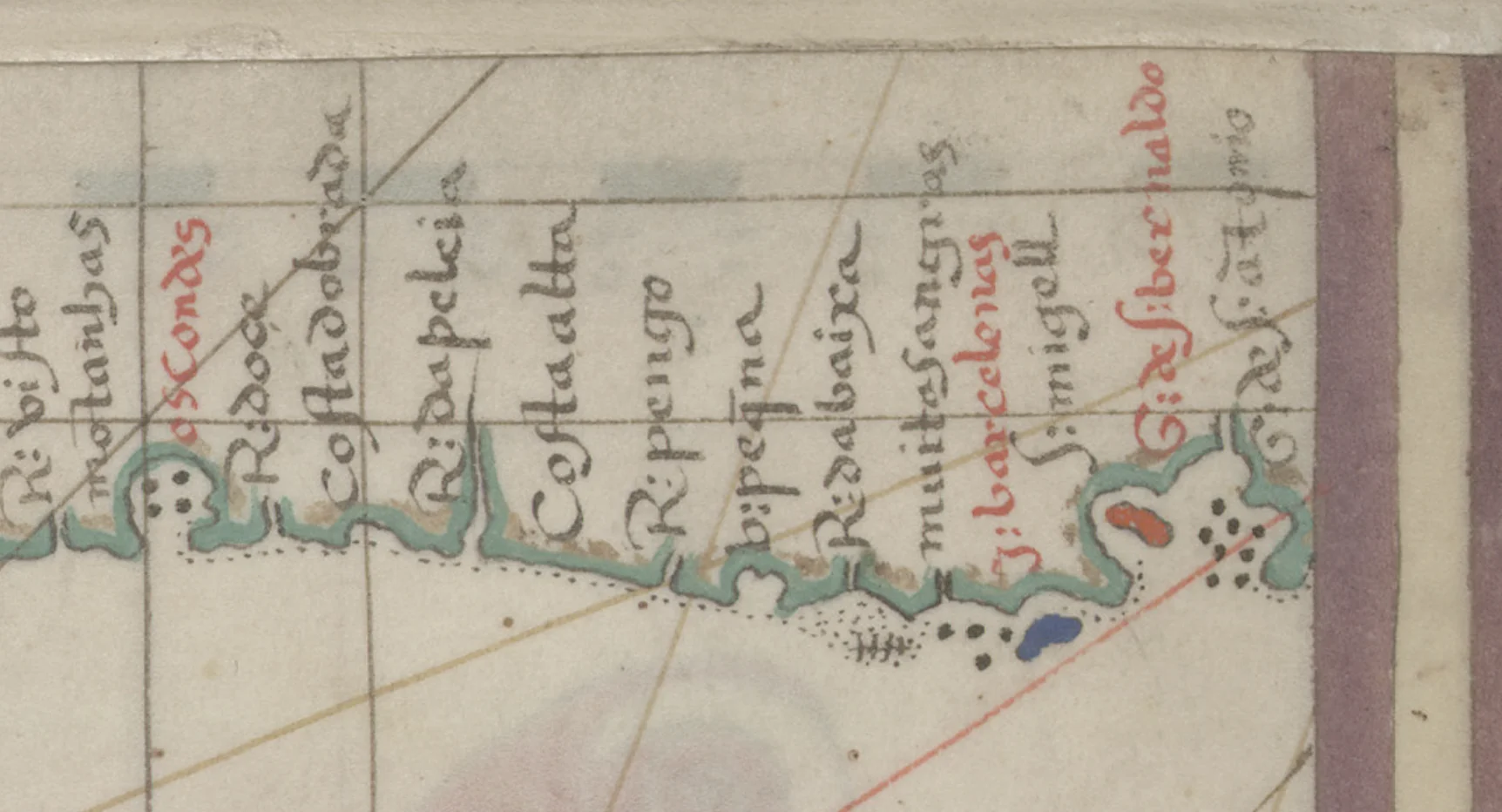
The Barcelos livestock enterprise was independently observed by English seafarers across three generations. Before 1553, Edward Haies noted that the Portuguese had released cattle and swine on Sable Island more than thirty years earlier. In 1582, Sir Humphrey Gilbert visited the island and found abundant herds said to have been left by the Portuguese decades before. In 1633, John Rose recorded approximately 800 reddish cattle on Sable Island and noted their similarity to a distinctive breed from Terceira. A century after the Barcelos colonisation voyages, English navigators were still encountering the genetic signature of Azorean stock along the Nova Scotia coast.
The documented Portuguese presence at the latitude of Oak Island ended precisely when the succession crisis in Lisbon made it impossible to maintain. In 1580, Philip II of Spain claimed the Portuguese crown. In 1583, his forces violently subjugated the Azores, with particular brutality directed at Terceira, the Barcelos homeland, because it harboured loyalists to the rival claimant, Don António, Prior of Crato. In the same year, a map by Sebastião Lopes showed the flag of the Kingdom of Portugal still planted on the Atlantic coast of Nova Scotia. It was the last such map. The Azorean Portuguese withdrew from Atlantic Canada because the ships, the ports, the men, and the families that had sustained the colony for nearly a century were destroyed at the source.
Champlain's Discovery
2 min
When Samuel de Champlain arrived on the Nova Scotia coast in 1604, he found traces of those who had come before. Near what is now Parrsboro, he reported discovering an old, moss-covered wooden cross that he attributed to earlier Christians. The cross is consistent with the older Portuguese practice of raising wooden territorial markers, which preceded the standardised stone padrão and remained in use alongside it on remote landings. The French adopted the practice of raising territorial crosses from the Portuguese. If the cross was indeed Portuguese, it marked a landfall that predated Champlain by at least a century, and possibly by far more.
In 1612, Champlain described a Portuguese attempt to settle at "Ninganis," identified with Ingonish on Cape Breton, abandoned due to harsh winters. Champlain's interpreter on the voyage was Mathieu DaCosta, a man of African-Portuguese heritage contracted to communicate with the Mi'kmaq. How and where DaCosta had acquired fluency in a Mi'kmaw language is not recorded, but decades of Portuguese-Mi'kmaq contact would provide the context. The Lopo Homem map of 1554 includes Mi'kmaw place names along the Cape Breton coast. Champlain himself spent three days at La Have, the precise area the Barcelos family had claimed, yet his journals contain no narrative of those days, an omission scholars have noted as uncharacteristic given his normally meticulous documentation.
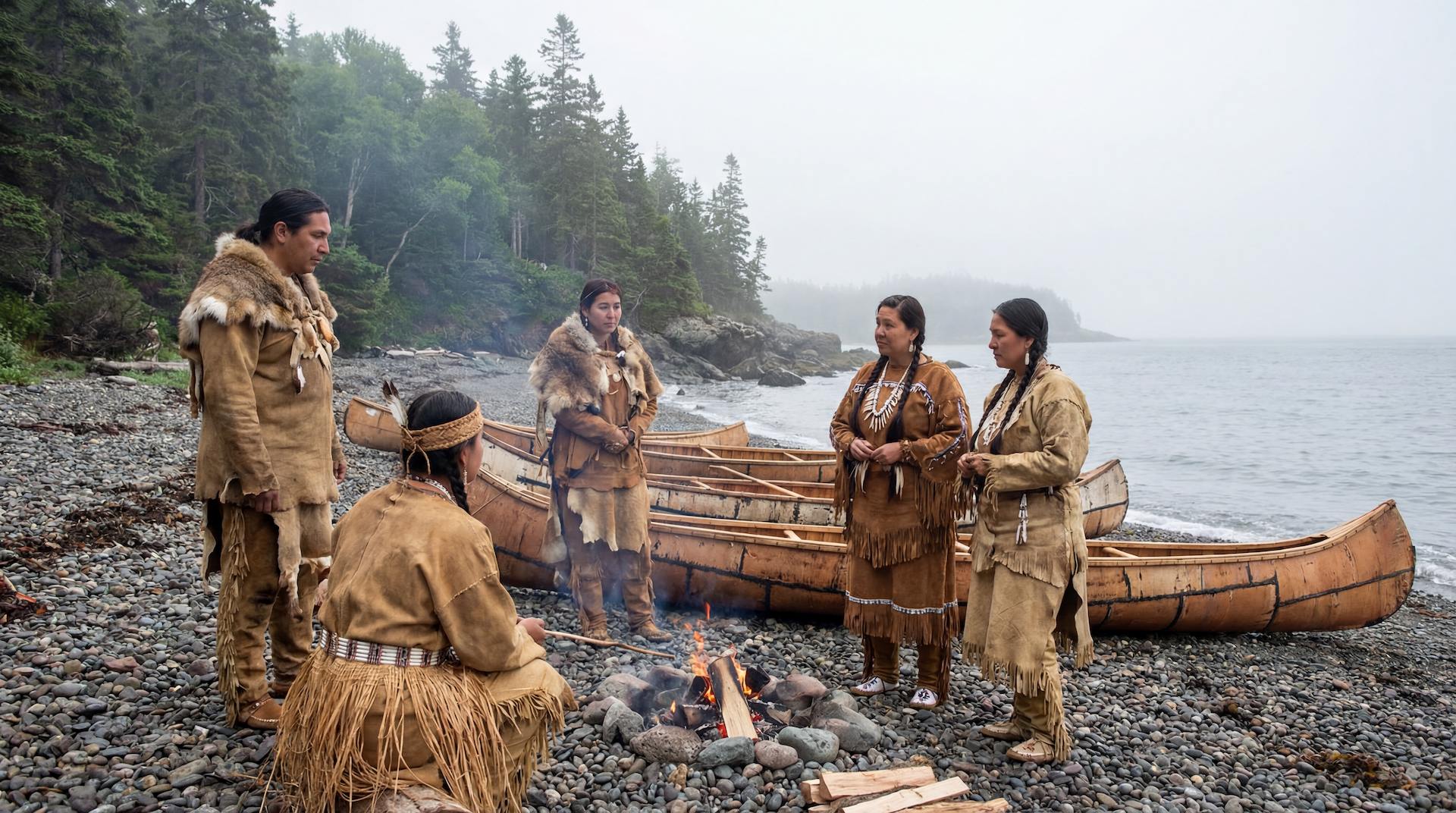 Mi'kmaq, the First Nation on Oak Island→
The family did not forget. On 8 February 1648, sixty-five years after the withdrawal, Guilherme Searsfeld submitted the 1531 and 1568 Barcelos documents to the authorities for formal certification. A later annotation from 1828 reaffirmed the discovery of Ilha Barcellona by Diogo de Barcelos Machado and Afonso de Barcelos. Three centuries after Pero de Barcelos's first voyage with Lavrador, his descendants were still defending the record of what the family had done.
In April 2026, the Oak Island team returned to this history. During the Season 13 episode "Road Trip," Oak Island historian Doug Crowell presented the Portuguese connection to Rick and Marty Lagina in the War Room, joined by researchers Emiliano Sacchetti and Judi Rudebusch. Crowell pointed to the death of King Ferdinand I in 1383 as the trigger for a civil war that may have prompted the Order of Christ to move its treasures to safer ground, beginning a century of Atlantic activity that the Barcelos family documents trace in detail. Sacchetti presented Portuguese charts dated between 1339 and 1385 that already depict the Azores, decades before the islands' official discovery in 1427. With the Portuguese coin recovered from the island and the Peacock-1 stoneshot traced to the Azores by Acadia University geologist Dr. Robert Raeside, Rick and Marty agreed to send a team to the islands to follow the trail the Barcelos family had left four centuries earlier.
The Overton Stone
1 min
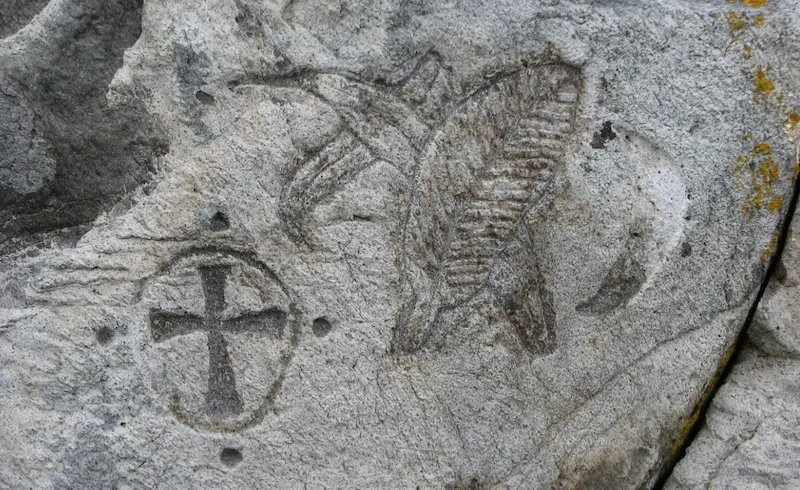
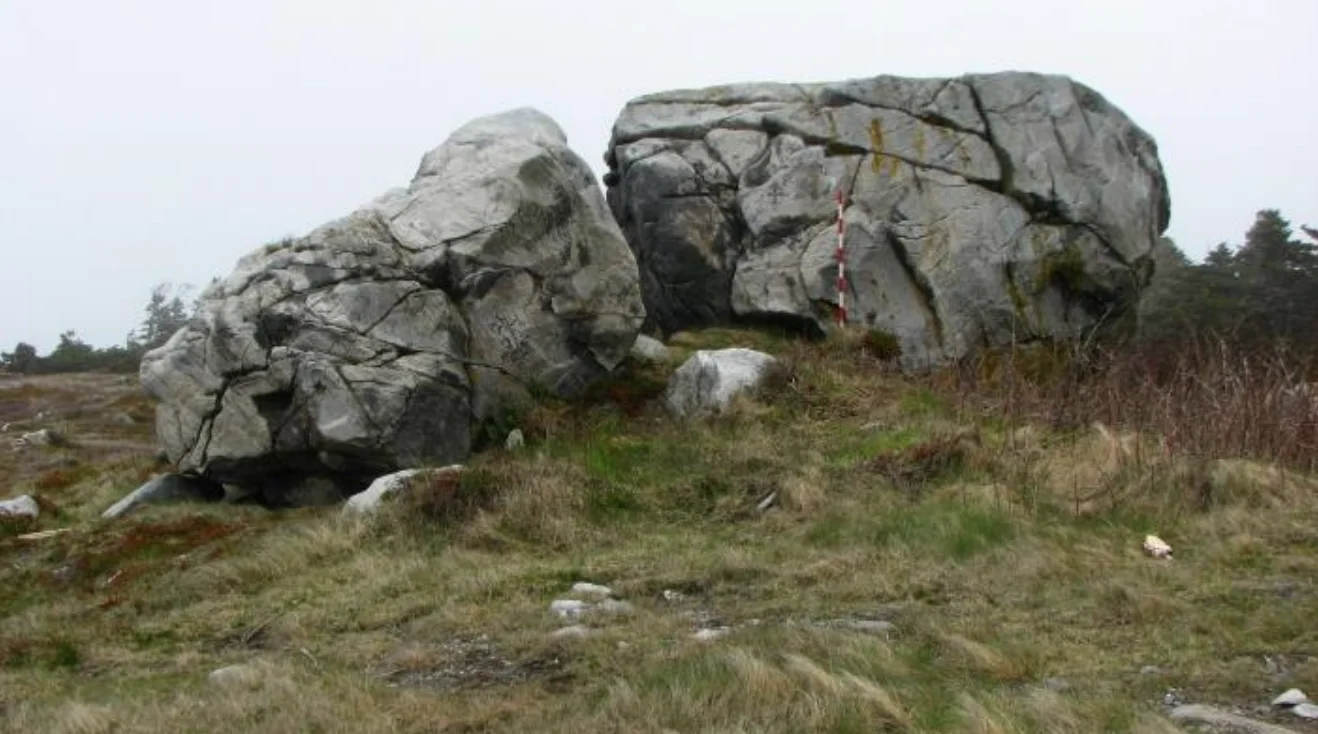
In 2015, local historian Terry Deveau presented the Oak Island team with his analysis of the Overton Stone, a large carved boulder found near the town of Overton, not far from Oak Island. Deveau identified the cross carved into the stone as stylistically consistent with the crosses surmounting Portuguese padrões, the stone pillars planted during the Age of Discovery as formal territorial claims.
The padrão tradition was directly tied to the Order of Christ, and the crosses were the Order's mark of possession at the edges of Portuguese reach.
Deveau proposed that the Overton Stone commemorates a friendship treaty between Portuguese explorers and the local Mi'kmaq people. The carving includes tobacco leaves and an eagle feather, both of deep spiritual significance in Mi'kmaw culture, alongside a crescent moon that corresponds to their tradition of observing the lunar cycle. If Deveau is correct, the stone represents documented contact between Order of Christ navigators and indigenous Nova Scotians, within reach of Oak Island.
Wroclawski, in his NEARA Journal article, added a further detail: a large hewn stone found on Oak Island itself is consistent with what Dr. Manuel da Silva identified as a third-era padrão, based on its size, shape, a notch at one end, and traces of iron oxidation within the notch suggesting it once held an iron cross. The rock type appears distinct from the typical Halifax Formation slate found locally and may be consistent with metamorphosed volcanic tuff, a stone common in the Azores.
Artifacts on the Island
2 min
Physical evidence of a Portuguese presence on Oak Island has been accumulating across multiple seasons of excavation. Three stone shots, or gun stones, have been found across separate seasons and locations: one from the Money Pit area, one from Lot 16, and a third from the Peacock drilling zone. Geology professor Dr. Robert Raeside determined they are olivine gabbro and olivine basalt, volcanic rocks that do not occur naturally on the island and are typical of hot-spot volcanic island chains such as the Azores. At the Lisbon Military Museum, Sergeants Ricardo Lopes and Carlos Magro examined replicas of the shots, measuring 3.9 centimetres, and confirmed they were made in either the Azores or Portugal. They matched them to a 15th or 16th century ship-mounted cannon with a four-centimetre calibre that fires a half-Portuguese-pound ball, a weapon type typically used on ships or fortresses that could be removed from a vessel and placed on a structure ashore.
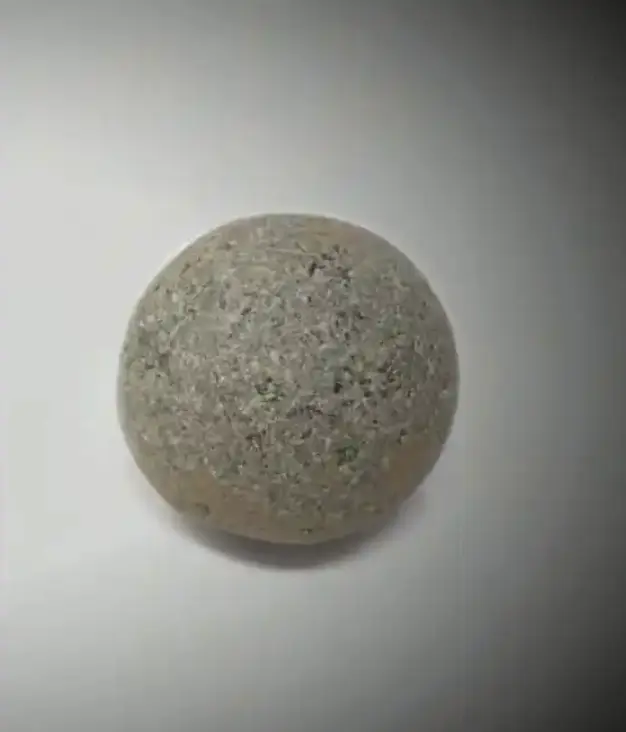 Stone Shot (Lot 16)→
 Stone Shot (Money Pit)→
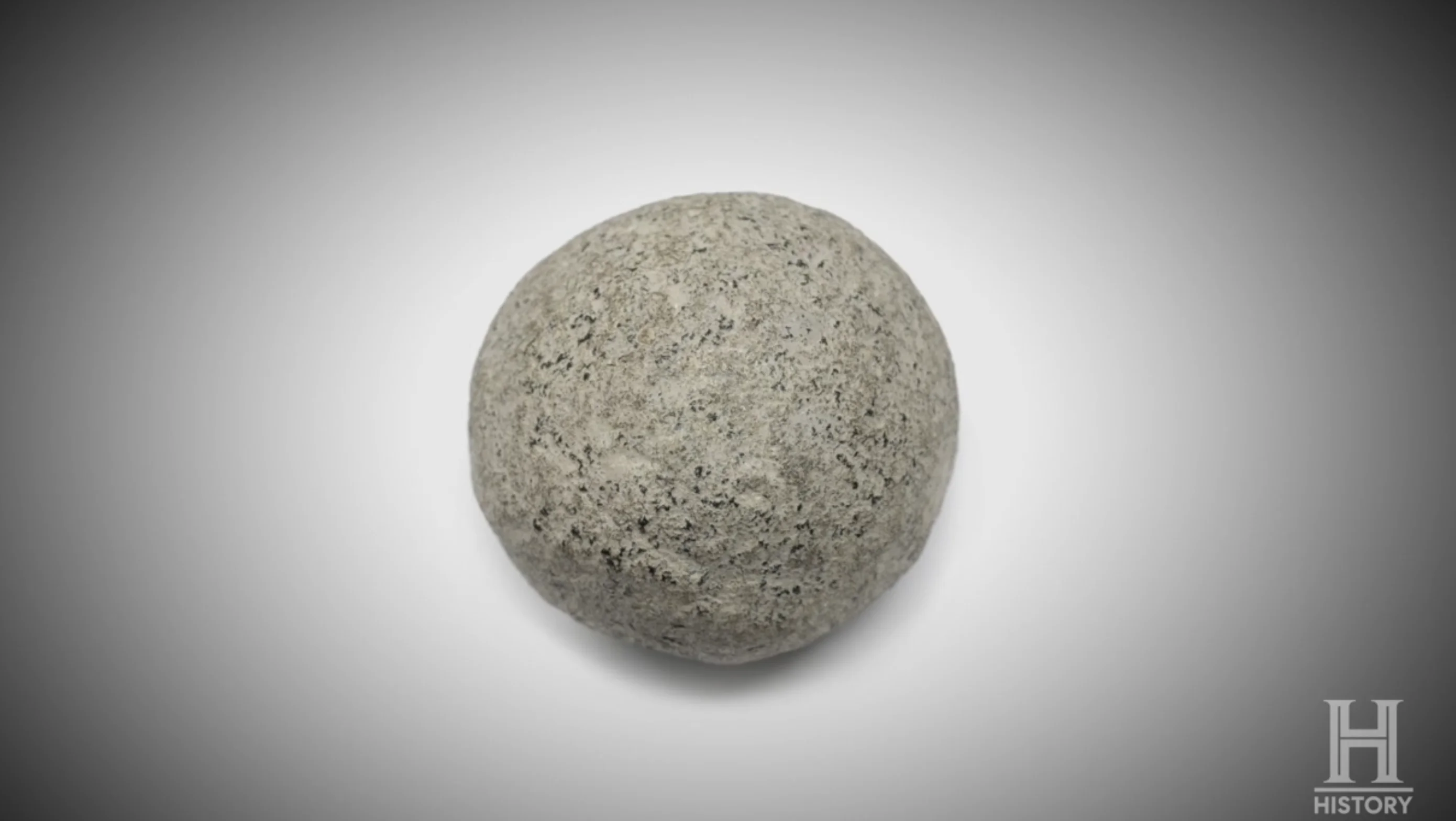 Stone Shot (Peacock 1)→
A fragment of what was identified as a Portuguese breech swivel gun was found on Lot 4, in an area marked on Zena Halpern's map as "The Hole under the Hatch." Analysis by Dr. Christa Brosseau confirmed the metal was consistent with cannon material, possibly of Portuguese manufacture.
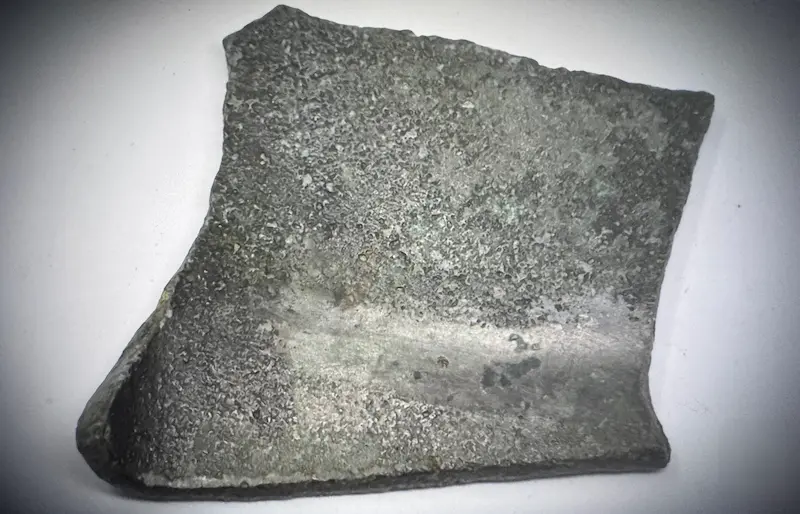 Swivel Gun Metal→
In Season 13, a hand cannon fragment was identified through CT scanning, revealing a touch hole that confirmed its function. Maltese military historian Matthew Balzan dated it to between the 1200s and early 1500s, and raised the possibility it had been repurposed as a tool for directing gunpowder to fracture rock, a technique that would predate conventional blasting and could connect to the construction of the island's stone road feature.
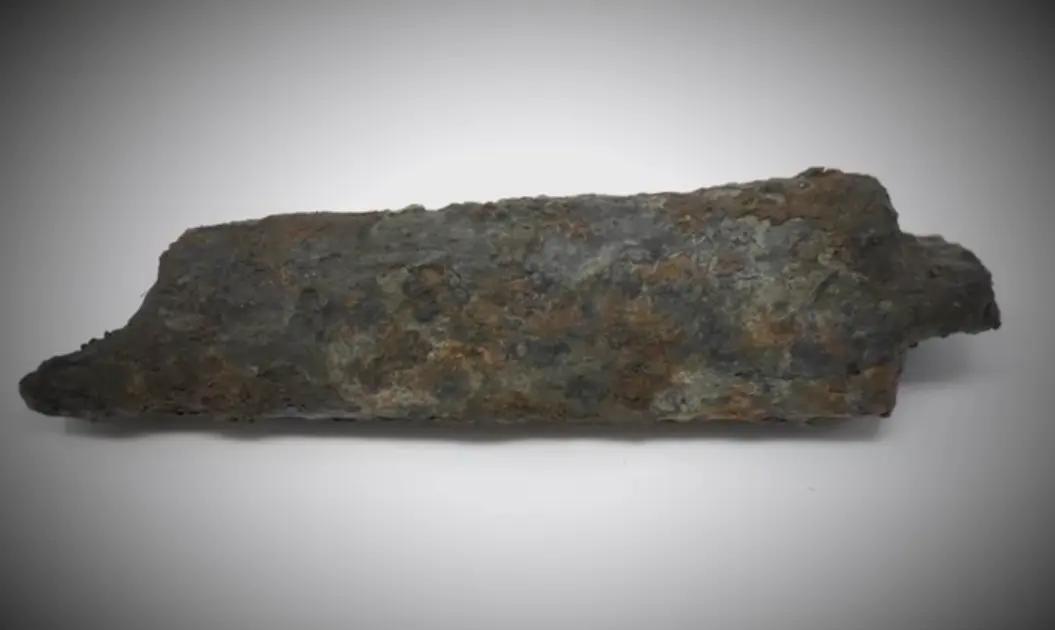 Barrel of a hand cannon→
The Portuguese coin found on the island is a billon Tornês from the reign of King Ferdinand I, minted at Miranda do Douro between 1369 and 1370. Its reverse carries a cross design that researcher Judi Rudebusch identified as resembling a Templar cross, alongside a six-pointed star similar to symbols found at Fonte Arcada Church in northern Portugal, the same Fonte Arcada that Teresa of León donated to the Templars in 1126.
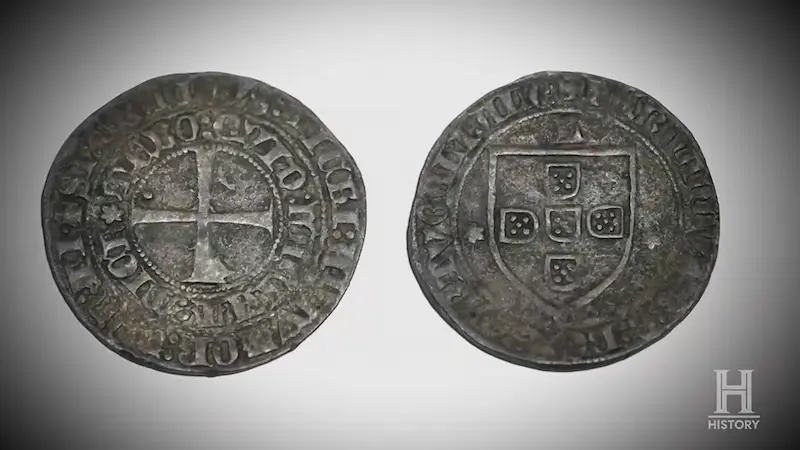 Portuguese Tornes, 1369-1371 (Pitblado coin)→
The Stone Road
1 min
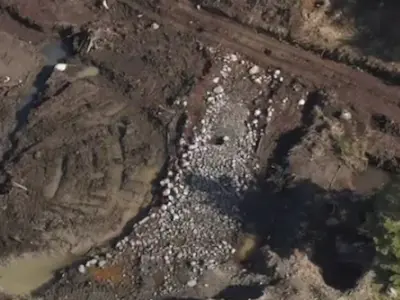
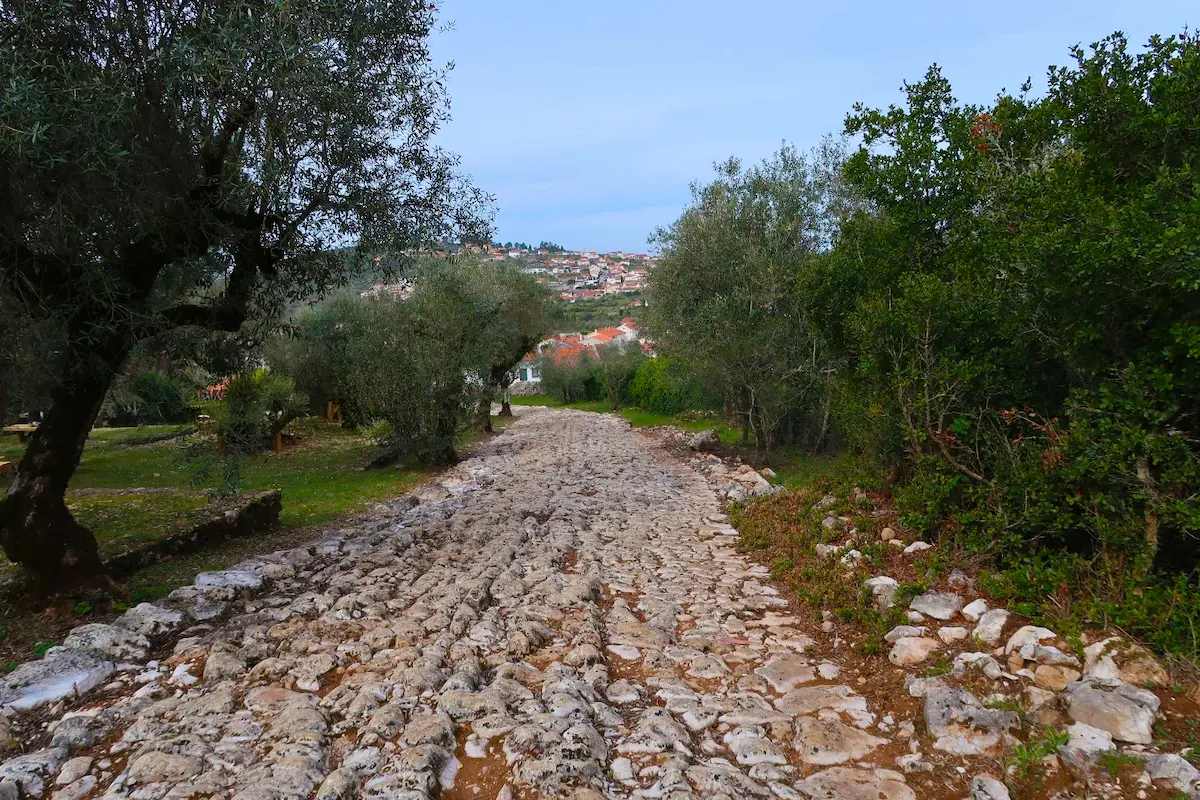
When the triangular swamp on Oak Island was drained and excavated, the team discovered a stone road and cobblestone pathway leading toward the Money Pit. Historian Terry Deveau immediately noted its resemblance to road construction techniques used by the Portuguese in the 1500s. The comparison was not casual. During the team's trip to Portugal in Season 9, guided by researcher Corjan Mol and Templar historian João Fiandeiro, they visited Alqueidão Da Serra, where a medieval Portuguese stone road bears a striking similarity to the one found in the Oak Island swamp.
Tomar, Fontarcada, and the Lost Archives
2 min
The Season 9 trip to Portugal took the Oak Island team to the heart of the Order of Christ's operations. At the Convento de Cristo in Tomar, Corjan Mol drew attention to the aqueduct drainage system, which he proposed could have served as an engineering precedent for whoever constructed the finger drains at Smith's Cove, the elaborate system designed to flood the Money Pit when disturbed. At the Church of Fontarcada in Póvoa de Lanhoso, the team found cryptic symbols and carvings that appeared to match those found on Oak Island. A well at Quinta da Regaleira in Sintra, built in the 19th century to replicate older designs, was found to share the exact dimensions of the original Money Pit treasure shaft. While the Sintra structure is relatively modern, it preserves construction traditions linked to the Order of Christ and Masonic initiation rituals with deep historical roots.
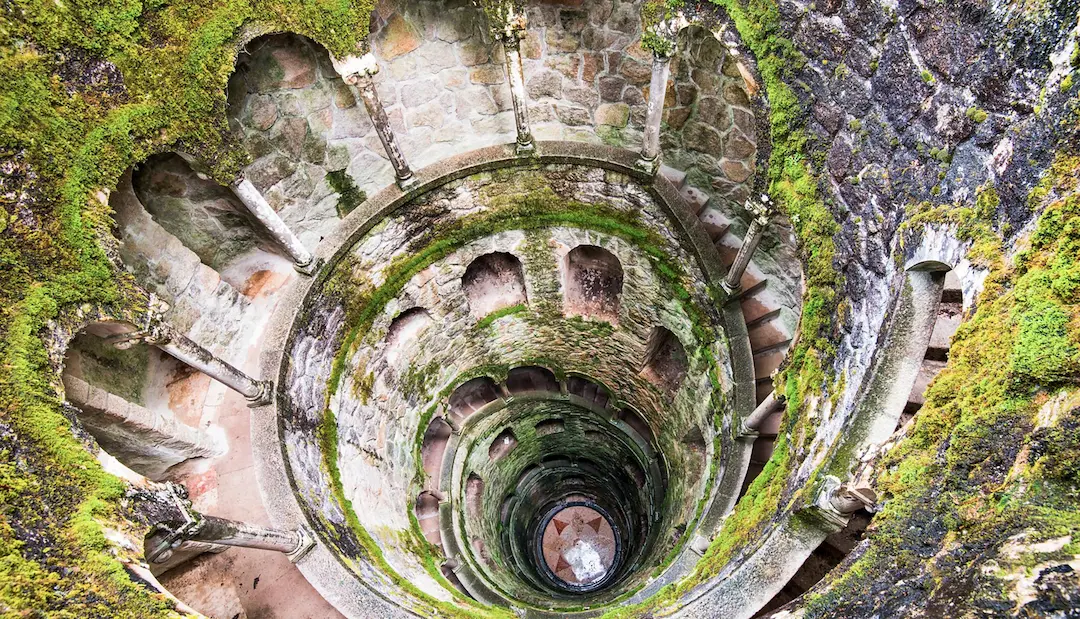 Quinta da Regaleira→
There is a reason why direct documentary evidence linking the Order of Christ to activities in Nova Scotia has not been found in Portuguese archives. It was deliberately destroyed. When the Inquisition was established in Portugal under King João III, an Inquisition Court was set up in Tomar. The Order of Christ was demilitarized and converted into a strictly conventual order, stripped of its former influence. The Reverend Inquisitor Frei António de Lisboa ordered the burning of the Order's centuries-old conventual archives. The burial grounds at Santa Maria do Olival, where Gualdim Pais and other Templar and Order of Christ masters had been interred, were desecrated. Ana Alice Bento Ribeiro Hidalgo de Lacerda, in her 2021 Uppsala University thesis on Tomar's heritage, documented this destruction and its consequences: of all the burials at Santa Maria do Olival, only the tombs of Gualdim Pais and one lay master, Lourenço Martins, survived the Inquisition's campaign intact.
Whatever the Order of Christ knew about its Atlantic operations, whatever records it kept of voyages, settlements, or construction projects in the waters west of the Azores, was fed to the flames in the sixteenth century. The absence of documentation is not evidence that such records never existed. It is evidence that they were systematically eliminated by an institution whose explicit purpose was to erase the Order's legacy.
A Theory Built on Evidence
1 min
The Portuguese theory does not rest on a single artifact or a speculative leap. It is built on a convergence of physical evidence, documented history, and geographical logic. The Order of Christ inherited the Templar mission and its resources. It funded the most advanced naval fleet in the world with centuries of accumulated wealth. Portuguese navigators reached the coast of Nova Scotia by the late 1400s, and Azorean families maintained a documented commercial presence at the latitude of Oak Island for the better part of a century, complete with ships, livestock, and infrastructure for transatlantic transport. They named the bays. They mapped the coast. They planted crosses. That presence ended abruptly in 1583, when the Spanish conquest of the Azores made it impossible to maintain.
On and around Oak Island itself, the physical record is consistent with this history. Stone shots made from Azorean volcanic rock. A Portuguese coin minted in the 1370s. Cannon fragments matching Portuguese manufacture. A stone road built using Portuguese construction techniques. Padrão-style crosses carved within miles of the island. And behind all of it, an Order whose archives were deliberately burned, leaving only what was buried in the ground and carved into stone.
None of this proves that the Order of Christ built the Money Pit. What it establishes is that the Portuguese, operating under the Cross of Christ, had the means, the opportunity, and a sustained physical presence in the area for nearly a hundred years. The engineering capability existed. The maritime routes were established. The artifacts are in the ground. The documentary record that might have explained the connection was destroyed by the Inquisition in the sixteenth century. What remains is the evidence on the island itself, and it points consistently in one direction.
Sources
3 min
Academic / Published
- Paul Wroclawski (2010), "Early History of Mahone Bay, Nova Scotia," NEARA Journal, Vol. 44, No. 1 available here. Source for: Pero de Barcelos's 1492-1495 voyage with João Fernandes Lavrador, the Barcelos family claim from 1508, the Gulfo de Sam Bernaldo at 44.5°N matching Mahone Bay and St. Margaret's Bay, the Velho 1560-1561 maps and the "I. barselonas" legend translation, the 1562-1566 colonisation voyages with cattle, pigs, sheep and goats, the Edward Haies observation (before 1553), Sir Humphrey Gilbert's 1582 visit, John Rose's 1633 record of 800 reddish cattle on Sable Island matching Terceira breeds, the Sebastião Lopes 1583 map, the 1583 withdrawal tied to the Spanish subjugation of Terceira, the Lopo Homem 1554 map with Mi'kmaw place names, Champlain's Ingonish settlement record (1612) and his missing La Have narrative, Mathieu DaCosta as Mi'kmaw interpreter, and the hewn stone on Oak Island as possible third-era padrão via Dr. Manuel da Silva.
- Terry J. Deveau (2015), "The Overton Stone," New England Antiquities Research Association, 3 December 2015, 35 pages. Available here. Source for: the Overton Stone carving analysis and padrão-style cross identification, the Mi'kmaw symbolism of the tobacco leaves, eagle feather and crescent moon, the Portuguese-Mi'kmaq friendship treaty interpretation, and the broader case for sixteenth-century Portuguese activity in Nova Scotia.
- Jonathan Wilson (2020), "The Filthy Animal and Saint Bernard of Clairvaux: Re-assessing the Case for Letter 308 and the Conquest of Lisbon, 1147," Al-Masaq: Journal of the Medieval Mediterranean, 32:3, pp. 332-352. Source for: Afonso Henriques as Templar confrater (Latin document), Pedro the Templar messenger, Bernard of Clairvaux involvement, the "Lisbon Indulgence."
- A.R. Disney (2009), A History of Portugal and the Portuguese Empire, Vols. 1 & 2, Cambridge University Press. Source for: Dinis creating Order of Christ 1319, Templar arrival 1128, Tomar castle 1160, Prince Henrique correctives (no Sagres school, medieval values, still prime patron), Fagundes settlement 1521 and its abandonment ~1526, Corte-Real brothers, Order of Christ ecclesiastical jurisdiction over Madeira/Azores.
- Ana Alice Bento Ribeiro Hidalgo de Lacerda (2021), "Tomar and its People: On the relationship between local people and their heritage," Uppsala University (Master's thesis). Source for: Santa Maria do Olival as Mother Church, papal bulls of Nicholas V (1454) and Calixtus III (1456), archive destruction by Frei Antonio de Lisboa, desecration of burial grounds, Jewish protection, Abraham Zacuto, Cult of the Holy Spirit, Order demilitarized by Inquisition.
- Manuel C. Baptista de Lima (1960), A Ilha Terceira e a Colonização do Nordeste do Continente Americano no Século XVI, Boletim do Instituto Histórico da Ilha Terceira, Vol. XVIII, Angra do Heroísmo. Source for: Barcelos family archival record from 1507 onward, including Pero's will, the 1508 Letter of Grace from King Manuel I, Diogo's 1531 settlement directive to Afonso and the formal renunciation by Anna Lopes, Diogo's 1533 will and Coat of Arms charter, Manuel's 1568 petition to João da Silva do Canto, and the 1648 Searsfeld recertification at the Angra Chamber.
- L.-A. Vigneras (1973), "The Voyages of Diogo and Manoel de Barcelos to Canada in the Sixteenth Century," Terrae Incognitae, Vol. 5, No. 1, pp. 61-64. Source for: English-language scholarly analysis of the Barcelos voyages and the mid-sixteenth-century colonisation programme.
Show-derived (for artifact and site references)
- The Curse of Oak Island, Season 9 and Season 13. Source for: stone cannonballs (Azorean volcanic rock analysis, Portuguese museum confirmation), Portuguese coin (Ferdinand I, Miranda do Douro, Judi Rudebusch identification), swivel gun fragment (Lot 4, Dr. Christa Brosseau analysis), hand cannon fragment (CT scan, Matthew Balzan dating), stone road (Terry Deveau comparison), Overton Stone (Terry Deveau 2015), Convento de Cristo aqueduct / finger drain comparison (Corjan Mol), Fontarcada symbols, Quinta da Regaleira well dimensions, Alqueidão Da Serra stone road visit (Corjan Mol, João Fiandeiro), Doug Crowell, Emiliano Sacchetti and Judi Rudebusch War Room presentation on the Portuguese connection (S13E22), Dr. Robert Raeside (Acadia University) stoneshot analysis.