The Knights Hospitaller
1 min
The Knights Hospitaller, formally the Order of Knights of the Hospital of Saint John of Jerusalem, are often overshadowed by their Templar rivals in the Oak Island story. They should not be. The Hospitallers were equally powerful, considerably longer lived, and when the Templars were destroyed in 1312, it was the Hospitallers who inherited their assets, their properties, and possibly their secrets.
The order began not as a military force but as a hospital. Around 1099, in the aftermath of the First Crusade, a group of monks operating a pilgrim hospital in Jerusalem dedicated to Saint John the Baptist was formally recognised by Pope Paschal II in 1113 as an independent religious order. Under Raymond du Puy, who succeeded the order's founder Brother Gerard around 1120, the Hospitallers transformed into a military organisation. Knights were recruited, fortifications built, and within decades the order operated as a standing army in the Holy Land, rivalling the Templars in wealth, manpower, and influence.
For nearly two centuries the Hospitallers held major fortifications across the Crusader states, including Krak des Chevaliers and Margat Castle. When Saladin recaptured Jerusalem in 1187, the order retreated to Acre. When Acre fell in 1291, the Grand Master Jean de Villiers led the surviving knights to Cyprus. It was the beginning of a pattern that would repeat across centuries: the order lost its base, regrouped, and rebuilt somewhere new.
Rhodes and the Templar Inheritance
1 min
In 1310, under Grand Master Foulques de Villaret, the Hospitallers captured the island of Rhodes after a four-year campaign. Two years later, Pope Clement V dissolved the Knights Templar with the papal bull Vox in excelso and, through a second bull, Ad providam, transferred all Templar properties to the Hospitallers. Houses, churches, lands, revenues, and possessions across Europe and the Levant were formally handed to the Order of Saint John. The Catholic Encyclopedia describes the result as a "fusion" of the two orders, one that significantly increased the Hospitallers' wealth and military character.
What was not transferred, at least not on paper, was whatever the Templars may have been guarding. The papal bulls dealt with land and revenue. They said nothing about relics, archives, or the contents of Templar vaults. If the Templars had possessed sacred objects or knowledge of hidden deposits, the Hospitallers were the most likely inheritors, both by legal decree and by the simple fact that many former Templars joined the Hospitaller ranks after 1312.
Guardians of Sacred Relics
1 min
The Hospitallers were no strangers to moving priceless objects across vast distances by sea. Their record as relic guardians is extensively documented. On Rhodes, the order maintained some of the most important relics in Christendom, including a fragment of the True Cross, the icon of Our Lady of Philermos (a Byzantine image of the Virgin Mary dated to the 11th or 12th century), and the right hand of Saint John the Baptist, which was presented to the order by Sultan Bayezid II in 1484.
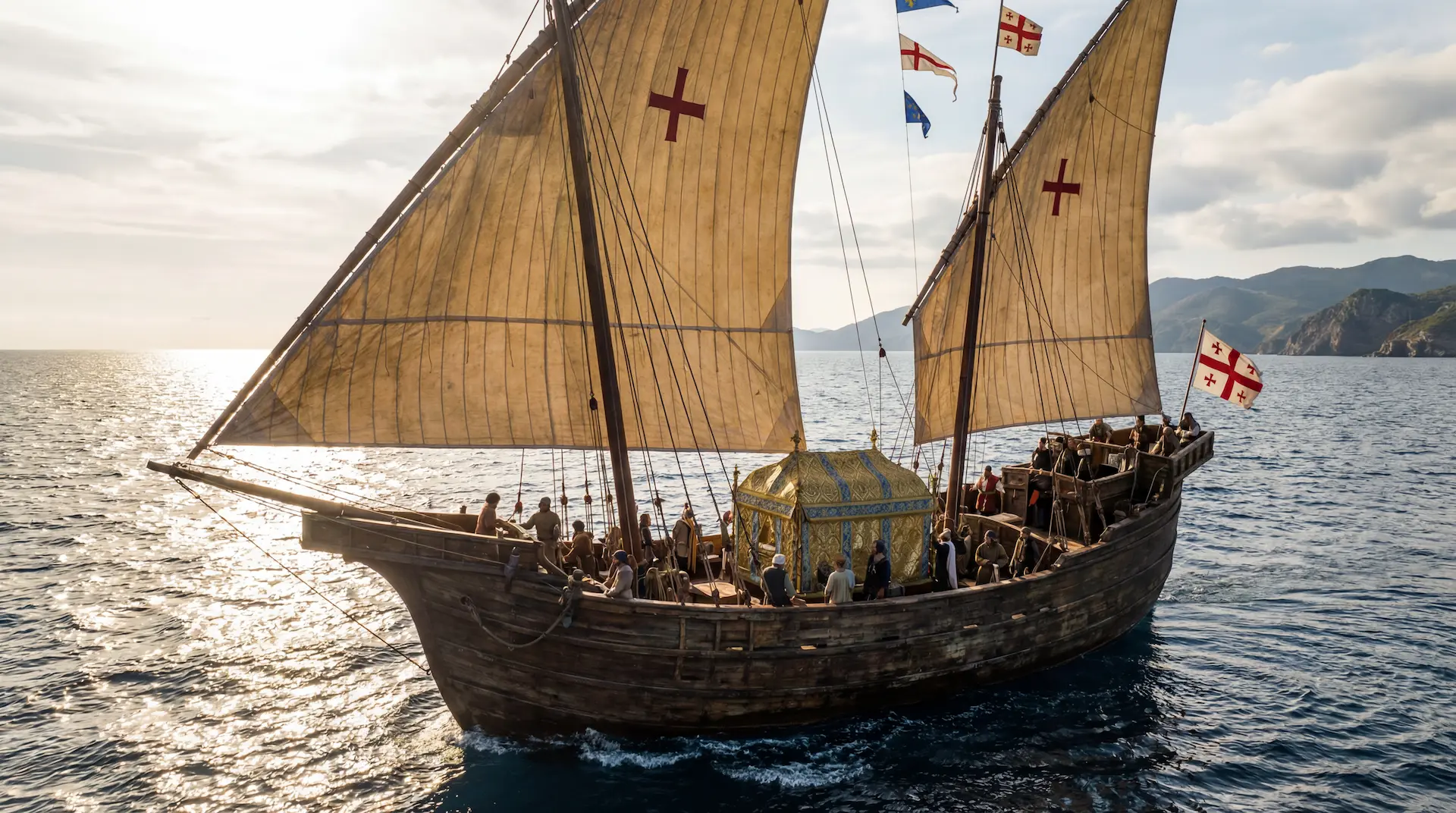
When the Hospitallers lost Rhodes to Sultan Suleiman in 1522, Grand Master Philippe de Villiers de L'Isle Adam negotiated an honourable withdrawal. The surviving knights were permitted to take their archives, their personal arms, and their most sacred relics. On January 1, 1523, they sailed from Rhodes carrying the hand of the Baptist, the fragment of the True Cross, and the icon of Philermos. For the next seven years, the homeless order wandered the Mediterranean, from Crete to Nice to Viterbo, carrying these relics with them at every stage.
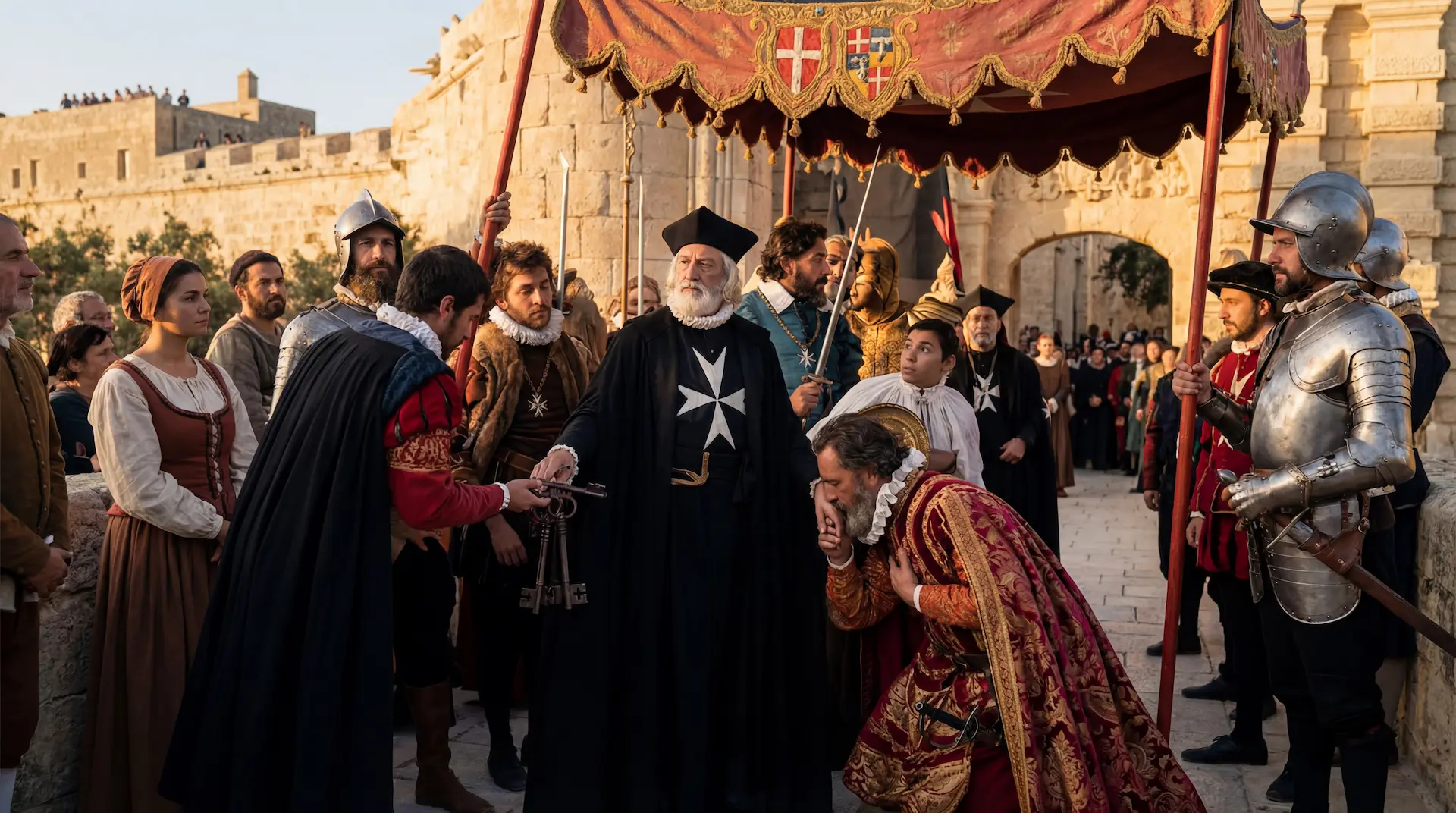
In 1530, Emperor Charles V granted the order the islands of Malta and Gozo, and the Hospitallers finally had a permanent home. From that point forward they became known as the Knights of Malta, and their story enters a new chapter, one with direct connections to Nova Scotia and to Oak Island.
 Sacred Cargo, Relics crossing Oceans→
Why the Hospitallers Matter for Oak Island
1 min
The Hospitallers had every capability attributed to the Templars and several the Templars lacked. They operated a powerful fleet. They transported sacred objects by sea as a matter of institutional routine. They absorbed former Templar knights, properties, and wealth. They survived for centuries after the Templars' destruction, maintaining continuity of knowledge and resources that the Templars lost in 1307.
The order's connection to Nova Scotia runs through specific family lines that bridged both orders. The same families that held senior positions among the Templars reappear, generation after generation, in the Hospitaller hierarchy.