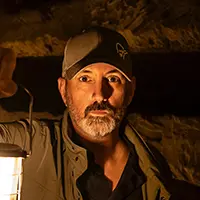
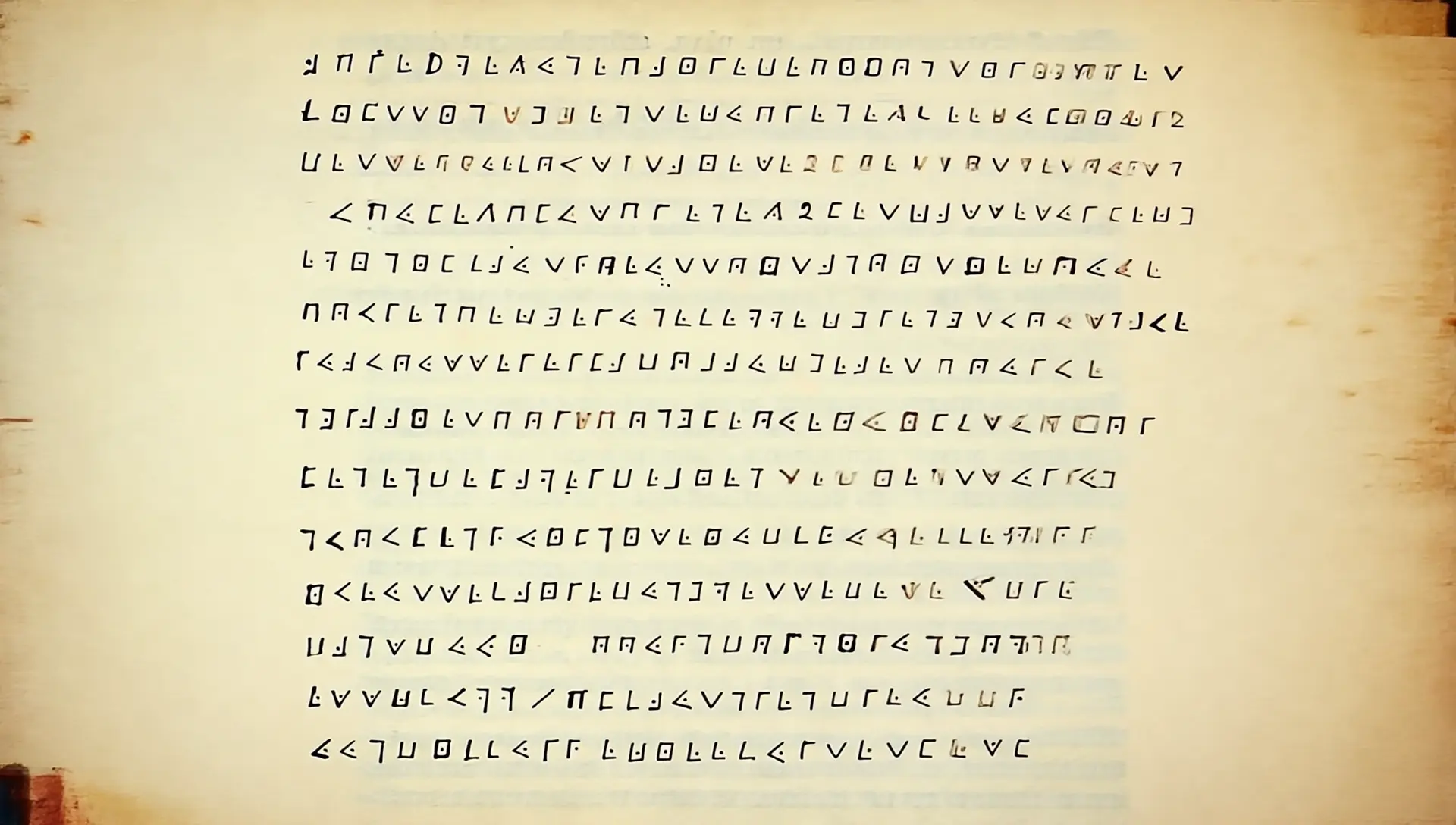
On the afternoon of July 7, 1730, a French pirate named Olivier Levasseur stood on the scaffold at Saint-Denis, on the island of Bourbon in the Indian Ocean. He had been captured near Fort Dauphin in Madagascar after nine years in hiding, and the charges against him were not in dispute. Levasseur had plundered ships across two oceans for the better part of fifteen years. According to a legend that has proven impossible to kill, he tore a necklace from his neck in his final moments, hurled it into the watching crowd, and shouted: "Mes tresors a qui saura comprendre." My treasures to he who will know how to understand. Inside the necklace was a slip of paper bearing seventeen lines of coded symbols. Nearly three hundred years later, the cryptogram has never been solved and the treasure has never been found.
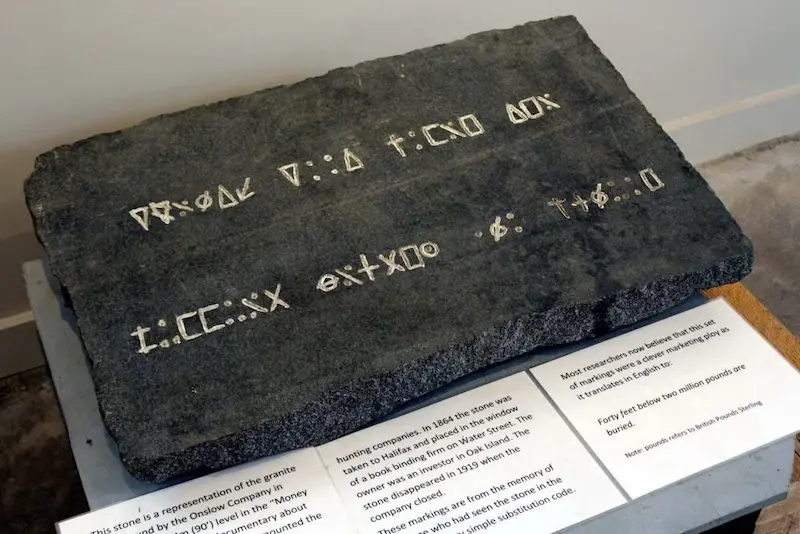
The story belongs on an Oak Island site for three reasons. The cryptogram is written in the pigpen cipher, the same Masonic system that the inscribed stone from the Money Pit has been compared against since the nineteenth century. Levasseur spent his first years at sea as a French privateer in the Atlantic, in the same waters and the same decades as the activity that carbon dating places on Oak Island. And his treasure, including the Fiery Cross of Goa, was never recovered, which has kept his name in circulation wherever pirate gold is discussed. None of this links him to Oak Island by evidence. It links him by pattern, and the pattern is worth setting out.
 Inscribed stone (90-foot stone)→
The Buzzard
1 min
Levasseur was born in Calais around 1688, during the Nine Years' War. Most accounts describe him as the son of a wealthy bourgeois family, well educated, possibly trained as an architect. When the War of the Spanish Succession broke out in 1701, he obtained a letter of marque from King Louis XIV and became a privateer for the French crown, raiding enemy ships in the Caribbean. He was, in other words, a licensed pirate, operating with royal authority in the same Atlantic waters that wash the coast of Nova Scotia.
When the war ended in 1714, Levasseur was ordered to return home with his ship. He refused. In 1716 he joined the pirate company of Benjamin Hornigold, whose crew at that time included a young Edward Teach, not yet known as Blackbeard. Levasseur also sailed with Samuel Bellamy, the so-called "Prince of Pirates," whose ship the Whydah was discovered off Cape Cod in 1984 carrying over four tons of gold and silver. These were not isolated operators. They were members of an interconnected Atlantic pirate network that stretched from the Caribbean to the African coast, from New England to Madagascar. Levasseur earned his nickname La Buse, "The Buzzard," for the speed and ferocity with which he attacked.
By 1719, Levasseur had moved his operations to the Indian Ocean, working alongside pirates Howell Davis, Thomas Cocklyn, John Taylor, and Edward England off the coast of West Africa and Madagascar. It was this partnership with John Taylor that would lead to the single richest pirate capture in recorded history.
The Nossa Senhora do Cabo
1 min
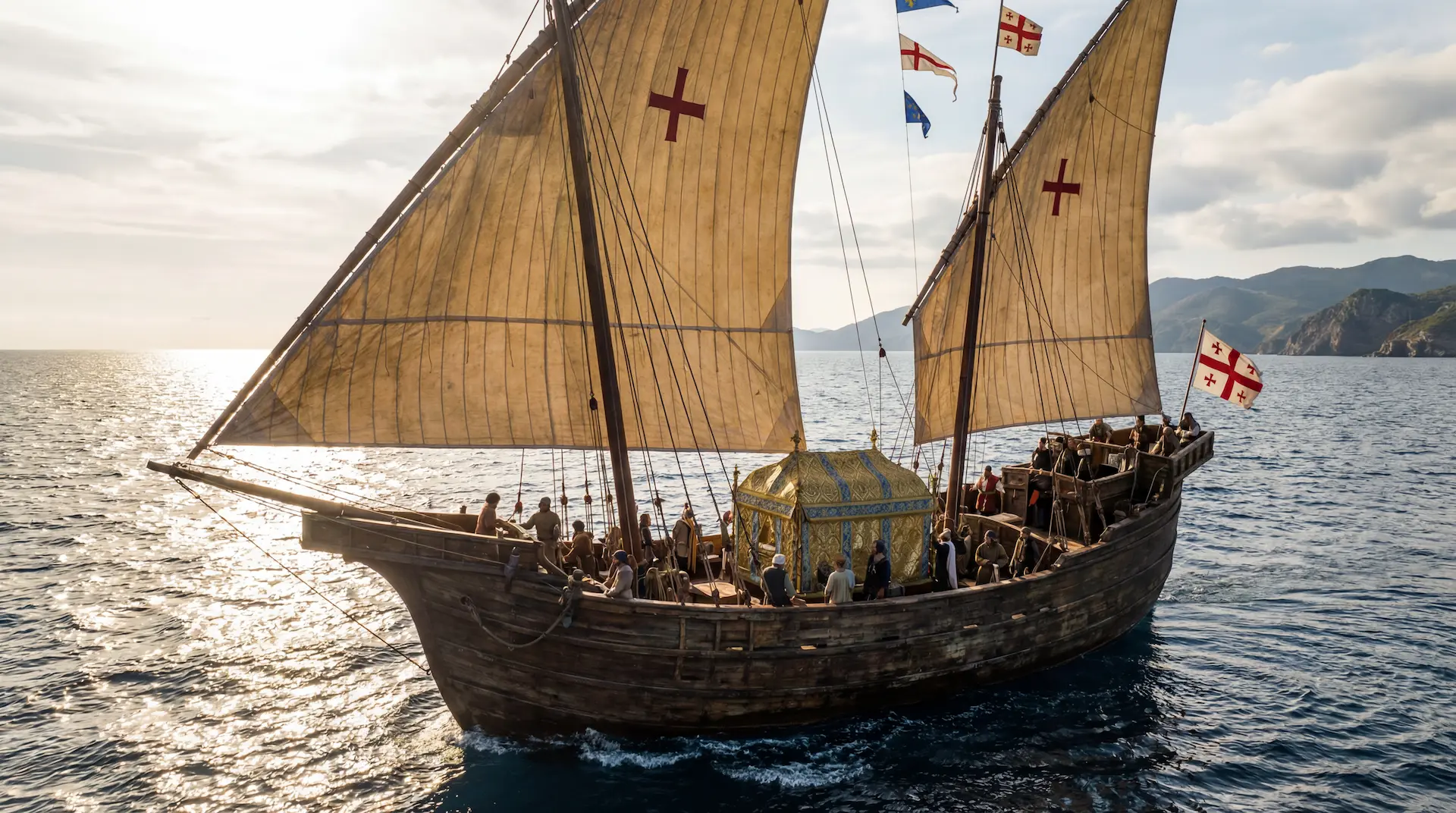
On April 8, 1721, Levasseur and Taylor, commanding the ships Victory and Cassandra, arrived at the island of Reunion. There they found a 700-ton Portuguese cargo ship, the Nossa Senhora do Cabo, lying at anchor at Saint-Denis. The ship had been caught in a violent storm on its voyage from Goa to Lisbon. Its main mast was broken, and two-thirds of its 72 cannons had been thrown overboard to prevent the ship from capsizing. It was, in every sense, a sitting target.
The pirates boarded without resistance. What they found in the holds has been described by one historian as a "floating treasure house." The Nossa Senhora was carrying the retiring Viceroy of Portuguese India and the Archbishop of Goa, both returning to Lisbon with the accumulated wealth of their offices. The cargo included bars of gold and silver, chests of golden guineas, diamonds, pearls, emeralds, rubies, sapphires, fine silks, spices, religious art, and sacred vessels. Among the haul was an object that would become the centrepiece of the legend: the Fiery Cross of Goa, also called the Flaming Cross, a crucifix said to stand seven feet tall, wrought from pure gold and encrusted with diamonds, rubies, and emeralds. It was so heavy that three men were required to carry it from the ship to the pirates' vessel.
The plunder was so vast that the pirates did not bother to rob the passengers of their personal belongings. The Viceroy was released for a ransom of 2,000 dollars. When the spoils were divided, each ordinary crew member received approximately 50,000 pounds in golden guineas and 42 diamonds. Levasseur and Taylor, as captains, claimed the lion's share of the remaining gold, silver, and artefacts. Levasseur took the Fiery Cross.
 Sacred Cargo, Relics crossing Oceans→
Nine Years in Hiding
1 min
After the Nossa Senhora raid, Levasseur attempted to retire. He settled in the Seychelles, hoping to live quietly on his fortune. The French government offered amnesty to any pirate who surrendered, but there was a condition: the pirate must forfeit his treasure. Levasseur refused. He became a fugitive, moving between the islands of the Indian Ocean for nearly a decade.
He was finally captured in 1730 near Fort Dauphin, Madagascar, and transported aboard the naval vessel La Meduse to Saint-Denis on Bourbon Island, where he was sentenced to hang. The details of what happened at the scaffold vary by source. Some accounts describe the necklace and the cryptogram. Others say the coded paper was concealed on his person. What most versions agree on is the challenge he issued to the crowd: find my treasure, if you can understand the clue.
The Cryptogram
1 min
The seventeen-line cryptogram that bears Levasseur's name first appeared in print in 1934, when the French historian and librarian Charles de La Ronciere published a book titled Le Flibustier Mysterieux: Histoire d'un tresor cache. La Ronciere claimed to have received the cryptogram through a chain of possession running from the original document through a notary on the island of Mahe in the Seychelles, a woman named Madame Savy who was a descendant of a pirate named Nageon de L'Estang, and eventually to the Bibliotheque Nationale de France in Paris.
La Ronciere identified the cipher as a pigpen cipher, a geometric substitution system in which letters of the alphabet are replaced by fragments of a grid pattern. This was not an obscure method. The pigpen cipher was widely used by the Freemasons throughout the eighteenth century to encrypt lodge records, ritual documents, and correspondence between lodges. It was so closely associated with the fraternity that it became known simply as the Freemason's Cipher. Variations of the same system had been used by the Rosicrucians since the early seventeenth century, and there is evidence of the Knights Templar employing a related substitution cipher during the Crusades.
 The Rosicrucian Connection→
Attempts to Solve the Cryptogram
2 min
La Ronciere decrypted the cipher into French plaintext, but the result was largely incomprehensible. Fragments of recognisable French appeared alongside garbled text that read more like a folk remedy or a spell than a set of directions to buried treasure. One line appeared to reference cooking pigeons and removing their hearts. Whether this was the result of deliberate obfuscation, repeated miscopying over two centuries, or a cipher that requires an additional key to fully decode has been debated ever since. Some researchers believe the symbols contain embedded numerical values that function as coordinates or measurements, hidden within what appears to be nonsense text.
The most sustained attempt on the ground began with Reginald Cruise-Wilkins, a former British officer who came across the Levasseur story in 1947 while recovering from malaria in the Seychelles. He concluded that the cryptogram was not a set of directions at all but a series of riddles built on classical mythology, with each stage of the search corresponding to one of the Twelve Labours of Hercules. Working from that reading, he began excavating at Bel Ombre on the northern coast of Mahe in 1949 and continued until his death in 1977. He reported finding carved rocks, an underground chamber, pirate-era tools, and a number of coins, but never the main cache. His son John Cruise-Wilkins took up the search after him and, as of the most recent reports, was still digging at the same site.
A second body of material sits alongside the cryptogram. Among the possessions of Nageon de L'Estang, the pirate whose family line La Ronciere traced the document through, were letters referring to Levasseur's treasure, three further cryptograms, and two letters said to describe hidden caches across the Indian Ocean. None of these has produced a verified find either.
The alternative reading is that there is nothing to solve. No contemporary account of Levasseur's execution mentions a coded document, a necklace, or a gallows speech. The cryptogram surfaces for the first time in 1934, two centuries after the hanging, in a book by the man who claimed to have decoded it. Some historians conclude from this that the cipher is a twentieth-century construction, either by La Ronciere or by someone in the chain of possession before him. What can be stated with confidence is narrow: every published solution since 1934 has failed to lead to Levasseur's treasure, and no decoding has been confirmed against a physical find.
The Wreck
1 min
In July 2025, archaeologists from the Center for Historic Shipwreck Preservation in Massachusetts confirmed what treasure hunters had long suspected. The wreck of the Nossa Senhora do Cabo had been found on the seafloor near Nosy Boraha, a small island off the northeast coast of Madagascar that was once the most notorious pirate haven in the Indian Ocean. After more than a decade of fieldwork, the team led by Brandon Clifford, the center's director, and Mark Agostini of Brown University identified the wreck through analysis of hull remains, artefact assemblages, and primary source accounts.
Among the more than 3,300 artefacts recovered from the site were gold coins inscribed with Arabic writing, pieces of Chinese porcelain, cowrie shells, and religious figurines carved from wood and ivory, including an image of the Virgin Mary and an ivory plaque bearing the inscription "INRI" in gold letters. These devotional objects were almost certainly made in Goa and were being shipped to Lisbon when the pirates intervened. The cargo the ship was carrying in 1721 has been valued at an estimated 138 million dollars. The Fiery Cross of Goa was not among the finds, consistent with the historical accounts that Levasseur took it with him when the spoils were divided.
The Oak Island Connection
2 min
Levasseur's treasure is traditionally associated with the Indian Ocean, not the Atlantic. The searches for his buried hoard have focused on the Seychelles, Reunion, and Madagascar. No artefact recovered on Oak Island has been directly linked to the Nossa Senhora do Cabo or to Levasseur personally.
But the connections that run beneath the surface are harder to dismiss. Levasseur began his career as a privateer for Louis XIV in the Caribbean, operating in the same Atlantic waters and during the same decades as the activity dated on Oak Island by carbon analysis. He sailed with Benjamin Hornigold, Edward Teach, and Samuel Bellamy, all of whom worked the Atlantic seaboard from the Caribbean to New England. The pirate networks of this period did not respect the boundaries that modern maps impose. A captain who sailed the Caribbean in 1716 could be operating off West Africa in 1719 and the Indian Ocean in 1721. The routes were fluid, the crews were interchangeable, and the harbours of Nova Scotia sat directly on the shipping lanes between Europe, the Caribbean, and the African coast.
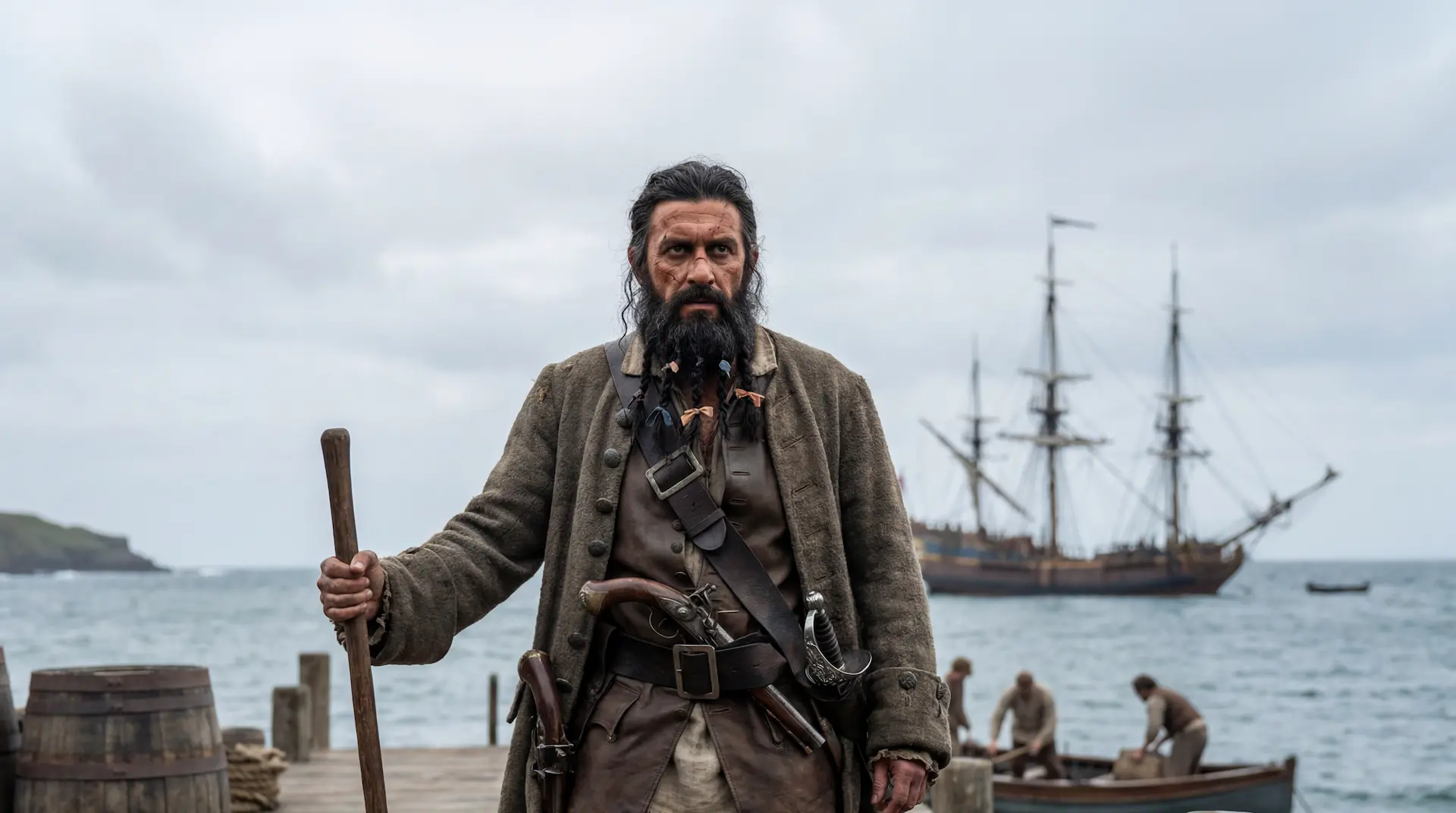 Blackbeard, the Devil's Bargain→
Then there is the cipher itself. The pigpen system used in the Levasseur cryptogram is a Masonic cipher, and Freemasonry is woven through Oak Island's documented history at every level. Frederick Blair, R.V. Harris, Franklin D. Roosevelt, and many of the early searchers were Freemasons. The inscribed stone reportedly found in the Money Pit at ninety feet, bearing symbols that no one could read, has invited comparison with coded Masonic systems for over two centuries. If Levasseur was a Freemason, as the cipher strongly suggests, he belonged to the same fraternal network that appears repeatedly in the Oak Island record.
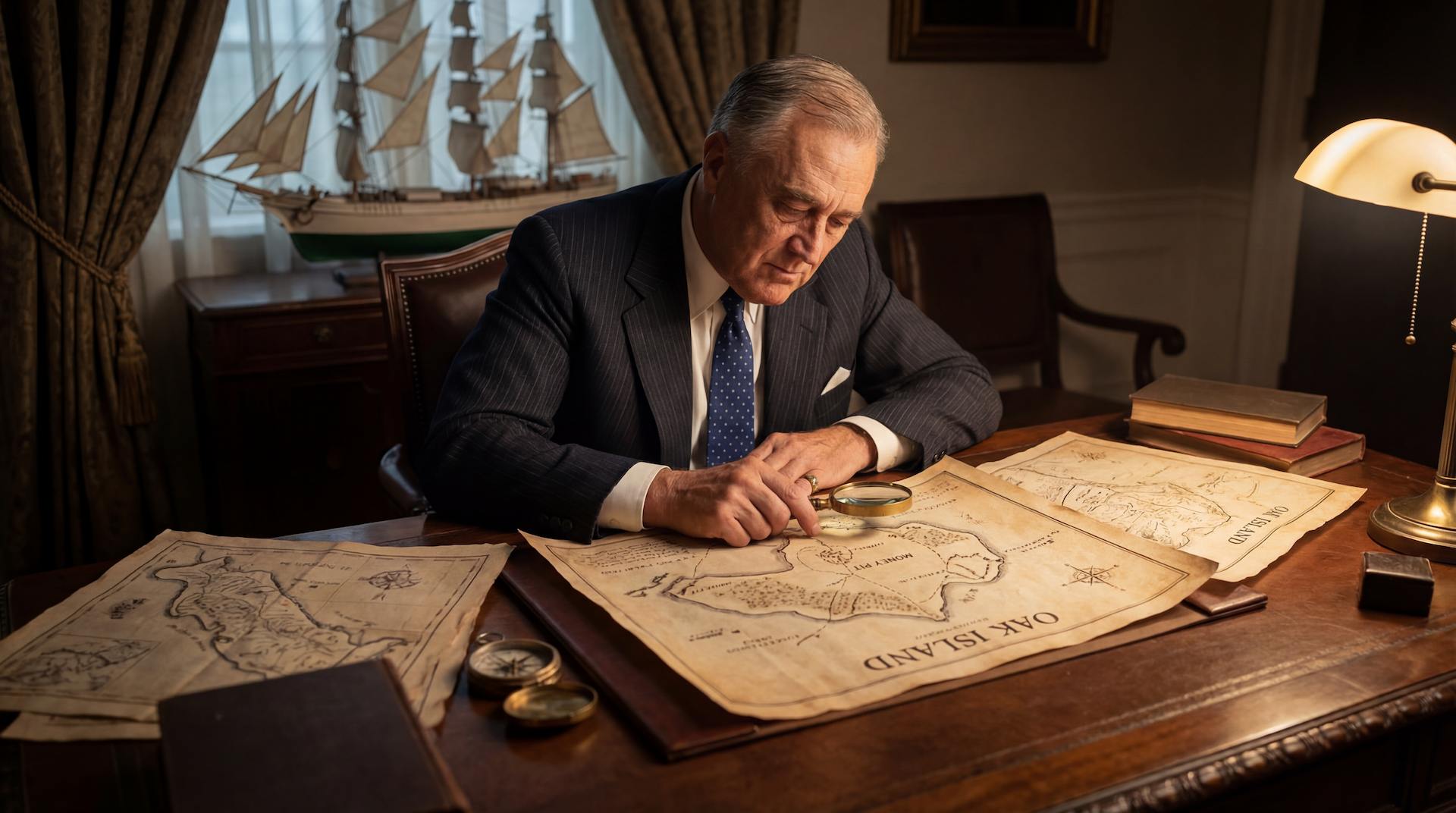 The Roosevelt Connection→
Levasseur's associate Nageon de L'Estang adds another thread. In one letter to his brother, L'Estang wrote that Levasseur, whom he called "our captain," had made sure L'Estang was a Freemason before entrusting him with his papers and secrets. The deliberate confirmation of Masonic membership before the transfer of treasure documents is a detail that resonates with the fraternal secrecy that characterises so much of the Oak Island story.
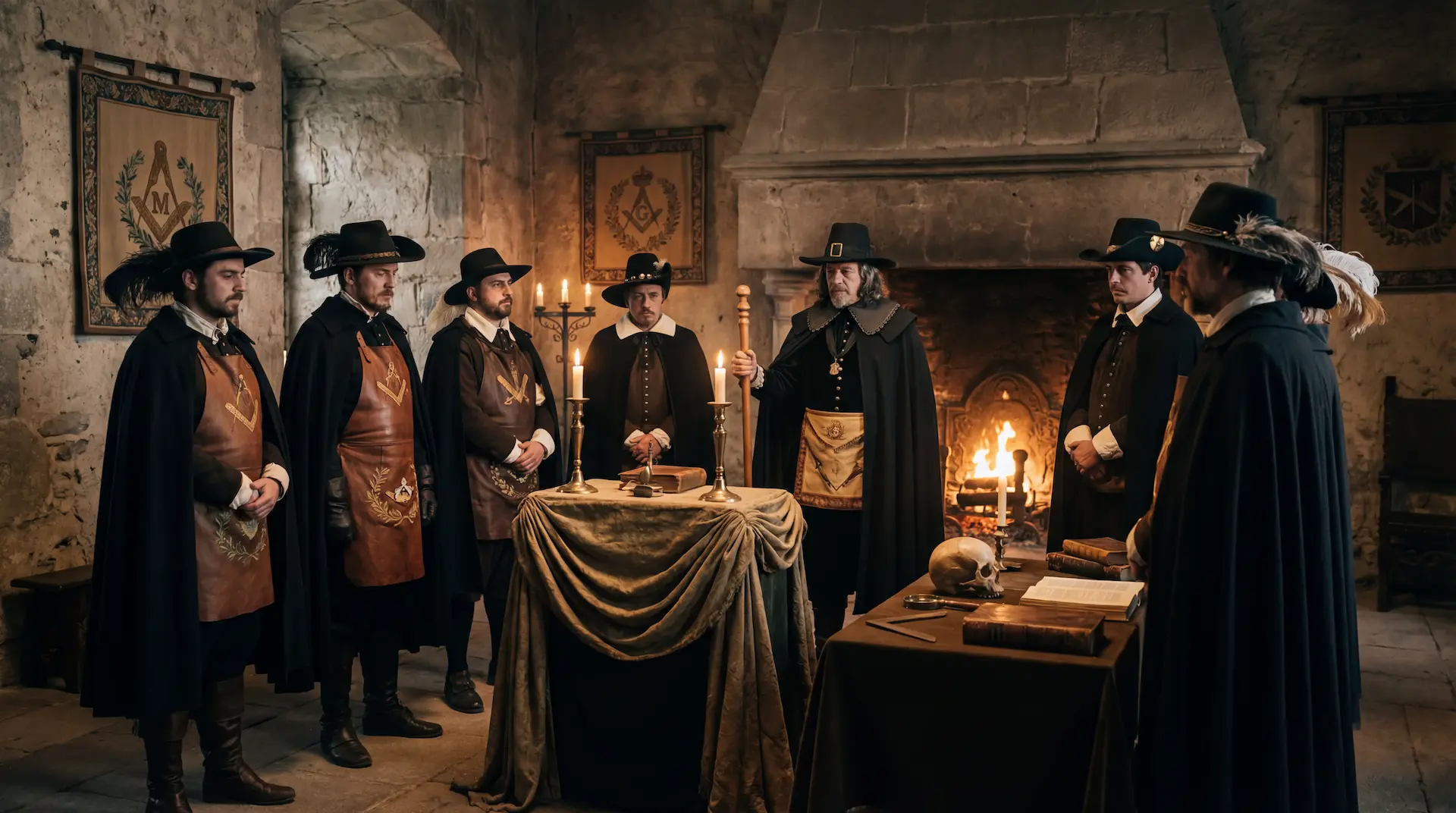 Freemasons on Oak Island→
The Parallel
1 min
Whether Levasseur's treasure lies beneath the Seychelles, on the seafloor off Madagascar, or somewhere else entirely, his story mirrors Oak Island's in ways that go beyond the obvious pirate connection. Both involve an elaborately concealed treasure. Both involve a coded message that has resisted solution. Both involve Masonic symbolism at critical junctures. And both have consumed the lives of searchers who were unable to walk away.
The Cruise-Wilkins family at Bel Ombre and the succession of syndicates at the Money Pit follow the same arc. The treasure is always close. The evidence is always tantalising. The next dig is always the one that will break through.
What makes Levasseur's story distinct is the cryptogram. Oak Island has its inscribed stone, its mysterious symbols, its geometric alignments. Levasseur had seventeen lines of pigpen cipher and a dying challenge to a crowd of strangers. Both puzzles remain unsolved. Both continue to attract people who believe the answer is there, waiting for someone with the right key. For a reader arriving from the Levasseur story, the Oak Island version begins in a depression in the ground on a Nova Scotia island in 1795.
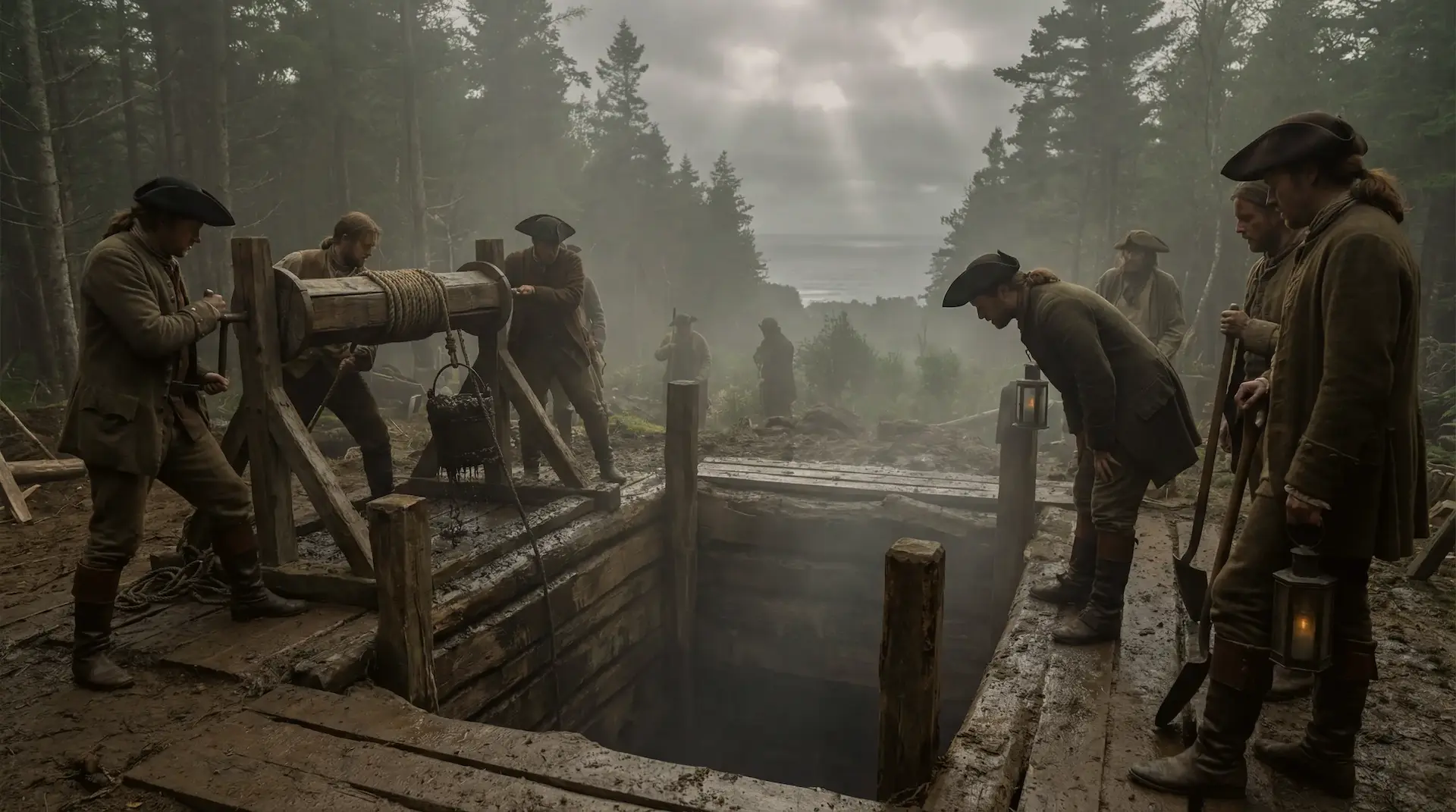 The Oak Island Money Pit→
 Pirates & Privateers on Oak Island→
Sources
1 min
Books
- Johnson, Captain Charles. A General History of the Robberies and Murders of the Most Notorious Pyrates. London: Charles Rivington, 1724. The accounts of Edward England and John Taylor, including the capture of the Portuguese viceroy's ship at Bourbon in 1721.
- La Roncière, Charles de. Le Flibustier mystérieux: Histoire d'un trésor caché. Illustrated by Jean Bernard. Paris: Le Masque, 1934. The first publication of the cryptogram and La Roncière's decipherment.
Articles and reports
- Kuta, Sarah. "Archaeologists Find 300-Year-Old Shipwreck in What Used to Be 'One of the Baddest Pirate Lairs on Earth.'" Smithsonian Magazine, 17 July 2025.
- Staff report. "Divers Discover Portuguese Shipwreck Off Madagascar." Archaeology, 7 July 2025.
- Seychelles Heritage Foundation. "Treasure Site," on Reginald Cruise-Wilkins and the search at Bel Ombre, Mahé.
- Pelling, Nick. "Charles de la Roncière's thoughts on Le Flibustier Mystérieux." Cipher Mysteries, 10 December 2023.