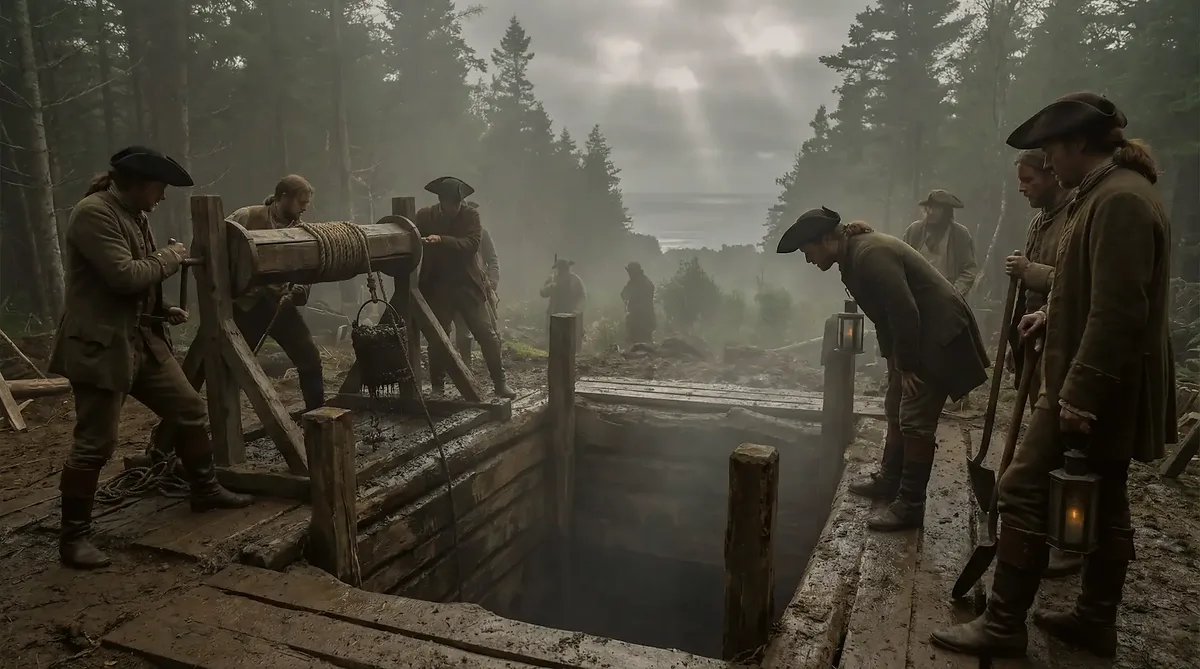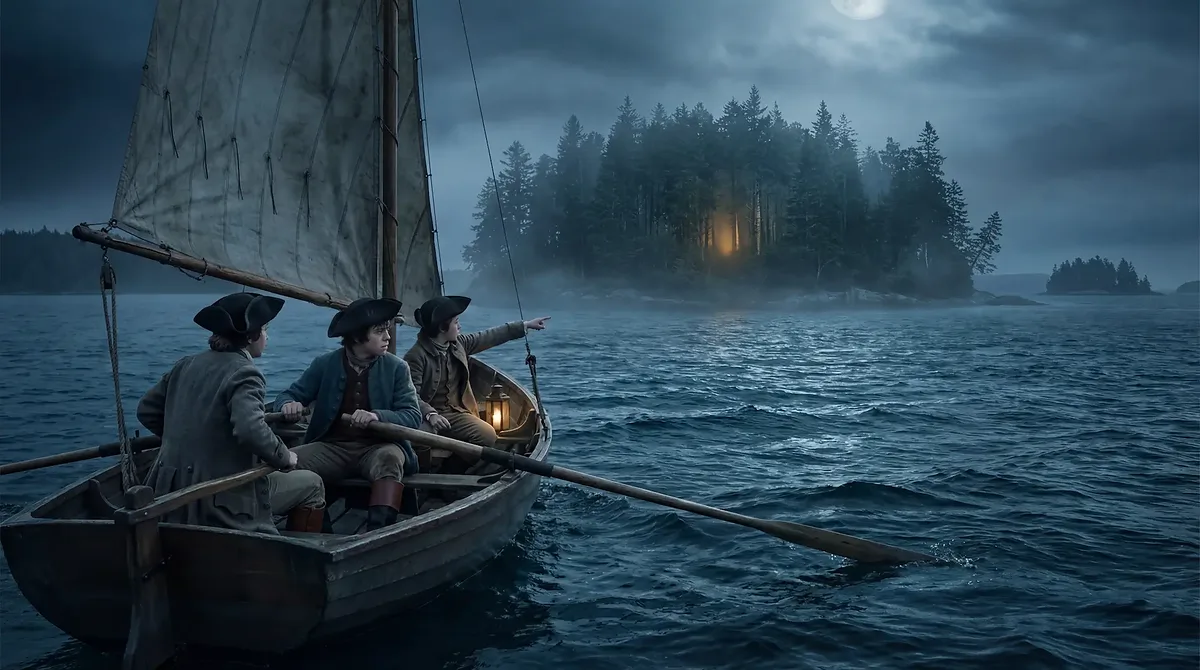
The pirate theory is where Oak Island begins. Not as history, but as a story people believed in enough to start digging. When Daniel McGinnis found that depression in the ground in 1795, the name on everyone's lips was Captain Kidd. More than two centuries later, the question of whether pirates could have built the Money Pit remains open. It is the oldest theory, the most popular, and in many ways the hardest to kill. It is also the theory that turns most easily on a single distinction, the difference between a pirate and a privateer.
Pirate or Privateer
2 min
The two words have been used interchangeably for so long that the difference between them has nearly vanished from popular memory, yet the line was sharp in law and sharply enforced in practice. A privateer was a private mariner who held a commission from a sovereign government, usually called a letter of marque, authorising him to attack and capture the shipping of a named enemy nation in time of war. The commission limited him to specific waters, specific flags, and a share of the prize that was reviewed by an admiralty court. He was, in legal terms, an instrument of state war fought by private means. A pirate was a private mariner who attacked shipping without any such commission, against any flag, at any time, for his own profit. The first was an officer of war in all but uniform. The second was, in the language of seventeenth-century law, hostis humani generis, an enemy of all humankind, subject to summary trial and execution wherever he was caught.
The line was thin and frequently crossed. A privateer whose war ended, whose commission expired, or whose patron lost a throne could find himself a pirate overnight, with the same crew, the same ship, and the same trade. A pirate whose nation had use for his skills could be pardoned and recommissioned. Sir Francis Drake sailed under Elizabeth I's commission for his entire career and died a national hero. Peter Easton held a royal commission, lost it when his war ended, and turned outlaw. William Kidd carried letters of marque from William III himself and was hanged at Wapping for piracy. Edward Teach served as a privateer in Queen Anne's War and went outlaw the moment the war ended. The same coastline that had been a privateering hunting ground became a pirate refuge the instant a peace treaty was signed. For Oak Island, the distinction matters because the men with the engineering manpower, the treasure, and the strategic motive to build something like the Money Pit were almost always privateers first, pirates only after.
The Legend That Started It All
1 min
The original story, first recorded in print in 1863, tells of a dying sailor from the crew of Captain Kidd who confessed that treasure worth two million pounds had been buried on an island east of Boston. The tale had been circulating among New England settlers for decades before McGinnis ever set foot on Oak Island. When he found that circular depression beneath an old oak tree, with a ship's tackle block hanging from one of the branches, it was the Kidd legend he reached for. That assumption shaped everything that followed. The Onslow Company, the Truro Company, and every nineteenth-century expedition dug with pirates in mind. The Money Pit was, from its very first excavation, understood as a pirate vault, and the question of which pirate has been argued ever since.
 Captain Kidd and the Hidden Maps→
Pirate Country
2 min
The case begins with geography. Oak Island sits among the three hundred and sixty islands of Mahone Bay, a body of water named for the mahonne, a low-lying barge favoured by the seamen who frequented these shores. Natural mountain barriers shield the bay by land, and the Tancook Islands close its mouth against the open Atlantic. A vessel beached on the south shore of Oak Island lies hidden behind a dense canopy of oak and is invisible from the bay's entrance. No coastline on the Atlantic seaboard was better designed for a crew with something to conceal.
Through the Golden Age of Piracy, conventionally 1690 to 1730, Nova Scotia was unsettled by Europeans but thick with shipping. The fishing grounds off Newfoundland and Cape Breton drew thousands of mariners every summer, and historian Dan Conlin has shown that pirate crews routinely worked these waters to recruit hands, stock provisions, and careen their hulls before heading south for the winter. The region was one of four nodes central to the Golden Age, valued less for what could be taken from it than for what it could supply.
The documented record runs deep on both sides of the legal line. Peter Easton was operating a fleet of forty ships out of Harbour Grace, Newfoundland, as early as 1612, the largest force ever raised on the Atlantic coast by a man who had once held a royal commission and now answered to none. A century later, the threat had become structural. Bartholomew Roberts, who carried no commission at any point in his career, raided Canso in June 1720 and crossed to Trepassey in Newfoundland the same summer, where he seized twenty-two merchant vessels and a hundred and fifty fishing ships in a single harbour. Two years later, Ned Low was terrorising the fleets at Shelburne. By the mid-1720s the governor of Fortress Louisbourg was so alarmed by the ongoing threat that he wrote to France asking for naval reinforcement. For more than a century, pirates and privateers treated this coastline as a place to recruit, resupply, and disappear.
One political event helps explain the timing. The Treaty of Utrecht, signed in 1713, ended Queen Anne's War and transferred Acadia from French to British control. Port Royal, the French stronghold on the Bay of Fundy, had fallen in 1710 and been renamed Annapolis Royal. French privateers who had operated under royal commission lost their legal cover overnight. Some relocated to the new French fortress at Louisbourg. Others drifted into outright piracy, the same men in the same ships sailing the same coastline they had raided lawfully for decades. The conventional start date of the Golden Age of Piracy, 1715, sits two years after the treaty for a reason.
Illustrious Men, Notorious Names
4 min
The roster of figures with plausible Oak Island connections is longer and more distinguished than the popular image of piracy allows. It begins not with the Golden Age outlaws but with the men the Crown sent to do the same work under licence. Sir Francis Drake circumnavigated the globe between 1577 and 1580 with Elizabeth I's commission in his sea-chest, returning to England with so much Spanish silver that the queen's share alone exceeded the entire annual revenue of the realm. Drake was a privateer for his entire career, never a pirate by English law, though Spain regarded him as one and offered a substantial bounty on his head. He buried captured treasure in Panama and on the California coast, drew his sailing crews from the Cornish ports, and recruited his mining specialists from the tin works of the West Country. Local historian Paul Speed has argued that Drake, who is known to have raided Nombre de Dios in Panama and to have used coastal vaults to stage plunder, possessed both the engineering crews and the strategic incentive to construct something like the Money Pit. Whether Drake himself ever reached Nova Scotia waters is unproven, but his crews moved freely across the North Atlantic, and the cultural template he established, the privateer with state sanction and engineering manpower, defined the figures who followed him.
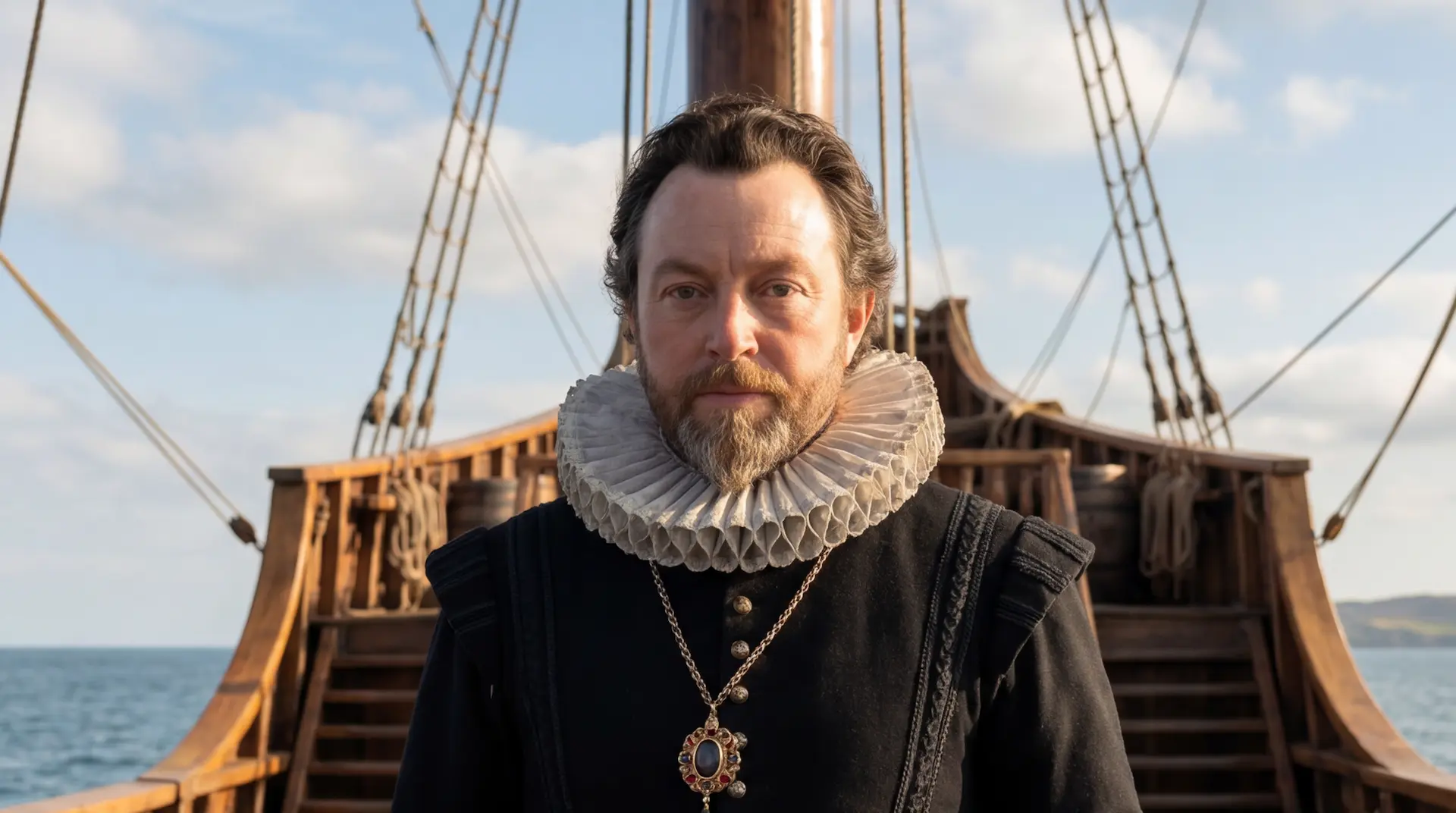 Sir Francis Drake, the Queen's Privateer→
Captain William Kidd is the most famous name attached to the Oak Island story and the one whose legend started the digging. Kidd began his Atlantic career as a privateer, carrying letters of marque from William III to hunt French shipping and the pirates of the Indian Ocean. He was hanged at Wapping in 1701 for crimes that his defenders have argued ever since were committed within the scope of his commission. Whether Kidd died a pirate or a privateer wronged by his backers remains the oldest unsettled question in Atlantic legal history. What is certain is that he buried treasure on Gardiners Island in 1699, proof that at least one commissioned mariner did hide valuables along the Atlantic coast. His execution ensured that his name attached itself to every unrecovered hoard from Newfoundland to the Carolinas. Henry Every, the King of Pirates, held no commission of any kind. He pulled off the richest pirate raid in history when he seized the Mughal ship Ganj-i-Sawai in 1695 and then vanished completely. His treasure was never recovered, and seventeenth-century Yemeni coins consistent with his plunder have since surfaced at sites across Rhode Island and Massachusetts, proof that his crew passed through New England waters. One version of the Oak Island theory places Kidd and Every as partners in a communal bank on the island, hiding their combined fortunes in a shared vault.
The communal bank theory extends further still. Beginning around 1625 and spanning into the early eighteenth century, mariners operating out of Port Royal, Jamaica, including Sir Henry Morgan (a commissioned privateer for most of his career and a colonial lieutenant governor at its end), Jean Levasseur, and Bartholomew Sharp, may have used Oak Island as a collective stash. Edward Teach, better known as Blackbeard, served as a privateer during Queen Anne's War and went outlaw the moment the war ended in 1714, a textbook case of the line crossed by a peace treaty. His Atlantic operations from 1716 to 1718 placed him within easy sailing of Mahone Bay, and his much-repeated boast that he had buried his treasure where none but Satan and himself could find it has anchored him to every undiscovered hoard from Carolina to Nova Scotia. Peter Easton, who Marty Lagina has named as the most likely single candidate for the Money Pit, ranks among the wealthiest mariners in history. He commanded forty ships, retired to Savoy with the title of Marquis, and was never tried, never robbed of his fortune, and never required to account for what he had buried. Easton's career spanned both sides of the legal line: royal commission first, outright piracy after.
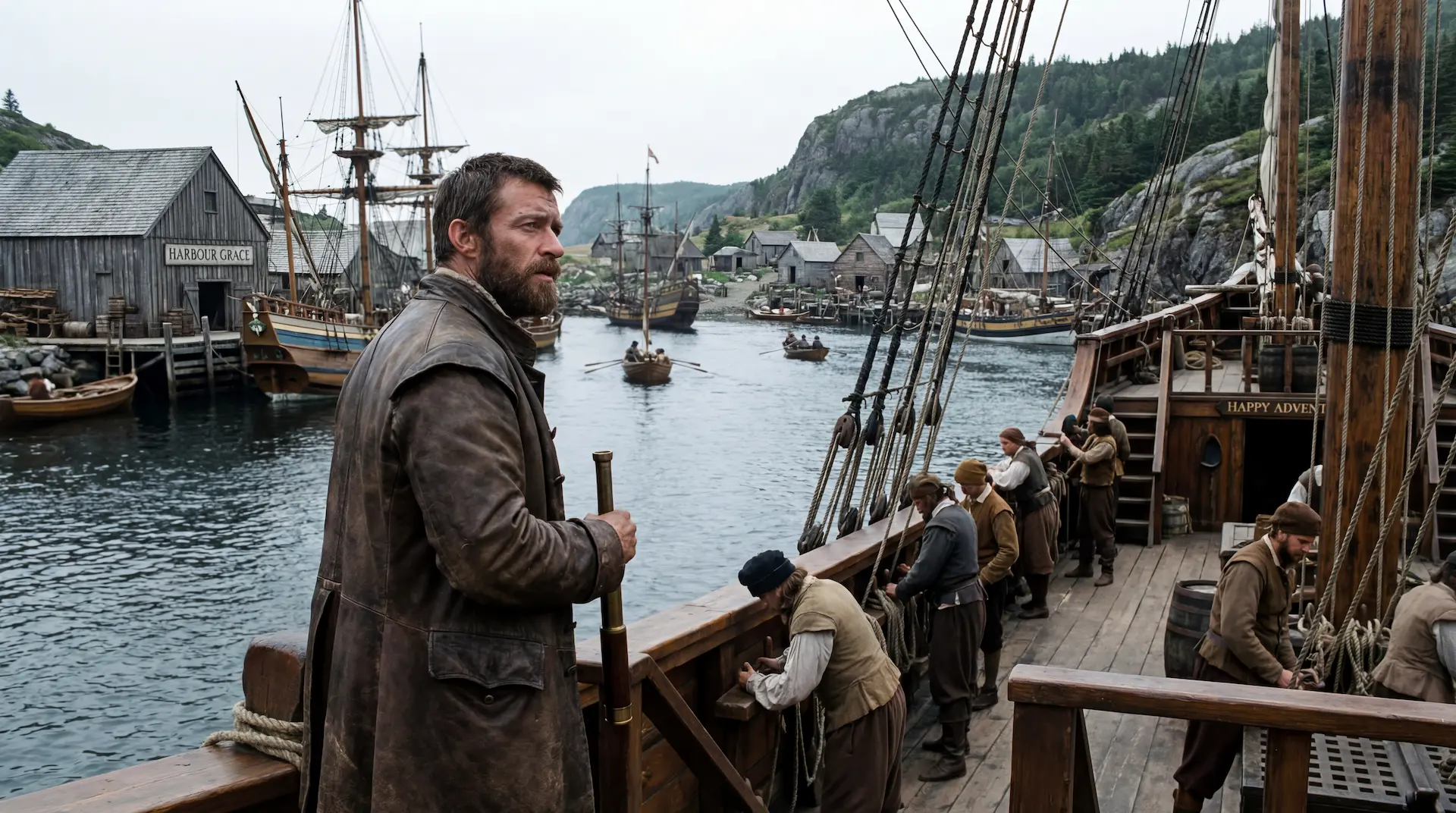 Peter Easton, the Pirate Admiral→
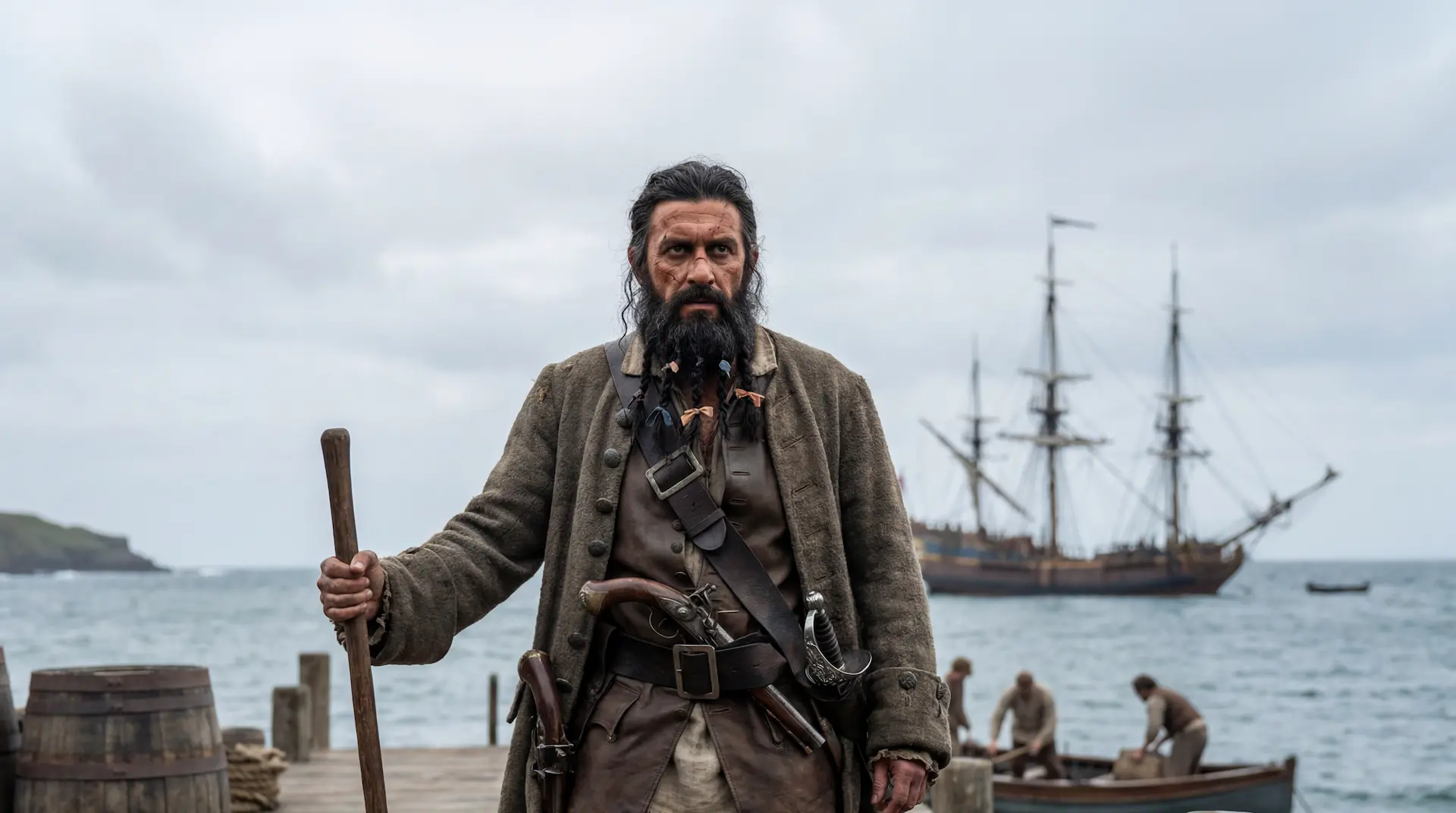 Blackbeard, the Devil's Bargain→
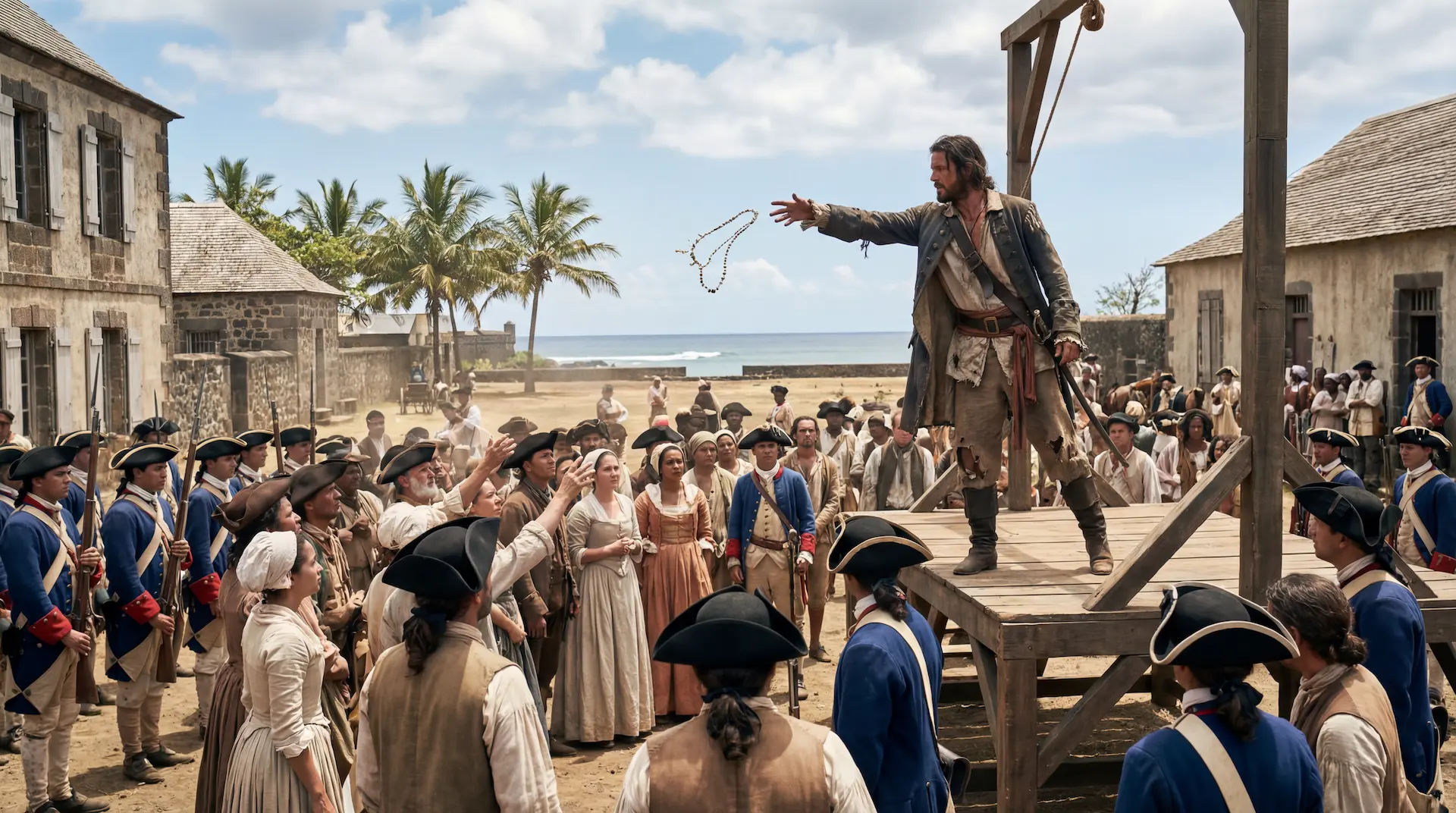 La Buse Cryptogram: Levasseur's Unsolved Code and Oak Island→
Olivier Levasseur, called La Buse, adds the most cryptic chapter. A French pirate who never held a commission worth keeping, he was hanged on Réunion in 1730, and at the gallows threw a coded cryptogram into the crowd with the cry that whoever could read it would find his treasure. The cipher has never been solved. Levasseur operated principally in the Indian Ocean, but his correspondence and crew records place him in Atlantic waters earlier in his career, and treasure hunters have linked his unsolved cryptogram to buried hoards on three continents.
Bartholomew Roberts, the Welsh pirate known as Black Bart, was the most successful outlaw of the entire Golden Age, taking more than four hundred prizes in three years without ever carrying a commission. He is the only named pirate of that era with a documented mainland Nova Scotia raid: Canso in June 1720, less than two hundred nautical miles from Oak Island along the same Atlantic shore. Local Cape Breton tradition, set down in detail by David Dow in 1977 and corroborated by an independent Newfoundland source that identifies the 1720 Trepassey raider as Captain Roberts from Mira River, places a hidden careening yard of his on the Mira River, two hundred and fifty nautical miles east of Mahone Bay. If the tradition holds, Roberts maintained the closest known operating base of any Golden Age pirate to Oak Island, a working coastline he raided personally and a sheltered river he used to refit between voyages.
 Bartholomew Roberts→
Sailors, Soldiers, and Specialists
1 min
The standard objection to the pirate theory is engineering. The Money Pit, with its precisely layered platforms, its fills of charcoal, putty, and coconut fibre, and its apparent flood tunnel system, required skills that disorganised pirate crews did not possess. Pirates were sailors and fighters, not civil engineers. The objection holds if pirate is taken to mean a band of mutineers between raids, but it weakens sharply when the question is reframed around privateers. Privateer crews, operating under government commission, routinely included former naval officers, experienced navigators, military engineers, and tradesmen drawn from merchant and military backgrounds. Drake sailed under Elizabeth's letters of marque with Cornish miners in his hold. Easton held a royal commission before turning outlaw and kept the crews trained under that commission for years afterwards. Kidd carried letters of marque from William III himself. Blackbeard had served as a privateer during Queen Anne's War. The men who matter for Oak Island are not the rabble of fiction but mariners whose careers began under flag and whose crews carried the technical training the flag had paid for.
Among ordinary crew, the skills ran wider still. The Cornish miner's pick recovered from a depth of 127 feet during William Chappell's 1931 excavation has drawn attention from theorists who note that Henry Every was known to recruit west countrymen, many of whom would have had experience working the tin mines of Cornwall. Drake's crews drew from the same labour pool a century earlier. A privateer expedition with access to military engineers, ship's carpenters, and Cornish miners could command a broader range of construction skills than the popular image of piracy suggests, and could keep a long secret if its members were bound by oath, articles of the company, and shared interest in the return.
 The Chappell Family and the Vault Beneath Oak Island→
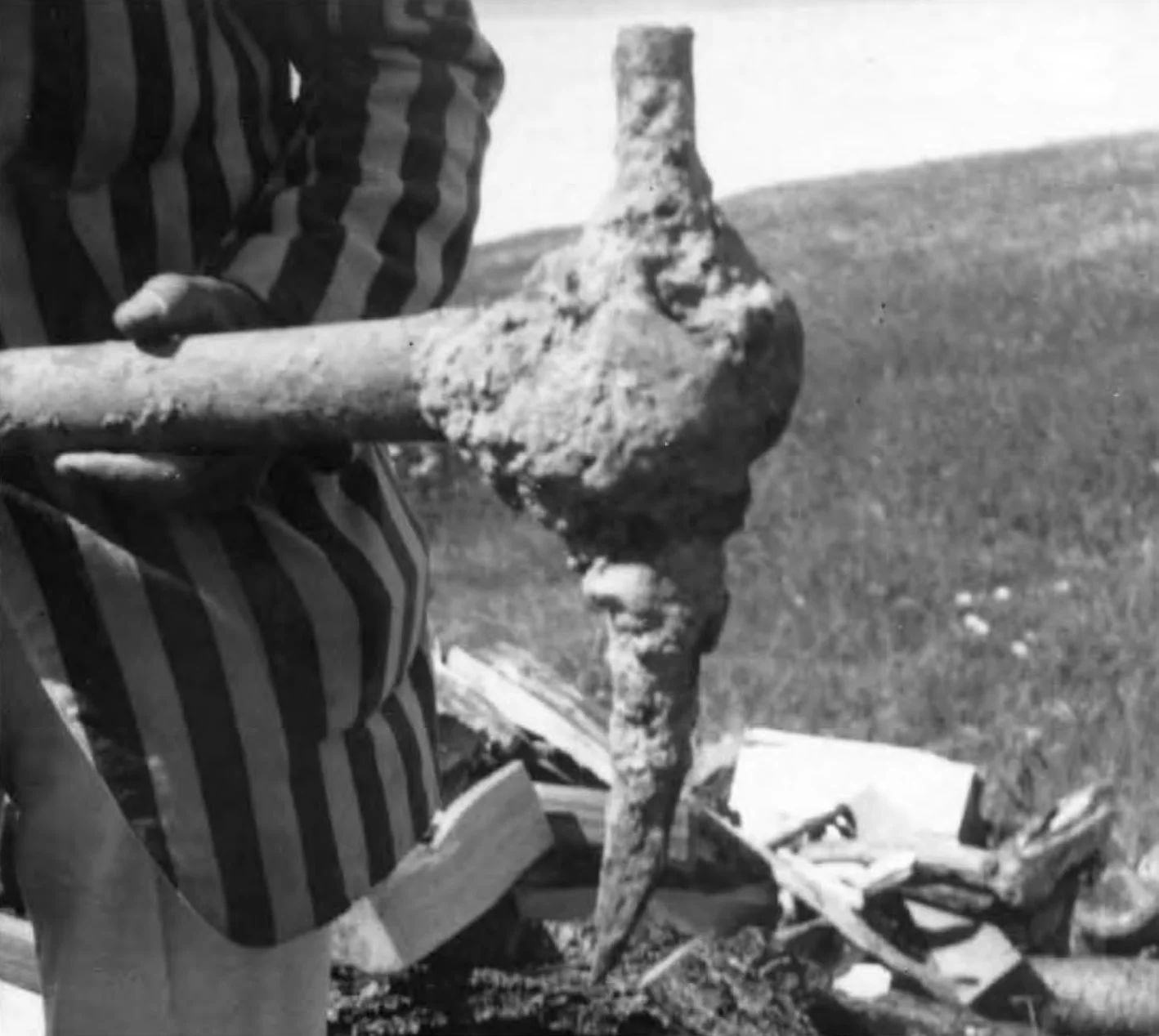 Cornish miner's pick→
The Privateer of Lot 26
2 min
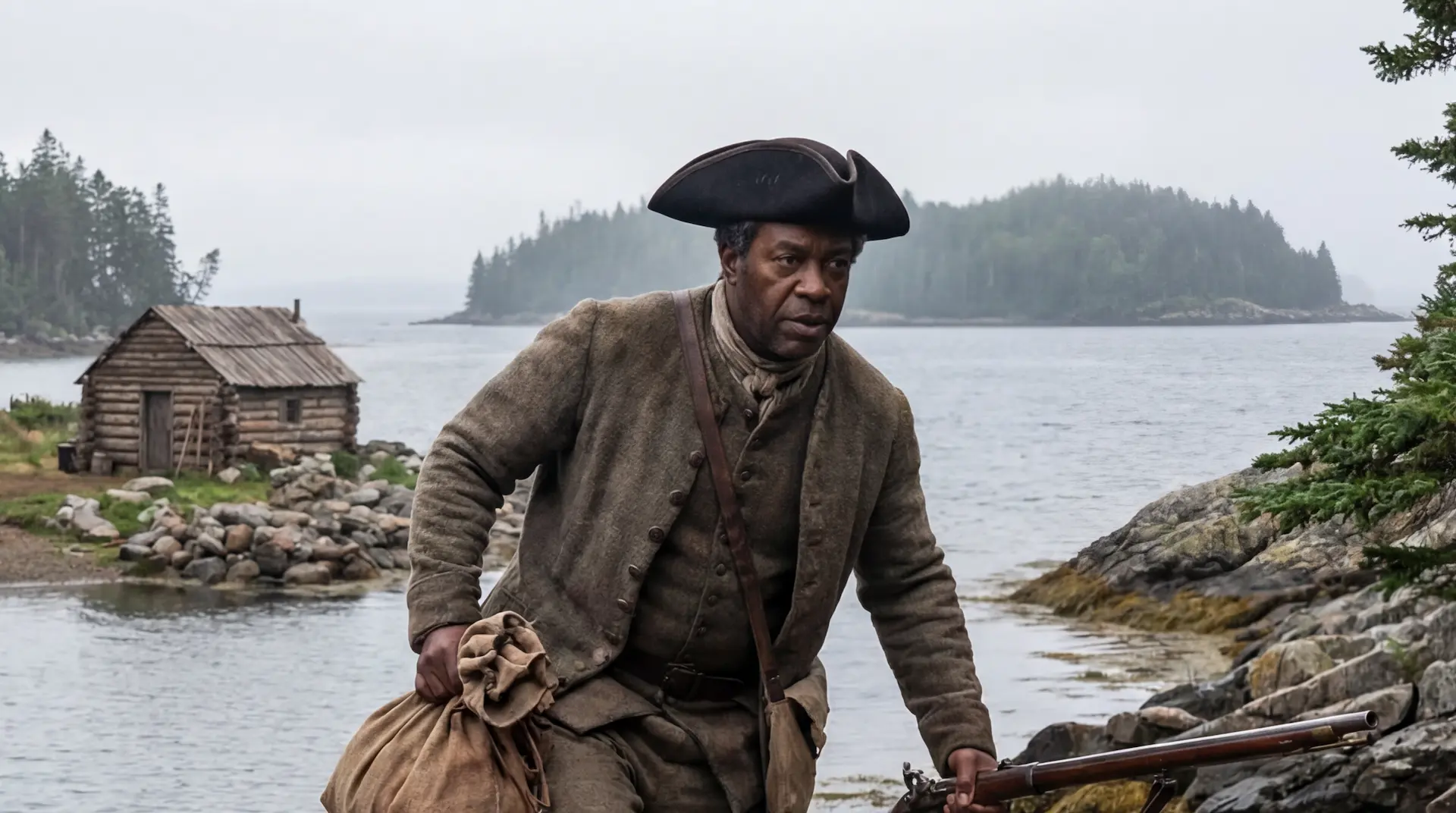
For all the speculation about pirates who may have passed through Mahone Bay, only one mariner of the pirate-privateer world is documented by name as an Oak Island lot owner. Captain James Anderson, a sea captain from Fell's Point in Baltimore, took the American patriot's oath in 1776 and was commissioned as a privateer on the rebel side, made a lieutenant on a galley before receiving a command of his own. In April 1778 he defected to the British at Philadelphia and received a permit from General William Howe to procure provisions for the garrison in his own ship, his second privateering commission in two years, this one British. Captured by rebel forces in late 1779, he was imprisoned at Richmond and charged with high treason in a letter sent from the Maryland Council to Governor Thomas Jefferson. He was somehow released, fled north, and reached Halifax by 1783. The following year he joined Chester Lodge No. 9, the closest Masonic lodge to Oak Island. In 1785 he took possession of Lot 26, which he held for three years before selling to Samuel Ball in 1788.
 Samuel Ball, the Unlikely Oak Island Owner→
Anderson is called a pirate by The Curse of Oak Island, which has consistently used the term to describe him across his appearances since Season 5, and by Scott Clarke, who treats him as a pirate throughout his Oak Island research and in Oak Island Odyssey. The press coverage of his rediscovery has followed that lead, with Monsters and Critics introducing him in 2020 as "Freemason and pirate: The amazing story of Captain James Anderson." The documentary record describes a different man, one who held legal commissions on both sides of the Revolutionary War and was never charged with piracy. The charge against him in Virginia was treason, the separate crime that applies when a privateer changes flag mid-war. He is the only Oak Island lot owner from the pre-Money Pit era whom the record identifies as both a Mason and a working privateer of either commission. His sea chest, preserved by descendants in Wolfville, Nova Scotia, still contains his 1791 Master Mason certificate, the 1778 purchase document for his privateer schooner Betsy, and four keys, three of which fit nothing the family has ever identified. He died in the West Indies in 1796, one year after Daniel McGinnis and his companions reported finding the depression that would become the Money Pit. If proximity to Oak Island is the measure, Roberts had the nearest pirate base and Anderson the nearest privateer deed.
 Captain James Anderson: The Pirate Oak Island Owner→
Simply Pirates
1 min
The pirate theory persists because it answers the simplest problem Oak Island poses, the problem of place. Small, wooded, uninhabited, sheltered in a bay already known to pirates and privateers alike, accessible by sea but invisible from the mainland. The geography fits, and the timeline works. Carbon dating of wood and other materials recovered from the pit has returned dates ranging from the early 1600s to the mid-1700s, a window that encompasses the careers of Drake, Easton, Kidd, Every, Blackbeard, Roberts, Levasseur, and dozens of other mariners on both sides of the legal line operating in Atlantic waters. The pirate theory is the oldest explanation for Oak Island, and whatever lies beneath the island, the pirates got there first in the imagination.