What Is a Dry Dock?
1 min
A dry dock is an enclosed basin built at the water's edge that allows a ship to float in, after which the entrance is sealed and the water pumped or drained out, leaving the vessel resting upright on the dock floor with its entire hull exposed. Unlike careening, which tips a ship onto its side on a beach using ropes and tackles, a dry dock keeps the vessel level and stable, allowing workers to access every part of the hull without placing the structure under the enormous strain of being hauled over. Dry docks could handle larger ships, permitted more thorough repairs, and reduced the risk of structural damage during maintenance. They were also far more expensive and difficult to build, requiring solid walls to hold back the surrounding water, a reliable drainage system, and a watertight gate or entrance that could be opened and closed with the tide.
During the Age of Sail, dry docks were prized assets. France had few of them, forcing the French Navy to careen its ships routinely, a disadvantage against the British, who by the late 18th century maintained 24 dry docks in home waters. In colonial North America the situation was worse. Halifax, the principal Royal Navy base on the continent, relied on a careening wharf from 1759 until a proper dry dock was finally constructed in 1887, more than a century later. Any facility capable of docking a ship upright and dry in colonial Nova Scotia would have been a rare and strategically valuable installation.
The Structures at Smith's Cove
2 min
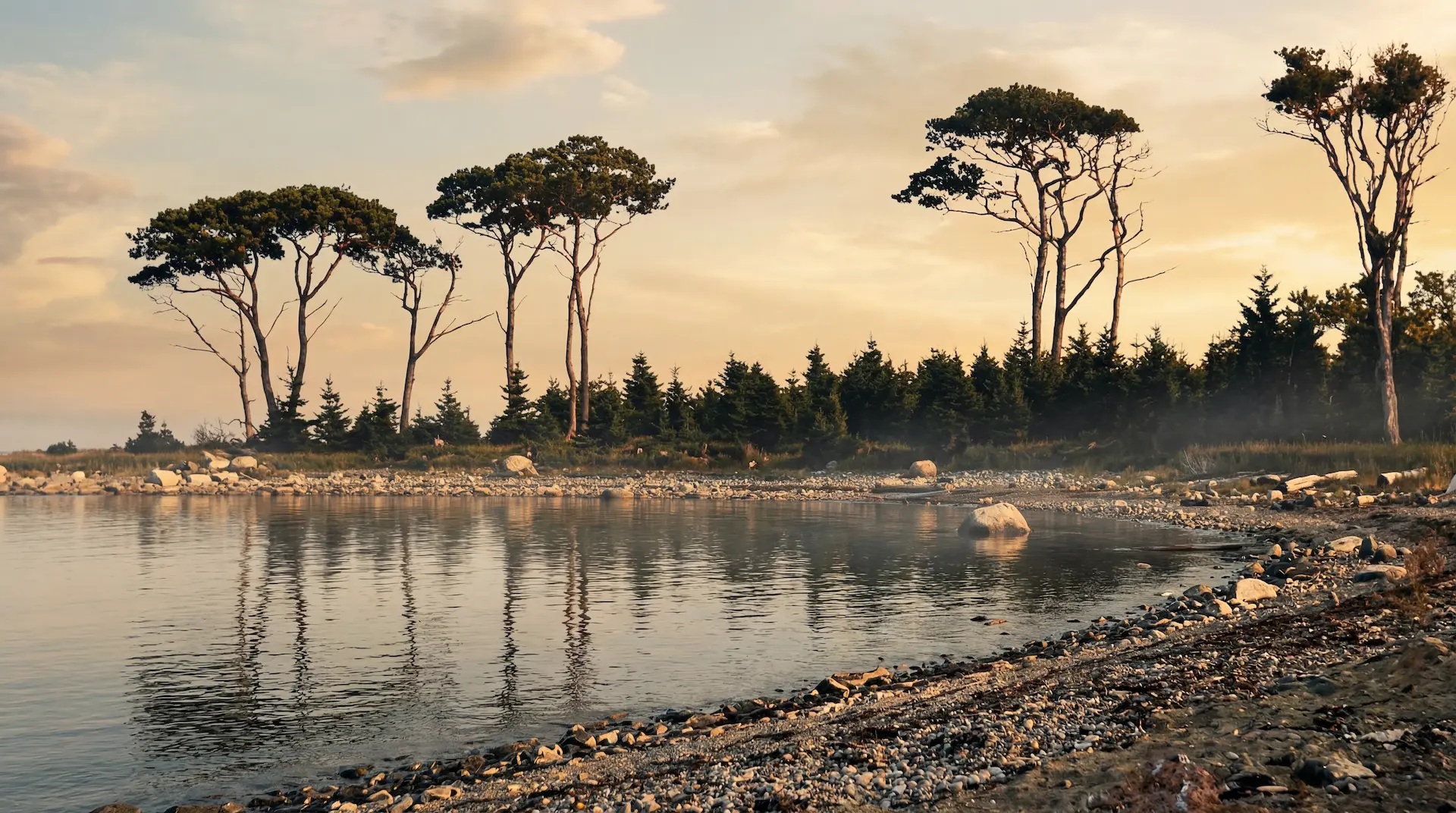
The eastern shore of Oak Island opens into a sheltered tidal inlet known as Smith's Cove, and since the mid-19th century it has yielded evidence of elaborate construction that predates the 1795 discovery of the Money Pit. In 1850, the Truro Company built a cofferdam around the cove and uncovered five stone-lined box drains arranged in a fan pattern, covered with layers of coconut fibre and eelgrass. These drains converged into a single channel leading inland, and for over a century they were interpreted exclusively as part of a booby-trap flood system designed to protect the Money Pit with seawater.
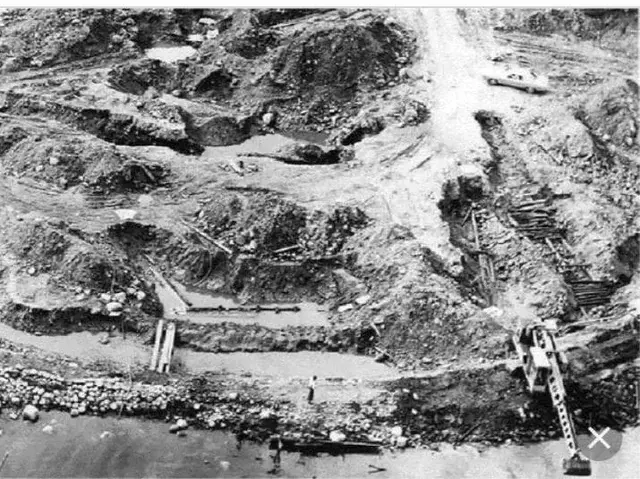
The Lagina team's cofferdam excavation in Seasons 6 and 7 exposed a far more complex picture. Beneath several feet of mud, archaeologist Laird Niven and the team uncovered a large U-shaped timber structure, roughly 65 feet long, built from logs exceeding 24 inches in diameter. Dan Blankenship had first encountered it in the early 1970s, reporting that the timbers bore Roman numerals carved at regular intervals, the kind of assembly marks used by shipwrights and builders to ensure components fitted together in the correct sequence. Nearby, the team found an L-shaped structure of different construction, and a wooden platform composed of long logs lashed together that Rick Lagina identified as a slipway, or ramp. Dendrochronologist Colin Laroque of the University of Saskatchewan dated the U-shaped structure to red spruce felled in 1769 and the slipway to red spruce felled in 1771, placing both firmly in the pre-discovery period. Niven remarked that the complete absence of iron fastenings in the timber structures was unprecedented in his experience of Nova Scotia archaeology.
The surrounding soil has produced artifacts consistent with colonial maritime activity. Metal detection expert Gary Drayton recovered crib spikes that blacksmith Carmen Legge dated to between 1650 and 1800, the type used to build wharves, derricks, and heavy platforms. Ox shoes indicated the presence of draught animals for heavy hauling. A flat military button dated to the 1700s suggested a connection to military or naval personnel. Cut lead consistent with ship waterproofing material and a timber bearing a precise 45-degree cut confirmed deliberate construction rather than natural deposition. Coconut fibre from the site has been carbon-dated to between 600 and 800 years old, and eelgrass from the box drains returned a 95 percent probability range of 1472 to 1650 AD.
A Dry Dock at Smith's Cove
2 min
When reassembled as a single installation, the Smith's Cove structures begin to resemble something specific: a tidal dry dock. The U-shaped structure, with its heavy walls open at one end toward the sea, forms the basin. A vessel could float in at high tide through the open end, which would then be sealed with a temporary gate or packed with clay and timbers to hold back the water. As the tide fell, the box drains would channel residual water away from the basin floor, drawing it through the coconut fibre filter layer that prevented sand and sediment from clogging the drainage channels. With the basin dry, the ship would rest upright on the dock floor, its full hull accessible for scraping, caulking, and repair. When the work was finished, the gate could be opened at the next high tide to refloat the vessel.
 U-shaped wooden structure→
The slipway dated to 1771 fits this reading as a ramp for guiding vessels into the dock or for launching smaller boats. The crib spikes match the heavy hardware found at documented colonial port facilities. The ox shoes point to the animal labour needed to operate hauling equipment, pumps, or capstans. The Roman numeral assembly marks on the U-shaped timbers suggest prefabrication, with components numbered for correct reassembly on site, a standard practice in shipbuilding and dock construction of the period. Even the L-shaped structure, built differently from the U-shape, could represent an extension or a secondary work platform added during a later phase of construction.
The dendrochronology dates anchor the installation to 1769-1771, a period when Nova Scotia was transitioning from French to British colonial control and maritime traffic along the coast was intensifying. The Halifax dockyard had been operational for barely a decade and offered only a careening wharf, not a dry dock. Demand for ship repair facilities far exceeded supply, and an enclosed docking basin in a sheltered cove, even a modest one, would have been a valuable asset for anyone operating vessels in Mahone Bay.
Competing Interpretations
1 min
The dry dock reading is not the only explanation proposed for the Smith's Cove structures. The traditional interpretation, dominant since 1850, holds that the box drains were engineered to flood the Money Pit with seawater as a defensive measure. Frederick Blair's 1898 dye test, which showed red dye poured into the Money Pit emerging at Smith's Cove, has long been cited as proof of this connection. Under this reading, the U-shaped structure and slipway are components of the same elaborate protective system built by whoever deposited the treasure.
An alternative theory, advanced by researcher and author Joy Steele, reframes the cove as the operational centre of a naval stores enterprise. In this reading, the cofferdam kept Smith's Cove dry not to repair ships but to facilitate tar production. The box drains managed groundwater seepage, and the structures supported crane and hauling equipment for the industrial operation. Steele's theory connects to the kiln discovered on Lot 15, which has been identified as a tar kiln consistent with British colonial naval stores production.
A third possibility, proposed through the Oak Island Solved research, challenges whether the U-shaped structure belongs in Smith's Cove at all. This theory identifies the timbers as the bottom chord of a barn roof, built around 1770 by Dr. Jonathan Prescott, who owned property on nearby Quaker Island. Destructive storm waves, the argument goes, carried the collapsed roof across the water and deposited it in the hollow behind the old cofferdam, where subsequent surges buried it under mud. The theory draws on the fact that the Truro Company's 1850 excavations made no mention of any timber structures in the cove, and that the U-shaped structure has no foundations.
The Coconut Fibre Question
1 min
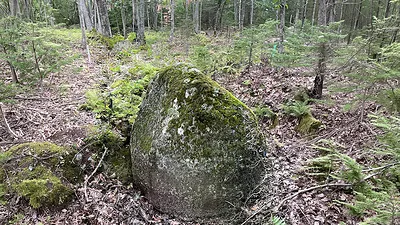
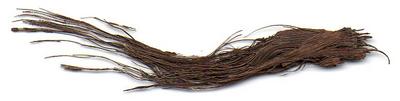
One of Oak Island's most persistent puzzles is the presence of coconut fibre more than 1,500 miles from the nearest coconut palm. For generations, it has fuelled theories about ancient visitors from tropical latitudes. A dry dock offers a more grounded explanation. Coconut fibre was a standard maritime commodity in the colonial period, used for rope, caulking, and filtration aboard ships that traded in the Caribbean and across the Atlantic. A repair facility servicing such vessels would naturally accumulate the material as a byproduct of the ships it maintained: old caulking stripped from hulls, spent rope and cordage, and packing material removed from cargo holds. Repurposing this fibre as a drainage filter beneath the box drains would have been a practical use of material already on hand.
 Oak Island Mystery Trees→
The carbon dating of the coconut fibre, however, complicates this picture. Samples from Smith's Cove have returned dates of 600 to 800 years old, placing the material centuries before the 1769 construction date of the U-shaped structure. If the fibre was contemporary with the box drains, it should date to the 18th century. The older dates suggest either that the fibre was already present in the soil from earlier activity on the island, or that it arrived aboard ships that had carried it for a very long time, neither of which has been conclusively demonstrated.
 Coconut fibre (Smith's Cove)→
What It Explains, and Where It Stops
1 min
The strength of the dry dock theory lies in its ability to account for the Smith's Cove evidence within a single, coherent, and historically documented framework. Every major structural element found in the cove has a functional parallel in ship repair infrastructure: the U-shaped basin, the drainage system, the filter material, the slipway, the wharf hardware, and the evidence of heavy animal labour. The dendrochronology dates fall within the right period, and the location, a sheltered tidal cove on an island in a region acutely short of docking facilities, fits the pattern of informal maritime installations that served colonial shipping throughout the Atlantic world.
Where the theory reaches its limits is at the boundary of Smith's Cove itself. It does not address the Money Pit, the medieval-period artifacts found on other parts of the island, the anomalous metals detected deep in the bedrock, or the carbon dates that place activity on Oak Island centuries before the colonial era. A dry dock built in the 1770s says nothing about what may have happened on the island in the 1200s. But these limitations do not necessarily weaken the theory so much as define its scope. A ship repair station and a treasure deposit are not mutually exclusive. Whoever buried something in the Money Pit, whenever they did it, would have needed to maintain the vessels that brought them there. The dry dock at Smith's Cove may explain not the mystery itself, but the working harbour that made the mystery possible.