The Zeno Narrative
1 min
In 1558, a Venetian nobleman named Nicolò Zeno the Younger published a collection of letters and a map that had been sitting in his family's archives for over a century. The documents, attributed to his ancestors Niccolò and Antonio Zeno, described a series of voyages through the North Atlantic in the 1390s under the command of a prince they called Zichmni.
The letters described how Niccolò Zeno had been shipwrecked in the North Atlantic and rescued by this prince, who ruled over islands to the north of Scotland. In gratitude, the Zeno brothers placed their considerable maritime expertise at Zichmni's disposal. What followed, according to the narrative, was a systematic program of exploration that took the expedition from the Faroe Islands to Iceland, to Greenland, and ultimately across the Atlantic to a land the Zenos called Estotilanda.
The Zeno Map that accompanied the letters proved remarkably accurate for its time. It charted the North Atlantic with a precision that sailors of many nations relied on for the next 150 years. Some researchers have noted that its accuracy raises its own questions: how could navigators in the 1390s have produced a map this detailed, unless they were working from older charts, perhaps carried in secrecy from the medieval East?
Prince Zichmni
1 min
The identification of Zichmni has been debated since the letters were first published. In 1784, Johann Reinhold Forster proposed that Zichmni was in fact Henry Sinclair, the first Earl of Orkney. The name, Forster argued, was a corruption introduced through Venetian transliteration of a Scottish title.
Henry Sinclair was born around 1345 and inherited the titles of Baron of Roslin and Lord High Admiral of Scotland while still a teenager. In 1379, King Håkon of Norway invested him as Earl of Orkney, granting him dominion over both Orkney and Shetland. He was, by any measure, a powerful northern lord with the resources and naval authority to mount a transatlantic expedition.
The Sinclair family's later history only deepens the connection. Henry's grandson William Sinclair founded Rosslyn Chapel in 1446, a structure whose elaborate carvings have fueled centuries of speculation about what the Sinclairs knew and when they knew it.
The Voyage of 1398
1 min
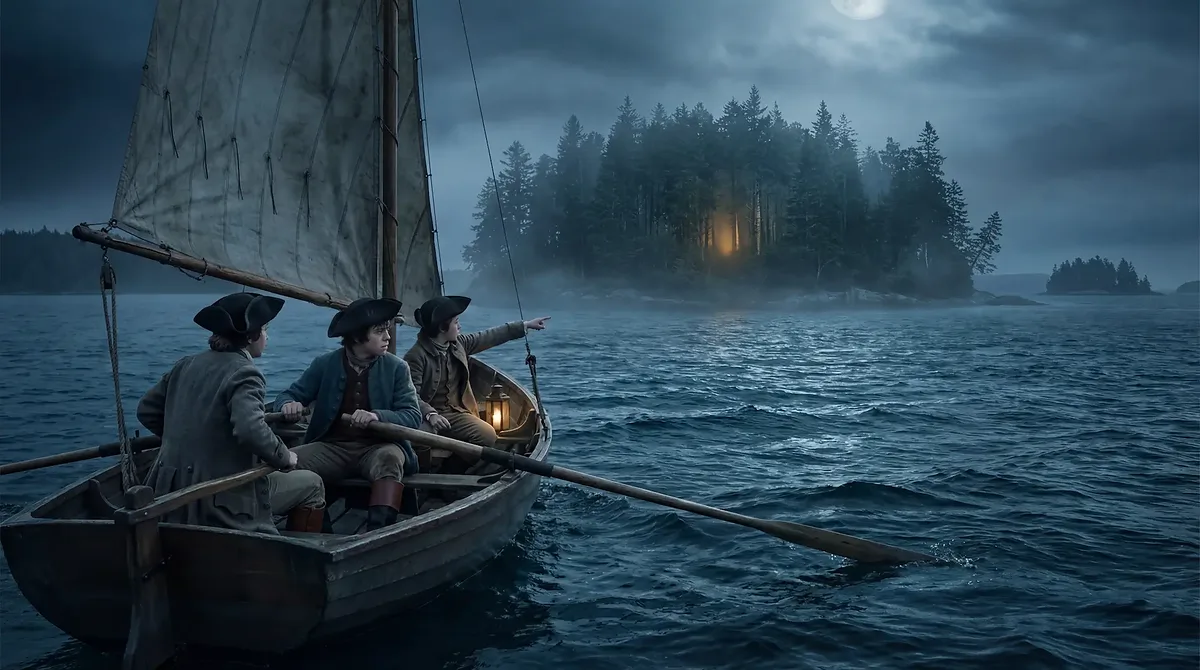
According to the Zeno Narrative, the expedition departed in the spring of 1398 with a fleet of twelve ships and approximately 300 men. Antonio Zeno served as navigator. Their route took them from Orkney to Iceland, then to Greenland, and finally six days' sailing west to a landfall in Newfoundland.
The reception in Newfoundland was hostile. The narrative describes the expedition being attacked by indigenous people, with several men wounded and killed while attempting to take on fresh water. Sinclair withdrew and continued south along the coast until reaching a more welcoming harbor.
The narrative describes what they found next: "We brought our barks and our boats to land, and on entering an excellent harbor, we saw in the distance a great hill that poured forth smoke." This description has been matched to the pitch deposits at Pictou and Stellarton in Nova Scotia, the only location on the North American coast with the open bitumen seeps described in the text. Mi'kmaq communities had long used these deposits and lived in nearby caves.
The timing of the arrival was established through a detail in the narrative itself. Sinclair named their anchorage Trin Harbor, from Trinity. The fleet arrived, in Zeno's words, when "the month of June came in." The only year between 1395 and 1402 when Trinity Sunday fell in early June was 1398.
Glooscap
1 min
The Mi'kmaq people of Nova Scotia preserved no written records from the 14th century. But their oral traditions carry a story that has drawn the attention of researchers for generations.
The Mi'kmaq tell of a figure called Glooscap, a powerful leader who arrived from across the sea. He came from an island far away, traveled with many soldiers, had three daughters, and stayed for one winter before departing. He told the people he would not return but would send others in his place.
The parallels to the Zeno Narrative are striking. A ruler from an island dominion. A military expedition. A winter spent among indigenous people. A departure with a promise of future contact. The Mi'kmaq held Glooscap in such regard that they celebrated his memory for centuries afterward, calling him "the deceiver," a title of respect meaning he was skilled at outwitting his enemies.
Whether Glooscap and Sinclair are the same figure cannot be proven. But the convergence of a European narrative describing a landing in Nova Scotia in 1398 and an indigenous oral tradition describing the arrival of a foreign leader from across the sea is difficult to dismiss as coincidence.
The Westford Knight
1 min
In Westford, Massachusetts, a glacial boulder bears markings that have been debated since the 1870s. First described in 1873 as a possible Native American carving, the pattern was reinterpreted in 1954 by Frank Glynn, president of the Connecticut Archaeological Society, who identified it as the effigy of a medieval knight.
Glynn, working with British archaeologist T.C. Lethbridge, identified the weapon as a hand-and-a-half wheel pommel sword of a type common in 14th century northern Britain. Heraldic analysis of the shield markings identified devices consistent with the arms of Clan Gunn: a galley, a star, and two buckles.
Sir James Gunn, chief of Clan Gunn, is believed by proponents of the Sinclair theory to have traveled with the 1398 expedition and died during an inland exploration of Massachusetts. The Zeno Narrative mentions a cousin of Zichmni who perished during the voyage, and the Westford carving, if genuine, would represent a memorial to the fallen knight.
The carving is contested. Archaeologist Kenneth Feder has argued that the markings have appeared to improve over time rather than deteriorate, suggesting modern enhancement. A forensic geologist, Scott Wolter, studied the stone's mineral weathering in 2007 and concluded the carvings predated colonial settlement. A bronze sculpture was added to the site in 2015, and a glass covering now protects the original rock face. The modern monument nearby states as fact that Sinclair traveled to Massachusetts in 1398.
Rosslyn Chapel
1 min
In 1446, Henry Sinclair's grandson William began construction of Rosslyn Chapel, six miles south of Edinburgh. The chapel took forty years to complete and contains some of the most elaborate stone carvings in medieval Britain. Over a hundred Green Men peer from the stonework. Biblical scenes share space with images that do not appear in any standard Christian iconography.
Among the carvings that have attracted the most attention are botanical forms around the window arches of the south aisle. Some researchers, beginning with Andrew Sinclair in 1992 and Robert Lomas and Christopher Knight in 1996, have identified these as depictions of maize and aloe, plants native to the Americas and unknown in Europe at the time of construction.
If the carvings do represent New World plants, the implication is significant: the Sinclair family possessed knowledge of American flora decades before Columbus sailed. William's grandfather had allegedly visited Nova Scotia in person.
The identification is disputed. Botanist Adrian Dyer examined the carvings and concluded that the forms were stylized decorative patterns that only coincidentally resembled real plants. Archaeo-botanist Dr. Brian Moffat identified the supposed maize as a highly stylized arum lily and noted that the carvings are not naturalistic. Rosslyn Chapel's own website has wavered between endorsing and qualifying the claim.
What is not disputed is that the chapel was built by the Sinclair family, that the Sinclairs held the Earldom of Orkney, and that the family's history is intertwined with the Zeno Narrative. Whatever the carvings depict, they exist within a context where a transatlantic voyage by the chapel's founder's grandfather is at least a documented claim, not a modern invention.
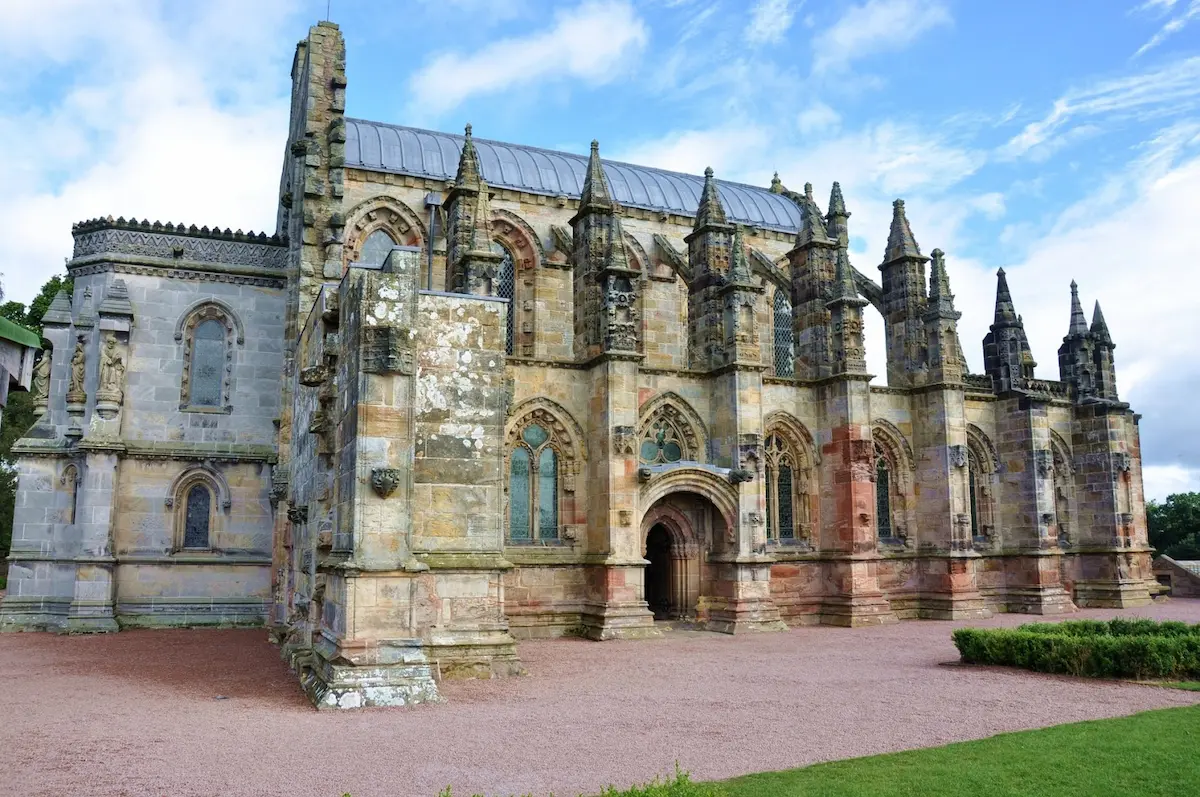 Rosslyn Chapel→
The Templar Thread
1 min
The connection between Henry Sinclair and the Knights Templar is central to the Oak Island theory but also the most speculative element of the story.
The Templars were suppressed across Europe beginning in 1307, more than ninety years before the alleged voyage. Scotland under Robert the Bruce, who had been excommunicated by the Pope, is widely believed to have offered refuge to fleeing Templars who were no longer welcome elsewhere in Christendom. The Sinclair family's territory bordered the Gunn lands in Caithness, in the far north of Scotland, and Orkney was about as far from papal authority as one could get in medieval Europe.
Proponents of the theory argue that Templar refugees brought with them not only their military expertise but also their accumulated treasures and navigational knowledge, possibly including charts of the western Atlantic predating any known European exploration. Sinclair's 1398 voyage, in this reading, was not a voyage of discovery but a mission with a specific destination, guided by maps the Templars had carried to Scotland nearly a century earlier.
The Sinclair family's own later history complicates matters. When the Templars were put on trial in Edinburgh in 1309, the Sinclair family testified against them. This is an inconvenient fact for the theory, though defenders note that public testimony against an order marked for destruction by both King and Pope may not reflect private alliances.
A Theory in the Balance
1 min
The Zeno Voyage theory rests on a single documentary source published 160 years after the events it describes, supported by contested physical evidence and indigenous oral tradition. The Zeno Narrative has been called a fabrication by some historians and a genuine record by others. The Westford Knight may be a medieval memorial or a glacial scratch enhanced by modern enthusiasts. The Rosslyn carvings may depict American plants or European lilies.
But the narrative does describe a voyage to a land whose geography matches Nova Scotia. The Mi'kmaq do preserve traditions of a foreign leader arriving by sea. A map accompanied the letters that proved accurate enough for navigators to use for 150 years. And the Sinclair family, whose genealogy is not in dispute, did hold dominion over the very islands from which the voyage allegedly departed.
The theory asks whether a powerful Scottish earl with Venetian navigators, a dozen ships, and 300 men could have crossed the Atlantic in 1398. The Vikings had done it four centuries earlier with less. The question, as with all Oak Island theories, is not whether the voyage was possible. It is whether it happened, and if it did, what the expedition left behind.