The Holy Grail is the most famous object in Western legend that no one can describe. In its earliest form it is not holy, not a chalice, and not even capitalised. Within three decades of its first appearance in literature, it had been transformed from an unnamed dish in a mysterious procession into the cup that caught the blood of Christ, a stone fallen from heaven, and the foundation of a sacred dynasty stretching from Jerusalem to the courts of medieval Europe. Eight centuries later, the Grail remains undefined, and that is precisely what makes it so persistent. Every generation reimagines it. And every reimagining, from the medieval romances to the Cathar fortress of Montségur to the theories surrounding Oak Island, leads back to the same group of guardians: the Knights Templar.
A Grail, Not the Grail
1 min
The first person to write about the Grail was Chrétien de Troyes, a French poet working at the court of Philip of Alsace, Count of Flanders. His unfinished poem le Conte du Graal (The Story of the Grail), composed between 1180 and 1191, follows a young man named Perceval on his journey to knighthood. During his travels, Perceval encounters the Fisher King and is invited to his castle. There he witnesses a strange procession: a young man carrying a bleeding lance, two boys bearing candelabras, and a beautiful young woman carrying an elaborately decorated grail. The procession passes before Perceval at each course of the meal. He wants to ask what he is seeing but does not, and his silence becomes the central failure of the story.
Chrétien referred to his object as un graal, a grail, using the indefinite article and a common noun. The word itself, derived from the Latin gradalis, meant a wide, shallow serving dish. In its earliest literary context, the Grail was not unique; there could be more than one. Chrétien left his poem unfinished at roughly 9,000 lines and never explained what the grail was. Four anonymous continuators extended the text to some 40,000 lines. Others wrote prequels, including the Elucidation Prologue, which focused on the family and descent of Perceval, establishing early on the connection between the Grail and certain bloodlines. For viewers of The Curse of Oak Island, the Grail has surfaced repeatedly across multiple seasons, most often through the Templar connection explored by researchers visiting the War Room. The theory that the Grail lies in the Money Pit does not depend on any single version of the legend. It depends on the order that every version names as its guardian.
The Cup of the Last Supper
2 min
It was Robert de Boron, writing between 1191 and 1202, who transformed a grail into the Holy Grail. In his verse romance Joseph d'Arimathie (also known as La grant estoire dou Graal, The Great History of the Grail), the biblical figure Joseph of Arimathea acquires the cup used by Christ at the Last Supper and uses it to collect his blood at the crucifixion. Joseph is imprisoned, and Christ visits him in his cell to explain the mysteries of the blessed cup. Upon his release, Joseph gathers his followers and travels west, founding a dynasty of Grail keepers that will eventually include Perceval. De Boron's version has become the standard account. The Grail as the chalice of the Last Supper, passed through a lineage of sacred guardians, is the image that endures in popular imagination and the one that would later drive both medieval quests and modern treasure hunts.
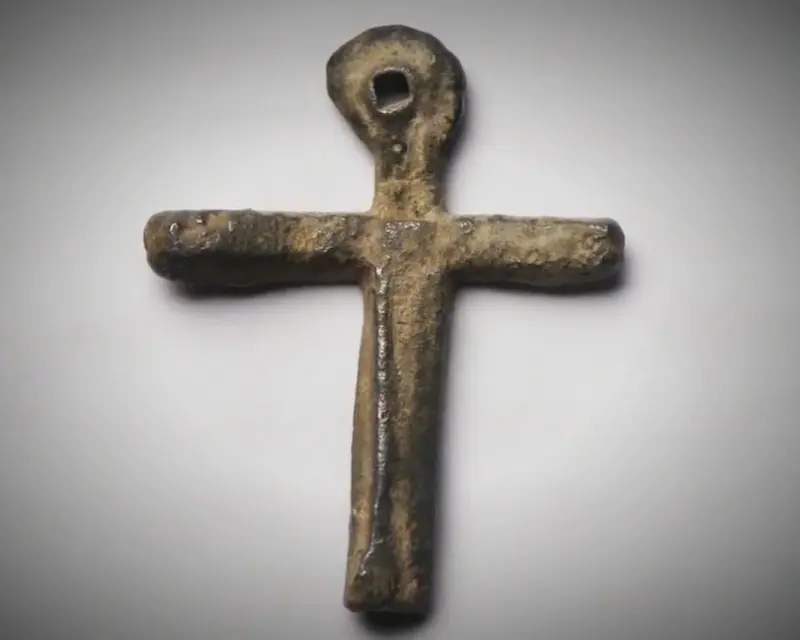
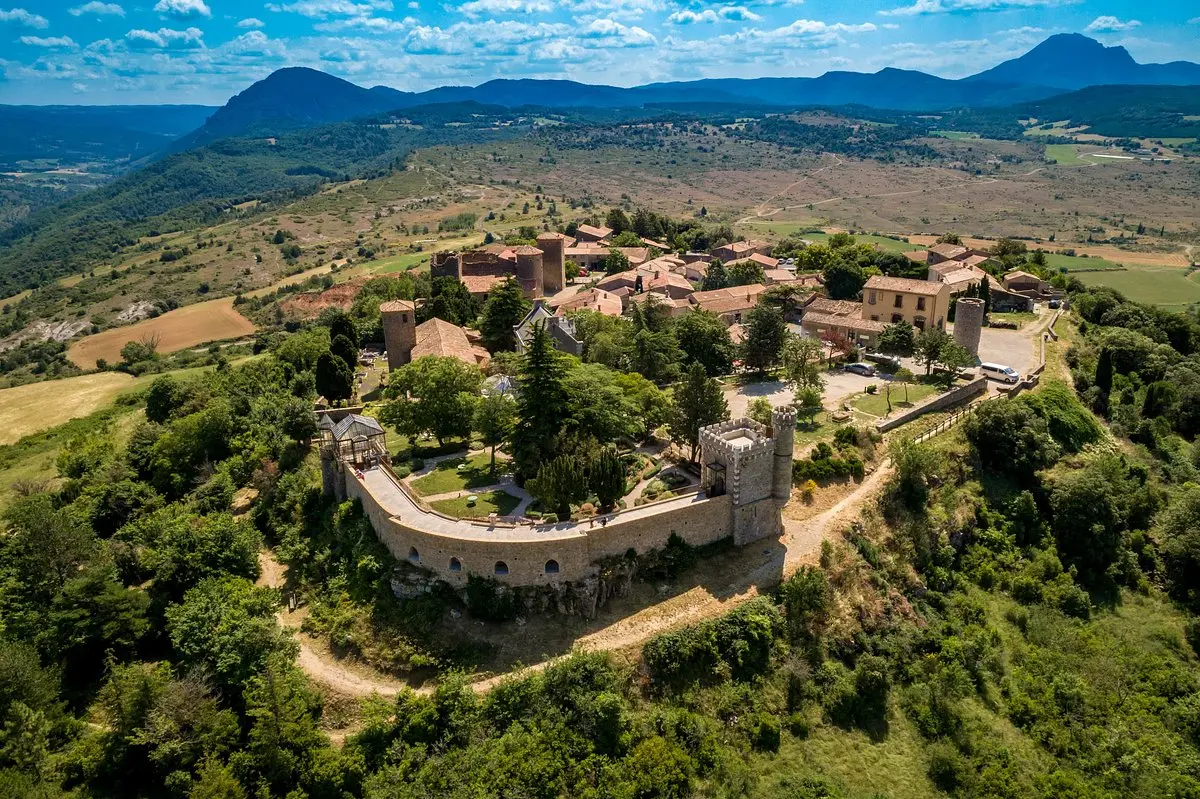
One detail in De Boron's account deserves particular attention. He writes that the Grail keepers travel to the "vaus d'Avaron," the valleys of Avaron. This has traditionally been read as Avalon, the mythical island of Arthurian legend. But Avaron is also the Occitan form of the Aveyron, a river and region in southern France that runs through the foothills between the Cévennes and the Montagne Noire. It is precisely this area, these same medieval mining districts, that produced the lead from which the cross found at Smith's Cove on Oak Island was made. Tobias Skowronek of the German Mining Museum in Bochum matched the cross's isotope signature to pre-fifteenth-century ore deposits in the Montagne Noire, within roughly twenty miles of Rennes-le-Château, a village with documented Templar connections dating to the thirteenth century. Whether De Boron's "Avaron" is a literary reference to Avalon or a geographical reference to the Aveyron, the coincidence between the Grail text's named location and the physical provenance of a medieval artifact found on Oak Island is, at the very least, striking.
The Stone from Heaven
1 min
Wolfram von Eschenbach's Parzival, composed around 1210, reimagined the Grail entirely. In Wolfram's telling, the Grail is not a cup but a stone, which he called lapsit exillis. The phrase has been debated for centuries: it may derive from lapis exilis (a small or humble stone), lapis ex caelis (a stone from heaven), or lapis elixir (the philosopher's stone of alchemy). Whatever the etymology, Wolfram's Grail is a physical object with the power to sustain life, provide food and drink, and prevent those who behold it from dying for a week after seeing it. It fell from heaven, brought to earth by angels who remained neutral during the war between God and Lucifer.
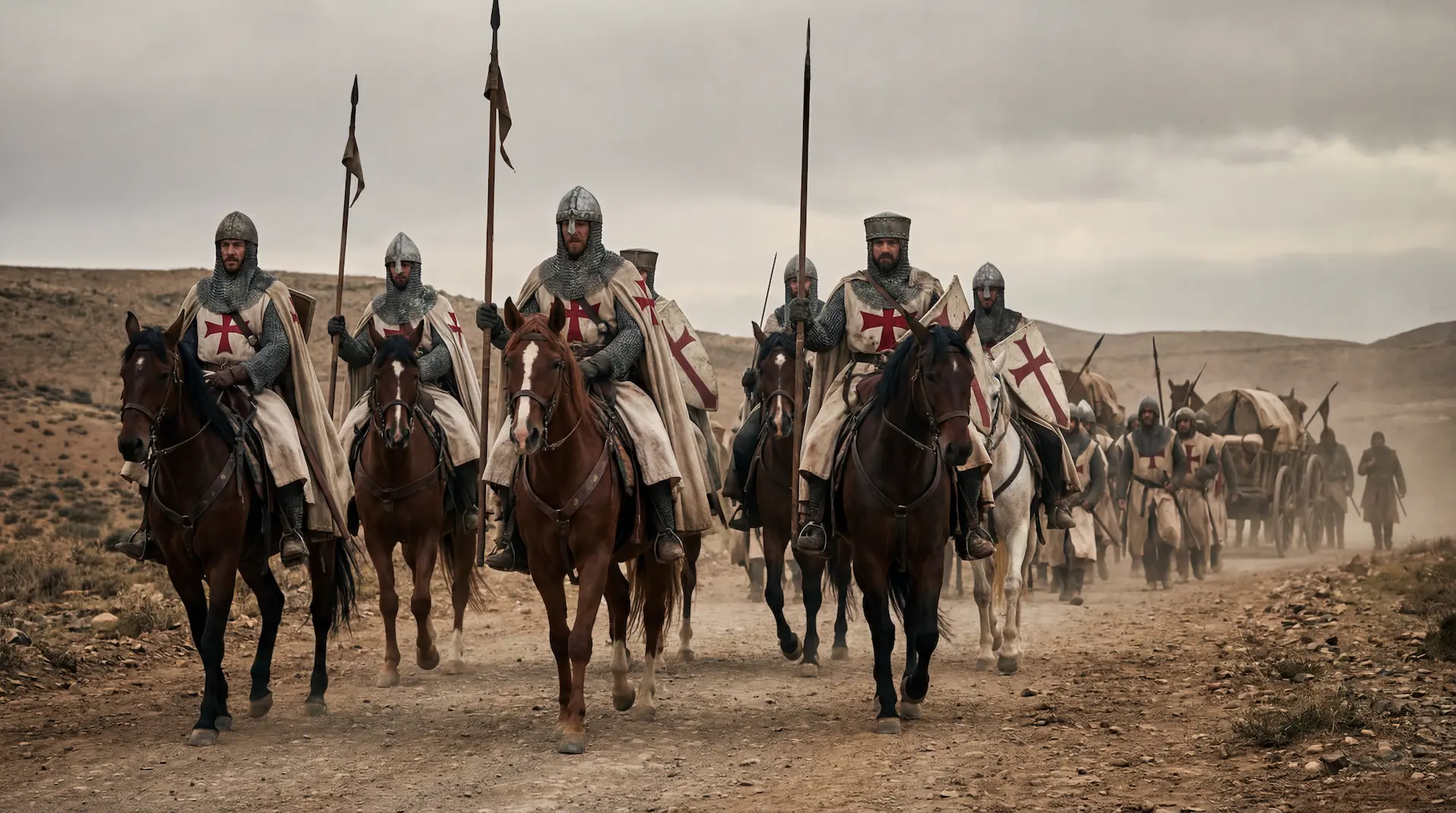
The guardians of Wolfram's Grail are an order of knights he calls Templeisen, a name that scholars have long read as a direct reference to the Knights Templar. They defend the Grail in a mountain fortress called Munsalvaesche (Mons Salvationis, the Mountain of Salvation). Wolfram claimed he had received the true story of the Grail not from Chrétien but from a Provençal poet named Kyot, who had in turn found it in an Arabic manuscript in Toledo written by a Muslim astronomer named Flegetanis. Whether Kyot existed or was Wolfram's literary invention remains unresolved, but the claim placed the origins of the Grail story in the Islamic world, outside the tradition of the Church. For Oak Island, Wolfram's version carries particular weight. Nine artifacts and structures on the island have been independently dated to between 1100 and 1300 AD, the exact period of Templar power. If the Grail was a physical object guarded by a Templar-like order, and if the Templars were on Oak Island during the medieval period, Wolfram's narrative provides the literary framework for what they may have been protecting.
 The Knights Templar on Oak Island→
The Valencia Chalice
3 min
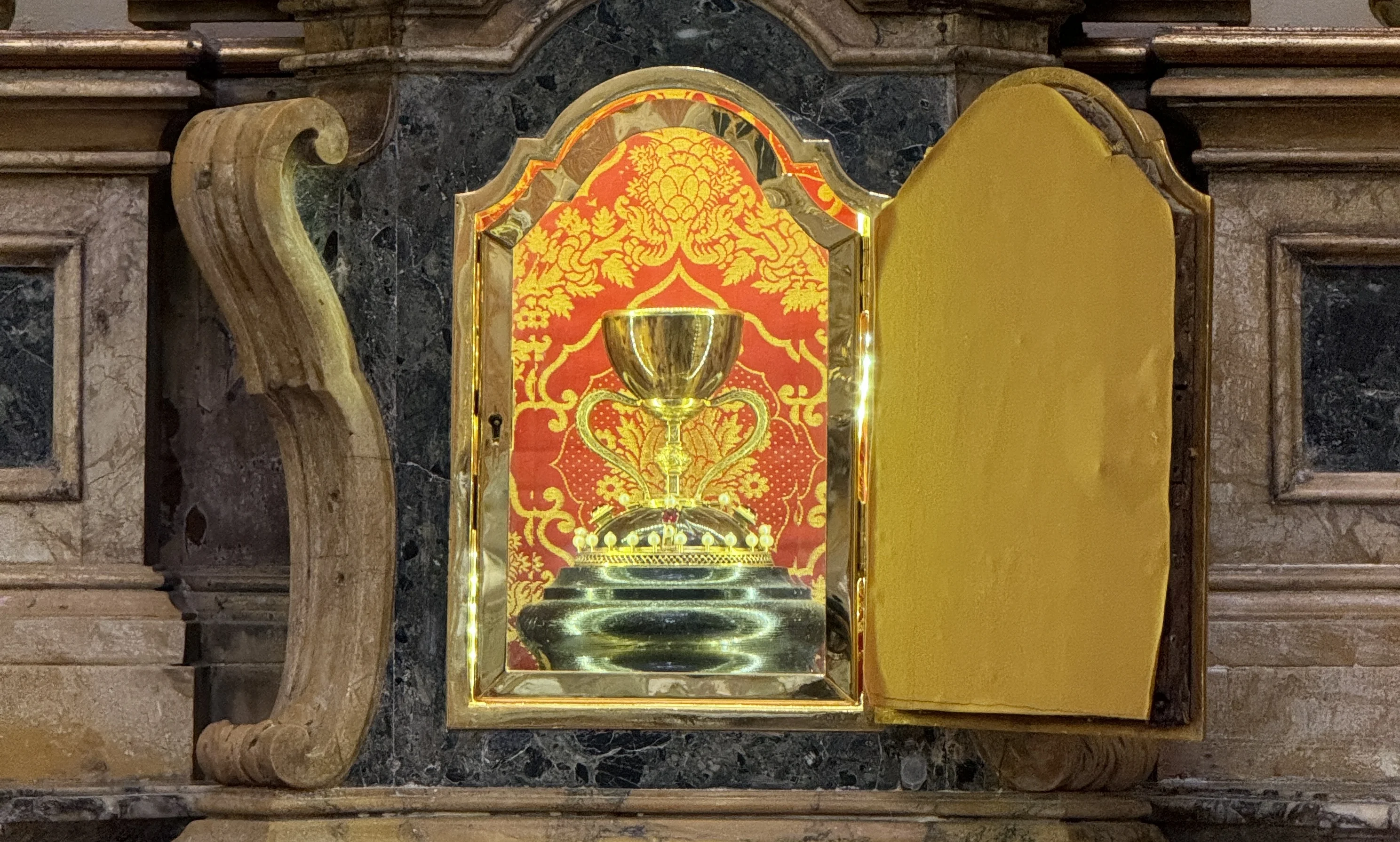
While the literary Grail multiplied into competing legends, a physical candidate for the cup of the Last Supper followed a documented path through Europe that has received far less attention than it deserves. In the Cathedral of Valencia, Spain, an ancient agate cup is preserved in a chapel dedicated to it. The Capilla del Santo Caliz, the Holy Chalice, is open to visitors, though few know what they are looking at.
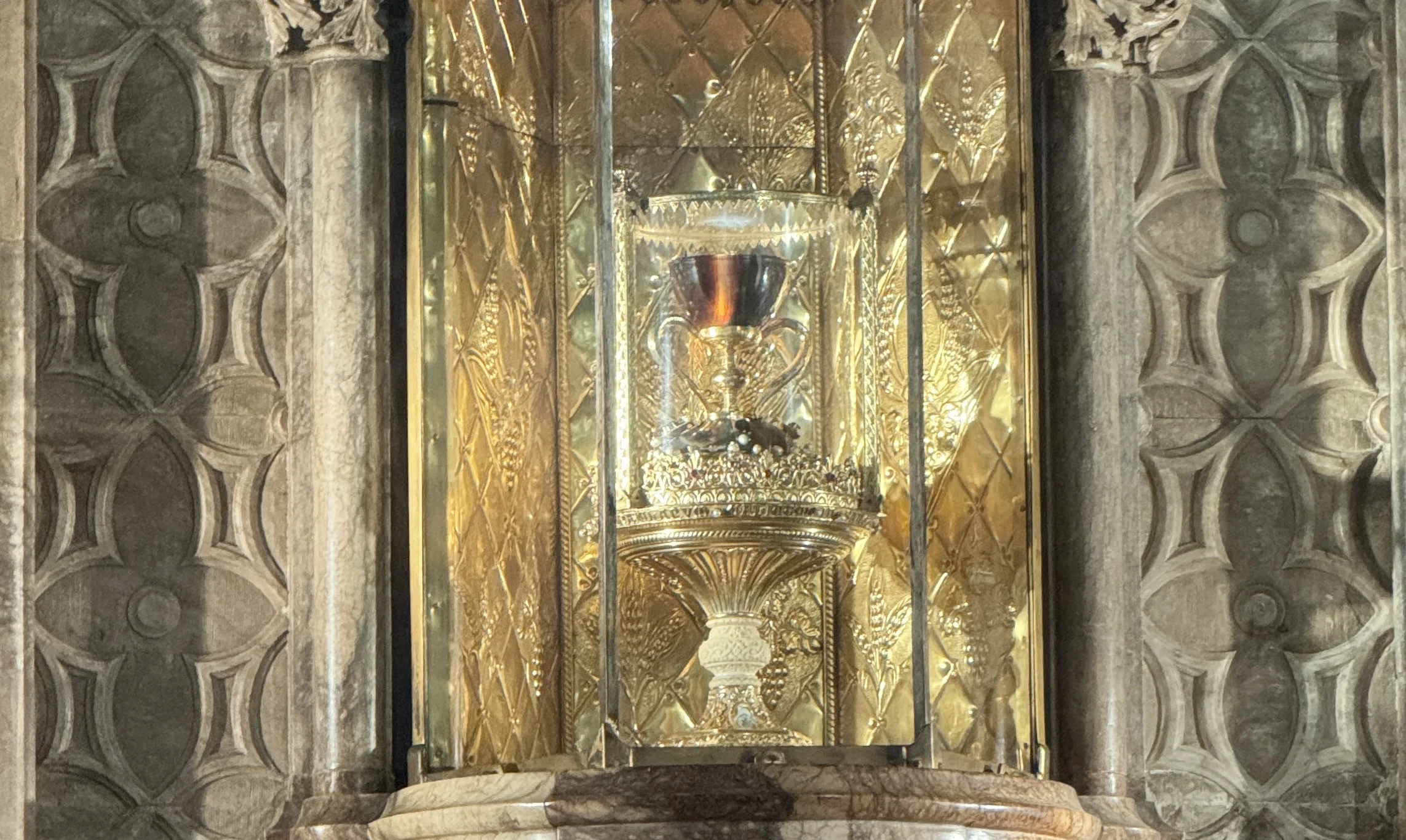
The tradition behind the Valencia Chalice, documented in detail by the American researcher Janice Bennett in St. Laurence and the Holy Grail (Ignatius Press, 2004), traces a chain of custody from the Last Supper to the present day. According to the tradition, St. Peter took the cup from Jerusalem to Rome, where the first popes used it to celebrate Mass. For more than two hundred years the chalice remained in Rome. In 258 AD, during the persecution under Emperor Valerian, the Roman authorities demanded that the Church surrender its possessions. Pope Sixtus II entrusted his deacon and treasurer, Laurence, with the ecclesiastical money and sacred objects, including the cup. When the Romans arrested Laurence and ordered him to hand over the Church's goods, he asked for three days, used the time to disperse everything, and was martyred on a gridiron. Before his death, Laurence sent the cup to Huesca in the Spanish Pyrenees, the town where his parents had originated.
From Huesca, the cup's trail follows the upheavals of Iberian history. After the Moorish invasion of 711, it was moved into the Pyrenean monasteries for safekeeping: first to the Church of San Pedro de Siresa, then to the Monastery of San Adrian de Sasabe, then to the Cathedral of Jaca, and finally, around 1071, to the Monastery of San Juan de la Peña, built into a vast cave beneath an overhanging cliff. There it remained for centuries, venerated by monks and protected by its remote location. In 1399, the cup was surrendered to King Martín el Humano of Aragón. By 1437 it had reached the Cathedral of Valencia, where it remains today, mounted on a medieval golden base encrusted with rubies, emeralds, and 28 pearls.
In 1960, the Spanish archaeologist Antonio Beltrán of the University of Zaragoza conducted the first scientific examination of the relic. The Archbishop of Valencia asked him to treat it as though it were an object found in an excavation. Beltrán dismantled the chalice and examined each component separately. He determined that the upper cup, a hemispherical vessel carved from a single piece of cornelian agate, dates to the first century. The golden base, handles, and jewelled mounting are medieval additions, probably from the tenth to fourteenth centuries, added to make the original cup appear more worthy of its status. Beltrán concluded that archaeology had found nothing that contradicted the cup's authenticity. Two first-century Roman cups of similar stone (chalcedony and sardonyx) in the British Museum provide typological parallels for the Valencia cup's form and period.
Bennett identifies San Juan de la Peña as Wolfram von Eschenbach's Munsalvaesche. The geography fits: a monastery built into a mountain cave in the Pyrenees, guarding a sacred object, protected by its isolation. If Wolfram's source Kyot existed and had knowledge of the cup's location, the description of a stone-like Grail guarded by a Templar-like order in a mountain fortress matches the physical reality of San Juan de la Peña and its agate chalice with a precision that is difficult to dismiss as coincidence. Pope John Paul II celebrated Mass with the Valencia Chalice during his visit to Spain in 1982. Pope Benedict XVI followed in 2006, referring to it as "this most famous chalice," echoing words the Roman Canon attributes to the earliest popes.
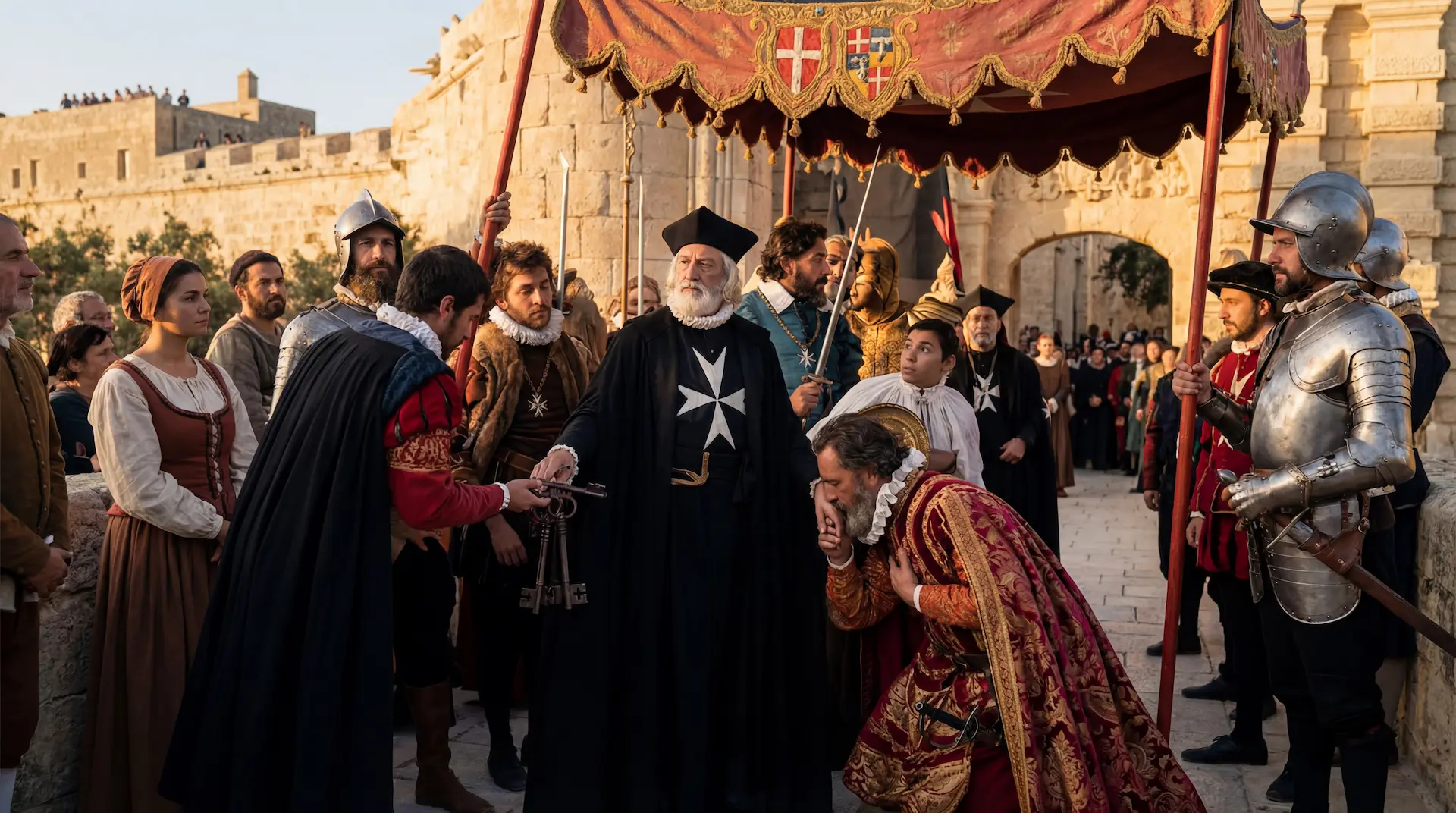
During their trip to Malta, the Oak Island team discovered a replica of the Valencia Grail in the Church of St. Lawrence in Birgu, the first conventional church of the Hospitallers, after they had arrived in Valletta.
 The Knights of Malta→
The Rival Chalices
3 min
Valencia is not the only claimant. By the sixteenth century, Jean Calvin counted several cups across Europe competing for the title of the vessel used by Christ at the Last Supper. Two rivals in particular have drawn sustained attention.
The Sacro Catino (Sacred Basin) is a hexagonal dish preserved in the Treasury Museum of the Cathedral of San Lorenzo in Genoa. According to William of Tyre, writing in the second half of the twelfth century, the Genoese crusader Guglielmo Embriaco acquired it during the sack of Caesarea in 1101. William described it as a vessel of brilliant green shaped like a bowl. The Genoese believed the dish was carved from a single emerald and accepted it in lieu of a large cash payment. For centuries the Sacro Catino was exhibited as a miracle of nature, its green radiance attributed to divine origin. The first explicit identification of the dish as the Holy Grail appeared in the Chronicon of Jacobus de Voragine in the 1290s. A Spanish visitor named Pedro Tafur confirmed the claim in 1436. In 1806, Napoleon seized the dish and had it transported to Paris. When it was returned to Genoa in 1816, it came back in ten pieces, one of which was missing. The breakage revealed the truth: the Sacro Catino was not emerald but green Egyptian glass. Studies by the Académie des Sciences confirmed the material, and later analysis dated the dish to the ninth or tenth century, identifying it as an Islamic artifact. The Sacro Catino remains on display in Genoa, restored most recently in 2017, but its claim to the Last Supper has not survived the evidence.
A more recent contender is the Chalice of Doña Urraca, a jewel-encrusted onyx cup preserved in the Basilica of San Isidoro in León. In 2014, medieval historian Margarita Torres of the University of León and art historian José Miguel Ortega del Río published Los Reyes del Grial (The Kings of the Grail), claiming to have traced the cup's journey from Jerusalem to León through a previously unstudied set of medieval Egyptian parchments from the Al-Azhar University in Cairo. According to their research, Muslim forces took the cup from the Christian community in Jerusalem during the Fatimid sack of the Church of the Holy Sepulchre in 1009. The cup passed through Cairo and was eventually given by the Emir of Denia to King Ferdinand I of León as a diplomatic gift in the eleventh century. Ferdinand's daughter, Infanta Urraca of Zamora, had the onyx cup mounted in gold and precious stones and donated it to the basilica. Scientific dating placed the onyx cup itself between 200 BC and 100 AD. Torres stated that the only chalice that could be considered the chalice of Christ was the one that made the journey from Cairo to León. The claim was disputed by other historians, including Oxford's Diarmaid MacCulloch, who called it unfounded. The museum at San Isidoro was forced to withdraw the chalice from general display and give it its own room after crowds overwhelmed the building.
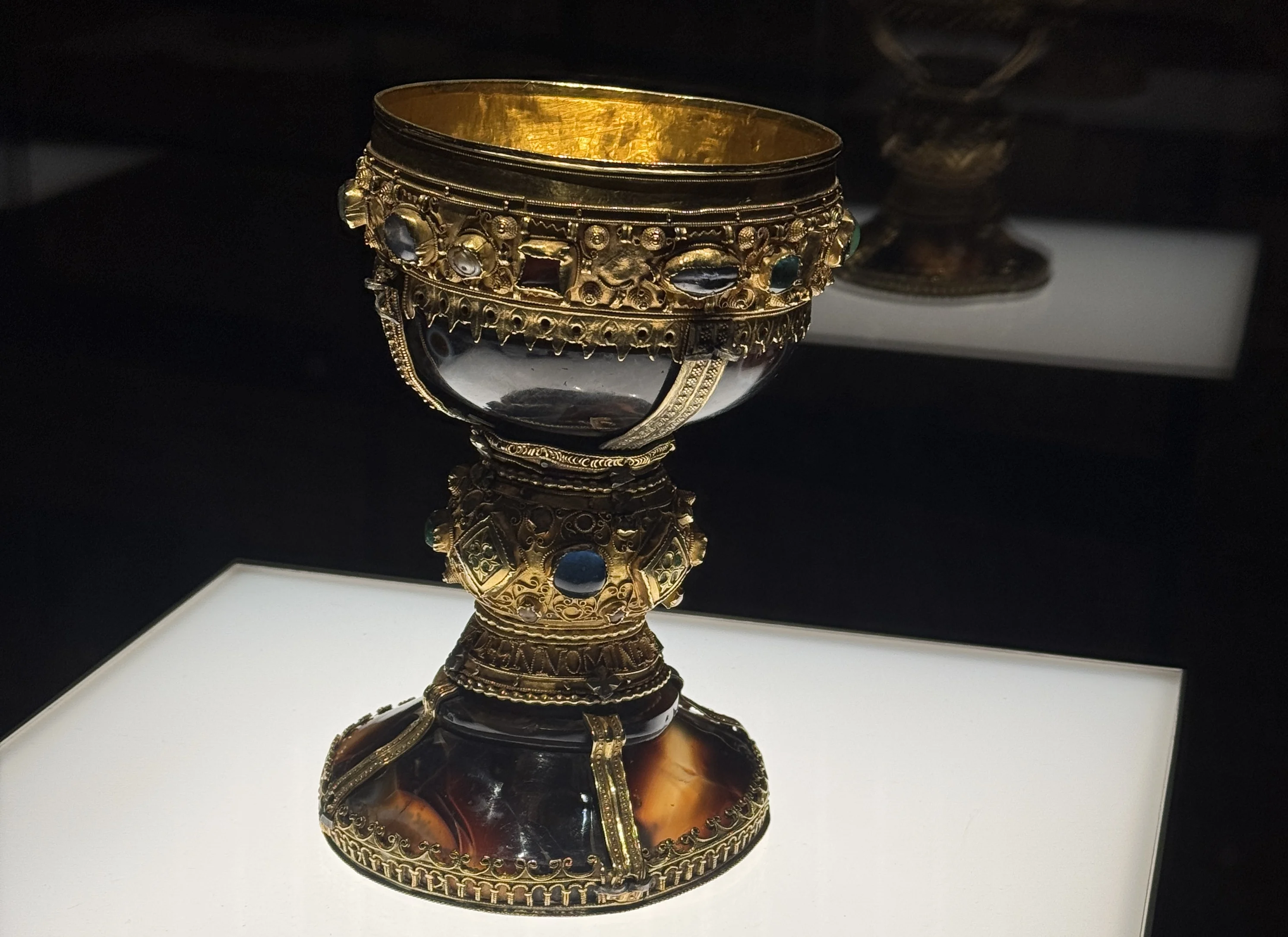
Three physical candidates, three documented chains of custody, three first-century cups. The Valencia agate, the León onyx, and the Genoa glass (now disqualified by material analysis) represent the surviving field of claimants in Western Christianity. If any of them is the cup of the Last Supper, the Grail has already been found, and the question becomes not where it is but which one it is. But every one of these chalices sits in a cathedral, on public display, venerated by pilgrims. The Grail of the medieval romances is the opposite: hidden, guarded, accessible only to the worthy. If the Grail romances describe a real object, it is by definition one that was concealed from the world, not exhibited in it. That version of the story, the hidden Grail defended by an order of knights, is the version that points to a place like Oak Island.
The Cathar Treasure of Montségur
2 min
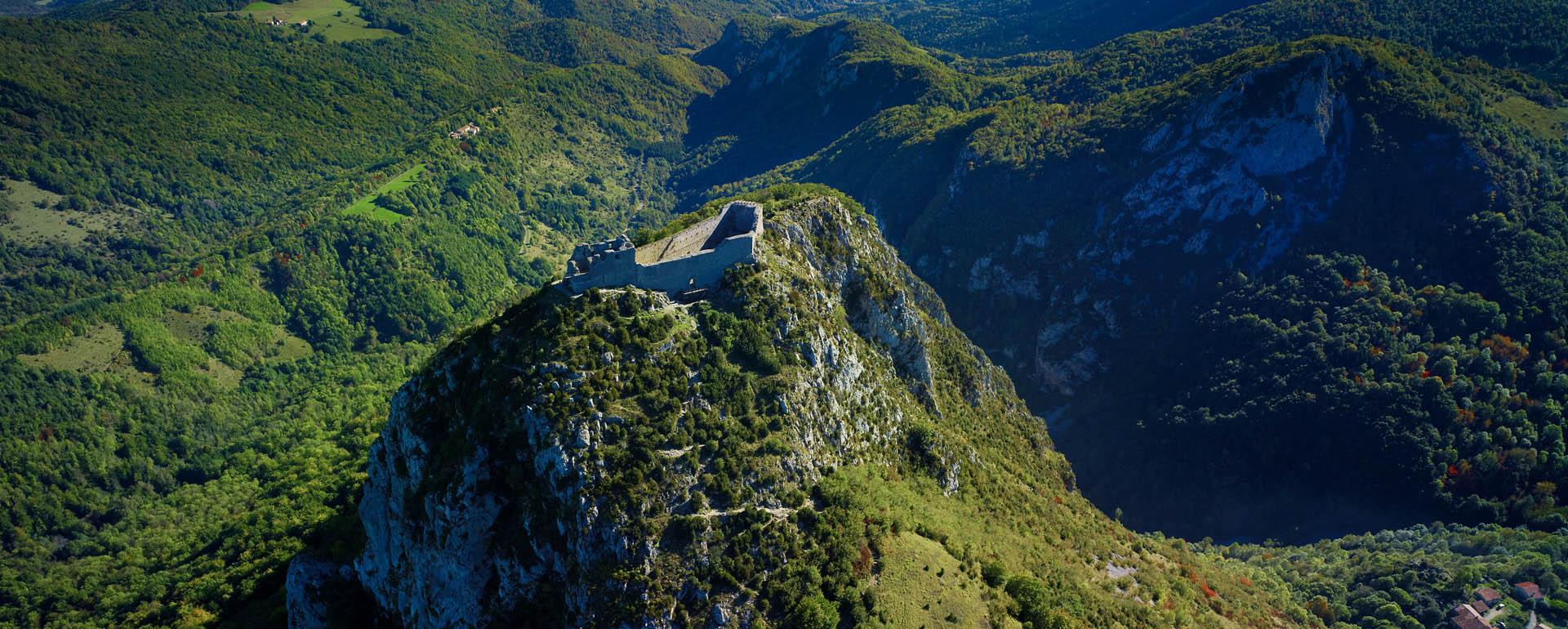
A parallel tradition connects the Grail not to a physical cup but to the Cathars, a dualist Christian sect in southern France that the Church declared heretical and crushed in the Albigensian Crusade (1209 to 1229). The Cathars' last stronghold was the fortress of Montségur, perched on a rocky peak in the Pyrenean foothills. In March 1244, after a siege of ten months, the garrison negotiated a two-week truce before surrender. On the night before the final capitulation, according to multiple accounts, four men slipped down the mountain carrying something of value. What they carried has never been identified. The garrison walked out the following morning, and 225 Cathars who refused to renounce their faith were burned alive in a single pyre at the foot of the mountain.
In the 1930s, a young German researcher named Otto Rahn travelled to the region and became convinced that the Cathar treasure was the Grail. His book Kreuzzug gegen den Gral (Crusade Against the Grail), published in 1933, argued that the Grail legends originated in the Cathar heartland of Languedoc and that Montségur was the Grail castle of Wolfram's Parzival. The book caught the attention of Heinrich Himmler, head of the SS, who recruited Rahn into his personal staff. In October 1940, while Hitler met with Franco in Spain, Himmler separately visited the castles and sites Rahn had described. He left empty-handed. Rahn himself died in 1939 under circumstances that remain disputed.
Rahn's thesis, that the Grail was a Cathar treasure hidden in the Pyrenees, does not survive serious scrutiny. The Cathars rejected material objects and physical sacraments; a sect that denied the value of the material world would have had little use for a holy relic. But the tradition that something was smuggled out of Montségur on the night before the surrender persists, and the four men who descended the mountain have never been identified. If whatever they carried passed into Templar hands (the Templars were active in the region and were not suppressed until 63 years later), it would have entered the same network of Templar infrastructure that connects southern France to the Atlantic coast and, if the Templar theory holds, to Oak Island. The lead cross from Smith's Cove traces to ore deposits in the Montagne Noire, the mountain range that overlooks the Cathar heartland. The geography of the Grail legend and the geography of Oak Island's medieval artifacts overlap in the same corner of southern France.
 Château de Montségur→
The Sang Réal
1 min
A different reading of the Grail emerged in the twentieth century and became widely known through Michael Baigent, Richard Leigh, and Henry Lincoln's The Holy Blood and the Holy Grail (1982), later popularised by Dan Brown's The Da Vinci Code (2003). The argument turns on a pun: San Greal (Holy Grail) becomes Sang Réal (Royal Blood). In this interpretation, the Grail is not an object but a bloodline: the descendants of Jesus Christ and Mary Magdalene, protected through the centuries by secret societies including the Knights Templar and the alleged Priory of Sion.
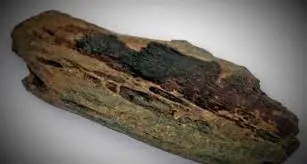
The bloodline theory rests on the Dossiers Secrets, a set of documents deposited in the Bibliothèque Nationale de France in the 1960s and later demonstrated to be forgeries created by Pierre Plantard. The genealogical claims have been thoroughly discredited. But the underlying idea, that the Grail romances encode a secret about lineage rather than an object, predates the forgeries. The Elucidation Prologue to Chrétien's poem already emphasised the family and descent of Perceval. Robert de Boron's entire narrative is structured around a dynasty of Grail keepers. The connection between the Grail and bloodlines is woven into the legend from the beginning, regardless of what one thinks of the Plantard fabrications. On Oak Island, human bone fragments recovered from the Money Pit in 2017 included remains of two individuals: one of European descent, one of Middle Eastern origin. The identity of whoever required burial at a depth of 160 to 170 feet in the most elaborately engineered shaft ever constructed in the New World remains unknown. The bones do not answer the question. But if the Grail tradition encodes a truth about sacred lineage, the presence of Middle Eastern human remains in the deepest levels of the Money Pit is a fact that no version of the theory can ignore.
 Human bone fragments (2 individuals)→
The Templars and the Grail
2 min
Whatever the Grail is, the Templar connection is present in every major version of the legend. Wolfram's Templeisen guard the Grail stone. The Grail romances were composed between 1180 and 1240, precisely the period when the Templars were at the height of their power. When Philip IV of France ordered their mass arrest on Friday, 13 October 1307, the order's leadership had advance warning. Templar Preceptor Jean de Châlons testified before the Papal Inquisition at Poitiers in June 1308 that Gérard de Villiers, Master of France, had fled with fifty horses and put to sea with eighteen galleys. Hugues de Châlons fled with them, carrying the entire treasure of Hugues de Pairaud, the Visitor of the Temple. The historian E.-G. Léonard identified Hugues de Châlons as probably identical with Hugh de Villiers, who held the same Templar office at the same commandery. If correct, both men who carried the Templar treasury out of Paris were De Villiers, and Pairaud was family by marriage.The treasure left Paris. The fleet sailed. Neither was seen again. The De Villiers bloodline traces the family that carried that treasure through ten generations, from the Templar suppression to Nova Scotia. Isaac de Razilly arrived in Acadia on 8 September 1632. His mother was Catherine de Villiers.
 De Villiers: The Treasure Bloodline→
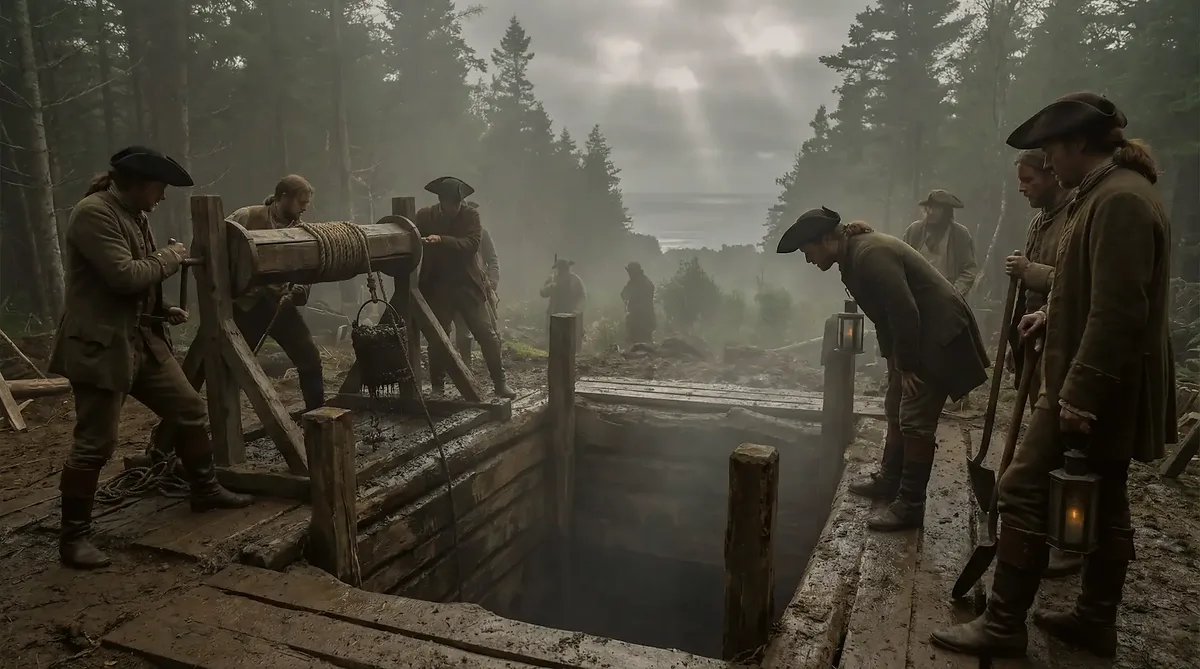
The case for the Grail on Oak Island does not rest on any single artifact. It rests on the accumulation: medieval lead from southern France, coconut fibre from the tropics dated to the Templar era, astronomical alignments dated to 1217 AD, a crossbow bolt from the 1200s, and human bones of Middle Eastern origin at the bottom of a shaft protected by the most elaborate flood defence system ever built in the pre-industrial New World. The coconut fibre from the Money Pit alone confirms that whoever built the Money Pit had access to global trade networks centuries before Columbus. The engineering is disproportionate to pirate gold or colonial banking. It is consistent with the protection of something considered sacred and irreplaceable by an organisation with the resources of a sovereign state.
What Can Be Established
1 min
The Grail exists in three distinct registers: as literature, as a physical object, and as a theory about Oak Island. As literature, its origins are documented and its evolution traceable from Chrétien through de Boron through Wolfram and beyond. As a physical object, at least two first-century cups with documented chains of custody survive in Spanish cathedrals, and the Valencia Chalice carries the strongest claim, supported by Beltrán's 1960 archaeological analysis and papal recognition. If either the Valencia agate or the León onyx is the cup of the Last Supper, the Grail has been found, and it is not on Oak Island.
But the Valencia tradition accounts for only one version of the Grail. Wolfram's stone, the Cathar treasure of Montségur, and the broader concept of a sacred object guarded by a Templar-like order all point in different directions. The Grail romances may encode real knowledge about real objects and real movements of sacred relics during the Crusades, or they may be literary inventions drawing on the cultural atmosphere of the Templar era. The distinction matters for Oak Island, because the theory that the Grail lies in the Money Pit depends entirely on whether one believes the Templars possessed something they identified as the Grail and transported it to the New World.
No artifact recovered from Oak Island has been identified as the Grail in any of its forms. The theory rests on the same Templar infrastructure that supports the Ark of the Covenant theory: the De Châlons testimony, the vanished fleet, the medieval dating of island structures, and the engineering scale of the Money Pit. If the Templar hypothesis holds, the Grail is one of several sacred objects that may have made the crossing. If it collapses, the Grail theory collapses with it. The legend endures because the Grail, by its nature, cannot be disproven. An object that has never been defined cannot be shown not to exist.
Sources
3 min
Primary literary sources:
- Chrétien de Troyes, le Conte du Graal (c. 1180-1191). Multiple published editions; standard critical edition by Alfons Hilka (Halle, 1932).
- Robert de Boron, Joseph d'Arimathie (c. 1191-1202). Standard edition by Richard O'Gorman (Pontifical Institute of Mediaeval Studies, 2005).
- Wolfram von Eschenbach, Parzival (c. 1210). Standard translation by A.T. Hatto (Penguin Classics, 1980).
- The Elucidation Prologue, anonymous (early 13th century). Published in Albert W. Thompson, The Elucidation (New York, 1931).
Physical Grail candidates:
- The Valencia Chalice (Santo Caliz). Cathedral of Valencia, Spain. On permanent display in the Capilla del Santo Caliz.
- Antonio Beltrán, archaeological examination of the Valencia Chalice (1960). Upper cup dated to the first century; cornelian agate.
- Janice Bennett, St. Laurence and the Holy Grail (Ignatius Press, 2004). Documents the Valencia Chalice chain of custody and identifies San Juan de la Peña as Wolfram's Munsalvaesche.
- The Sacro Catino. Treasury Museum, Cathedral of San Lorenzo, Genoa. Identified as ninth/tenth-century Islamic glass by the Académie des Sciences after Napoleon's seizure in 1806.
- The Chalice of Doña Urraca. Basilica of San Isidoro, León, Spain. On display.
- Margarita Torres and José Miguel Ortega del Río, Los Reyes del Grial (2014). Claims based on medieval Egyptian parchments from Al-Azhar University, Cairo. Onyx cup dated 200 BC to 100 AD.
- William of Tyre, Historia rerum in partibus transmarinis gestarum (12th century). Describes Guglielmo Embriaco acquiring the Sacro Catino at Caesarea, 1101.
- Jacobus de Voragine, Chronicon (c. 1290s). First explicit identification of the Sacro Catino as the Holy Grail.
Cathar and Montségur:
- Otto Rahn, Kreuzzug gegen den Gral (Crusade Against the Grail, 1933). Republished Arun Verlag, 2000.
- The account of the four men descending Montségur on the night of 15-16 March 1244 is preserved in multiple Inquisition records, principally DOAT (Collection Doat), Bibliothèque Nationale de France, Volumes XXII-XXIV.
Sang Réal:
- Michael Baigent, Richard Leigh, and Henry Lincoln, The Holy Blood and the Holy Grail (Jonathan Cape, 1982).
- The Dossiers Secrets, deposited at the Bibliothèque Nationale de France in the 1960s. Demonstrated as forgeries by Pierre Plantard.
Templar testimony:
- Jean de Châlons testimony, Papal Inquisition at Poitiers, June 1308. Procès des Templiers, ed. Jules Michelet, 2 vols. (Paris: Imprimerie Royale, 1841-1851), vol. I.
- A single-page document from August 1308, Bibliothèque nationale de France, inserted into a letter by Pope Clement V entitled "these are the names of the brothers that have fled." Names "Gérard de Villiers and Hugh de Châlons who had armed 40 brothers." Also referenced by Heinrich Finke.
- E.-G. Léonard, Introduction au cartulaire manuscrit du Temple (1150-1317) (Paris, 1930). Identifies Hugues de Châlons as probably identical with Hugh de Villiers.
Published secondary sources:
- Justin E. Griffin, The Holy Grail: The Legend, the History, the Evidence (McFarland, 2001).
- Mark Oxbrow and Ian Robertson, Rosslyn and the Grail (Mainstream Publishing, 2005).
Oak Island evidence cited:
- Lead cross isotope analysis by Tobias Skowronek, German Mining Museum, Bochum. Traces to pre-fifteenth-century ore deposits in the Montagne Noire, southern France. Within roughly twenty miles of Rennes-le-Château.
- Coconut fibre radiocarbon dates: 1036-1374 AD across three independent samples, two laboratories (Beta Analytic and Woods Hole Oceanographic Institution).
- Human bone fragments from Money Pit (160-170 feet): two individuals, one European, one Middle Eastern origin.
- Archaeoastronomical dating of Nolan's Cross by Professor Adriano Gaspani: approximately 1217 AD.
- Crossbow bolt typologically dated to approximately 1200-1299 AD.