The Richest Church in Scotland
1 min
St. Andrew's Cathedral was the largest building ever constructed in Scotland. Founded in 1158 on a clifftop promontory on the Fife coast, the church measured 119 metres from end to end, with a central tower and spire visible from miles out at sea. For four centuries it served as the seat of the Catholic Church in Scotland, home to the Bishop and later Archbishop of St. Andrews, head of the richest diocese in the kingdom.
The cathedral's power derived from its relics. According to tradition, the bones of the apostle Andrew were brought to Scotland in the 8th century by Bishop Acca of Hexham. The collection included a kneecap, an upper arm bone, three fingers, and a tooth, housed in a chest weighing approximately 1.5 tonnes. These relics drew an estimated 20 million pilgrims between the 14th and 16th centuries, making St. Andrews one of the most visited shrines in medieval Europe, second in the British Isles only to Canterbury and rivalling Santiago de Compostela in Spain.
The wealth that accumulated around these relics was extraordinary. At its height, the cathedral contained 30 altars, a large statue of Christ above the high altar, extensive white marble work, and what researchers describe as the largest collection of medieval art in Scotland. Ecclesiastical plate, jewelled reliquaries, vestments embroidered with gold thread, illuminated manuscripts, and liturgical objects from across Europe filled the building. In 1318, Robert the Bruce himself attended a consecration service, attended by every bishop and most of the powerful nobles of Scotland. The cathedral was not simply a church. It was a national treasury.
The Battle of Bannockburn
1 min
The theory linking St. Andrew's to Oak Island begins not with the cathedral itself, but with the battle that secured Scottish independence.
On June 23 and 24, 1314, Robert the Bruce's army of roughly 7,000 men defeated King Edward II's force of approximately 15,000 English soldiers at Bannockburn, near Stirling. The victory was decisive. Bruce's forces captured the entire English baggage train, a haul of gold, silver, weapons, armour, and valuables that represented the accumulated campaign wealth of the largest army England had ever sent north. This treasure was added to the holdings of the Scottish Crown and, according to the theory first published in 1988, much of it was placed under the protection of the Church at St. Andrews.
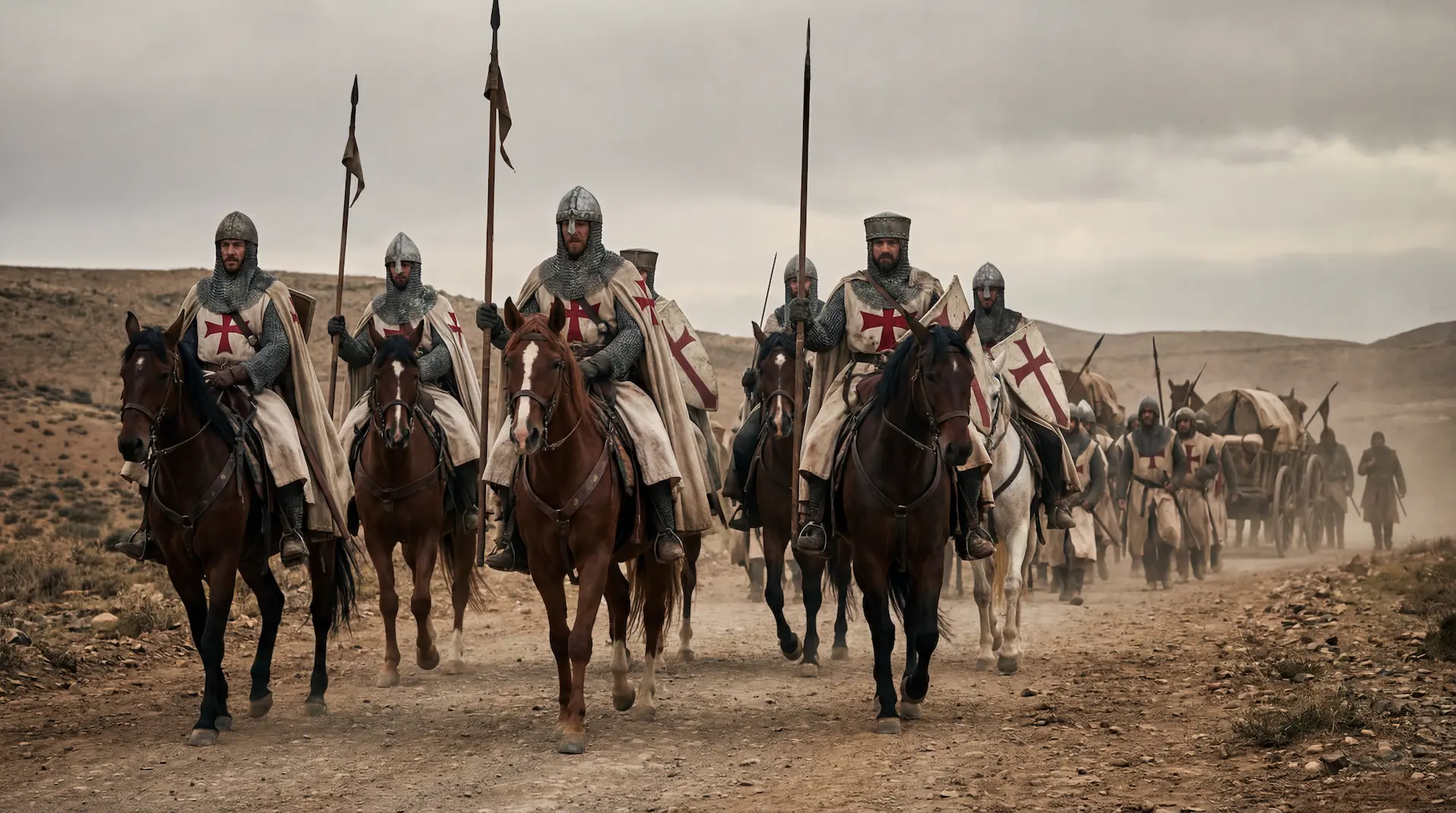
A persistent legend surrounds the Scottish victory at Bannockburn. According to accounts first recorded in the 18th century, fugitive Knights Templar fought alongside Bruce's army and helped turn the battle. The factual basis for this claim is narrow but real. In October 1307, King Philip IV of France ordered the arrest of every Templar in his country and pressured other European monarchs to follow suit. Scotland, whose king was already excommunicated, never enforced the papal suppression. Robert Ferguson, in his 2010 book The Knights Templar and Scotland, calculated that between 29 and 48 Templars could have reached Scotland after the arrests.
Whether or not Templars fought at Bannockburn, the connection matters for the theory because it places both a vast captured English treasure and a possible Templar presence in Scotland at the same moment. If fugitive Templars did reach Scotland, and if they did bring knowledge of sacred relics or treasure concealment, their influence would have extended to the institutions that protected Scotland's wealth, including its most powerful cathedral.
 The Knights Templar on Oak Island→
The Destruction of 1559
2 min
For 240 years after Bannockburn, the wealth of St. Andrew's continued to grow. Pilgrims arrived in such numbers that Queen Margaret of Scotland endowed a ferry service across the Firth of Forth, with hostels at both North and South Queensferry. The university founded in 1413 added intellectual prestige to the cathedral's spiritual authority. By the mid-1500s, St. Andrews was the undisputed ecclesiastical capital of Scotland.
Then the Reformation arrived.
On June 11, 1559, John Knox preached a sermon in the parish church of St. Andrews. Knox had spent years in exile in Geneva, studying under John Calvin and developing a vision of Protestant Scotland free from Roman authority. His preaching in Perth had already triggered riots that destroyed three monasteries. At St. Andrews, the effect was the same. On June 14, a Protestant mob ransacked the cathedral, destroying the interior, smashing altars, statuary, and religious imagery. The shrine containing the relics of St. Andrew was broken open. The relics themselves were either destroyed or disappeared; their fate has never been determined. Replacement relics were not obtained until 1879, when a shoulder bone was sent from Amalfi in Italy, and 1969, when Pope Paul VI donated additional bones with the words "Peter greets his brother Andrew."
The cathedral was abandoned by 1561 and never repaired. Its stone was quarried by townspeople for use in other buildings. Today it stands as a roofless ruin, its precinct walls and the 33-metre St. Rule's Tower the most substantial surviving structures.
But the fate of the cathedral's movable wealth remains an open question. Researcher Andrew Speirs has noted that the Reformation's transfer of church property was not purely chaotic. For the most part, the loss of medieval religious plate, art, vestments, books, relics, and architecture was a slow, organised, and lengthy process, with clerics smuggling valuables to the Continent and sympathetic laypeople concealing what they could. Rick Falconer, a St. Andrews author and researcher, has investigated reports of tunnels and sealed vaults beneath the cathedral grounds, based on work by 19th-century antiquarian Linskill, who documented a sealed stone staircase near the High Altar discovered during rubble clearance in 1842. In 1868, stonemasons working on the walls discovered a sealed crypt inside what is now called the Haunted Tower, containing mummified bodies that may predate the Reformation.
Whether the treasure was looted by the mob, smuggled abroad by fleeing clergy, hidden in vaults beneath the cathedral, or removed before the destruction even began, one fact is clear: a thousand years of accumulated sacred wealth vanished from St. Andrews and was never accounted for.
New Scotland
2 min
The connection between Scotland's lost cathedral treasure and Oak Island runs through one of the most ambitious colonial ventures in Scottish history.
In 1621, King James I of England (simultaneously King James VI of Scotland) granted Sir William Alexander a royal charter for all the territory between New England and Newfoundland. The colony was to be called Nova Scotia: New Scotland. To finance the settlement, James created a new chivalric order in 1624, the Knights Baronet of Nova Scotia. Scottish aristocrats could purchase membership, with the funds used to outfit colonists and establish a Scottish presence in the New World.
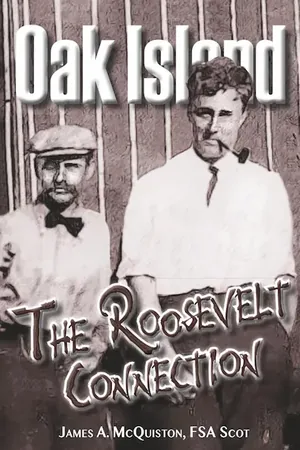
Sir William Alexander was himself an active Freemason, a member of Mary's Chapel Lodge in Edinburgh from 1634, the oldest documented Masonic lodge in the world. Writer and researcher James McQuiston, a Fellow of the Society of Antiquaries of Scotland who has appeared on The Curse of Oak Island, found that approximately 25% of the Knights Baronet had documented genealogical connections to the Knights Templar. McQuiston has described the Baronetage as a continuous legacy of the Scottish Templars.
The first settlers under Alexander's charter landed on the Atlantic coast of Nova Scotia in 1623, not far from Oak Island. Alexander's son established a Scottish settlement at Charles Fort, later Port-Royal, in 1629. Though the colony was returned to France in 1632 and Alexander died in poverty in 1640, the Baronetage itself continued, and Scottish interest in Nova Scotia persisted for decades.
The timeline is suggestive. The cathedral treasure vanishes between 1559 and 1561. The Knights Baronet are created in 1621 to colonize Nova Scotia. The first Scottish ships arrive near Oak Island in 1623. Carbon dating of materials recovered from the Money Pit has produced clusters in the 1620 to 1660 range, precisely the period of the Baronetage's most active operations. If the cathedral treasure had been secretly preserved by Catholic or Templar-connected Scottish families during the 60 years between the Reformation and the creation of Nova Scotia, the Baronetage provided both the motive to establish a secure hiding place and the means to reach it.
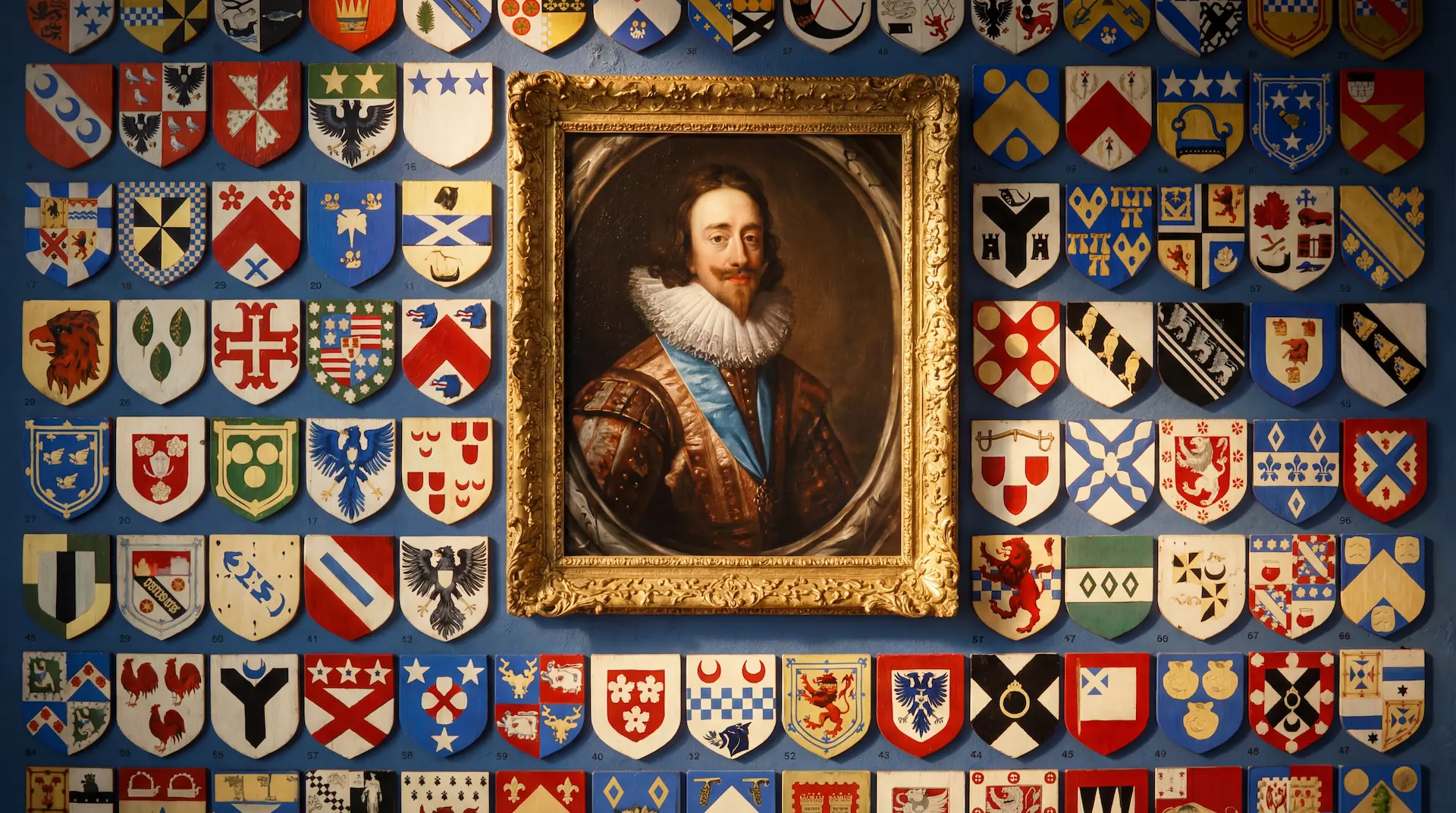 The Knights Baronet of Nova Scotia→
The Theory
1 min
The Treasure of St. Andrew's theory was first published in April 1988 in Treasure Magazine, under the title "The 13 Million Dollar Mistake?" The article, which reached Hammerson Peters through the personal Fortean archive of researcher Gary Mangiacopra, proposed that the wealth accumulated at Scotland's greatest cathedral over a millennium, augmented by the spoils of Bannockburn, was secretly transported to Oak Island.
The original article did not explain the mechanism of transport. Subsequent research by McQuiston and others has filled in the gap through the Knights Baronet connection, linking the Scottish families who would have had access to the treasure with the chivalric order that had both legal authority over Nova Scotia and ships capable of reaching it.
Several elements of the theory align with physical evidence found on Oak Island. The lead cross discovered at Smith's Cove in 2017, dated to between 900 and 1300 AD, was traced through lead isotope analysis to medieval mines in southern France, a region with deep connections to both the Templars and the Scottish crown. The coconut fibre found in the Money Pit has been carbon dated to the medieval period, consistent with materials that could have been used as packing for sacred objects during transport. The elaborate engineering of the Money Pit itself, with its flood tunnels and layered platforms, suggests the work of people protecting something of extraordinary value, something worth more than gold.
The Treasure of St. Andrew's theory remains one of the lesser-known proposals for the origin of the Oak Island deposit. But it connects three historical facts that are individually well documented: Scotland possessed a cathedral treasure of immense value; that treasure disappeared; and within decades, Scottish settlers with Templar connections were establishing colonies within miles of Oak Island. The question is whether those three facts are coincidence, or a trail.