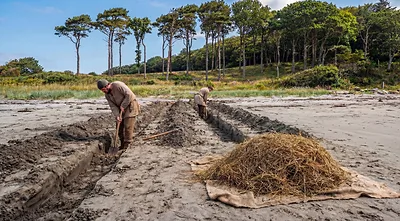
For 231 years, the Oak Island treasure hunt has been organized around two questions: who built the workings, and what they buried. A third question, less often asked in those terms, is when. The artifact vault on this site holds 350 published objects, recovered over more than two centuries of searching. They do not point to a single century, a single people, or a single deposition event. Plotted against the documented history of Nova Scotia (Acadia) and the island itself, they cluster in patterns that any honest theory has to account for.
This article does that mapping. It treats the artifacts not as evidence for one theory or another, but as a dataset that has its own shape. The shape is uneven. Some centuries are densely represented, others almost absent. Some objects sit in their period with high confidence, others span ranges so wide they place little weight on any one window. The point of the exercise is to see what the vault actually says about time, before deciding what it says about anything else.

The Three Dates Behind Every Artifact
1 min
Every artifact has three different dates. The first is its origin date, when the object was made or grew. The second is its deposition date, when it arrived at Oak Island. The third is its recovery date, when a searcher pulled it from the ground. These three are almost never the same, and frequently span centuries.
A Spanish maravedi minted in 1598 might have been pocket change in 1750. A coconut husk fragment carbon dated to 1036 AD might have arrived in the Money Pit any time before its discovery. A hand-forged iron pintle of a style first used in 2000 BC was almost certainly forged for a colonial-era hinge. The chronological mapping below uses the earliest plausible origin date as the spine, with notes where deposition diverges from origin, and recovery context as supporting evidence.
Every claim that follows traces to a named laboratory, named assessor, named document, or named eyewitness. Where dating comes from a radiocarbon assay, the lab is identified. Where it comes from a typological reading, the analyst is named. Where neither exists, the article says so plainly. Of the 350 published artifacts, 249 carry an origin date in the database; the remaining 101 are placed by era label only and treated with appropriate care.
The Mi'kmaq Centuries and the Medieval Cluster (to 1499)
4 min
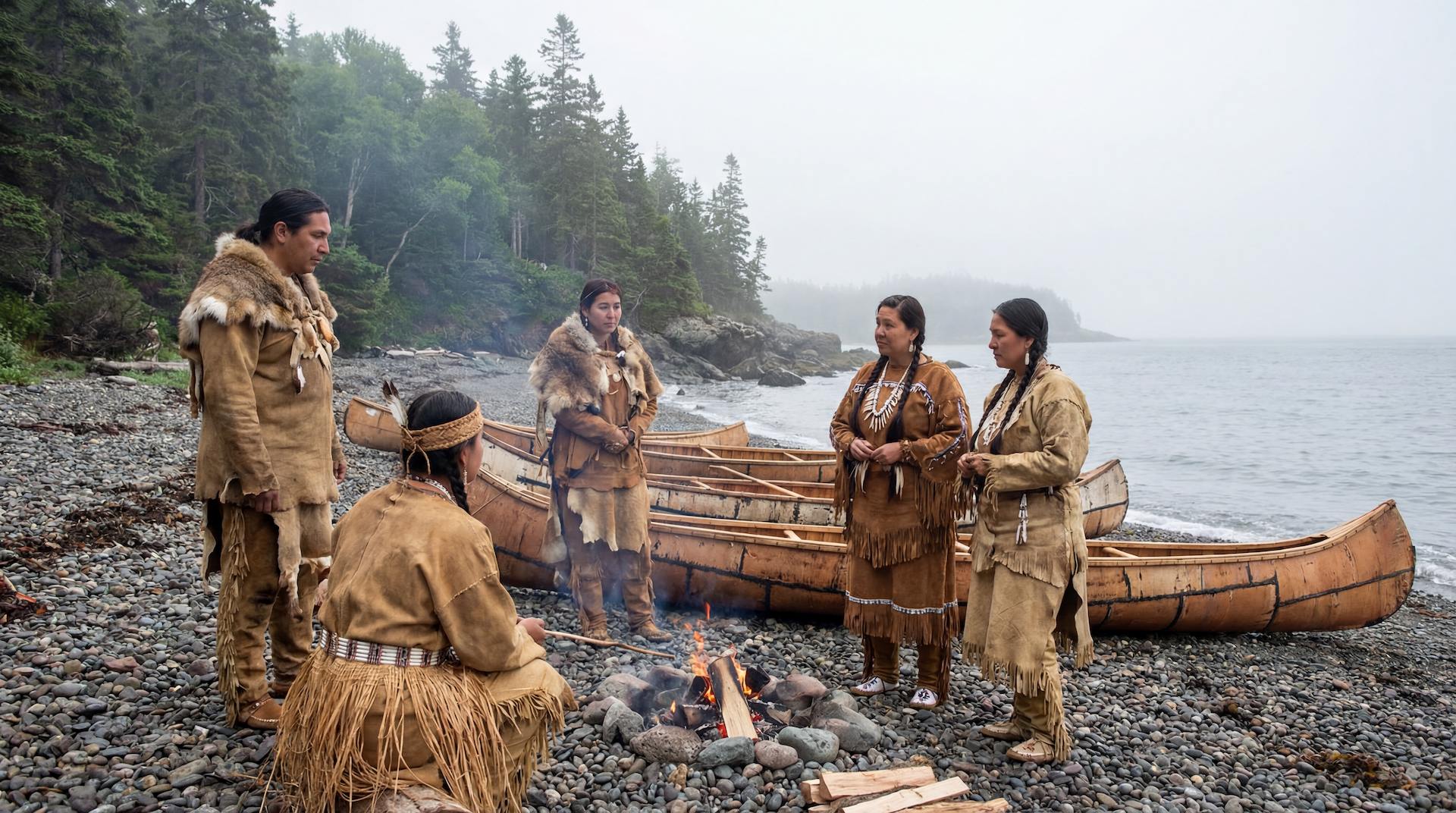
Before any documented European reached what is now Nova Scotia, the Mi'kmaq lived along its coast and inland waters. Pottery shards recovered from the southeast corner of the Oak Island swamp, near the stone road feature, have been assessed at between 500 and 2,500 years old. The Indigenous presence on the South Shore did not begin when European ships first arrived, and it did not end either. Any chronology of the island that opens with European contact has already mislabelled half the timeline.
 Mi'kmaq, the First Nation on Oak Island→
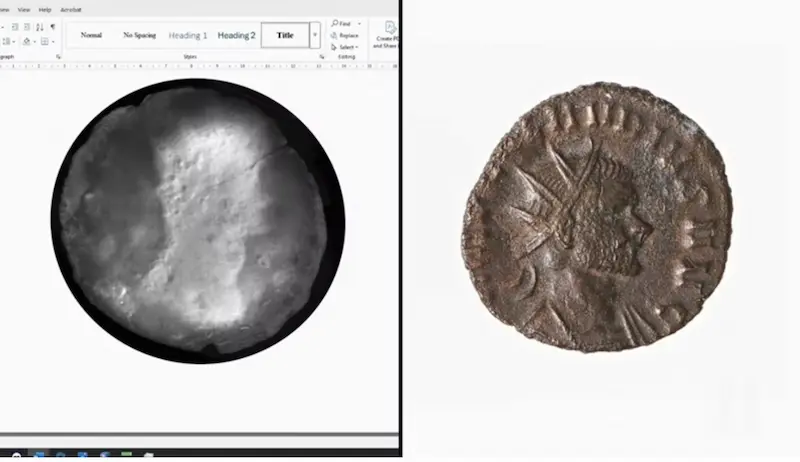
A second, much smaller signal sits behind the Mi'kmaq baseline. On Lot 5, metal detection has recovered what numismatists have read as Roman copper pieces, including a coin attributed to the emperor Claudius II (268-270 AD) and other fragments dated to between 100 and 600 AD. Inside the Money Pit, a charcoal layer between 30 and 40 feet has produced two radiocarbon results bracketing the Roman period, around 90 BC and 290 AD. Peat deposits in the south shore beach pits returned dates of roughly 30 BC to 50 AD and 425 to 355 BC. These results sit at low to medium confidence in the database, and the Roman coin attributions remain contested in the wider numismatic literature. They are recorded here because they exist in the soil, not because they prove anything by themselves.
 Roman coin (Claudius II), 268-270 AD (Lot 5)→
 Charcoal layer→
The strongest pre-1500 signal is later, and it clusters tightly between roughly 1050 and 1400. Fibrous material from Smith's Cove was radiocarbon dated to 780-840 AD by the Woods Hole Oceanographic Institution in 1995-96. Three independent samples of the same material from the Money Pit at 60 feet returned a combined range of 1036-1374 AD from Beta Analytic and Woods Hole. The Smith's Cove timber structures excavated by Dan Blankenship in 1969-70 produced an oak peg dated to around 860 AD (720-1000) and a beam dated to around 1135 AD (1025-1245). Beneath the centre of the triangular swamp, the so-called paved area or stone wharf overlies wood radiocarbon dated to around 1200 AD.
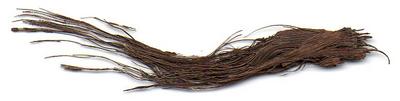
The fibre itself has since been re-examined. For most of the 20th century it was identified as coconut coir, on the basis of sample work by Robert Dunfield in 1976 and the Woods Hole analysis in 1995. In 2022, forensic botanical research by David H. Neisen, Robert W. Cook, and Christopher L. Boze re-identified the material as trunk-sheath fibre from the Judean Date Palm (Phoenix dactylifera), with a narrowed radiocarbon range of 1185 to 1330 AD at 95 percent confidence. Their work estimates a minimum of 1.54 metric tonnes of the fibre recovered from the Money Pit and Smith's Cove combined, a volume that argues against accidental deposit or shipboard dunnage. The Judean Date Palm was cultivated commercially in a restricted band of the Levant during the medieval period, including the Jericho region where the Knights Templar operated agricultural estates between 1116 and the Battle of Hattin in 1187. The lower bound of the Oak Island fibre dating begins almost precisely where that Levantine operation ended.
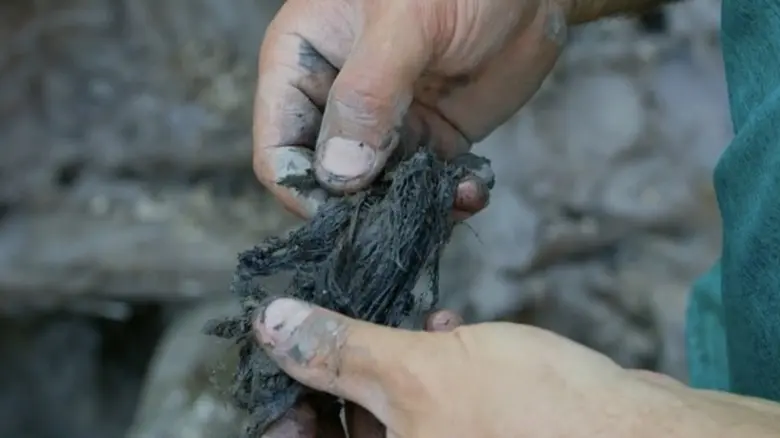 Coconut fibre (Money Pit)→
Around the same window, archaeoastronomer Adriano Gaspani dated the geometry of Nolan's Cross, the five-boulder configuration in the island interior, to 1217 AD. Charcoal from the rock wall on Lot 26, near the stone well that never freezes, returned a 15th-century date. The well itself has been assessed as 12th century. A hand-wrought iron spike pulled from a stone foundation on Lot 5 was metallurgically dated to the 1100s-1300s. The lead decorative piece recovered in 2024 was carbon dated to before 1400 by Tobias Skowronek of the German Mining Museum, using its lead isotope signature. Leather shoe fragments from the northern swamp returned a tight medieval window of 1148-1216. A crossbow bolt assessed by the Ladby Viking Museum was placed in the medieval or Viking Age. A lead cross from Smith's Cove was estimated at 900-1300 AD.
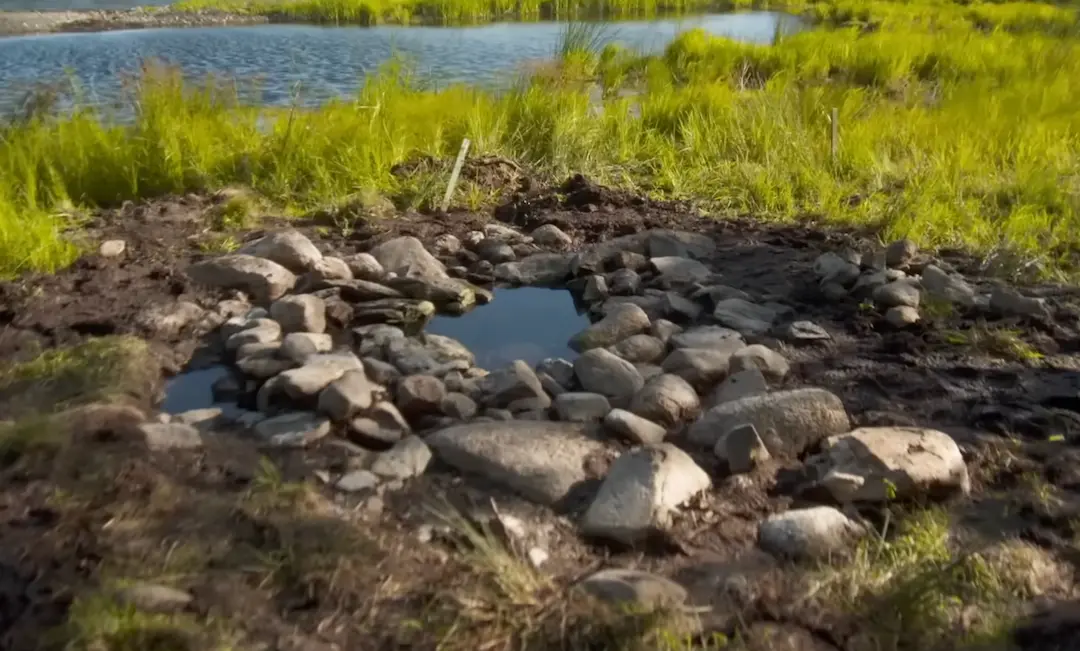 Stone well (never freezes)→
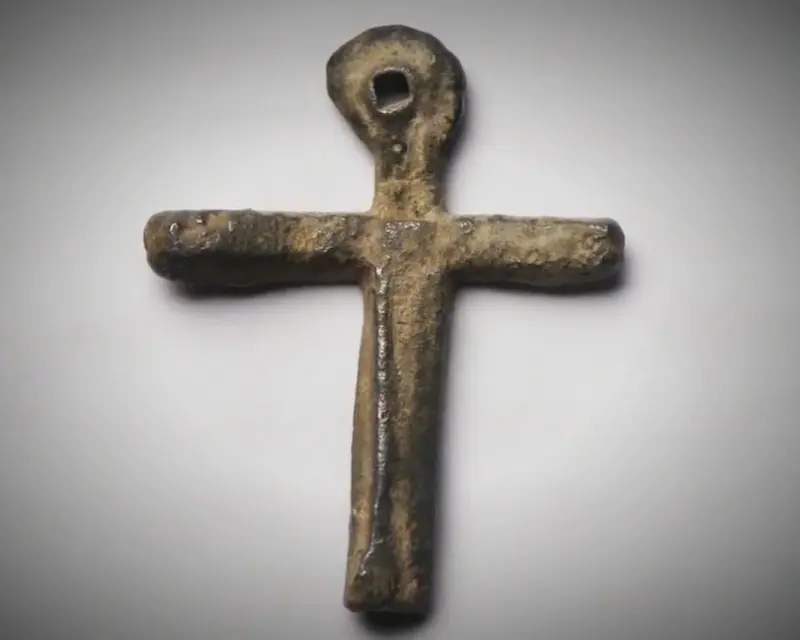 Lead cross→
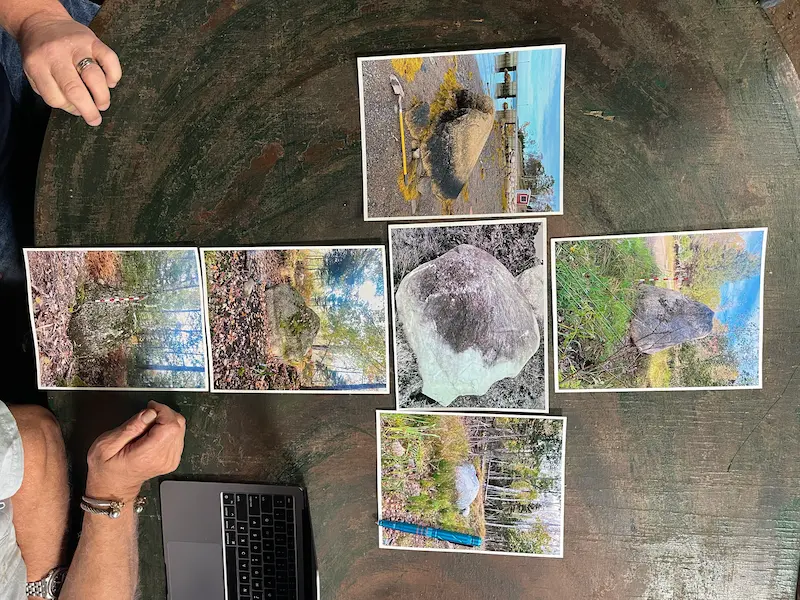 Nolan's Cross (5 boulders)→
One coin sits awkwardly in this window. The Portuguese tornes attributed to King Ferdinand I of Portugal (minted 1369-1371) was XRF-confirmed by Emma Culligan as period-appropriate metal. As evidence of medieval activity on Oak Island, the coin is contested and circumstantial at best. Its provenance is presented as a Pitblado-Archibald family heirloom rather than a documented Oak Island recovery, with the Money Pit auger story attached by oral tradition. The metallurgy is real. The findspot is not verifiable. The article notes both, and treats the coin as a separate question from the radiocarbon and dendrochronology results above.
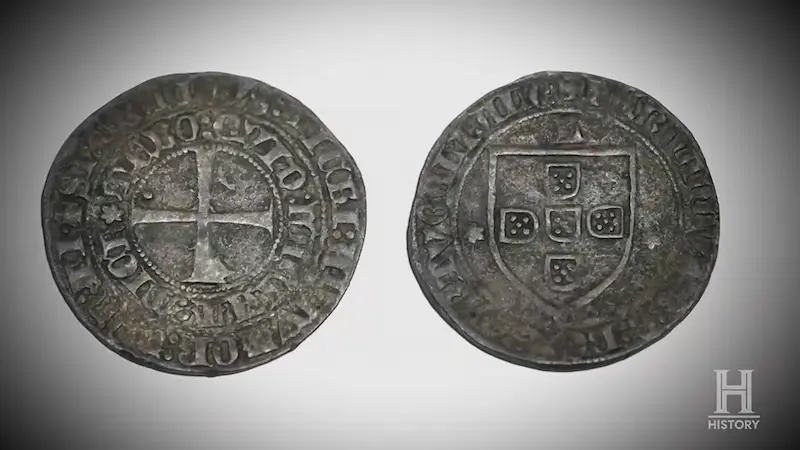 Portuguese Tornes, 1369-1371 (Pitblado coin)→
Taken together, the 12th to 14th century cluster is the densest pre-Columbian signal in the vault, with the highest proportion of laboratory-confirmed dates of any window before 1500. It does not name a builder. It establishes a time window, supported by independent samples from multiple locations on the island.
Tudor Coins, Iberian Sails, and the Sixteenth Century (1500-1604)
2 min
The documented European presence on the South Shore begins thinly in this century. John Cabot reached Newfoundland and the eastern seaboard in 1497, claiming territory for England. Portuguese fishermen and cartographers worked the coast through the 1500s, leaving names on early charts that no other European had yet placed. Basque whalers operated out of Red Bay on the Strait of Belle Isle from at least the 1530s. Sir Humphrey Gilbert, a friend of Dr. John Dee, reached Newfoundland and is recorded in the vicinity of Nova Scotia in 1583. Pierre du Gua de Monts received his colonization charter in 1603, and Samuel de Champlain reached the region the following year. Port Royal would not be founded until 1605.
Against that thin documented background, the Oak Island artifact record for this century is unusually heavy. Lot 5 has yielded a British Tudor portcullis coin assessed to the 1500s, recovered in the circular depression that has produced repeated finds across multiple seasons. A Spanish 11 maravedis copper dated 1598 was recovered at Isaac's Point, near Smith's Cove. A Barrote nail of Spanish galleon construction (1575-1600) came out of the north end of the swamp. Flat decking wood from the swamp's southern edge was carbon dated to 1516-1674.
 British Tudor portcullis coin, 1500s (Lot 5)→
 Cut Spanish maravedi, 17th-18th century (Isaac's Point)→Barrote Nail (Spanish Galleon)→
The Iberian fingerprint extends through ornamental and personal objects whose origin dates fall in the 16th-17th century band. The McGinnis Gold Cross, recovered inside the Money Pit, has been stylistically dated to between 1550 and 1700. A jewelled brooch with a rhodolite garnet from Lot 8 was placed in the 16th-17th century by gemmological analysis. A silver Spanish ring came out of the swamp. Decorative iron hinges of Spanish-style construction were recovered with an associated divider compass on Lot 21. None of these objects can be tied to a documented event, but they sit in a tight stylistic window and several were found in the same locations as the larger 16th-century coin and ship-fitting record.
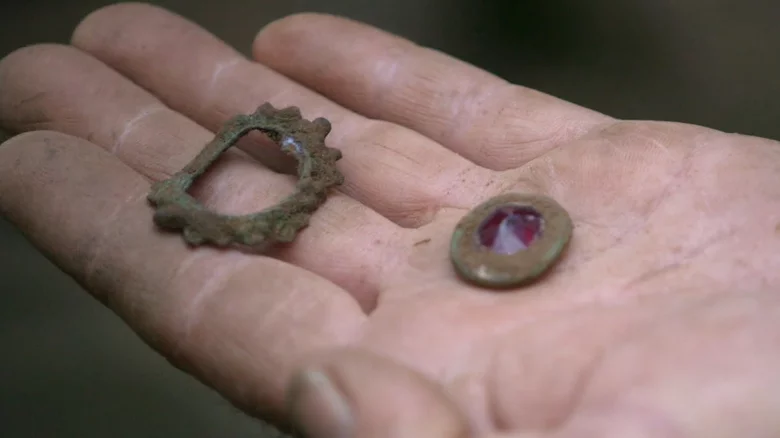 Jewelled brooch (rhodolite garnet)→
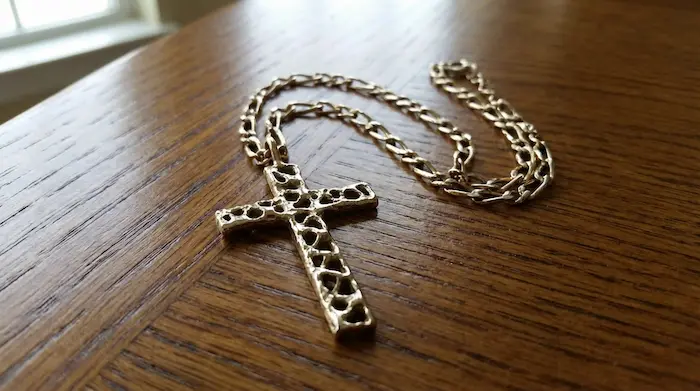 McGinnis Gold Cross→
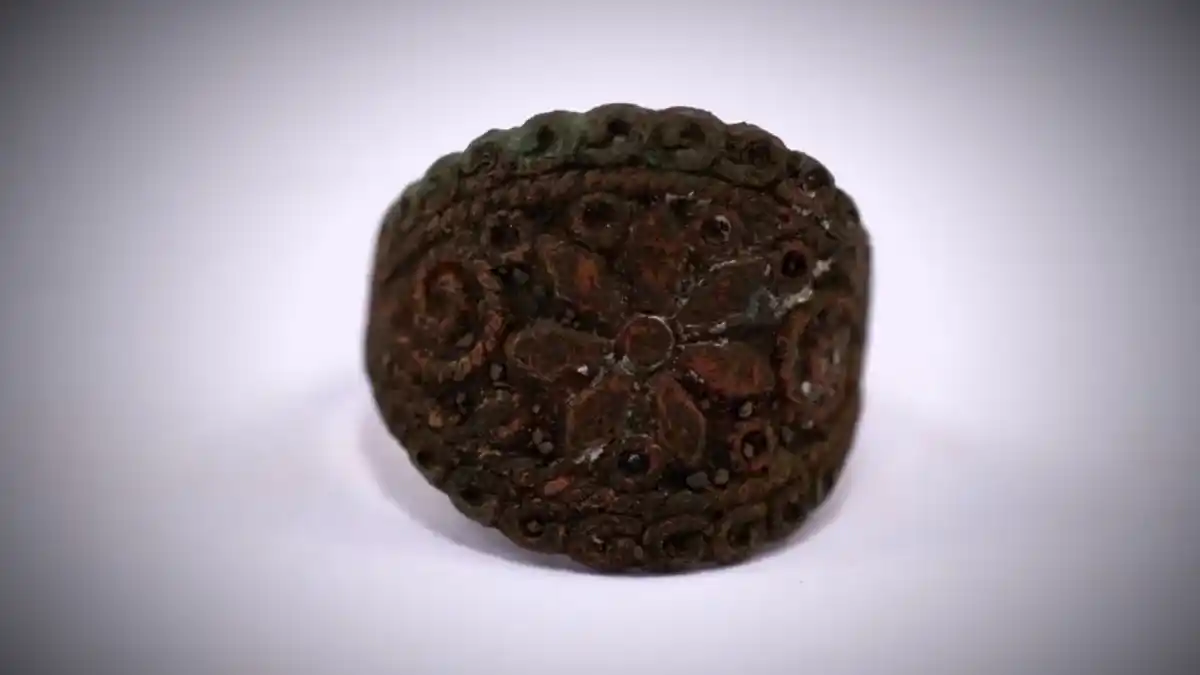 Silver Spanish ring→Decorative iron hinges (pair, Spanish-style)→
On the mainland, a single object provides important context. The Ardoise Hill gravestone in Nova Scotia, inscribed C. Manulis 1558, is the oldest documented European-marked stone in the province. It establishes that someone with a European name died and was buried in Nova Scotia thirty-seven years before Champlain reached the region by the conventional account. Whether or not the artifact is associated with the documented exploration record, it is a hard date in stone on the mainland forty-seven years before Port Royal.
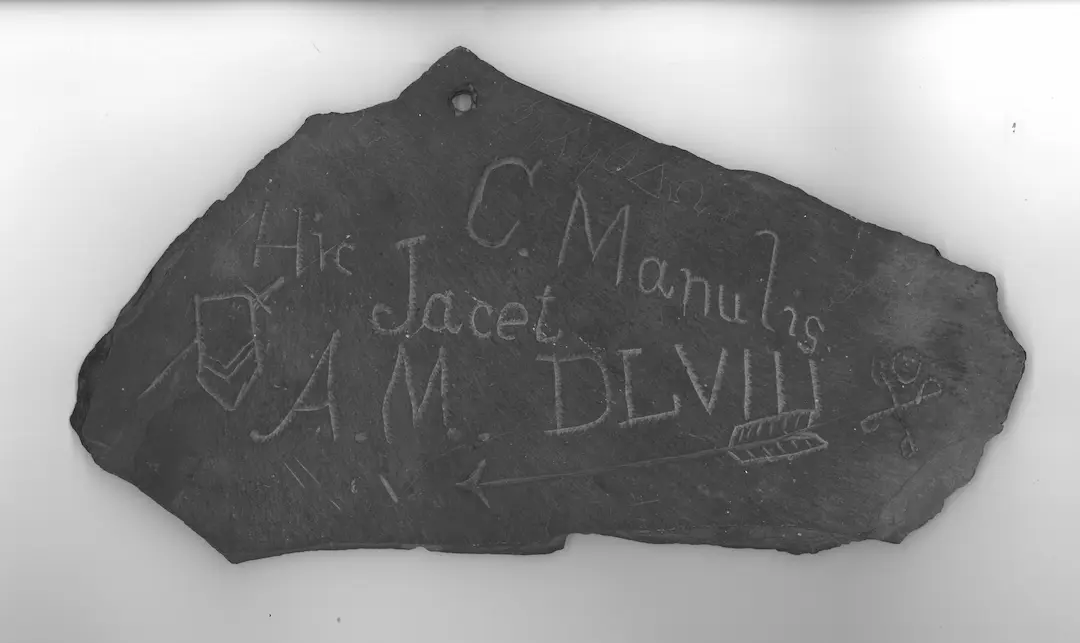 Ardoise Hill Gravestone (C. Manulis, 1558)→
The 1500-1604 window holds 54 dated artifacts in the vault, second only to the medieval cluster. Most are coins, ship fittings, and personal ornaments. Most of the find locations cluster around the swamp, Smith's Cove, and Lot 5. The historical record gives this period almost no documented European presence on the South Shore. The artifact record gives it considerable activity. The mismatch is one of the more interesting things the chronological mapping surfaces.
Port Royal, LaHave, and the Bones at One Hundred Sixty Feet (1605-1712)
3 min
This is the French Acadian century. Champlain established Port Royal on the Bay of Fundy in 1605, after the disastrous Isle Sainte-Croix attempt the year before. The Acadian population grew slowly but steadily through the 1600s, eventually reaching the thousands. Isaac de Razilly established a French settlement at LaHave on the South Shore in 1632, eight miles from what is now Lunenburg and roughly thirty miles from Oak Island. By 1670, Acadians had settled in small communities at LaHave and at Merligueche, later renamed Lunenburg. Around 1700, the French governor of Acadia is recorded as inviting Atlantic Coast pirates to use LaHave as a depot. The Treaty of Utrecht transferred Acadia to England in 1713, closing this period.
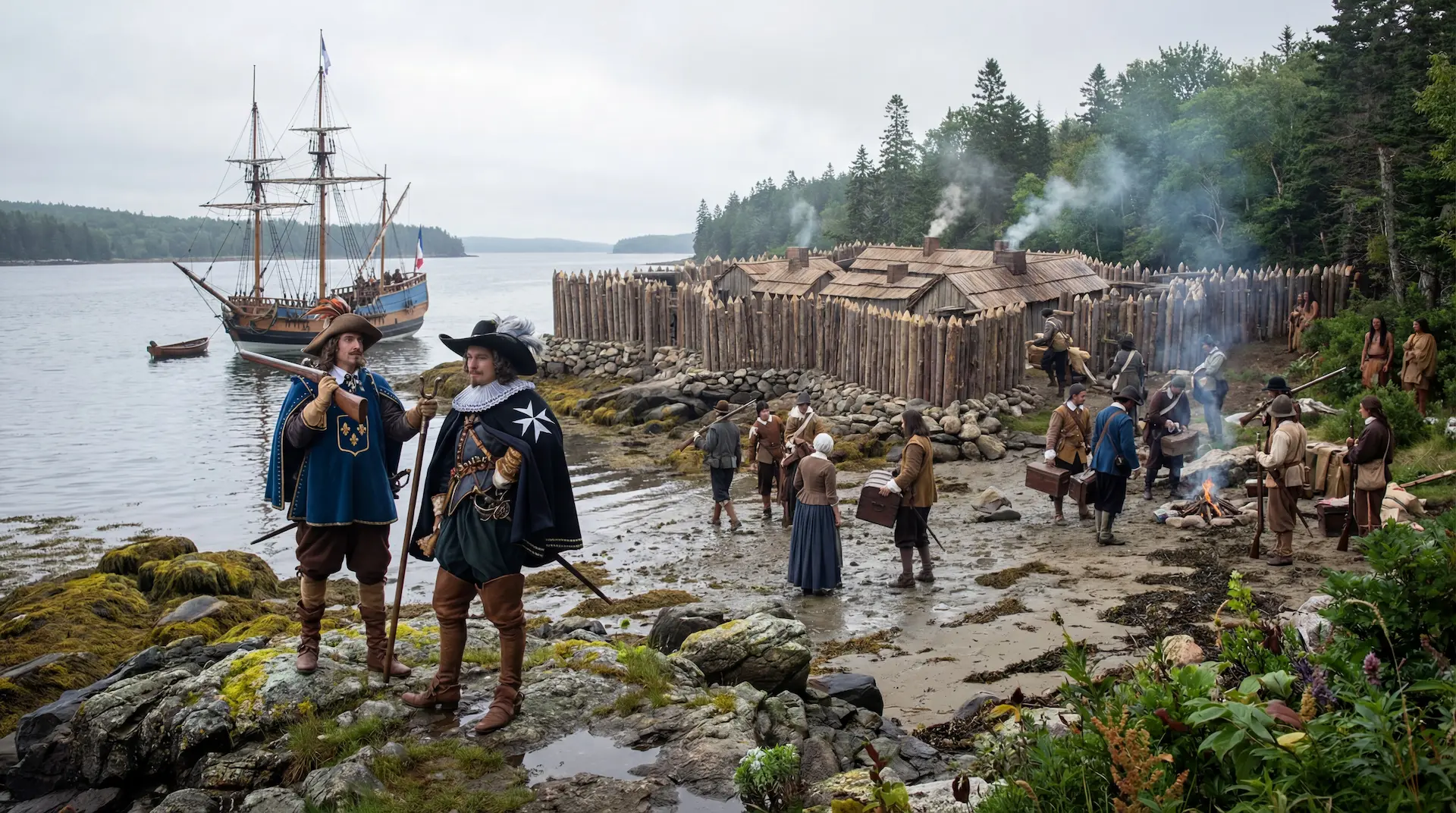 The Knights of Malta→
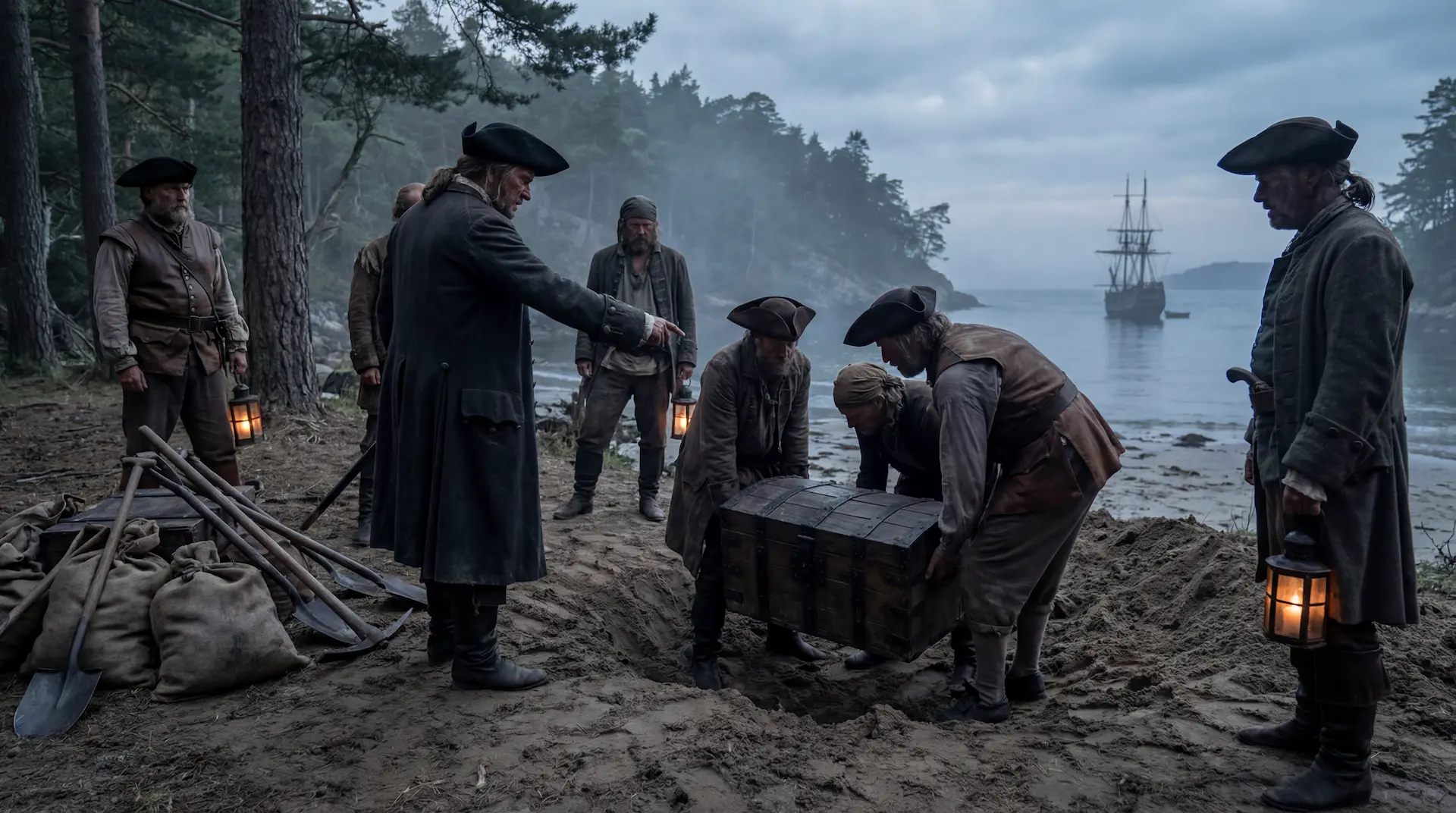 Pirates & Privateers on Oak Island→
The artifact vault for this century holds 46 dated objects, with the highest proportion of high-confidence laboratory and inscription-based dating of any period in the dataset. The 1671 Order of the Garter medallion was recovered at New Ross on the mainland. A Britannia copper of Charles II dated 1673 and a second Britannia copper of William III dated 1694 came out of the Lot 16 spoils from Robert Dunfield's 1965 Money Pit excavation. A William III sixpence (1697-1701) was recovered in the same spoils. A Spanish 8 maravedis dated 1652 was pulled from the swamp. A stone bearing the inscription 1704 has been documented on the island surface.
 Britannia copper, 1673 (Charles II, Lot 16)→
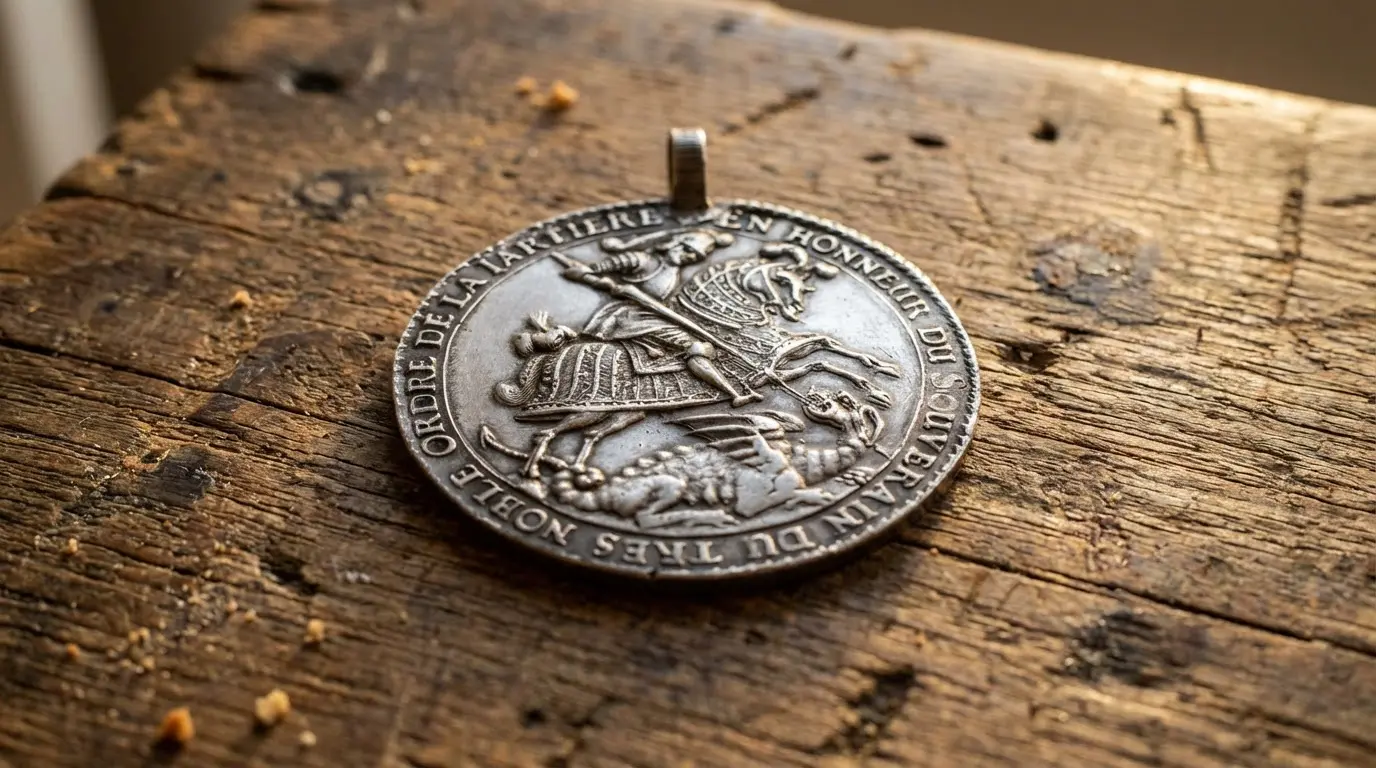 1671 Order of the Garter Medallion→Britannia copper, 1694 (William III, Lot 16)→
 William III sixpence, 1697-1701 (Lot 18)→
The most striking high-confidence find of this period lies inside the Money Pit at depth. Human bone fragments recovered from borehole H8 at approximately 160 feet were radiocarbon dated to between 1678 and 1764. The fragments represent two individuals. They place at least two human deaths inside the Money Pit workings during the late 17th or early 18th century, decades before the 1795 discovery. A trapezoid-shaped wooden piece from the Triangle Swamp excavation returned a radiocarbon date of 1683-1735. Sticks and organic matter from the Eye of the Swamp returned 1674-1700. Staffordshire slipware pottery from the Lot 5 round feature was placed at 1675-1770.
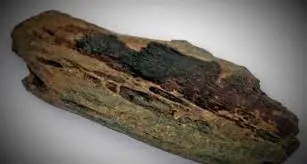 Human bone fragments (2 individuals)→
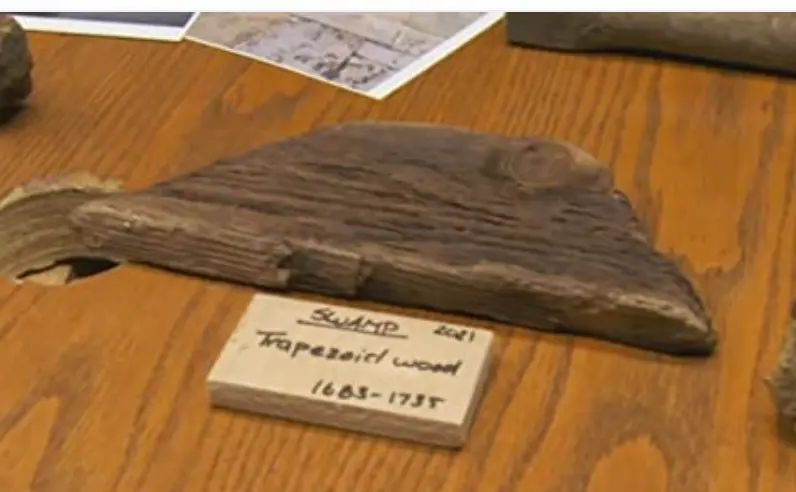 Trapezoid-Shaped Wood Piece→Sticks/organic matter (Eye of the Swamp)→
The swamp continued to receive material through this century. Lead bag seals identified as Leeds cloth (with Golden Fleece, 17th-18th century) and Norwich cloth (1638-1714) were recovered from Lots 8 and 32. An adze head from Lot 4 was placed at 1620-1740 by blacksmith analysis. Bush scythe fragments from the well on Lot 26 were dated to the mid-17th century. Crib spikes from Smith's Cove fell into a 1650-1800 window. A block and tackle hook from Lot 11 well spoils was placed at 1650-1690.
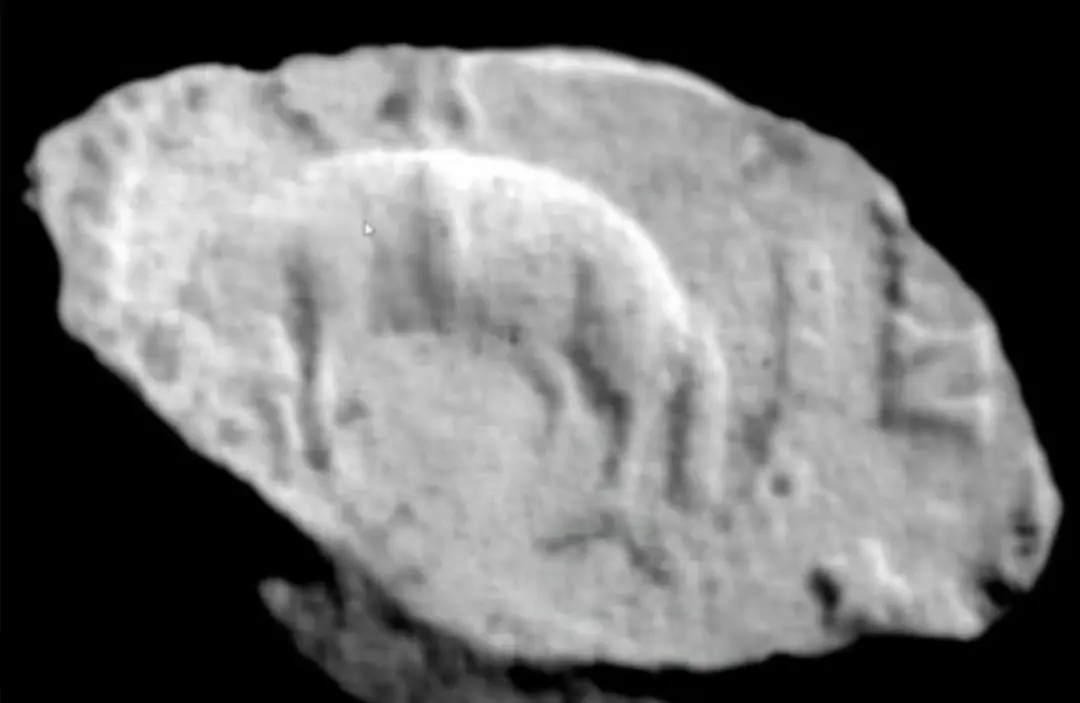 Lead Bag Seal - Leeds, with Golden Fleece→
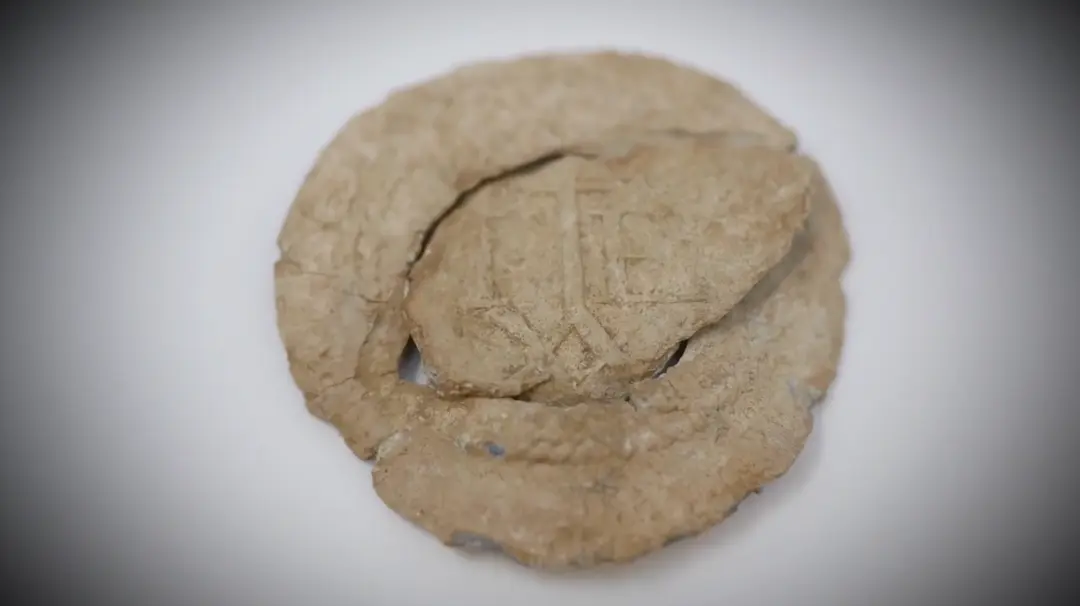 Lead Bag Seal - Norwich Cloth→
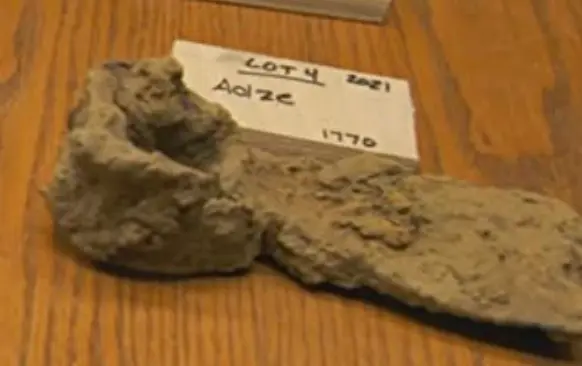 Adze Head→
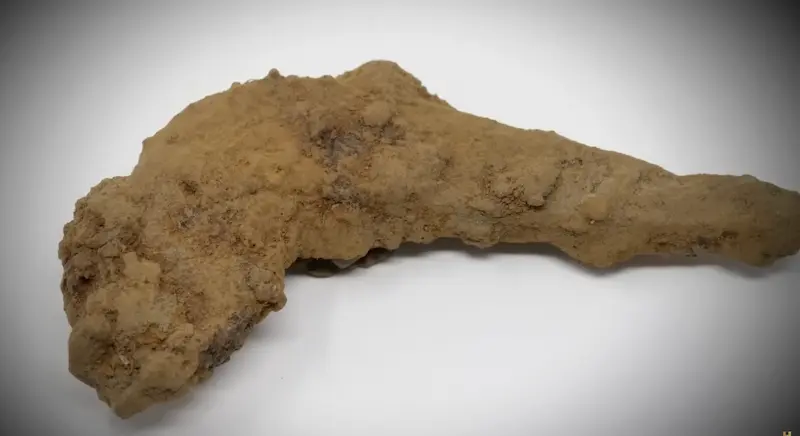 Bush Scythe Fragments→Crib spikes (multiple)→Block and tackle hook→
The conventional account of this century holds that Oak Island was uninhabited, with Acadian and pirate activity concentrated at LaHave to the south and at Mahone Bay to the north. The artifact record places coins, ship fittings, agricultural tools, cloth seals, ceramic ware, organic deposits inside the swamp, and the remains of at least two human beings inside the Money Pit at 160 feet, all within this window. The two readings are difficult to reconcile.
Human bone fragments (2 individuals)→ 1671 Order of the Garter Medallion→
Louisbourg, the Expulsion, and the 1769 Slipway (1713-1794)
3 min
The period between the Treaty of Utrecht and the Money Pit discovery is the most under-discussed in Oak Island writing. It is also, by the artifact record, the period in which the question of who reached the island before McGinnis becomes hardest to dismiss.
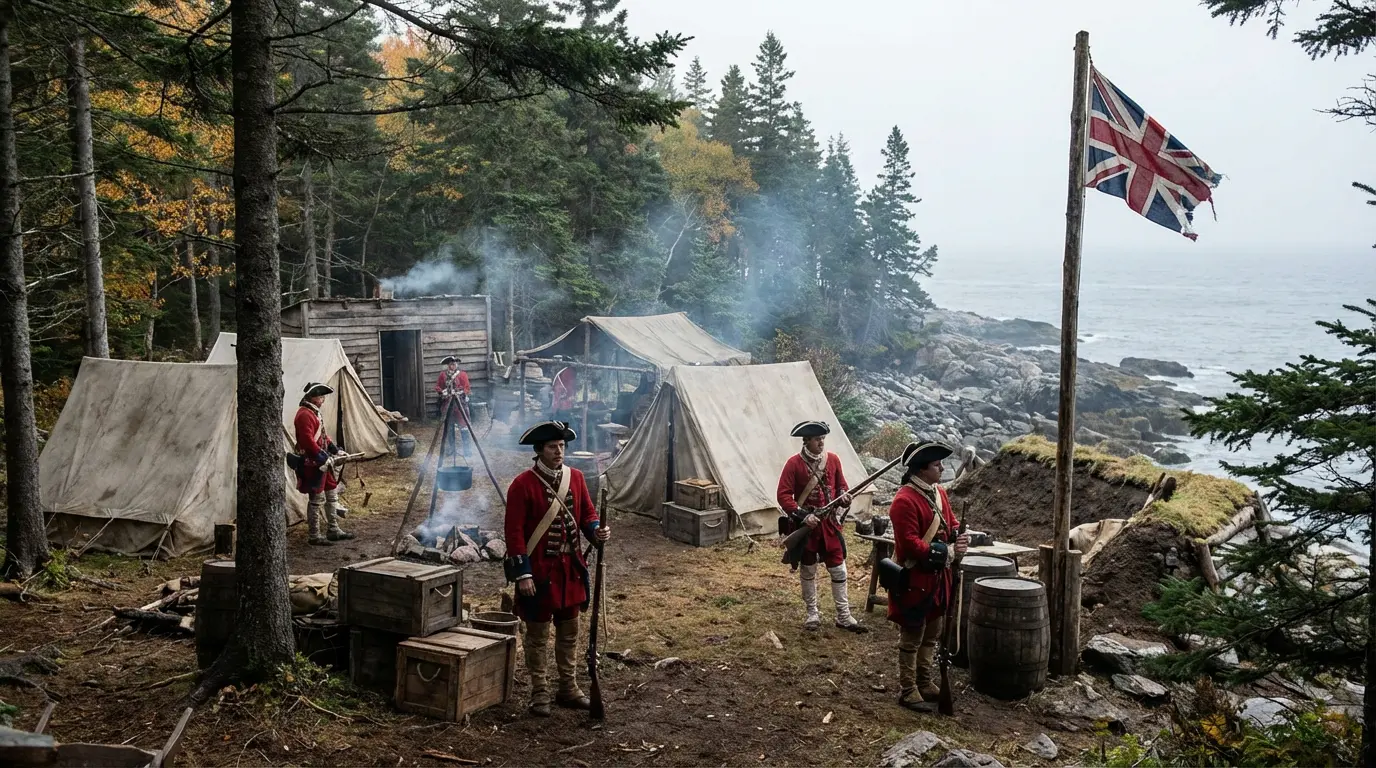
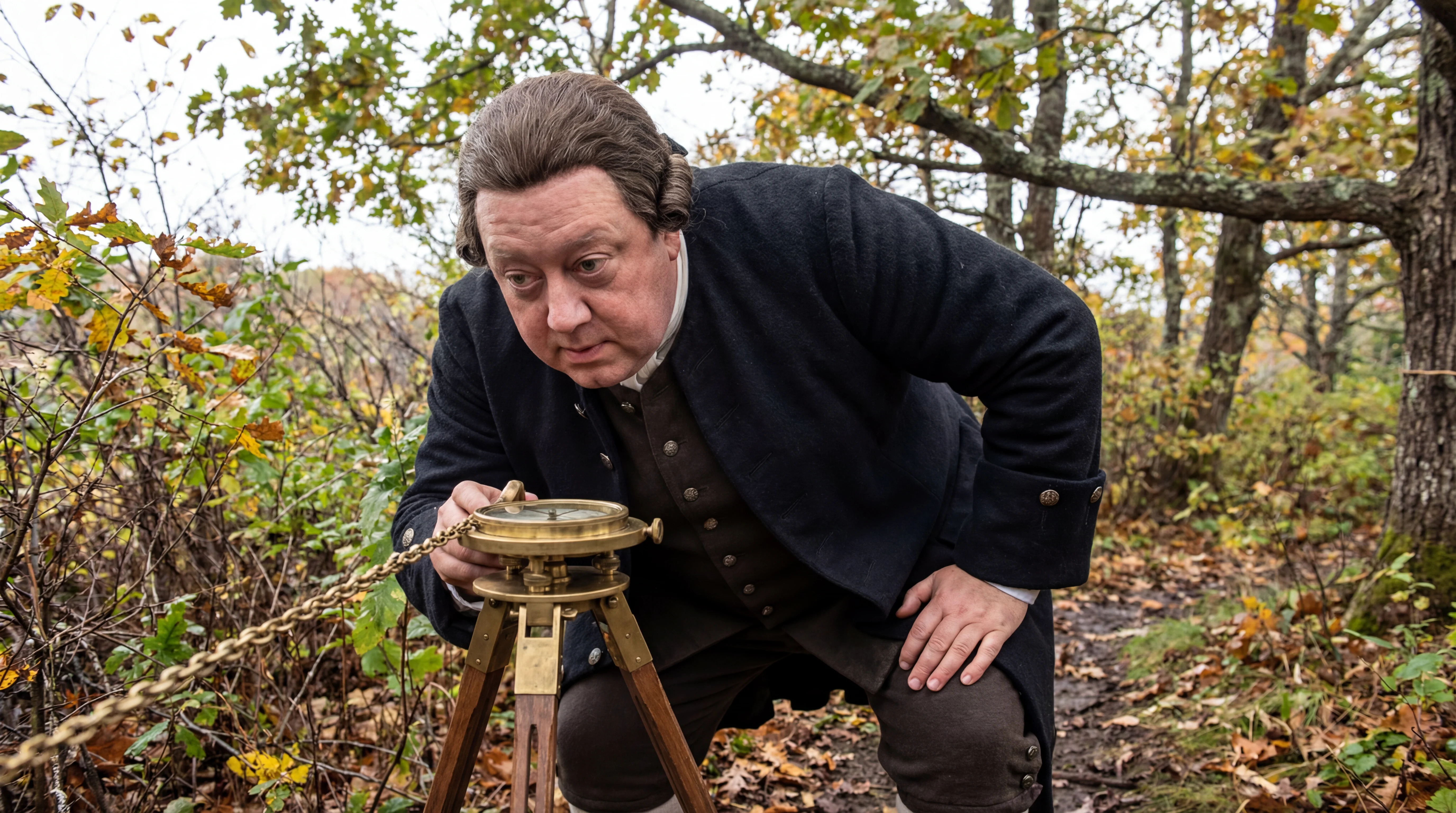
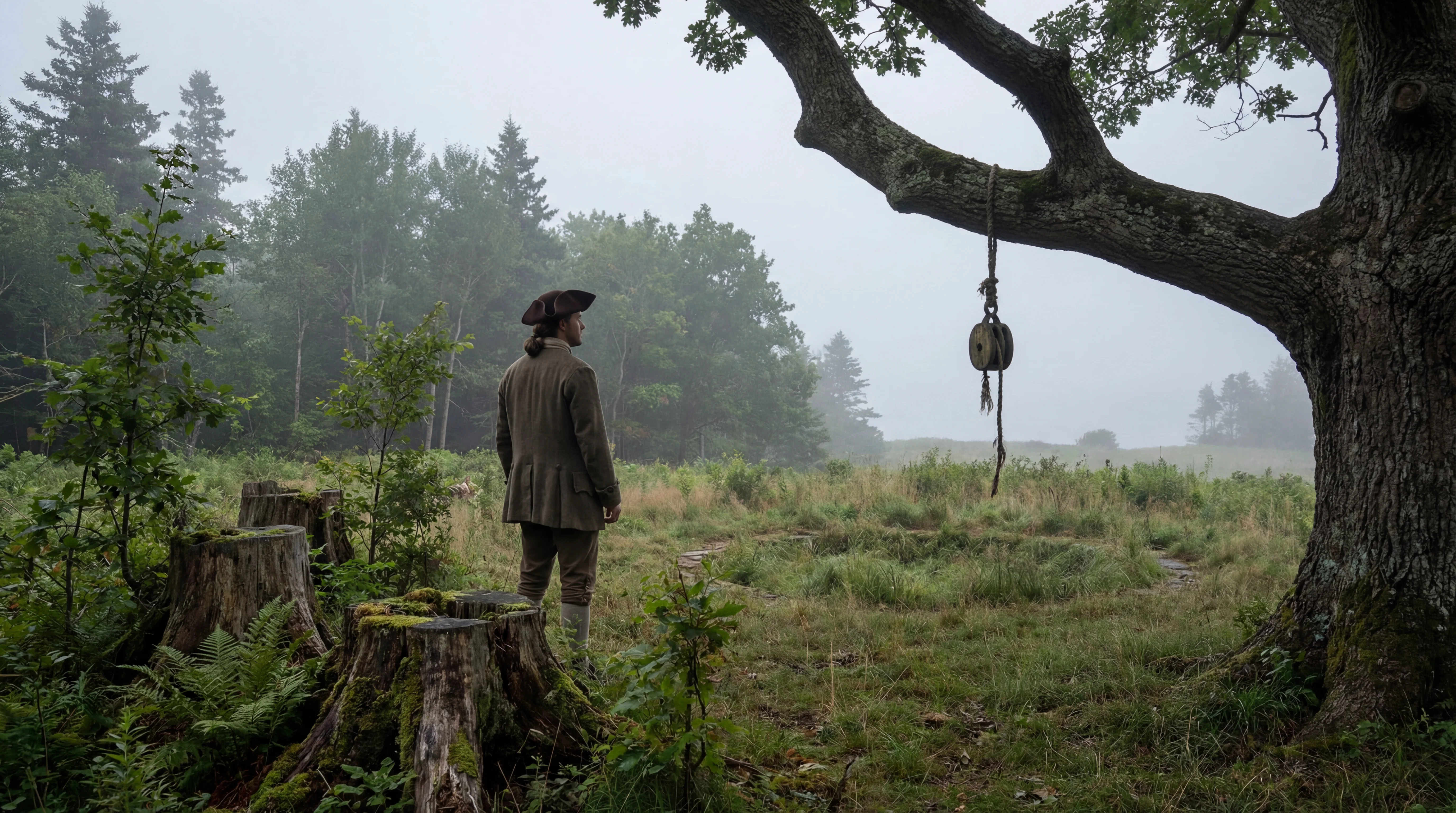
The documented history of the South Shore through these eighty-two years is dense. The French fortress of Louisbourg on Cape Breton, founded in 1713, generated regular pay-ship traffic across the Atlantic. Louisbourg fell to a New England force in 1745, was returned to France in 1748, and fell again to the British in 1758. In 1746, the d'Anville fleet sailed from France to retake Louisbourg and lost most of its ships at sea. The Foreign Protestants, a group of German, Swiss, and French Protestant settlers, were brought to Lunenburg in 1753. The British military expelled the Acadian population beginning in 1755 in what is now called the Grand Derangement. The Treaty of Paris of 1763 permitted Acadian return, though most never came back. The Shoreham Grant of 1759 opened the area around Oak Island to New England Planters, and the Chester Township was established the same year. Charles Morris surveyed the island into thirty-two four-acre lots in 1762, thirty-three years before McGinnis, Smith, and Vaughan walked onto it.
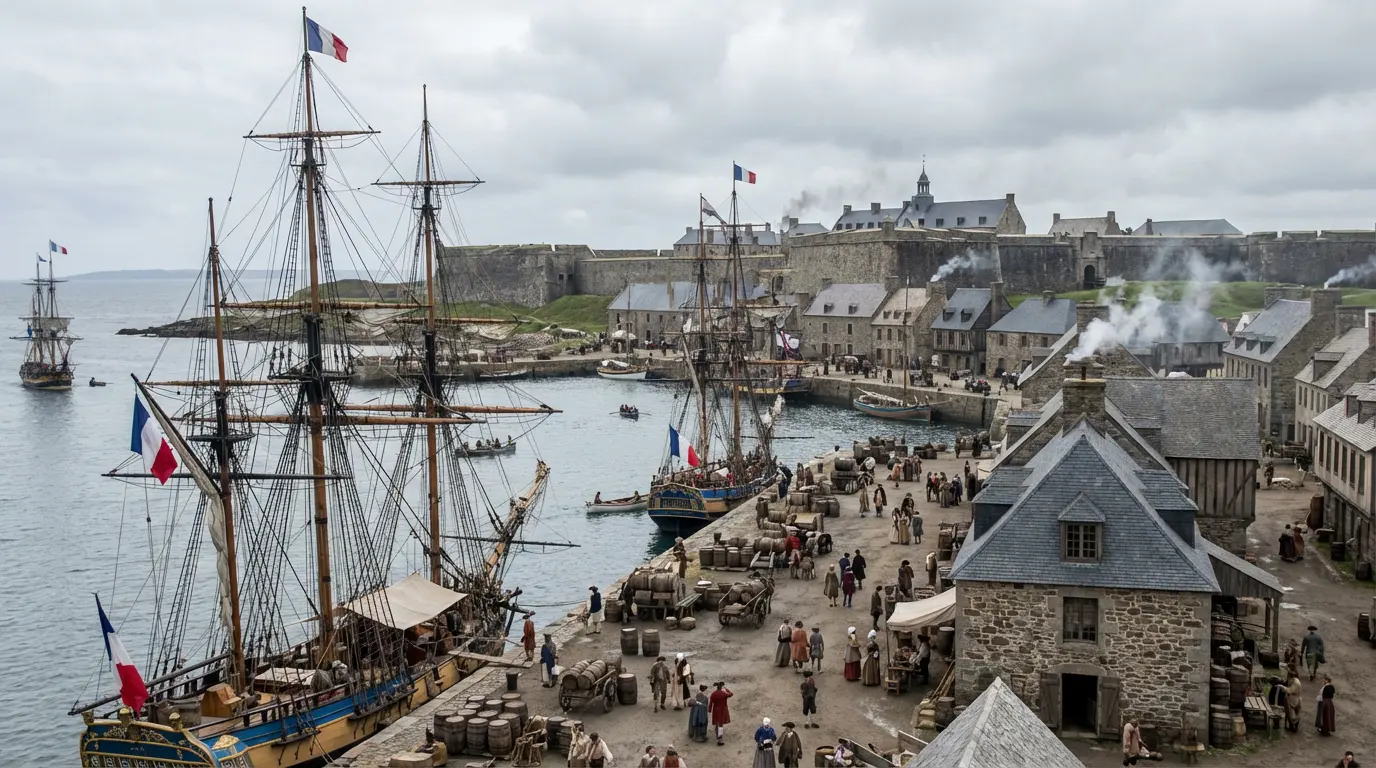 The Treasure of Louisbourg→
 Duc d'Anville's Doomed Fleet→
 The Secret British Military Bank→
 Charles Morris: The Man Who Mapped Oak Island→
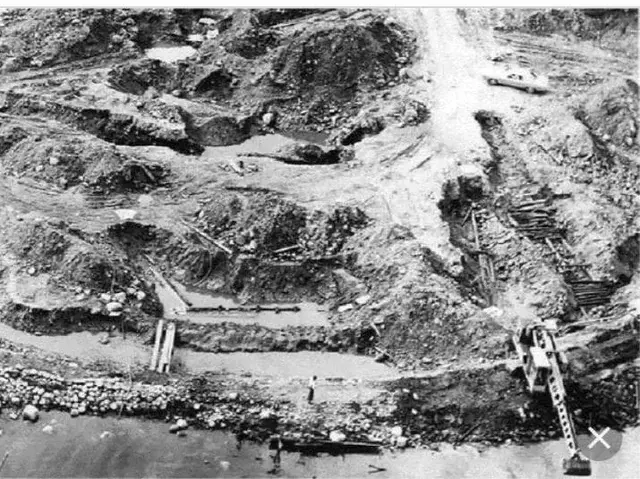
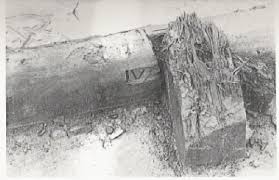
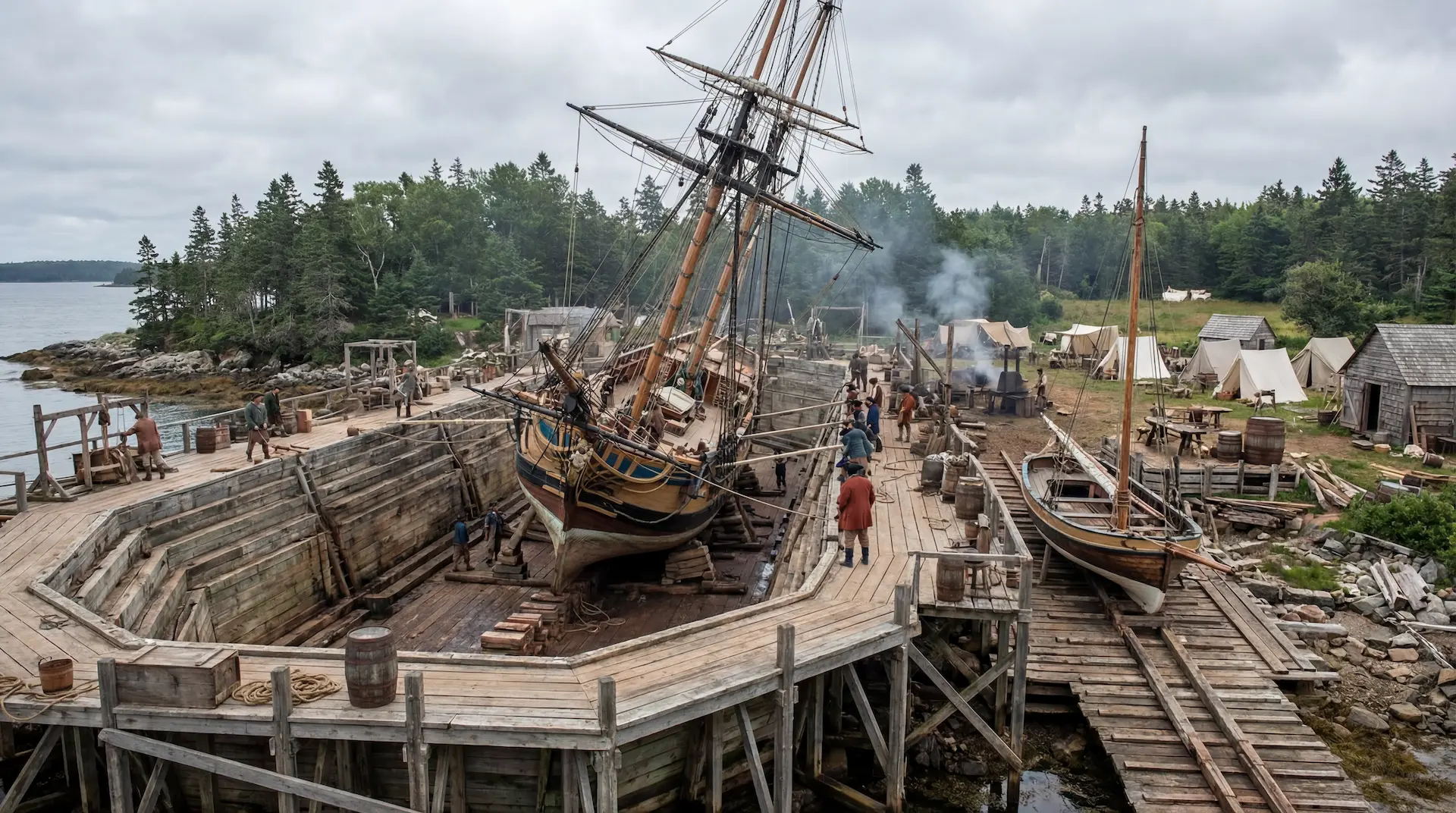
The artifact record for this period holds 17 dated objects, fewer than the preceding centuries but with the highest single-date precision of any window in the vault. In 2022, dendrochronological analysis of a red spruce slipway timber recovered at Smith's Cove returned a felling date of 1769. A separate U-shaped wooden structure in the Smith's Cove tidal zone, recovered in the same period of investigation, returned the same dendrochronology date of 1769. A large log bearing Roman numerals, found beneath the shore at Smith's Cove, was dated to trees felled around 1770.
 U-shaped wooden structure→
 Large log with Roman numerals (65 ft)→
The dendrochronology numbers are not estimates or stylistic readings. They are tree-ring counts against a regional master chronology, accurate to the year. Someone was at Smith's Cove in 1769, building maritime infrastructure substantial enough to leave a slipway and an associated wooden structure, twenty-six years before Daniel McGinnis arrived on the island. The Foreign Protestants had been at Lunenburg for sixteen years. The Chester Township had been settled for ten. Charles Morris had drawn his thirty-two lots seven years earlier. Whoever felled those red spruce in 1769 was not working in an unmarked wilderness.
 The Oak Island Dry Dock→
 The Real Daniel McGinnis of Oak Island→
Inside the Money Pit, Staffordshire pearlware pottery shards have been recovered at 192 feet, placed by Laird Niven at 1780-1800. A King George II copper coin dated 1771 was recovered at the south shore near the swamp. A Spanish half-real silver coin dated 1781 came out of Lot 5. A bone-handled knife from the McGinnis foundation root cellar (Lot 21) was placed at 1750-1799 by typology.
Pottery shards (Staffordshire pearlware)→ King George II copper coin, 1771 (south shore)→Spanish half-real silver, 1781 (Lot 5)→Bone-handled knife→
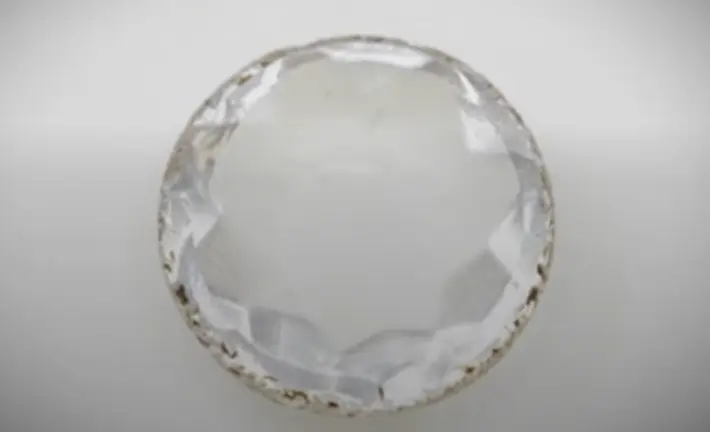
The Lot 5 round stone feature continued to receive small objects through this period: an iron chopping knife (mid-1700s), an iron hook from the well, a black glass jewel, an ornate faceted glass jewel (post-1734), square nails, and a George III penny or halfpenny in the 1760-1820 range. Whatever stood at the Lot 5 round feature was occupied through the entire pre-Loyalist colonial period.
Iron chopping knife→ Iron Hook (Lot 5 Well)→
 Black Glass Jewel→
 Ornate Faceted Glass Jewel→Square nails→George III penny or halfpenny, 1760-1820 (Lot 5)→
The vault's chronology says clearly that the island was not empty before 1795. By 1769 someone was building permanent works at Smith's Cove. By 1780 someone was depositing English pottery at 192 feet inside the Money Pit shaft, well below any depth McGinnis and his companions would reach in their first season of digging. The question of who that someone was sits outside the scope of this article. The question of when they were there is in the wood.
The Cartwheel Twopence, the Cofferdam, and the Chappell Vault (1795+)
2 min
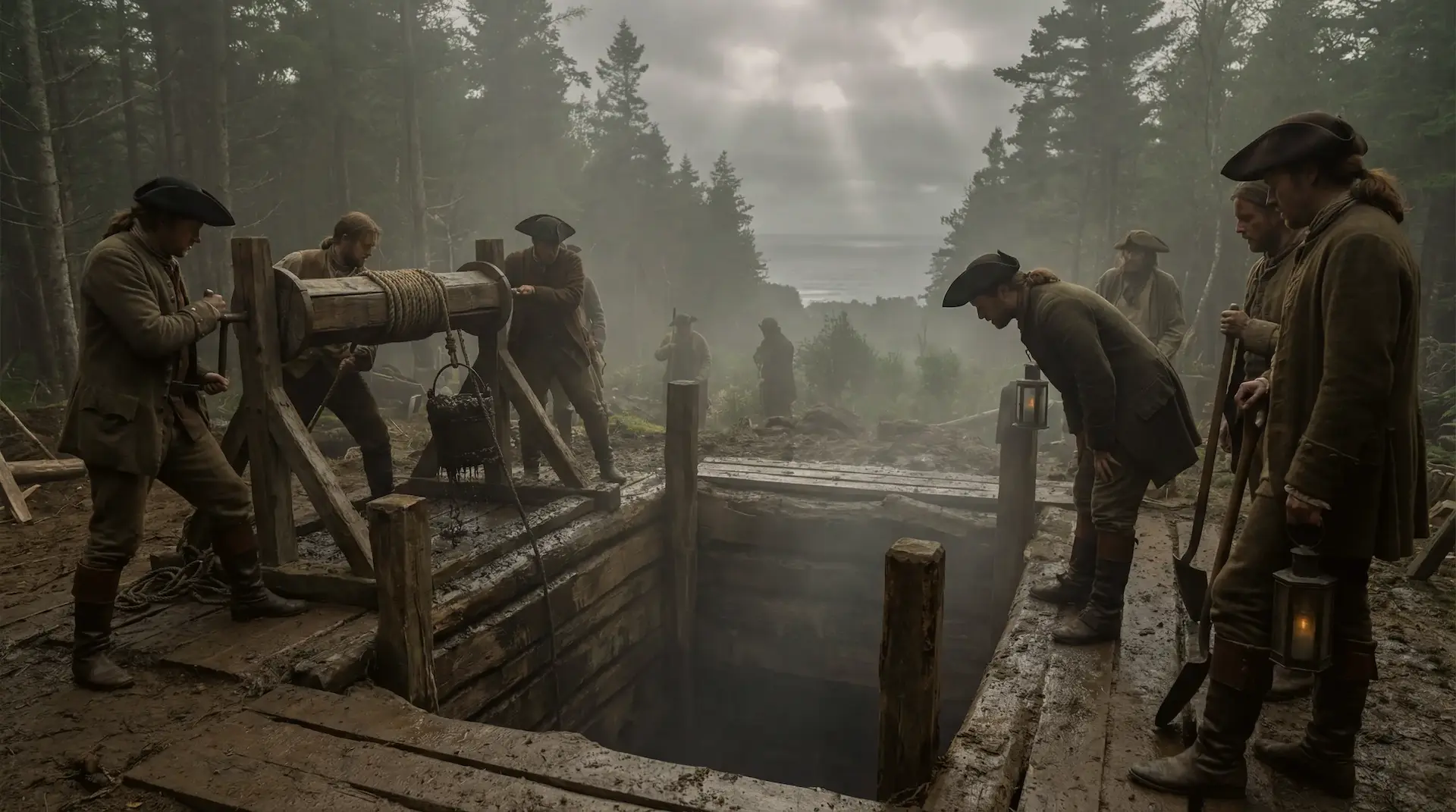
The discovery of the Money Pit in 1795 begins a new chronological layer in the vault. The objects from this period are not treasure. They are the residue of 230 years of treasure hunting.
 The Oak Island Money Pit→
A George III "cartwheel" twopence dated 1797, struck at Matthew Boulton's Soho Mint, was recovered on Lot 2 two years after Daniel McGinnis filed his claim. A George Washington funeral urn medal dated January 1800 was recovered in the northern part of the swamp. A British naval officer's button dated 1804-1825 came out of Lot 25, on the foundation of Samuel Ball's home. Wrought iron scissors of pre-mid-19th century manufacture were recovered at Smith's Cove, beneath the original flood system. A Queen Victoria copper halfpenny of the 1840s was found near the McGinnis foundation on Lot 21. The 1850 cofferdam remains at Smith's Cove, built by the Truro Company, are documented in the archaeological record. A leather boot sole dated 1830-1900 was pulled from the north swamp.
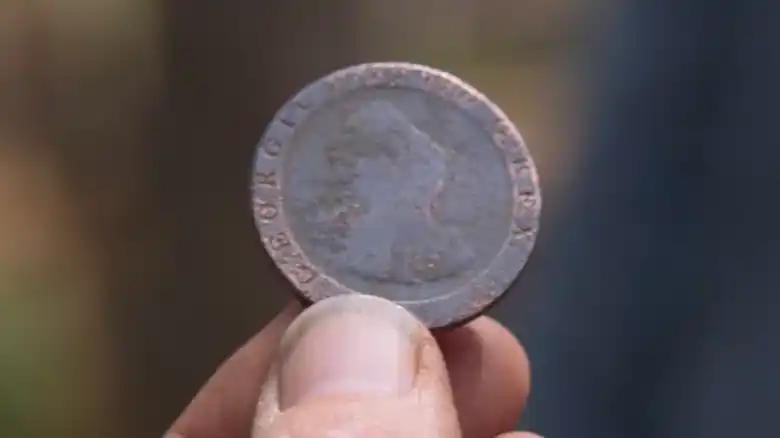 George III "Cartwheel" twopence, 1797 (Lot 2)→
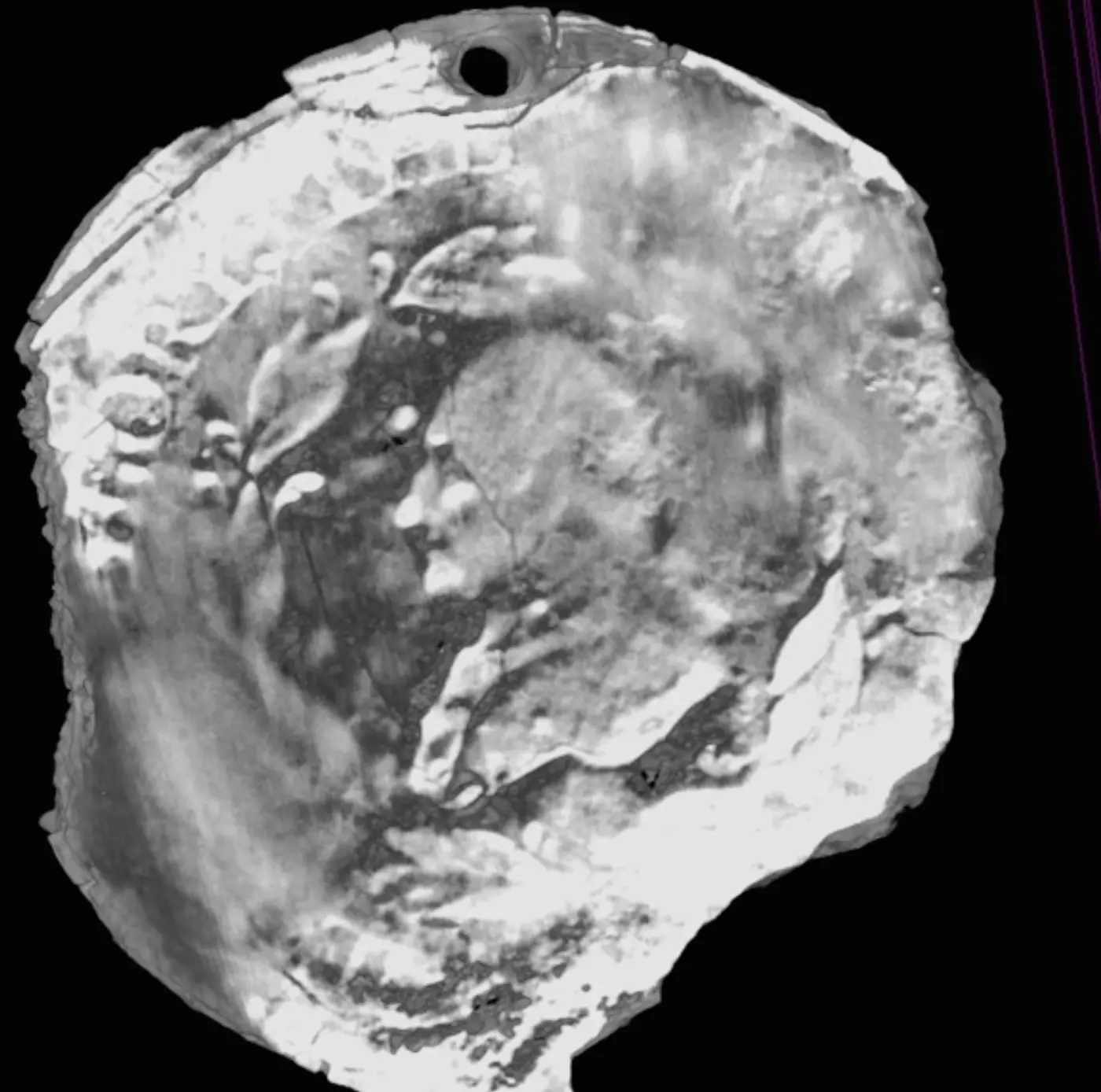 George Washington funeral urn medal, 1800 (swamp)→British naval officer's button→
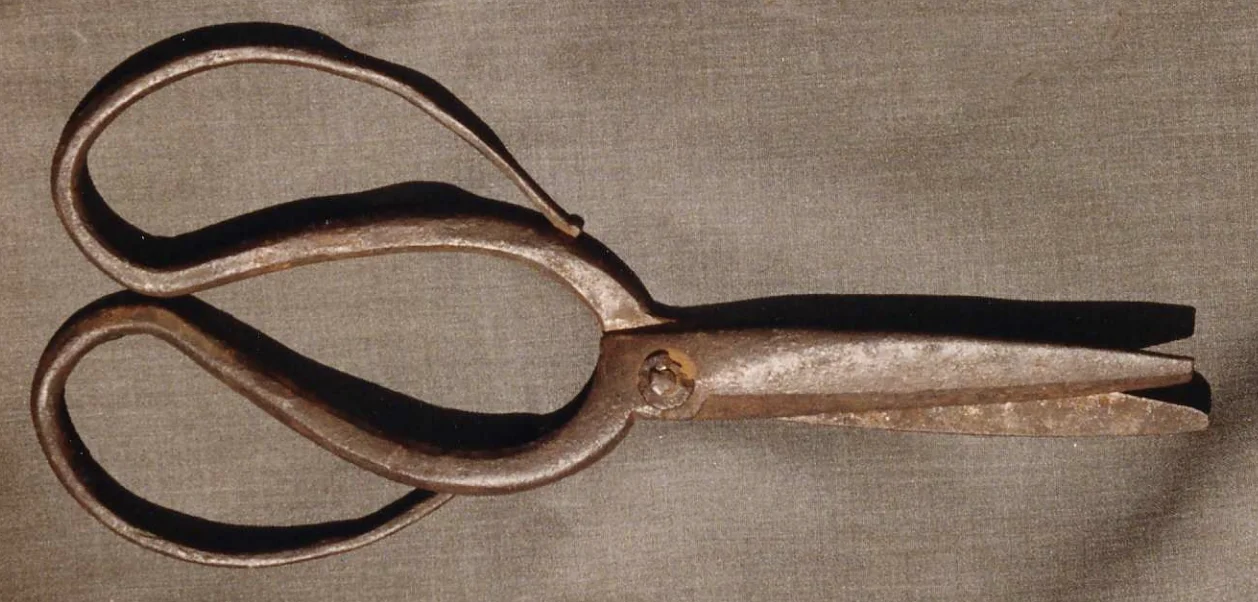 Wrought iron scissors→Queen Victoria copper halfpenny, c. 1840s (Lot 21)→
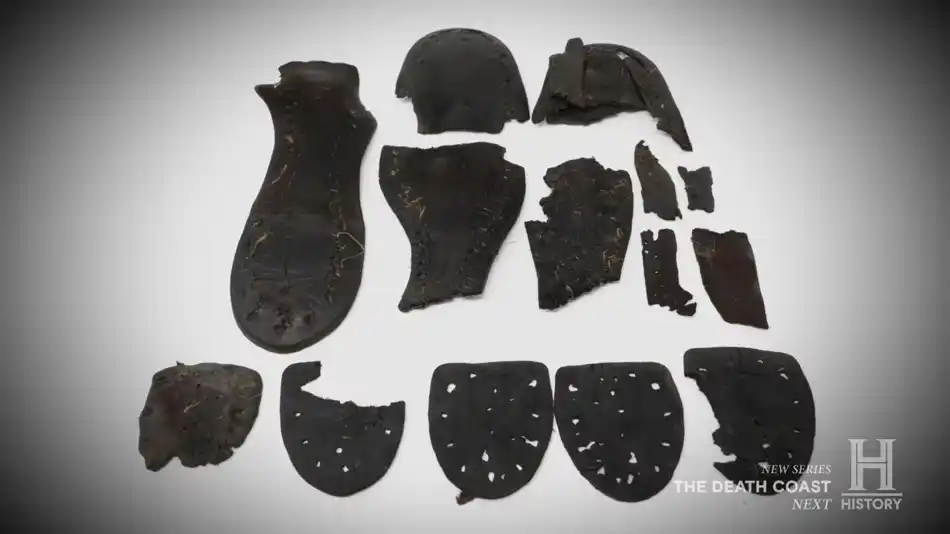 Leather Boot Sole→
In 1897, Frederick Blair's Oak Island Treasure Company detected what came to be called the Chappell Vault by drilling at 153 feet inside the Money Pit. The vault has never been physically reached and it's status will remain legendary until found. The detection itself is part of the artifact record, a piece of negative evidence about the search rather than about what is buried.
 The Chappell Family and the Vault Beneath Oak Island→
The post-1795 layer in the database is thin by design. The site treats searcher-era objects as supporting evidence about the history of the hunt, not as candidates for the original deposit. A 1797 cartwheel pence is not evidence of a Templar visit or a Spanish pay ship. It is evidence that someone with a freshly minted English coin in his pocket was on Oak Island two years after the Money Pit was found. The boot soles, the buttons, the Victorian halfpennies, and the cofferdam timbers are all best read this way. They date the search, not the deposit.
George III "Cartwheel" twopence, 1797 (Lot 2)→
A Thousand Years of Activity Before McGinnis
1 min
The chronological mapping does not name a builder. It does not identify a treasure. It does not resolve any of the major theories that have organized writing about Oak Island for two centuries. What it does is constrain the question.
The vault is heavily weighted toward objects with origin dates before 1795. Of the 182 dated artifacts in the published record, 174 fall before the Money Pit discovery, and only 8 fall after. The largest dated single cluster sits between 1500 and 1712, with 100 artifacts across two periods. The next largest cluster sits between roughly 1050 and 1400, with the highest proportion of independent laboratory dating in the vault. The 1713-1794 window holds fewer artifacts than the surrounding periods, but the dendrochronology dates of 1769 at Smith's Cove are among the most precise findings in the dataset.
If a single theory is to account for these patterns, it must explain why the 12th to 14th century timber, fibre, stonework, and metal cluster appears in independent samples from Smith's Cove, the Money Pit, and the swamp, all dated by separate laboratories. It must explain the 16th-century Iberian fingerprint at a time when the documented European presence on the South Shore was almost nil. It must explain the human remains at 160 feet in the Money Pit, dated between 1678 and 1764. And it must explain who was at Smith's Cove in 1769 building a slipway in red spruce felled that same year.
None of these are isolated finds. None of them point on their own to a single perpetrator or purpose. Taken together, they describe an island that has received human attention, in pulses and clusters, for at least a thousand years before the boys from Chester Township walked onto it in 1795.
[Editor's note: This article will be updated as new artifacts are added to the public vault and as further dating results are released. The five-period structure used here is a reading of the current dataset, not a fixed historical claim.]