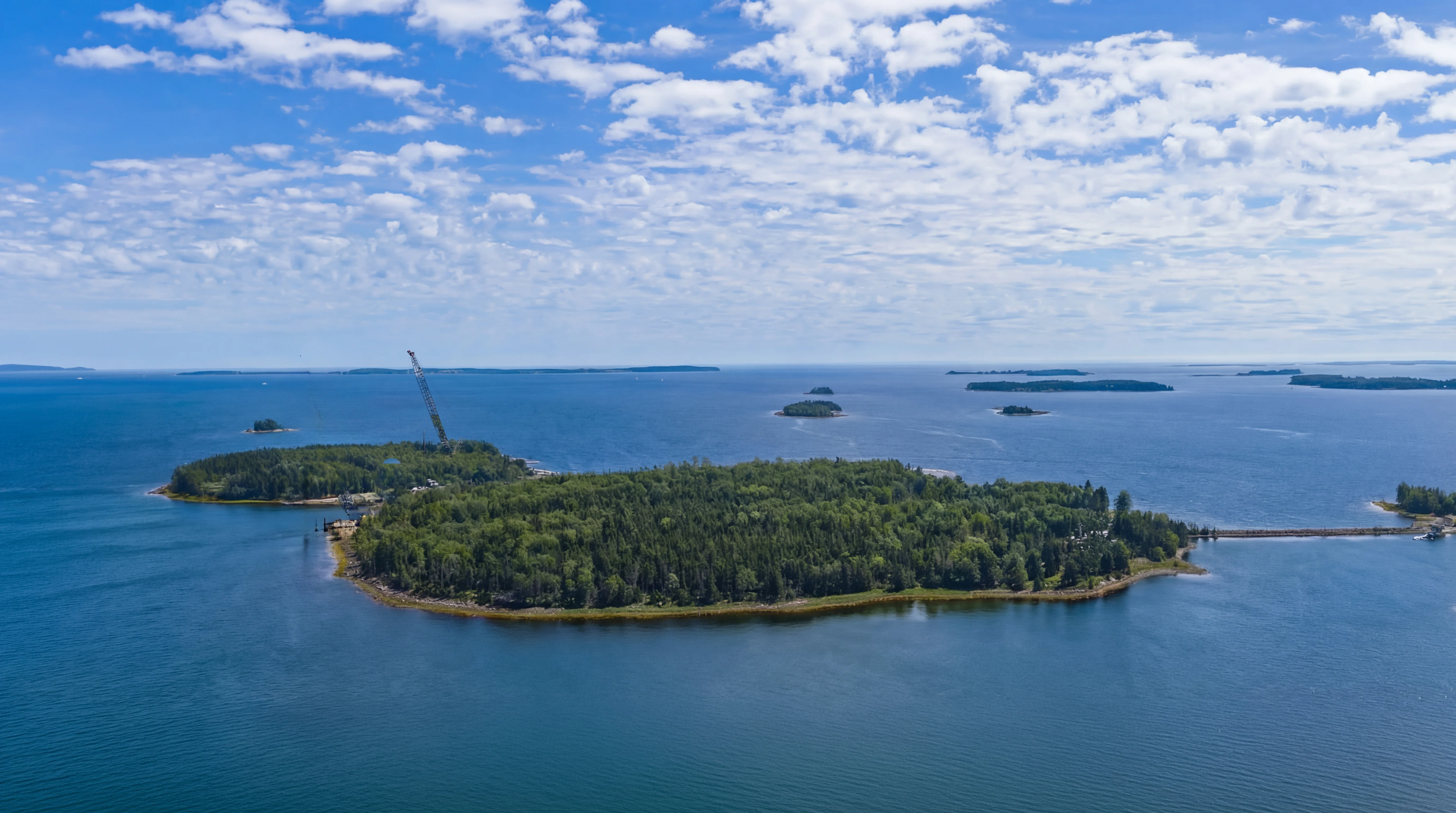
Oak Island is a small, tree-covered island off the coast of Nova Scotia, Canada. For more than two hundred years, people have been digging into it, certain that something valuable lies buried somewhere beneath the ground. Nobody has ever proven what it is, or who put it there. No treasure has been found yet. And the search is still going.
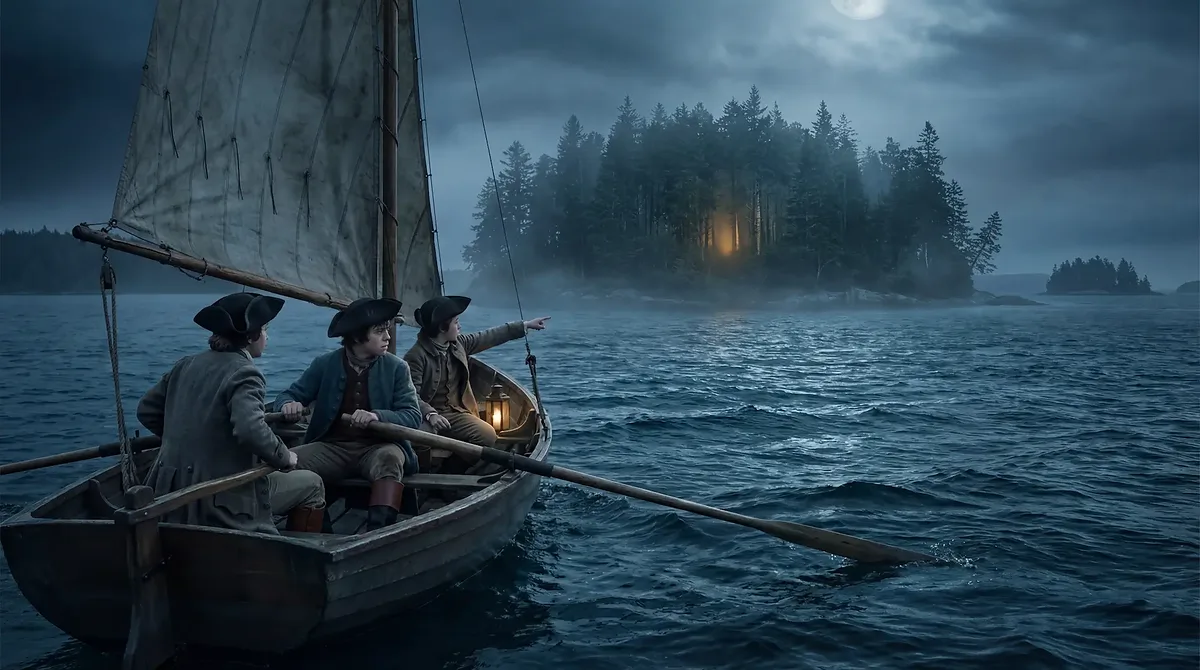
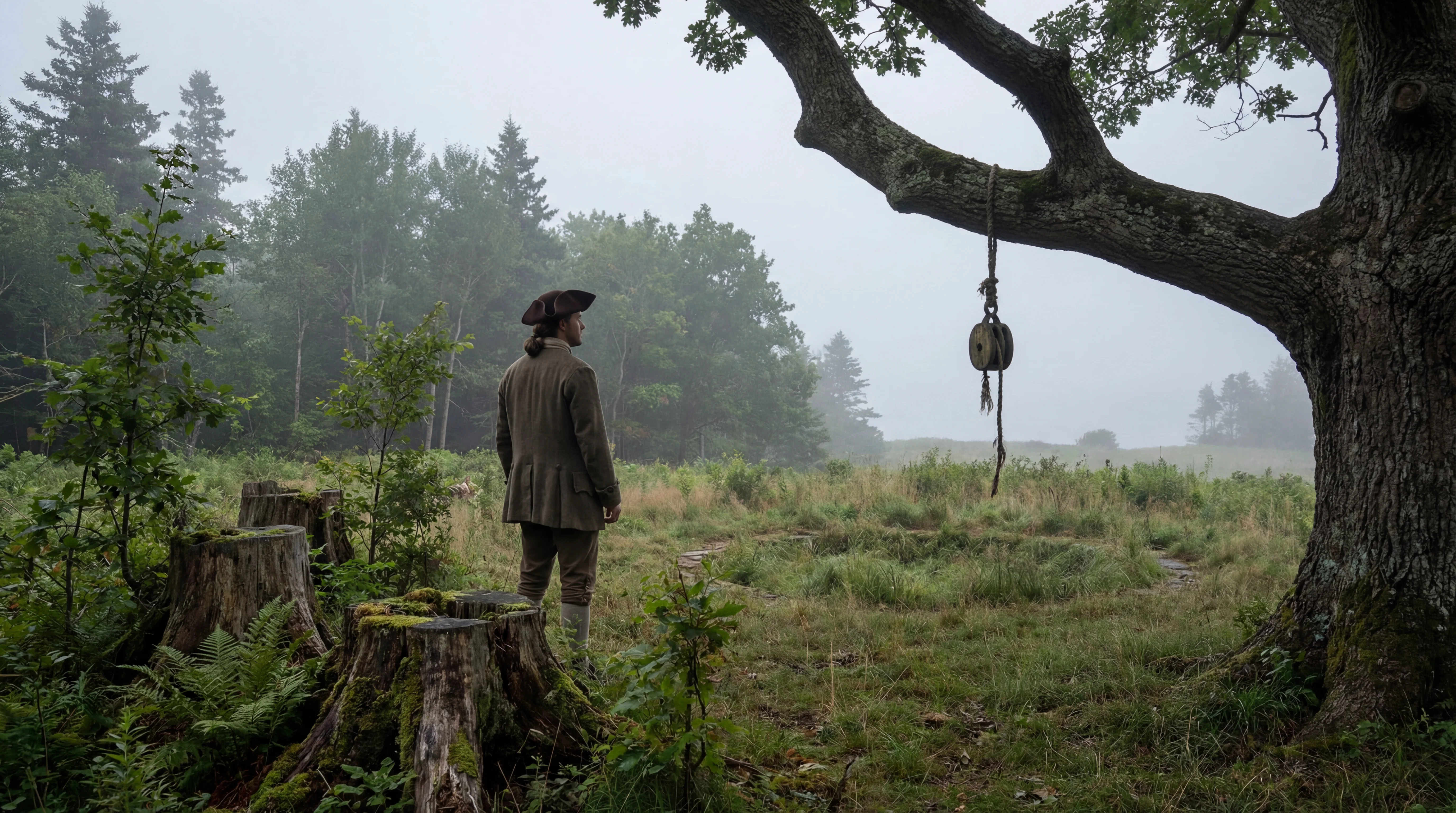
The most popular version of the story begins in 1795. A young man named Daniel McGinnis was out on the island when he came across a strange dip in the earth, a round depression in a clearing, with an old oak tree standing beside it. Hanging from a sawed-off branch directly above the hollow was an old ship’s tackle block, the kind of pulley used to haul heavy loads. McGinnis had grown up on tales of pirates working these waters, and a thought took hold of him: someone had buried something here. He came back the next day with two friends, and they started to dig.
 The Real Daniel McGinnis of Oak Island→
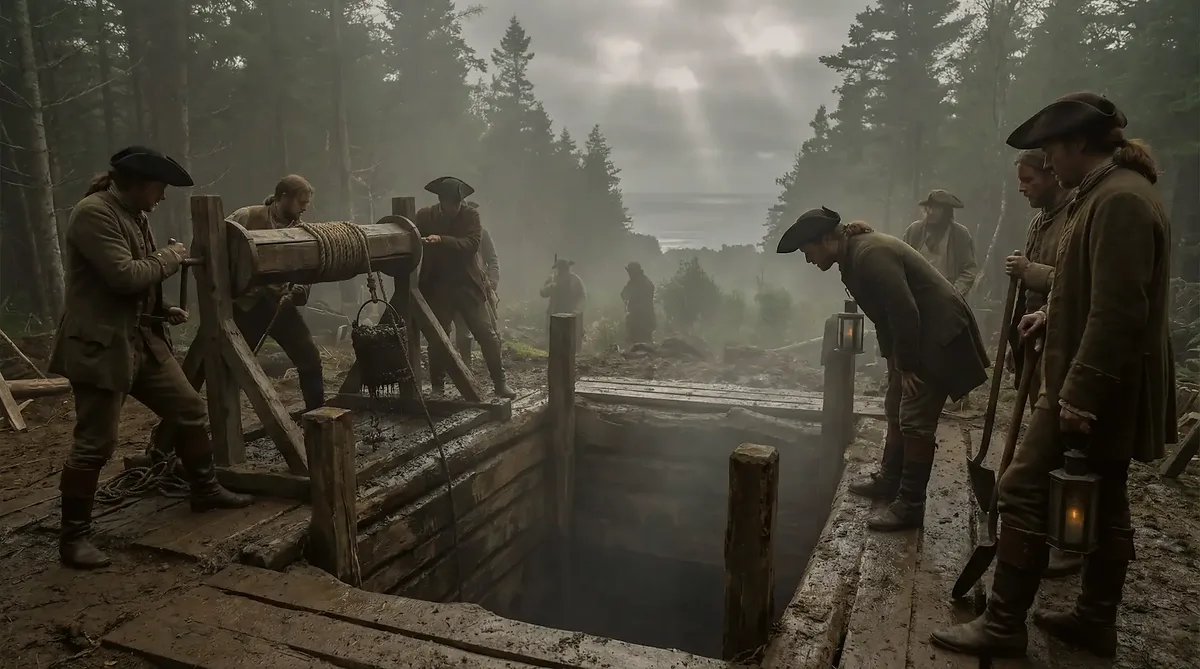
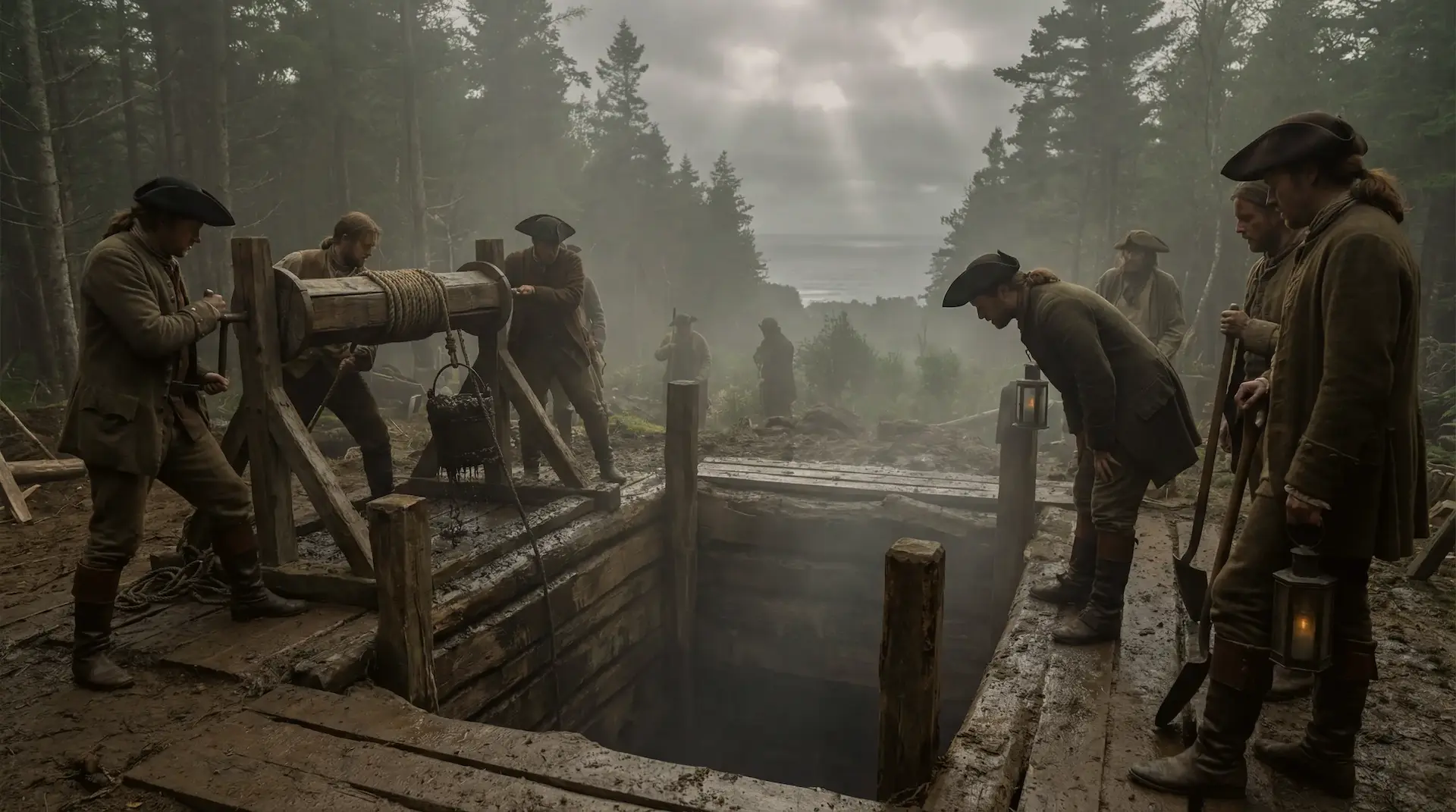
A few feet down, they hit a layer of flagstones. Below that, a platform of oak logs. They kept going, and every ten feet or so, another platform. Whatever this was, someone had built it deliberately, and built it to go deep. The three of them dug until they couldn’t dig anymore, the shaft was simply too much for three pairs of hands, but they never forgot it. The hole they started became known as the Money Pit, and from 1808 onward, group after group picked up where the boys left off, digging the ground and combing through archives around the world, chasing the who, the what, and the why of it. The pit has swallowed lives and fortunes ever since.
Deeper
1 min
And the deeper anyone dug, the stranger it got. There was coconut fiber, packed in layers, a material that grows nowhere within thousands of miles of Nova Scotia. Around ninety feet down, a stone turned up, cut with markings nobody could read. And at a certain depth, the pit did something no natural hole should do: it flooded with seawater, faster than any crew could bail. It took decades to work out why. The answer most searchers settled on was chilling, whoever built the pit had cut tunnels connecting it to the sea, so that digging too deep would drown the shaft. A booby trap. And a booby trap means someone, long ago, went to extraordinary lengths to make sure whatever lay at the bottom stayed there.
 The Oak Island Money Pit→
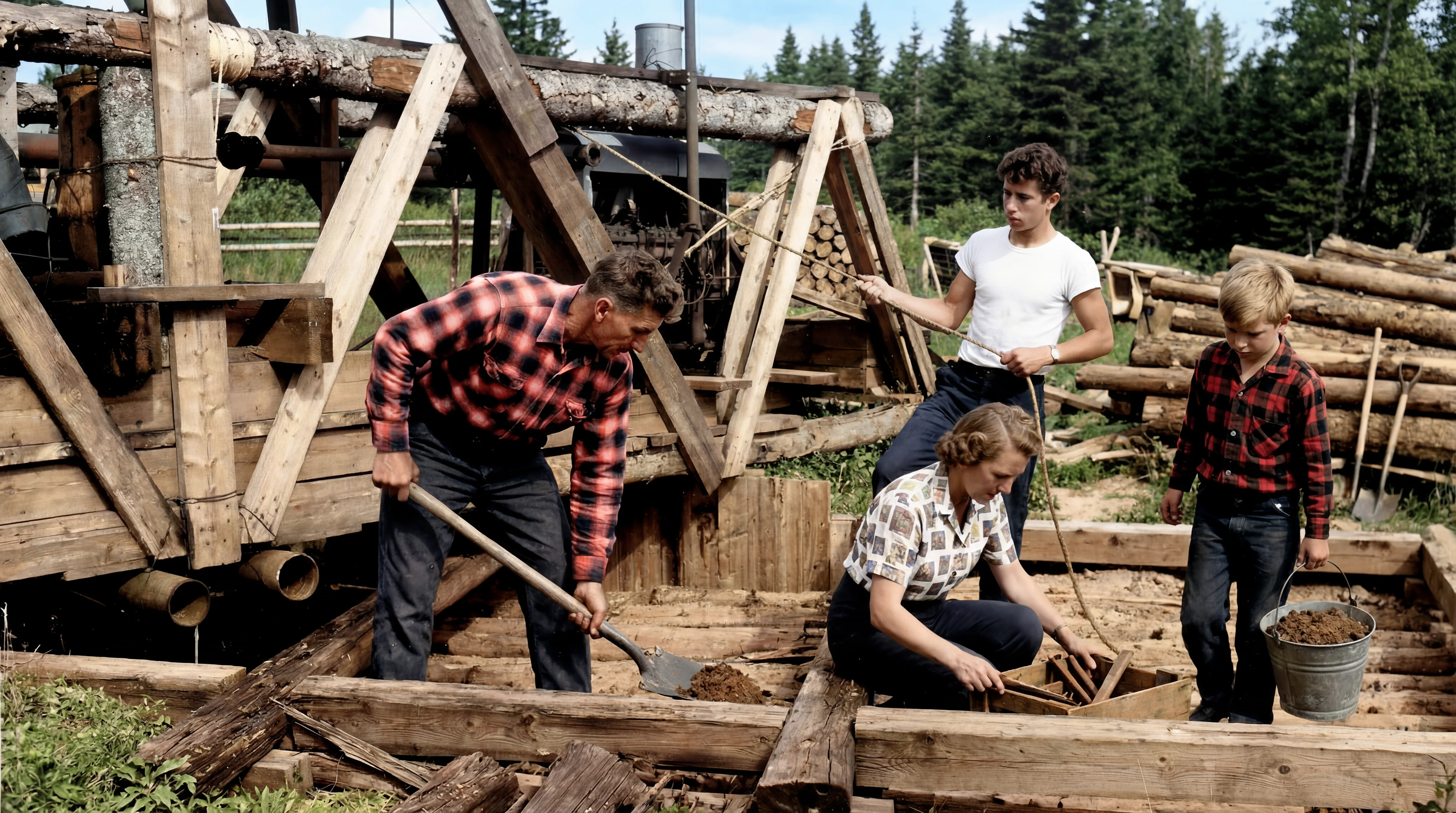
The next two centuries became a parade of attempts. Companies formed, raised money, dug, flooded out, went broke, and gave up, and then the next group arrived to try again. Heavy machinery was hauled across the water. Shafts were punched all over the eastern end of the island. A young Franklin Roosevelt even joined one of the digs, years before he became president. The ground was torn up so many times that today, nobody is even certain where the original pit stood.
Several men have died on the island over the years. A legend grew up around those deaths, a curse, with a grim number attached: seven must die before the treasure gives itself up. It makes for great television, which is exactly where it came from, the line was invented for the screen and has no basis in the real record. The actual deaths were accidents, collapsing shafts and bad air deep underground. They belong to the island’s history. The curse belongs to its mythology.
 The Restall Tragedy→
Rick & Marty Lagina
1 min
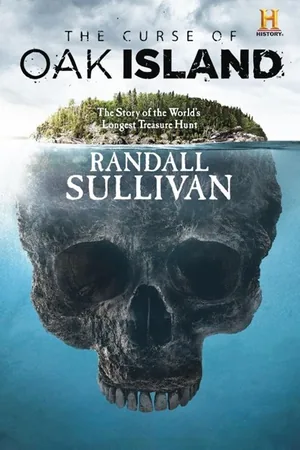
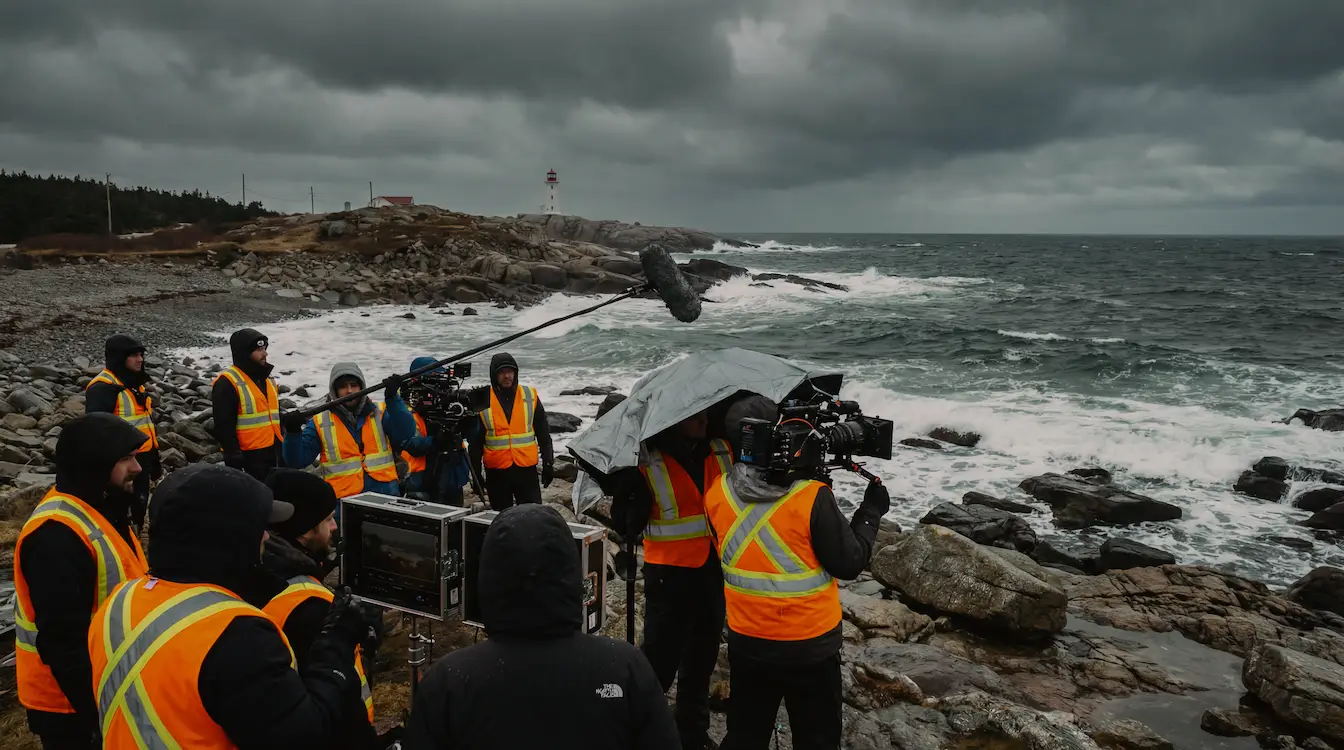
The modern chapter begins with two brothers from Michigan, Rick and Marty Lagina. Rick first read about Oak Island in a magazine as a boy in the 1960s, and the mystery never let go of him. Decades later, with the means to chase it, the brothers bought a stake in the island and brought in real excavation muscle, the kind of equipment the early treasure hunters could only have dreamed of. A television producer caught wind of the hunt and started filming, and the result, The Curse of Oak Island, first aired on the History Channel in 2014. It’s been running ever since.
 The Modern Quest→
Thirteen years of digging later, the Laginas haven’t found the treasure yet, but they’ve proven something extraordinary. The early treasure hunters left behind mostly stories. The Laginas’ search has left hard evidence, thousands of finds, recovered, recorded, and sent off for scientific dating. And some of what’s come out of the ground is genuinely hard to explain.
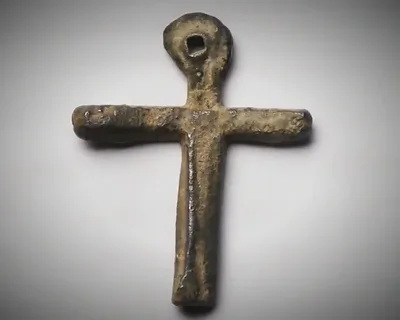
A small lead cross, pulled from the beach at Smith’s Cove, of a medieval design that resembles one tied to a Templar prison in France. Six Roman-era coins, scattered across a single lot that has no recorded history of anyone ever living on it. A cobblestone pathway laid through the swamp, its leather fragments carbon-dated to the years around 1200. A circular stone structure, expertly built, dated to roughly the same era. Add to that the everyday debris of centuries, hand-forged spikes, broken pottery, old glass, and a picture starts to form.
 Oak Island Evidence: 2026 Update→
Medieval visitors
1 min
When you plot every scientifically dated find on the island, the dates cluster into two groups. One falls around 1700, easy enough to explain, people were busy here in colonial times. The other falls in the 1200s. More than twenty finds carry dates from the Middle Ages, a concentration with no parallel anywhere else in North America. That’s centuries before Columbus, on an island where, according to every history book, nobody should have left so much as a footprint.
So someone was here. Someone was on Oak Island, building, working, and hiding something, hundreds of years before history says they could have been. That single fact is what turns Oak Island from a tall tale into a genuine mystery.
Treasure
1 min
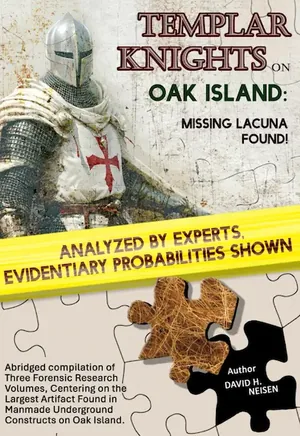
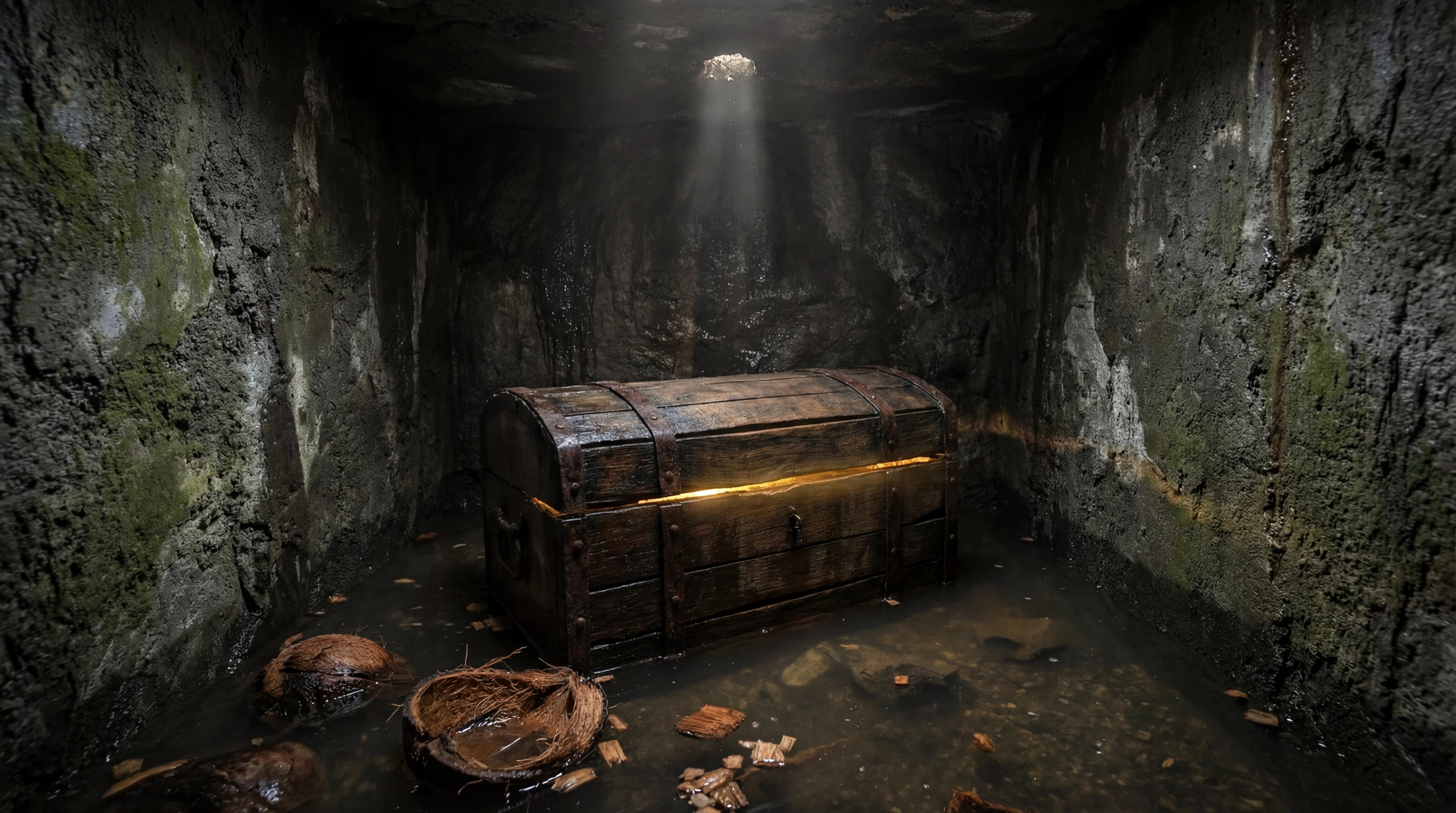
Which leaves the question everyone actually wants answered: what is down there, and who put it there? The theories run wild and they run far, pirate gold, the lost jewels of French royalty, hidden manuscripts, sacred relics tied to the Knights Templar. This site takes up each one in turn and weighs it honestly, against what the evidence will and won’t support. But the bottom line is simple. The island is hiding something made by human hands, something old, something deliberate, and far older than the boys who found it in 1795. Until someone can finally say who built it and why, the treasure is still very much in play. And so the digging goes on.
 The Treasure→