A Hunt with no End
Since 1795, over a dozen major expeditions have attempted to reach the bottom of Oak Island's Money Pit. An estimated $50 to $100 million has been spent and ...
Read the full article
The Oak Island mystery, one story at a time

The Money Pit is a shaft on Oak Island, Nova Scotia, first dug in 1795, with log platforms reported at roughly ten-foot intervals. It flooded with seawater near 93 feet in 1803 or 1804. Searchers have since drilled to...
Read the ArticleSince 1795, over a dozen major expeditions have attempted to reach the bottom of Oak Island's Money Pit. An estimated $50 to $100 million has been spent and ...
Read the full articleOak Island is a small island off Nova Scotia, Canada, where people have dug for more than two hundred years in search of something buried beneath it. Discove...
Read the full articleMahone Bay, Nova Scotia, holds Oak Island on its southern shore. The Mi'kmaq called the bay Sebetre and Mush-a-Mush. The French administered it for sixty-fiv...
Read the full articleSeason 13 of The Curse of Oak Island did something the show had not quite managed before. Independent scientific methods (carbon-14 on swamp leather, archaeo...
Read the full articleDaniel McGinnis discovered evidence of a previously excavated shaft on Oak Island around 1795. He recruited John Smith and Anthony Vaughan to help dig, and t...
Read the full articleCaptain William Kidd is the name most closely linked to the origin of the Oak Island legend. A dying sailor's confession, first recorded in 1863, placed trea...
Read the full articleCaptain James Anderson (c.1748-1796) was a Maryland sea captain who took the American patriot's oath in 1776, defected to the British in 1778, was charged wi...
Read the full articleThe Knights Templar and Oak Island are linked through 20 medieval-dated artifacts that converge on the year 1211. The cluster was produced by radiocarbon dat...
Read the full articleThe Ark of the Covenant vanished from Solomon's Temple in 586 BC and has never been recovered. For six centuries, the papal cathedral in Rome claimed to poss...
Read the full articleMultiple pre-1795 Oak Island lot owners were documented Freemasons in Nova Scotia lodges. The physical layout of the Money Pit parallels the Masonic vault of...
Read the full articleFour independent researchers have decoded what they believe are hidden directions to Oak Island within Shakespeare's published works. Petter Amundsen found a...
Read the full articleFrancis Bacon's posthumous work Sylva Sylvarum, published in 1627, describes both a tidal seawater filtration pit and a method of preserving documents in mer...
Read the full articleWhen the Knights Templar were dissolved in 1312, Portugal's King Denis I simply renamed them the Order of Christ. This Order funded every major Portuguese vo...
Read the full articleSamuel Ball was a formerly enslaved man from South Carolina who settled on Oak Island around 1787 and eventually owned nine lots totaling thirty-six acres, m...
Read the full articleFranklin D. Roosevelt invested in the Oak Island treasure hunt as a young law clerk in 1909 and maintained his interest for thirty-six years, corresponding w...
Read the full articleThe Marie Antoinette theory proposes that during the French Revolution, the queen's personal jewels were smuggled out of France by a lady-in-waiting who fled...
Read the full articleDan Blankenship was a Florida building contractor who read about Oak Island in a 1965 Reader's Digest article and devoted the rest of his life to the treasur...
Read the full articleRobert Dunfield was a California petroleum geologist who excavated the Money Pit to 141 feet with a crane in 1965-1966. He built the causeway, relocated the ...
Read the full articleRobert Restall and his family lived on Oak Island from 1959 to 1965, conducting a methodical low-budget search focused on the Smith's Cove flood system. The ...
Read the full articleThe ghosts of Oak Island form a documented body of folklore stretching from the 1850s to the present. This haunted history includes reports of a black dog wi...
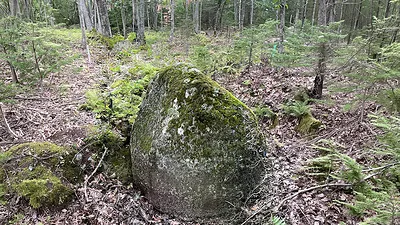
Read the full articleIn 1981, Nova Scotia land surveyor Fred Nolan discovered five cone-shaped granite boulders arranged in a cross formation measuring 360 feet wide by 867 feet ...
Read the full article