Visit Oak island · The Official Guided Tour of Oak Island · the Oak Island Museum & Treasure Shop
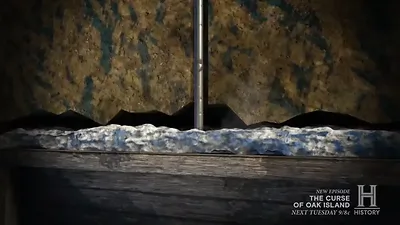
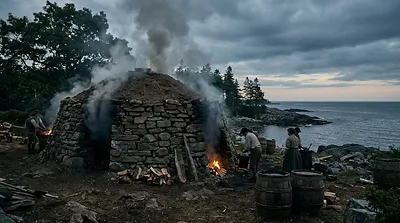
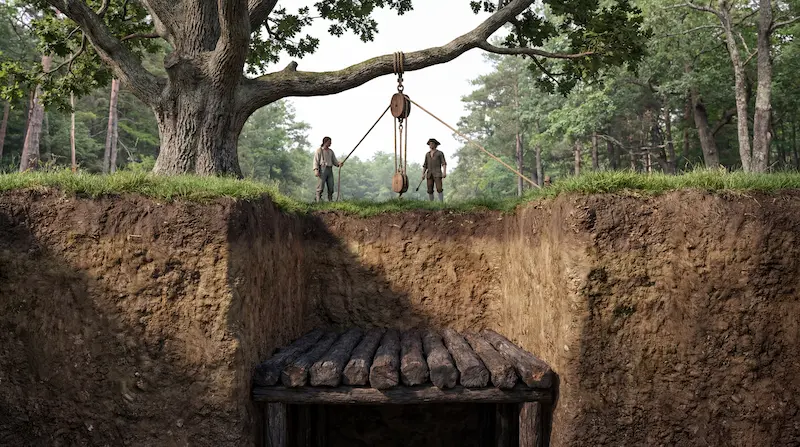
Money Pit (Shaft No. 1) at the Oak Island Money Pit (AI-assisted historical reconstruction, not a photograph)
Searcher shaft Era I, Pick and Shovel On the map, position approximate 16 artifacts

Money Pit (Shaft No. 1)

Dug 1795 to 1909, 114 ft

Depth114 ft
As reported by the source
Year1795 to 1909
ByMcGinnis, Smith and Vaughan; re-dug by Onslow, Truro, OIA, Halifax Co., OITC, Old Gold Salvage
WhereOriginal shaft

1795 dig reached 25 ft (or 30). Re-excavated 1804 (93), 1849 (86), 1861 (88), 1862 (103), 1866 (108), 1897 (111, locally 114, exposing the Flood Tunnel at 110 to 114), 1909 (113). Collapsed 1861; merged into Dunfield's open pit 1965/66.

Positions on the map are approximate; each dot marks the top of the hole.
What the Drill Found

  1. 0 ft
    SurfaceTop of the shaft
  2. 2 ft
    Stone / rockFlagstone layer
    Artifact Vault
    Flagstone layer →
  3. 10 to 90 ft
    WoodOak log platforms (multiple)
    Artifact Vault
    Oak log platforms (multiple) →
  4. 30 ft
    OtherLayer of charcoal
    McNutt (1863) puts the charcoal at 40 ft.
    Onslow Syndicate accounts
    Charcoal layer →
  5. 40 ft
    OtherPutty, enough to glaze twenty houses in the Mahone Bay area
    McNutt puts putty at 70 ft; artifact 4 says 50 ft.
    Onslow Syndicate accounts
    Putty layer →
  6. 40 ft
    OtherCharcoal tier
    James McNutt (1863 account)
    Charcoal layer →
  7. 50 ft
    Stone / rockTier of smooth beach stones with figures and letters cut on them
    James McNutt (1863 account)
  8. 60 ft
    Fibre / clothTier of manila grass and coconut rind
    James McNutt (1863 account)
    Coconut fibre (Money Pit) →
  9. 60 ft
    OtherEelgrass layer
    Artifact Vault
    Eelgrass layer →
  10. 70 ft
    OtherTier of putty
    James McNutt (1863 account)
    Putty layer →
  11. 80 to 95 ft
  12. 90 ft
    Stone / rockInscribed stone slab, about 36 x 15 x 10 in, rudely cut letters on the underside; later read as 'Forty feet below two million pounds are buried'
    Harris and MacPhie discount the inscription as a clue
    Harris and MacPhie suggest a basalt glacial erratic.
    Onslow Syndicate (1804); decipherment first reported c. 1864
    Inscribed stone (90-foot stone) →
  13. 98 ft
    WoodHard surface across the whole shaft struck with an iron bar; 'some supposed it was wood, and others a chest'
    Pit flooded to sea level (33 ft below surface) over the weekend.
    The Colonist, 2 Jan 1864
  14. 98 ft
    WoodSpruce platform
    Artifact Vault
    Spruce platform →
  15. 98 to 104 ft
    MetalMetal in pieces
    Artifact Vault
    Metal in pieces →
  16. 98 ft
    MetalGold chain links (3)
    Artifact Vault
    Gold chain links (3) →
  17. 107 ft
    WoodPlanks and timbers lying in all directions, seen by a diver
    Old Gold Salvage (Bowdoin, 1909)
  18. 108 to 110 ft
  19. 108 ft
    OtherWalls hard on one side, so soft elsewhere a crowbar sank in effortlessly
    J.B. Leedham (OIA, 1863-64)
  20. 110 to 114 ft
    TunnelFlood Tunnel mouth on the east wall: 2.5 ft wide by 4 ft high, filled with smooth beach stones
    S.C. Fraser (Halifax Co., 1867); confirmed by OITC 1897
  21. 111 ft
  22. 118 ft
  23. 118 ft
    WoodYellow-painted barrel bottom and timbers (1861 Money Pit collapse)
    Artifact Vault
    Yellow-painted barrel bottom and timbers (1861 Money Pit collapse) →
  24. 124 ft
  25. to 140 ft
  26. 153 ft
    CementCement/concrete vault layer
    Artifact Vault
    Cement/concrete vault layer →
  27. 153 ft
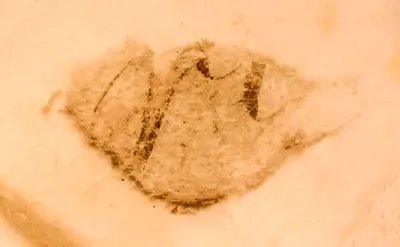
    DocumentParchment fragment
    Artifact Vault
    Parchment fragment →
  28. 153 ft
    Soil / clayBlue clay layer
    Artifact Vault
    Blue clay layer →
  29. 153 ft
    OtherChappell Vault
    Artifact Vault
    Chappell Vault →
  30. 171 ft
    MetalIron barrier
    Artifact Vault
    Iron barrier →

Rows are in depth order; the column on the left is the hole, and a figure between rows is the stretch with nothing logged. Depths as reported by each source.


Where It Sits

Connected to Money Pit (Shaft No. 1)

Sources

  • Harris and MacPhie, Oak Island and its Lost Treasure, 3rd ed. (2013); scan App. p191-196; body p18-31, p38-39, p41, p48
  • Artifact Vault: Money Pit, 2 ft depth
  • Artifact Vault: Money Pit, every 10 ft (10-90 ft)
  • Harris and MacPhie, Oak Island and its Lost Treasure, 3rd ed. (2013); scan p18-20
  • Harris and MacPhie, Oak Island and its Lost Treasure, 3rd ed. (2013); scan p23
  • Harris and MacPhie, Oak Island and its Lost Treasure, 3rd ed. (2013); scan p18
  • Artifact Vault: Money Pit, 60 ft depth
  • Harris and MacPhie, Oak Island and its Lost Treasure, 3rd ed. (2013); scan p23-24
  • Harris and MacPhie, Oak Island and its Lost Treasure, 3rd ed. (2013); scan p24
  • Artifact Vault: Money Pit, 98 ft depth
  • Artifact Vault: Money Pit, ~98-104 ft depth
  • Artifact Vault: Money Pit, below 98 ft
  • Harris and MacPhie, Oak Island and its Lost Treasure, 3rd ed. (2013); scan p60
  • Harris and MacPhie, Oak Island and its Lost Treasure, 3rd ed. (2013); scan p39
  • Harris and MacPhie, Oak Island and its Lost Treasure, 3rd ed. (2013); scan p41-42, p48
  • Artifact Vault: Ejected by mud into the Oak Island Association's lateral tunnel from the 118-foot west shaft into the Money Pit
  • Artifact Vault: Money Pit, 153 ft depth
  • Artifact Vault: Money Pit, below 153 ft
  • Artifact Vault: Money Pit, 171 ft depth
  • Positions and depths: see how we know this on the Money Pit Map.