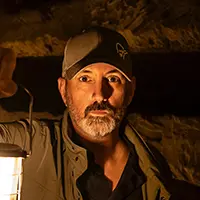
David C. Tobias was born in Winnipeg around 1924. He graduated from Sir George Williams University in Montreal, served as a Royal Canadian Air Force officer in the Second World War, and spent most of his working life managing a packaging company he acquired out of bankruptcy in 1955. He made his money quietly. When Robyn Bryant profiled him for This Week in Business in April 1990, she asked him to describe himself. His answer, preserved as the headline quote, became the defining line of his public identity: "I'm not a fortune hunter."
By then Tobias had spent an estimated $750,000 of his own money trying to solve the mystery of Oak Island, and the Montreal-based consortium he ran, Triton Alliance Ltd., had spent approximately $2 million more. He was sixty-five years old. He had been at it for twenty-seven years. He would continue for another sixteen.
A Wartime Visit
1 min
Tobias's first encounter with Oak Island came in 1943, during a leave from the RCAF. He was stationed at the Maitland, Nova Scotia, base as a young combat pilot in training. He had heard about the small island in Mahone Bay, the hole dug by three teenagers in 1795, the tunnels said to flood the shaft with seawater, the generations of failed expeditions. On a free day he drove the long road south to have a look. He left unimpressed. Why anyone had not simply dug up whatever was down there escaped him completely, he would say with a laugh sixty years later.
The indifference held for twenty years. After the war he completed his degree at Sir George Williams, worked at various jobs in Montreal, and in 1955 took control of a bankrupt company that manufactured product identification items: tags, labels, and data processing products. The firm was Jonergin Co. Inc., headquartered at 110 River, Verdun, Quebec. Tobias rebuilt it. He opened plants in Ontario and Vermont, and over the following three decades grew Jonergin into a successful mid-sized manufacturer with operations on both sides of the border.
The Restall Investment
1 min
In 1963 Tobias read a newspaper article about a man named Robert Restall, a former carnival motorcycle stunt rider who had been digging on Oak Island since 1959 with his son Bobbie. The article renewed his curiosity. He travelled to Oak Island, met the Restalls, and arranged to become what he later described as "a small passive investor" in the venture, giving Restall $20,000 for a percentage of any treasure that might be recovered.
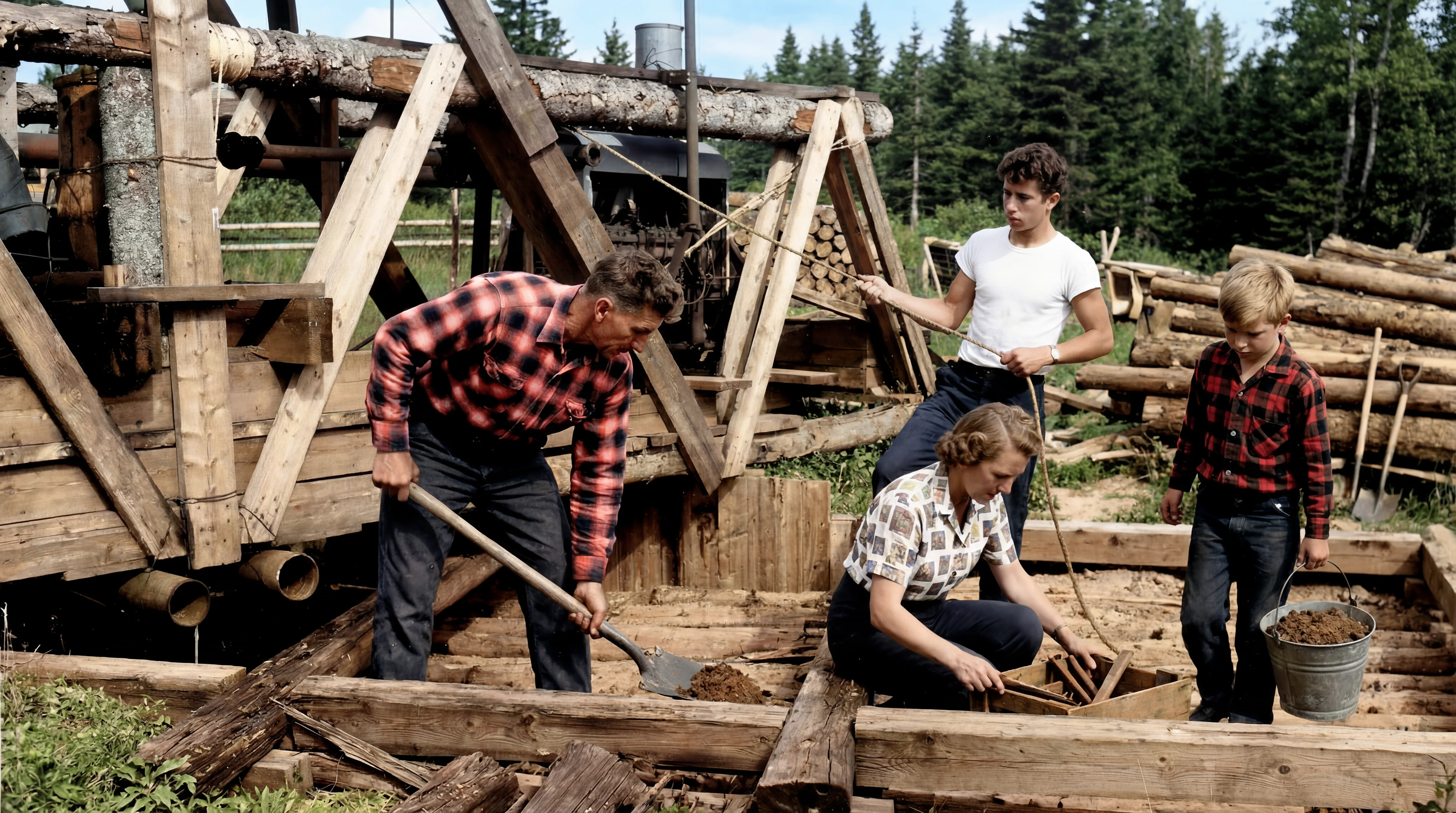
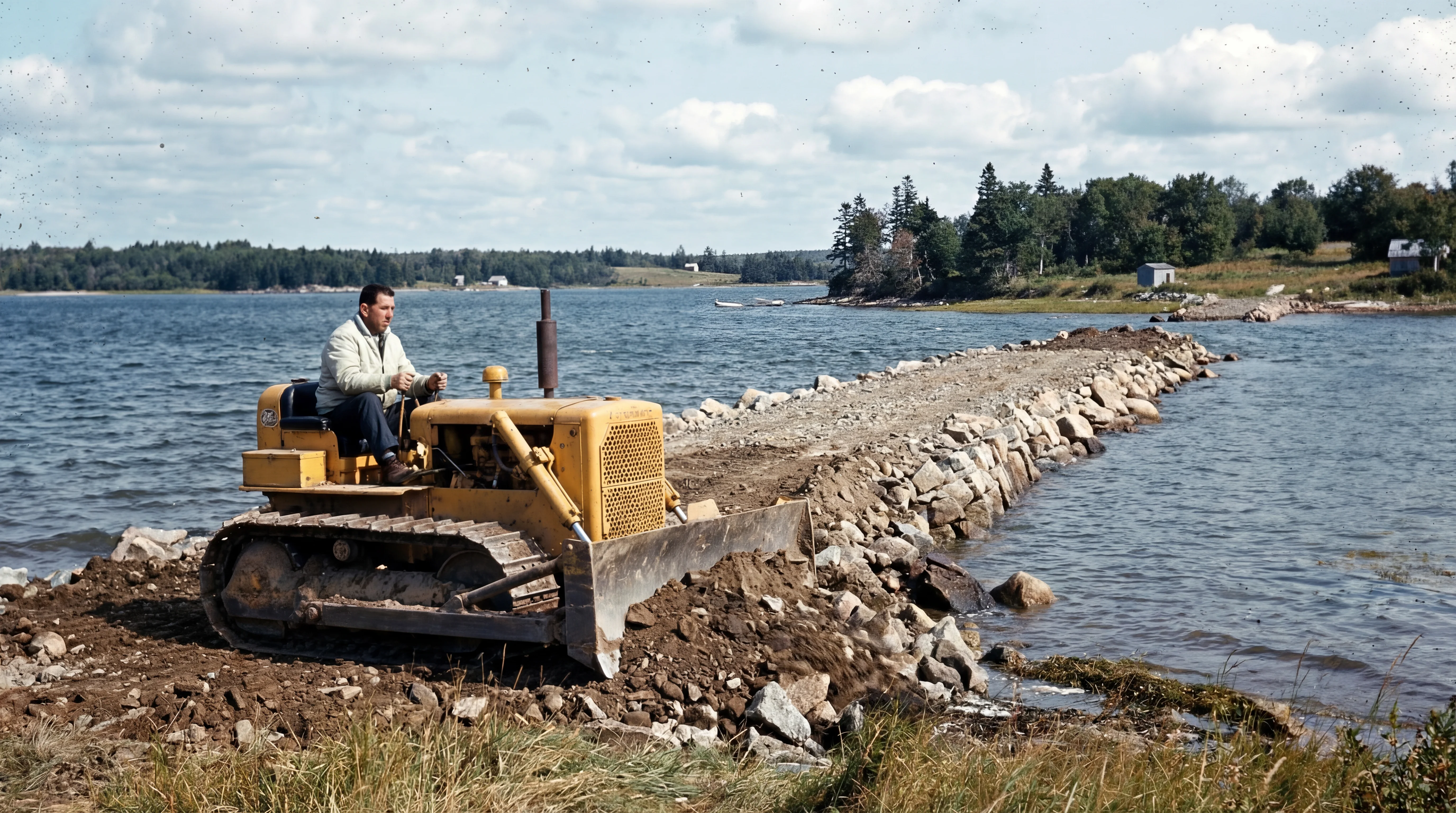
Two years later, on August 17, 1965, Robert Restall, his son Bobbie, and two of their workers, Cyril Hiltz and Karl Graeser, died in a shaft near the Money Pit. Contemporary reports attributed the deaths to noxious gas from a small pump. The 1990 Bryant profile would later describe it as carbon monoxide poisoning. Tobias's $20,000 was gone, and within weeks the treasure hunt had passed to a California petroleum engineer named Robert Dunfield, who began tearing the island apart with heavy machinery under a new contract from the owner, Mel Chappell.
For the next year Tobias watched from the outside.
 The Restall Tragedy→
 Robert Dunfield and the Destruction of Oak Island→
The Becker Program
2 min
By the summer of 1966 Dunfield had given up and returned to California, leaving the island gouged and the Money Pit area filled in. Tobias moved quickly. He approached Mel Chappell in early 1967 with a specific proposal involving a Toronto company called Becker Drilling Ltd. Becker operated a new type of core sampling system: a drill pipe driven into the ground by a pile-driving hammer, with high-velocity compressed air forcing cuttings back up through the pipe in real time. The advantage over every earlier drilling method on Oak Island was that artifacts recovered from depth could be located with precision rather than churned up through hundreds of feet of uncontrolled borehole. Tobias offered to pay for the entire program personally, a commitment of $130,000, in exchange for two-thirds of any treasure recovered. Chappell agreed.
Tobias's first confirmed correspondence with Dan Blankenship, the Florida building contractor who had been working on Oak Island since 1965, is dated October 5, 1966, and is addressed to "Mr. David Tobias, Jonergin Company Inc., 110 River, Verdun, Quebec, Canada." The two were already on first-name terms. Blankenship was writing to update Tobias on his dealings with Chappell and to propose a joint approach to the site. He closed with a request for a five percent share for his own backers, and signed it "Best wishes, Dan."
The Becker program began in the spring of 1967 and ran for several months. To interpret the results, Tobias hired Colin Campbell, a Toronto consulting engineer considered one of Canada's leading authorities on underground workings. Campbell's August 22, 1967 report to Tobias concluded that the drilling had confirmed the existence of man-made workings well below the bedrock line. Core samples from the bedrock gypsum and limestone horizons at depths exceeding 200 feet produced wood, china, metal, cement, and clay putty. The Canada Cement LaFarge laboratory analyzed the cement as a type common in the sixteenth and seventeenth centuries. Carbon-14 analysis of the wood placed it around 1575, give or take eighty-five years. Campbell recommended that the next phase of the search should concentrate on the gypsum and limestone horizon below the Money Pit, to be reached by sinking a new shaft adjacent to it and then drilling laterally.
The Becker program was the single most important scientific result of Tobias's entire involvement with Oak Island. It was the first time any search had produced laboratory-grade evidence that something man-made existed at extreme depth. Every treasure hunter who came after Tobias built on that foundation.
Founding Triton Alliance
1 min
By the end of 1967, Tobias, Blankenship, Dunfield, and surveyor Fred Nolan had formed an informal syndicate for exploration. Two years later Tobias formalized it into a Montreal-based private company, Triton Alliance Ltd., with himself as president and Blankenship as field operations director. The Financial Post of March 21, 1970 described Triton as a group of twenty-four Canadian and American investors prepared to commit up to half a million dollars. By 1990 the number had grown to forty-eight.
The shareholder list was built on Tobias's business network. Boston property developer Charles Brown III. Former Nova Scotia deputy attorney general Gordon Coles. Past Toronto Stock Exchange president George Jennison. Toronto financier Donald Webster. Bill Sobey, honorary chairman of Sobeys Stores Ltd. Pentagon weapons systems designer Bill Parkin. Mel Chappell, the previous owner, joined as a director. In 1977 Tobias bought the majority of Oak Island's land from Chappell for $125,000, consolidating the ownership that had been split since the Restall era.
For the next decade Triton operated on a simple division of labour. Tobias handled the money, the corporate structure, the investor relations, and the theories. Blankenship handled the field. The Montreal office was initially Tobias's own residence at 6200 Grande Allée in the suburb of St-Hubert. The corporate letterhead featured an oak-tree logo, still in use today, under the words "The Oak Island Exploration: A Project of Triton Alliance Ltd."
The First Fifteen Years
2 min
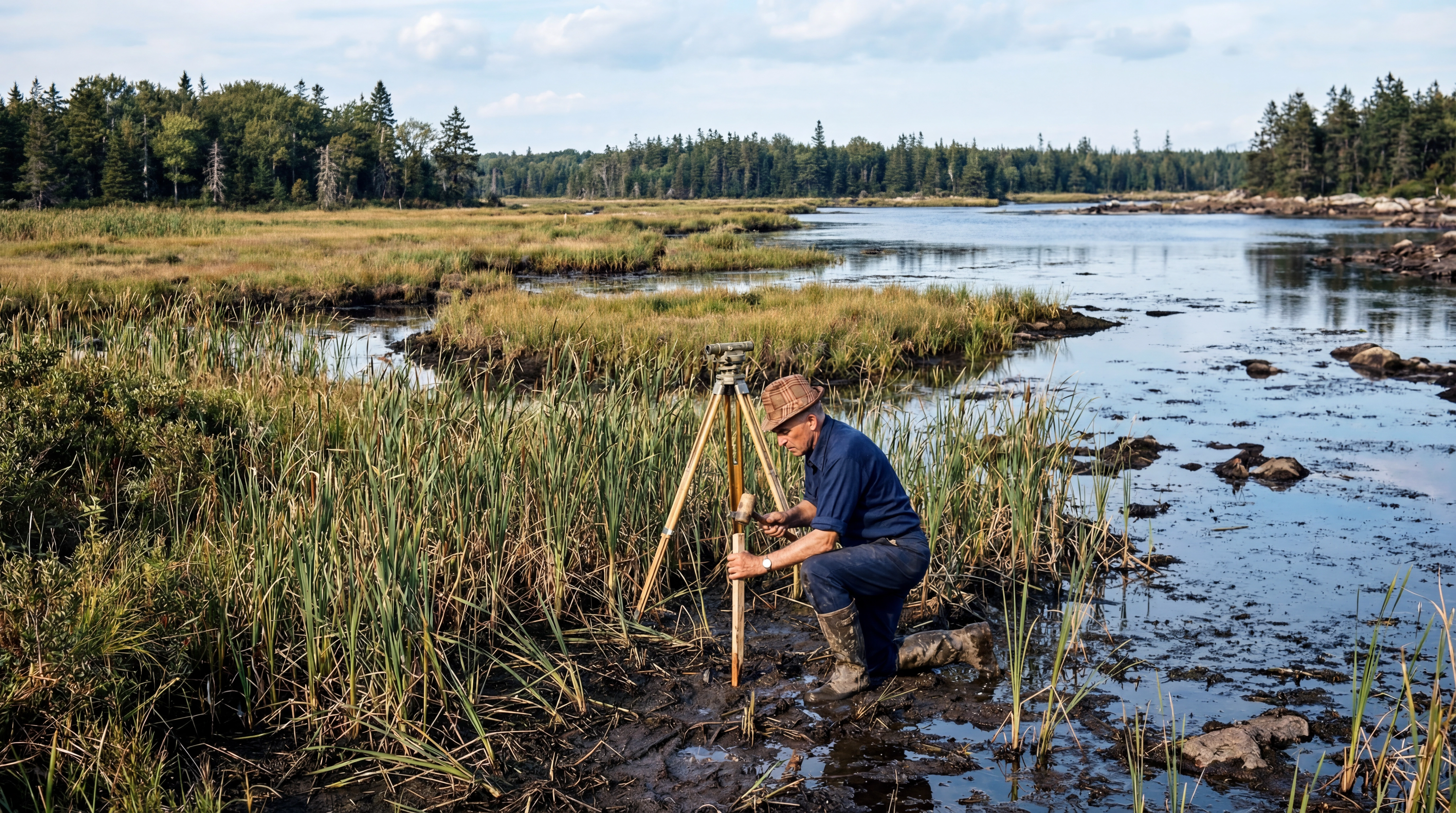
The 1970s were the closest thing to a productive partnership Tobias and Blankenship would ever have. In 1969 Triton built a four-hundred-foot cofferdam at Smith's Cove that exposed a massive U-shaped wooden structure below the low-tide line, with two-foot-thick logs up to sixty-five feet long, notched at four-foot intervals with Roman numerals. In the same year Blankenship drilled what would become Borehole 10-X. Between 1971 and 1972 a remote-controlled camera was lowered into the flooded cavity at the bottom, producing the disputed footage of what Blankenship described as chests, tools, timbers, and a severed human hand. Professional divers from Can Dive Services Ltd. of Vancouver descended in August 1971, and Blankenship made his own first dive on September 18, 1972.
The two men corresponded constantly. Blankenship wrote detailed progress reports, now collected in a 193-page compilation by engineer Les MacPhie, across every season from 1966 to 1994. The letters read as a record of a close working relationship. In December 1975, after Blankenship had built a small house on Lot 23 on the island's west end, he wrote to Tobias to account for every dollar of the $2,000 Tobias had personally advanced him to finish the construction. Jane Blankenship had moved up from Florida. The cellar had been dug by hand. The furnace was in. "All of us are very happy and comfortable in our new home," Dan wrote, "and cannot thank you and M. R. [Mel Chappell] too much for your wonderful help and understanding."
The most striking letter of the period is a handwritten note dated February 12, 1981. Blankenship, writing from Oak Island ahead of a trip to Montreal, told Tobias that after fifteen years of failure he had finally located what he called "the magical, mythical place called 'X'." He warned Tobias that the idea would seem insane. He also wrote, in a line that captured the texture of their partnership at its best: "the answer is not very much different than what you have advocated all along, except it is more massive than either of us could imagine."

Francis Bacon and Francis Drake
2 min
Tobias was the Triton partner most interested in theories. Blankenship preferred to stay on the ground. Over the years Tobias cycled through most of the major candidates for what had been buried on Oak Island and by whom. His 1990 profile lists the catalogue he considered: a pirate's cache, Incan or Mayan or Aztec treasure, the crown jewels of Louis XVI and Marie Antoinette, Huguenot riches, and the original manuscripts of Sir Francis Bacon that might prove Bacon had been the author of the plays attributed to William Shakespeare.
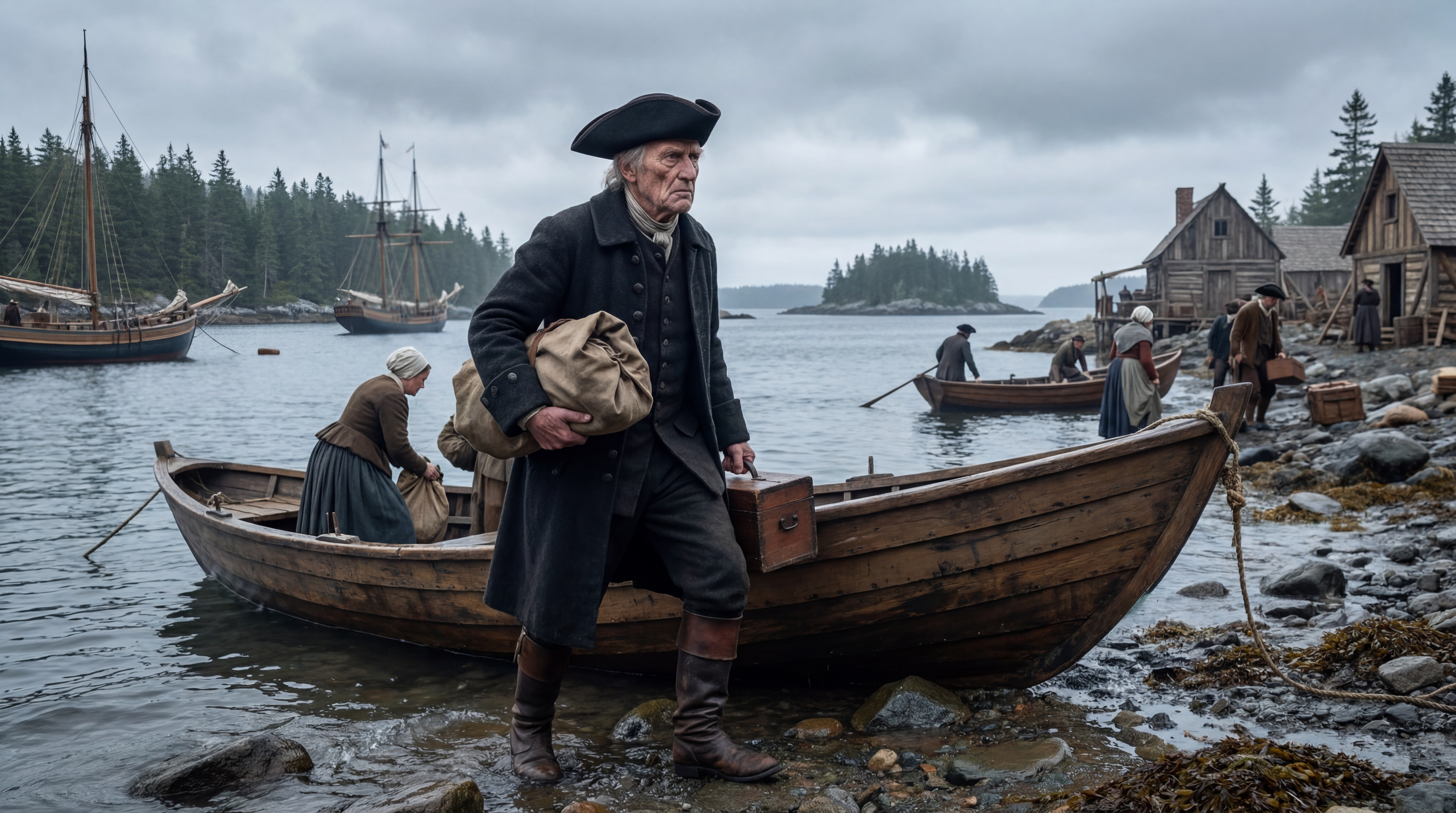 The Huguenot Treasure Vault of Oak Island→
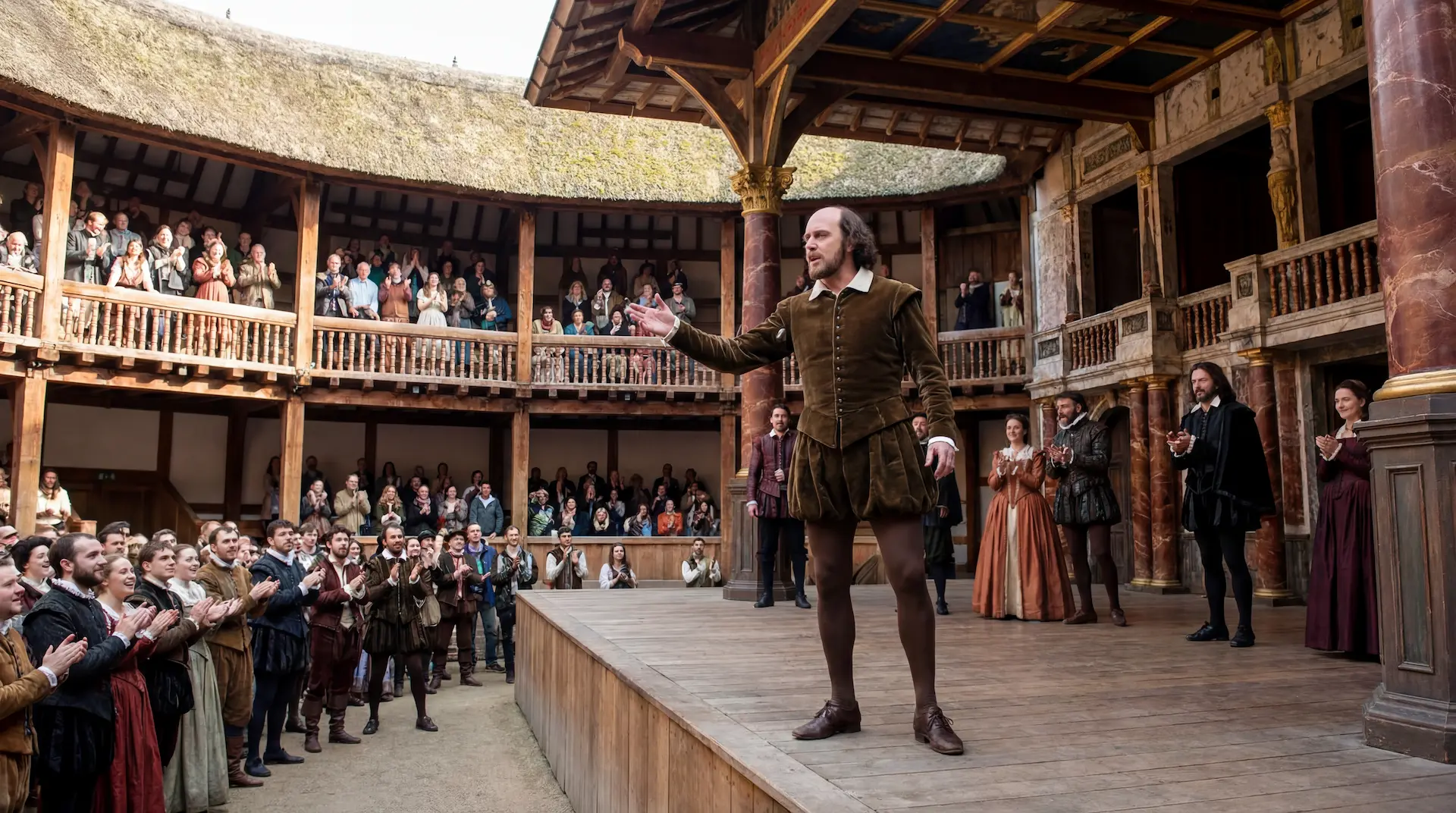 Shakespeare and Oak Island→
 The Jewels of Marie Antoinette→
From the mid-1980s onward his attention settled on two Elizabethan figures. The first was Sir Francis Drake. When Peter C. Newman's Maclean's profile appeared on August 10, 1987, Tobias was publicly arguing that gold plundered by Drake in the sixteenth century might be buried on Oak Island, and predicting that recovering it would be the deepest and most expensive archaeological dig ever attempted in North America. The second was Francis Bacon himself.
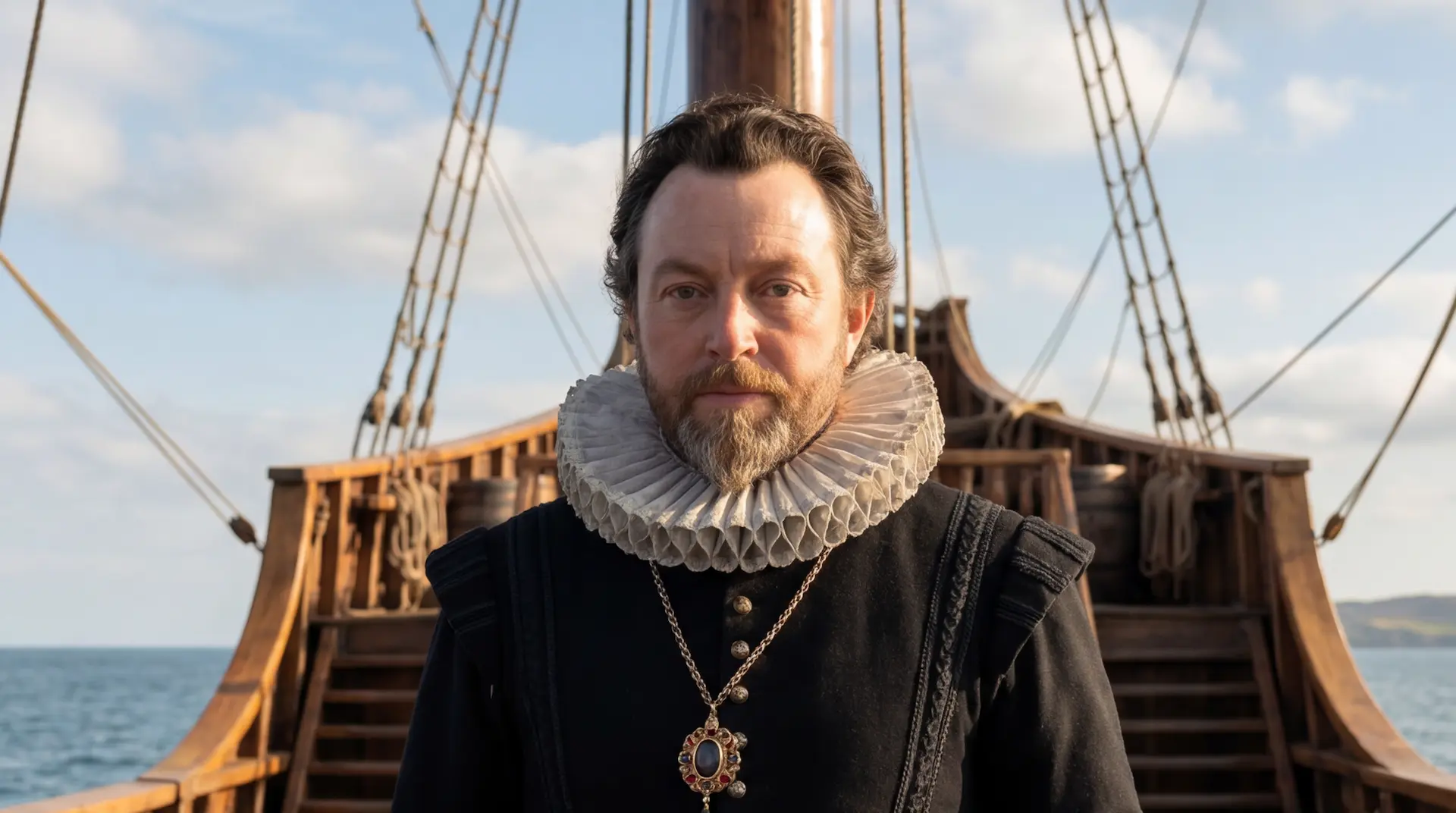 Sir Francis Drake, the Queen's Privateer→
The Bacon theory came to Tobias through a California esotericist named Betty McKaig, who had plotted the position of God's index finger on a Tycho Brahe star map and calculated that it pointed at Oak Island. McKaig flew to Montreal in the late 1980s to pitch Tobias. He was intrigued but not yet convinced. After McKaig died in 1991 of apparent mercury poisoning from her own alchemical experiments, Tobias opened an extensive correspondence with the Francis Bacon Foundation in Claremont, California, and the Francis Bacon Society in Surrey, England. Through those contacts he became interested in Joachim Gans, the Bohemian mining engineer brought across the Atlantic by Sir Walter Raleigh in 1584, and in Thomas Bushell, the British mining engineer who had been Bacon's protégé and was said to have been entrusted with Bacon's "dearest secret." Tobias never produced a formal written theory tying these figures to Oak Island, but the Bacon-Drake axis dominated his thinking for the last twenty years of his life.
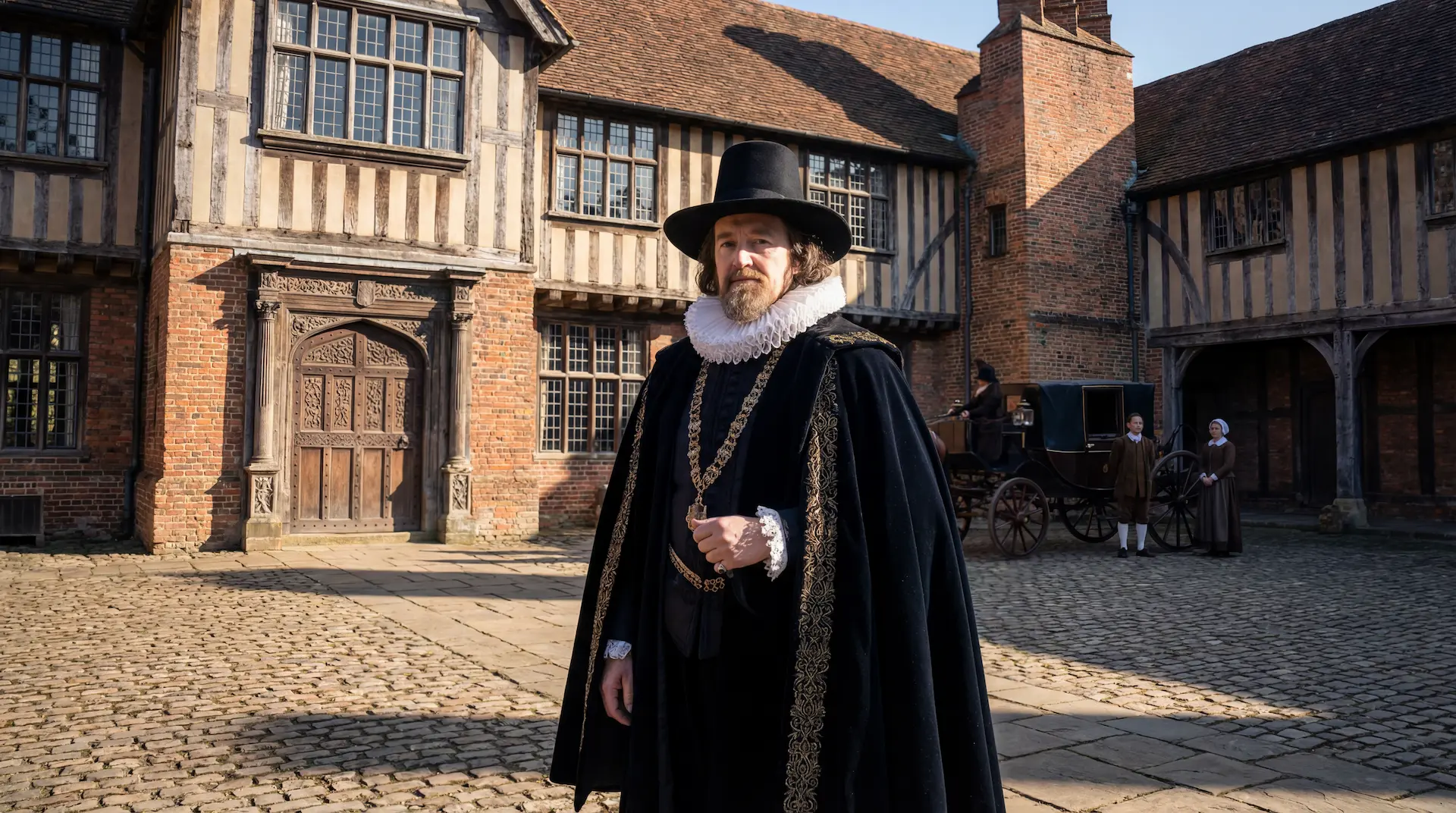 Francis Bacon's Secret Island→
The Big Dig That Wasn't
2 min
In 1985 Tobias sold the Canadian and U.S. operations of Jonergin Co. Inc. He was sixty-one years old. He announced that he intended to devote his time to managing his family investment company, Ilex Capital Corp., to piloting his Beechcraft aircraft, and to Oak Island. The Ilex offices were in Westmount, at Suite 150, 4 Westmount Square. A framed poster on the wall carried a quote attributed to Einstein: "Great spirits have always encountered violent opposition from mediocre minds."
A 1986 feasibility study, prepared by Ottawa engineer Bill Cox for Triton, concluded that sealing the flood system and exploring the Money Pit below bedrock would cost up to $8 million. Triton's partners had by then invested $1.25 million of their own money. They were not willing to go deeper. The only way forward, the board decided, was a public stock offering capable of raising the full amount. Only one director voted against the plan. Dan Blankenship wanted the money spent on completing 10-X instead.
The Big Dig, as Tobias called it, was designed to the scale of the problem. Cox's plan called for an eighty-foot-diameter shaft sunk to 215 feet, lined with interlocking steel plates reinforced by concrete, surrounded by a $300,000 cofferdam at Smith's Cove and a $700,000 dam at the south shore. Any remaining flood tunnels would be sealed with cement grouting. By the time Cox completed the engineering document that would serve as the central piece in the stock prospectus, the cost estimate had risen to $10 million.
In September 1987 Blankenship wrote Tobias a formal letter of objection. "Finally," it began, "I feel compelled to put my thoughts and feelings down regarding your recent memo on our meeting of Aug. 30, in Montreal." The two men had a great difference of opinion on how to proceed. Blankenship continued to believe, on the basis of the 1971 camera footage and Parkin's sonar, that 10-X was the backdoor to the treasure. Tobias did not. The board sided with Tobias.
The prospectus went out to twenty Canadian and American underwriters in the winter of 1988, with a stated plan to begin the Big Dig the following June. The response was almost silent. Black Monday, the October 1987 crash, had made institutional investors cautious about anything speculative. Triton waited two years, then in 1990 took the project public on its own. In December 1989 it acquired ninety percent of a New York trading company called Northeast Capital Inc., renamed it Oak Island Exploration Co., and listed one million shares on the over-the-counter market as a Rule 144 stock. Tobias's son Norman, a director of the new company, told the Financial Post on February 5, 1990 that he expected no difficulty registering the shares. They sold fewer than one in ten.
In 1991 Triton applied to the Atlantic Canada Opportunities Agency for a $12 million loan guarantee, offering in exchange to create fifty jobs and the largest tourist attraction in Nova Scotia. The application was rejected as falling outside ACOA's guidelines. A follow-up request to the Nova Scotia Department of Tourism was rejected by minister Greg Kerr on the grounds that Oak Island was a treasure hunt, not a cultural asset. A federal application for tax incentives was turned down by Finance Minister Don Mazankowski. Tobias would later tell Sullivan he had been bitterly disappointed.
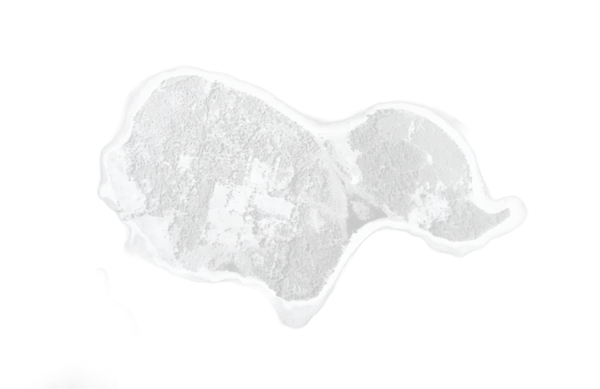 Borehole 10-X→
The Partnership Fractures
1 min
The failure of the Big Dig plan accelerated what was already a deteriorating relationship. Through the early 1990s Blankenship and Tobias disagreed on almost every major decision. Blankenship's funding from Triton had been cut to a subsistence budget of roughly $30,000 a year. He was drilling without pay and repairing equipment out of his own pocket. Tobias, operating from Westmount, was preoccupied with stock and lawsuit matters in Montreal.
On April 30, 1994, Blankenship formally resigned as a director and officer of both Triton Alliance and Oak Island Exploration Co. He sent Tobias a three-and-a-half page letter dated May 16 detailing his reasons. Tobias did not reply until July 18, by fax. On August 11, 1994, Blankenship sent a public memo "To all Concerned," with carbon copies to David Tobias, Norman Tobias, Charles Brown III, Dick Nieman, and Bob Atkinson.
The memo is a document of exhausted generosity. Blankenship itemized his health complaints: chest pain, shortness of breath, arthritis, bursitis in both shoulders from twenty years of drilling, rapid atrial fibrillation, migraine. He declined to blame Tobias personally. "Both, David and myself have been through many very trying and flustrating years," he wrote. "Perhaps history will treat us both kindly." He added: "I wish all of you to know that I do not blame David for any of the flustrations that have happened in the field. They were GOD's will, and I accept that."
Then, in a postscript that cut through the public composure, he wrote: "And David said I was 'faint hearted'."
The memo ran to two single-spaced typed pages. Its final line addressed twenty-five years of Blankenship's life: "25 years of my life could go down the tube."
Mugar and the Hollywood Boys
3 min
With Blankenship off the Triton board, Tobias began exploring new partnerships. The most consequential of them involved David Mugar, a Boston businessman best known as the founder of the Boston Pops Fourth of July concert. Mugar's pitch was ambitious. He and his partner Don Glazer would handle the media rights for the Oak Island project through a new company called Oak Island Discoveries. Mugar would commission the Woods Hole Oceanographic Institution to conduct a thorough scientific survey of the island, which could then be used to attract Hollywood financing for the Big Dig. In exchange, Oak Island Discoveries would receive a significant share of any resulting media revenues.
Tobias was cautious from the outset. In an April 27, 1995 letter to his Montreal lawyer Simon V. Potter of Ogilvy Renault, he wrote that any agreement "should be conditional upon the raising of the necessary total finances for the project in order that we not be vulnerable or swallowed up." The contracts were eventually signed with significant alterations inserted by Bob Atkinson on the Triton side. Woods Hole scientists made their first visit to Oak Island on March 29 to 31, 1995, taking field samples for analysis and carbon dating.
The relationship began to deteriorate almost immediately. On the Woods Hole return visit of July 21, 1995, Mugar phoned Tobias in Switzerland and asked Atkinson to sign what Mugar represented as a Woods Hole confidentiality agreement. Atkinson did, after adding his own alterations, and also obtained the signature of Steve Curcuru on behalf of the Mugar/Glazer side. Tobias later came to believe the document had never been a Woods Hole contract at all, but one originating from Mugar's own Oak Island Discoveries.
From that point forward, Mugar and Glazer gave a series of excuses for the absence of any feedback from the Woods Hole field tests. Mugar blamed Woods Hole; Tobias later concluded Mugar had been blocking the feedback himself. Meanwhile Mugar's lawyer Ed Benjamin never responded to Potter's letter confirming that Mugar/Glazer would begin paying Triton $10,000 per month from October 1, 1995. No payments were ever made.
On October 18, 1995, Mugar placed a conference call to the entire Triton group and announced he no longer wanted to pursue the Oak Island project. Just before Christmas he contacted Tobias again, sent a new confidentiality agreement, and asked to resume discussions. Tobias recognized the new document as the same one originally presented to Atkinson at the start of the Woods Hole work. On February 7, 1996, Mugar called Tobias in San Francisco and asked why the contracts had not been signed and returned. Tobias said he was waiting for his lawyer. Mugar asked, in Tobias's words, "why I was involving our lawyer (can you believe it?)."
On February 13, 1996, Tobias wrote a three-page private memorandum summarizing the entire Mugar episode for Potter. The memorandum, preserved in the O'Connor archive, is the closest thing to a Tobias autobiography that survives. He concluded that "all the transactions of the past year have been contrived to reach a very non-equitable and predaceous conclusion at our expense, trying to create leverage to enhance their position." Under a heading marked Second Thoughts, he admitted a painful error: "I'm afraid I was too open in my contacts with the Mugar Group so that they are probably aware of our financial situation."
One line from the memorandum, written in Tobias's accountant's prose, captures the bitterness better than any summary could. Referring to the information Triton had provided to Woods Hole to enable the field tests, he wrote that his group had supplied "97% of the information which enabled Woods Hole to proceed with field tests." Steve Curcuru, on the Mugar side, had put the figure at ninety-five percent. In Tobias's view the difference was immaterial. What mattered was the principle.
The Mugar deal ended in the spring of 1996. The Woods Hole report, when it eventually arrived, concluded only that the evidence for man-made works on Oak Island was inconclusive and recommended another $700,000 to $1 million in further testing. Tobias had spent $80,000 for an inconclusive summary. Blankenship, on hearing the result, was reported by Sullivan to have gloated.
The Final Sale
1 min
The common enemy briefly reconciled the two old partners. Blankenship and Tobias worked together against Mugar in 1995 and 1996, then drifted apart again. Through the late 1990s and early 2000s their relationship settled into a pattern of mutual obstruction. Each blocked the other's treasure trove license renewals. Each accused the other of planting a January 2003 newspaper rumour that Oak Island Tours intended to sell the island for $7 million.
In 2004 Tobias announced plans to raise $15 million for a new excavation. Nothing came of it. In July 2005 the Halifax Chronicle Herald ran the headline "For Sale: One Money Pit," with the subhead "Partners give up treasure hunt, put Oak Island Tours on market." Blankenship, the only partner quoted in the article, confirmed that he and Tobias had agreed to abandon their court claims against one another, liquidate Oak Island Tours, and list their 78 percent share of the island at $7 million.
The sale did not happen in the form either man had expected. In March 2004, an advertisement for one of Tobias's Oak Island lots appeared in Islands magazine. Two Michigan brothers, Rick and Marty Lagina, saw it. They had been following Oak Island since reading the same 1965 Reader's Digest article that had drawn Blankenship in. In 2005, through a company called Center Road Developments, they purchased Lot 25 from Tobias for a reported $230,000, then spent the following year negotiating to acquire the remainder of Tobias's holdings. In April 2006 it was announced that the Laginas, with partners Craig Tester and Allan Kostrzewa, had purchased fifty percent of Oak Island Tours from Tobias for an undisclosed sum. The remaining fifty percent stayed with Blankenship.
Tobias was eighty-two years old. His own health was failing, though not as publicly as Blankenship's. He kept Lot 25 out of sentiment only briefly before transferring it. The transaction that finally closed the Triton era took less time than any of the lawsuits that had preceded it.
Death in Montreal
1 min
David Tobias died in Montreal in 2012. He had been eighty-three at the time of the Lagina purchase, and Sullivan, who by then was researching the book that would become The Curse of Oak Island: The Story of the World's Longest Treasure Hunt, described him in that period as on his last legs. Tobias's son Norman, who had been a director of Oak Island Exploration Co. since 1990, survived him.
Tobias did not live to see The Curse of Oak Island premiere on the History Channel in January 2014. He did not see Rick and Marty Lagina become the public face of Oak Island, or the 10-X chamber re-entered by professional diver John Chatterton, or the U-shaped structure his 1969 cofferdam had exposed become the subject of seven seasons of excavation. The show dedicated no episode to him. His name appears in early seasons only when other characters mention him in passing, usually in the context of Blankenship's memories.
Assessment
2 min
David C. Tobias spent forty-nine years on Oak Island. He never picked up a shovel. He personally invested an estimated $750,000 or more of his own money, underwrote a corporate structure that raised and spent several million more, and kept the Oak Island treasure hunt continuously funded from the death of Robert Restall in 1965 to the arrival of the Lagina brothers in 2006. Without Tobias, there would have been no bridge between the two eras. The decades of activity documented on the show would have had nothing to build on.
His contributions to what is actually known about Oak Island are concentrated in the years 1967 to 1971. The Becker drilling program, which he proposed, funded, and staffed, produced the first laboratory-grade evidence that man-made workings existed below 200 feet. The Smith's Cove cofferdam of 1969 exposed the U-shaped structure that remains the single most impressive archaeological feature recovered from the island. The 1971 camera footage from 10-X, whatever one concludes about the images Blankenship identified, confirmed the existence of a cavity at 230 feet in a location where none should occur naturally. All three of those were Tobias's projects in the financial sense that matters, and all three remain foundational to the modern investigation.
His limitations were equally clear. The Big Dig strategy of 1986 to 1990 was premised on the assumption that a detailed engineering plan and a respectable investor roster would attract capital. The Black Monday market conditions and the inherent speculative character of the project made that assumption wrong. The Mugar episode of 1995 to 1996 showed that his dealmaking instinct was not immune to the pressure of diminishing resources. His extended theories about Sir Francis Drake and Francis Bacon were speculative at best and unsupported by any primary document Tobias was ever able to produce. His falling out with Blankenship cost both men most of the productive years they had left.
The 1990 Bryant profile closed with a quote Tobias had mounted on his Westmount office wall, attributed to Albert Einstein: "Great spirits have always encountered violent opposition from mediocre minds." It is the only surviving piece of writing in which Tobias indicated how he wished to be remembered. Whether the treasure ever existed, and whether Tobias's long obsession will be vindicated by anything the Laginas or their successors eventually recover, is a question the search he helped sustain may yet answer.
Blankenship's own verdict, written in the margin of the August 11, 1994 memo that ended their formal partnership, may be closer to what Tobias himself would have accepted. "Perhaps history will treat us both kindly," he had said.
Sources
4 min
Primary documents:
Periodic Reports by Dan Blankenship on Oak Island Activities, 1965 to 1994. Compiled and annotated by Les MacPhie, Revision 1 May 2014. 193 pages. 77 reports including at least ten letters addressed directly to David Tobias. Key letters used in this article: October 5, 1966 (the first Blankenship-to-Tobias letter on record, establishing their working relationship prior to the official 1967 Becker deal); September 12, 1967 (negotiating the Becker Drilling contract); August 28 and October 17, 1972 (Can Dive Services diving operations in 10-X); December 17, 1975 (Blankenship's acknowledgement of Tobias's $2,000 personal loan for the Oak Island house); February 12, 1981 (Blankenship's handwritten note describing his breakthrough theory); September 17, 1987 (Blankenship's formal objection to the Big Dig plan); May 24, 1988 (Blankenship's historical summary of 10-X for Tobias); July 7, 1993 (handwritten letter to Bob Atkinson and Tobias on the Money Pit boreholes, transcribed by MacPhie July 18, 2007); August 11, 1994 (Blankenship's public resignation memo).
Recap on David Mugar, memorandum from David C. Tobias to Simon V. Potter, Esq., Ogilvy Renault, Montreal, dated February 13, 1996. Three pages, marked "TOBIAS' NOTES RE MUGAR!" in the archival annotation. The single most detailed Tobias-perspective document of the Woods Hole / Oak Island Discoveries episode.
Letter from David C. Tobias to Simon V. Potter, April 27, 1995, Re: MUGAR/GLAZER DRAFT AGREEMENT. Oak Island Exploration Company letterhead, 30 Forden Avenue, Montreal. Includes Tobias's initial and final reactions to the proposed contracts.
Letter from Green Parish Barristers and Solicitors (Victoria Steeves) to David Tobias, April 8, 1998, covering a draft confirmation letter from Oak Island Tours Inc. to Oak Island Exploration Co.
Letter from David C. Tobias, president of Oak Island Tours Inc., to Oak Island Exploration Co., April 13, 1998, confirming the latter's access to all lots on Oak Island exclusive of lots 23, 5, and 9 through 14. Establishes the 1998 corporate structure.
The Discovery Begins, undated promotional document, c. 1995. Prepared during the Mugar / Oak Island Discoveries period. Describes the Money Pit as comparable in complexity to the inner workings of the pyramids and requiring approximately 100,000 man-hours to construct.
D'Arcy O'Connor Fonds, Public Archives of Nova Scotia. Correspondence and phone interview notes with Tobias and Blankenship spanning the mid-1970s to 2007.
Colin Campbell, consulting engineer, report to David Tobias on the Becker drilling program, dated August 22, 1967.
Newspaper and magazine sources:
Robyn Bryant, "Montrealer Tobias heads Oak Island treasure hunt," This Week in Business, April 7, 1990, page 5. Profile photograph by James Sebert. The most detailed single published account of Tobias's biography, including his Winnipeg birth, Sir George Williams degree, 1955 Jonergin acquisition, Ontario and Vermont plants, 1985 sale, and Westmount office Einstein poster. Accompanying sidebar: "Triton ready to raise funds for final assault on treasure."
Norman Tobias quoted in the Financial Post, February 5, 1990, on the Oak Island Exploration Co. share issue.
Financial Post, March 21, 1970, on the original Triton Alliance shareholder structure.
Peter C. Newman, "The Mystery of Oak Island," Maclean's, August 10, 1987. Tobias quoted on the Drake theory and on the projected cost of the Big Dig.
Douglas Preston, "Death Trap Defies Treasure Seekers for Two Centuries," Smithsonian Magazine, June 1988.
Steve Proctor, "Treasure hunter says he's pieced together Oak Island puzzle," Halifax Chronicle Herald, December 29, 2003. Blankenship-focused. Companion piece the same day: "Rival treasure sleuth just wants a resolution," featuring Fred Nolan and a Tobias quote dismissing Blankenship's methods.
"No news like Oak Island news (not!)," Gazette (Montreal), December 31, 2003.
"For Sale: One Money Pit," Halifax Chronicle Herald, July 2005.
Published books:
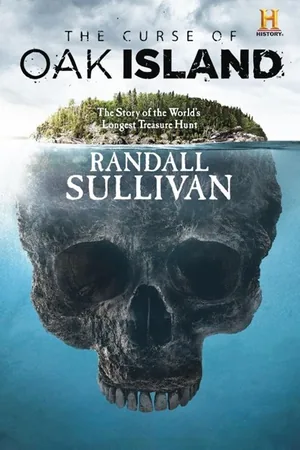
Randall Sullivan, The Curse of Oak Island: The Story of the World's Longest Treasure Hunt (Atlantic Monthly Press, 2018). Principal secondary source. Sullivan conducted extended interviews with both Tobias and Blankenship in 2003. Confirmed Tobias's death year as 2012 and his age of eighty-three during the 2006 Lagina purchase.
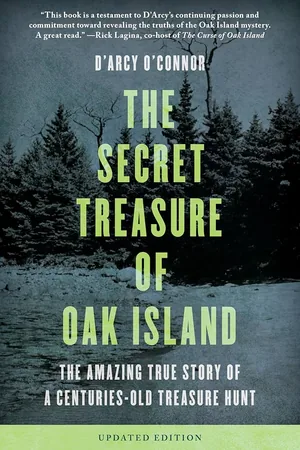
D'Arcy O'Connor, The Secret Treasure of Oak Island (Lyons Press, 2004; earlier editions as The Money Pit, 1978, and The Big Dig, 1988). O'Connor was a former Wall Street Journal reporter who maintained direct contact with Tobias from the mid-1970s onward.
Mark Finnan, Oak Island Secrets (Formac Publishing, second edition 1997). Includes detailed coverage of the 1988-1992 period, the Norman Tobias quote, the ACOA rejection, and the 1990 NASDAQ listing.
Lionel and Patricia Fanthorpe, The Oak Island Mystery: The Secret of the World's Greatest Treasure Hunt (Hounslow Press, 1994). Triton Alliance shareholder list and original Campbell engineering conclusions.
Graham Harris and Les MacPhie, Oak Island and Its Lost Treasure (Formac Publishing, third edition 2013). Engineering-focused account of the Triton period.
Scott Clarke, Oak Island Odyssey: A Masonic Quest (Nimbus Publishing, 2023). Contains Clarke's firsthand observation of the 1971 10-X camera footage on an original monitor.
Lee Lamb, Oak Island Family: The Restall Hunt for Buried Treasure (Dundurn, 2012). The Restall family perspective on Tobias's 1963 investment, and a timeline confirming Tobias as co-operator from 1969 to 2006.
Scientific and technical analysis:
Becker Drilling Ltd., Calgary. Deep core sampling program on Oak Island, 1967, funded by David Tobias at $130,000. Established presence of wood, china, metal, cement, and clay putty in bedrock horizons below 200 feet.
Canada Cement LaFarge, analysis of cement recovered by the Becker program, 1967. Identified as a type common in the sixteenth and seventeenth centuries.
Carbon-14 dating of Becker wood samples: approximately 1575, plus or minus eighty-five years.
Huntec Limited, seismic and geophysical testing concurrent with Becker program, 1967.
Woods Hole Oceanographic Institution, field survey of Oak Island, March 29 to 31 and July 21 onwards, 1995. Bathymetry, groundwater, side-scan sonar, and seismic tests at Smith's Cove, 10-X, and the Money Pit area. Report commissioned and paid for by Triton Alliance at $80,000.
Bill Parkin (Pentagon weapons systems designer and Triton shareholder), ground-penetrating sonar sensor deployed in 10-X from approximately 1976.
Television series:
The Curse of Oak Island: Drilling Down, Season 1, Episode 4. Dan Blankenship discusses his first meeting with Tobias and the early Triton years.