Charles Barkhouse and Paul Troutman supervise the drilling of Borehole DN-13.5, located 14 feet west of the Garden Shaft and within the area known as the Blob. At a depth of 99 feet, a core reveals wood at roughly 93 to 95 feet sitting in firm, undisturbed material above and below. When Craig Tester and Terry Deveau arrive, Terry says the find could be the continuation of the tunnel the team hit in Borehole DN-12.5, heading toward the Garden Shaft. Craig bags the wood for possible dendrochronology testing, and the team will also collect water samples before continuing to a depth of 120 feet.
On Lot 26, archaeologist Laird Niven, Helen Sheldon, Gary Drayton, and Jack Begley investigate the well that was carbon dated to 1028 to 1172 A.D. and tested positive for silver, making it one of the oldest structures on the island and one of the only locations outside the Money Pit to show silver. Gary has already flagged several targets in the surrounding area, hoping to find artifacts dropped by those who used the well. Working with Peter Fornetti, Gary unearths a wrought-iron door hanger, then a copper pipe tamper used for packing tobacco in a pipe, and then a second door hanger. The pieces will be sent to Carmen Legge for evaluation. Meanwhile Laird, Helen, and Jack remove soil from around the well to study its construction and search for additional artifacts.
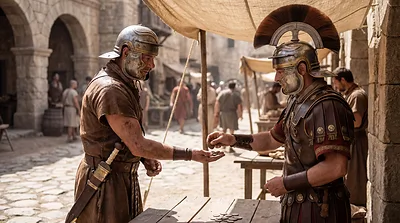
At the University of New Brunswick, Doug Crowell and Alex Lagina meet with Dr. Chris McFarlane and Brandon Boucher for isotope testing of the half-cut coin found on Lot 5, which numismatist Sandy Campbell suggested could be Roman from as early as 300 B.C. Using laser ablation, McFarlane and Boucher extract samples and run them against a European database, filtering the results from eight possibilities down to a likely origin on the Iberian Peninsula, the Mediterranean, or Spain, while ruling out Germany, Greece, and the U.K. Doug notes that beginning in 206 B.C. the Roman Empire occupied the Iberian Peninsula, which includes Spain and Portugal, for nearly 700 years, mining the region for gold, silver, and other metals used to make tools, weapons, and coins. In the War Room, Alex shares the results with the team, who discuss how the coin could have reached the island and whether it may have served as a passport key.
At Northville Farm, Doug and Scott Barlow bring the two wrought-iron pieces Gary and Peter found on Lot 26 to Carmen Legge. Carmen identifies them as broken pieces from a bush scythe, a cutting tool with a history stretching back 5,000 years in Europe and Asia. In the 1500s the bush scythe became a standard tool on large sailing vessels for clearing areas when crews came ashore. Carmen dates the pieces to the middle 1600s, before the first known settlement on Oak Island in 1760.
Cameron Carter, Paul Cote, Ben Young, and Tony Linton of Dumas Contracting join the team by video conference to update them on the Garden Shaft permitting issues. Cameron tells the group the government will work with Dumas in an "expedited manner" and that they expect to receive authorization to proceed with the rehabilitation within the next week.