Scott Barlow and Paul Troutman discuss the Garden Shaft reconstruction with Paul Cote, who reports that the next set will go in once the grouting is finished. Scott notes that not only has the shaft's wood been dated to 1735, but gold has been found in the water, in the wood from the shaft itself, and in the wood from Borehole DN-11.5. Several tunnels appear to be heading toward the Garden Shaft. A few days later, however, Charles Barkhouse meets with Roger Fortin about a problem: one of the timbers has bowed outward and the main timber on the end plate is cracked from significant pressure. Dumas halts all work, and Roger recommends installing the new set above the damaged section, securing everything, removing the compromised timber, and bracing the area before proceeding. The delay pushes back the team's plans to reach whatever lies beneath the shaft.
In the swamp's northeast section, Rick Lagina, Billy Gerhardt, and Gary Drayton attempt to confirm the ramp is an extension of the paved area. Conditions are too wet in one area, so the group shifts to another section where Rick hopes to connect the paved area to the ramp and the ramp to the stone path. Billy spreads the first bucket of soil for Gary to scan, and Gary pulls a horseshoe from the spoils. At the Research Center the next day, Carmen Legge examines the piece and points out that the top is very thick but tapers down and is unusually short, characteristics that indicate great age. The shoe belonged not to a draft horse but to a cavalry or riding horse; the shortness made the animal stand up "prouder," typical of a high-prestige mount. Carmen calls it the oldest horseshoe he has seen in Nova Scotia, handmade and dating to the 1400s, a period when no recorded visits of horses to the province had yet occurred.
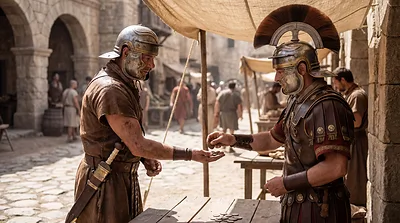
In the War Room, numismatist Sandy Campbell examines the scalloped lead piece found on Lot 5 the previous week. Sandy tells the group he recognized it immediately, having seen a near-identical piece 10 to 12 years earlier in a collection of ancient and historical money. He identifies the Oak Island piece as a barter piece from the 5th century and shows documents from the British Museum depicting a matching artifact found at Stonea Grange in Cambridgeshire. Gary checks and discovers Stonea Grange is just 13 miles from Royston Cave, an area that was part of the Roman Empire more than 1,500 years ago.
On Lot 5, Alex Lagina and archaeologist Laird Niven begin investigating the circular stone pit found the previous week. Laird sets up a four-by-six-foot test unit at the edge of the stones, and as they clear the surface Alex finds a piece of cream ware that Laird dates to the 1770s. Because the pottery sits on top of the feature, Laird says they need to reach the earliest strata and the earliest occupation for the site. Probing around the ring, Alex finds rocks at every point he checks. Inside the pit, there is roughly a foot of soil, and the feature measures 13 feet across, matching the dimensions of the original Money Pit. Alex and Laird discuss the possibility that this could represent an earlier attempt at digging the Money Pit, and with no documented occupation on the island at that time the connection to the treasure could be significant.
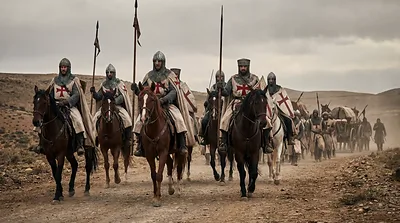
By video conference, Italian researcher Emiliano Sacchetti tells the team he has found a cave system near Osimo, on the Adriatic coast northeast of Rome, that was used by both Romans and Templars. Steve Guptill displays the cave layout, and the group notices a section that resembles the shape of the lead cross found in Smith's Cove in 2017. Emiliano offers to track down more information on the Roman coin found on Lot 5. The team decides that Rick, Alex, Peter Fornetti, and Corjan Mol will travel to Italy to investigate further.