Six weeks after the provincial government shut down work on the Garden Shaft over safety concerns, Dumas Contracting resumes operations. Rick Lagina, Doug Crowell, Alex Lagina, and Peter Fornetti arrive at the Money Pit where the rest of the team and the Dumas crew are waiting. Roger Fortin hands Rick the keys to the shaft, and once the padlock is unlocked and the metal cover removed, work begins again on refurbishing the 80-foot structure where traces of gold were found in the water. Nearby, Ian Spooner and Paul Troutman collect water samples from the area known as the Blob using a single-valve bailer, hoping to pinpoint the gold's location at a depth of 80 to 120 feet.
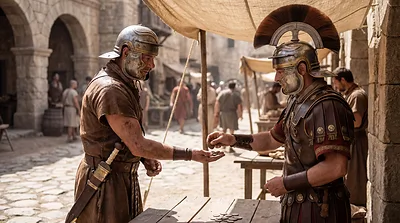
On Lot 5, Peter and Gary Drayton dig flagged targets. Gary pulls out a button he believes may be military from the 1700s, in the same area where the team has already recovered a buried stone feature, a pipe stem, metal tools, and a Roman coin. At the next flag they find what appears to be a piece of a bush scythe, similar to ones Carmen Legge dated to the 1600s on Lot 26. On Lot 26, archaeologist Laird Niven, Jack Begley, and Helen Sheldon continue investigating the 900-year-old well that tested positive for silver, one of the oldest manmade features on the island and one of the only locations outside the Money Pit to show silver. The group pumps out the well and examines debris from the bottom for artifacts and construction clues. At the Interpretive Center, Helen and Emma Culligan sift through the well spoils and Helen recovers a piece of handwrought iron she thinks could be a file. Emma notes it is sulfuric, meaning it was made in a furnace at lower temperature. When Rick and Ian arrive, Ian wonders whether it could be a clenched nail used in ship construction, and Helen suggests a date in the 1700s.
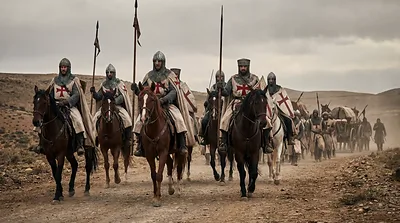
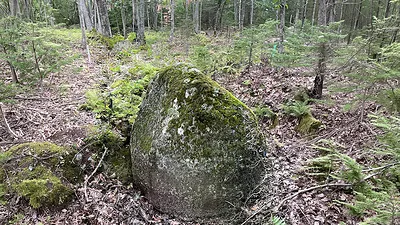
In the War Room, Brian Pharoah presents a theory that Nolan's Cross points the way to the treasure. Brian tells the team the cross is a megalithic and mathematical phenomenon that could not be happenstance, built using sacred numbers, geometry, and sacred knowledge to indicate the treasure's location. The numbers he uses are 144, 288, 360, 432, 720, and 864, which he says are encoded in sacred sites such as Chartres Cathedral, Rosslyn Chapel, and the Temple Mount. Brian demonstrates how the measurements of Nolan's Cross incorporate these sacred numbers and reveals hidden geometry within the cross. Using intersecting lines originating from its stones, his calculations point to a location near the Garden Shaft. Steve Guptill recalculates using Brian's method with the team's own boulder positions and arrives at a spot a few feet north of the shaft. Because reconstruction is ongoing, the team cannot investigate the theory yet. When Rick asks who he thinks created this, Brian answers: the Templars.
At St. Mary's University, Peter, Charles Barkhouse, and Emma have Dr. Christa Brosseau test the iron piece from the well and the bush scythes using a scanning electron microscope that magnifies samples up to 200,000 times and identifies their chemical composition. The bush scythe material contains no manganese, confirming it pre-dates 1840. The iron piece from the well also shows no manganese but contains 0.7 percent phosphorous, indicating an older date. Dr. Brosseau dates the headless nail to the 1600s through late 1700s. Back at the Interpretive Center, Emma shares the results with the team: Dr. Brosseau agreed with Carmen's dating of the bush scythes, and the iron artifact from the well is wrought iron with phosphorous content pointing to an earlier origin. At the Garden Shaft, Roger tells Rick they are ready for the hammer grab, and the first load of material is brought out of the shaft and deposited into a dump truck for examination.