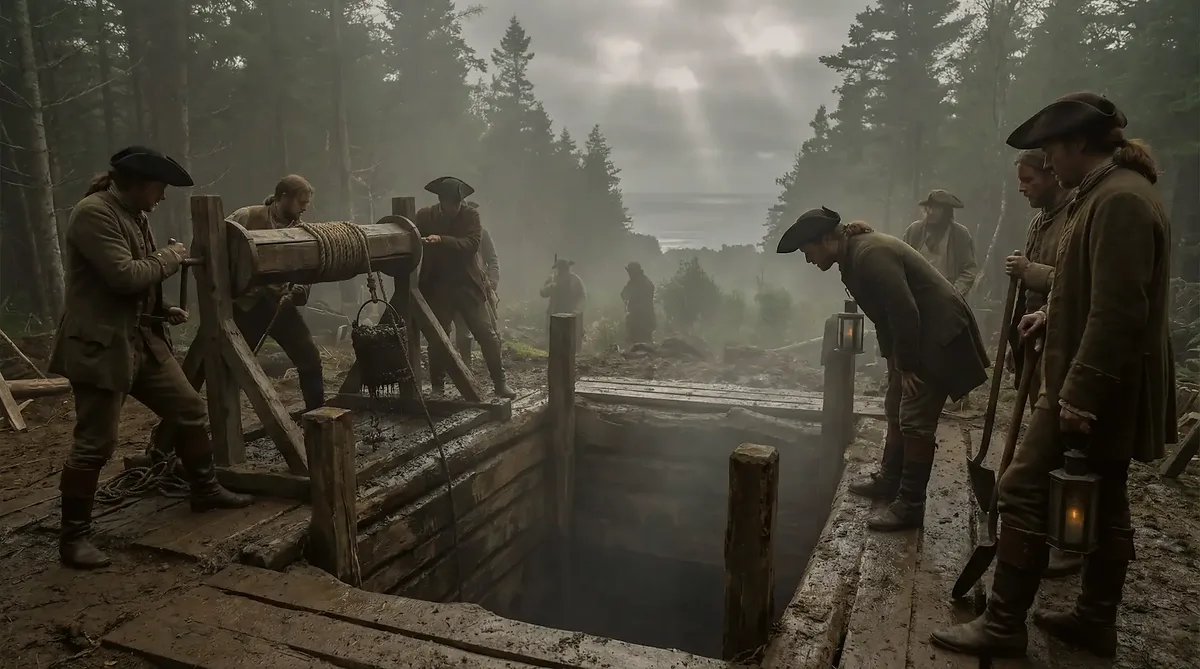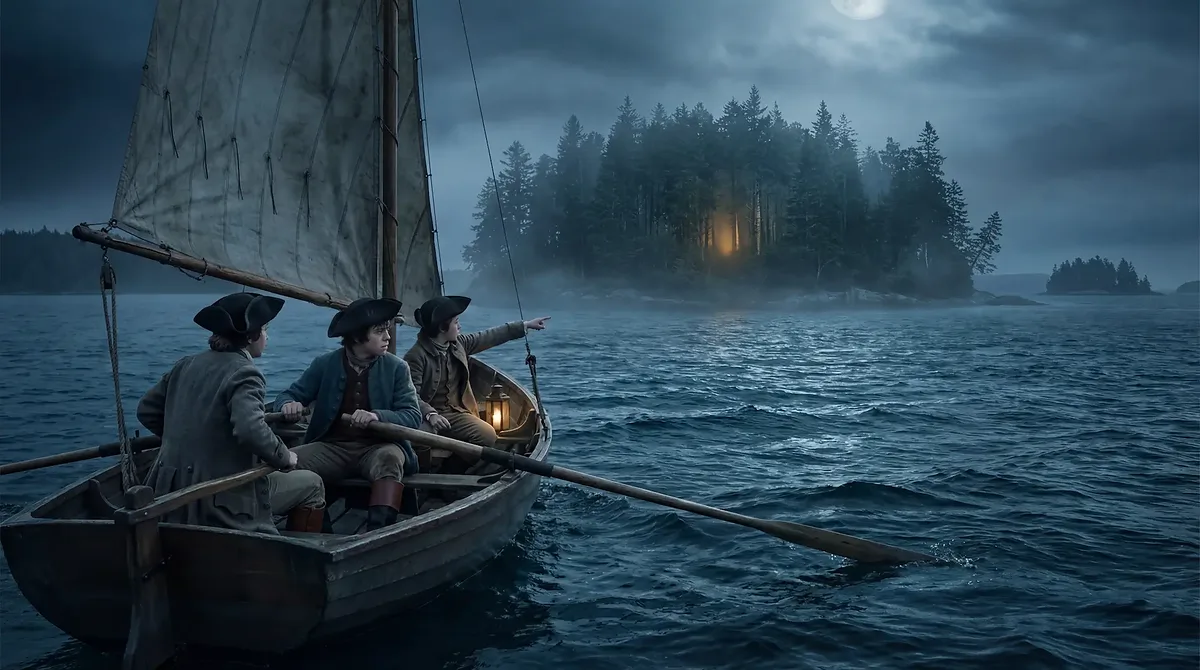
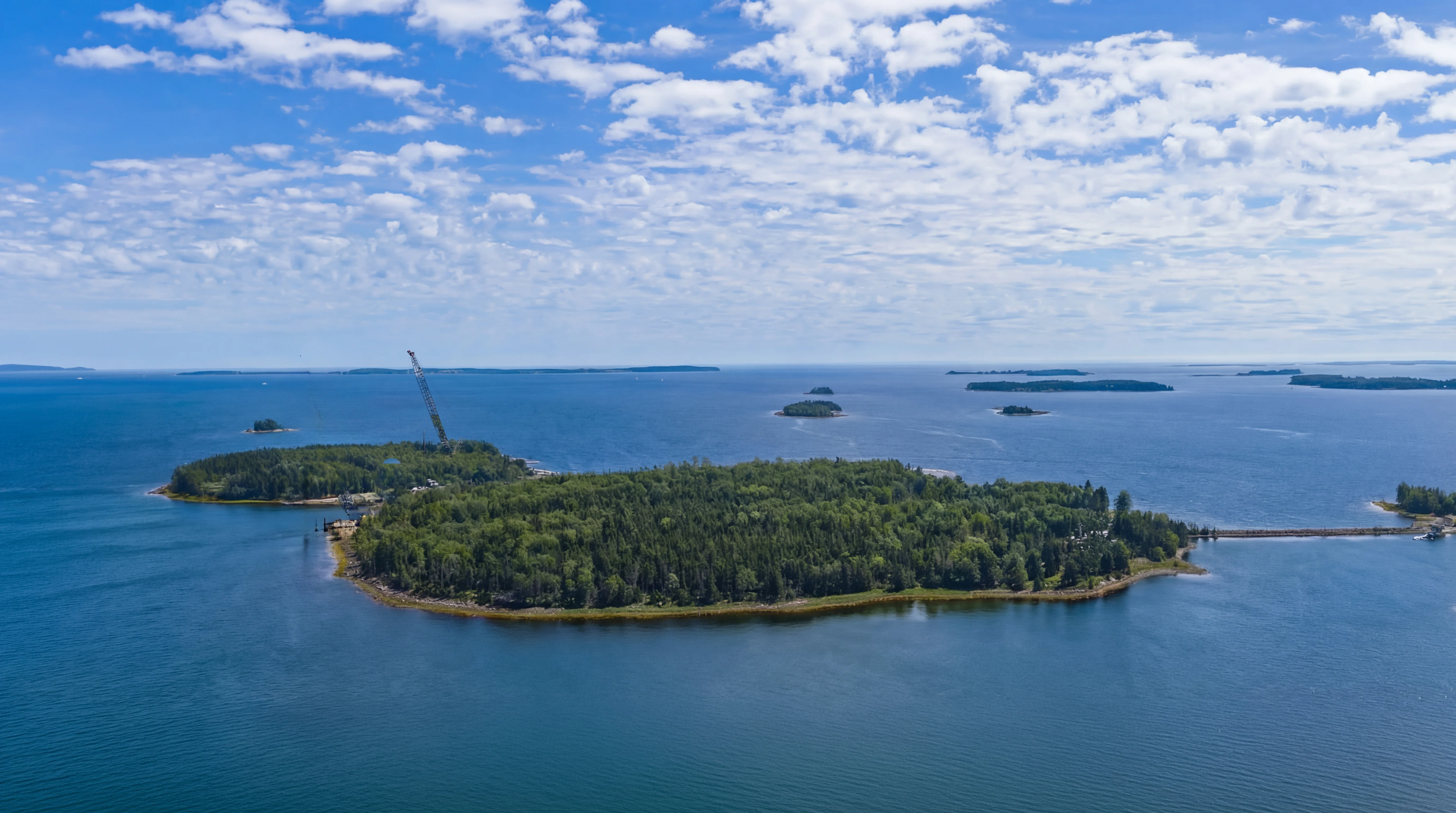
The short answer is no. Two hundred and thirty-one years after three boys started digging under an oak tree, nobody has lifted a chest, a vault, or a hoard out of Oak Island. The long answer is more interesting, because the island has been giving up gold, coins, and jewellery for years. Just never in the quantity the legend promises.
That distinction is worth holding onto. Ask whether the treasure has been found, and the record says no. Ask whether anything of value has come out of the ground, and the record fills a vault.
 Oak Island Evidence: 2026 Update→
No Hoard After 231 Years of Digging
1 min
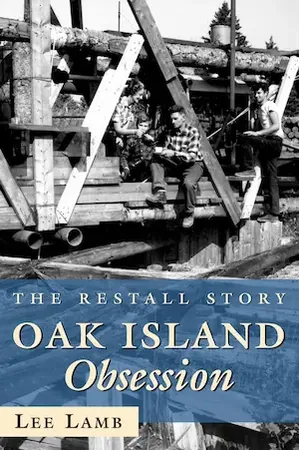
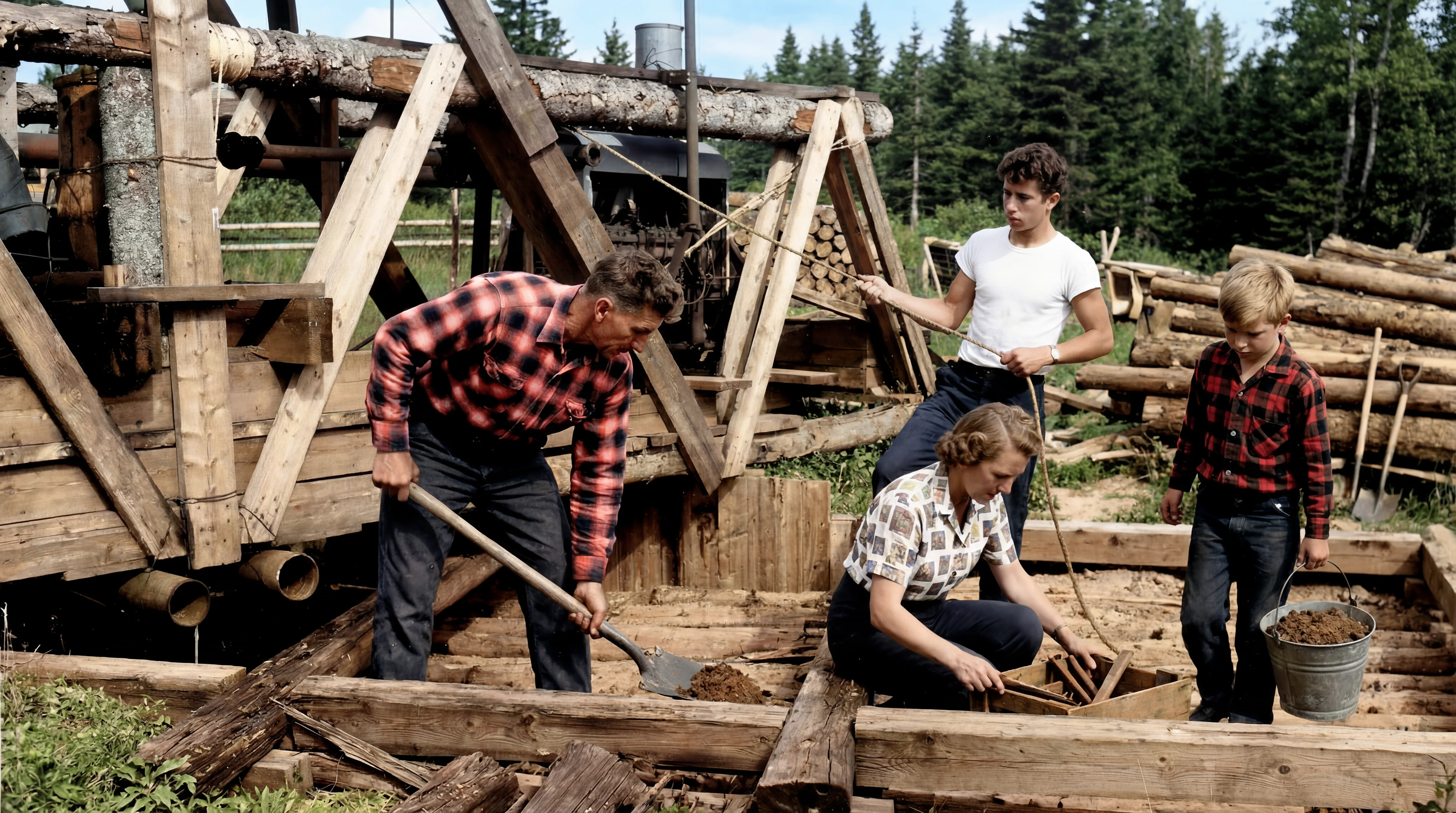
The search began in 1795 and has never fully stopped. Company after company sank shafts into the Money Pit area through the nineteenth century, drilling platforms and steam pumps followed in the twentieth, and since 2006 Rick Lagina and Marty Lagina have run the most heavily resourced operation the island has ever seen. Six searchers have died in the attempt, four of them on a single August day in 1965, when Robert Restall, his son Bobbie, Karl Graeser, and Cyril Hiltz were overcome by gas in a shaft near Smith's Cove.
 The Restall Tragedy→
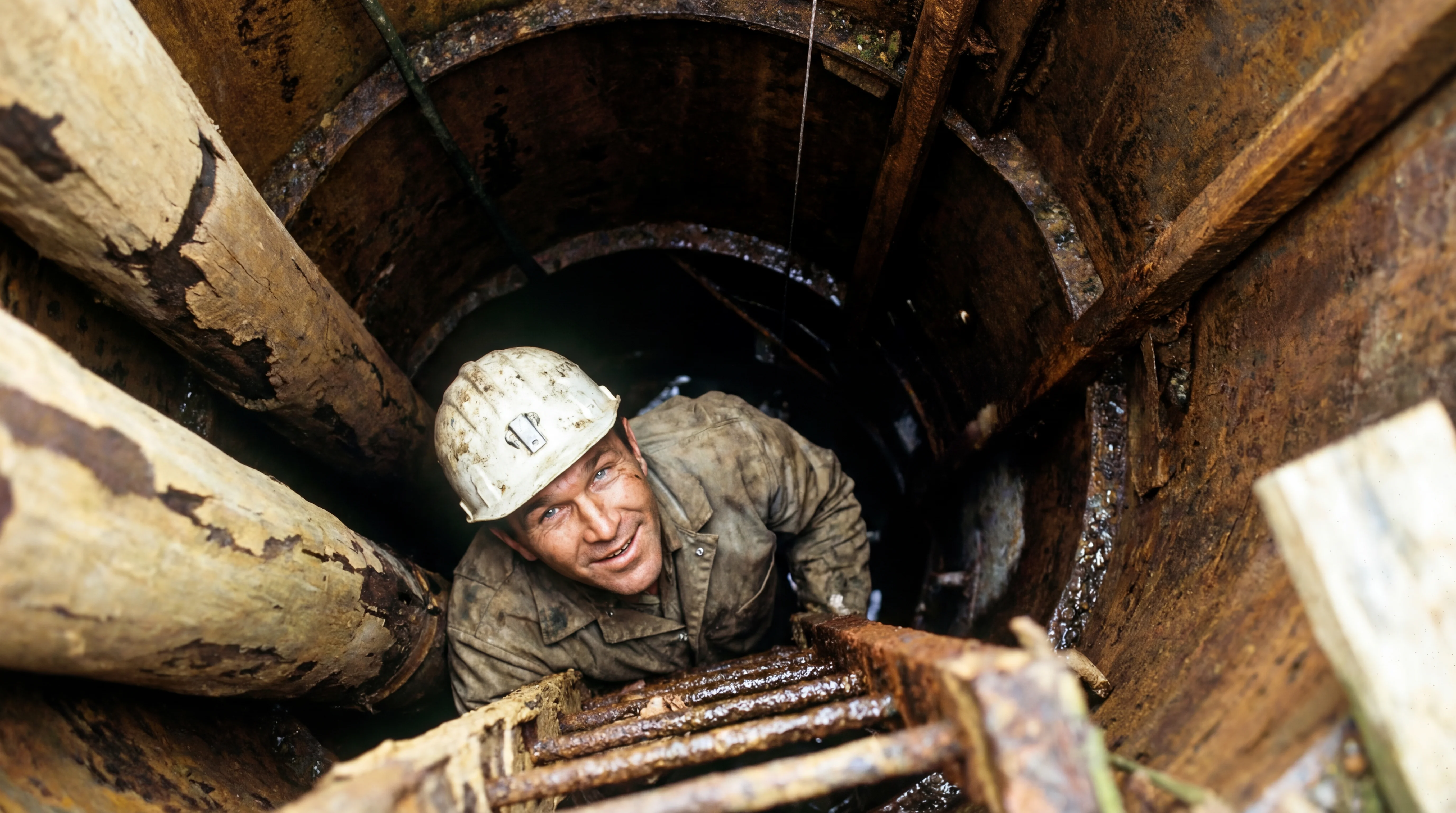
The closest thing the hunt has to a creed came from Dan Blankenship, who searched the island for more than five decades before his death in 2019. In a 2010 interview he recalled his reaction to first reading about the island in 1965: "There's treasure on Oak Island, and I'm going to be instrumental in getting it." The first half of that sentence is still a prediction. The second half he made true, and the past decade has kept changing the picture, because the finds that keep coming up are old, valuable, and hard to explain.
 Dan Blankenship and Borehole 10-X→
Gold in the Wood and the Water
1 min
The most consequential gold on Oak Island so far cannot be held in a hand. Water samples drawn from deep in the Money Pit area have returned traces of gold, and a testing program led by Dr. Ian Spooner and Dr. Fred Michel has been putting recovered wood through metals analysis to find out where those traces travel from. Of fifteen samples processed under the program, a piece of wood recovered from Shaft 2A in 2024 returned the highest silver reading and the third-highest gold reading recorded on the island. Marty Lagina has committed to extending the program, on the logic that metal-bearing water and metal-bearing wood both point somewhere.
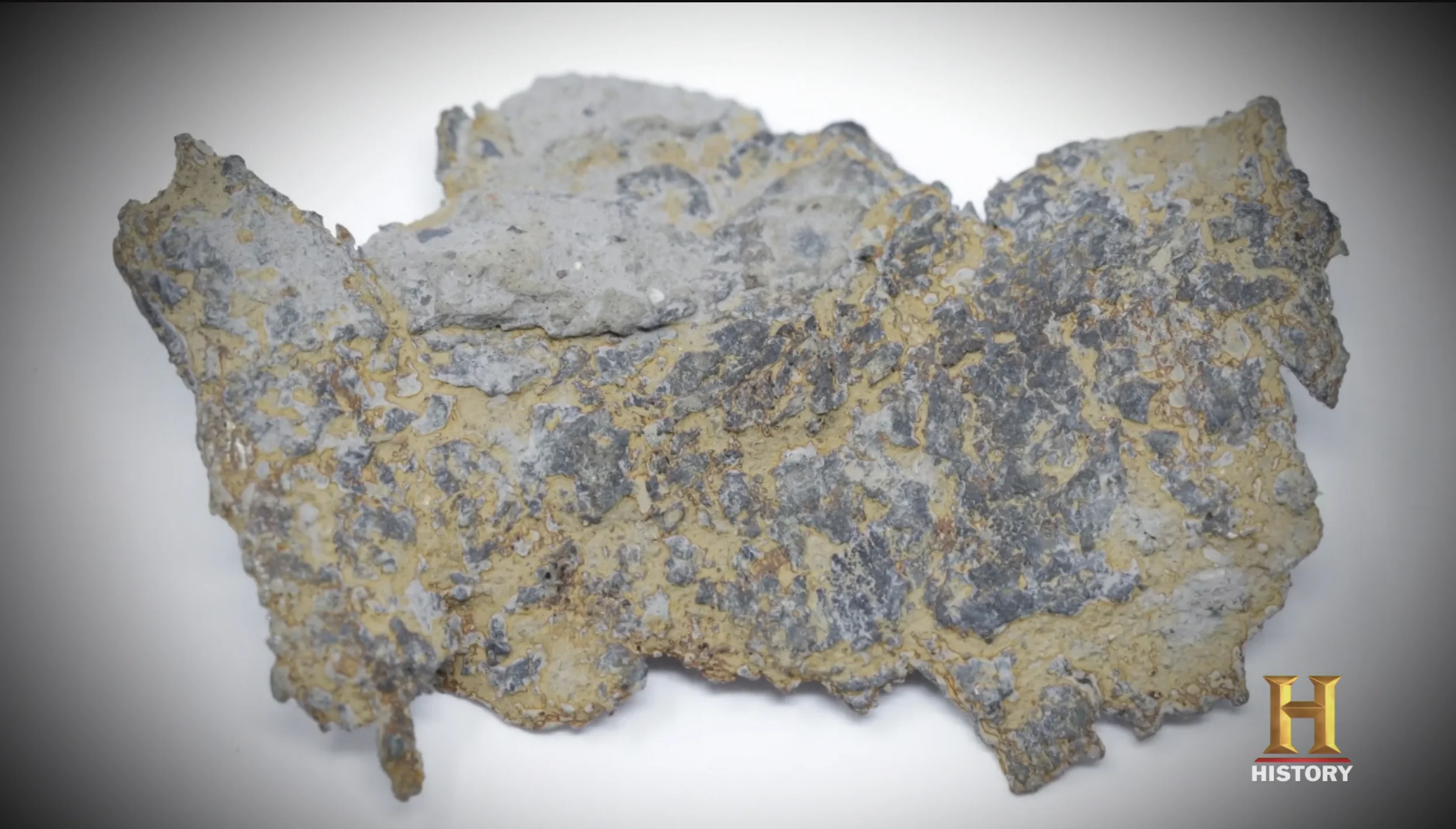
The hand-held gold is smaller and stranger. Three gold chain links. A metal fragment carrying gold traces. Gold-gilded buttons. A set of gold-copper alloy fragments identified by some examiners as tumbaga, a pre-Columbian alloy, an identification that other specialists dispute. None of it is a hoard. All of it had to get there somehow.
Coins From Five Centuries in the Ground
1 min
Coins are the steadiest currency of the hunt, in the literal sense. The oldest confidently dated European coin is the Pitblado coin, a Portuguese Tornês struck under King Ferdinand I. Renowned Portuguese numismatist Alberto Silva narrowed its striking window to no later than 1371. That places a medieval Portuguese coin on an island whose recorded history begins four centuries later.
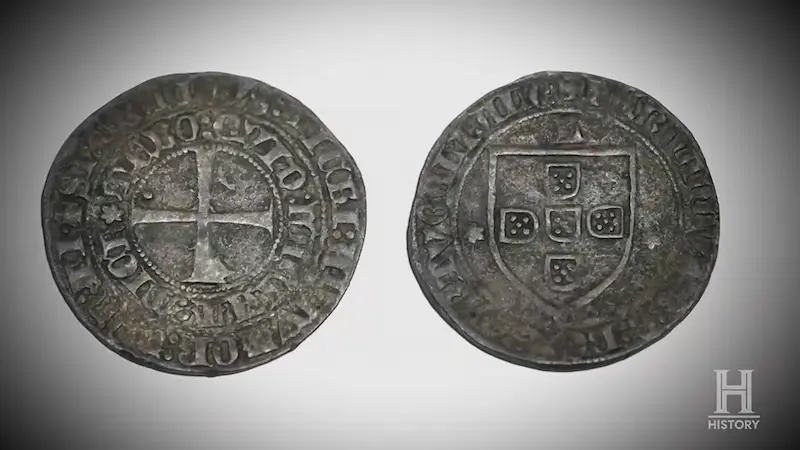 Portuguese Tornes, 1369-1371 (Pitblado coin)→
The Spanish material spans the empire's whole run: an 11 maravedis piece of 1598 from Smith's Cove, an 8 maravedis piece of 1652 from the swamp, a silver half real of 1781. British coins cluster in the eighteenth century, King George II coppers among them, and in Season 13 Katya Drayton pulled a William III sixpence, struck between 1697 and 1701, out of the Dunfield spoils on Lot 18, with the identification made by Emma Culligan at the island laboratory.
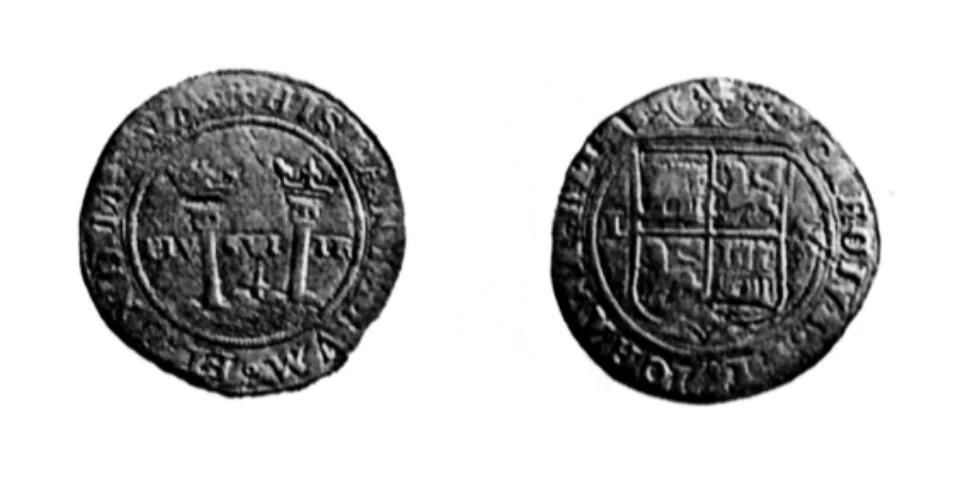 Spanish 11 maravedis, 1598 (Smith's Cove)→
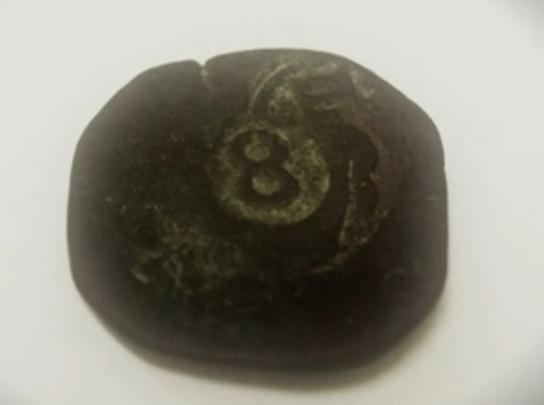 Spanish 8 maravedis copper, 1652 (swamp)→
 Spanish half-real silver, 1781 (Lot 5)→
 William III sixpence, 1697-1701 (Lot 18)→
Then there are the Roman coins from Lot 5, one of them attributed to the reign of Claudius II, 268 to 270 AD. Their dating is not the problem; how they reached a Nova Scotia island is, and that route is unresolved. They are treated here as finds, not as proof of anything.
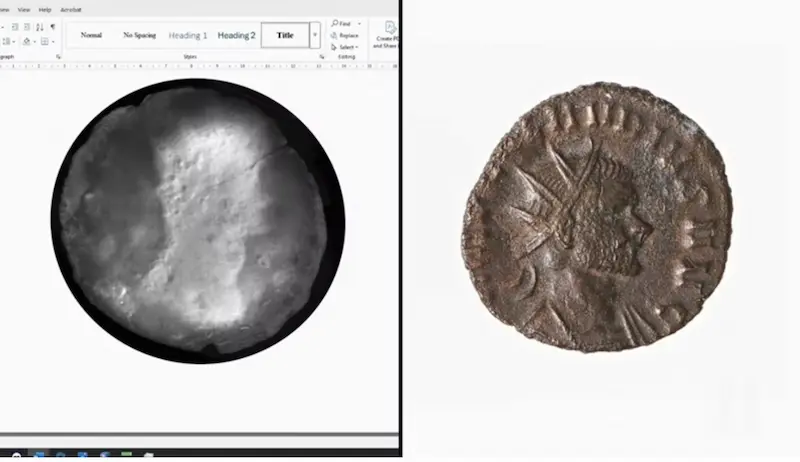 Roman coin (Claudius II), 268-270 AD (Lot 5)→
 Did the Romans reach Oak Island?→
Jewels, Crosses and the Question of Age
1 min
The jewellery is where the hunt starts to look like something other than colonial litter. A brooch set with a rhodolite garnet has been dated to the sixteenth or seventeenth century. A second, gold-plated brooch holds a leaded glass gem whose threading technique points to the fourteenth century or earlier. A professionally cut gemstone recovered from the island has been judged likely medieval, and an ornate faceted glass jewel dates to the early or middle 1700s.
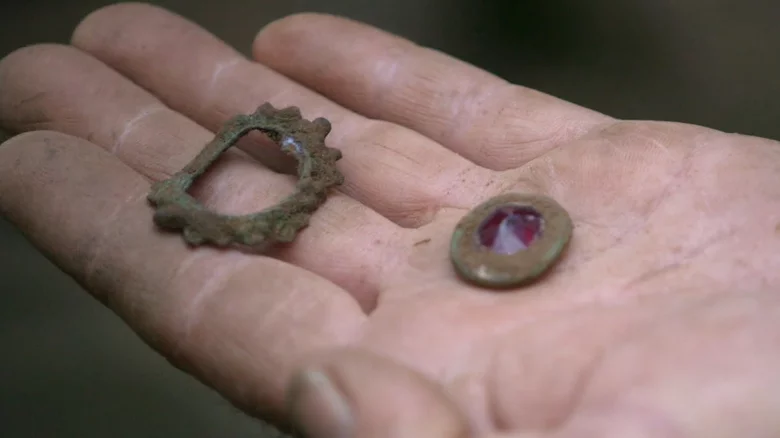 Jewelled brooch (rhodolite garnet)→
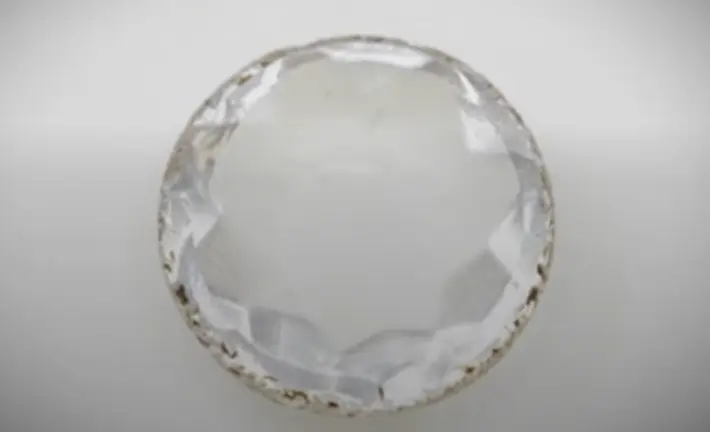 Ornate Faceted Glass Jewel→
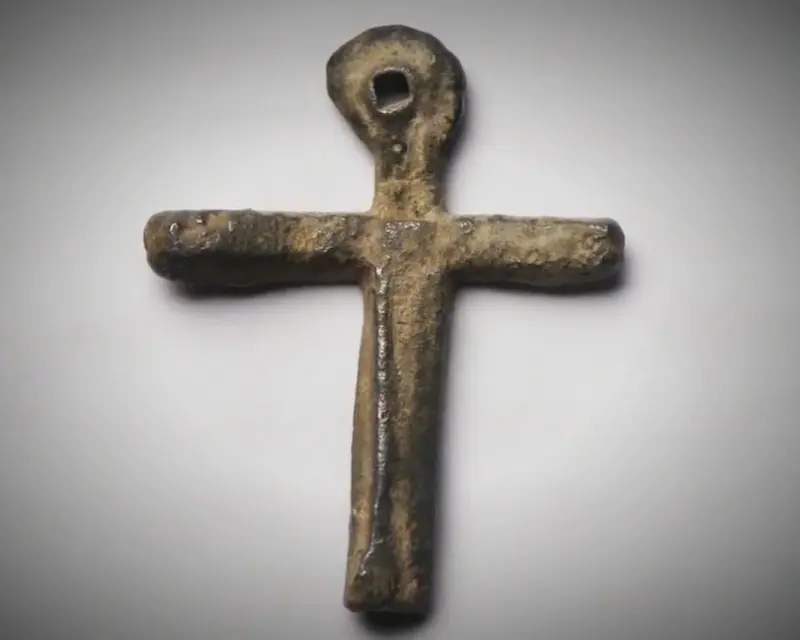
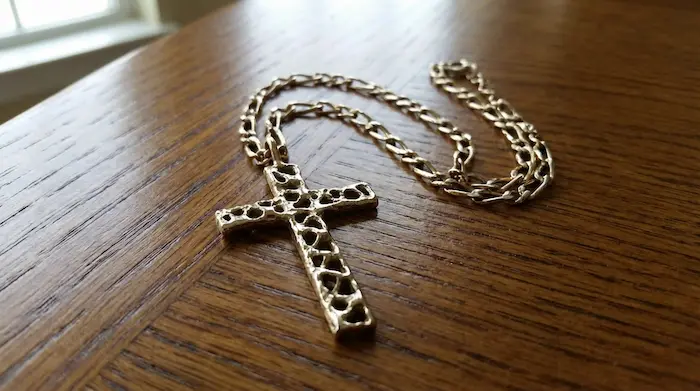
The crosses carry the same spread. The lead cross recovered by Gary Drayton at Smith's Cove has been placed as early as 900 to 1300 AD on the strength of its lead sourcing. The McGinnis Gold Cross, a small gold cross associated with the family of Daniel McGinnis, one of the three original diggers of 1795, has been dated to between 1550 and 1700. Each of these objects has its own page in the Artifact Vault with the full dating evidence; the point of listing them together here is what they add up to. Someone lost or left objects of real value on this island across a span of several hundred years, and the earliest of those centuries has no recorded population to lose them.
The Water, the Collapse and the Lost Shaft
1 min
If valuable things keep surfacing, the fair question is what has kept the main prize out of reach, assuming there is one. The record offers three answers. The first is water: from the moment early searchers broke into the flood system, the Money Pit has refilled faster than pumps could empty it, and it has drowned every attempt to dig it dry by hand. The second is the collapse of 1861, when the bottom of the original workings fell into a void and took whatever the shaft held down with it. The third is the searchers themselves. Two centuries of overlapping shafts, tunnels, and spoil heaps blurred the original site so thoroughly that relocating the 1795 pit became a research project in its own right.
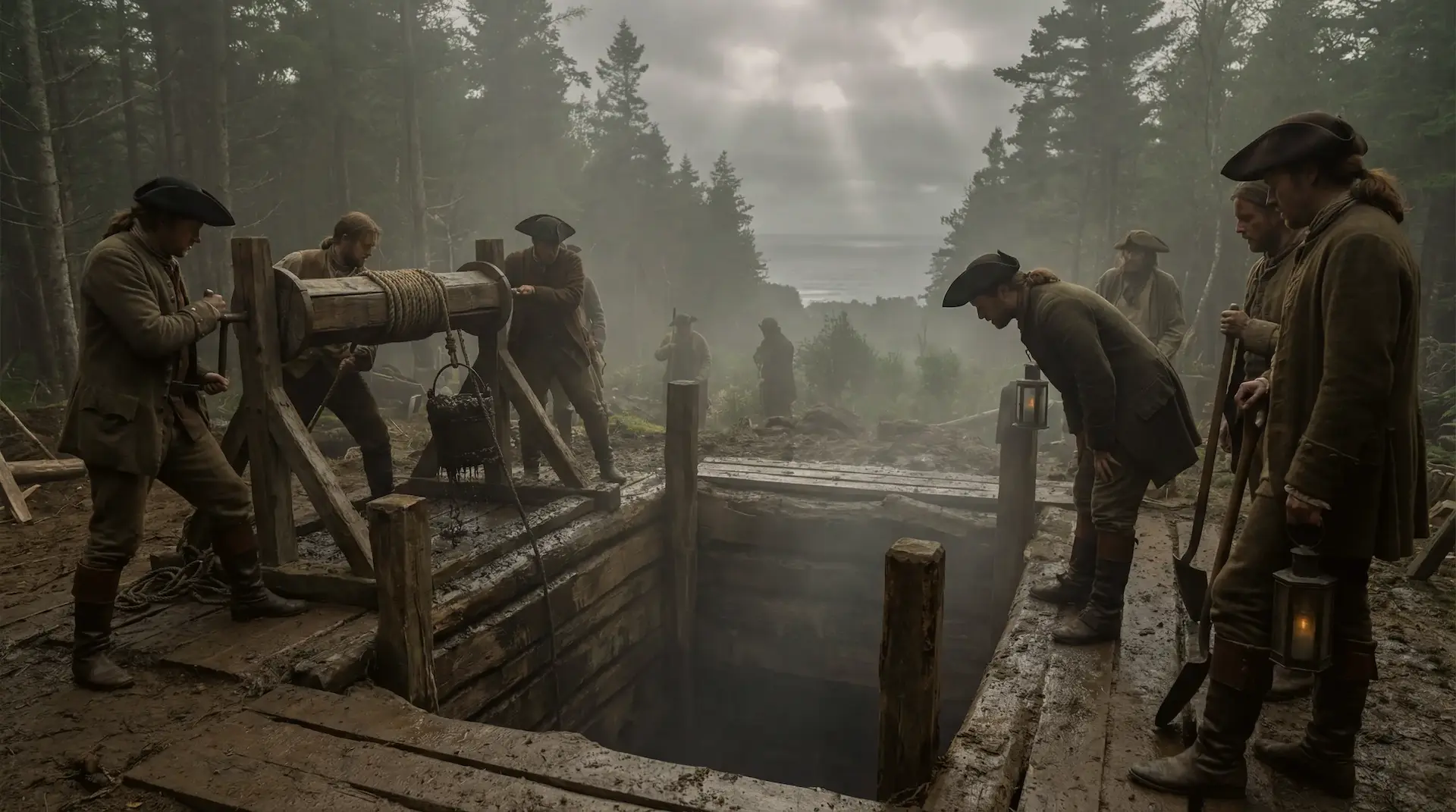 The Oak Island Money Pit→
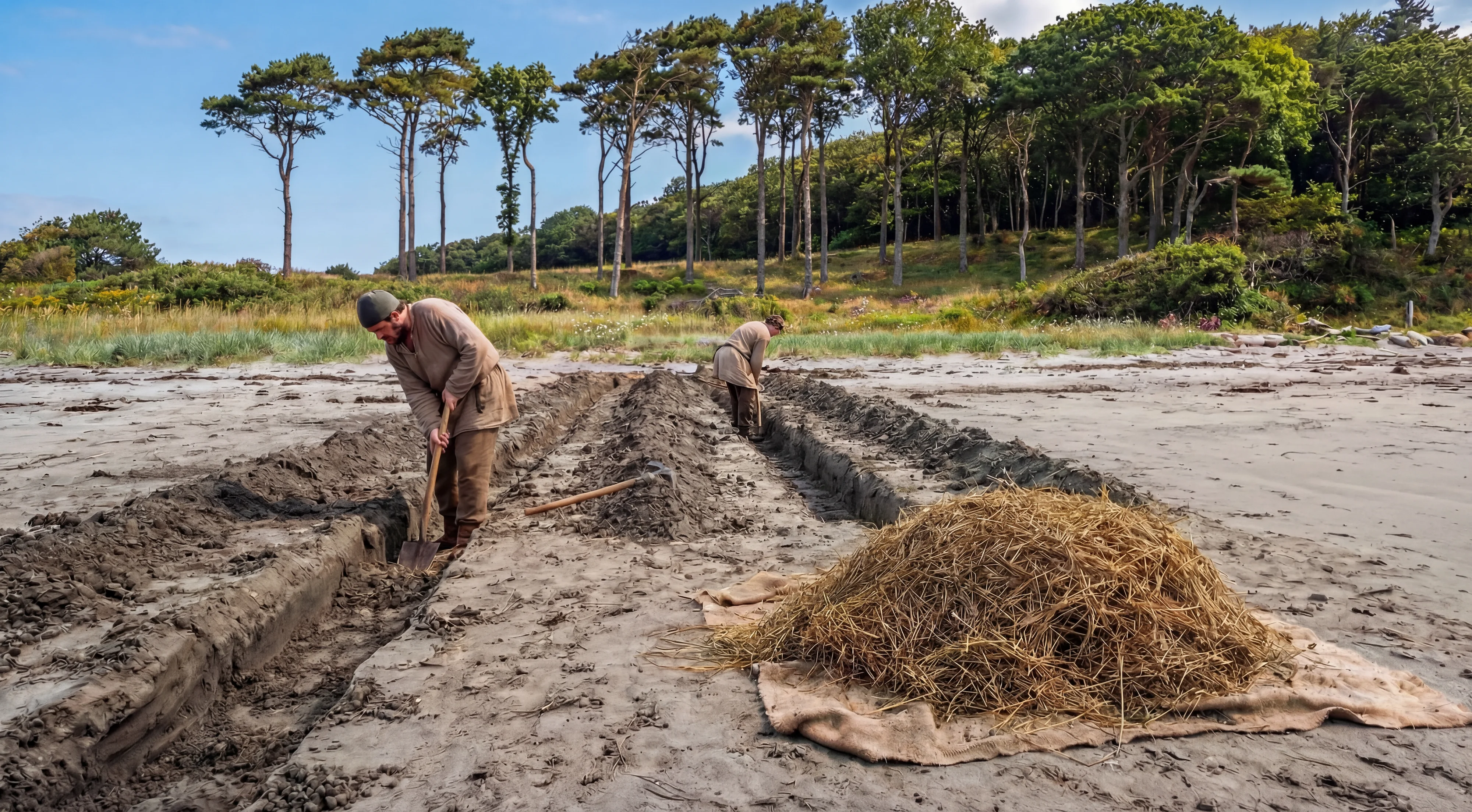 Oak Island Flood Tunnels and Box Drains: The Water Trap→
The modern response is industrial. In Season 13 the caisson designated MP-1 reached bedrock at 210 feet, five feet short of its design depth, and came up with nineteenth-century drill pipe, twisted iron, and a piece of stained wood that Rick Lagina noted has no natural place at that depth. The team is now digging through the wreckage of every earlier attempt to reach whatever those attempts were after.
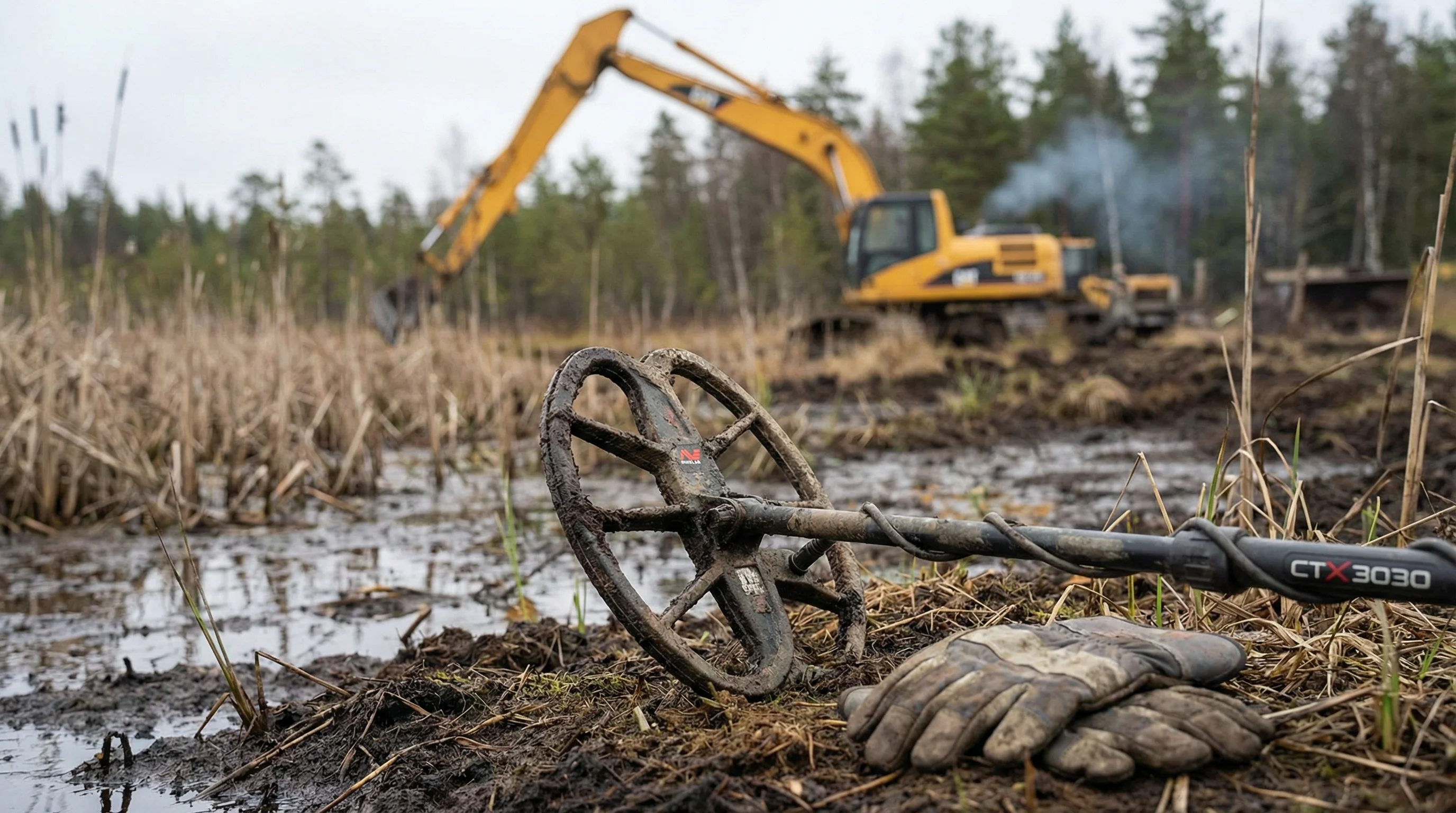 Equipment and Technology on Oak Island→
What Counts as Found Under Nova Scotia Law
1 min
Recovery, if it comes, will be a legal event as much as an archaeological one. Nova Scotia retired its old treasure-hunting statute and replaced it with the Oak Island Treasure Act, a law written for this single island, which ties recovery to a provincial licence and archaeological oversight. That is why archaeologist Laird Niven stands beside the excavators, and it is why any object of historic value passes through documentation before it passes through anyone's hands. The practical meaning is simple: when something is found, the finding will be recorded, reviewed, and shared with the province, in that order.
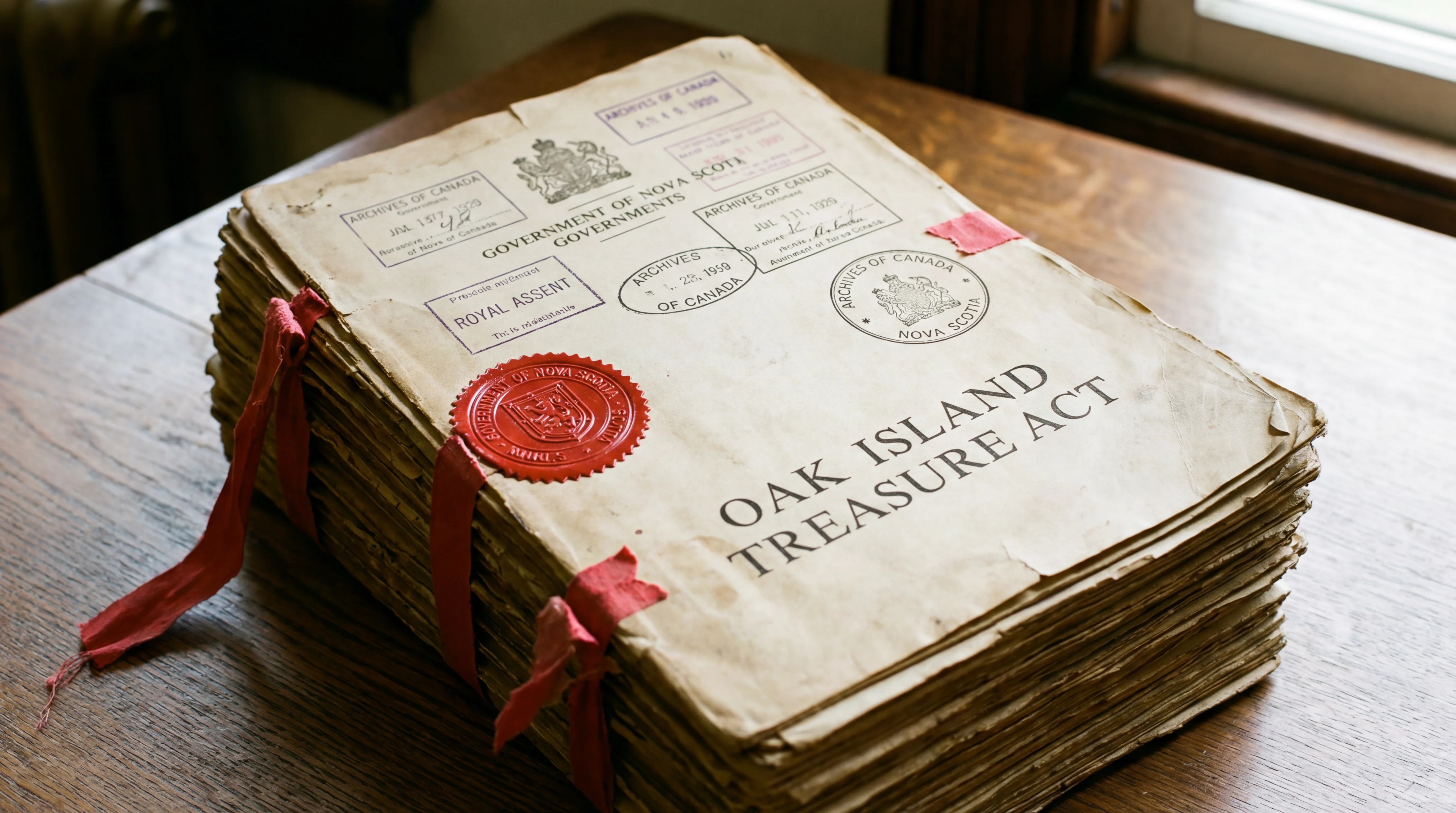 The Treasure and the Law: The Oak Island Treasure Act→
The Search as of August 2026
1 min
Season 13 closed on May 5, 2026 as the most artifact-rich year in the show's history. Steve Guptill's final heat map plotted more than 800 finds; Laird Niven put the year's true total closer to 1,200. At the closing war-room meeting, Marty Lagina unveiled a one-ounce gold maple leaf coin and placed it as a physical marker on the spot the team intends to sink first when digging resumes. It is, for now, the only confirmed gold treasure on Oak Island, and the team put it there themselves.
 Oak Island S13: The Medieval Case→
Filming for Season 14 began on June 1, 2026, and the premiere is set for November 10, 2026. The wood metals program continues, the Lot 8 cradle excavation is unfinished, and the caissons return to the Money Pit with a marked target. This page is updated as developments happen. The answer at the top changes the day the ground gives a different one.
Sources
1 min
Books
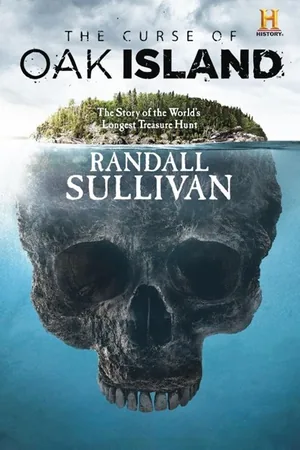
- Sullivan, Randall. The Curse of Oak Island: The Story of the World's Longest Treasure Hunt. Atlantic Monthly Press, 2018.
- Harris, Reginald V. The Oak Island Mystery. Ryerson Press, 1958.
- Lamb, Lee. Oak Island Family: The Restall Hunt for Buried Treasure. Dundurn, 2012
Scientific and specialist analyses
- Wood metals testing program, Dr. Ian Spooner and Dr. Fred Michel, sample series through 2024.
- Numismatic assessment of the Pitblado coin, Alberto Silva, Angra do Heroísmo.
- Laboratory identifications, Emma Culligan, Oak Island archaeology laboratory.
Legislation
- Oak Island Treasure Act, Province of Nova Scotia.