On a single lot on Oak Island, one with no recorded history of anyone ever living there, the search has turned up Roman coins. Not one, but six by the start of Season 13, the oldest of them struck before the birth of Christ. They are real coins, examined by numismatists and run through laboratory analysis, and that is what makes them interesting. The hard part is not whether they are Roman. It is how they came to be lying in the soil of a small island off Nova Scotia, and when.
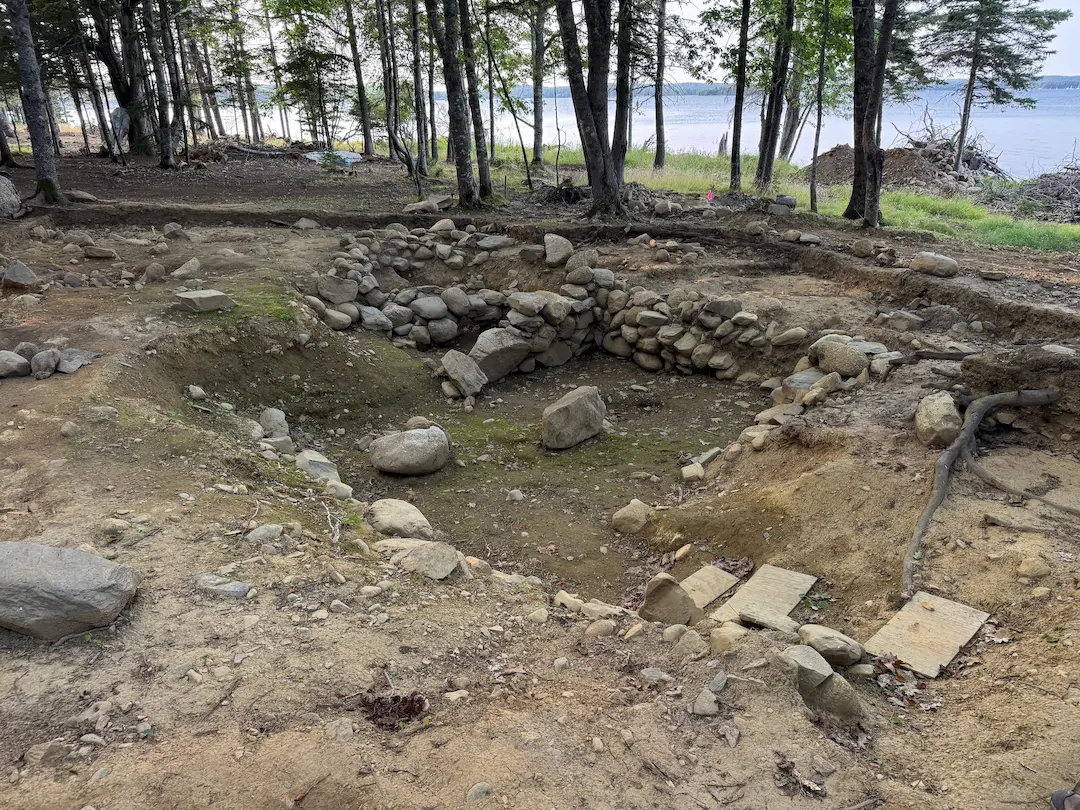 Lot 5 Stone Feature→
The Coins of Lot 5
2 min
The coins came out of Lot 5, most of them from in and around a rounded stone feature that has produced finds spanning several centuries. The first arrived in Season 10, in 2022, a worn half coin that numismatist Sandy Campbell judged to be Roman. Metallurgical analysis found it was arsenical bronze with a chemical signature matching ancient Roman mines in Spain and Sardinia. The team carried that coin to Rome, where the Italian numismatist Umberto Moruzzi examined it alongside Campbell.
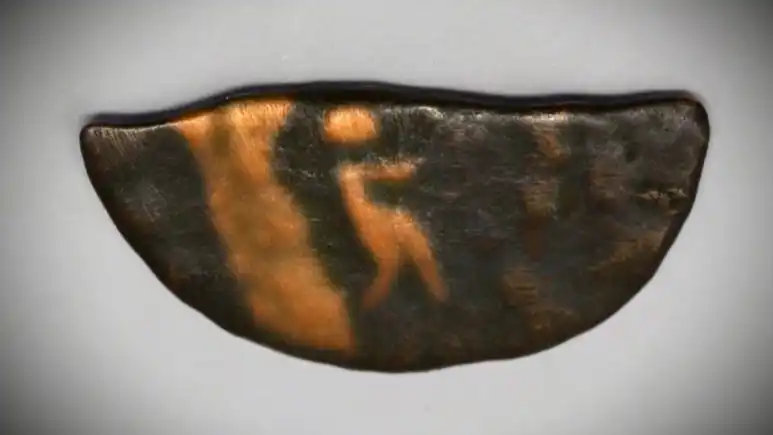 Half Roman coin, c. 300 BC-600 AD (Lot 5)→
More followed. In the Season 11 premiere in 2023, Rick Lagina recovered two coins from the round feature on the same morning, with Gary Drayton working the mi metal detector. Emma Culligan's X-ray fluorescence analysis read one as a strong Roman candidate, copper with lead and tin, and Campbell dated it to between 100 and 300 AD. The second was stranger. Culligan's reading returned about 94 percent copper and 5 percent silver with no tin and no lead, a composition she said was neither Roman nor modern, which left it unclassified in the lab. Campbell, examining it later, read a male portrait and two conjoined figures, placed it before the birth of Christ, and called it possibly the oldest coin ever found on the island.
 Roman coin, 100-300 AD (Lot 5)→
 Roman coin, pre-100 AD (Lot 5)→
Season 12 produced a hammered copper-alloy coin, irregular in shape, dated to roughly 200 to 300 AD, found by Jack Begley while sifting soil that archaeologist Laird Niven had removed from the feature. Then in the Season 13 premiere, Katya Drayton recovered a sixth coin from the southern part of the lot. Culligan's CT scan of its worn surface revealed a portrait she identified as the emperor Claudius II, with what appeared to be a figure holding an oak leaf on the reverse, an image consistent with known Claudius II coinage. Campbell confirmed the identification and the third-century date and called it the most remarkable of all the Roman coins found on Oak Island.
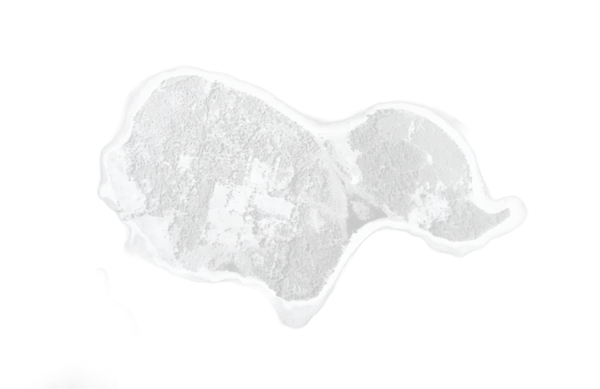 Roman coin, 200-300 AD (Lot 5)→
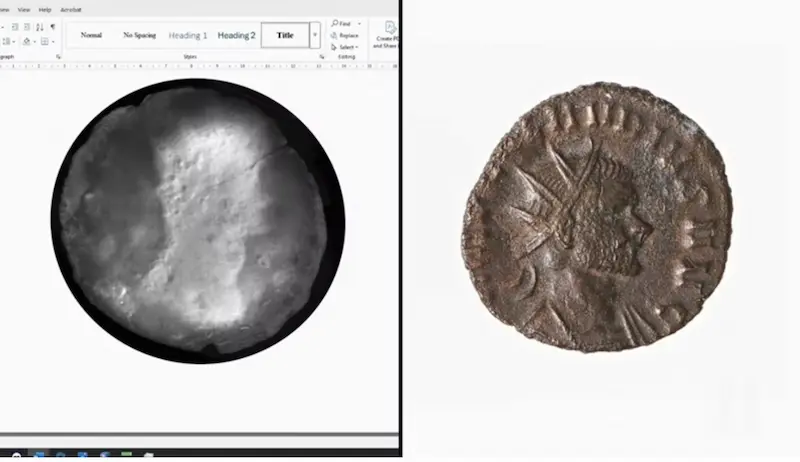 Roman coin (Claudius II), 268-270 AD (Lot 5)→
What the Coins Do Not Settle
1 min
The authenticity of the coins is not the open question. Campbell and Culligan, working separately by eye and by instrument, agreed the pieces are ancient. The open question is the one Campbell himself raised and that team member Tom Nolan put most plainly: a Roman coin tells you when it was made, not when it was lost.
Roman copper coinage was minted in enormous quantities and stayed in use for a very long time. The antoninianus of Claudius II, debased from silver to copper-alloy by his reign, circulated for centuries after his death in 270 AD. Campbell noted that Roman coins were still being traded as currency well into the 1500s across Europe and the New World, and that the Vikings were known to collect and repurpose Roman coins they came across during their expansion through Europe and the North Atlantic. A coin struck in the third century could therefore have been dropped in the third century, or carried in a pocket and lost a thousand years later, or brought to the island by a much later visitor who valued it as an antique. The metal fixes the date of manufacture and nothing else.
What does stand out is the pattern rather than any single coin. Six Roman-era coins, concentrated on one uninhabited lot, is not the scatter you would expect from a coin or two lost by chance. The Lagina team has noted that similar Roman coins from the same era were recovered at sites associated with the Knights Templar in Iceland during their European research trips, a connection they have pursued rather than proven. The concentration is real and unexplained. It does not, on its own, establish who brought the coins or when.
The Iron Projectile from Lot 26
1 min
The coins are not the only Roman-era material claimed for the island. In Season 6, in 2018, Gary Drayton, Jack Begley, and geophysicist Mike West recovered a hand-forged iron object with a tapered point from the Lot 26 beachfront, roughly ten inches down, during a deep-scanning survey. Drayton first took it for a crossbow bolt of the medieval period. At Saint Mary's University in Halifax, Dr. Christa Brosseau and Dr. Xiang Yang ran scanning electron microscope analysis and confirmed the metal was iron with manganese.
The California antiquities specialist Gabriel Vandervort then re-examined the piece. He found the long neck inconsistent with a crossbow bolt and reclassified it as a possible Roman pilum, the throwing javelin carried by legionaries, whose thin iron neck was designed to bend or break off after striking. Vandervort observed that such objects are rare even in Europe and effectively unknown in North America. A similar tapered iron object was later recovered among the slipway spoils at Smith's Cove. The identification is one expert's reading rather than a settled fact, and the dating it implies is broad, spanning the first century BC to the fifth century AD.
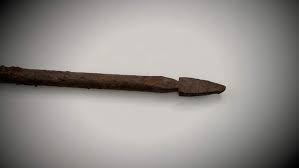 Iron projectile (Lot 26, possible Roman pilum)→
The Roman Sword
1 min
The most publicised Roman claim attached to Oak Island did not survive testing. In late 2015, the researcher J. Hutton Pulitzer announced that a Roman ceremonial sword had been hauled up decades earlier by a scalloper working off the island and kept hidden, and he described it as a smoking gun for a Roman presence in the New World before Columbus. He said his own analysis showed metal consistent with Roman artifacts, and he spoke of an unexcavated Roman shipwreck nearby.
The series brought the sword to Saint Mary's University, where the chemist Dr. Christa Brosseau analysed a shaving from it. The metal was brass with a zinc content above 28 percent and refined copper, a composition that could not have been produced before the middle of the nineteenth century. Researchers subsequently traced the object to a known modern decorative reproduction, with other identical copies in circulation, which an authentic ancient artifact would not have. The sword is a modern souvenir casting. Its main value to the Roman question is as a caution: the one Roman object that was supposed to prove the case turned out to be the easiest to rule out.
The Sword on the Head Stone
1 min
A further sword belongs to the discussion, this one carved rather than forged. At the centre of Nolan’s Cross, the formation of cone-shaped boulders that surveyor Fred Nolan identified on the island in 1981, Nolan found a very large block of sandstone at the point where the arms and post of the cross intersect. He noted it during his early surveys but did not examine it closely until 1991, when he tipped it with a backhoe and judged it had been shaped into a human face, with what appear to be an eye, forehead, nose, mouth, and chin. Alongside those features is an indentation that has been read as a blade, and its short, broad form is sometimes compared to a Roman gladius rather than to a longer medieval sword. Geologists who examined the stone could not settle whether the face was carved or shaped by weathering, and the masons who later inspected it found the surface too eroded to judge. The carving is more often folded into the Templar reading of the cross than the Roman one, and the gladius comparison rests on an indentation in a worn surface that may not be a deliberate carving at all. It is the faintest of the Roman threads, and it carries weight, if any, only beside the coins.
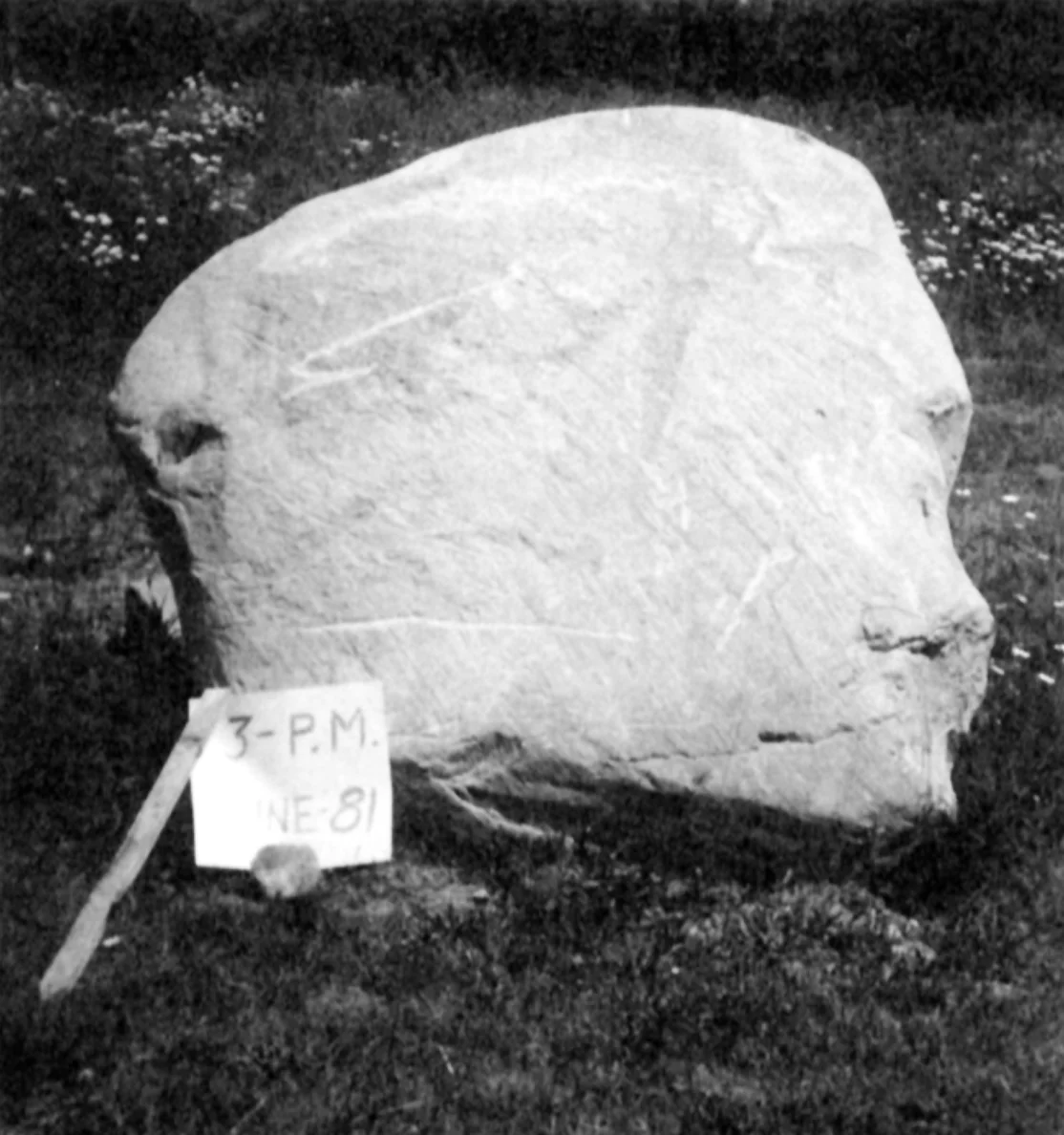 Head Stone (human face/sword)→
What the Romans Imagined Lay West
1 min
The idea that someone from the classical Mediterranean might cross the Atlantic was not foreign to the Romans themselves, though what survives is imagination rather than navigation. The historian Diodorus Siculus, writing in the first century BC, recorded that Phoenician or Carthaginian sailors driven past the Strait of Gibraltar had found a large and fertile island far out in the Atlantic, and that the Carthaginian authorities suppressed knowledge of it. The island is usually taken to be Madeira or one of the Canaries, but the passage shows the ancient world entertained the notion of inhabited land beyond the known ocean.
Plutarch went further. In his essay On the Face in the Moon, written around 100 AD, he described a great mainland encircling the ocean, reached by way of islands lying about five days' sail west of Britain, and tied the account to a Carthaginian expedition sent out once every thirty years. The framing is mythological, built around the banished god Cronus, so it cannot be read as a sailing report. It is, even so, a Roman-era text imagining a continent across the western sea.
The most striking passage belongs to Seneca. In his tragedy Medea, written around 50 AD, the chorus foresees a distant age when, as one translation gives it, "Ocean will unloose the bonds of things" and "Tethys shall disclose new worlds," so that Thule will no longer be the last of lands. Centuries later, Christopher Columbus copied those lines into his Book of Prophecies and marked them as a prediction of his own discovery. The Romans wondered what lay beyond the ocean, and a few of them guessed there was land. None of that is evidence that any Roman reached it.
Genuine Coins, Open Question
1 min
The Roman material on Oak Island divides cleanly. The sword is modern and out of the discussion. The pilum is a single specialist's identification, suggestive but unconfirmed. The coins are the solid core: six genuine Roman-era pieces, authenticated by separate examiners and by laboratory analysis, concentrated on a lot with no history of settlement. That concentration is a real anomaly and deserves to be treated as one.
What the coins cannot do is date their own arrival. Because Roman copper circulated for more than a thousand years and was still changing hands in the age of Columbus, the coins are consistent with an ancient visit, a medieval one carried by Norse or other hands, or a later deposit entirely. The honest position is the one held by the people who examined them: the coins are real, the pattern is unexplained, and the question of when they came to Oak Island, in Tom Nolan's phrase, is the real million-dollar question.
Sources
1 min
Oak Island finds and analysis
- Sandy Campbell, numismatic examination of the Lot 5 coins, Seasons 10 to 13.
- Umberto Moruzzi, numismatic examination of the half Roman coin, Rome.
- Emma Culligan, X-ray fluorescence and CT analysis of the Lot 5 coins, Oak Island research centre.
- Dr. Christa Brosseau and Dr. Xiang Yang, scanning electron microscope analysis of the Lot 26 iron projectile, Saint Mary's University, Halifax.
- Gabriel Vandervort, reclassification of the Lot 26 projectile as a possible Roman pilum.
- Dr. Christa Brosseau, metallurgical testing of the alleged Roman sword, Saint Mary's University, Halifax.
Classical texts
- Diodorus Siculus, Bibliotheca Historica (first century BC), on the Carthaginian Atlantic island.
- Plutarch, De facie quae in orbe lunae apparet (On the Face in the Moon, c. 100 AD).
- Seneca, Medea, lines 375 to 379 (c. 50 AD).
- Christopher Columbus, Book of Prophecies (Libro de las profecías, c. 1501), quoting Seneca.
The Roman sword controversy
- J. Hutton Pulitzer, public statements on the Oak Island sword, 2015 to 2016.
- Contemporary archaeological commentary identifying the sword as a modern reproduction, 2016.