Katya Drayton was seven when she started metal detecting with her father. Today she works Oak Island beside him with a Minelab MANTICORE, one of the most powerful detectors money can buy. Getting started yourself costs a lot less: a few hundred dollars buys the same kind of kit, built for weekends rather than television. The routine on the island has not changed in years. A coil sweeps the ground, a signal sounds, a pinpointer narrows it down and somebody kneels in the dirt with a digger. Before anything goes in the bag, it is photographed where it lies and its position is logged. This guide is for anyone who wants to become a treasure hunter: it walks through each piece of treasure hunting equipment, what it does on the island, what to buy first and what to buy when you are hooked. It ends with the part most beginners skip: where you are allowed to use it.
Katya and Gary Drayton's Metal Detectors, and the One to Buy First
2 min
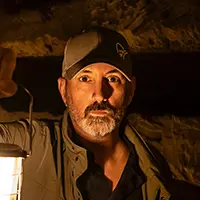
The metal detector used on Oak Island most often is Gary Drayton's Minelab CTX 3030. Drayton, the metal detection expert from Lincolnshire, England, who joined the search in Season 2, has worked the island with it for years. It takes interchangeable search coils, from a 6-inch coil for tight spots to a 17-inch coil for depth, and Drayton has written that the 17-inch coil is what picked up the deep signal of the Templar coin he recovered in the woods above the Money Pit. Its built-in GPS logs the position of every find. For fine gold in soil brought up from the Money Pit area, he spreads the spoil on tarps and scans it with a Minelab SDC 2300, a compact detector built for small pieces of gold in heavily mineralized ground.
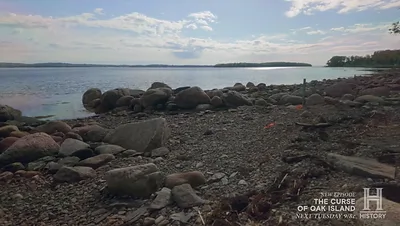
Since Season 12, Drayton has had a second detectorist at his side: his daughter, Katya Drayton. She learned the craft from him as a child, and her strongest ground is the beach. Katya Drayton's metal detector is a Minelab MANTICORE, which Minelab calls the most powerful detector it has ever built, and in Season 13, when the team needed to know whether fine metallic particles were present, she was the one called in to confirm them.
Those three machines are built for professionals and priced that way, and none of them is where a beginner should start.
For a first detector, the Minelab VANQUISH 540 is the one to beat. It comes from the same company as the team's machines, it runs Minelab's Multi-IQ technology, which transmits several frequencies at once, and it sells for around $300. You switch it on and start swinging. If you would rather go American, the Garrett ACE 300 has been the classic starter machine for years: a numeric target ID from 0 to 99, a waterproof coil and a price in the same range.
When the hobby has its hooks in you, the step up is the Minelab EQUINOX 900, at around $1,000. It reads targets on a scale of 119 segments, so it tells one target from another in much finer detail, and it is waterproof to 5 meters, which opens up beaches and shallow water. Gary Drayton himself has written about the EQUINOX line for beach and water hunting on Minelab's blog.
The Pinpointer: Finding It in the Hole
1 min
A detector tells you something is down there. It does not tell you exactly where, and digging a wide crater to find a button is how you lose the button. A pinpointer is a short probe you push into the hole: it beeps faster as it gets closer to the metal. Gary Drayton carried a Minelab PRO-FIND 25 in the early seasons and has written about working with its successor, the Minelab PRO-FIND 35.
The other pinpointer you will see in every field is the bright orange Garrett Pro-Pointer AT, made in Texas, waterproof to 20 feet and hard to lose in the grass. Either one will save you more time than any upgrade to your detector.
Treasure Hunting Tools: The Digger and the Pouch
1 min
A garden trowel bends on the first root. Detectorists use a narrow, serrated digging tool that cuts a neat plug of turf, which you lift, search and put back so the ground looks untouched when you leave. The Lesche digging tool, a 12-inch blade of chrome-moly steel made in the USA, is a favorite among experienced hunters. It comes serrated on the left or the right side; pick the side that matches the hand you dig with.
Finds go in a pouch, and so does the trash. Every pull tab and nail you take out of the ground is one the next person does not have to dig. The Garrett camo digger's pouch has a deep main pocket for junk and a separate zipped pocket for the good stuff, and it costs about the same as a sandwich.
The GPS: Log Every Find
1 min
The CTX 3030 in Gary Drayton's hands records the coordinates of every target he digs, and over the years those points have built up a map of where things turn up on the island. That is the habit that turns a pile of finds into evidence. A coin is interesting. Ten coins along the same line across a field tell you there was once a path there.
Your phone can log a location, but it drains its battery and struggles under trees. The Garmin eTrex SE is a simple handheld GPS that runs for up to 168 hours on two AA batteries, and it does one job well: mark the spot and take you back to it. The serious option is the Garmin GPSMAP 67, which uses multi-band satellite reception for better accuracy in dense woods, the kind of ground that covers most of Oak Island.
The Compass and the Protractor: Checking the Geometry for Yourself
1 min
Some of the island's biggest questions are questions of angles. In 1981 Fred Nolan, a surveyor who owned part of the island, followed his sight lines to six large boulders that form a cross 360 feet wide and 867 feet long. Long before that, searchers found a triangle of beach stones on the south shore whose center line, extended northward, points to true north. You cannot test claims like these with a vague sense of direction. You need bearings.
 The Geometry of Nolan's Cross→
A baseplate compass does two jobs: it takes bearings in the field, and its clear base with printed scales works as a protractor on a paper map or an aerial photo. The Suunto A-10 is the classic starter, made in Finland and priced like a paperback. The step up is the Suunto MC-2, a mirror compass with a sighting notch, so you can line up a distant boulder and read the bearing at the same moment, plus an adjustable declination to correct the gap between magnetic north and true north. To measure angles on a map or a printed aerial photo, add the Weems & Plath square protractor, the 5-inch protractor navigators use on charts: line its grid up with the north lines on the map and read the bearing straight off its edge.
The Laser and the Tape: Measuring the Distances
1 min
When Nolan wanted his boulders measured, he hired William S. Crooker, a land surveyor who had followed the hunt for decades, to survey them in 1992. You do not need a surveyor's total station to check a distance, but you do need something better than pacing it out. The handheld laser measures sold for home renovation are built for walls indoors, and their dot is hard to see in bright daylight. Outdoors, start with the Keson 300-foot open-reel fiberglass tape, marked in feet and meters, the tool surveyors still carry, and a friend to hold the other end.
For longer distances, a hunting rangefinder does the job on its own. The Vortex Ranger 1800 reads distances to reflective targets out to 1,800 yards, far more than you need to measure the arms of a cross of boulders, and it fits in a shirt pocket.
The Binoculars: Read the Ground Before You Walk It
1 min
Experienced hunters spend their first hour on a new site looking, not swinging. A raised line in a field may be an old road. A patch of different vegetation may be an old foundation. A stone that looks out of place often is. Binoculars let you scan a shoreline or a tree line before you commit your legs to it.
The Celestron Nature DX 8x42 is the best pair for the money, light enough to carry all day and focusing down to 6.5 feet. The upgrade is the Vortex Diamondback HD 8x42, which is sharper at the edges, focuses as close as 5 feet and is backed by one of the most generous warranties in the business.
The Drone: The View the Team Paid For
1 min
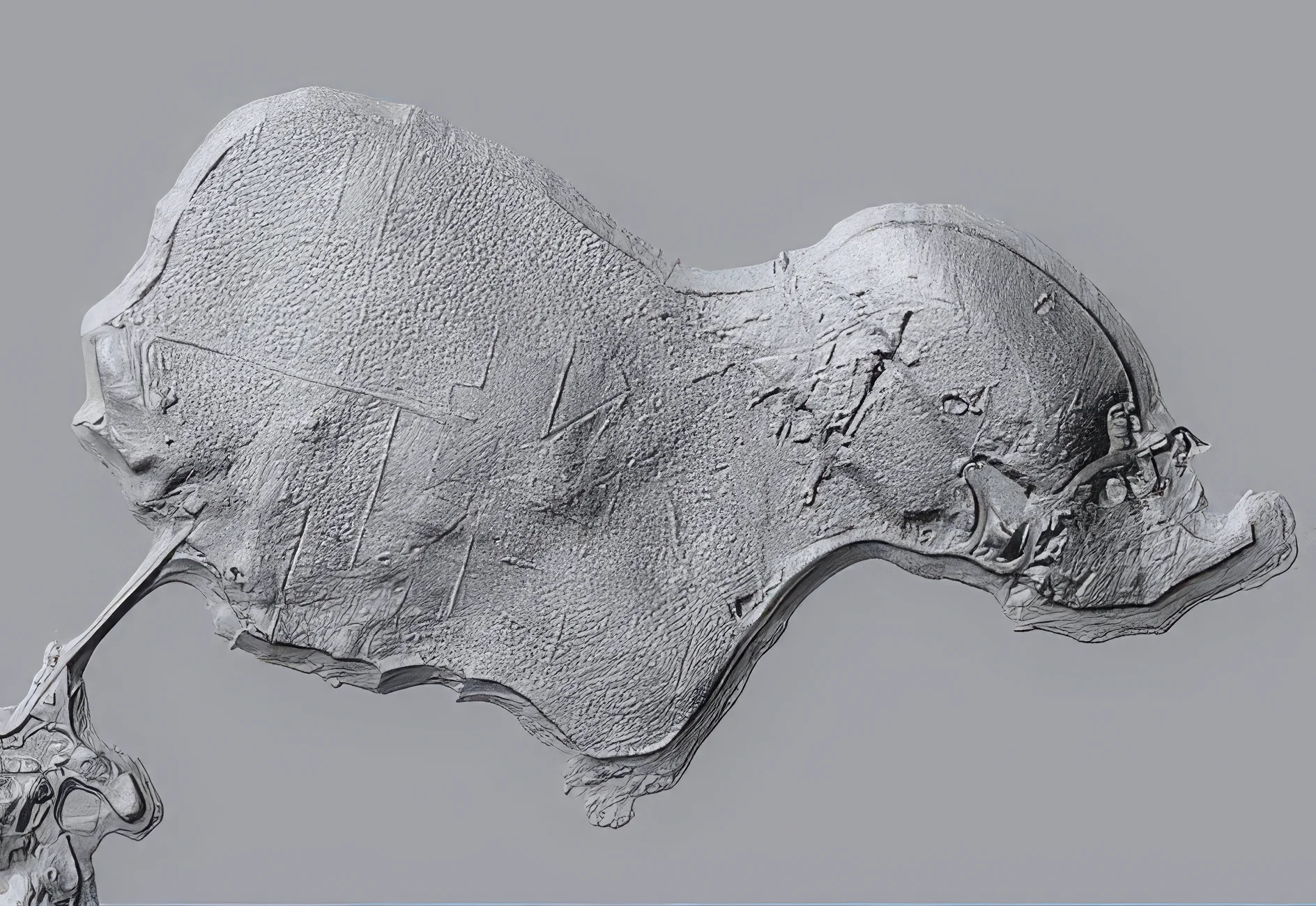
In Season 10, a lidar-equipped drone surveyed the whole island and picked out a giant rectangle on Lot 30. A hobby drone will not see through trees the way lidar does, but even an ordinary camera from 100 feet up shows crop marks, old field boundaries and paths that are invisible from the ground.
 Oak Island Lidar: Laser Reveals The Way→
The DJI Mini 4K weighs under 249 grams, shoots 4K video and costs around $300. The DJI Mini 4 Pro adds obstacle sensing in every direction, which matters when you fly near trees. In the United States, the FCC put new foreign-made drone models on its Covered List in December 2025, which blocks new models from sale, but models approved before that date, these two included, can still be sold and flown.
The rules for flying come with the drone. In the US, every recreational pilot must pass the free TRUST safety test, and a drone of 250 grams or more must be registered with the FAA. Canada and Britain have their own rules. And no drone goes over private land without the owner's permission, Oak Island included.
The Camera and the Loupe: Photograph It Where It Lies
1 min
The single most valuable thing you can record about a find is where it came out of the ground, and the second is what it looked like before you cleaned it. Take a photo in the hole, with your GPS reading and something for scale in the frame. Your phone will do. The upgrade is the OM SYSTEM Tough TG-7, a rugged camera that is waterproof to 15 meters, survives drops and focuses on subjects just 1 centimeter from the lens, close enough to read the date on a small coin.
For a closer look in the field, carry a 10x Hastings triplet loupe, the three-lens hand lens geologists, coin dealers and gemologists use. Hold it in front of your phone's camera and it doubles as a macro lens.
Where You Can Metal Detect, and Why Oak Island Is Off Limits
1 min
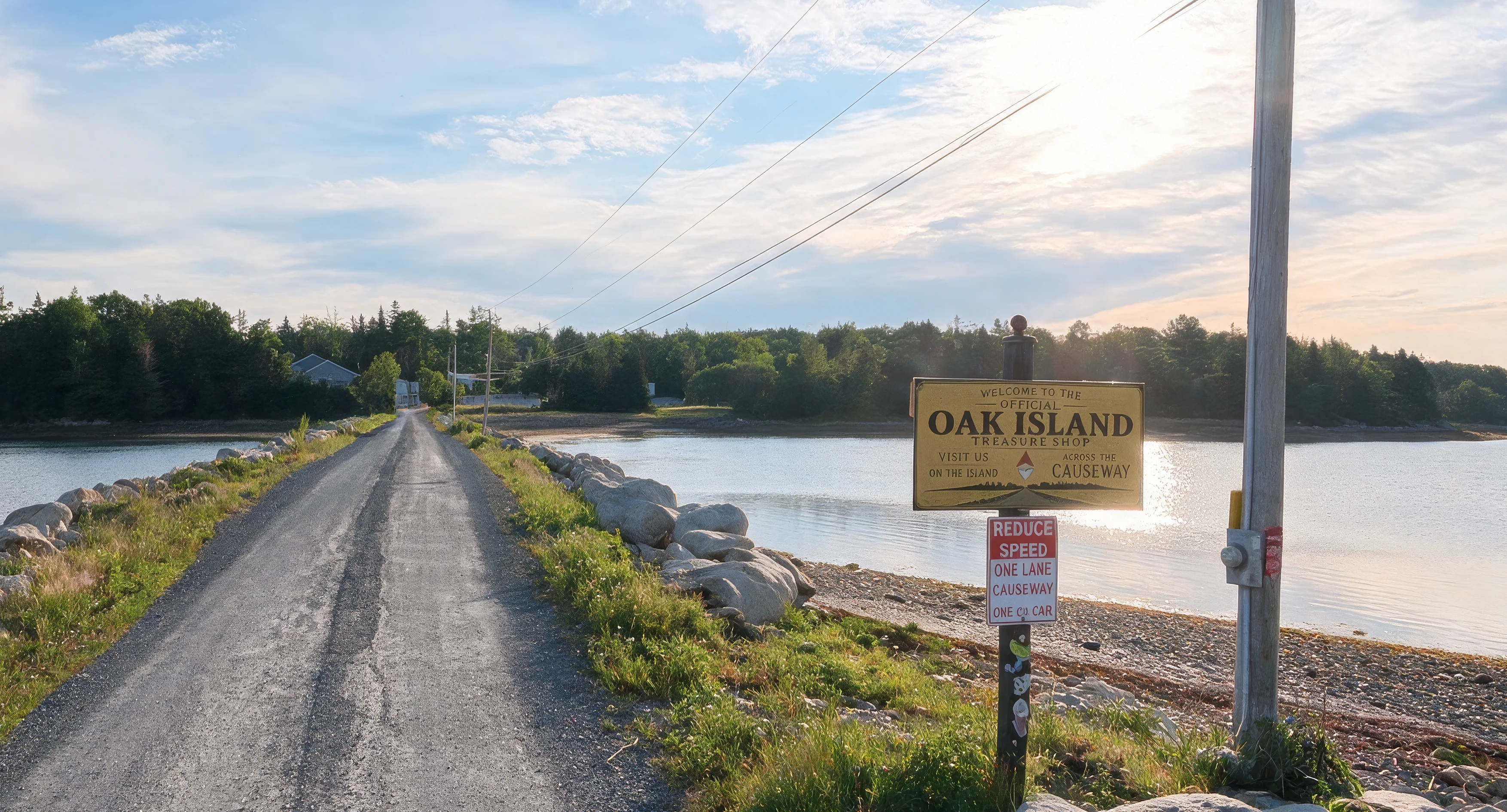
Start with the island itself. Oak Island is private property. Visitors can reach the museum and the shop, and no farther, so there is no detecting on the island for the public. Searching for treasure there is a licensed activity under Nova Scotia's own law, the Oak Island Treasure Act, which requires a license for anyone who wants to search for and recover precious metals or stones on the island.
 Oak Island Has Opened to the Public: How to Visit→
Elsewhere in Nova Scotia, the province allows metal detecting for non-intrusive scanning in some areas with the landowner's permission. It is prohibited at registered archaeological sites and in areas of high archaeological potential, and anyone looking for or collecting objects of historical value needs a Heritage Research Permit. Seeking heritage objects without one breaks the Special Places Protection Act.
In the United States, detecting is banned in national parks, where even having a detector in your car can be an offense, and on all federal land the Archaeological Resources Protection Act protects remains at least 100 years old. State parks, city parks and beaches each have their own rules, so check before you go. In England and Wales you need the landowner's permission everywhere, beaches and footpaths included, and anything that may legally count as treasure must be reported within 14 days.
The rule that keeps you out of trouble anywhere is simple: ask before you dig, record what you find and report anything old. That is also, give or take a license and a film crew, exactly how the team works.
Your Treasure Hunting Kit at a Glance
1 min
| Tool | Starter | Step up |
|---|---|---|
| Metal detector | Minelab VANQUISH 540 or Garrett ACE 300 | Minelab EQUINOX 900 |
| Pinpointer | Garrett Pro-Pointer AT | Minelab PRO-FIND 35 |
| Digger and pouch | Garrett digger's pouch | Lesche digging tool |
| GPS | Garmin eTrex SE | Garmin GPSMAP 67 |
| Compass and protractor | Suunto A-10 | Suunto MC-2 |
| Distance | Keson 300-foot tape | Vortex Ranger 1800 |
| Binoculars | Celestron Nature DX 8x42 | Vortex Diamondback HD 8x42 |
| Drone | DJI Mini 4K | DJI Mini 4 Pro |
| Camera | Your phone and a 10x loupe | OM SYSTEM Tough TG-7 |
Nobody needs all of it on day one. A detector, a pinpointer, a digger and a pouch will put you in the field this weekend. The rest arrives the way it did for the team: one question at a time, each one needing a better tool to answer it.
Sources
1 min
Laws and official guidance
- Nova Scotia Department of Communities, Culture and Heritage, "Metal detecting in Nova Scotia," Special Places program.
- Nova Scotia Museum, "Special Places Protection Act" and "Metal Detecting."
- Nova Scotia Department of Natural Resources, "Treasure Trove Licence," under the Oak Island Treasure Act (2010).
- National Park Service, "Metal Detectors: Don't Dig Here," Fort Smith National Historic Site.
- USDA Forest Service, "Metal Detecting on National Forest System Lands."
- Federal Aviation Administration, "Recreational Flyers and Community-Based Organizations."
- UK Government, "Report treasure."
- David Shepardson, "US bars imports of new models of DJI, all other foreign drones," Reuters, December 23, 2025.
Manufacturers
- Minelab, product specifications for the VANQUISH 540 and EQUINOX 900.
- Garrett Metal Detectors, product specifications for the ACE 300 and Pro-Pointer AT.
- Garmin, product specifications for the eTrex SE and GPSMAP 67.
- Suunto, product specifications for the A-10 and MC-2.
- Vortex Optics, product specifications for the Ranger 1800 and Diamondback HD.
- OM Digital Solutions, product specifications for the OM SYSTEM Tough TG-7.
Articles
- Gary Drayton, "Metal Detecting Adventures on the Infamous Oak Island," Minelab Treasure Talk.
- Gary Drayton, "EQUINOX for Beach and Water Hunting," Minelab Treasure Talk.