Globe Trotters
1 min
Robert Restall was born in England and came to Canada as a young man. He was short and stocky, five foot eight, with a broad forehead, bushy hair, and hands that could fix anything. Before Oak Island entered his life, he had already lived several of them. He was a steelworker. He was a builder. He was a plumber in the pipe-and-drain trade. And for thirty years, he was a carnival daredevil.
Restall rode trick motorcycles on the English stage in the 1920s, touring with circuses across Europe. During one tour, he met a young ballet dancer from Yorkshire named Mildred. She was eighteen. They married, and she became his partner in the act. Together they built the Globe of Death, a round steel cage inside which they rode motorcycles at roughly sixty-five miles per hour, crisscrossing each other's paths at furious speed while the audience watched from outside. Mildred drove horizontally along the curved sides while Bob powered up from the bottom around the top. The act played circuses and carnivals across Europe and North America for decades. It was, by every measure, a life defined by calculated risk.
They eventually settled in Hamilton, Ontario, where Bob took a steady job in the pipe-and-drain business at $150 a week. They had three children: Bobby, Lee, and Rickey. After a lifetime of wandering, Mildred believed they had finally put down roots. She was wrong.
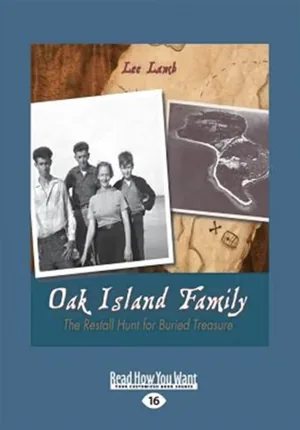 Oak Island Family: The Restall Hunt for Buried Treasure
A Patient Man
1 min
Bob Restall had read about Oak Island as a young man during a trip to England, sometime before the Second World War. The story seized him and never let go. He read everything he could find about the island, about the Money Pit, about the flood tunnels and the generations of men who had failed to defeat them. He never mentioned his interest to the family. For years, Oak Island was a private obsession.
In the mid-1950s, Bob began writing letters to Mel Chappell, the Sydney, Nova Scotia businessman who owned most of Oak Island and held the provincial licence to search for treasure there. Restall asked for a chance to search. Chappell wrote back without committing. Several times, it appeared that Chappell was ready to grant permission, only to give the contract to someone else instead. George Greene got his turn, then the Harman brothers. Bob kept writing. In 1955, the Restall family visited Oak Island, and Bob met Greene, who gave him a firsthand account of the Money Pit mystery. That visit hardened his resolve.
By 1956, according to Bob, he had made up his mind. As he later told reporters, he had believed since boyhood that pirate treasure lay buried on Oak Island, and he had always planned to dig for it himself once he had the means. The means never quite materialized the way he imagined, but by the late 1950s he decided he could wait no longer. In 1959, Chappell finally signed the first of what would become a series of one-year agreements. Robert Restall, age fifty-four, was on his way to Oak Island.
 The Chappell Family and the Vault Beneath Oak Island→
Arrival on Oak Island
1 min
Bob and his eldest son Bobby, then eighteen, arrived on Oak Island on October 10, 1959. They set up camp on a mound of earth thrown up by a previous searcher, near the Money Pit clearing on the eastern plateau of the island. Their home was a 16-by-16-foot cabin made of rough unfinished boards, lined inside with plywood and insulated against the cold. Heat came from a space heater. Cooking was done on a propane-gas stove. There was no electricity, no running water, and no indoor plumbing. The nearest telephone was on the mainland.
The island had not been worked seriously in nearly twenty years. Nine of the old shafts were still more or less open. The place was quiet, overgrown, and isolated. Bob and Bobby explored, mapped, and began to put things in order.
In June 1960, Mildred arrived with nine-year-old Rickey and the family's Belgian sheepdog, Carnie. Their daughter Lee was already married and living in Oakville, Ontario; she did not join them on the island. The family was now complete, or as complete as it would ever be on Oak Island. Bobby had a separate cabin close by. Mildred and Bob shared the main cabin, where the family ate together and gathered in the evenings.
Water was a daily labour. A crater left by a previous searcher's dynamite blast, about fifty feet across and forty-five feet deep, collected rain and snowmelt. The Restalls hauled water from this makeshift well to the cabin in pails, a distance of roughly three hundred feet, then boiled and strained it before use. Groceries came from the mainland shore twice a week. Rickey helped carry them up to the cabin while Carnie trotted beside him.
A Spartan Life
2 min
Mildred Restall called herself "the reluctant treasure hunter." She had been a dancer on the London stage before marrying Bob, and the leap from that world to a plywood cabin on a treeless island in Mahone Bay was considerable. In all her years on Oak Island, she rarely wore a dress. She taught herself French. She rediscovered reading. She gathered wild apples and cooked them in every imaginable way. She planted sweet peas beside the cabin, in soil that struggled to support them, next to the roar of generators and pumps.
The isolation was, by her own account, the hardest part. There were no neighbours and no other women on the island. In a 1965 account told to Weekend Magazine journalist Cyril Robinson, she described the loneliness plainly: all she heard was the male point of view. She would have given anything to walk down a familiar street, see a familiar face, or simply hear someone say her name. Halifax, Chester, and Bridgewater were not far across the water, but it did not seem right for her to go on pleasure trips while Bob was working so hard and spending every dollar on the search.
Rickey, for his part, adapted more easily. He kept up his schooling through correspondence courses from the Nova Scotia government. He became an avid bird watcher, and once fenced off an area where a bird had nested so that no one could disturb the eggs. His one constant companion was Carnie, who never left his side; if Rickey went to the mainland with the men, the dog would curl up on the beach and wait, regardless of weather, until the boy returned. The family fished, hunted, and gathered food from the island. They played chess in the evenings to pass the long winter nights. In the summers, tourists from all over the world arrived by boat to see the famous little island, and the quiet rhythm of the family's life would briefly fill with strangers.
There was also the worry about storms. One Christmas, Bob and Mildred went to Bridgewater to buy presents for the boys. Bobby was to pick them up later that night in their sixteen-foot motorboat. The storm came without warning. The bay, which could be like glass one moment, turned violent within minutes. Bobby had already left the island. His engine quit in heavy seas, and he spent hours fighting the breakers with an oar, gradually working the boat into a sheltered cove. The family was overjoyed to find him safe, but they were also acutely aware that Rickey had been alone on the island during the ordeal.
About two years before the end, the cabins finally got electricity. It was a small mercy. There was still no plumbing, no refrigeration (the 127-foot-deep Hedden shaft served as the family larder, keeping groceries cool), and no television. As Mildred put it in a 1964 interview with the Star Weekly: sometimes she was sick to death of Oak Island, but the mystery of the place continued to hold the family spellbound.
Works at Smith's Cove
3 min
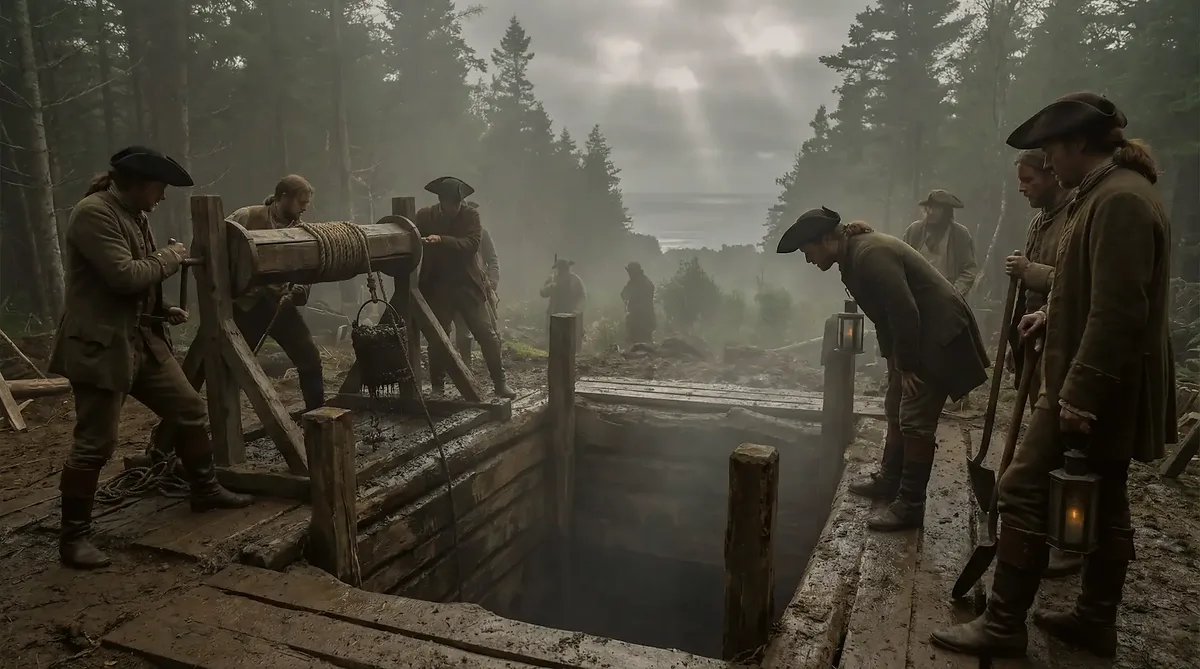
Bob and Bobby initially concentrated their efforts on the Hedden shaft, the most imposing of the existing openings, sunk in 1936 by Gilbert Hedden, a New Jersey steel manufacturer, to a depth of 125 feet. A small extension, six feet by six feet, had been sunk another 43 feet below that. Restall built a forty-foot bridge over the shaft to carry a 1,000-gallon-per-minute pump he had purchased from Professor Edwin Hamilton, who had worked Oak Island in the 1930s and 1940s. He also installed a small mine hoist. Progress in the shaft was slow and not very rewarding.
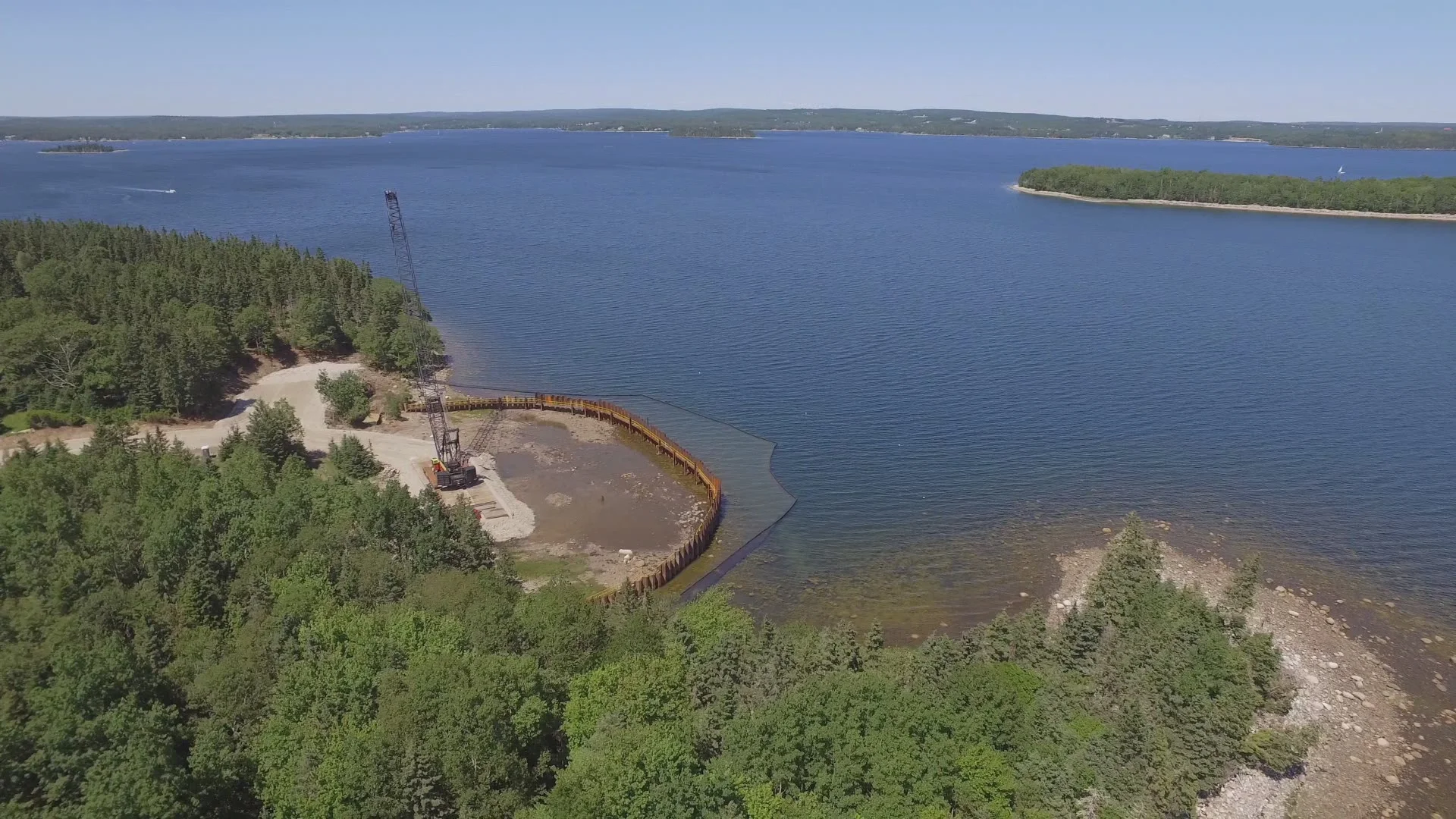
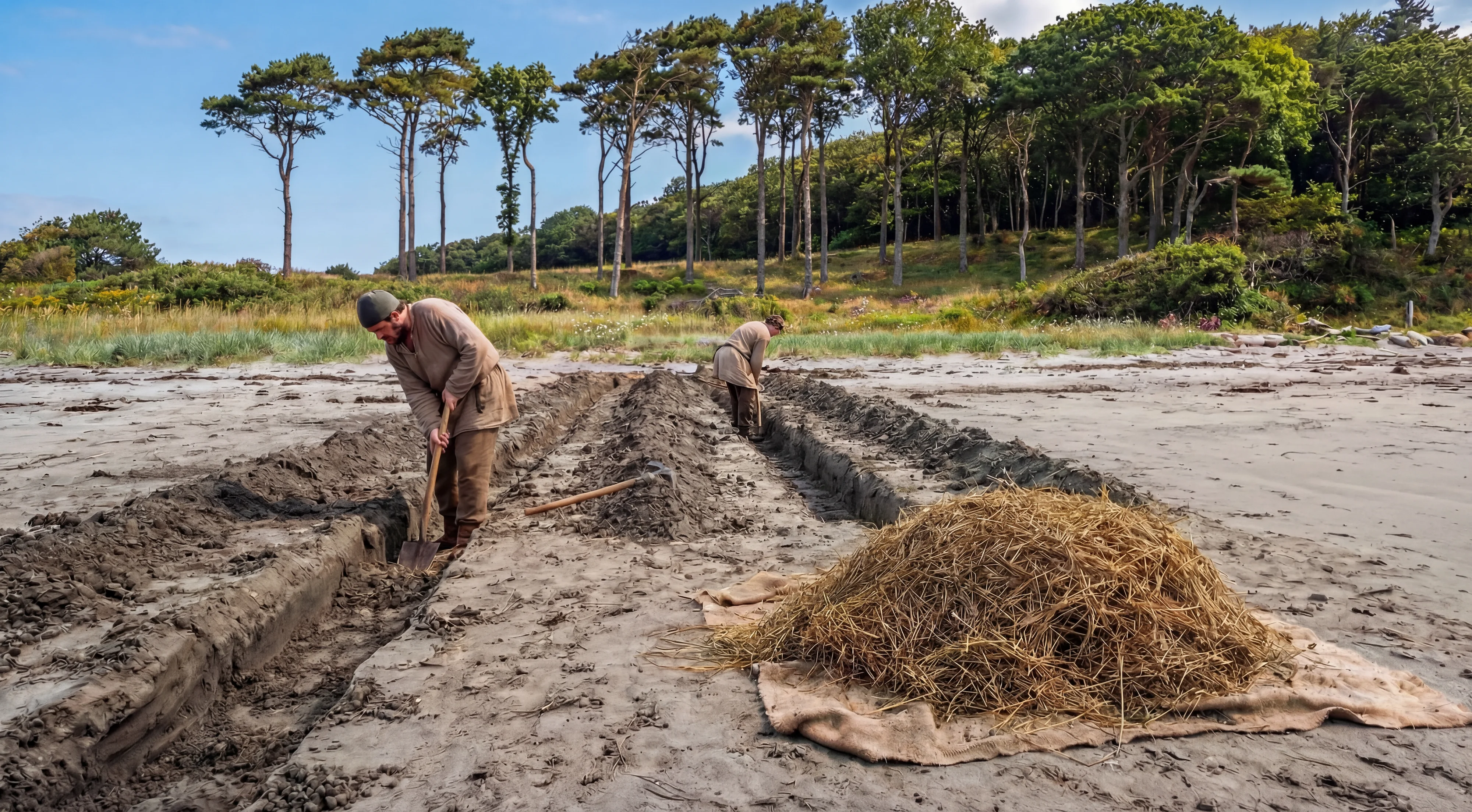
Restall understood early that the central problem of Oak Island was water, not depth. Reaching the treasure, if there was a treasure, required cutting off the flood tunnels that connected the Money Pit area to the sea. He shifted his focus to Smith's Cove, the crescent-shaped beach on the island's eastern shore where the original cofferdam and box drains had been discovered in the nineteenth century.
 Smith's Cove→
 Oak Island Flood Tunnels and Box Drains: The Water Trap→
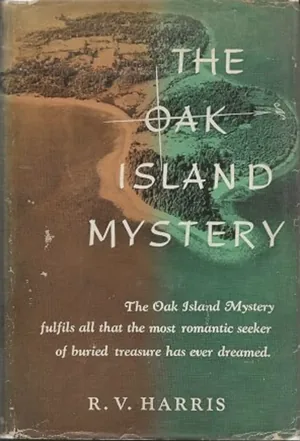
The work at the beach was painstaking. In a letter to R.V. Harris dated May 1, 1961, Restall reported that he and Bobby had drilled sixty-five holes into the Smith's Cove beach, some reaching down to the stone paving, others penetrating into the reservoir beneath. He described finding the remains of three cofferdams, and inside the innermost one, the fanwise drains that previous searchers had reported. The paved area, he wrote, measured 243 feet from one side of the cofferdam to the other at the high water mark, and 168 feet from inside the cofferdam to the back of the excavated area. The entire surface was covered with eel grass and coconut fibre from the high tide line almost to the cofferdam, with local wood branches (oak, elder, birch, spruce, fir) and eel grass covering the rear portion. The vegetable fibre covering varied from eight to twenty-four inches thick; one section contained hundreds of acorns, still in good condition though somewhat shrunken.
 The Oak Island Mystery
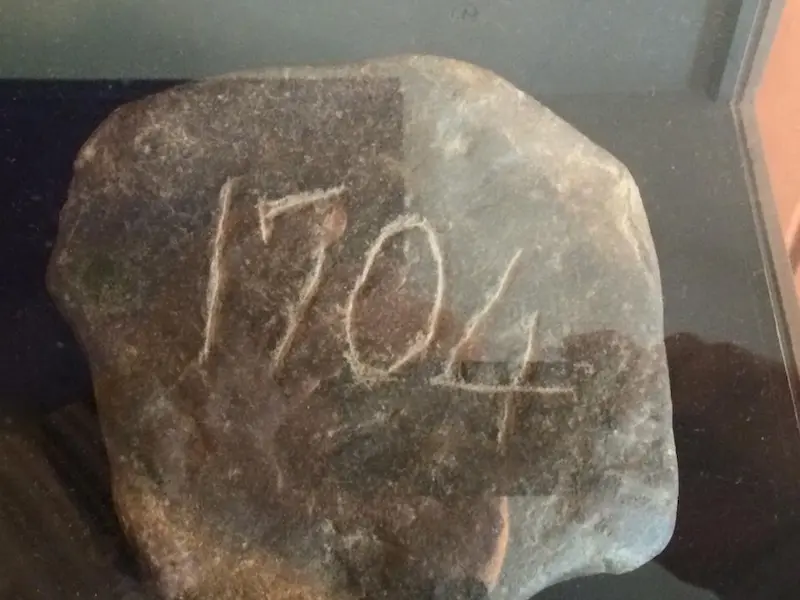
Among Restall's most significant finds was a stone, approximately five by six inches, buried in the paving on the line between the Cave-in Shaft and the Money Pit, covered with decayed eel grass and coconut fibre. When the grime was scoured away, the date 1704 was visible, carved into the surface. Restall wrote to Harris that the stone came from an absolutely undisturbed part of the original works, and that it confirmed what Harris had long argued: the work on Oak Island was done between 1700 and 1750. He also found a pierced stone buried deep below the surface, surrounded by a circle or barrier of other stones.
 1704 stone→
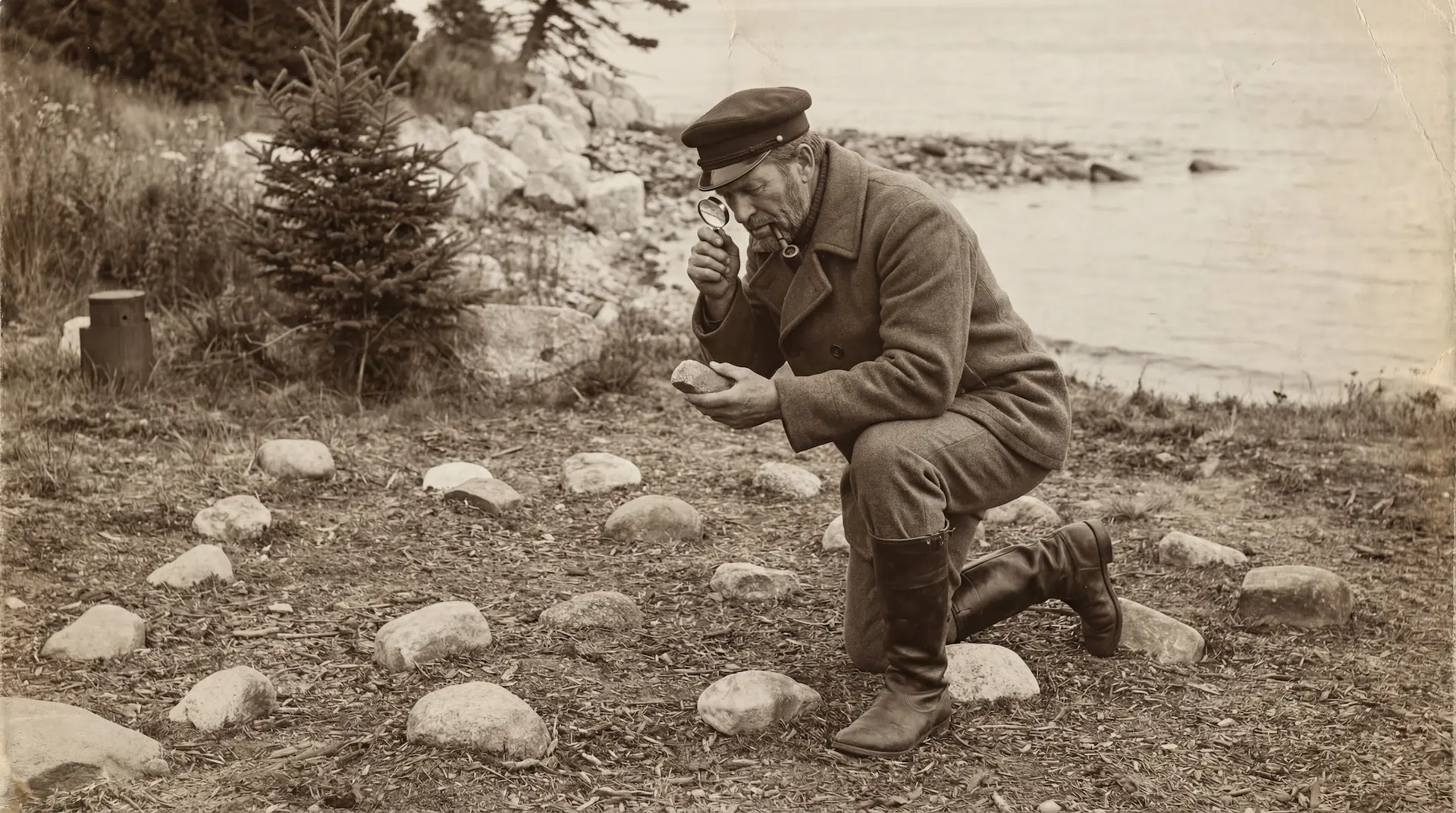
In a formal statement dated June 20, 1961, Restall recorded additional discoveries: the stone triangle on the south side of the island, which he interpreted as a map of the underground workings. The base of the triangle, he believed, represented the cofferdam, and the medial line represented the water tunnel to the place where the treasure was buried. He measured the distance from the pierced rock to the Cave-in Pit at seven rods, and from there to the Money Pit (or the place where the original oak tree stood) at eighteen rods further.
It should be noted that the 1704 stone's authenticity was later questioned. Professor Edwin Hamilton, who had worked Oak Island during the summers of 1938 to 1943, told journalist Jack Sivley for a 1967 True Magazine article that one day his men had produced the stone, freshly cut, as a joke. When Hamilton laughed it off, they buried it. Sivley reported that the stone lay undiscovered until Restall found it. Whether Hamilton's account was accurate, or was itself a piece of mischief, has not been settled by any subsequent investigation.
 Stone Triangle, the Oak Island Sextant→
The Privateer Theory
2 min
Robert Restall developed his own theory about Oak Island, and it differed from the common accounts in several respects. He dismissed the idea that Captain Kidd had buried treasure on the island; Kidd, he pointed out, was not even a pirate, but a privateer turned scapegoat, and he was hanged in London on May 23, 1701. Restall believed the treasure had been buried by English privateers, three years after Kidd's execution, in 1704. He argued that the island was not a one-time burial site but a guarded depot, used for roughly twenty years by a consortium of privateers who pooled their loot, stored it in an elaborately engineered underground vault, and returned periodically to add to the hoard. The system of tunnels and pits, flooded by seawater, was the mechanism by which they protected it.
 Captain Kidd and the Hidden Maps→
In his view, the treasure consisted of approximately $30 million in gold bars, much of it taken from the Spanish plate ships in the Caribbean. He rejected the higher estimates (some as high as $200 million) that other searchers had entertained. He believed the privateers had employed slave labour to build the Money Pit and its connecting tunnels, and that the engineering of the flood system was consistent with similar works used for safekeeping of treasure in Panama and the West Indies during the seventeenth and eighteenth centuries.
Restall also believed that the stone triangle, the drilled rocks, and the original oak tree at the Money Pit site formed a deliberate survey system, laid out by the builders as a map. In his letter to Harris, he corrected errors he had found in earlier survey records: the distance from the base of the triangle to the oak tree was eighteen rods, not fourteen as previously reported. The drilled rock near the Money Pit was not north of the triangle as shown in Hedden's drawing; someone had made an error. These measurements mattered to Restall because they were, in his view, the key to locating the main flood tunnel and, ultimately, the treasure itself.
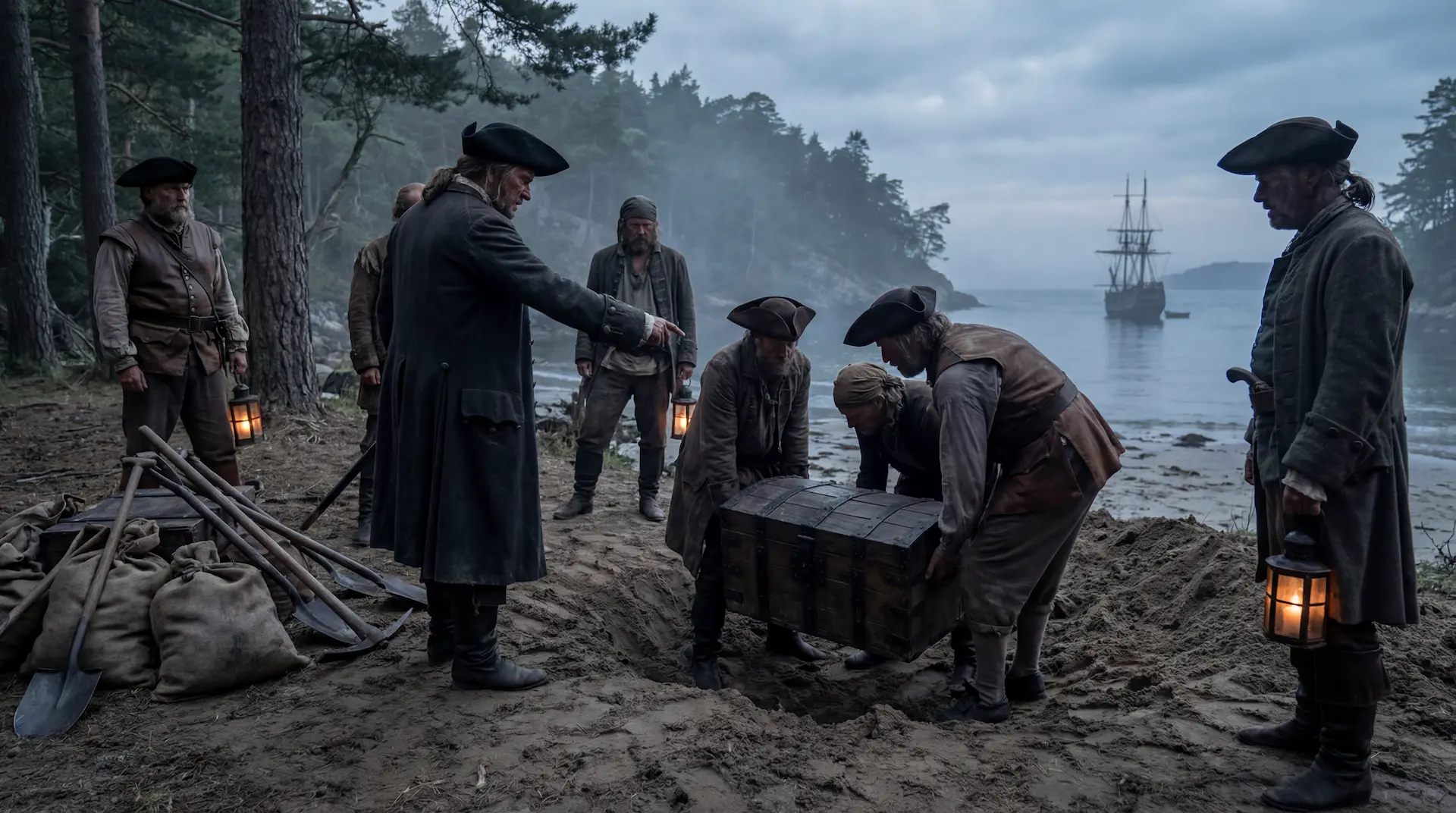 Pirates & Privateers on Oak Island→Oak Island Flood Tunnels and Box Drains: The Water Trap→
Financial Pressure
2 min
Restall was not wealthy, and Chappell was not generous. The contract between them divided any treasure found into one hundred shares: thirty-five to Chappell, fifteen to Restall, and fifty for Restall to sell in order to raise capital. Perhaps because Restall lacked heavy financial backing, Chappell refused the sort of long-term contract common in exploration. Instead, he renewed the agreement one year at a time, sometimes for only a few months, and always grudgingly, hinting that he might not renew again. The effect was to make fundraising nearly impossible; no serious investor would commit money to an operation that might lose its lease before a discovery could be made.
Restall sold the fifty shares when and where he could, typically for about $1,000 each. By 1964, four years into the search, he had invested roughly $70,000, a figure that included his own life savings, contributions from friends, and the proceeds from share sales. Among his roughly twenty backers were Karl Graeser, a Long Island businessman who owned a dock construction and marine crane service, and Floyd G. Matthews of Moncton, New Brunswick. David Tobias, a Montreal businessman, also became a Restall investor in 1962.
Bob lived frugally. There is no evidence he took more than living expenses from the funds raised. He and his family lived like pioneers on the island, and every dollar went into equipment, fuel, and the ceaseless work of pumping, drilling, and digging.
By the summer of 1965, Restall had persuaded Chappell to broaden the share ratio so that he could raise more money. That month, the last block of new shares went to Robert Dunfield, a petroleum geologist from Canoga Park, California, who paid $5,000. Dunfield was a heavy-equipment man by temperament. Though he did not say so bluntly at first, he believed Restall had wasted six years with his careful, small-tool approach and that a bulldozer would get to the heart of the matter. For his $5,000, Dunfield demanded and got control of the operation. Restall, who had been working the island for six years, said little. Perhaps there was not much to say to the suggestion that the job could be finished in two months.
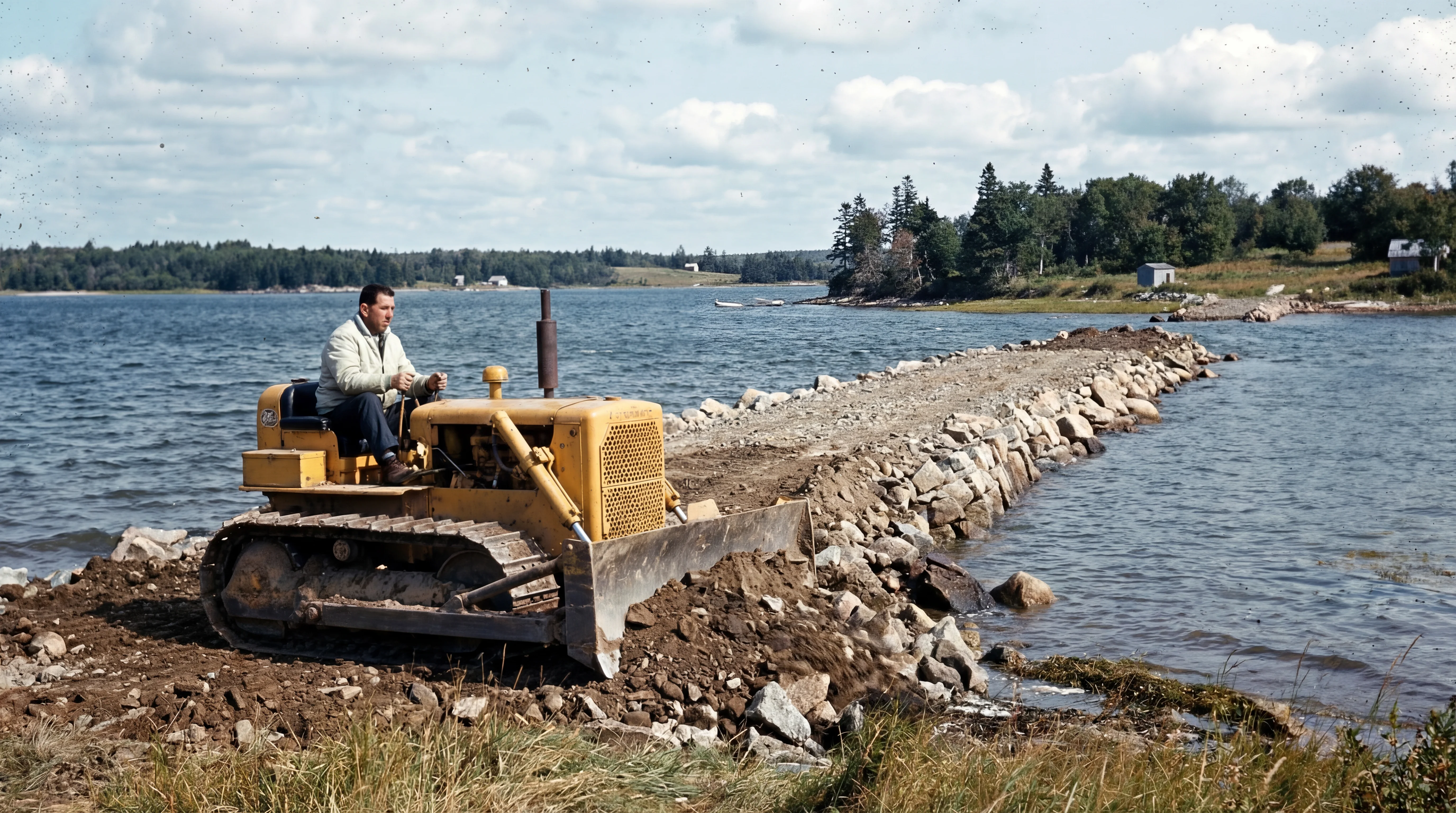 Robert Dunfield and the Destruction of Oak Island→
August 17, 1965
3 min
By August 1965, Restall was using a borrowed diamond drill and felt he was near success. He had told backers the previous Sunday that he was within twenty-five feet of the treasure. Peter Beamish, a teacher at Phillips Academy in Andover, Massachusetts, who was visiting the island with a group of students, had spoken with Bob the night before the tragedy. Restall described how he had found the key to the network of tunnels between Smith's Cove and the Money Pit. Beamish later told the press that Restall had been excited, certain he had it this time.
August 17 was a Tuesday. The air was hot and heavy and moist. Fog drifted in over the half-square-mile island. Smoke from brush being burned along the shore lay hard against the water, pressed flat by the heavy air. There was a surprising number of people on the island that day. Dunfield was there. Karl Graeser had arrived from Long Island the previous Sunday. A physics class from Andover, Massachusetts, led by a young instructor, was on a field trip. There were tourists, and there were labourers hired from the shore.
The shaft where the disaster occurred was not at the Money Pit. It was near Smith's Cove, at a point where the land began to rise toward the clearing. Restall had dug it in mid-July, in an effort to intercept the Smith's Cove flood tunnel. The shaft was rectangular, ten feet by thirty feet, twenty-seven feet deep, with three or four feet of black, stinking water at the bottom. A gasoline-powered pump ran continuously at the top, drawing water out.
At two o'clock that afternoon, Bob came up from the shaft to the cabin. He told Mildred he was going to Halifax that day. He would leave at 3:30, so he needed a few minutes before three to wash and change. It was the last time she saw him alive.
What happened next is pieced together from witness accounts, and some details remain uncertain. At some point after returning to the shaft, Bob leaned over the edge to check the water level, or perhaps began to descend the ladder. Without a sound, he toppled in. Bobby, who was nearby carrying brush, saw his father fall. He dropped the bushes and raced to the shaft. He started down the ladder and within seconds collapsed into the water beside his father. Karl Graeser arrived next, drawn by Bobby's earlier shout. He went unhesitatingly down the ladder and also lost consciousness. Sixteen-year-old Cyril Hiltz of Martin's Point, a loyal member of the Restall crew, followed Karl into the shaft. He too fell. Andrew DeMont, seventeen, of Gold River, a friend of the Restalls who had been working with them, scrambled down after the others. Leonard Kaizer, twenty-one, of Western Shore, was the last man to attempt a rescue. Two other men who had started down the cribbing retreated to the top when they began to choke, and huddled there, peering fearfully at the black water below.
Mildred learned what had happened when she walked toward the shaft about ten minutes before three o'clock. One of the men who had been working with Bob in the shaft was soaking wet and shaking. She asked him what was wrong. He told her straight. Bob and Bobby were gone. Not then, not the next day, not ever. That was it.
The Rescue
4 min
Among the tourists approaching the island by boat at that moment was Edward J. White Jr., a lieutenant in the Buffalo Fire Department, on vacation from Clarence, New York, with his wife and three sons. White's family had been camping their way through the Maritime provinces since late July. The visit to Oak Island was a last-minute detour; White had read about Restall in the January 1965 issue of Reader's Digest and had steered the family toward Mahone Bay without telling them why.
Their boat operator, William Sawlor of Western Shore, was bringing them across when another boat intercepted them. The man at the helm shouted that there had been an accident or cave-in on the island, and that five men were trapped in a pit. White told Sawlor and Floyd Matthews, who was aboard, that he was a trained firefighter. They sped to the island.
White jumped from the boat and ran to the shaft, where twenty-five to thirty people stood around the open hole. A man who appeared to be in charge told him five men were in the pit, four of them under water, and a fifth was unconscious, wedged against the side with water up to his lower lip. White looked down. All he could see was black water and wooden shoring. A loud, rasping noise came from one corner: DeMont, his head wedged under the horizontal perimeter shoring, unconscious but still breathing.
White asked for a ladder. There was none. He asked for a mask or any breathing device. None. He asked for a rope. This they had. He walked ten steps away to make a life hitch around himself without interference. As he was tying the knot, his wife came and stood in front of him. Their eyes met. She knew what he was about to do. She grabbed the two younger boys and fled behind a tool shed. White finished the hitch, put the rope end into the hands of his eldest son, sixteen-year-old Edward, and told him not to pull unless he signalled.
White climbed down the shoring into the pit, holding his breath. The air was foul. His neck, armpits, and legs stung from the gas. He estimated he descended about twenty-five feet to the water. There in a corner, his head under a log, was DeMont. Black water was running into his mouth; he would spit it out and make a terrible rasping noise. White stepped into the water, lifted DeMont upright, and the semiconscious teenager punched him. White, who had cracked a rib at Bay of Fundy Park days earlier, held on. DeMont had been weakened by the gas and did little damage. The scuffle caused the men above to think White was in danger and they began to haul him up. He shouted for them to stop.
Looking up, White could see the colour of the gas in the pit against the sky: greenish yellow. He made up his mind to hold his breath. He tied a clove hitch around DeMont's chest, put on two good binder knots, and signalled for the men above to haul the boy out. Once DeMont was clear, White reached into the water as far as he could, trying to find one of the four men submerged below. He felt nothing. He put his leg in up to the hip and moved it around. Still nothing. He saw what he thought was the top of a man's head and grabbed at it, but it was only bubbles of gas breaking the surface. He had to breathe. The first breath nearly choked him. His scalp and arms tingled. He climbed out.
The whole episode, from descent to return, lasted roughly ten minutes.
On the surface, White and others removed DeMont's wet clothing, covered him with blankets, and rubbed his arms and legs to restore circulation. Rich Barber of Exeter, New Hampshire, a teacher with the student group, and Peter Beamish administered artificial respiration. DeMont opened his eyes, then closed them again. His breathing slowed and stopped. His fingertips and earlobes were turning blue. White straddled him, arched his back, and pushed down on his rib cage. DeMont belched foul air. After three or four repetitions, he began to breathe more easily.
The Chester Fire Department arrived. None of the young volunteer firemen were willing to be lowered into the gas-filled shaft. They proposed using a treble hook, a three-pronged gaff, to pull the bodies up. Jim Kaizer, a short, stocky, powerfully built man of Mi'kmaq descent who had worked alongside the Restalls for months, had arrived from the mainland. According to his son Faron, who was ten years old at the time and later recounted the story to author Randall Sullivan, Kaizer refused to let them use the gaff. He put on an old World War II gas mask, soaked rags in water and wrapped them around it, tied a rope around his thighs and waist, and had the firemen lower him into the shaft. He went down four times, bringing up the bodies of Robert Restall, Bobby Restall, Karl Graeser, and Cyril Hiltz one at a time.
After that, Faron said, his father was not the same.
Tragedy
1 min
The coroner ruled the cause of death as drowning. All four men had fallen unconscious into the water at the bottom of the shaft and drowned before they could be reached.
The nature of the gas that rendered them unconscious was never conclusively identified. Autopsies found no trace of carbon monoxide poisoning. The immediate assumption at the scene was "swamp gas," meaning methane, but methane is both odourless and colourless. Every witness at the scene described a powerful stench. White, looking up from below, saw the gas as greenish and heavy, rolling like fog. From above it appeared brownish. The medical examiner thought it smelled awful but detected no clear whiff of rotten eggs. Others at the scene compared it to rotten eggs or auto exhaust. Leonard Kaizer's grandmother, according to his grandson Tim, told the family that when Leonard came home that day, she hung his overalls out back, but the smell persisted for a week. His father never wore them again.
Dr. J.P. Nowlan, the deputy minister of mines for Nova Scotia, said he believed carbon monoxide from the gasoline pump engine was the more likely cause. The weather that day, hot and humid with little wind, would have allowed exhaust fumes to settle into the shaft rather than dissipate. Others pointed to hydrogen sulphide, which produces the rotten-egg smell and can be generated by decaying organic matter in waterlogged soil. Randall Sullivan, writing decades later, suggested carbon dioxide collecting in an enclosed space, which can also produce a sulphurous odour at high concentrations.
Crown Prosecutor Gary Bardon of Bridgewater examined the preliminary police report and concluded that an inquest was unlikely to be necessary. There was not much question, he said, that it was an accident. The deputy minister of mines added that his department could not order the pit closed, as it was not classified as a mine.
Aftermath
3 min
On the evening of the tragedy, as fog settled over the island, fourteen-year-old Ricky Restall wandered aimlessly around the pit where his father and brother had died. A reporter for the Halifax Mail Star found him there. Ricky told him they had been close, very close, to finding the treasure. Mildred was under heavy sedation in the cabin. The Reverend M.J. Finlay, the Anglican minister at Western Shore, attended to her. He told the press he did not think she had fully realized what had happened, even before the sedation took hold.
The next day, Mildred spoke to a UPI reporter on the island. Her words carried the weight of six years of suppressed doubt. She said she had never believed in the treasure, not once, not from the moment she stepped on the island in October 1959. But it was Bob's dream. He was always so sure, so absolutely positive there was something there. So she went along.
Funeral services for Robert Restall, Bobby Restall, and Cyril Hiltz were held at Martin's Point. The two Restalls were natives of Hamilton, Ontario; Hiltz was from the local community. The body of Karl Graeser, thirty-eight, of Massapequa, Long Island, was returned to the United States for burial. Bob and Bobby were interred in Western Shore Cemetery, where Mildred herself would eventually be laid to rest. Cyril Hiltz was buried nearby. Though just sixteen, Hiltz had been supporting himself by his own labour and looking after his pregnant girlfriend. Before working for the Restalls, he had been a scallop dragger out of Lunenburg, lucrative but dangerous work that he had given up because, as he confided to his girlfriend, he was afraid of drowning at sea.
Chappell and Dunfield moved quickly. According to Mildred's later account and the recollections of her surviving son Rick, Chappell urged her to come to Halifax to sign a legal transfer of the search rights to Dunfield before Bob and Bobby were even buried. Dunfield promised to pay the rent on a mainland house for the rest of Mildred's life. He kept that promise for a few months, Rick recalled bitterly, then simply stopped paying. Worse, every chart, map, and document the Restalls had collected before and during their six years on Oak Island disappeared into Dunfield's and Chappell's possession. The family's photo albums were taken as well. Mildred, according to her surviving children, never got over the loss of those records.
In a telephone interview recorded on May 14, 1975, Mildred said she did not go on the island anymore because she found it depressing. She had closed the door when she left in August 1965 and had not reopened it. She was furious about a tourism sign on the island that read "Restall tragedy pit," calling it cheap, shoddy, and disgusting. The government, she said, was trying to make money from her misfortune, and they had never even consulted her. The island, she added, was no longer beautiful the way it had been when the family lived there.
In March 1978, Mildred wrote to author D'Arcy O'Connor to thank him for a copy of his book about Oak Island. She found it concise and to the point, she said, unlike the Harris book with its confusing technical details. In a postscript that revealed something of the woman behind the tragedy, she noted: "I had never thought of myself as being 'frail.' Frail?" O'Connor, mortified, wrote back to explain he had confused the word with "petite." He added that he had at least got the "attractive" and "Yorkshire accent" parts right.
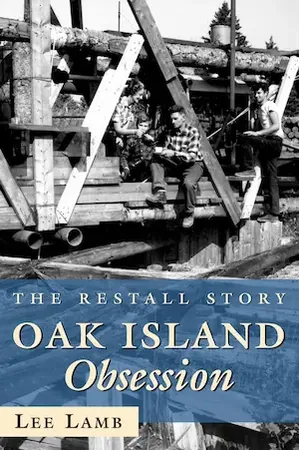
Lee Lamb, the Restalls' daughter, wrote two books about the family's experience: Oak Island Obsession (2006) and Oak Island Family (2012). In an interview with Randall Sullivan in 2003, shortly after Mildred's death, she said simply: "I say Oak Island killed my parents."
The Restall Legacy
2 min
The Restall expedition was, in financial and material terms, the most modest of all major Oak Island operations. Where previous searchers had brought capital from wealthy syndicates and industrial equipment from the mainland, the Restalls brought themselves. Bob worked largely by hand, assisted by Bobby and a small number of hired helpers, using tools and methods that would have been familiar to nineteenth-century miners. His total investment of roughly $70,000, substantial for a working-class family, was a fraction of what earlier and later operations spent.
What Restall lacked in resources he compensated for with patience, careful observation, and a systematic approach to the island's physical evidence. His detailed mapping of the Smith's Cove beach works, his drilling of sixty-five test holes to chart the underground drainage system, and his measurements correcting errors in earlier surveys all represented genuine contributions to the body of knowledge about Oak Island's engineering. His letters to R.V. Harris reveal a man of considerable intellectual curiosity, working through the evidence methodically and arriving at conclusions (the privateer consortium theory, the triangle as a survey map, the role of the 1704 stone) that, whether ultimately correct or not, were grounded in fieldwork rather than speculation.
The tragedy of August 17, 1965, brought the total death count on Oak Island to six, all by drowning, all in shafts. It remains the single worst disaster in the island's recorded history. Robert Dunfield, who assumed control of the Restall contract, would bring a seventy-ton crane and two bulldozers to Oak Island within weeks, obliterating much of the surface evidence that Restall had spent six years documenting. The stone triangle was buried under tons of dozed earth. The cofferdams and beach works at Smith's Cove were covered over. Much of what Restall had mapped and measured was destroyed.
The Restalls gave six years of their lives to Oak Island. Four members of the expedition, Bob and Bobby among them, gave their lives outright. Mildred and Ricky survived with their grief and without the records that might have preserved the full scope of what Bob had learned. Whether the island holds a treasure or does not, and whether the Restalls were close to finding it or were not, the fact of their sacrifice is beyond dispute. They lived with less than any other Oak Island expedition and endured more. The island gave them nothing in return.
Sources
2 min
Letters, statements and interviews
- Robert Restall to R. V. Harris, letter, 1 May 1961 (four pages), on the Smith's Cove drilling, the cofferdams, the paved area, the 1704 stone and the stone triangle. R. V. Harris papers, Nova Scotia Archives.
- Robert Restall, signed statement, 20 June 1961, on the cofferdams, the 1704 stone, the pierced stone and the stone triangle.
- Mildred Restall, telephone interview, 14 May 1975.
- Mildred Restall to D'Arcy O'Connor, letter, 20 March 1978, and D'Arcy O'Connor to Mildred Restall, reply, 28 March 1978.
- Edward J. White Jr., "I Couldn't Go Away and Let Him Die," first-person account of the rescue, written for D'Arcy O'Connor, 29 April 1987.
Newspapers and magazines
- Robinson, Cyril (text), and Louis Jaques (photographs). "Treasure Hunt That's No Picnic." Weekend Magazine, vol. 11, no. 40, 1961.
- Fitzner, Stanley. "Does Island Hide a Fortune." October 1961.
- Barnard, Murray (text), and John Max (photographs). "Four Years on Treasure Island." Star Weekly (Toronto), 4 January 1964.
- Staff report. "20 Feet From Pirates' Loot, Says Ex-Stuntman." Halifax Mail-Star, 28 December 1964.
- MacDonald, David. "Oak Island's Mysterious Money Pit." Reader's Digest, January 1965, condensed from The Rotarian.
- Watkins, Lyndon. "Treasure Hunt Takes 4 Lives." Chronicle-Herald (Halifax), 18 August 1965.
- Watkins, Lyndon. "Mine Shaft at Oak Island Is Scene of Tragedy, Heroism." Halifax Mail-Star, 18 August 1965.
- Staff report. "Had Enough" and "Widow Never Believed." Chronicle-Herald and Halifax Mail-Star, 19 August 1965.
- Staff report. "Danes Want Try at Treasure With Secret Equipment." Halifax Mail-Star, 20 August 1965.
- Unsigned. "Death at the Money Pit." Time, 27 August 1965.
- Restall, Mildred, as told to Cyril Robinson. "Death on Treasure Island." Weekend Magazine, 6 November 1965.
- Sivley, Jack. "Tragedy Stalks a Tantalizing Treasure." True, January 1967.
Books
- Lamb, Lee. Oak Island Obsession: The Restall Story. Toronto: Dundurn Group, 2006.
- Lamb, Lee. Oak Island Family: The Restall Hunt for Buried Treasure. Toronto: Dundurn, 2012.
- O'Connor, D'Arcy. Secret Treasure of Oak Island. New York: Coward, McCann & Geoghegan, 1978.
- Sullivan, Randall. The Curse of Oak Island: The Story of the World's Longest Treasure Hunt. New York: Atlantic Monthly Press, 2018. Jim Kaizer's recovery of the bodies as told by his son Faron, the Kaizer family's recollections, Cyril Hiltz's life, the loss of the Restall records, and Lee Lamb's 2003 interview.