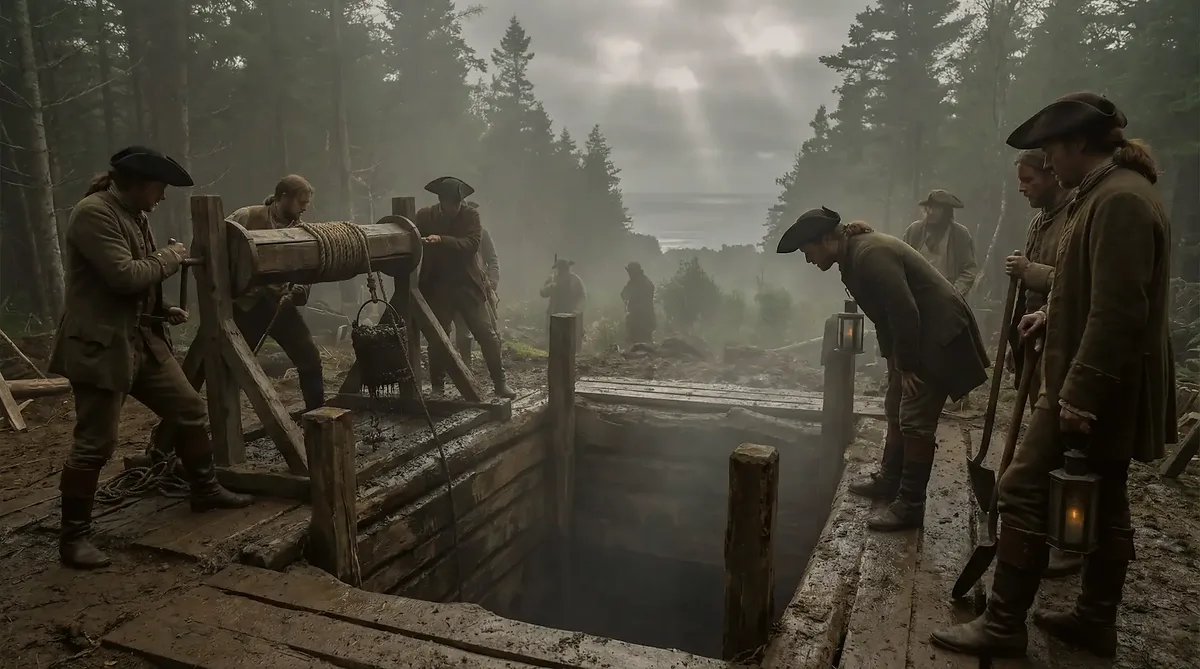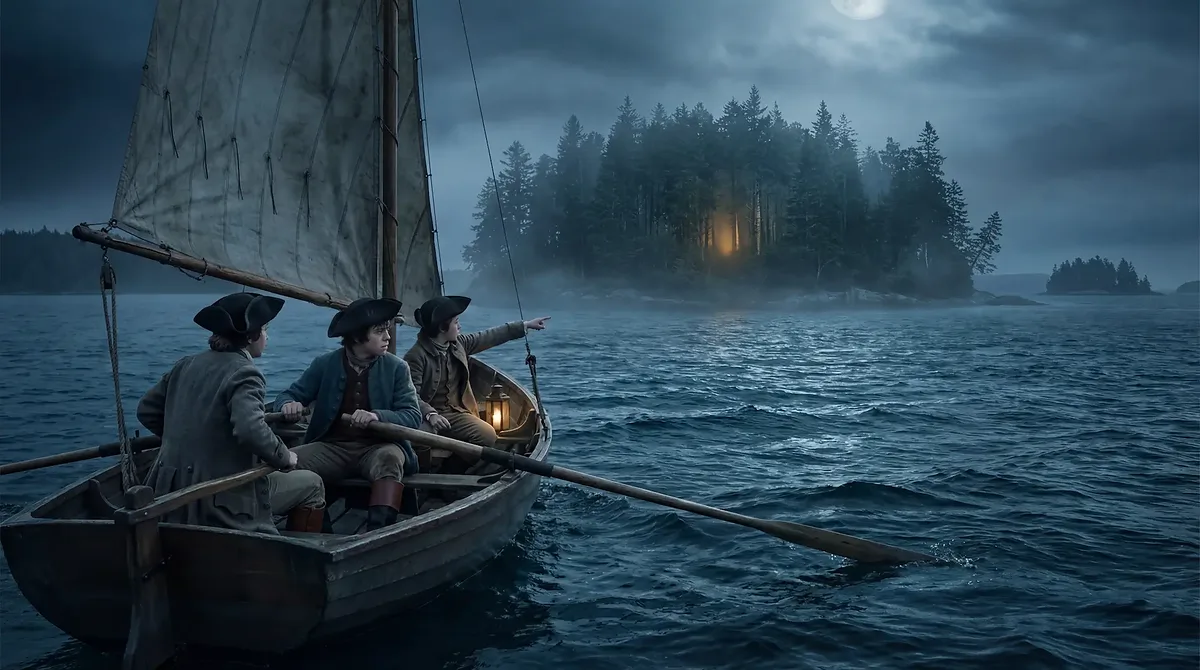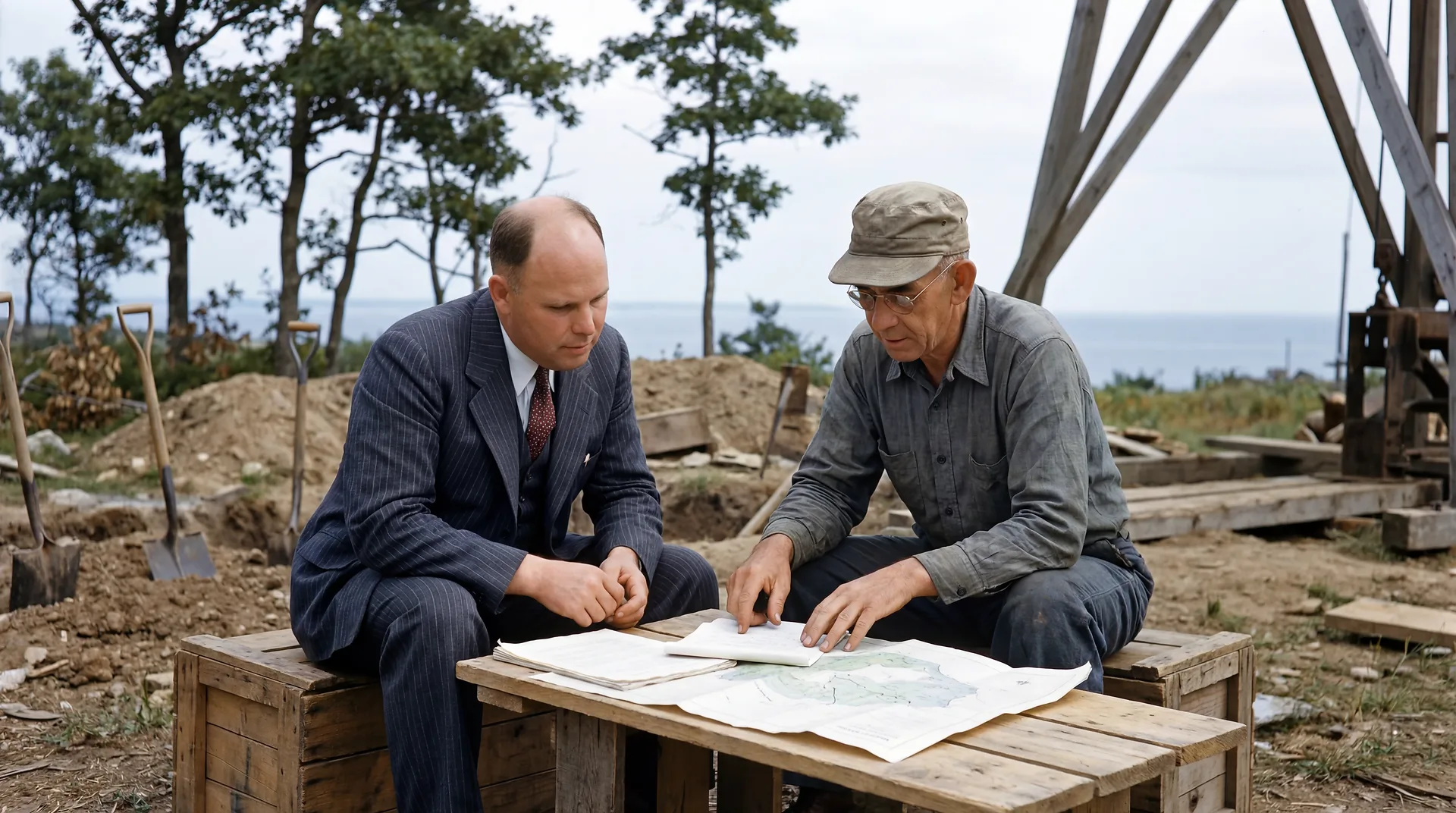
Between 1935 and 1943, two engineers from the northeastern United States brought a level of professional discipline to Oak Island that no previous expedition had matched. Gilbert Hedden, a Cadillac dealer and former mayor from New Jersey, purchased the eastern end of the island and hired one of Pennsylvania's leading drilling contractors to attack the Money Pit. When financial ruin forced Hedden to step back, Edwin Hamilton, a consulting engineer at New York University, took over the operation with the same crew and the same equipment. Together, they spent more than $110,000, sank 58 boreholes to bedrock, measured the flooding that had defeated every previous attempt, and traced a tunnel system that ran from the shore to the heart of the island. Their work produced no treasure, but it did something that a century of searchers had failed to do: it established, within a margin of five feet, where the original Money Pit actually was.
The Car Dealer from Morristown
2 min
Gilbert Douglas Hedden was born in New Jersey in 1897. By his mid-thirties he had built a comfortable life in Morristown, operating a Cadillac, LaSalle, and Oldsmobile dealership at 39-41 Market Street, with a service department at 40 Bank Street. He had served as mayor of nearby Chatham. He was a Freemason. And he had become consumed by Oak Island.
Hedden's interest in the mystery predated his involvement by several years, but it was Frederick Blair, the insurance broker from Amherst, Nova Scotia, who held the treasure trove license and who controlled access to the site, who made the partnership possible. In February 1935, Blair wrote to his lawyer Reginald V. Harris in Halifax with undisguised confidence. He felt "reasonably sure that nothing stands in the way of Mr. Hedden entering into an agreement whereunder he will solve the mystery of Oak Island before the fall of 1936, or prove it cannot be done." The only obstacle, Blair noted, was securing property rights from the heirs of Sophia Sellers, who owned the eastern lots where the Money Pit was located. Hedden solved that problem by purchasing all the lots on the east side of the island from the Sellers heirs for $5,000.
In April 1936, Hedden wrote to Harris from his Morristown letterhead to report that he had completed his agreement with a contracting firm and anticipated having men on the site by the first of May. The firm was Sprague and Henwood of Scranton, Pennsylvania, a company with deep experience in diamond drilling and underground work. Hedden's plan of attack, influenced by information from Melbourne Chappell, the son of the 1897 driller William Chappell, was to open and drain the Chappell shaft (No. 21), reinforce it, and use drills to explore the surrounding ground at various depths. He instructed Sprague and Henwood to admit only Blair, Chappell, and Harris to the site. Local hostility was already a concern; when Hedden sought electric power from a Chester firm, he received an estimate of $4,500 with $1,500 salvage, nearly double what Chappell had paid for the same installation. Hedden suspected local efforts to overcharge him, and opted for gasoline-powered equipment instead.
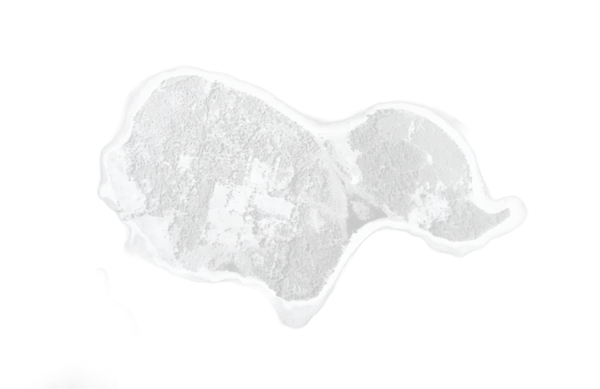
One of the drillers Hedden spoke with while preparing the campaign left a record of a find that has never been fully explained. A driller named Baker, who had put down holes near the Money Pit some time before 1934, told Hedden that specks of a silvery substance had come up mixed with clay at the end of his boring tool, and that on inspection it proved to be free mercury. The exchange survives only in The Oak Island Enigma, a 1953 booklet by Thomas Leary. Graham Harris and Les MacPhie, geotechnical engineers who later reviewed the drilling record, note that free mercury rarely occurs in nature and was used before the mid-nineteenth century to separate gold from ore and to back mirrors.
 Free mercury (Baker drill-hole, Money Pit)→
 The Treasure and the Law: The Oak Island Treasure Act→
The 1936 Campaign
1 min
By the summer of 1936, Hedden was on the island personally directing operations. On August 24 he wrote to Harris that the crew had reached the bottom of the Chappell shaft and that the drilling outfit was assembled and ready to go into action. During this period, the team found coconut fiber at the beach in considerable quantity. Hedden also experimented with a divining rod and became convinced he had located the tunnel lines, though he placed no great weight on the method.
An inscribed stone found on the shore that summer drew his attention. Someone, perhaps Harris, wrote to Hedden suggesting that the last line of the inscription meant "something begins forty feet to the right of the stone from the shore," and expressed conviction that the stone had something to do with the original deposit. Hedden investigated and came to the opposite conclusion. Writing back to Harris, he judged the stone to be "of local origin and the work of a jokster," noting that much of it had been removed and broken up in recent years.
A Cribbed Tunnel at 104 Feet
1 min
In 1937 Hedden opened a shaft of his own a short distance northeast of the Chappell shaft. Known afterward as the Hedden Shaft, or Shaft No. 22, it measured twenty-four feet long and was among the largest ever sunk at the site. Old cribbing appeared almost at once, still in good condition. The record of the excavation, summarized by Harris and MacPhie, reads like a cross-section of a century of searching: old drill casings at 50 feet, an old miner's whale-oil lamp at 65 feet, an old oak stump at 80 feet, and at 93 feet an old collapsed tunnel with a band of putty nearby. At 104 feet the crew broke into a tunnel three feet ten inches wide and six feet four inches high, cribbed with oak and hemlock. Excavation stopped at 125 feet. Borings below it met hard sand to 148 feet and then oak timbers of various thicknesses in five holes between 148 and 157 feet. The shaft never struck the flood tunnel, which suggests either that its mouth lay elsewhere or that earlier searchers had disturbed it beyond recognition.
Miner's oil lamp (whale oil)→
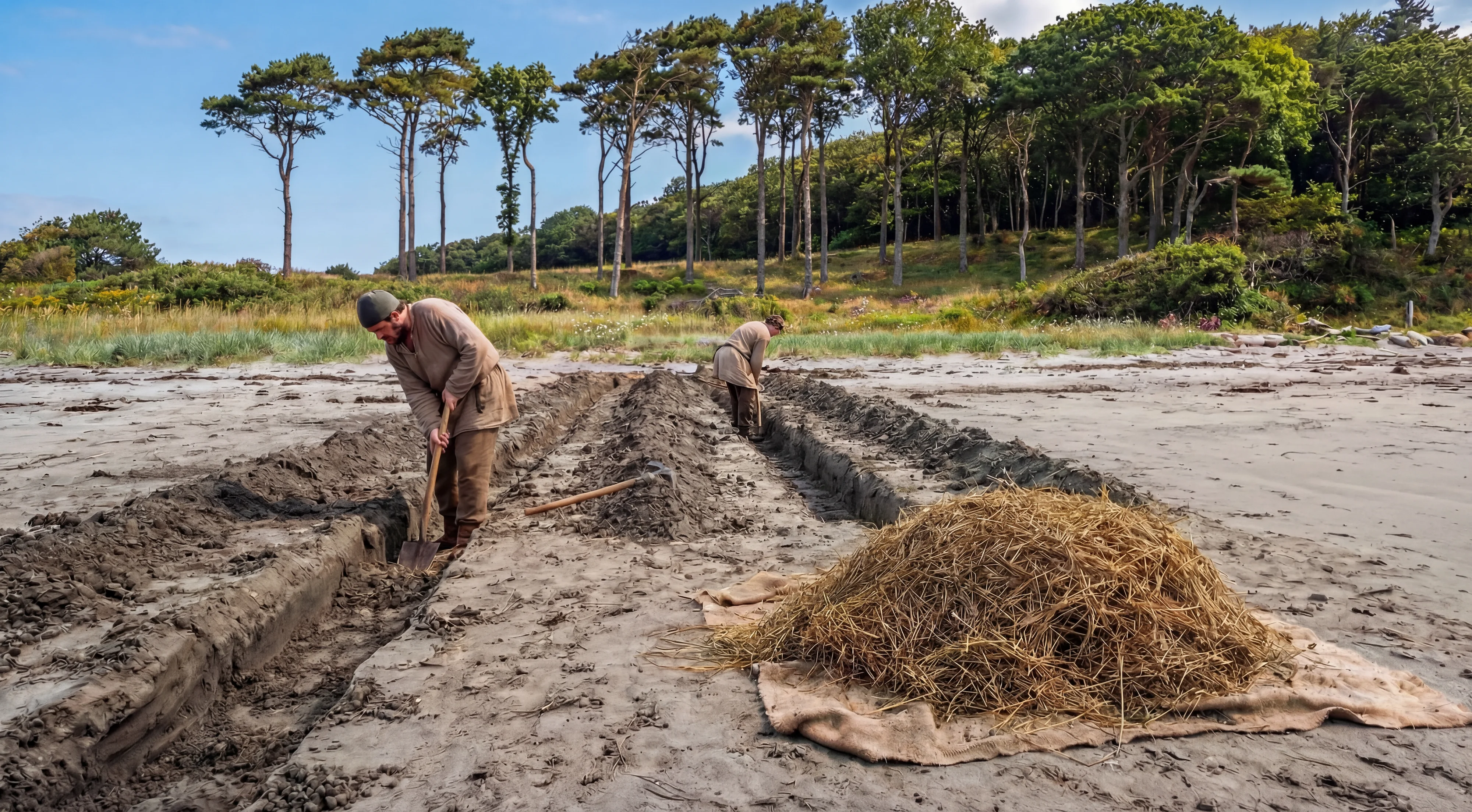
The same season Hedden noticed how badly the sea was eroding the shoreline at Smith's Cove. Ancient-looking timbers were projecting from the sand at low tide. Clearing four feet of sand exposed logs about fifteen inches across, gently inclined and set four feet apart, each notched at four-foot intervals, with crosspieces held by wooden pins called treenails. Hedden took the structure to be an old ramp or slipway.
The Stone Triangle and the Wilkins Map
2 min
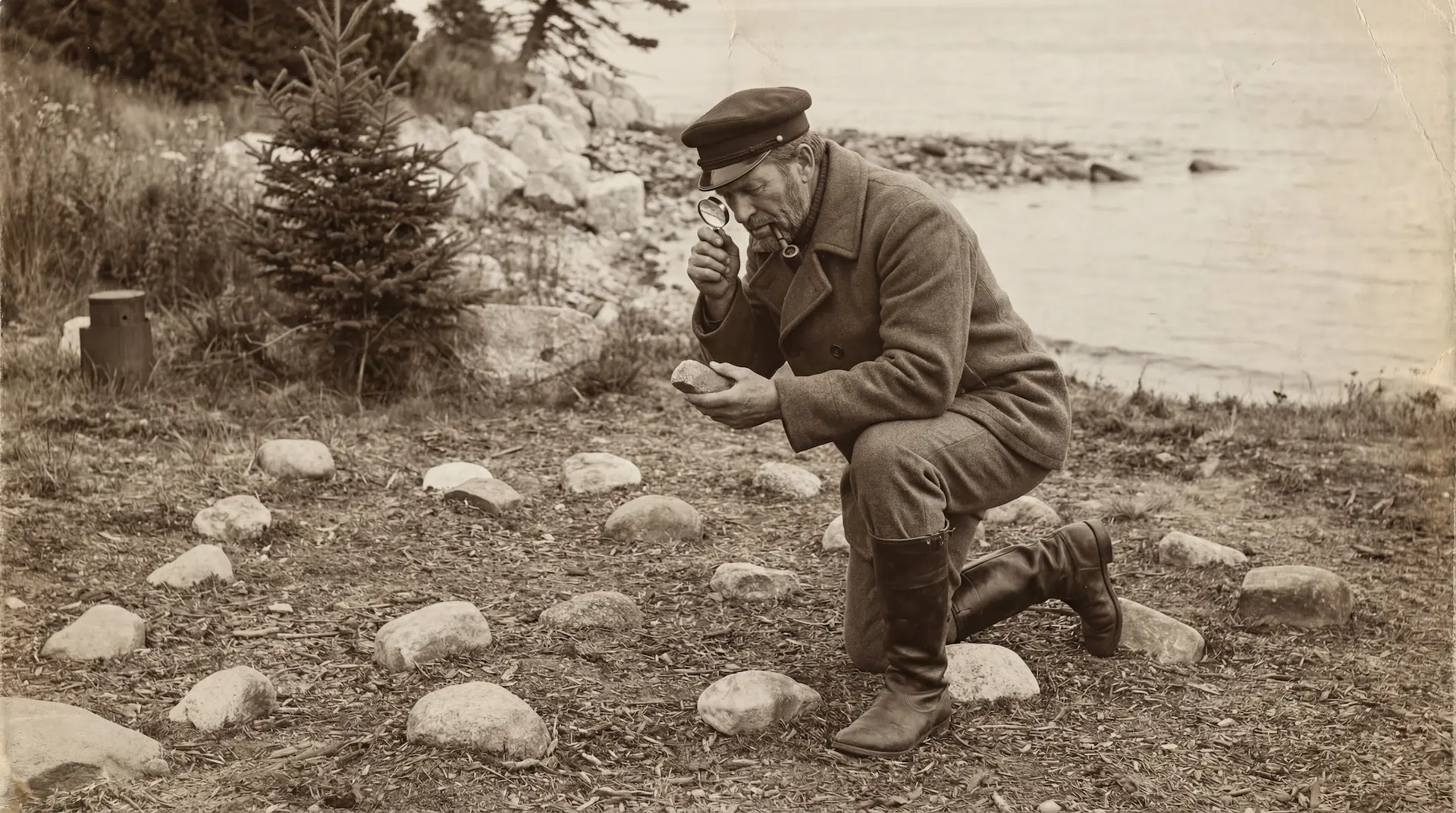
The following summer proved far more eventful. In 1937, Blair told Hedden about a stone triangle and drilled boulders that Captain John Welling, a member of Blair's Treasure Company, had reported finding on the island in 1897. Hedden ordered his men to search for these markers, and one of them, a local worker named Amos Nauss, found the triangle. Hedden then discovered not one but two drilled boulders. He brought in Charles Roper, a Halifax land surveyor, to conduct a formal survey using the reference points. Roper's survey established that the medial line of the stone triangle pointed due north, directly into the center of the Money Pit.
 Stone Triangle, the Oak Island Sextant→
Around the same time, a book titled Captain Kidd and His Skeleton Island by the British writer Harold Wilkins was published, containing what became known as the Mar Del map, purportedly based on authentic Captain Kidd treasure charts. Hedden noticed striking similarities between the map and Oak Island. Using the map's legend and a rod as the unit of measurement, the dimensions between the markers on the map corresponded closely to the distances between the drilled stones and the triangle on the island. Hedden wrote to President Franklin D. Roosevelt to inform him of the discoveries, then booked passage on the Aquitania, sailing to England in November 1937 to meet Wilkins in person.
Meanwhile, Hedden had been conducting his own research. He located a 1670 map of the North American continent drawn by the Dutch cartographer Frederick De Wit, on which the Atlantic Ocean was labeled "Mat Del Nort" and the Pacific "Mar Del Sur," with longitude measured from the island of Ferro in the Canary Islands rather than from Greenwich. Hedden believed this older coordinate system might reconcile the map's position with Oak Island's actual location, and he shared the discovery with Harris in an excited letter in October 1937. In the same letter, he described preparing slides for a lecture at his Masonic lodge and reported that a company called Avon Enterprises had told him their metal-detecting machine could not function on the island because the mass of buried metal was so enormous that it threw the instrument out of adjustment. The company estimated as much as five tons of metal might be present. Hedden initially found this intriguing, though he later dismissed the company as "a complete and not very clever hoax."
The meeting with Wilkins in England was clarifying. Hedden found that the map was, as he later described it in 1967 to the Halifax researcher Robert Gay, "purely the product of his imagination," roughly copied from a map of Tierra del Fuego. Wilkins could not explain why his fictional map matched Oak Island's markers so closely. Hedden was taken to the owner of several purportedly authentic Kidd charts and found three different maps, only one of which he considered genuine. That one bore the inscription "Start from Centre of Triangle" with a latitude and longitude, though no specific island was identified. He was offered all the maps for $10,000 and refused. The encounter left Hedden convinced that Kidd may have known of a valuable cache and its general location, but that Wilkins was, in his words, "a rather crack-pot writer."
 Captain Kidd and the Hidden Maps→
A Sudden Withdrawal
1 min
On March 25, 1938, Hedden wrote what an archivist later marked as a "KEY LETTER" to Harris. The news came without warning. Through an unusual combination of circumstances, Hedden explained, he had acquired a new Cadillac, LaSalle, and Oldsmobile franchise in addition to the one he already held. The new activity would require his personal charge through most of the year, and most of his liquid finances would be tied up in the organization. He would have to postpone his activities on Oak Island "rather indefinitely." Someone, likely Harris, annotated the letter with two words: "so sudden."
The franchise acquisition was not the full story. By August 1939, Harris learned the deeper truth from Hedden's lawyer Ralph Lum during a meeting in England. Hedden had lost a lawsuit brought by the federal government for income tax, and an appeal had been filed but with little hope of success. To pay the judgment, Harris was told, would almost bankrupt Hedden. By April 1940, Hedden himself laid out the extent of the damage in a long letter to Harris. The claim had been fought all the way to the Supreme Court and lost. A compromise settlement would consume every liquid asset he possessed and put him financially where he had been twenty years earlier. He was forced to sell his home, liquidate his business, and dispose of his securities. He was working nights at bookkeeping jobs to support a family of seven. His present employment was as a municipal auditor, investigating embezzlements in Union City, New Jersey. Despite all of this, he held on to the island property, which the government valued as worthless real estate. He had already spent approximately $60,000 on the Oak Island venture.
Hamilton Takes Over
1 min
Edwin Hamilton had been corresponding with Blair about the possibility of taking over the search before Hedden's withdrawal made it a practical matter. In a June 1938 letter to Harris, Hedden described the professor as "a consulting engineer for a college in New York and, while not impressive, seems thoroughly reliable." Hamilton had sufficient capital to complete the drilling campaign and was eager to begin. The negotiations over profit-sharing consumed more than two months. Blair, who had always received half of any recovery in previous agreements, initially resisted the proposed split. By the end of June 1938, the three men agreed on a 40-30-30 division, with Blair receiving the largest share and Hedden and Hamilton splitting the remainder equally.
Hamilton moved quickly. He arrived on the island in mid-July 1938 with a drilling crew from Sprague and Henwood, the same firm Hedden had used. He hired Amos Nauss, who had found the stone triangle the previous year, and retained a foreman to direct the daily work. His letterhead identified him as "Erwin H. Hamilton, Consulting Engineer" at New York University, 181st Street and University Avenue, New York. The author Mark Finnan later noted in Oak Island Secrets that Hamilton was a high-ranking Freemason in New York, a connection that linked all three partners in the enterprise.
 Freemasons on Oak Island→
Five Summers of Systematic Work
5 min
Hamilton's first priority was to locate the original shaft as precisely as possible. Working from the Chappell shaft, where two sections of the cribbing were beginning to buckle, his crew spent five weeks reinforcing timbers between depths of 145 feet and 170 feet, then between 90 feet and 62 feet. Once the shaft was stabilized, they used a diamond bit to bore 58 holes in the Money Pit area down to bedrock, which they struck at depths of between 168 and 171 feet. Several of the lateral probes at 119 feet encountered what was described as "very old oak" in the area immediately north of the Chappell pit and west of the Hedden shaft. Hamilton also established that seawater was pouring into the Money Pit area at a rate of approximately 800 gallons per minute, a volume that Hamilton took as proof that the flooding could not be natural percolation.
 Oak Island Flood Tunnels and Box Drains: The Water Trap→
In a typed report titled "Work Carried on at Oak Island (Summer 1939)," Hamilton described the second season in detail. The first five weeks had been consumed by emergency repairs: the timbering in the 12-by-12-foot shaft was broken or unlocked at the corners and liable to collapse. In all, upwards of 10,000 feet of timber was used to stabilize the structure. While this work was under way, the sand-filled pit on the shore was excavated and revealed three separate tunnels. The uppermost started at approximately 40 feet in the north corner and ran diagonally toward the Sink Hole. The next ran beneath the first, diagonally toward the western shore. The lowest ran directly from the south side of the shaft. Both the uppermost and lowest tunnels extended 25 to 30 feet and ended in what appeared to be disturbed ground. Checking their direction against the surface, Hamilton determined that both terminated on a straight line that passed through the Sink Hole and the Money Pit. At the end of the lowest tunnel, a small shaft was sunk to a depth of 18 feet. The earth gave every evidence of having been disturbed by human activity. At approximately 12 feet, an appreciable quantity of old-fashioned leaf tobacco was found.
Hamilton conducted his own dye test, similar to the one Blair had performed in 1898. As Nauss later recalled, dye was dropped into both the Hedden and Chappell shafts. He and Nauss took a boat out and observed the dye emerging from the seabed on the southeast side of the island, roughly a hundred yards from the high-tide mark. The starting point of this underground connection was completely submerged even at low tide, the result of decades of rising sea levels and shoreline erosion.
Hamilton also reported finding a second, lower flood tunnel entering the Money Pit on its eastern side at about 150 feet, some forty feet below the known tunnel from Smith's Cove. No record of its size, cribbing or fill survives, and Harris and MacPhie regard its existence as unconfirmed. In their view the dye he watched rising offshore traveled through the same natural solution channels in the anhydrite, not through a second engineered tunnel.
 Frederick Blair: The Man Who Held Oak Island for Sixty Years→
During the 1940 season, Hamilton traced the Halifax Company tunnel, the passage dug by the Halifax-based syndicate that had worked the island in the 1860s. Tunneling from the Hedden shaft around the Chappell shaft, he found the Halifax tunnel just to the southeast of Hedden's shaft. What Hedden's crew had identified in 1937 as the tunnel of S.C. Fraser, the Halifax Company's foreman, turned out to be part of the Halifax system. Hamilton followed the tunnel from the Halifax pit near the beach up to the top of the hill, finding a branch near the Sink Hole Pit. Some of the original wooden track rails were still in evidence, and the excavation substantiated Chappell's account of having traversed the tunnel in 1897. In Hedden's account of this work, written to Harris in December 1940, he reported that he and Hamilton were now convinced the Halifax tunnel had once terminated at the actual Money Pit, and that Chappell had been "a bit off in his location when he put the shaft down in 1931."
In 1941, Hamilton returned determined to explore the bottom of the Money Pit itself, but wartime labor shortages made progress difficult. He managed to sink an 8-by-8-foot shaft between the Hedden and Chappell shafts in 1942, using the remains of two earlier tunnels to connect the two at a depth of 155 feet. Lateral drilling produced no significant results, but the crew did intercept a watercourse 8 inches high by 10 inches wide, cut through limestone. Analysis of the water flowing through this apparently man-made channel showed it had a slightly higher specific gravity than water drawn from Smith's Cove, suggesting the presence of dissolved minerals. During the same season, several drill holes between the Chappell and Hedden shafts reached approximately 12 feet below the bottoms of both shafts and encountered a large amount of gravel and stones of a kind not native to that depth. Only limestone should have been present at that level.
Hamilton also pushed deeper than anyone before him. In 1939 and 1940 he extended the western part of the Hedden Shaft with a six-foot-square shaft from 125 to 170 feet, and he deepened the Chappell shaft from 160 to 167 feet, where it met bedrock. Drill holes put down from the bottom of the Chappell shaft went below 200 feet, and in some of them chips of oak came up after the bit had passed through a considerable thickness of rock. Harris and MacPhie call this the first direct evidence of man-made workings extending below the bedrock surface, a finding whose significance went unrecognized for almost thirty years, until the Becker drilling of 1967. They also offer a different reading of Hamilton's water. The bedrock beneath the east end of the island is largely anhydrite and gypsum, soft minerals that dissolve in water, and they suggest the stones out of place and the dense, mineral-laden stream were products of that rock: seepage drawn toward the pumps through channels that decades of pumping had dissolved.
A President, a Movie Star, and an Astor
2 min
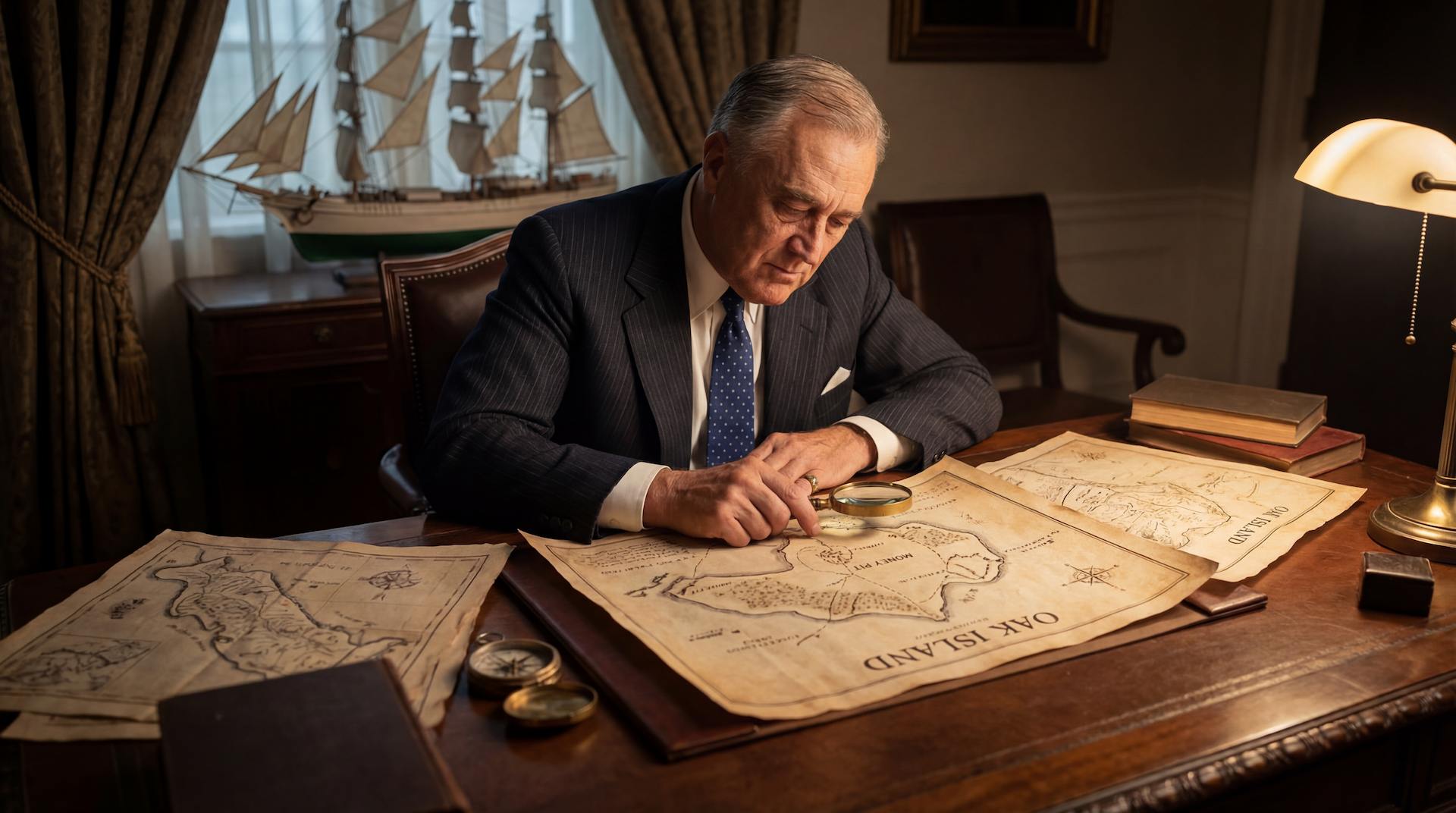
Hamilton maintained a correspondence with President Roosevelt throughout his time on the island. On November 4, 1938, he sent a summary of the summer's work, and Roosevelt seemed especially interested in the 800-gallon-per-minute flooding measurement, which Hamilton presented as proof that the water intrusion could not be natural percolation, as Captain Henry Bowdoin had suggested after his own unsuccessful 1909 expedition. Roosevelt, then in his second term, made plans to visit Oak Island during a scheduled Halifax stopover of his US Navy cruiser in the summer of 1939. Hamilton was so confident the visit would happen that he ordered the construction of a custom sedan chair to carry the polio-disabled president from the dock at Smith's Cove to the Money Pit area. At the last minute, Roosevelt sent word through a friend that the looming war in Europe made the visit impossible.
 The Roosevelt Connection→
The war also complicated Hamilton's efforts in other ways. Canada entered the conflict alongside Britain in September 1939, and finding workers in Nova Scotia became increasingly difficult. Hamilton eventually assembled a crew of eleven in the summer of 1940, reportedly by offering the exorbitant pay of forty cents per hour. During this same period, the actor Errol Flynn attempted to join the treasure hunt. A February 1940 article in the Boston Sunday Advertiser, headlined "Errol Flynn Set to Hunt Kidd's Gold," reported that Flynn had instructed his business manager to contact the Canadian syndicate to determine whether he could buy in. Flynn was no stranger to treasure hunting; he had previously financed an Alaskan prospector and had located a sunken cannon off the Isle of Pines south of Cuba. Hamilton wrote to Harris in February 1940 asking whether Flynn had actually obtained any rights to the island, noting that a magazine article had made the claim. The Flynn bid came to nothing.
Another suitor attracted less publicity but carried greater weight. In April 1940, Hedden revealed to Harris that Vincent Astor had sent for him the previous year. Astor, one of the wealthiest men in America, went into the Oak Island affair in considerable detail and expressed genuine interest. Hedden was to guide him on a cruise to inspect the site in early October 1939, but the outbreak of war in September ended the plan. Astor had been too busy since to pursue it further.
Hamilton's Verdict
1 min
By 1942, Hamilton had exhausted his ideas. In December of that year, Hedden relayed Hamilton's conclusions to Harris in a letter written on War Department stationery. Hedden was now a Resident Auditor for the Army Air Forces, stationed at International Business Machines in Endicott, New York. Hamilton's assessment was blunt: he had substantiated the accounts of earlier searchers like Fraser and the Halifax Company, but his present conclusions were that "either the whole thing is a cruel mirage based on fantastic imagination, or, that the exact location of the early money pit has been irretrievably lost." Hamilton was inclined to discount Chappell's account of his 1897 drilling on two grounds: the detailed account had been written many years after the fact, and Hamilton detected familiar phrases that coincided with the language used in earlier accounts by Fraser and others.
Hamilton had also reached a conclusion about the drilled stones that Hedden had once considered evidence of the original deposit. He now believed they were nothing more than sockets for "Whim" axles, the supports for the horse-drawn hoisting equipment that various searcher groups had erected over the shafts. He had found at least one other drilled stone of similar size and depth near other shafts, supporting this interpretation. As Hedden reported it, "the only two items unexplainable are the work and fibre at the Beach and the parchment."
In the summer of 1943, Hamilton covered the exposed shafts with strong platforms placed just above the normal water level in each pit and decked all three over at the surface. He removed his equipment from the island and placed it in storage in Chester. His five-year campaign was over. He had spent an estimated $60,000.
After the Island
2 min
Hamilton retired to Chester, where he established a boat-building business. In his corrections to R.V. Harris's manuscript around 1950, he was precise about what his work had established: the correct location of the Money Pit was between the Chappell and Hedden shafts, perhaps five feet to the south of where Chappell had put his shaft down. He also noted that Hedden was never on the island from June 1938 until July 1949, a period of more than a decade in which the man who owned the property never set foot on it.
Hedden's path after Oak Island traced a long arc of financial recovery. From his Cadillac dealerships, he moved to a position at the British Purchasing Commission in New York in late 1940, working in the Service Division of the Aircraft Section. By 1942 he was a government auditor at IBM in Endicott. He held on to the Oak Island property throughout, selling it in 1950 to John Whitney Lewis, an elderly New York mining engineer, for $6,000. Hedden and his wife Marguerite eventually moved from New Jersey to Kissimmee, Florida, in 1962.
In 1967, writing from Florida at the age of seventy, Hedden responded to a letter from Robert Gay in Halifax and was amused to learn that several recent articles had written him off as dead. He was, he assured Gay, "very much alive and active." He had been receiving phone calls from a group working on the island with a new type of core drill, almost certainly the Triton Alliance. In the same letter, he shared what three decades of reflection had given him. He believed that Kidd may have known of the cache but had not created it. "Oak was constructed before Kidd was born," Hedden wrote, "and was not intended to be discovered until about 1900. The original one who conceived the idea and did the work underestimated human progress by a bit over 100 years." He estimated that resolving the mystery would require two years of sustained effort and at least $200,000.
In an interview conducted in Kissimmee in February 1976, Hedden's widow Marguerite recalled that her husband had believed the deposit was either pirate treasure or Bacon's Shakespearean manuscripts. She had visited the island only once, in 1935, but she still held the conviction that something of great value was buried there, "because of the care they had taken in putting it down." Gilbert Hedden had tried to locate the inscribed stone that once sat inside the Money Pit, but could not find it. The last he had heard, it was somewhere in Chester.
Gilbert Douglas Hedden died in Florida on September 14, 1974, at the age of seventy-seven. The Money Pit he had mapped and measured, and the tunnels he and Hamilton had traced beneath the island, were reopened in his lifetime by Triton Alliance, whose drills reached deeper into the bedrock than he and Hamilton had gone, without resolving what lies there.
 Shakespeare and Oak Island→
Sources
1 min
Archival Collections
- R.V. Harris Papers, MG1 Vol. 381/382/384, Nova Scotia Archives, Halifax, N.S.
- Gilbert Hedden correspondence (1935–1967), R.V. Harris Papers
- Edwin Hamilton correspondence (1939–1940), R.V. Harris Papers
- Hamilton's Notes re Harris MS. (~1950), R.V. Harris Papers
- Erwin Hamilton, "Work Carried on at Oak Island (Summer 1939)," typed report, obtained from Amos Nauss, May 1976
- Interview with Mrs. Marguerite Hedden, Kissimmee, Florida, February 15, 1976
Newspaper Sources
- "Errol Flynn Set to Hunt Kidd's Gold," Boston Sunday Advertiser, February 18, 1940
Books
- Randall Sullivan, The Curse of Oak Island: The Story of the World's Longest Treasure Hunt (Atlantic Monthly Press, 2018)
- Lionel and Patricia Fanthorpe, The Oak Island Mystery: The Secret of the World's Greatest Treasure Hunt (Dundurn Press, 1995)
- Graham Harris and Les MacPhie, Oak Island and Its Lost Treasure (Formac Publishing, third edition 2013)
- Thomas P. Leary, The Oak Island Enigma (Omaha, 1953)
- Mark Finnan, Oak Island Secrets (Formac Publishing, 1995)
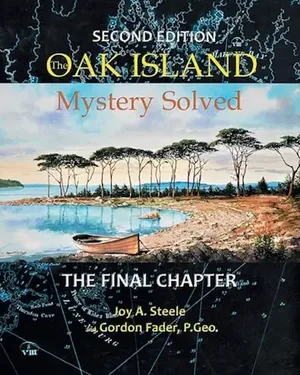
- Joy A. Steele and Gordon Fader, Oak Island Mystery Solved (Nimbus Publishing, 2019)
- D'Arcy O'Connor, The Secret Treasure of Oak Island (Lyons Press, 2004)
- William S. Crooker, Oak Island Gold (Nimbus Publishing, 1993)
- Lee Lamb, Oak Island Obsession (Dundurn Press, 2006)
- Scott W. Clarke, Oak Island Odyssey: A Masonic Quest (Nimbus Publishing, 2023)