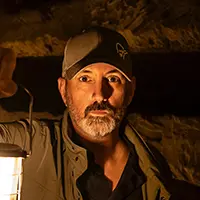
Daniel Christian Blankenship was born in Ohio on May 23, 1923. He served in the United States Army during the Second World War, fighting through Europe in a campaign that left two friends dead on either side of him in Belgium. He came home, met Jane Cecilia Lablanovitz in New York, married her, and built a successful construction business in Miami, Florida. By 1965 he had just finished building a hospital in Palm Beach. He was forty-two years old, financially secure, and by every conventional measure a man who had made it. Then he picked up a copy of Reader's Digest.
The Magazine Article
1 min
The January 1965 issue of Reader's Digest carried an article condensed from The Rotarian magazine under the title "Oak Island's Mysterious 'Money Pit.'" The piece described the two-century-old treasure hunt on a small island off the coast of Nova Scotia: the discovery of the pit in 1795, the flooding, the coconut fiber, the inscribed stone, and the generations of searchers who had spent their fortunes trying to reach whatever lay at the bottom.
Blankenship handed the article to Jane and told her to read it. Her response, as family friend David Eisnor would recount at Dan's funeral decades later, was brief: "So what?" Blankenship told her there was treasure on Oak Island, and that he was going to find it. Jane would later say, wistfully, how different her life might have been if she had never let Dan see that magazine.
The same article would also be read by a thirteen-year-old boy in Iron Mountain, Michigan, named Rick Lagina, who insisted on reading it aloud to his ten-year-old brother Marty. And it would be read by a teenager in upstate New York named Dan Henskee, who would eventually follow Blankenship to Nova Scotia and spend the rest of his life there. One magazine article, three lives permanently altered.

Arrival on Oak Island
1 min
Blankenship travelled to Nova Scotia shortly after reading the article. Robert Restall was running the treasure hunt at the time and was wary of newcomers, particularly those being shown around by the island's owner, Mel Chappell. Blankenship found himself standing in line behind another outsider: Robert Dunfield, a California geologist who had his own designs on the island.
 Robert Dunfield and the Destruction of Oak Island→
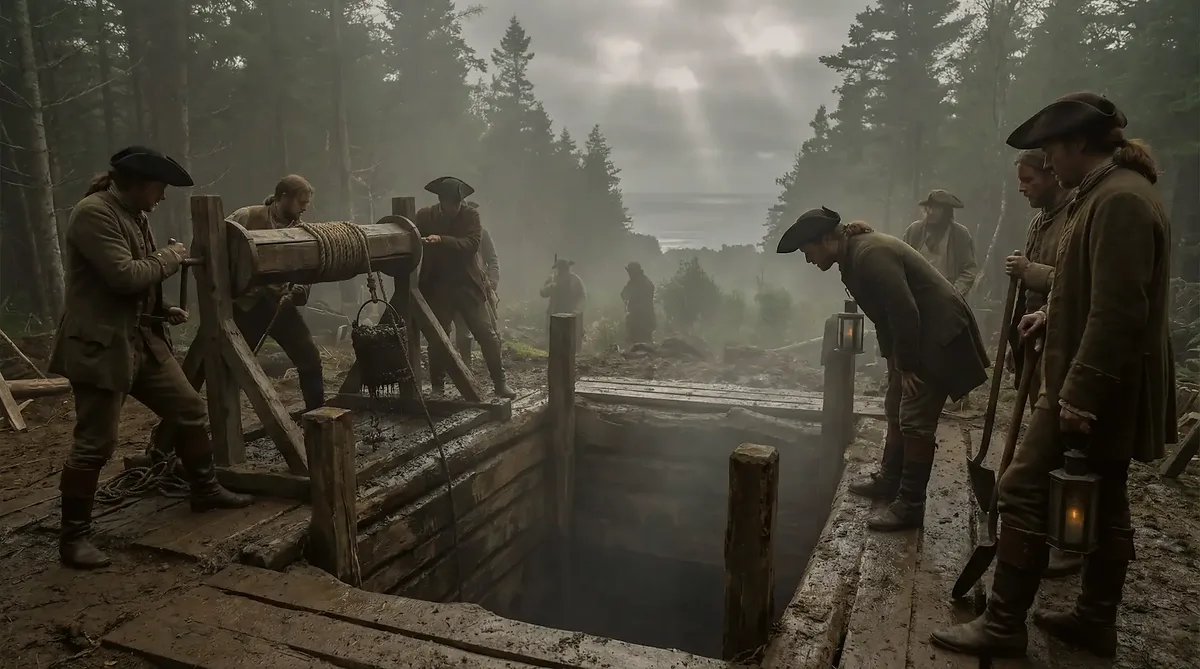
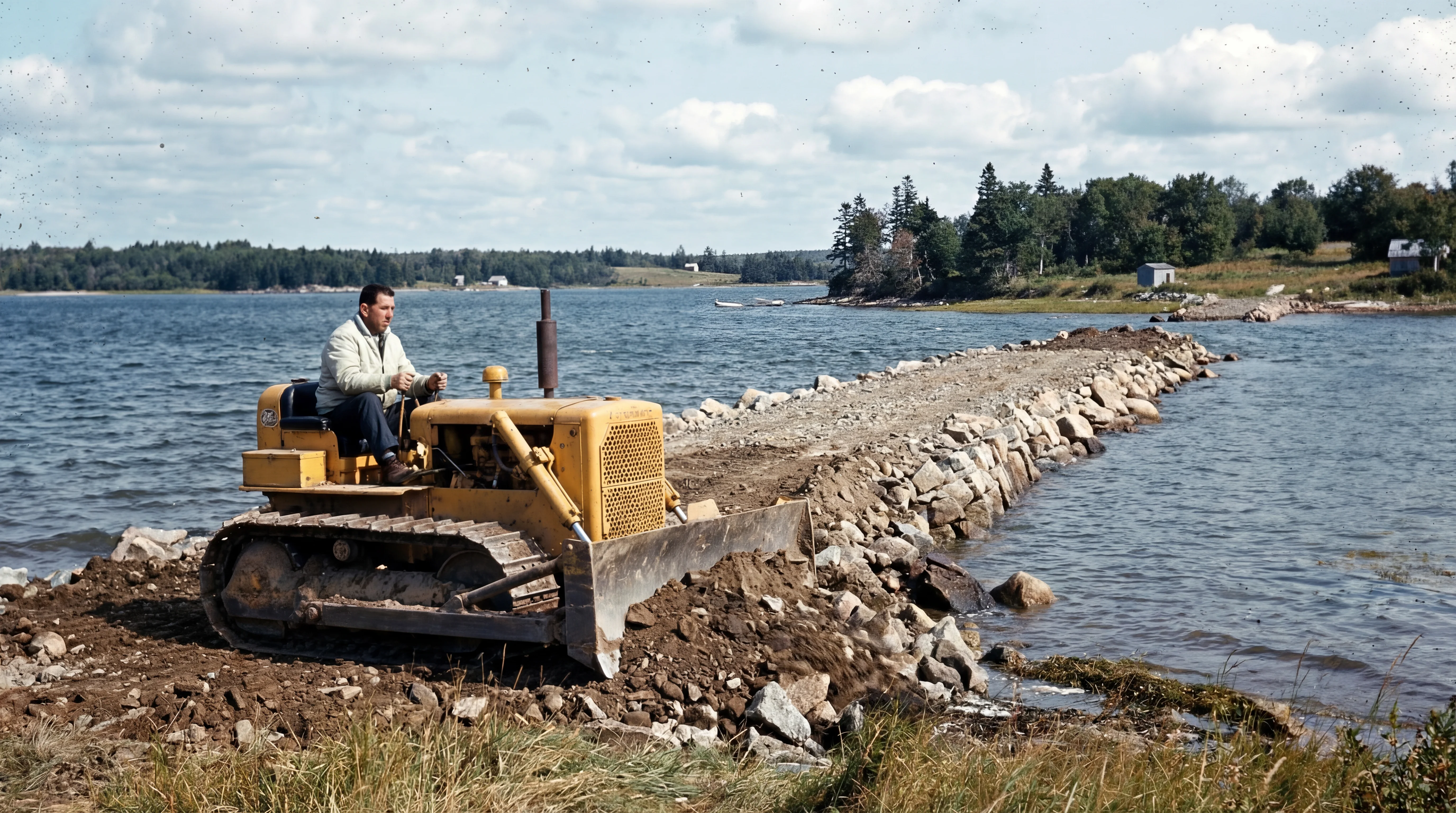
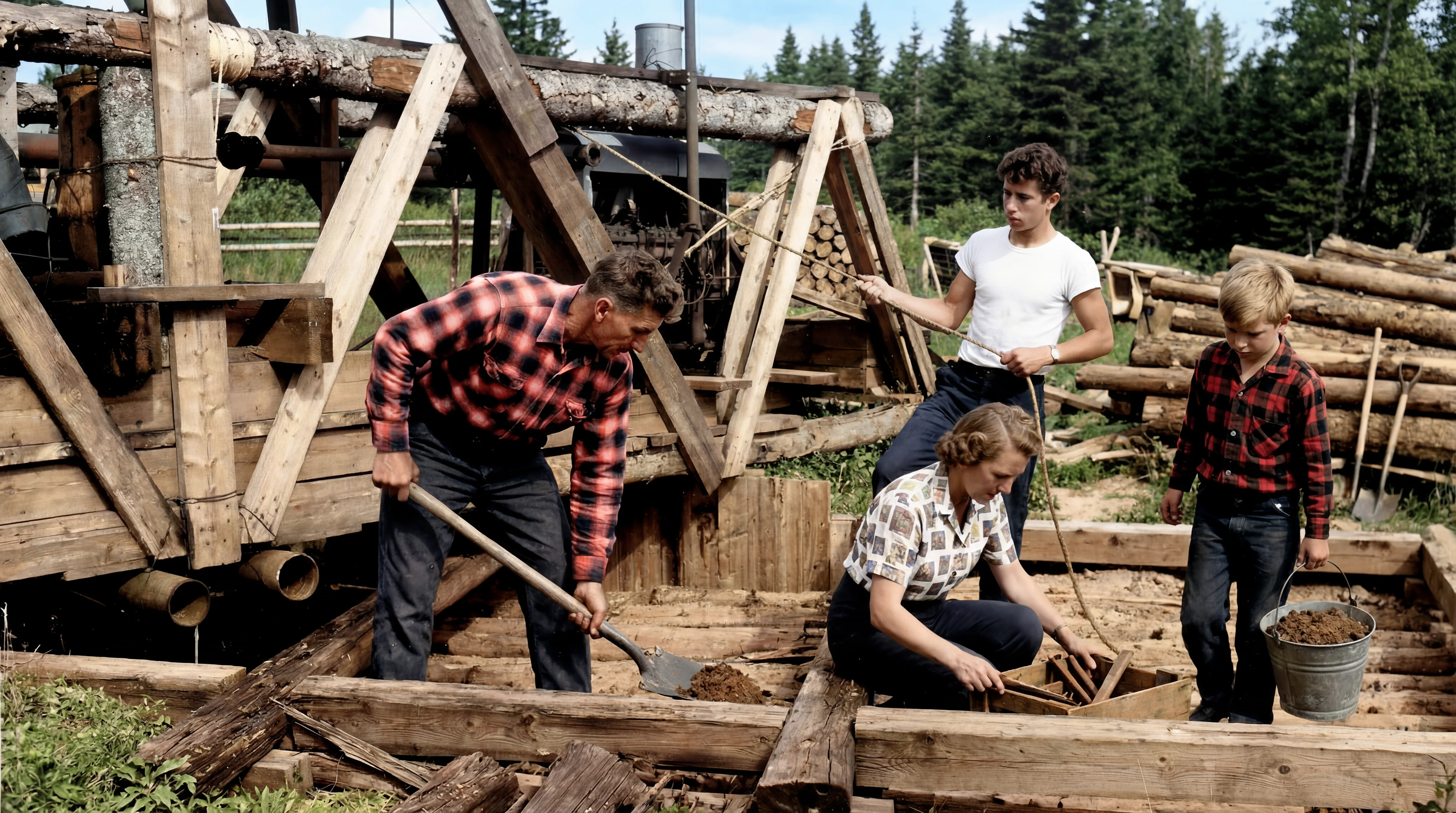
On August 17, 1965, Restall, his son Bobbie, worker Cyril Hiltz, and investor Karl Graeser died in a shaft near the Money Pit, overcome by underground gas. Within days, Dunfield took over operations under the Restall contract. Blankenship invested $21,000 in Dunfield's venture, becoming one of several limited partners. He would later describe Dunfield's heavy-equipment approach as going at it "the wrong way," but the investment was his only way in.
Dunfield was gone within a year. Blankenship quickly persuaded Chappell that he was the right man for the job, and by 1967 he had assumed control of field operations on Oak Island.
 The Restall Tragedy→
The Split Life
1 min
For the next seven years, Blankenship divided his existence between two countries. Winters were spent in Florida with Jane and their three children, working long days on construction projects. Summers were spent in Nova Scotia, living out of a motel in Western Shore, focused entirely on Oak Island.
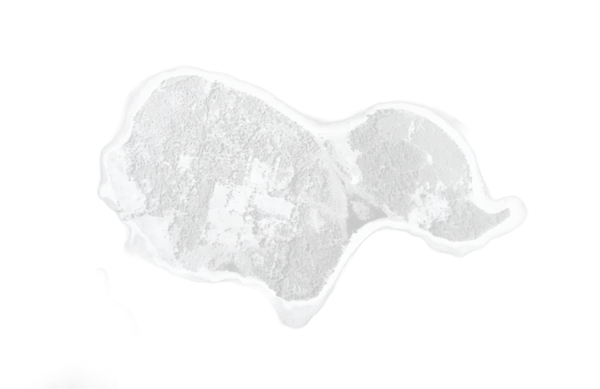
He was methodical in a way previous searchers had not been. He spent weeks in Halifax, working through the records at the Public Archives of Nova Scotia, most of them collected by Frederick Blair and R. V. Harris. He interviewed every surviving veteran of earlier expeditions he could find: Mel Chappell, Gilbert Hedden, Edwin Hamilton. He hired botanists and geologists to study Smith's Cove. He mapped the drainage system and laid out plans for a drilling program based on what he found.
One of his earliest conclusions was that the oak platforms found in the Money Pit by the Onslow Company had been placed there not as markers but to reduce soil compaction over the centuries, so the surface would settle into a slight depression rather than a deep crater. If the original depositors had not intended to excavate back through those platforms, Blankenship reasoned, they must have had another way to reach the treasure. Finding that other way in became his driving purpose.
But his construction business was suffering. Despite a company still netting six figures annually, by early 1967 the financial strain was becoming serious. It was at that moment that David Tobias entered his life.
Triton Alliance
1 min
David Tobias was a Montreal businessman who had first visited Oak Island in 1943 as a young Royal Canadian Air Force officer training at the Maitland, Nova Scotia, base. He had invested $20,000 in Robert Restall's project in 1963 and was looking for a new operator after the tragedy. In January 1967, Tobias joined Blankenship, Dunfield, and Fred Nolan in forming a syndicate for exploration.
Two years later, Tobias and Blankenship formed Triton Alliance and purchased most of Oak Island for $125,000 through a consortium of approximately 49 investors. The shareholder list was impressive: Boston property developer Charles Brown, former Nova Scotia Attorney General Gordon Coles, former Toronto Stock Exchange president George Jennison, and Pentagon weapons systems designer Bill Parkins. Tobias served as president and CEO. Blankenship became field operations director, the man on the ground.
In 1975, Blankenship persuaded Jane to leave Florida permanently. They rented a house in Mahone Bay for two years, then Dan acquired Lot 23 on Oak Island's west end, near the causeway, and built the bungalow where they would live for the rest of their lives together.
Borehole 10-X
2 min
In 1969, under Blankenship's direction, Triton began drilling what would become the deepest and most controversial shaft in Oak Island's history. Borehole 10-X was located on Lot 19, approximately 180 feet northeast of the Money Pit. The Bowmaster Drilling Company took it down to 230 feet under Blankenship's instructions, blowing compressed air down the hole to bring up material loosened by the drill. Thin metal scrapings that rapidly oxidized on exposure to air, lengths of old wire, and fragments of chain came up from between the 160 and 170 foot levels. The Steel Company of Canada analyzed the chain links as at least two hundred years old and the metal as a form of smelted steel of comparable age.
Triton had the borehole widened to 27 inches and lined to bedrock with quarter-inch steel casing the following winter. At 155 feet the drill struck spruce wood and several small links of steel chain. The fifty feet through the anhydrite bedrock to a seven-foot-high cavity at the bottom remained unlined, but the hole was now large enough to admit an underwater camera.
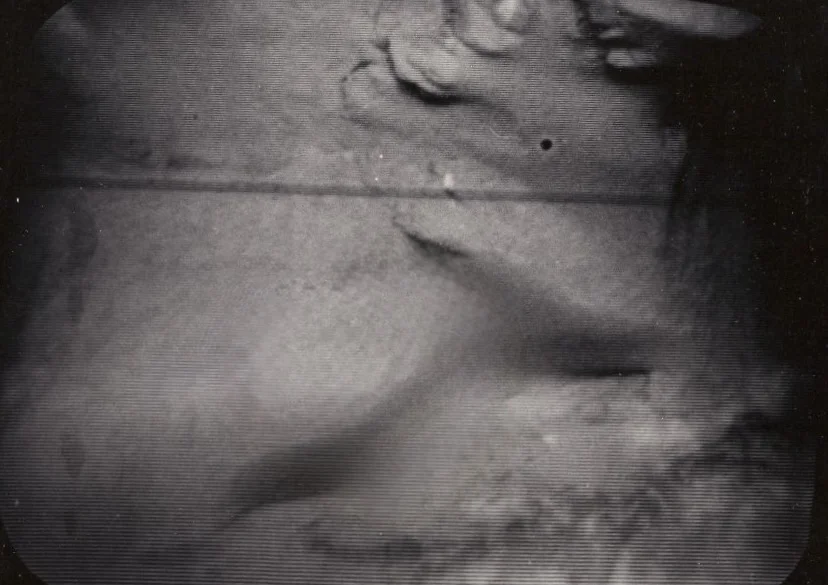
In August 1971, with assistance from the CBC in Halifax, a remote-controlled television camera was lowered into the cavity. Blankenship watched a monitor in a shed on the surface. What he and his assistant Dan Henskee and driller Parker Kennedy saw on the screen became one of the most debated moments in Oak Island history: what appeared to be a severed human hand floating in the water, rectangular shapes that resembled wooden chests covered in a layer of whitish anhydrite sediment, the upright handle of what looked like a pickaxe or large hammer, man-made timbers, and what appeared to be a partly preserved human body slumped against the cavern wall.
The camera footage was recorded on tape, though its existence was not acknowledged publicly for over twenty years. The images were grainy, shot through murky water swirling with suspended particles. Clarke, who later viewed the original footage on a small monitor, could not make out the objects Blankenship described. Opinions have remained divided ever since. What no one disputed was that the camera had revealed a cavity at depth, connected by what appeared to be tunnels, in an area where no natural formation of that kind would be expected.
More than ten dives were subsequently conducted into the cavern. Professional diver Phil Irwin of Atlantic Divers descended well below the 180-foot mark, where the force of the subterranean current nearly tore the helmet from his head and suspended particles reduced visibility to zero. Blankenship himself went down, but neither he nor any other diver was able to venture far from the narrow opening above their heads. The continuous pumping was eroding the soluble anhydrite bedrock, making each descent more dangerous than the last.
Thirty-Five Seconds
2 min
In November 1976, Blankenship was strapped to a seat and lowered into 10-X by his son David, who operated the winch at the surface. Dan was at the 140-foot level when he heard a noise from within the shaft and felt bits of clay falling on him. He looked up and saw the steel casing above his head beginning to buckle inward.
He shouted into the telephone link to David. His son worked the winch as fast as it would go. It took thirty-five seconds to raise Dan from 145 feet to 95 feet, the point where the casing was collapsing. Moments after he passed that depth, the quarter-inch steel crumpled like cardboard as tons of soil and rock crashed against it from the surrounding earth. Had David been slower by even a few seconds, his father would have been buried alive 140 feet underground.
When Dan reached the surface, he told his son: "For God's sake, don't tell your mother, David."
He went back into 10-X the next day. Dave lowered him only 73 feet before Dan was standing on solid ground; that much debris had fallen into the shaft overnight. Blankenship drilled 22 feet down through the rubble until his bit caught on twisted, shredded steel where the casing had collapsed. He concluded that a man-made flood tunnel was passing close to 10-X at around 90 feet, and the continuous pumping had created a fault between the shaft and the tunnel that caused the collapse.
He moved away from 10-X for a time, but he was not finished with it. By 1978 he was back, this time using railroad tank cars. After cutting off the ends with an acetylene torch, he had three solid steel cylinders, each 34 feet long and 8 feet in diameter, with half-inch walls twice the thickness of the original casing. The work of clearing the interior with jackhammers, loading broken rock into buckets, and driving the cylinders into the shaft took two full summers. Blankenship was by then more than sixty years old. His son Dave had left the island to work as a construction steelworker on the mainland. The bulk of the underground work fell to Dan Henskee, who by then had become Blankenship's indispensable partner, living in a shack that doubled as an equipment shed.
 Borehole 10-X camera images→
The Partnership Dissolves
1 min
The relationship between Blankenship and Tobias, which had been productive for more than two decades, deteriorated through the late 1980s and into the 1990s. The two men had fundamentally different temperaments: Blankenship was the man in the field, physically present on the island year-round, while Tobias managed operations from Montreal. As the years passed without a breakthrough, disagreements over strategy and money deepened into personal animosity.
Blankenship resigned from the Triton Alliance board in 1994. In 1990 the two had formed Oak Island Exploration as a separate entity, but that partnership also fractured. By 2003, when journalist Steve Proctor of the Halifax Chronicle Herald interviewed Blankenship at length, the eighty-year-old treasure hunter was blunt about the state of affairs. He and Tobias together owned roughly 100 acres of the island and held 78 percent of Oak Island Tours, but they had not worked as a team in the better part of fifteen years. Tobias, quoted in the same newspaper, dismissed some of Blankenship's methods and conclusions, while Blankenship maintained that Tobias had never properly valued his decades of fieldwork.
In July 2005, the Chronicle Herald ran a headline that seemed to mark the end of the story: "For Sale: One Money Pit." The subhead read: "Partners give up treasure hunt, put Oak Island Tours on market." Blankenship confirmed that he and Tobias had agreed to abandon their court claims against one another, liquidate Oak Island Tours, and put their share of the island on the market for $7 million. But he added a caveat: any sale would depend on the buyer and their reasons. He would not agree to a developer breaking the island into lots and building condominiums. "Money's not my god," he told the newspaper. "It never has been, and it isn't now."
The Spanish Theory
1 min
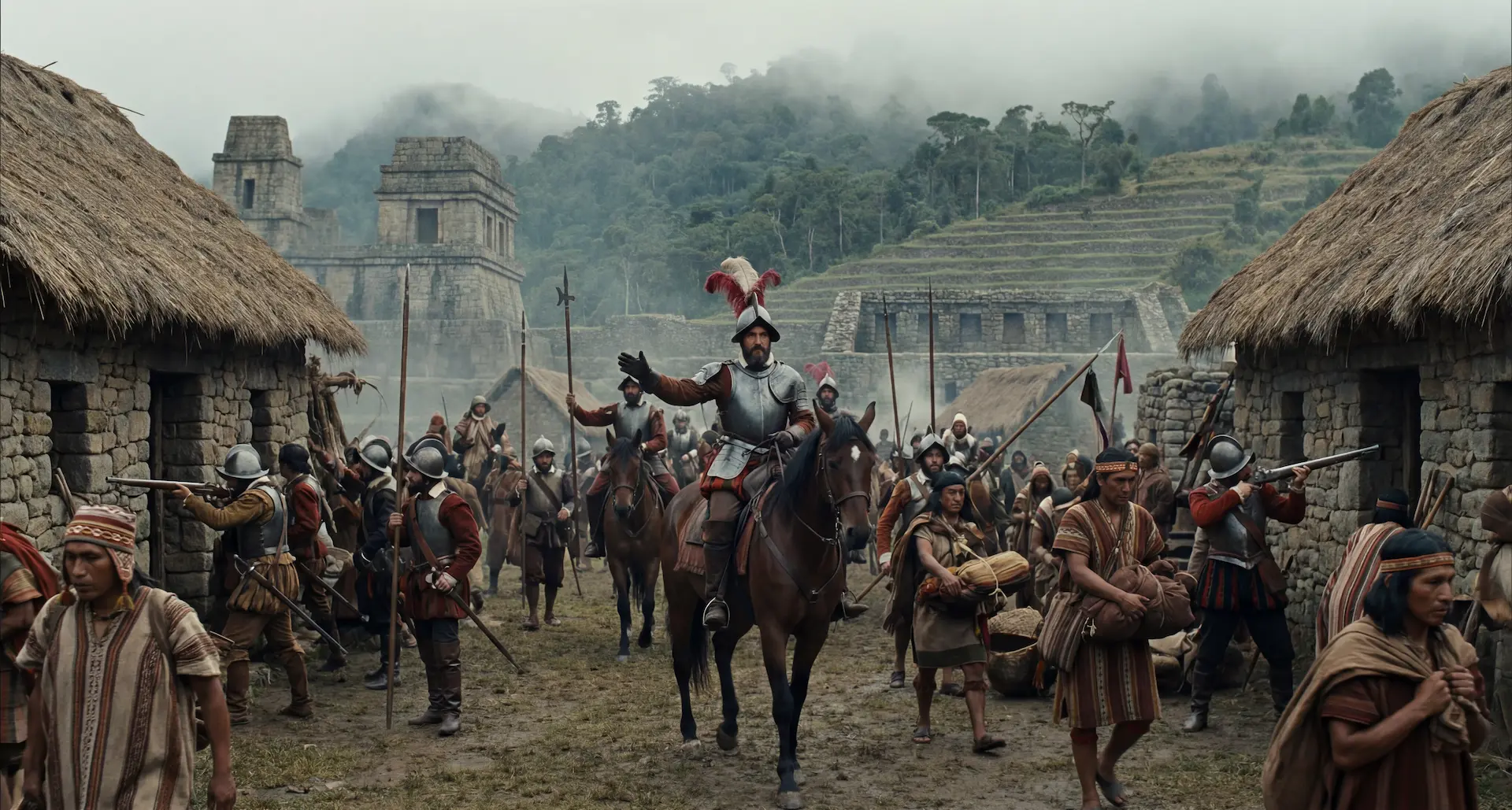
Blankenship held a consistent theory about what lay beneath Oak Island, and he never wavered from it across five decades. In his earliest known written statement, a document dated September 27, 1965 and now held in the D'Arcy O'Connor Fonds at the Public Archives of Nova Scotia, he wrote that Captain Kidd "knew the way to Nova Scotia" and speculated that the treasure "may have been Incas treasure." He referenced the story of Pizarro and noted that, as a Florida resident, he recognized the material found on the beach at Smith's Cove as coconut fiber.
By 2003, his thinking had refined but not fundamentally changed. In the Chronicle Herald interview, he went public for the first time with his conclusion that the island was a repository for gold and silver left by Spanish forces in the mid-sixteenth century, and that the treasure could be recovered within seven months if he were granted a new treasure trove license. He cited a book detailing 1,500 years of mining experience in Spain, and suggested that surface features on the island were markers that mirrored something happening deep below.
In a 2007 phone conversation recorded by D'Arcy O'Connor, Blankenship stated that he had had swamp stakes carbon-dated in the 1980s, at a cost of $300 per sample, and that the results came back to approximately 1550. He continued to argue the connection to the Spanish New World until the end of his life.
 Spanish Galleons full of Inca Gold→
The Laginas Arrive
1 min
Rick and Marty Lagina had been thinking about Oak Island since reading that same 1965 Reader's Digest article. In the early 1990s, the two brothers drove from Michigan to Nova Scotia to introduce themselves to their hero. They made it as far as the entrance to the causeway at Crandall's Point and stopped, afraid to drive any further. Jane Blankenship had told Rick over the phone that if he wanted to drive the nearly fourteen hundred miles from Iron Mountain, she could not stop him, but she had not exactly extended an invitation.
They eventually crossed the causeway and found Dan himself clearing trees with a chainsaw. Rick went to work alongside him without a word. Marty had brought a bottle of whiskey. Both brothers agreed that they were barely past some opening small talk before Dan got a phone call and sent them on their way. It would be years before the relationship developed into a partnership.
In 2006, the Laginas purchased a majority stake in Oak Island Tours. By the time O'Connor spoke with Blankenship in September 2007, Dan mentioned that "Marty and Rick" were waiting alongside him for the provincial minister to approve new treasure trove licenses. In 2014, the History Channel series The Curse of Oak Island premiered, and Blankenship, now in his early nineties, became the show's elder statesman: the living connection to a half-century of searching.
The Price of the Search
1 min
Jane Blankenship died in 2011. Their daughter Janet Kirby also predeceased Dan. His son David and daughter Linda survived him, along with four grandchildren, six great-grandchildren, and two great-great-grandchildren.
Dan had admitted even in his later years that he brooded over the possibility that death would find him before he found the treasure. "What I find most frightening is the thought that what I know might die with me," he told Sullivan. The arrival of the Laginas gave him a repository for that knowledge, but he found little consolation in the process of sharing it. Sullivan, who spent time with Blankenship in both 2003 and 2016, observed that the passage of time and the death of his old rival Fred Nolan had deepened a melancholy in him. By 2016, Dan seemed certain he would be gone before the treasure hunt was finished.
He was right. Daniel Christian Blankenship died peacefully of natural causes at the South Shore Regional Hospital in Bridgewater, Nova Scotia, on March 17, 2019. He was ninety-five years old. Roughly 120 people attended his funeral at St. Mark's Anglican Church in Martin's Point. The service included a rendition of Frank Sinatra's "My Way."
Assessment
2 min
Dan Blankenship spent 54 years on Oak Island. He gave up a profitable construction business, moved his family to a foreign country, drilled the deepest shaft on the island, survived its collapse by seconds, formed and dissolved the largest treasure-hunting syndicate in Oak Island's history, and never recovered a single item of treasure.
His contributions to the search were substantial. The Becker drilling program he and Tobias initiated in 1967, carried out by Canada Cement LaFarge, identified cement from below ground as a type common in the sixteenth and seventeenth centuries and carbon-dated recovered wood to at least two and a half centuries old. The program established the existence of man-made tunnels at depths exceeding 200 feet. The 1969 cofferdam at Smith's Cove exposed the massive U-shaped structure of notched logs with Roman numerals that remains one of the island's most significant archaeological features. The camera footage from 10-X, whatever one makes of the images, proved that a cavity existed at 230 feet in a location where none should naturally occur.
His limitations were equally real. The 10-X footage, for all the conviction Blankenship brought to its interpretation, was never confirmed by the more than ten dives that followed. His Spanish theory, held from 1965 to 2019, was based largely on personal conviction rather than documentary evidence. His falling out with Tobias cost both men decades of potential collaboration and nearly resulted in the island being sold to developers.
The History Channel's official tribute at his death read: "It is with heavy hearts that we share the news of the passing of Daniel Blankenship. A true Oak Island legend. Dan was a respected and admired man. His perseverance, ingenuity and passion inspired all." Rick Lagina, on the first episode filmed after Blankenship's death, put it simply: "You can't have Oak Island without Dan Blankenship."
He had a good contracting business in Florida, friends, and a good reputation. He gave it all up to come to Nova Scotia and make a gamble. The gamble did not pay off in the way he intended. Whether it paid off in other ways is a question the search he helped sustain may yet answer.
Sources
4 min
Primary documents:
- Statement of Daniel Blankenship, September 27, 1965. Earliest known written statement by Blankenship. Filed at the Public Archives of Nova Scotia (MG1 Vol. 383, p. 212, R.V. Harris Papers). Records his arrival on Oak Island, dismissal of Restall's work, glass-bottom boat survey, Cave-in Pit observations, Captain Kidd/Inca theory, and identification of Smith's Cove material as coconut fiber. Annotated in manuscript by Dunfield.
- D'Arcy O'Connor Fonds. Correspondence and phone interview notes spanning 1978 to 2007, including: letters between O'Connor and Blankenship (1978, 1988), O'Connor's phone notes (January 1988, November 2003, September 2007). Key material includes the 1988 legal advice on Blankenship's story rights independent of Triton Alliance, the 2003 interview documenting the Tobias falling out and Spanish theory, and the 2007 call recording the first mention of the Lagina brothers and carbon-dated swamp stakes (approximately 1550).
Newspaper sources:
- Steve Proctor, "Treasure hunter says he's pieced together Oak Island puzzle," Halifax Chronicle Herald, December 29, 2003. First major published interview with Blankenship. Spanish theory, 10-X near-death, license dispute. Photo by Tim Krochak.
- Steve Proctor, "Rival treasure sleuth just wants a resolution," Halifax Chronicle Herald, December 29, 2003. Companion article. Fred Nolan interview. Tobias quoted dismissing Blankenship's methods. Nolan regrets publicizing the cross-shaped stones.
- "No news like Oak Island news (not!)," Gazette (Montreal), December 31, 2003. Editorial column on Blankenship's license renewal.
- "For Sale: One Money Pit," Halifax Chronicle Herald, July 2005. Partners agree to put Oak Island Tours on market for $7 million. Blankenship quoted on refusing developer sales.
Obituary and funeral reporting:
- Daniel Christian "Dan" Blankenship obituary, Mahone Funeral Home, Mahone Bay, N.S. Born May 23, 1923, Ohio. Died March 17, 2019, South Shore Regional Hospital, Bridgewater, N.S. Age 95. Survived by son David (wife Garnette), daughter Linda.
- Aly Thomson (Canadian Press), "Famed N.S. treasure hunter brought about new era in Oak Island mystery," CBC News, March 26, 2019. Funeral reporting. David Eisnor eulogy. 120 attendees at St. Mark's Anglican Church, Martin's Point. Frank Sinatra's "My Way."
- "Dan Blankenship" memorial, Find a Grave (memorial 197634036). WWII service, family details, predeceased by wife Jane (2011), daughter Janet Kirby.
Published books:
- Randall Sullivan, The Curse of Oak Island: The Story of the World's Longest Treasure Hunt (Atlantic Monthly Press, 2018). Principal narrative source. Sullivan met Blankenship in 2003 and 2016. Covers Reader's Digest origin, Dunfield investment, split life between Florida and Nova Scotia, Tobias partnership, 10-X drilling and camera footage, 1976 near-death, railroad tank car reconstruction, Henskee partnership, Tobias falling out, Lagina arrival.
- D'Arcy O'Connor, The Secret Treasure of Oak Island (Lyons Press, 2004; earlier editions as The Money Pit, 1978, and The Big Dig, 1988). Three editions spanning the Triton era. O'Connor had direct and sustained access to Blankenship from the mid-1970s onward.
- Mark Finnan, Oak Island Secrets (Formac Publishing, 1995; second edition 1997). Finnan visited Oak Island in 1992-1994, met Blankenship, attended the March 1995 public showing of the enhanced 10-X tape at Western Shore firehall. Detailed account of 10-X camera footage, diver descents, 1976 shaft collapse, and the previously suppressed videotape.
- Lionel and Patricia Fanthorpe, The Oak Island Mystery: The Secret of the World's Greatest Treasure Hunt (Hounslow Press, 1994). Met Blankenship in 1988 and again in October 1993. Triton Alliance shareholder list. Reader's Digest origin. 10-X camera tape description.
- Graham Harris and Les MacPhie, Oak Island and Its Lost Treasure (Formac Publishing, third edition 2013). Engineering-focused account of Triton operations and underground structure.
- Scott Clarke, Oak Island Odyssey: A Masonic Quest (Nimbus Publishing, 2023). 10-X camera footage description from personal viewing of original tape on small monitor. Near-death chronology. Triton drilling program detail. U-shaped structure at Smith's Cove.
Scientific and technical analysis:
- Steel Company of Canada (Stelco), analysis of metal fragments and chain links from Borehole 10-X, 160-170 foot depth. Identified as smelted steel and low-carbon wire, estimated pre-1750.
- Canada Cement LaFarge, analysis of cement from Becker drilling program (1967). Identified as type common in sixteenth and seventeenth centuries.
- Bowmaster Drilling Company, drilling of Borehole 10-X to 230 feet under Blankenship's direction, 1969-1970. Parker Kennedy, driller (Halifax).
- Atlantic Divers Ltd. (Phil Irwin), Brooklyn, Nova Scotia. Professional dive into 10-X below 180-foot mark. Severe current, zero visibility from suspended particles.
- Bill Parkin, ground-penetrating sonar sensor, c. 1976. Detected previously unknown cavities in bedrock connected to or near 10-X.
Television series:
- The Curse of Oak Island, Season 1, Episode 1: "What Lies Below" (History Channel, 2014). Introduction of Blankenship as elder statesman of the search.
- The Curse of Oak Island, Season 2, Episode 2: "Return to the Money Pit." Paul Troutman (son of Dunfield crew member), recap of Dunfield-era operations.
- The Curse of Oak Island, Season 2, Episode 9: "A Dangerous Dive." Diver descent into 10-X.
- The Curse of Oak Island, Season 3, Episode 5: "Disappearing Act." Rick and Marty reach impasse over continuing 10-X work.
- The Curse of Oak Island, Season 5, Episode 8: "Dan's Breakthrough."
- The Curse of Oak Island, Season 7, Episode 1: "The Torch Is Passed." First episode filmed after Blankenship's death. Rick Lagina: "You can't have Oak Island without Dan Blankenship."