In 1849, a group of men in Lunenburg County submitted a formal application to the provincial government of Nova Scotia for permission to dig for treasure on Oak Island. The application was refused. The paperwork, however, survived, and it remains the earliest known record of anyone asking the government's permission before putting a shovel in the ground on the island. It is worth pausing on the date. Nova Scotia would not join Confederation for another eighteen years. Queen Victoria had been on the throne for twelve. And already, before a single act of the colonial legislature addressed the matter, someone had decided that digging for treasure on Oak Island required a permit.
That instinct, the idea that the state has a say in what happens beneath the soil of a 57-hectare island in Mahone Bay, has shaped the Oak Island treasure hunt as profoundly as any flood tunnel, any collapsed shaft, any piece of coconut fiber pulled from the earth. For 230 years, searchers have fought the water, the clay, the bedrock, and each other. They have also fought the paperwork. The paperwork has often proven harder.
North America's Only Treasure Law
1 min
In 1954, the province of Nova Scotia did something no other jurisdiction in North America had done or has done since: it passed a law specifically governing the search for buried treasure. The Treasure Trove Act was created to regulate activity on Oak Island, though its language was broad enough that it would eventually be applied to shipwreck salvage operations along the entire Nova Scotia coast.
The Act was administered not by the Department of Culture or Heritage, but by the Department of Natural Resources, under the same bureaucratic apparatus that governed mining. Treasure, in the eyes of the provincial government, was a natural resource. The application process required a letter to the Registrar of Mineral and Petroleum Titles, a work proposal organized by year, identification of the area of interest using the mineral rights grid, and a fee of $560.50. If the application cleared the Registrar, it went to the provincial Cabinet. If it cleared Cabinet, it received Royal Assent from the Lieutenant Governor. Only then could the applicant legally put a shovel in the ground.
The terms were simple. The province kept ten percent of whatever was found, collected "in kind," meaning the government could choose which ten percent it wanted. The Curator of Collections for the Nova Scotia Museum and the Department of Natural Resources would negotiate the selection. Licenses were typically issued for five-year terms. They could not be transferred without written permission from the Minister.
For the treasure hunters, the Act provided something that had not existed before: legal certainty. A license holder had the right to search, to recover, and to keep ninety percent of what was found. For the province, the Act provided revenue and, at least in theory, oversight. Whether it provided adequate protection for whatever might actually be buried on the island was a question that would take decades to answer.
The License as Weapon
2 min
For as long as the Treasure Trove Act was in force, the license was the key to Oak Island. Without it, no one could legally excavate. With it, a license holder had the provincial government's blessing to dig on Crown land and, with the landowner's consent, on private property. That last clause, the requirement for landowner consent on private land, turned the license into something its drafters may not have intended: a tool of control.
The problem was simple and, given the personalities involved, inevitable. By the early 2000s, Dan Blankenship and David Tobias co-owned roughly 78 percent of Oak Island through Oak Island Tours Inc. Tobias was president and held a controlling vote. Fred Nolan owned five lots on the northern side. Robert Young owned one lot. The rest was Crown land. When all existing treasure trove licenses expired in July 2003, four applicants filed for new ones: Oak Island Exploration (Tobias's company, of which Blankenship was a dissident member), Mahone Bay Exploration (Blankenship's own application), Fred Nolan, and Robert Young.
Blankenship's application was the only one that covered property he did not personally own. Because Oak Island Tours held the land and Tobias held the deciding vote, Blankenship could not obtain the landowner consent required for his own license on an island he had lived on for nearly four decades. The Registrar of Mineral and Petroleum Titles, Rick Ratcliffe, was bound by the law. A civil servant with no background in the complexities of the Oak Island saga was left to adjudicate a feud that had been festering since the early 1990s.
In 2004, Tobias and Nolan were granted licenses. Blankenship was refused. He had met with Natural Resources Minister Richard Hurlburt, laid out his findings, and told the Chronicle Herald: "I turned 80 in May and won't get another chance." The province gave the license to a man in Montreal who had not set foot on the island in years, while the man who lived there, who had drilled its deepest shaft and nearly died in it, was told he could not dig in his own backyard.
The situation was, as Marty Lagina would later describe it, "a thorny mess."

The Lagina Transition
1 min
In April 2006, Rick and Marty Lagina purchased fifty percent of Oak Island Tours from David Tobias. The Michigan Group, as they were known, had also acquired Lot 25 through their associate Allan Kostrzewa. Dan Blankenship retained the other half of the company. For the first time in years, the people who owned the island and the people who wanted to dig on it were the same people.
Getting a license, however, still required the full bureaucratic journey. The application had to pass the Heritage Research Permit stage at the Nova Scotia Museum, then clear the Registrar, then go to Cabinet, then receive Royal Assent. By September 2009, three years after the Laginas had bought in, Oak Island Tours still had not received its Treasure Trove License. John MacNeill, who had replaced Rick Ratcliffe as Registrar that May, told D'Arcy O'Connor the application was "still in the conduit" and that he was "hoping it will move soon." A change in government, with the NDP taking power, had forced new ministers to re-read and vote on all pending legislation. The license, when finally issued, would be for two years rather than the five-year terms granted in the past.
In July 2010, the license was finally granted. It would expire on December 31 of that year. By then, the law itself would be gone.
The Oak Island Treasure Act
1 min
On November 2, 2010, Natural Resources Minister John MacDonell introduced Bill 81 in the Nova Scotia Legislature. The bill proposed three things: repeal the Treasure Trove Act, amend the Special Places Protection Act, and create a new piece of legislation called the Oak Island Treasure Act. The bill passed third reading on November 26 and received Royal Assent on December 10. It took effect on January 1, 2011.
The repeal of the Treasure Trove Act had been recommended by a 2006 Voluntary Planning heritage strategy task force, which raised questions about whether private firms should be allowed to conduct salvage operations and recover artifacts for commercial gain. The UNESCO Convention on the Protection of the Underwater Cultural Heritage added international pressure. Percy Paris, the Minister of Tourism, Culture and Heritage, put the government's position plainly: "Artifacts in shipwrecks along our coast belong to Nova Scotia."
Every treasure trove license in the province expired on December 31, 2010. Divers who had spent millions exploring the roughly 10,000 shipwrecks off the Nova Scotia coast were, overnight, out of business. The most famous recovery under the old Act had been the Le Chameau operation in 1965, when divers salvaged approximately $500,000 in gold coins and artifacts from a French payship that sank near Louisbourg in 1725. That kind of operation would no longer be legal.
Oak Island was the sole exception. The new Act created a bespoke framework for the island alone. The Minister of Natural Resources could now issue licenses directly, without Cabinet approval or Royal Assent. Existing Treasure Trove licenses on Oak Island continued for one year under the new regime. The definition of "treasure" remained unchanged from 1954: precious stones or metals in a state other than their natural state. Everything else, every piece of pottery, every iron spike, every fragment of wood or leather or bone, fell outside the definition.
That distinction would matter more than anyone anticipated.
The Letter
2 min
The moment the legal ground shifted beneath the Laginas' feet arrived not in a courtroom or a legislature but in an envelope. In season five, episode three of The Curse of Oak Island, a letter from Nova Scotia's Department of Communities, Culture and Heritage informed the team that all metal detecting on the island must now be conducted under a Heritage Research Permit and that no excavation or removal of objects could occur without formal archaeological oversight.
The letter was not entirely unexpected. In 2014, local MLA Denise Paterson-Rafuse had introduced a bill to amend both the Oak Island Treasure Act and the Special Places Protection Act. The amendments cancelled all existing Oak Island treasure licenses outright, designated the island as a protected site, and replaced the treasure license system with Heritage Research Permits administered under the Special Places Protection Act. Under the new framework, the province would appoint an archaeologist to monitor any excavation on the island. The permit holder would pay the archaeologist's expenses. If coins or gold or silver bars were found, the permit holder could keep seventy-five percent; the remaining twenty-five percent, selected by the government-appointed archaeologist, would go to the Nova Scotia Museum. All other heritage objects, every artifact that was not a precious metal or a precious stone, became the property of the province.
After a tense face-to-face meeting with provincial officials, the team reached a compromise. Archaeologist Laird Niven, who had worked with the Laginas since helping secure the original Treasure Trove License seven years earlier, would hold a single Heritage Research Permit. An archaeologist would be present at every dig. Metal detecting could continue without an archaeologist present, provided no digging occurred while the archaeologist was away.
It was a workable arrangement, and Niven's presence proved its value almost immediately. On Lot 24, the former property of Samuel Ball, Niven spotted large, rounded, stacked rocks beneath a tree stump that he identified as cultural, possibly a wall or foundation, and called an immediate halt. The formation, hidden for centuries under the root system, would require careful archaeological investigation before the team could proceed. Niven had prevented the team from destroying with an excavator what might have been the most significant feature on that lot.
The Tightening
2 min
What followed over the next eight seasons was a steady, incremental expansion of government oversight that fundamentally changed how the treasure hunt operated. Each season brought new requirements, new restricted areas, and new negotiations with provincial authorities.
In season nine, Niven explained to the team that the Department of Communities, Culture and Heritage wanted more oversight of the search. Areas of the eastern drumlin that had previously been unrestricted now required permits, more formal testing, and more excavation by hand. When Mi'kmaq pottery was recovered from a stone feature in the swamp, the Department contacted the Acadia First Nation, and four acres of the island were placed under special restrictions. Work in those areas could not continue without clearance from both the First Nation and the province. Marty Lagina made the difficult decision to scale back the archaeological team: Niven remained in an advisory role, but the field archaeologists departed at the end of that week.
The following season brought a sharper confrontation. When the team attempted to rehabilitate the Garden Shaft for deep excavation, the Nova Scotia government determined that the project required mining permits rather than the rehabilitation authorization Dumas Contracting had received. Work was halted. The contractor fielded more than fifty questions from various government agencies. Six weeks passed before operations resumed. Craig Tester, who managed the logistics and engineering side of the operation, described the permitting as a process that could stop months of planning overnight.
The visit of Nova Scotia Premier Tim Houston in season nine briefly suggested the political winds might be shifting. Houston told the team he felt they had "done things properly" and that there needed to be "a balance between common sense and regulations." Whether that sentiment translated into actual policy is less clear. By season twelve, the government had designated a feature on Lot 5 a "special place" under the Special Places Protection Act, meaning objects could only be removed by archaeologists. By season thirteen, the team was working within a patchwork of permitted and restricted zones, applying for access to areas sometimes only forty feet from where they were already digging.
What the Law Means for the Treasure
1 min
The practical consequences of the current legal framework depend entirely on what the team finds. The definition of "treasure" under the Oak Island Treasure Act is narrow: precious stones or metals in a state other than their natural state. Coins, gold bars, silver ingots, gemstones. Under the Heritage Research Permit system, the team may keep seventy-five percent of such finds, surrendering the other twenty-five percent to the province.
Everything else is a heritage object. Pottery, iron, wood, leather, bone, parchment, stone carvings, lead artifacts, brass fittings. Under the Special Places Protection Act, heritage objects discovered on Oak Island become the property of Nova Scotia. The team may study them, display them, photograph them, and use them in their research. They do not own them.
The implications are worth considering. If what lies beneath Oak Island is a cache of Spanish gold coins, the Laginas keep seventy-five percent and the province gets twenty-five. If it is a chest of Templar documents written on vellum, the province owns the chest and every page in it. If it is the Ark of the Covenant, it belongs to Nova Scotia. The treasure hunters who have spent more than a decade and an undisclosed fortune searching for it would have no legal claim to the object itself.
In season eleven, when archaeologist Jamie Kouba recovered a piece that tested at ninety percent silver from the Garden Shaft spoils, Rick Lagina confirmed on camera that the find "qualifies as treasure under the treasure trove license." It was one of the few moments in the show's history where the legal framework became visible to the audience. For Rick, the distinction was clear: silver is treasure, treasure belongs to the finder. For the province, the distinction is equally clear: everything else belongs to Nova Scotia.
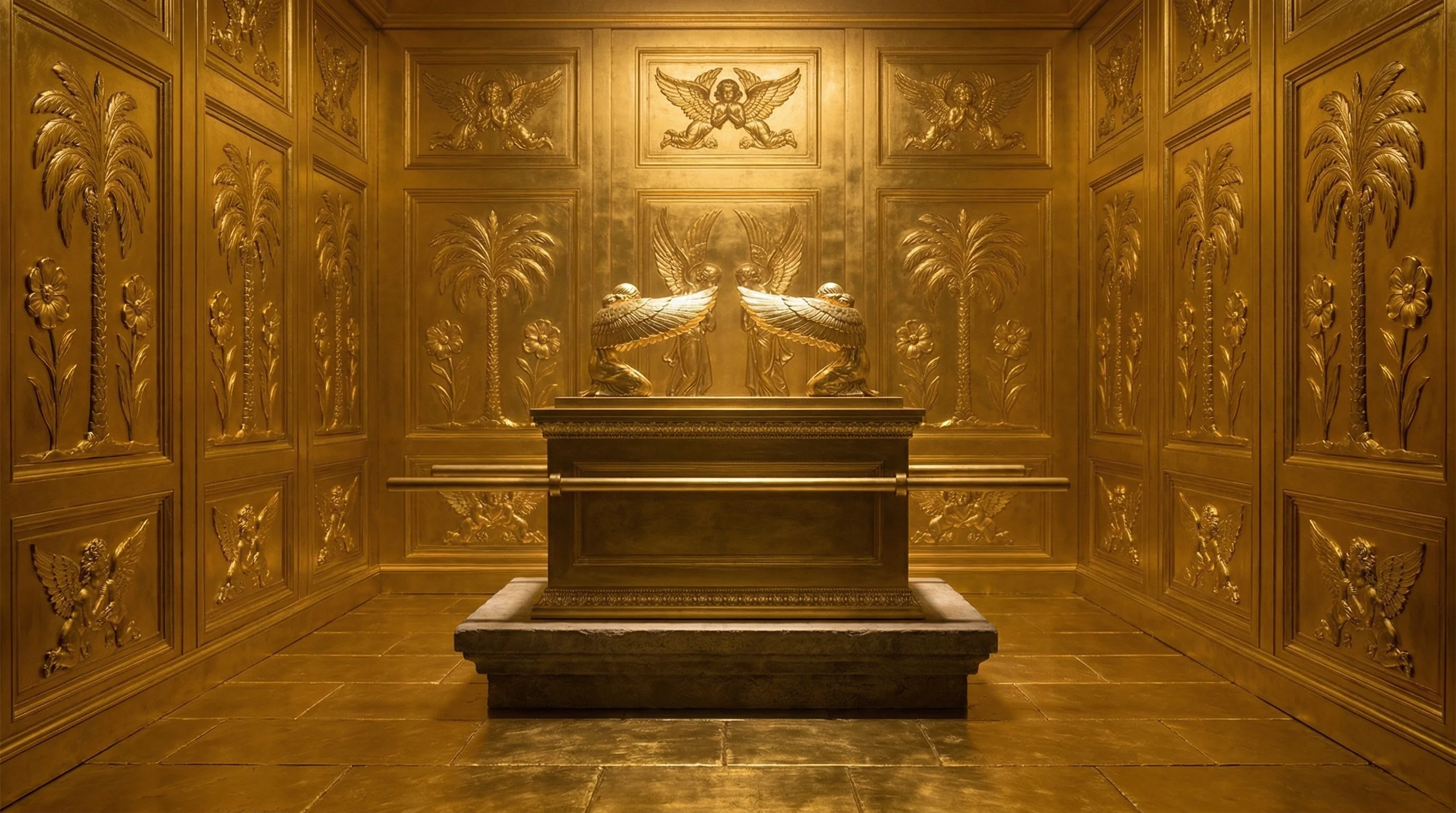 The Ark of the Covenant→
Assessment
1 min
Three successive acts of the Nova Scotia legislature have governed Oak Island across seven decades. The Treasure Trove Act of 1954 treated buried treasure as a natural resource, administered through the same bureaucracy that issued mining licenses. The Oak Island Treasure Act of 2010 preserved the right to search but eliminated the broader treasure-hunting framework that had applied to the rest of the province. The Special Places Protection Act amendments of 2014 completed the shift from treasure hunting to heritage management, placing the island under archaeological oversight and giving the province ownership of all non-monetary finds.
Each act reflected the politics of its moment. The 1954 law was written for an era when treasure was something to be found and divided. The 2010 law was written under pressure from UNESCO and heritage advocates who argued that artifacts were being exploited for commercial gain. The 2014 amendments were written in response to the Laginas' own success: the more they found, the more the province wanted to protect.
For the men and women who have searched Oak Island across two centuries, the legal framework has been an obstacle as persistent as the water itself. Robert Restall never had a formal license. Dan Blankenship spent the last fifteen years of his active career fighting for one. The Laginas spent six years securing permits before they could begin filming. Today, Laird Niven effectively sets the pace of the excavation, and the province can designate any feature a "special place" at any time, halting work until its archaeologists are satisfied.
Whether this is the right balance between the rights of the searchers and the obligations of the state is a question Nova Scotia has been answering, and re-answering, since 1849. The treasure, if it exists, has been underground for centuries. The paperwork required to reach it grows thicker every year.
Sources
4 min
Legislation (full text):
- Treasure Trove Act, RSNS 1989, c 477 (enacted 1954, revised 1989, repealed January 1, 2011). North America's only treasure-hunting statute. Administered under the Department of Natural Resources, Mineral Resources Branch. Full text: https://www.canlii.org/en/ns/laws/stat/rsns-1989-c-477/latest/rsns-1989-c-477.html
- Oak Island Treasure Act, SNS 2010, c 39 (Bill 81). Introduced November 2, 2010; Royal Assent December 10, 2010; effective January 1, 2011. Replaced the Treasure Trove Act for Oak Island only. Full text as passed: https://nslegislature.ca/legc/bills/61st_2nd/3rd_read/b081.htm
- An Act to Amend the Oak Island Treasure Act and the Special Places Protection Act (Bill 68, 62nd General Assembly, 1st Session, 2014). Cancelled all Oak Island treasure licenses, designated Oak Island a protected site, introduced Heritage Research Permits, mandated government-appointed archaeologist. Full text: https://nslegislature.ca/legc/bills/62nd_1st/1st_read/b068.htm
- An Act to Amend the Oak Island Treasure Act and the Special Places Protection Act (Bill 40, 62nd General Assembly, 2nd Session, 2014). Companion bill with technical amendments. Full text: https://nslegislature.ca/legc/bills/62nd_2nd/1st_read/b040.htm
- Special Places Protection Act, RSNS 1989, c 438 (as amended). Governs heritage objects, protected sites, and Heritage Research Permits on Oak Island. Consolidated statute: https://nslegislature.ca/sites/default/files/legc/statutes/specplac.htm
- Oak Island Treasure Act (consolidated). Current version incorporating all amendments: https://nslegislature.ca/sites/default/files/legc/statutes/oak%20island%20treasure.pdf
Government announcements and guidelines:
- Government of Nova Scotia, "Changes to Treasure Hunting Regulations Introduced," news release, November 2, 2010. Ministers John MacDonell (Natural Resources) and Percy Paris (Tourism, Culture and Heritage). https://novascotia.ca/news/release/?id=20101102006
- Government of Nova Scotia, "Changes to Treasure Hunting Regulations," news release, July 13, 2010. Initial announcement of intent to repeal. https://news.novascotia.ca/en/2010/07/14/changes-treasure-hunting-regulations
- Mineral Resources Branch, Department of Natural Resources, "General Guidelines for Treasure Trove Applicants." Application procedures, fee schedule ($560.50), royalty terms (10% in kind), mineral rights grid requirements. Contacts: John MacNeil, Robert Ogilvie. https://novascotia.ca/natr/meb/data/pubs/ic/ic61_v6.pdf
- Nova Scotia Permits Directory, Department of Natural Resources, Oak Island Treasure Act license information. https://novascotia.ca/sns/paal/dnr/paal147.asp
Newspaper sources:
- Steve Proctor, "Treasure hunter says he's pieced together Oak Island puzzle," Halifax Chronicle Herald, December 29, 2003. Blankenship at 80 without a license; four applicants; Ratcliffe quoted on review process.
- Steve Proctor, "Rival treasure sleuth just wants a resolution," Halifax Chronicle Herald, December 29, 2003. Companion article. Nolan and Tobias quoted.
- "Tunnels below Oak Island hold Spanish booty, die-hard insists," Globe and Mail, December 30, 2003. Ratcliffe confirms all licenses expired July 2003; four applicants named; Blankenship's application the only one covering property he does not own. https://www.theglobeandmail.com/news/national/tunnels-below-oak-island-hold-spanish-booty-die-hard-insists/article18441056/
- "For Sale: One Money Pit," Halifax Chronicle Herald, July 2005. Partners agree to sell Oak Island Tours for $7 million. Blankenship: "Money's not my god."
- Aly Thomson (Canadian Press), "Looters likely to be scouring sunken treasures off Nova Scotia, experts warn," Globe and Mail, April 9, 2019. Post-repeal consequences for shipwreck archaeology; Oak Island Act as sole exception; Le Chameau recovery referenced. https://www.theglobeandmail.com/canada/article-looters-likely-scouring-sunken-treasures-off-nova-scotia-experts-warn-2/
Online primary sources:
- Oak Island Tourism Society, "Time for Treasure Hunt." Ratcliffe confirms license changed hands to Michigan Group and Blankenship; Delaware company dissolution required. http://oakislandsociety.ca/time-treasure-hunt/
Published books:
- Randall Sullivan, The Curse of Oak Island: The Story of the World's Longest Treasure Hunt (Atlantic Monthly Press, 2018). Blankenship-Tobias license dispute, "For Sale" headline, Lagina acquisition of Oak Island Tours.
- Scott Clarke, Oak Island Odyssey (Nimbus Publishing, 2023). Treasure trove license history, Triton Alliance operations under license.
Television series:
- The Curse of Oak Island, Season 1, Episode 1: "What Lies Below". Laginas spent six years securing permits before full-scale investigation.
- The Curse of Oak Island, Season 2, Episode 1: "Once In, Forever In". MLA introduces bill to replace Oak Island Treasure Act with heritage research permit system.
- The Curse of Oak Island, Season 4, Episode 2: "Always Forward". Laird Niven first appears; recommends formal archaeological permit.
- The Curse of Oak Island, Season 5, Episode 3: "Obstruction". Letter from Department of Communities, Culture and Heritage; Heritage Research Permit compromise reached; Niven appointed as permit-holding archaeologist.
- The Curse of Oak Island, Season 9, Episode 1: "Going for the Gold". Niven explains changing regulatory requirements; previously unrestricted areas now require permits. The Curse of Oak Island, Season 9, Episode 3: "Stone Roadblock". Mi'kmaq pottery found; CCH and Acadia First Nation consulted; four acres restricted.
- The Curse of Oak Island, Season 9, Episode 14: "Premier of the Dig". Premier Tim Houston visits; "balance between common sense and regulations."
- The Curse of Oak Island, Season 10, Episode 7: "Norsing Around". Garden Shaft requires mining permits; 50+ questions from agencies; work halted.
- The Curse of Oak Island, Season 11, Episode 19: "Hi Ho Silver". 90% silver piece qualifies as treasure under license.
- The Curse of Oak Island, Season 13, Episode 1: "The Comeback". 1849 Lunenburg treasure trove application referenced as earliest known.