In 2009, the researcher Scott Clarke drove to Wolfville, Nova Scotia, to meet a man named Bill Anderson, a direct descendant of an eighteenth-century sea captain whose chest had stayed in the family for more than two centuries. Inside the chest, alongside its original key, was a document of red wax and faded ink dated June 24, 1791. The Chester Lodge No. 9 secretary had written it to certify that Brother James Anderson stood as a regular Master Mason of the lodge, had conducted himself honourably during his stay there, and was recommended to fellow Masons wherever he travelled next. It was signed by the lodge secretary Thomas Thomson and the lodge master Roger English.
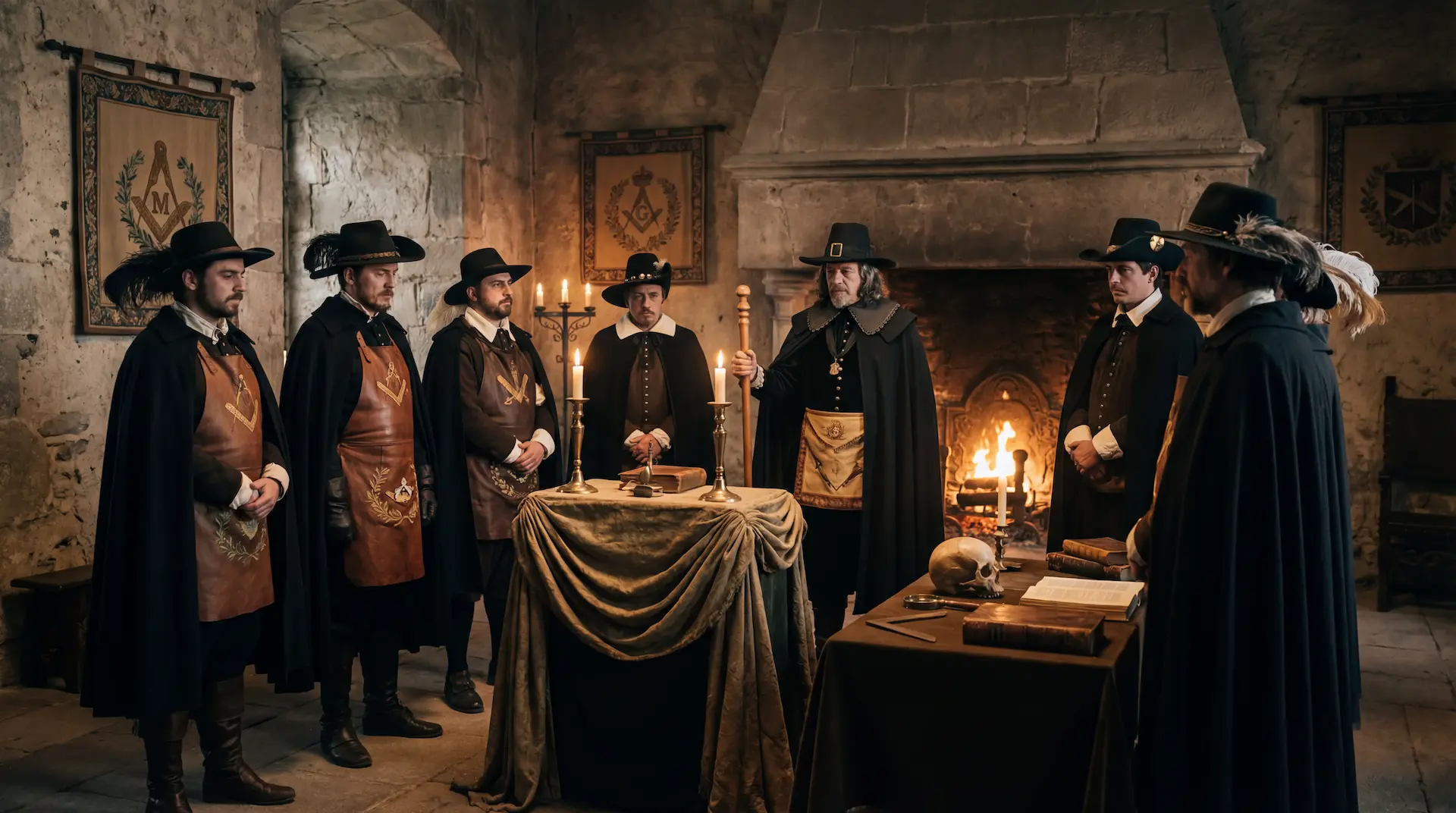 Freemasons on Oak Island→
Eight years later, a different branch of the family, in Wolfville again, would open the same chest for cameras during Season 5, Episode 2 of The Curse of Oak Island. Inside it the team also found a purchase document for a schooner called the Betsy, acquired in 1778 for sixty-seven pounds and seventeen shillings, and four keys. Three of them fit nothing the family could identify.
The man who carried that chest from Baltimore to Halifax to Lot 26 of Oak Island, and from there to his death in the West Indies one year after the Money Pit was discovered, is among the most thoroughly documented figures associated with the island. The record names him in Maryland Council minutes, in a letter to a future president of the United States, in the columns of the Pennsylvania Gazette, in the petitions of the American Loyalist Claims series held by the British Public Records Office, and in the founding attendance ledger of Chester Lodge No. 9. The pirate theory of Oak Island rests, in part, on him.
Fells Point, 1772 to 1777
1 min
James Anderson was born about 1748 and by 1772 was leasing lot number twenty-two on Thames Street in the Fell's Point district of Baltimore, Maryland. He worked as a sea captain. He was respected enough among his neighbours that when John French of Fell's Point wrote his will in October 1774, he named Anderson as a friend, left him a pair of cast iron hand irons, a looking glass, a gilt-framed picture of the Crucifixion, and silver tea spoons, and appointed him guardian of his daughter Ellinor. By the following year Anderson had married Mary Brimmer, who would bear his children and outlive him.
When the American Revolution broke out, Anderson sided early with the rebels. According to the Loyalist Claims he later filed with the British government, he was "among the first that opposed the association at the beginning of the Rebellion" and took the patriot's oath in 1776. He was made a lieutenant on a galley and rose to a privateer command of his own. On 18 February 1777 he auctioned a captured ship and its contents at his house on the Baltimore waterfront, the standard public sale by which privateers turned a prize into cash. To the rebel committees of the Chesapeake he was, at that moment, a useful man.
Defection to the British
1 min
In April 1778 he changed sides. Anderson's own statement in the Loyalist Claims puts the date and place plainly: he joined His Majesty's forces at Philadelphia and received a permit from General William Howe to procure provisions for the British garrison there, which he did in a vessel of his own. The rebels confiscated his estate and, as he later wrote, "every individual article he was possessed of." For the remainder of the war he served the British navy as pilot and privateer in Chesapeake Bay, mentioned by name in the Pennsylvania Gazette among the loyalist privateers operating those waters. A witness deposition recorded in the 1781 Council of Maryland correspondence described him as wearing, on the breast of his shirt, a handsome Bristol Stone Freemason brooch. Anderson, at this point, was already a Mason. He had received his Entered Apprentice degree in Maryland.
The cost of changing sides was severe. He recorded that he was many times forced to leave his estate and family to fortune, and "screen himself in the woods." But he kept sailing.
A Letter to Thomas Jefferson
1 min
In late 1779 his luck ran out. Anderson was captured by Captains Yellott and Folger in one of the barges that had been harassing rebel shipping in the bay, and was taken to Richmond, where he was imprisoned. On 31 January 1780 the Maryland Council wrote to the Governor of Virginia, the future third president of the United States, Thomas Jefferson. The letter, preserved in volume forty-three of the Journal and Correspondence of the State Council of Maryland, opens by informing Jefferson that a certain James Anderson, a subject of Maryland, had been captured and was now confined at Richmond, and asks the governor to deal with him for high treason.
The Virginia treason statute carried a punishment of execution but Anderson was spared. Why he was released, and on what terms, is not in the surviving record. Scott Clarke remarks Freemasons sat on both sides of the Revolution and that Anderson's lodge standing may have been the factor that saved him. Whatever the reason, by about 1780 he had moved his family from Baltimore to New York, the principal British stronghold in the colonies, and from there, after the war, to Nova Scotia.
The Refuge of Loyalists
1 min
The peace of 1783 sent tens of thousands of American loyalists north to British territory, and Halifax became one of the principal landing places. Anderson reached Halifax by 1783 and within a year had settled in Chester, a small port on the western shore of Mahone Bay close to the mainland landing at Oak Island. His son John Seccombe Anderson was born at Chester in February 1790, the name a courtesy to the Reverend Jonathan Seccombe, the Chester minister whose own family had crossed paths with the early Oak Island lot owners on the Belcher and Prescott side.
On 27 December 1784, Anderson sat in the room in Chester where eight Master Masons petitioned to form a new lodge. According to the surviving Chester Lodge No. 9 attendance records at the Nova Scotia Archives, two James Andersons joined the lodge that night. The man recorded as James Anderson Junior was one of the eight founding Master Masons, raised in Scotland. The man recorded as Captain James Anderson Senior was the privateer from Maryland, present that evening as an Entered Apprentice, passed to Fellowcraft during the meeting itself, and raised to Master Mason in the years that followed. Chester Lodge No. 9 was the oldest and closest Masonic lodge to Oak Island during the period in which the Money Pit is supposed to have been built. It would remain active until the 1820s, then go dark, and reopen in 1870 under a new warrant as Clarke Lodge No. 61.
Lot 26
1 min
In 1785, the year after he joined the lodge, Anderson took possession of Lot 26 on Oak Island and moved his family onto the property. The lot sits on the south shore, west of the swamp, on the same side of the island as the lots that would later become Samuel Ball's. The lot is known for its 12th century dates well that never freezes and an old rock wall, thought to be of European origin.
 Stone well (never freezes)→
 Rock Wall (Lot26)→
Anderson owned Lot 26 for three years. In 1788 he sold the property to Samuel Ball, the formerly enslaved man from South Carolina who had arrived in Chester the previous year and would become, in time, a succesful landowner. Of the men who acquired Oak Island lots before the Money Pit was discovered in 1795, Anderson is the only one the documentary record identifies as both a Mason and a working pirate, and the only such figure known to have lived on the island.
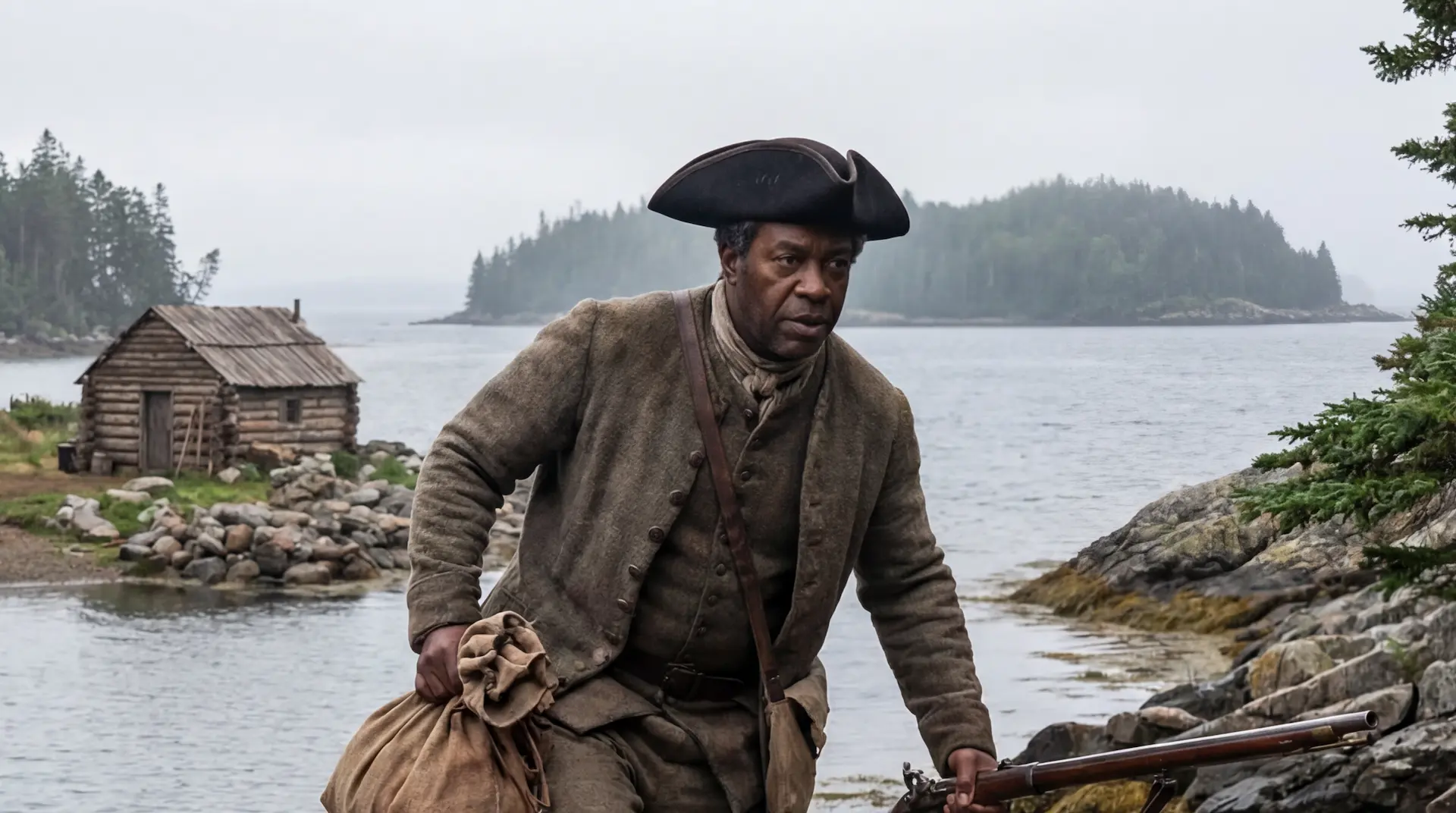 Samuel Ball, the Unlikely Oak Island Owner→
Anderson was not the only Chester Lodge member among the early owners. Alexander Pattillo, one of the founding eight Master Masons of the lodge and a long-serving Worshipful Master, owned Lots 1 and 27. James Sharp, another founding member raised in Scotland, owned Lot 28. Captain James Kinghorn, initiated into the lodge that same first meeting, already owned Lot 4 when he joined. Doctor Jonathan Prescott, raised to Master Mason that same evening, owned Lots 8 and 22. Alexander McNeil, who joined two years later, owned Lots 20 and 21 and bought Lot 4 from Kinghorn in 1786. By Clarke's count, six members of Chester Lodge No. 9 owned at least nine of the thirty-two lots on Oak Island before the Money Pit was discovered in 1795. That is close to thirty percent of the island.
The Sea Chest
1 min
The sea chest is the centrepiece. Inside it, when it was first opened in 2009 at the home of Bill Anderson, was the June 1791 Master Mason certificate, still bearing its red wax seal. The document certifies Anderson's standing in Lodge Number Nine, vouches for his conduct during his time among the brethren, and recommends him to fellow Masons "whersoever providence may order his lott." The signatures are those of Thomas Thomson, the Scottish-raised first master of the lodge, and Roger English, a sergeant major of the British 45th Regiment of Foot raised as a Mason at Louisbourg in 1762.
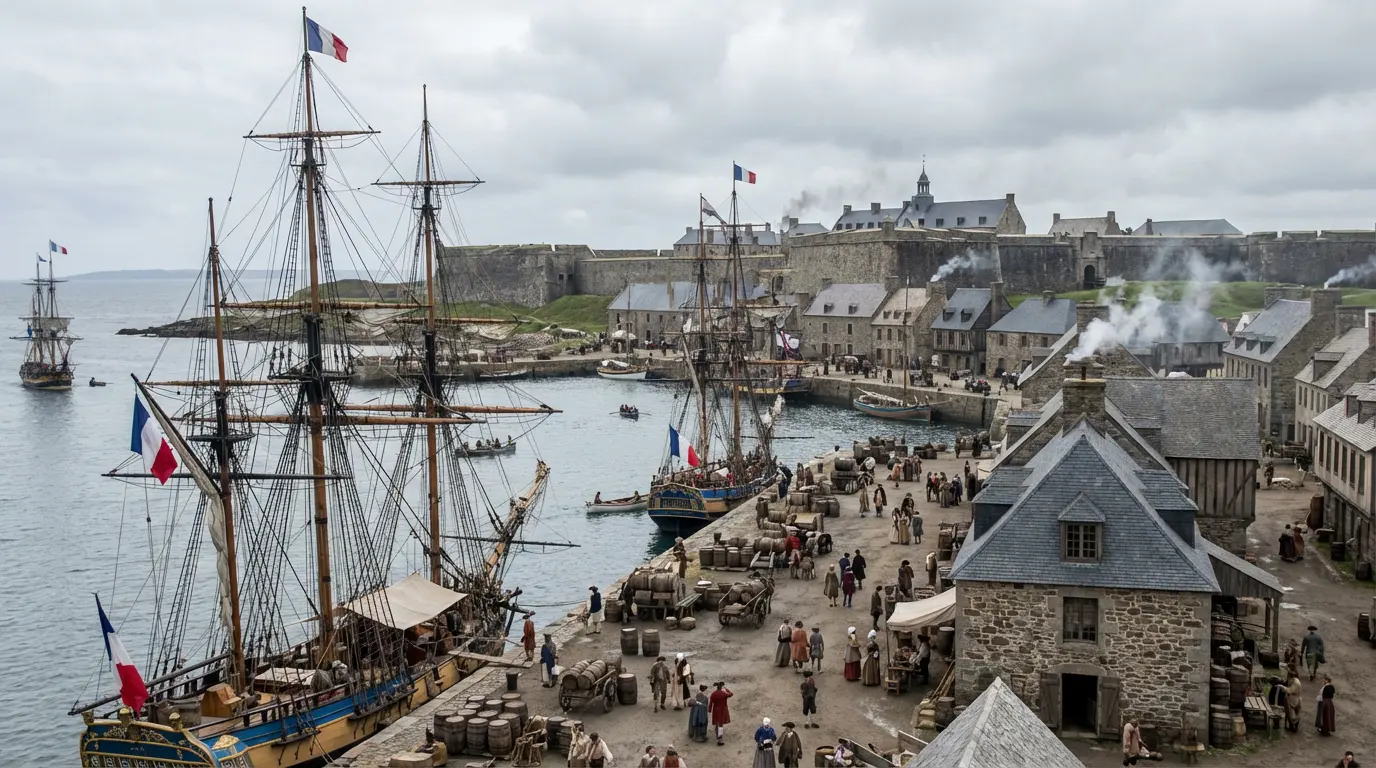 The Treasure of Louisbourg→
The chest, examined again on camera in 2017 by the Lagina team and the descendant Steve Atkinson, also held the purchase document for the schooner Betsy, dated 1778 and priced at sixty-seven pounds seventeen shillings. The schooner was Anderson's privateer command, distinct from the rebel galley he had been given in 1776 and from the ship called the Baltimore that he had captained for the patriot side. Beside the documents lay four keys. One opened the chest itself. Three opened nothing the family had ever seen.
The Betsy's Cargo
2 min
What Anderson would have had access to during his fifteen years at sea is the central question of the pirate theory. As a privateer he had legal sanction to take prizes. As a loyalist operator with a permit from General Howe he had a British military pass to move freight along an enemy coast. As an escaped prisoner of the Virginia council he had reason to keep moving and to conceal what he carried. The American Loyalist Claims he filed in London record significant losses of personal property and confiscated estates, an unusual paper trail for a man often described in the same documents as having to hide in the woods.
The smuggling theory of Lot 26 proposes that Anderson, having operated for years in the coastal waters between Baltimore, Philadelphia, New York, and Halifax, used his three years on Oak Island to bury or stage cargo that he could not openly land. The theory does not require him to have built the Money Pit, which most accounts place earlier in the eighteenth century or much earlier still. It requires only that he treated the island as a private cache during the brief window when the lot was legally his. The four keys, three of them matching no surviving chest, are taken by some readers as evidence that other chests existed and were left somewhere. The Lot 26 well, examined in Season 10, was carbon-dated by Doctor Ian Spooner to between 1028 and 1172 and tested by the same researcher for elevated silver in the water, a result not found in any other well on the island outside the Money Pit area. The well predates Anderson by six centuries. Whatever it once marked, he would have known it was there.
The case against the smuggling theory is that no document places treasure in his hands. The Loyalist Claims describe losses, not gains. His widow, Mary Brimmer Anderson, did not appear in the historical record as a wealthy woman after his death. The lot sale to Samuel Ball in 1788 was a normal land transaction at the prevailing rate. If Anderson buried anything on Lot 26, he did so in silence, and the silence has held.
The West Indies, 1796
1 min
James Anderson died in the West Indies in 1796, one year after the boys Daniel McGinnis, John Smith, and Anthony Vaughan reported finding the depression that would become the Money Pit. He was forty-eight. What he was doing in the Caribbean at that age, eleven years after he had given up his Oak Island lot, the record does not say. He may have returned to active sea captaincy. He may have been trading. He may have been doing something quieter. His widow remarried in November 1797, to Josiah Marvin.
 The Real Daniel McGinnis of Oak Island→
The case for Anderson as an Oak Island actor is one of the strongest available, not because the documentary record places him at the Money Pit, but because the documentary record places him almost everywhere else. His name appears in a Maryland will, a Virginia treason letter, a Maryland Council deposition describing a Masonic brooch on his shirt, a London Loyalist Claims petition, a Nova Scotia lodge ledger, an Oak Island deed, and a sea chest still held by his descendants in Wolfville. The artefacts recovered from Lot 26 in recent seasons, the medieval well, the seventeenth-century bush scythes, the iron projectile reclassified as a Roman pilum, the British naval officer's button found in the neighbouring Ball foundation, all predate or postdate his three years of ownership, and most have nothing to do with him. What they do establish is that Lot 26 sat on ground that mattered to other people long before he arrived and after he was gone.
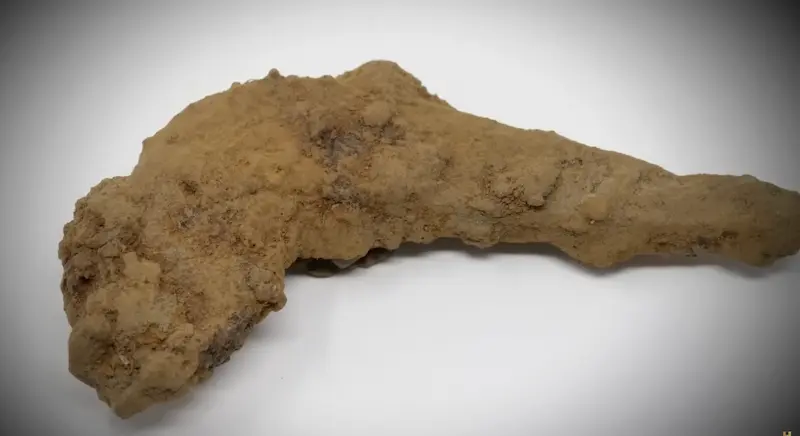 Bush Scythe Fragments→
 British naval officer's button→
The man can be proven. The Mason can be proven. The lot can be proven. The chest can be opened. What cannot be proven, on the evidence available, is whether Captain James Anderson buried anything on Oak Island, or whether he simply lived there for a time on his way somewhere else.
Sources
3 min
Primary Documents (Eighteenth Century)
- John French of Fell's Point, Last Will and Testament, Baltimore, Maryland; dated 12 October 1774, probate 14 November 1774. Bequeathed household items to James Anderson and named him guardian to French's daughter Ellinor. Folio 289, p. 8. Abstracted in Leslie and Neil Keddie, Baltimore, Maryland Wills 1774–1779 (Family Tree Bookshop).
- American Loyalist Claims, Series 2, A.O.13, Bundle 24, pp. 7–9; New Claims, Nova Scotia. Petition filed by James Anderson detailing his services to the Crown, his confiscated Baltimore estate, his permit from General William Howe in April 1778 to procure provisions for the Philadelphia garrison, his work as pilot, and his treason imprisonment in Virginia. Held by the British Public Records Office (now The National Archives, Kew), London. Family History Library microfilm 366717. Great Britain, Exchequer and Audit Department.
- Maryland Council Letter to Governor Thomas Jefferson, dated 31 January 1780. Informs the Governor of Virginia that James Anderson, a subject of Maryland, has been captured by Captains Yellott and Folger and is confined at Richmond, and requests he be dealt with for high treason. Published in Journal and Correspondence of the State Council of Maryland (27 October 1779 – 13 November 1780), vol. 43.
- Council of Maryland Witness Deposition, 1781. Witness describes Anderson as wearing a "handsome Bristol Stone Freemason broach on the breast of his shirt." Recorded in the Maryland Council correspondence of that year.
- Pennsylvania Gazette (Philadelphia), wartime issues. Named Anderson among the loyalist privateers operating in Chesapeake Bay.
- Chester Lodge No. 9 Attendance Records, Chester, Nova Scotia. Founding meeting 27 December 1784 records eight founding Master Masons and three petitioners passed to Fellowcraft, including "Captain James Anderson Sr." entering as Apprentice from Maryland and passed to Fellowcraft the same evening. Held in the Grand Lodge of Nova Scotia special collection, Nova Scotia Archives, Halifax.
- Master Mason Certificate, Chester Lodge No. 9, dated 24 June 1791. Issued to Brother James Anderson, signed by lodge secretary Thomas Thomson and lodge master Roger English. Original document held in the Anderson family sea chest, Wolfville, Nova Scotia. Bears its original red wax seal.
- Schooner Betsy Purchase Document, 1778, sixty-seven pounds seventeen shillings. Held in the Anderson family sea chest.
- Chester Township Book of Lunenburg County, Nova Scotia – Births / Family Records 1762–1820, entry "Heirs of James and Mary Anderson." Records the children born to the Andersons after settlement in Chester, including John Seccombe Anderson (born 6 February 1790).
- Lunenburg County Deed Records, 1785 transfer of Lot 26 on Oak Island to James Anderson, 1788 sale to Samuel Ball.
Books and Published Research
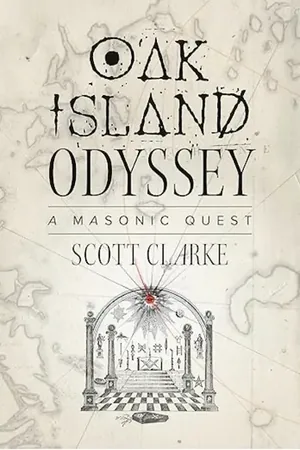
- Clarke, Scott. Oak Island Odyssey. Halifax: 2023. Chapter sections on Chester Lodge No. 9, the founding members, and the two James Andersons. Clarke's 2009 visit to descendant Bill Anderson in Wolfville and his transcription of the 1791 Masonic certificate are the primary modern documentary record of the chest's contents.
- Pougher, Richard D. "Averse… to Remaining Idle Spectators": The Emergence of Loyalist Privateering during the American Revolution 1775–1778. Doctoral thesis, University of Maine. Vol. 1, p. 110. Quotes the Loyalist Claims petition describing James Anderson of Fell's Point taking the rebel oath and serving as lieutenant on a galley.
- Harris, Reginald V. History of St. Andrew's Lodge. Halifax. Used by Clarke to trace cross-membership between Halifax Masonic lodges and Chester Lodge No. 9.
Genealogical and Descendant Research
- Diane Boumenot, descendant of James Anderson. Genealogical research blogs on Anderson's Maryland years and Revolutionary War service. Cited in the Monsters and Critics article of July 2020.
- Bill Anderson, Wolfville, Nova Scotia. Direct descendant who held the sea chest at the time of Scott Clarke's 2009 visit.
- Steve Atkinson, Wolfville, Nova Scotia. Direct descendant who appeared on Season 5, Episode 2 of The Curse of Oak Island with the sea chest and its contents.
- WikiTree profile "James Anderson UEL (abt.1748–1796)", Anderson-10590. Compiled from the primary documents listed above by descendants and genealogical researchers.
- Geni.com profile "Captain James Anderson, Sea Captain, Privateer (1748 – 1796)". Family-curated record citing the same primary sources.
Press and Secondary Coverage
- "Freemason and pirate: The amazing story of Captain James Anderson from The Curse of Oak Island." Monsters and Critics, 4 July 2020. Interview material with Scott Clarke and references to Diane Boumenot's research.
- "Curse of Oak Island: The Story of Captain James Anderson." TVovermind, 8 April 2020. Summary of Anderson's Revolutionary War service and Oak Island connection.