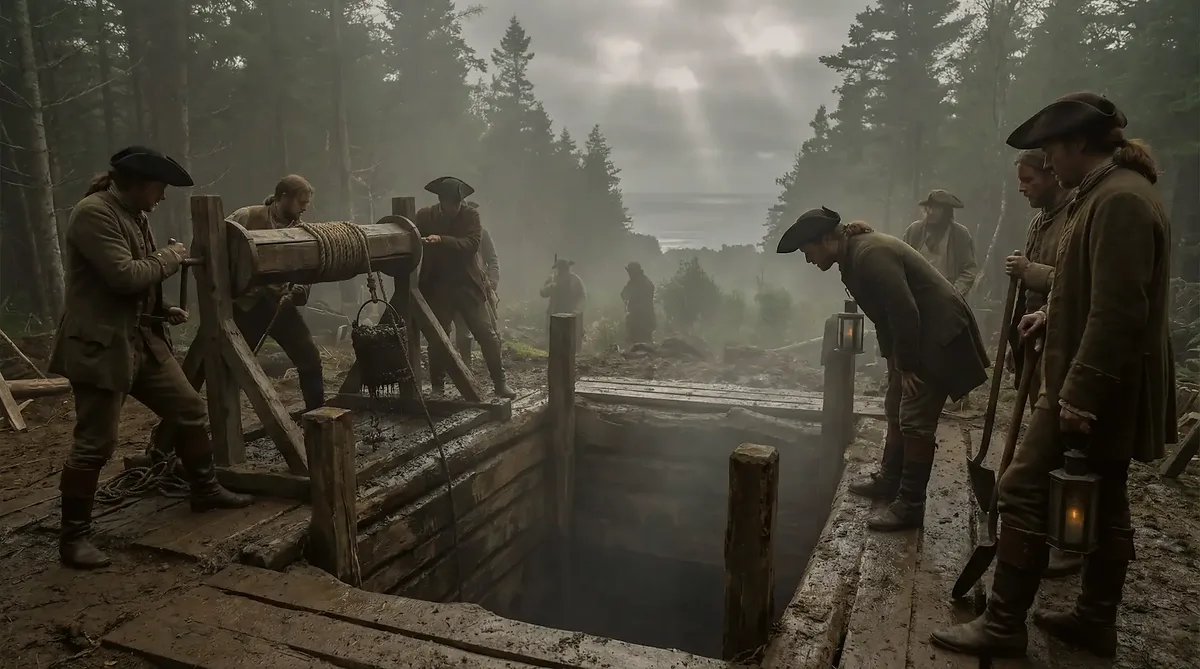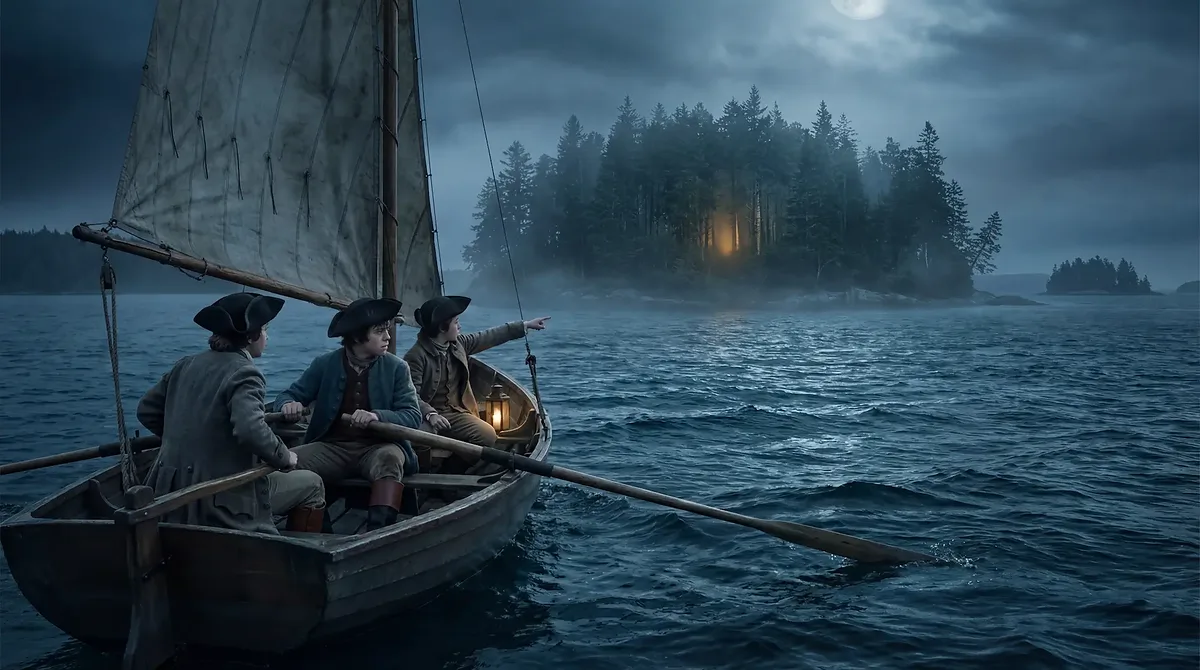
In the summer of 1795, so the story goes, a teenager named Daniel McGinnis was exploring the eastern end of Oak Island, a small wooded island in Mahone Bay, Nova Scotia, when he came across a round hollow in the ground. He came back with two friends and a shovel. More than two centuries later, people are still digging in the same spot, and the shaft they call the Money Pit has given up wood, parchment, coconut fiber and human bone, but no treasure anyone has been able to authenticate.
Much of what we know about those first years comes from accounts written down long afterwards. The earliest printed versions appeared in Nova Scotia newspapers in the late 1850s and early 1860s, more than sixty years after the dig began, and they do not always agree. What follows is the story as those accounts tell it, with the points where they part ways marked along the route. The books and episodes behind each section are listed under Sources at the end.
Three Boys and a Hollow in the Ground
1 min
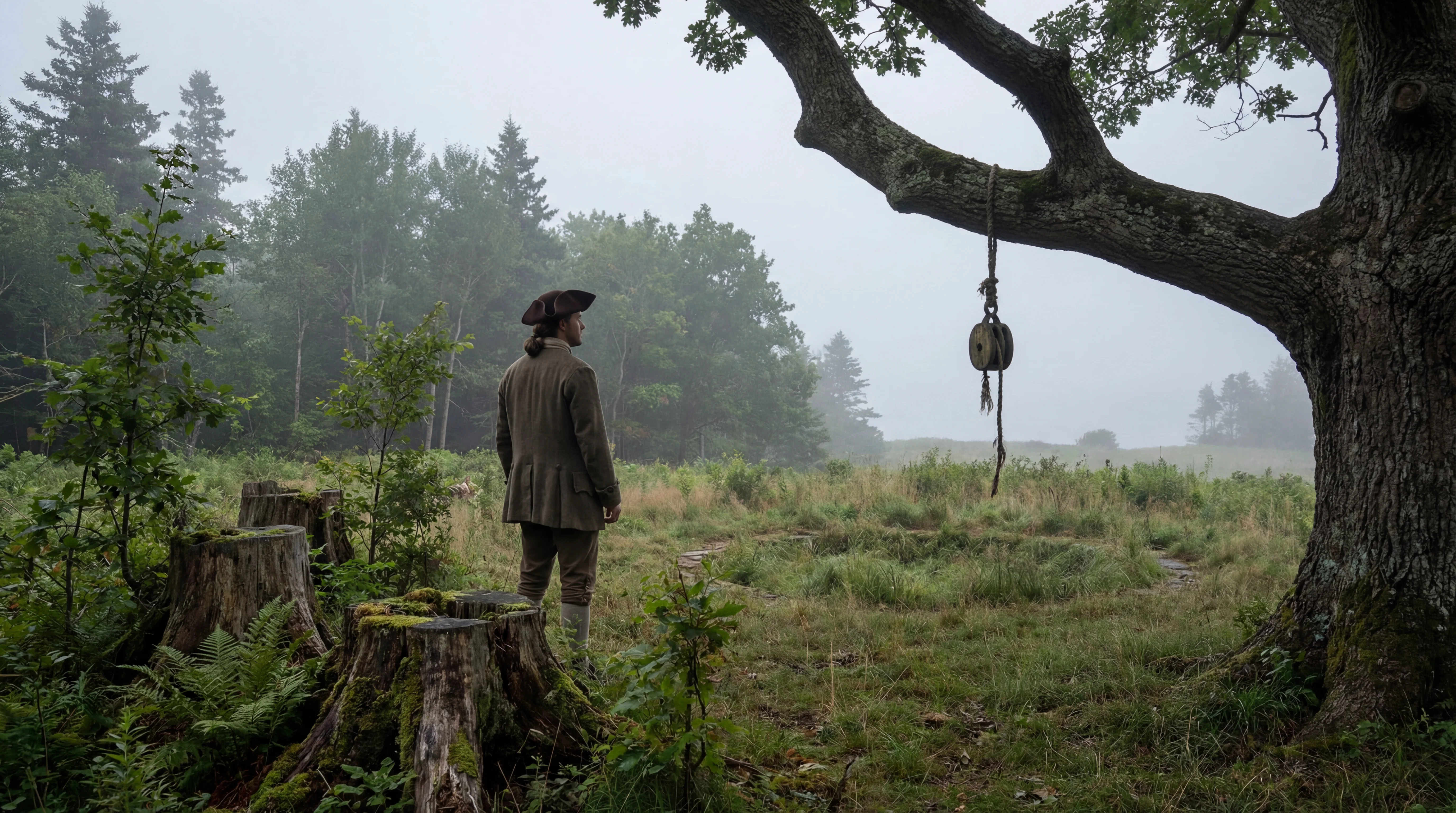
The hollow was about thirteen feet across. In the most famous version of the story, an old ship's tackle block hung from a sawn-off oak branch directly above it, the kind of detail that makes a young man think of pirates. It is also the detail most often doubted, and some researchers reject it altogether.
What McGinnis did next is less in dispute. He went back for his friends John Smith, who would later farm the east end of the island, and Anthony Vaughan, who lived on the mainland across the water, and the three of them began to dig.
 The Real Daniel McGinnis of Oak Island→
Oak Platforms Every Ten Feet
1 min
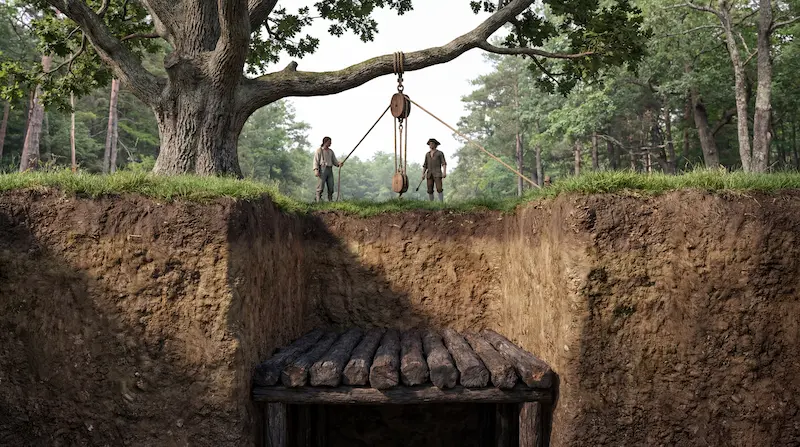
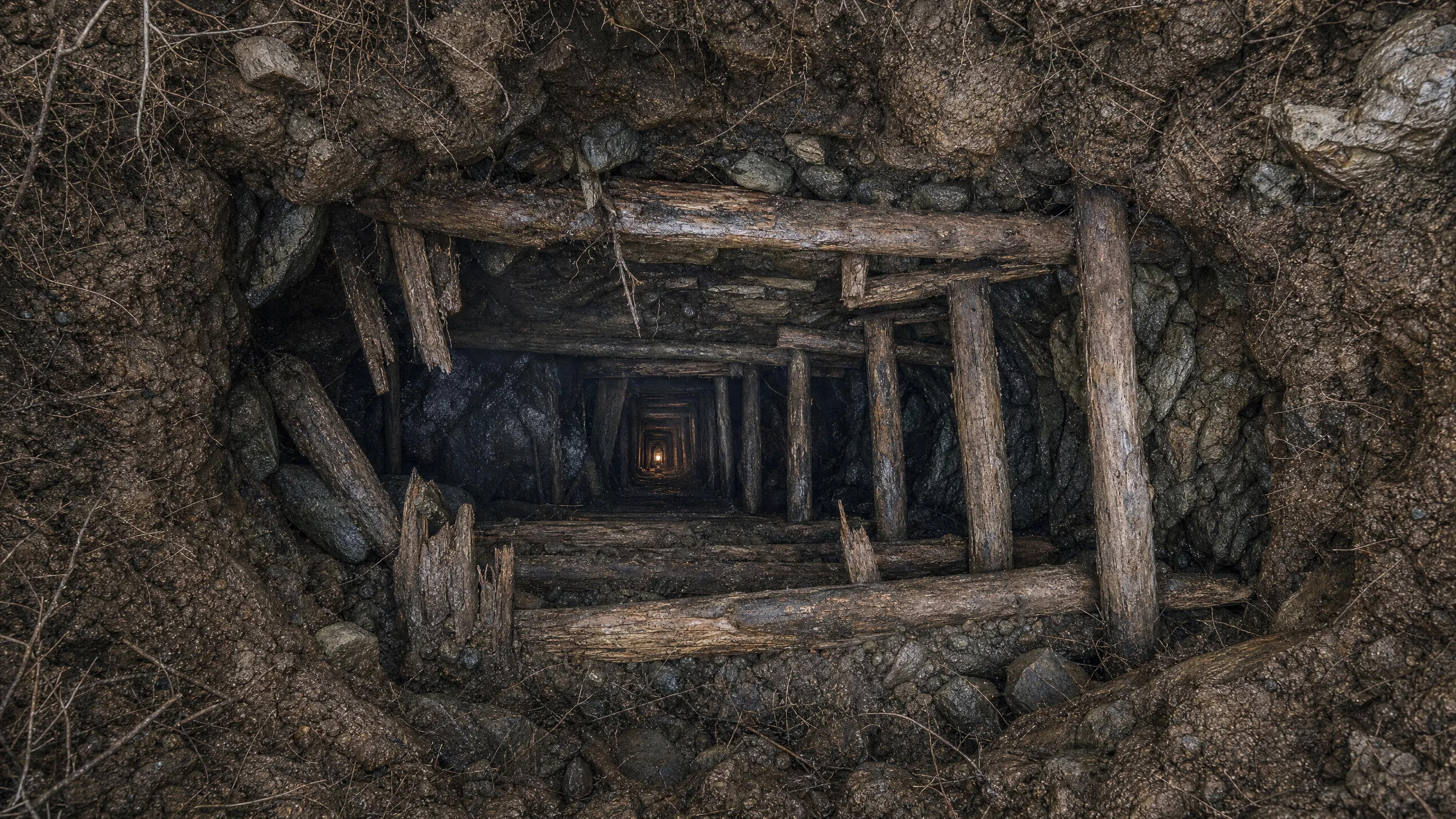
Two feet down, the boys hit a layer of flagstones. Beneath them the earth was loose, as if it had been dug before, and the clay walls of the shaft still showed the marks of picks. At ten feet their shovels struck wood: a platform of oak logs, the ends driven firmly into the walls. They pried it out and kept digging. At twenty feet there was another.
Somewhere between twenty and thirty feet, depending on which account you read, the work became too much for three young men with hand tools. They stopped, but they did not forget. Smith settled on the land beside the pit, and the three waited for someone with money to take the search further.
 Oak log platforms (multiple)→

The Merchant from Onslow
1 min
That someone turned out to be Simeon Lynds, a merchant from Onslow, near Truro, and a relative of Anthony Vaughan's father. In Chester on business, Lynds spent an evening at the Vaughan home and heard the story of the pit. The next morning he went across to see it for himself, and he came home convinced.
By 1803 or 1804 (the accounts disagree on the year) Lynds had formed the Onslow Company with a group of prominent local men, among them a justice of the peace and a county sheriff. Their crew cleared out the old shaft and dug on past the point where the boys had stopped. The log platforms kept coming, roughly every ten feet, and between them the diggers reported stranger things: a layer of charcoal at forty feet, a putty-like clay at fifty, and at sixty feet a mat of coconut fiber. One account claims there was enough putty to glaze the windows of more than twenty houses in the district.
The coconut fiber has intrigued searchers ever since, because coconut palms do not grow within 1,500 miles of Nova Scotia. Fiber from the island has since been radiocarbon dated to between the 11th and 14th centuries. That date belongs to the fiber, which could have been old cargo packing, and not necessarily to the shaft it was found in.
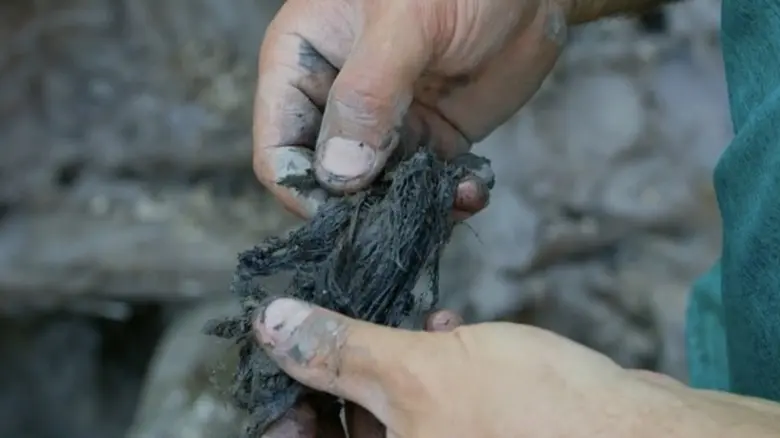 Coconut fibre (Money Pit)→
A Stone Nobody Could Read
1 min
At about ninety feet the Onslow crew lifted out a flat stone carved with rows of symbols. Nobody present could make sense of them. John Smith took the stone home and built it into his fireplace, reportedly with the carving facing out so that visitors could admire it.
Around 1865 the stone was taken to Halifax, where a bookbinder put it in his shop window at a time when the Oak Island Association was selling shares. Its later life was less glamorous. A man who worked in the shop from 1890 remembered that the carving had faded away completely and that the stone was being used as a weight for beating leather. When the firm closed in 1919 the stone was left behind, and a search in 1935 found no trace of it.
The best-known translation, "forty feet below two million pounds are buried," reached print through a Nova Scotia clergyman who credited it to an unnamed schoolteacher. Much later, Barry Fell, a Harvard biologist who had made a second career of reading ancient inscriptions, argued that the same symbols were a Coptic religious text. Neither reading can be checked against the stone itself: no rubbing of the original is known to survive.
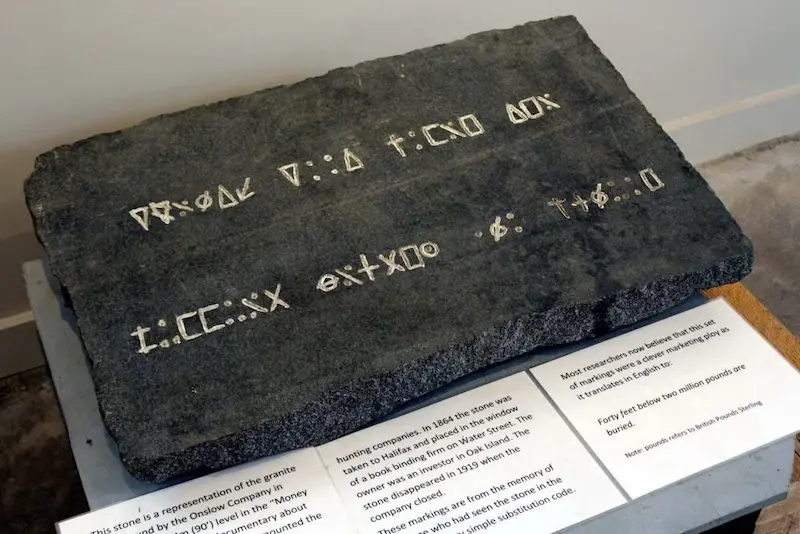 Inscribed stone (90-foot stone)→
The Night the Sea Came In
1 min
Below the stone the Onslow men reached about 93 feet. As the light faded at the end of the day they pushed a crowbar into the soft floor of the shaft, as they did every evening, and at 98 feet it struck something hard that seemed to stretch from wall to wall. Some thought it was wood, others a chest. They went home expecting to find out in the morning.
When they came back, the shaft was full of water to about sixty feet below the surface. They bailed through the day and into the night without lowering it by more than a few inches. That autumn the company paid for a pump, which burst before it cleared the water. The following spring the men sank a second shaft 110 feet deep beside the first, planning to tunnel across underneath the treasure. When the tunnel came within a few feet of the Money Pit, water broke through and the new shaft flooded too. The Onslow Company had spent close to everything it had, and it gave up.
The Men from Truro and Their Drill
1 min
Nearly half a century passed before anyone tried again. In 1849 the Truro Company reopened the shaft and within two weeks had cleared it to 86 feet. The crew went to church that Sunday. When they came back, sixty feet of water stood in the pit, and bailing, as one account put it, was about as useful as eating soup with a fork.
So the company drilled instead. Jotham McCully, its engineer, recorded what the auger passed through: a spruce platform at 98 feet, a gap of about a foot, then oak, then 22 inches of what he called "metal in pieces," then more oak and more loose metal. When the auger came up, three small links like those of a watch chain were caught on it. In some tellings they were gold. McCully's own accounts do not agree on that point.
 Gold chain links (3)→
What Lay Under the Beach at Smith's Cove
1 min
The Truro men had noticed that the water in the shaft was salt and that it rose and fell with the tide. The sea, it seemed, was getting in. In 1850 they went looking for the entrance on the beach at Smith's Cove, where at low tide the sand was said to gush water like a squeezed sponge.
A few feet down they found a bed of coconut fiber about two inches thick, laid over a layer of decayed eelgrass and spread along 145 feet of shoreline between the tide marks. Beneath that lay clean beach stones, and beneath the stones, five drains built of flat rock, each about eight inches wide, fanning out toward the sea like the fingers of a hand. McCully also noted the remains of an older dam just offshore. To the Truro men the conclusion was obvious: someone had built a filter on the beach and a tunnel to carry the sea into the pit. A dam they built to hold back the tide was swept away, and the company's work ended soon after.
Not everyone reads the evidence the same way. Gordon Fader, a marine geologist who has surveyed the seabed around the island, and the historian Joy Steele point to dye tests run in the 1960s by Robert Dunfield, an engineer who later dug up the Money Pit area with heavy machinery, which found most of the water entering from below 140 feet. They also cite a 1996 Woods Hole test in which dye placed deep in a nearby borehole never appeared along the shore. In their view, the island's own bedrock and sinkholes can explain the flooding.
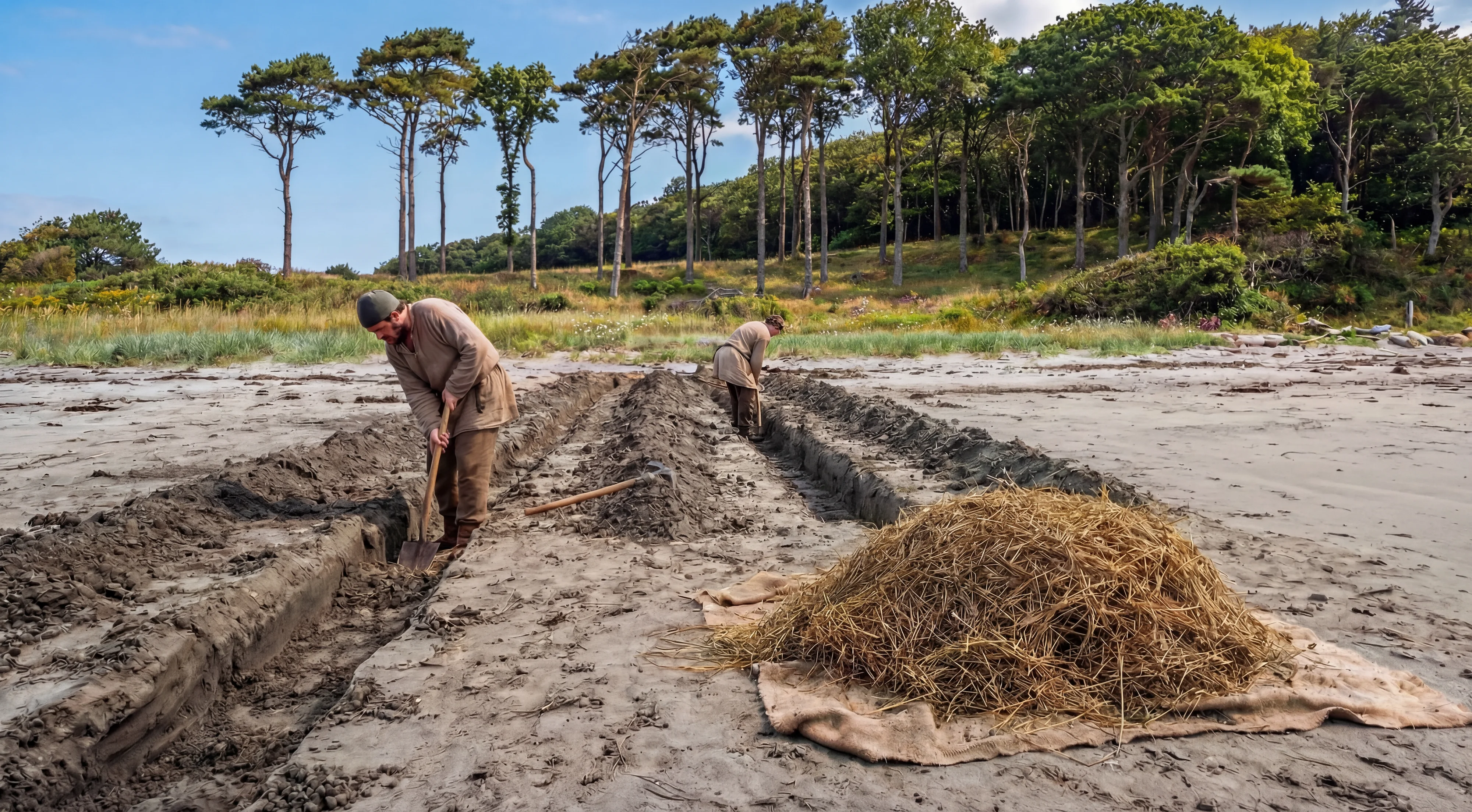 Oak Island Flood Tunnels and Box Drains: The Water Trap→
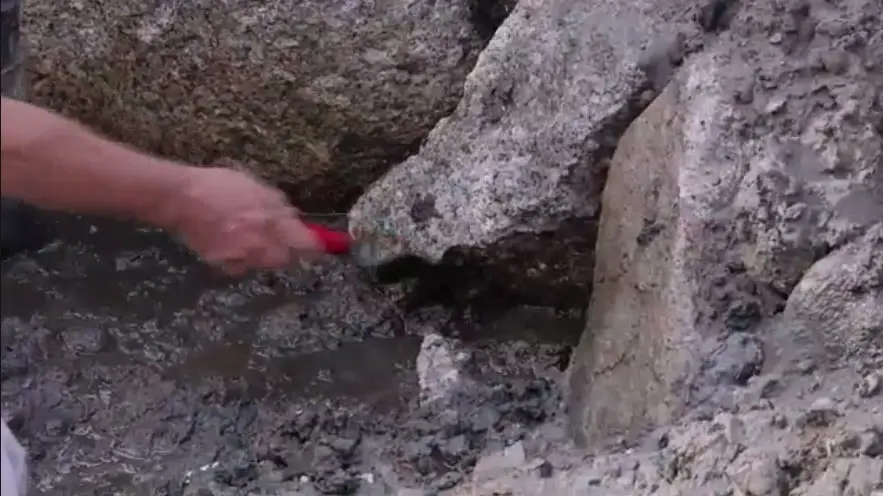 Possible box drain entrance→
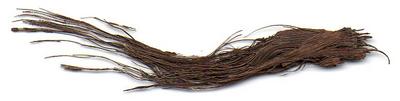 Coconut fibre (Smith's Cove)→
A Scrap of Parchment at 153 Feet
1 min
In 1897 the Oak Island Treasure Company brought its drill to the pit. At 126 feet the auger went through oak and then stopped on iron. In a second hole, at about 153 feet, it passed through seven inches of what looked like cement, then five inches of oak, then loose metal. Among the borings from that hole was a tiny ball of parchment, no bigger than a grain of rice.
On September 6, 1897, a local doctor unrolled it in the courthouse at Amherst in front of more than thirty men and read the letters "vi" or "wi". Specialists in Boston later reported that it had been written with a quill in India ink. A third hole hit iron at 171 feet, and the drillers ran a magnet through the cuttings to prove it. Steele and Fader urge caution here: drillers on Oak Island have more than once taken a hard granite boulder for iron.
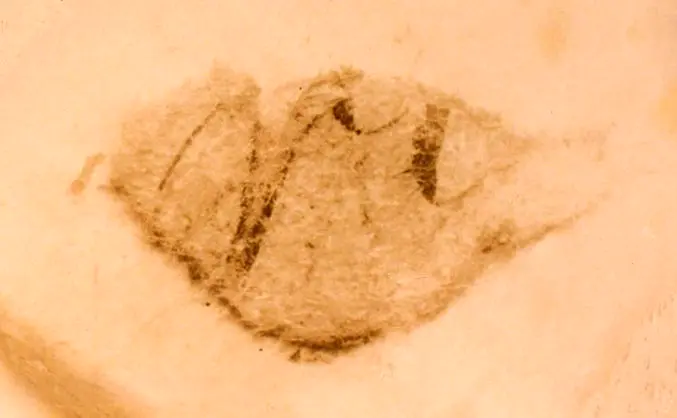 Parchment fragment→
In 1931 William Chappell, who had run the drill in 1897, came back with his son Melbourne and sank a shaft to 163 feet close to the old holes. It turned up tools lost by earlier searchers, but no cement, no iron and no loose metal.
Timbers, Bones and a Date Before 1795
1 min
At Smith's Cove in 1970, Triton Alliance, the treasure company that ran the search from 1969, uncovered a U-shaped structure of massive logs, some up to 65 feet long and marked with Roman numerals. Tree-ring analysis puts the felling of its timbers at 1769, a generation before the boys began to dig.
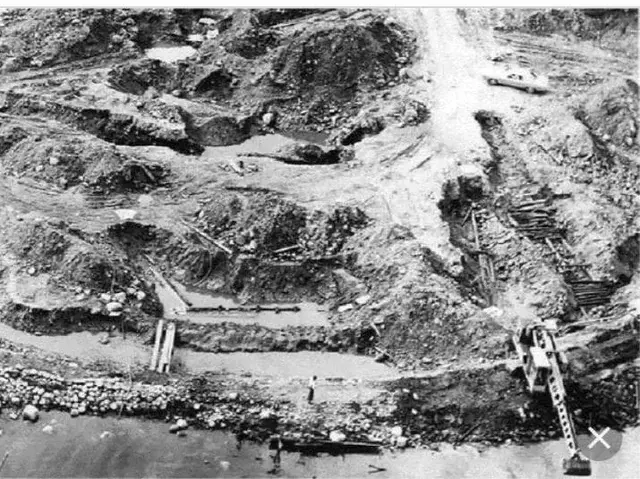 U-shaped wooden structure→
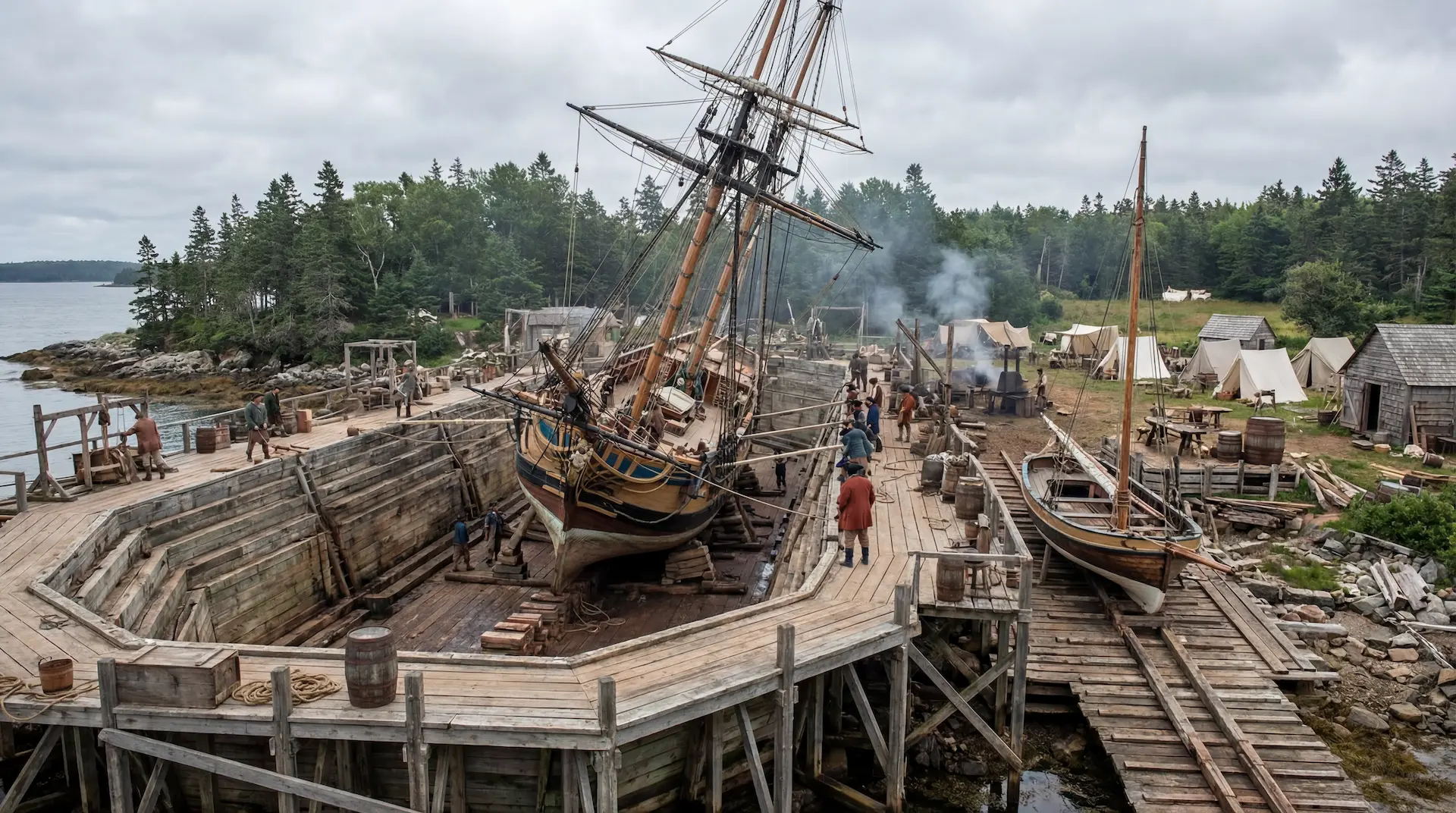 The Oak Island Dry Dock→
The televised search added its own surprises. During Season 5 of The Curse of Oak Island, two small fragments of human bone came up from borehole H-8, about 160 feet down. The radiocarbon results, presented in Season 5, Episode 8, dated one, from a person of Middle Eastern ancestry, to between 1682 and 1736, and the other, from a person of European ancestry, to between 1678 and 1764.
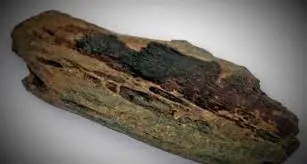 Human bone fragments (2 individuals)→
How Deep Is the Money Pit
1 min
The original shaft was dug by hand to about 93 feet before it flooded, with the crowbar probe reaching 98. Drilling in 1897 reported finds down to 171 feet. The Chappell shaft of 1931 went to 163 feet, and Dunfield's excavation of 1965 removed ground to roughly 140 to 148 feet. Drilling in 1967 found bedrock at about 160 feet.
The televised search has gone deeper still. In Season 13, Episode 3, the team drilled to 233 feet in the Money Pit area and hit bedrock at 229 feet, at the bottom of a channel dissolved into the rock. Nearby Borehole 10-X, 180 feet northeast of the Money Pit, reaches 235 feet, and in Season 3, Episode 13, the veteran wreck diver John Chatterton went all the way down and stood in its chamber. Every recorded find is placed at its depth on the Money Pit Descent.
What the Pit Has Given Up, and What It Keeps
1 min
Some things are beyond doubt. Searchers found worked timber, fill and material from far away in a shaft on the east end of the island. The workings flood with salt water that rises and falls with the tide. Wood, fiber and bone from the pit and from Smith's Cove have returned dates earlier than 1795. And the search has cost lives: a worker scalded by a bursting boiler in 1861, Maynard Kaiser, who fell when a hoisting rope slipped in 1897, and four men overcome in a shaft in August 1965.
Other things remain open. Nobody knows who dug the original shaft, when, or why. The flooding may have been engineered, or it may be the work of the island's geology; Steele and Fader argue that the upper layers match an old tar kiln that sank into a natural sinkhole. The exact position of the first shaft was lost when the area was excavated in the 1960s, which limits what any later find can prove about it. The ideas about what was buried range from pirate gold and French royal jewels to Francis Bacon's manuscripts and Templar relics, and each has its own page on this site.
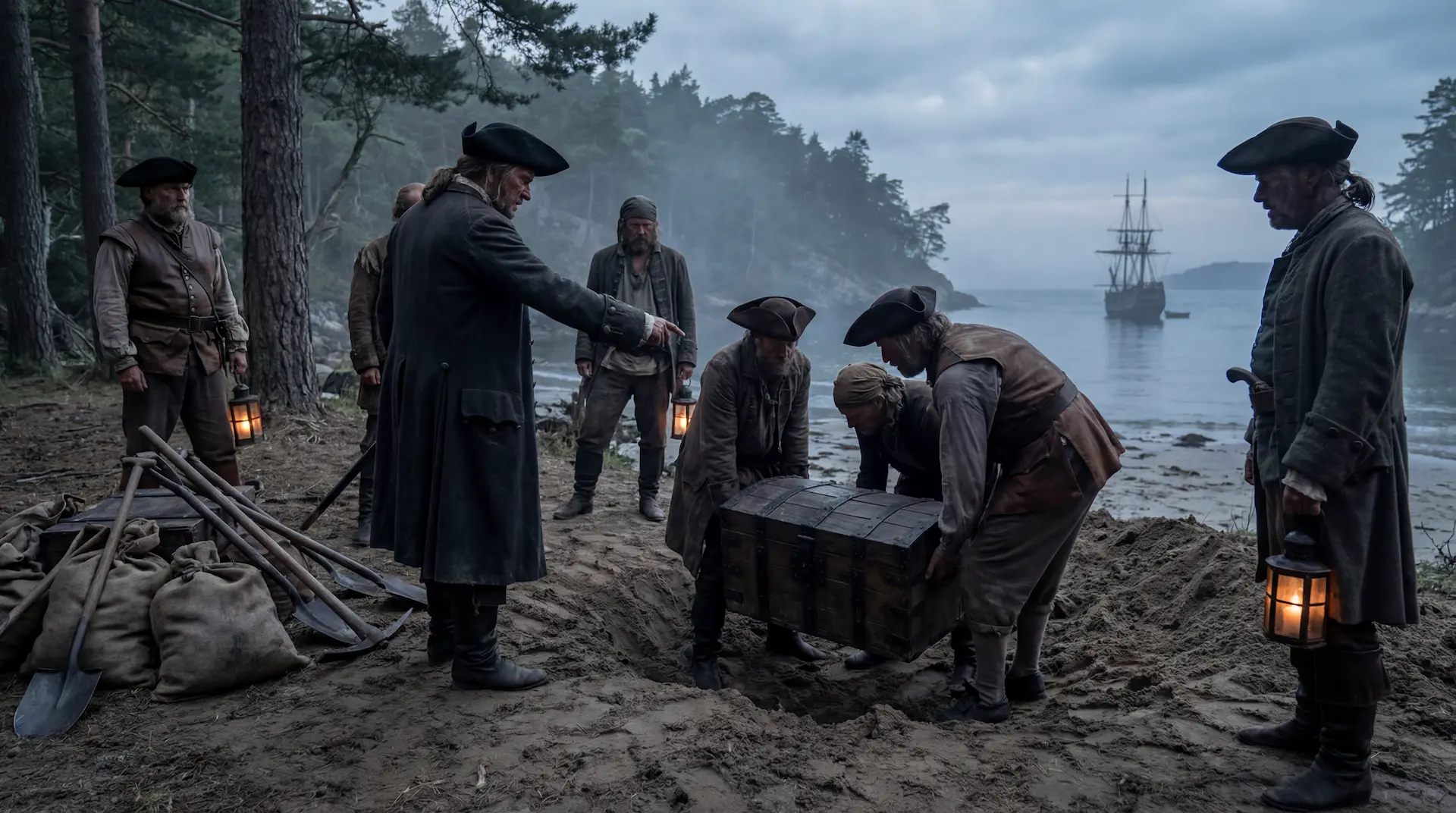 Pirates & Privateers on Oak Island→
 The Knights Templar on Oak Island→
 The Jewels of Marie Antoinette→
Sources
2 min
Books
- William S. Crooker, Oak Island Gold (Halifax: Nimbus, 1993). The 1795 dig, the Onslow Company's platforms, stone, 93-foot floor, 98-foot probe, flood and Mosher pump, the 1805 parallel shaft, the Truro Company's 1849 reopening, the flooding after the Sunday church service, and the 1850 Smith's Cove excavation, Jotham McCully's 1862 letter on the old dam, the 1897 iron at 171 feet, and the 1931 Chappell shaft.
- Randall Sullivan, The Curse of Oak Island: The Story of the World's Longest Treasure Hunt (New York: Atlantic Monthly Press, 2018). The late date of the first printed accounts, the Onslow Company in 1804, the British Colonist and Liverpool Transcript reports, McCully's description of the 1849 auger borings and chain links, the Smith's Cove drains, Dunfield's 1965 excavation depth, and the 1967 Becker drilling to bedrock.
- Joy A. Steele and Gordon Fader, Oak Island Mystery: Solved: The Final Chapter, 2nd ed. (2018). The history of the inscribed stone from John Smith's fireplace (citing Charles Driscoll on the carving facing outward) to the Creighton bookbindery, Harry Marshall's 1935 statement, the Kempton translation, the 1935 searches, the dye-test evidence against a flood tunnel (citing Richard Joltes), the 1996 Woods Hole test in Borehole 10-X, the caution on iron readings, and the tar kiln and sinkhole hypothesis.
- Mark Finnan, Oak Island Secrets, rev. ed. (Halifax: Formac, 2002). Barry Fell's Coptic reading of the stone, the low-tide water at Smith's Cove, and the 1897 examination of the parchment by Dr. A. E. Porter.
- Lionel & Patricia Fanthorpe, The Oak Island Mystery: The Secret of the World's Greatest Treasure Hunt (Toronto: Hounslow Press, 1995). The 1803 date for the Onslow Company and the account of the putty used to glaze local windows.
- R. V. Harris, The Oak Island Mystery (Toronto: Ryerson Press, 1958; 2nd ed. 1967), cited through Steele and Fader for the removal of the stone to Halifax around 1865.
The Curse of Oak Island (HISTORY)
- Season 3, Episode 13, "Secrets and Revelations" (2016). John Chatterton enters the chamber at the bottom of Borehole 10-X, 235 feet down.
- Season 5, Episode 8, "Dan's Breakthrough" (2018). Radiocarbon dates for the two human bone fragments from borehole H-8.
- Season 5, Episode 18, "Amazing Discoveries" (2018). The H-8 bones at about 160 feet and the ancestry of the two individuals.
- Season 13, Episode 3, "Medieval Intentions" (2025). Drilling to 233 feet in the Money Pit area, with bedrock at 229 feet.
Site records
- The Artifact Vault entries for the coconut fiber from the Money Pit (three radiocarbon samples, Beta Analytic and Woods Hole) and the U-shaped structure at Smith's Cove (tree-ring felling date of 1769).