Robert S. Young is one of the quiet figures in the Oak Island story. Viewers of the show know him in passing: the previous owner of Lot 5, the man who found a coin there in 1996, the neighbour whose land the Laginas bought after his passing. The record he left behind deserves a fuller telling. Young owned Lot 5 for twenty-four years, visiting it by boat more than 4,500 times because he was never once permitted to drive there. That didn't stop him from recovering 67 artifacts under two provincial licences and filing a neat document for each one of them, all while keeping the lot in the condition that now makes it the most productive archaeological site on the island.
A Library Book and a Walk Across the Causeway
1 min
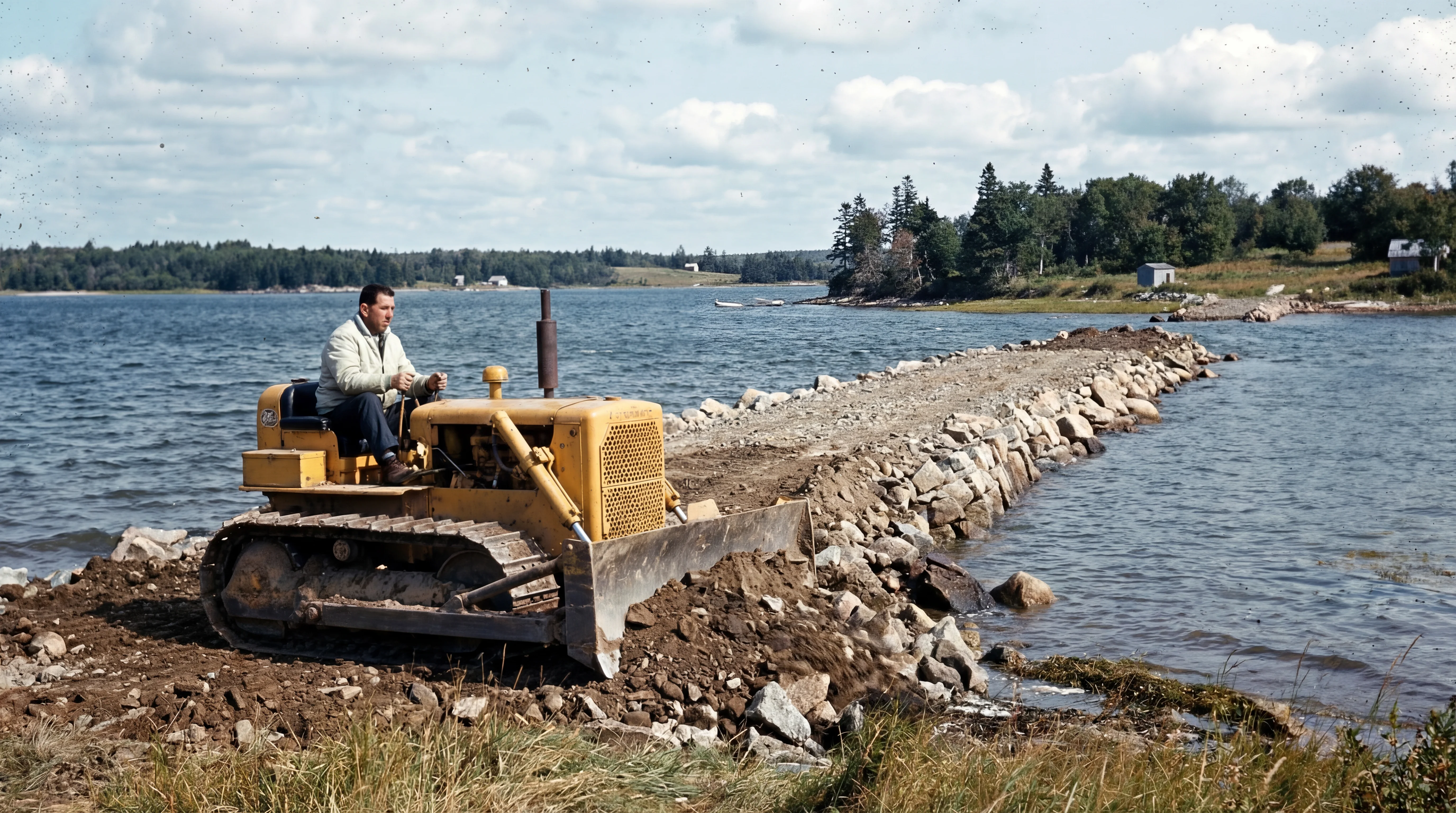
Young's own account, published on his website, dates his introduction to the island to around 1980, when he borrowed D'Arcy O'Connor's The Money Pit from his local Toronto library. That summer he drove to Nova Scotia to see the island for himself. He parked at Crandall Point, walked across the Dunfield causeway, and was met on the island side by Jane Blankenship, who sold him admission and gave him a solo tour of the island's small museum. He then walked the island alone, hearing machinery and water pumps running at Borehole 10-X, where Triton Alliance was at work. Young had spent years in the Alberta oil patch as a roughneck and motorman, and he judged the operation with a driller's eye. He went home to Ontario convinced the island's story held more fact than fiction, and then set it aside for fifteen years.
 Robert Dunfield and the Destruction of Oak Island→
 Dan Blankenship and Borehole 10-X→
Those years he spent building Chase Of Toronto, his custom solid-wood furniture company, teaching cabinetmaking apprenticeships in partnership with a community college, and writing feature articles for Canadian Workshop Magazine. The craftsman's discipline in that career would later show in the way he ran an excavation.
A Two-Paragraph Contract with Fred Nolan
1 min
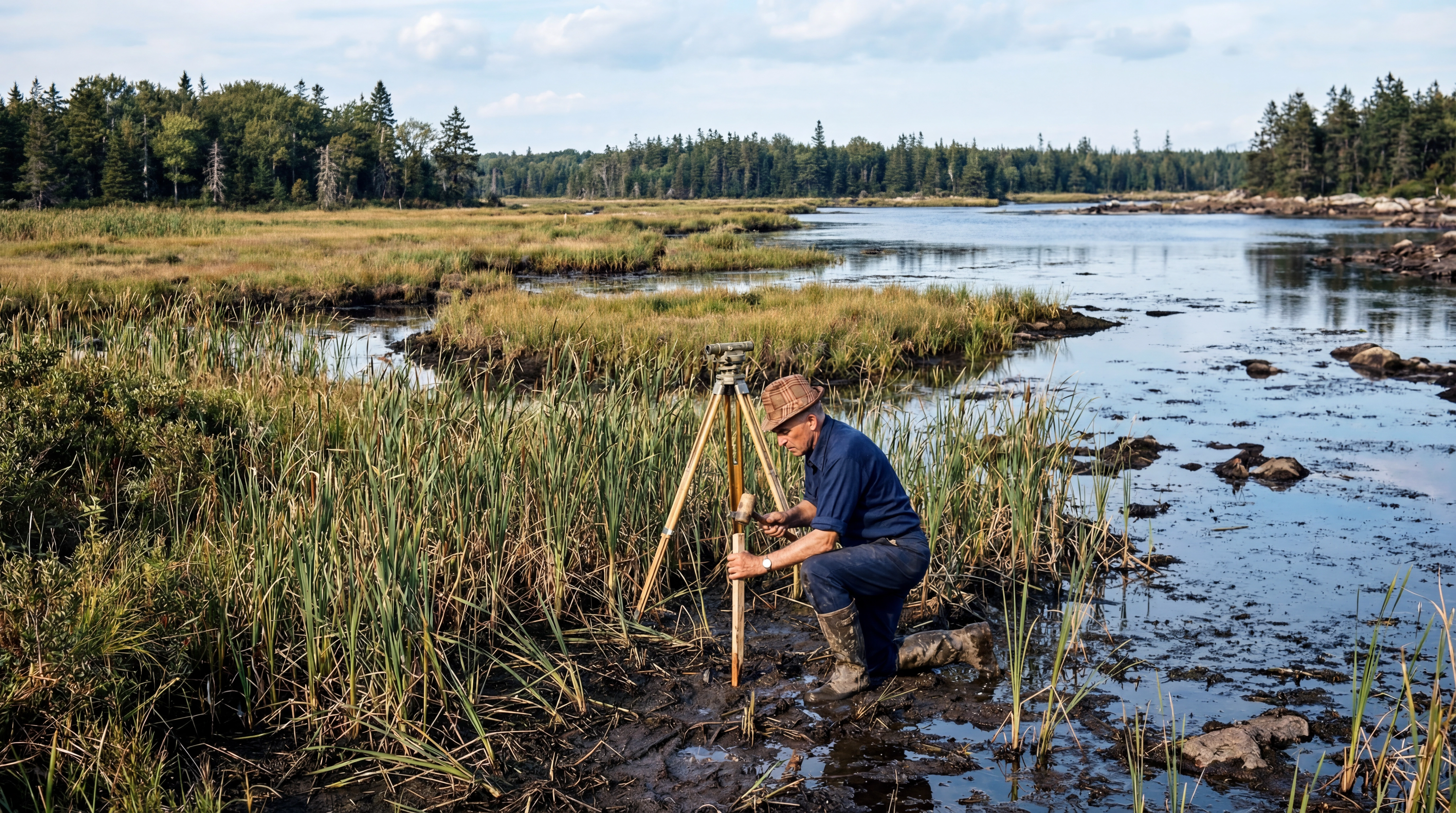
At Christmas 1994 his sister Susan gave him William S. Crooker's Oak Island Gold. Young wrote to Crooker asking about investment opportunities, and Crooker pointed him to Fred Nolan, the surveyor who then owned Lot 5 and Lots 9 through 14. Young and Nolan corresponded for six months. In the summer of 1995 Nolan gave him a personal tour, Young asked directly whether he would sell Lot 5, and Nolan said yes. The agreement was a handwritten contract of two paragraphs. It took Young the better part of a year to wind up his obligations in Ontario, and in June 1996 the ownership of Lot 5, roughly four acres, transferred. He later settled in Upper Tantallon, Nova Scotia, across the bay from his island property.
 Fred Nolan, the Oak Island Surveyor→
The lot he bought carried marks older than any deed. At each of its corners, Young documented vestiges of dry stone walls that correlate precisely to the original 1762 survey, which by his description made Lot 5 among the best-defined lots on the island. It also came encumbered by the island's long feuds. During the legal battles of the 1980s, in which Triton Alliance twice contested Nolan's ownership of his lots and the Supreme Court of Nova Scotia twice ruled in Nolan's favour, Dan Blankenship cut forty-foot swaths along the boundaries of Nolan's properties on the adjoining lots, clearings island regulars came to call the spite lines. Blankenship, by Young's account, confirmed to him years later that their purpose had been to keep watch on Nolan.
Twenty-Four Years by Boat
1 min
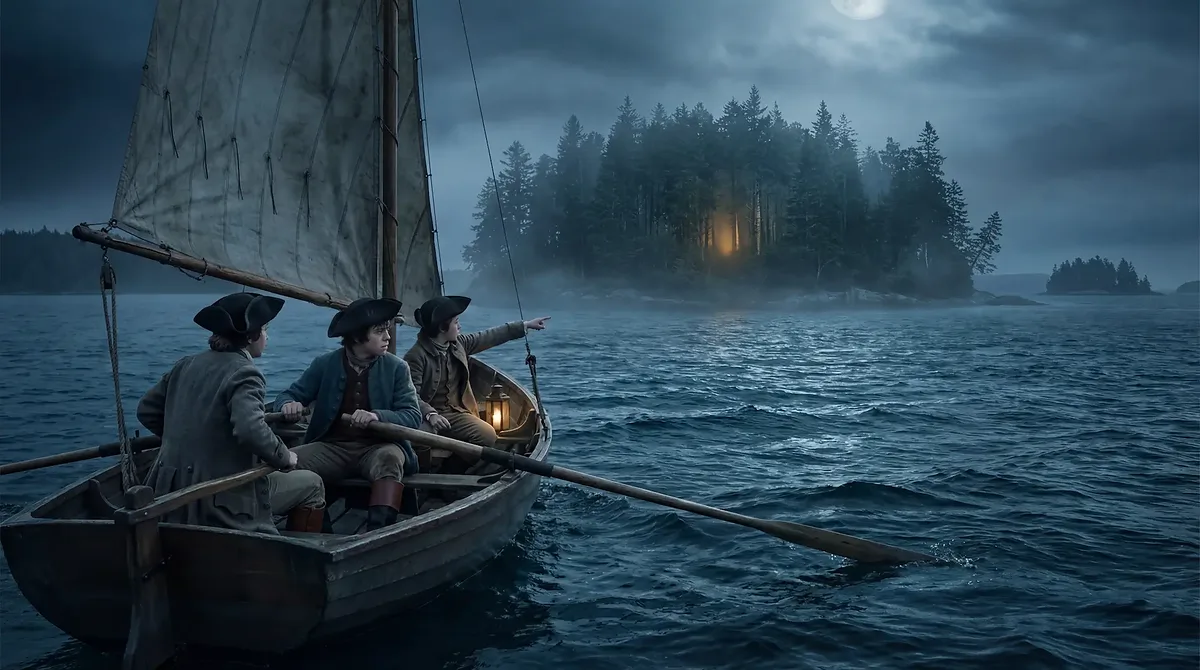
The feuds outlived their principals in one practical respect: access. The private road connecting the causeway to the island's Centre Road remained closed to Nolan and, after him, to Young. Because Lot 5 has water frontage, no easement was required in law, and none was granted in fact. Young calculated that between 1996 and his death he made more than 4,500 round trips to his own property by water, in a 16.5-foot Lund runabout he named Relic, attended by a tender named Bubbles, both christened after characters from Canadian television.
What he did with those trips sets him apart from nearly everyone else in the island's history. He did not dig for treasure in any conventional sense. He practised silviculture, and identified, photographed, and tagged every red oak on the lot for long-term study: 28 healthy trees exceeding the 200-year benchmark that R. V. Harris had established from growth-rate research for The Oak Island Mystery, including more than a dozen old-growth specimens from 22 to 36 inches in diameter. His website states the lot has "never been ploughed, clear-cut, excavated or built upon." Every later discovery on Lot 5 rests on that restraint. The soil the archaeologists have been reading since 2023 is legible because Young declined to disturb it.
Two Licences and Sixty-Seven Finds
1 min
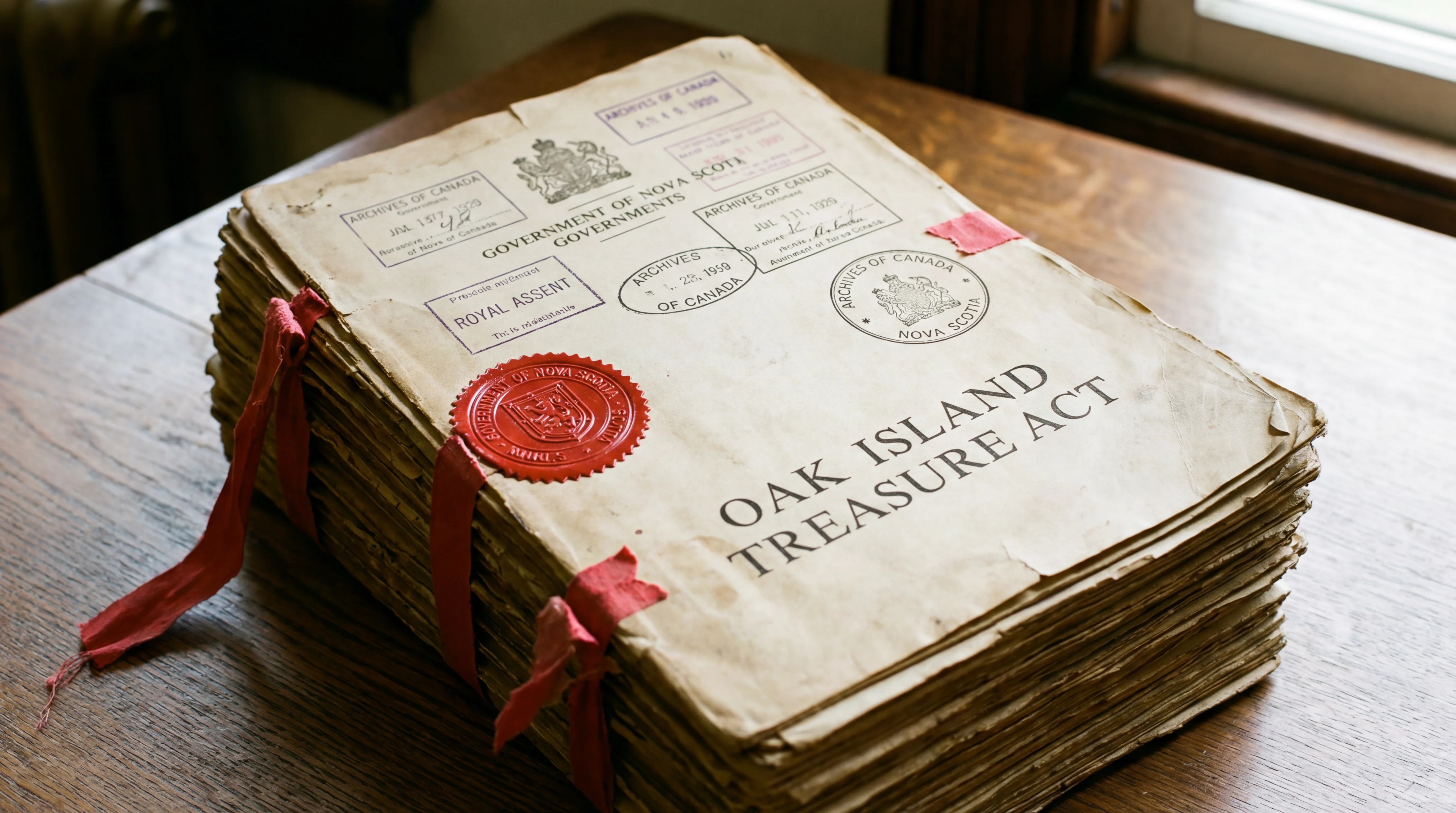
Young was a searcher all the same, be it on his own terms. Under Treasure Trove Licence T-162, issued through Orders in Council in 1998 and renewed in 2004, he recovered artifacts from Lot 5 between July 1998 and June 2008. He worked with hand tools only, reported every find to the appropriate government departments, and prepared what he called a bespoke specification sheet for each object, recording the details of its discovery. His photographic catalogue runs to 67 numbered finds, photographed against neutral backgrounds with the catalogue label in frame, in chronological order of recovery, with second angles for two-sided objects and, in one case, an X-ray.
 The Treasure and the Law: The Oak Island Treasure Act→
The catalogue is dominated by the material of colonial life: more than a dozen buttons, coins, refined and coarse earthenware, window and bottle glass, a thimble, a buckle, an iron skeleton key, wrought nails and spikes, and a grooved sharpening stone. Among the standouts are a silver 1781 Spanish half-real, an ornate gilt badge with a cricket motif set with a red glass gem examined by gemologist Charles Lewton-Brain, and the find that entered the television record: a coin Young recovered in 1996 that he believed was Norse. A hornfels stone recovered on Lot 5 in 1998 falls inside his first licence window.
The Structure He Showed Laird Niven
1 min
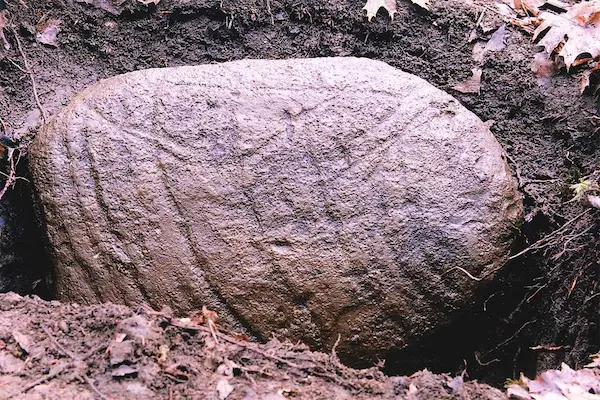
Young knew his lot held more than surface finds. Around the turn of the millennium, more than twenty years before the current excavation, he showed archaeologist Laird Niven a stone structure on the property, a visit Niven recalled on camera in April 2023 when he directed the team's attention to it. Young had read the stone well near the shoreline as a 20th-century construction, an assessment the Season 13 excavation would revise. And he photographed the lot's features throughout his tenure: after his death, historical photographs of the circular feature reached the team from the Young family through researcher Danny Hennigar, giving the excavation a record of the structure as it stood decades earlier.
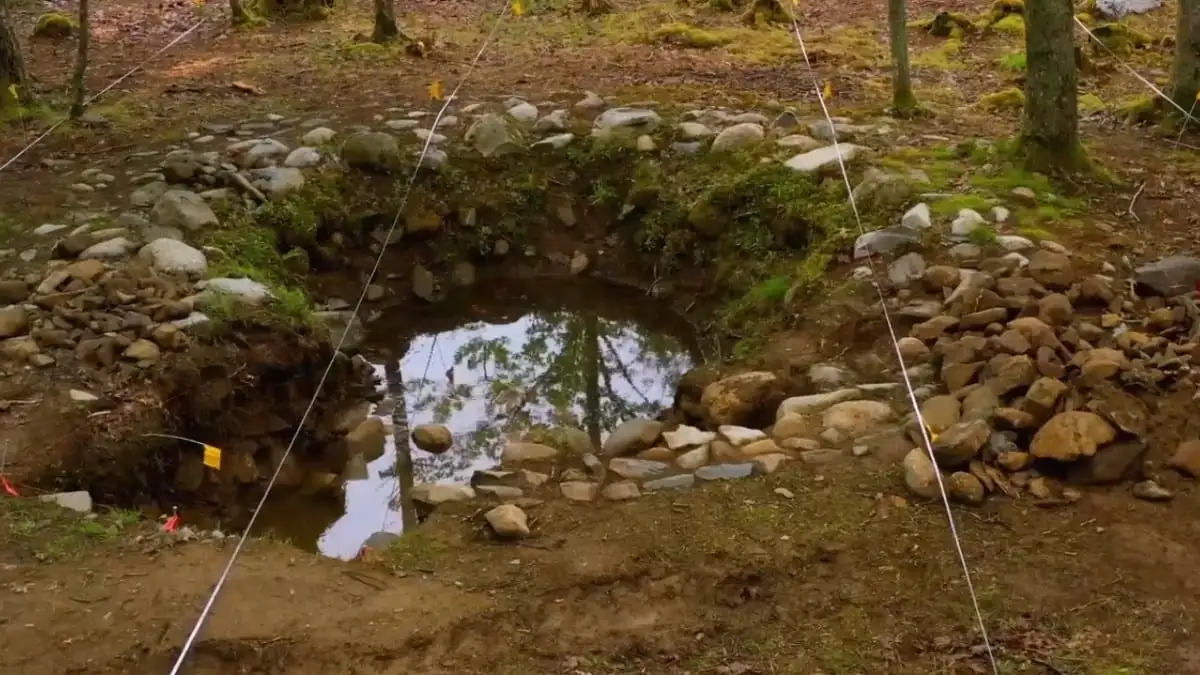 Round stone feature (Lot 5)→
Robert Young died on October 28, 2020, at 65. Lot 5 passed to his estate, and in January 2023 Rick and Marty Lagina announced on the show that they had purchased it. Within weeks of the announcement, the metal detectors were out on the lot, and within a season the circle he had shown Niven was being excavated. What has come out of Lot 5 since, the Roman coins, the buried foundations, the two-occupation reading, is treated in full in the site's Lot 5 article. All of it was found in ground that stayed readable because its owner of twenty-four years chose to keep it that way. His catalogue, his photographs, and his specification sheets are the prologue to the most closely studied archaeological site on Oak Island, written by a man who carried everything he found off the island in a boat named Relic.
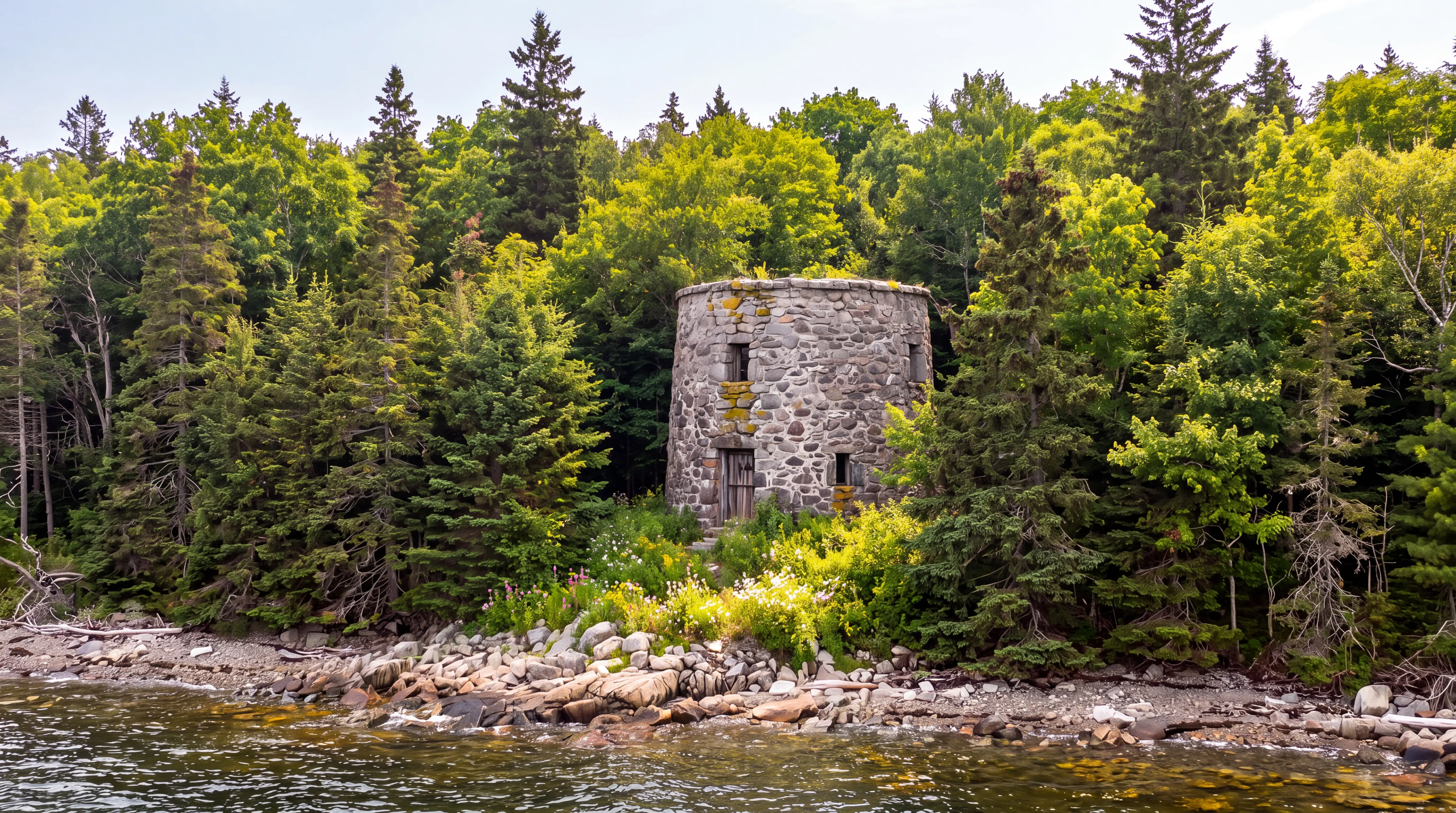 Oak Island's Lot 5: From Stone Circle to Buried Complex→
Sources
1 min
Robert Young's own record
- Robert S. Young, oakislandlotfive.com: the autobiographical account on the Robert S. Young page and the artifact catalogue and licence details on The Finds page.
- The Robert S. Young photographic catalogue of Lot 5 finds, numbers 5.001 through 5.067 (photographs by Robert S. Young).
Obituaries and press
- Obituary of Robert S. Young (May 27, 1955 to October 28, 2020), Toronto Star, via Legacy.com.
- The Macdonald Notebook, "Oak Island: Treasure Seeker Robert S. Young's Account Of How He Came To Buy Lot 5 On Oak Island," June 2022.
Books referenced in Young's account
- D'Arcy O'Connor, The Money Pit.
- William S. Crooker, Oak Island Gold.
- R. V. Harris, The Oak Island Mystery (red oak growth-rate research).
Broadcast record
- The Curse of Oak Island (History Channel): the 1996 coin and purchase announcement (Season 10), the Young family photographs via Danny Hennigar (Season 11), and the stone well reassessment (Season 13).
Reference
- Wikipedia, "Oak Island mystery," on the 1996 purchase from Fred Nolan, the 1781 Spanish half-real, and the passage of the lot to Young's estate.
- The Oak Island Compendium on the cricket badge and the Lewton-Brain examination.