Not necessarily. If the legendary Oak Island treasure were discovered, Nova Scotia law would require qualifying treasure to be reported immediately to provincial authorities. It would not require an immediate announcement to the press. Archaeological findings are governed by additional heritage protections, and certain records can remain outside public view while discoveries are documented, examined, and assessed.
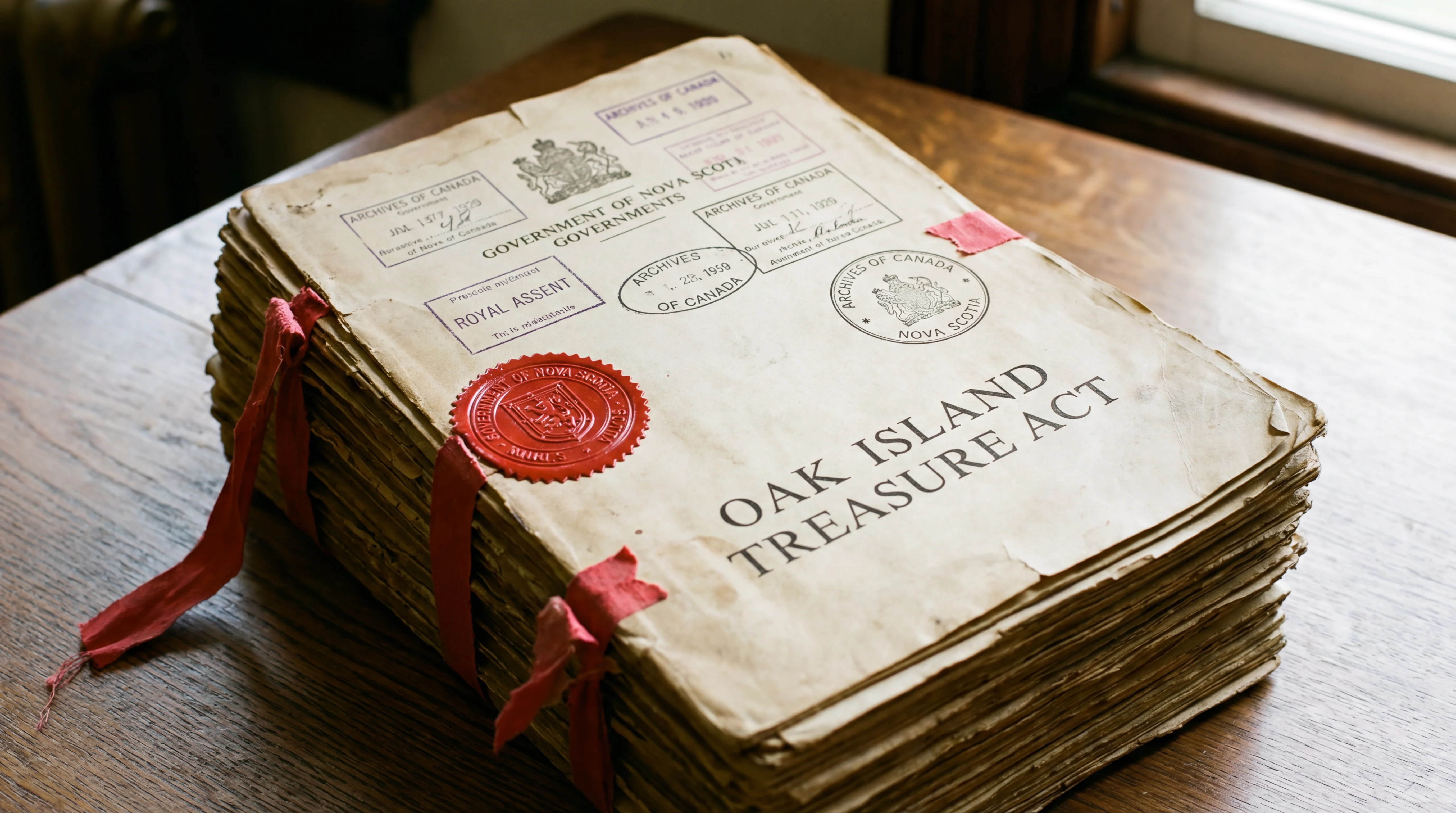 The Treasure and the Law: The Oak Island Treasure Act→
That does not mean a secret treasure has been found. It means one of the most frequently repeated arguments about The Curse of Oak Island rests on an assumption that the law does not support.
The argument is familiar to anyone who follows the series. If Rick and Marty Lagina had discovered anything truly important, surely someone would have leaked it. The authorities would know. The newspapers would be reporting it. The world would have heard long before the episode reached television.
It sounds reasonable. A discovery capable of rewriting a chapter of Atlantic history would attract enormous interest, and the number of people involved in the modern search makes absolute secrecy difficult to imagine. But reasonable expectations are not the same as legal requirements. Nor is the absence of a headline evidence that nothing has happened.
There is an actual Oak Island case that illustrates the difference.
The Oak Island Records the Province Would Not Release
1 min
On November 18, 2003, Nova Scotia's Freedom of Information and Protection of Privacy Review Officer, Darce Fardy, issued a report concerning records connected with the Oak Island Exploration Company. Someone had requested nine years of correspondence between a third party and the province's Department of Natural Resources. The department refused to release the records, citing provisions protecting confidential business information.
The applicant challenged that refusal. Fardy examined the documents, consulted the parties, and reviewed the government's reasons for withholding them. His report described a substantial collection of records supplied to the department to keep officials informed about progress in the Oak Island treasure hunt.
He concluded that the information included financial and technical material supplied in confidence. Disclosure, he found, could undermine the continued flow of information to the government. He also determined that certain personal identities deserved protection. His recommendation was that the department maintain its refusal.
The report is publicly available today as FI-03-52, a formal provincial freedom-of-information review. It establishes an important historical fact: information concerning the Oak Island treasure search had been submitted to government authorities, withheld from public access, and subjected to an independent review that supported keeping it private.
This was 2003, years before the Oak Island Treasure Act replaced the earlier treasure legislation. The case does not concern the Lagina brothers' present investigation, does not document a treasure discovery, and cannot establish how a hypothetical discovery would be handled in 2026. Its significance is narrower, but substantial. The notion that any information entering provincial hands must automatically become public has already been tested in an Oak Island matter, with a different result.
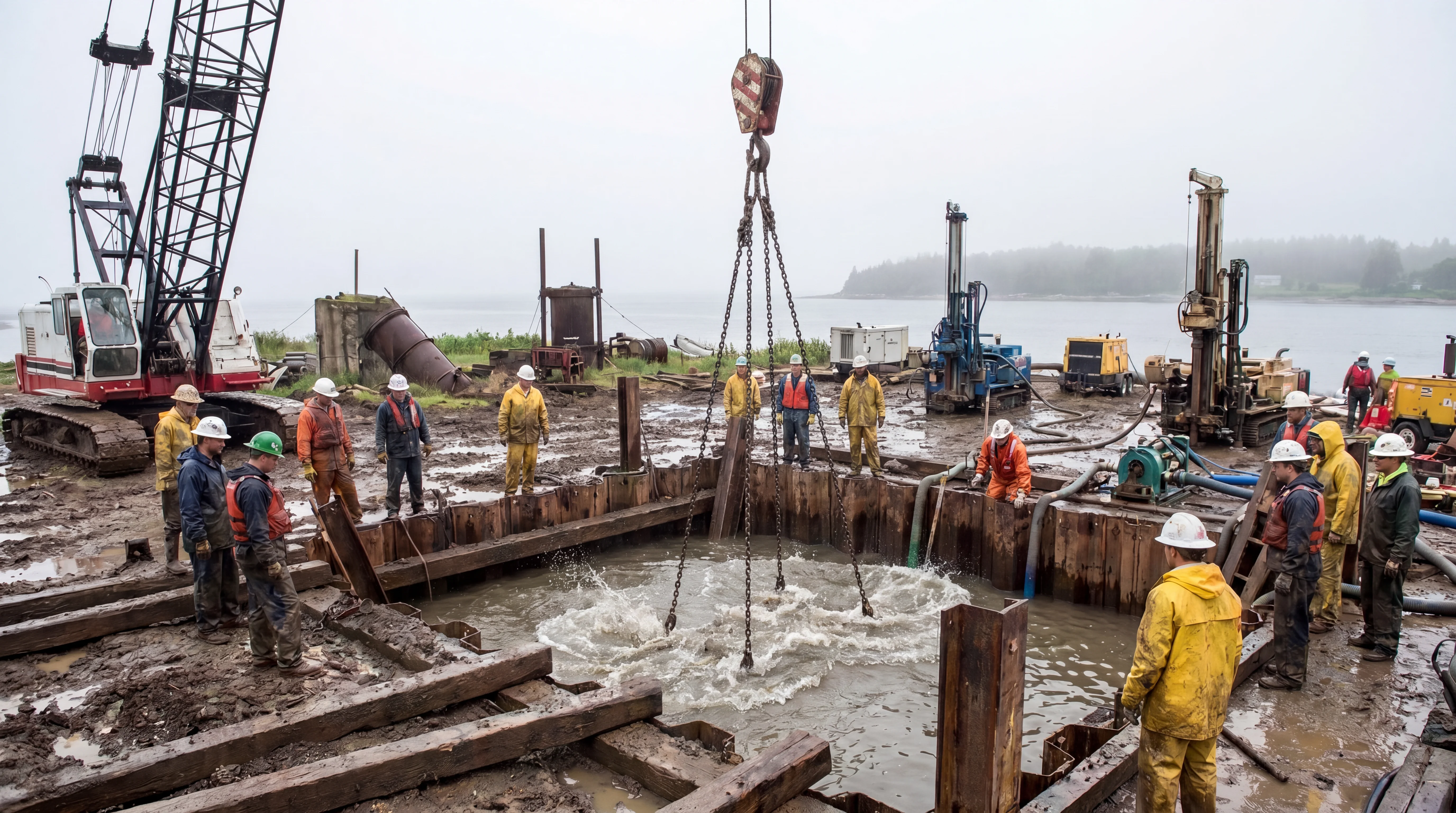 Has the Oak Island Treasure Been Found? The 2026 Answer→
What Nova Scotia Law Actually Requires
1 min
The Oak Island Treasure Act, which came into force on January 1, 2011, contains a direct reporting provision. Under Section 8, anyone who discovers or recovers treasure on Oak Island, whether or not that person holds a treasure licence, must immediately submit a written report verified under oath to the responsible minister. The report must describe the treasure, identify where it was discovered, and state where it can be inspected.
The law defines treasure as precious stones or metals in a state other than their natural state. A cache of gold coins could therefore fall under the Act's reporting requirements. A timber structure, inscribed stone, piece of pottery, or fragment of worked wood raises different heritage questions and may be subject to the Special Places Protection Act and archaeological permit conditions.
The legal distinction matters because Oak Island's most historically important discovery might not be something conventionally recognized as treasure. A document, a dated structure, or an artifact recovered in an unusually secure archaeological context could tell historians far more than a collection of precious metals.
The Oak Island Treasure Act requires reporting to the province. It does not require a simultaneous press release, a public database entry, or an announcement before an episode of the television series airs. A report filed under Section 8 would itself become a government record, subject to the same Freedom of Information and Protection of Privacy Act that governed the 2003 review. Other legal duties and disclosure rules may apply, but reporting to government is not synonymous with publication.
The history of these laws, the changing rights of treasure hunters, and the province's increasingly extensive archaeological oversight are examined in our separate legal history of Oak Island.
Why Archaeological Discoveries Are Not Always Publicized
1 min
Nova Scotia has a practical reason for restricting access to certain archaeological information: the more precisely a vulnerable site is identified, the easier it becomes for someone to damage it.
The province's own heritage guidance explains that its database of registered archaeological sites is not publicly accessible because releasing sensitive locations could encourage looting. All known and unknown archaeological sites receive protection under the Special Places Protection Act, and disturbing archaeological remains requires appropriate authorization.
That principle extends to the records produced by archaeological investigations. Nova Scotia's Heritage Research Permit procedures recognize that project reports may contain information requiring protection. The province provides a formal process for requesting that reports, or portions of them, be withheld under its Freedom of Information and Protection of Privacy Act.
The possible grounds include conservation concerns, personal privacy, and qualifying confidential business information. A permit holder cannot simply declare a discovery secret and make the decision final. Members of the public can request access to records, and applicable exemptions must be assessed under the law. Confidentiality is neither automatic nor absolute.
But neither is immediate publicity.
An archaeologist recovering an unusual object must first establish precisely where it came from, record the surrounding context, and determine what further examination is necessary. Conservation, laboratory analysis, dating, specialist comparison, and the preparation of formal reports can all follow. The importance of an object may only become apparent after those steps have been completed.
That is not secrecy for its own sake. In archaeology, protecting the circumstances of a discovery can be essential to understanding it. An object removed without adequate documentation may lose the very information that could establish why it matters.

What Viewers See Was Filmed Months Earlier
1 min
There is another complication, one that has little to do with provincial legislation and everything to do with the production of a television series.
The Curse of Oak Island is filmed well before its episodes reach viewers. The excavation, the collection of scientific results, the interviews, and the editorial process do not happen on the same schedule as the broadcasts. The audience is therefore watching an investigation whose fieldwork may have taken place months earlier.
Television productions commonly use confidentiality agreements to protect unreleased material, and this series is no exception. That says nothing about what the season contains. Agreements of this kind cover everything that has not yet been broadcast, an empty test hole as much as a significant find, and they are standard on productions of this type whatever the results.
No production agreement overrides statutory reporting obligations. A treasure discovery would still have to be handled in accordance with Nova Scotia law.
The more useful observation is that a television broadcast is not a real-time record of archaeological work. A discovery can be reported to the appropriate authorities, examined by specialists, and incorporated into a future episode without first becoming a headline. Whether something of that magnitude could remain unreported by the wider media is a separate, uncertain question.
In November 2026, Rick and Marty Lagina gave interviews expressing unusual confidence about the latest season's findings, while stopping short of revealing the discoveries behind their remarks. Their statements have naturally raised expectations, particularly because Marty has traditionally approached the search with greater skepticism. The brothers' confidence, however, is not independent evidence that the legendary treasure has been found.
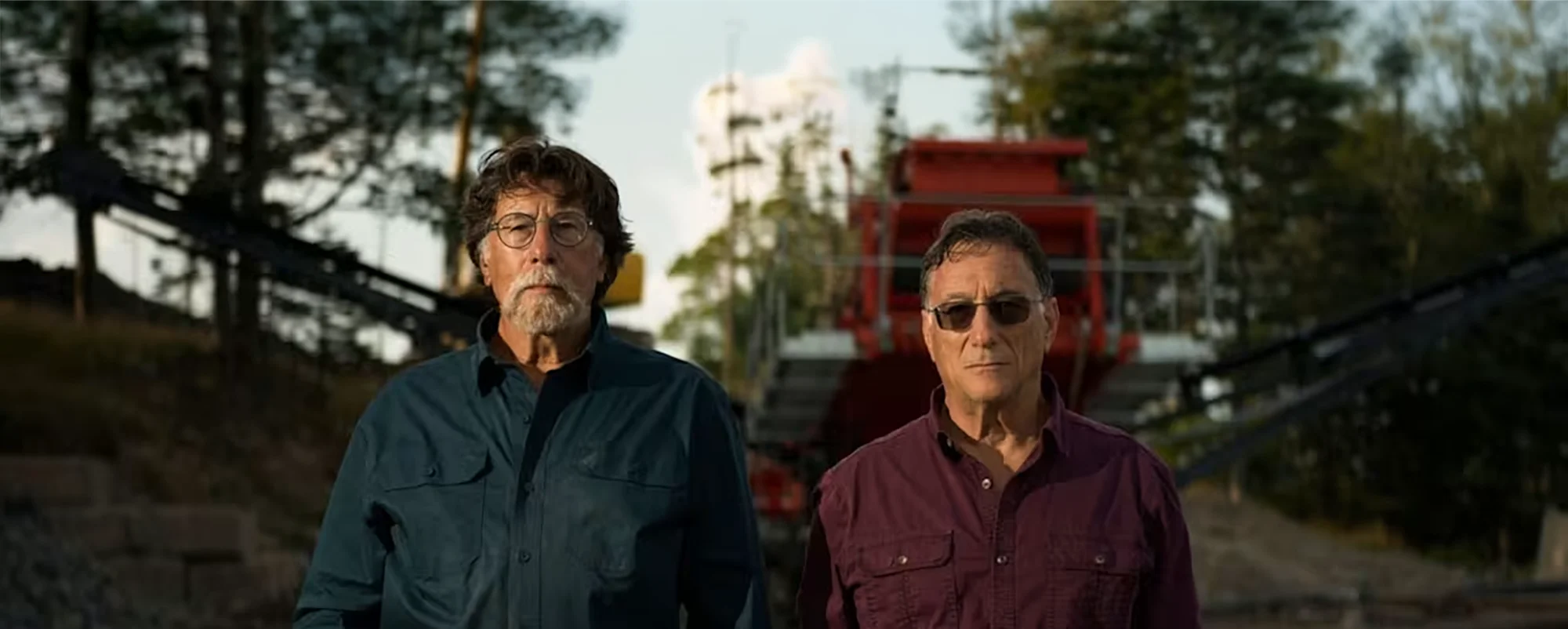 Rick and Marty Lagina on Season 14: "This Is the Year to Watch"→
When an Unexpected Discovery Changed History
1 min
One historical example helps here, not because it predicts the outcome on Oak Island, but because it shows what can happen when a long-debated possibility is finally tested against the ground.
For centuries, Icelandic sagas preserved accounts of Norse voyages to lands west of Greenland, and scholars argued over whether they described real journeys to North America. In 1960, Norwegian explorer Helge Ingstad was shown a series of grass-covered ridges at L'Anse aux Meadows, on the northern tip of Newfoundland. He and his wife, archaeologist Anne Stine Ingstad, went on to lead an international excavation there for eight years. Beneath the turf lay the remains of eight Norse buildings, along with a bronze ring-headed cloak pin, a spindle whorl, a stone lamp, and ironworking debris.
No single artifact had to carry the argument. The construction methods, objects, and industrial remains together formed a coherent picture of an eleventh-century Norse settlement. L'Anse aux Meadows became the first authenticated Norse site in North America and was later recognized as a UNESCO World Heritage Site. It established beyond reasonable doubt that Europeans had reached the continent centuries before Columbus, although Indigenous peoples had inhabited North America for thousands of years before either voyage. The excavations transformed a historical possibility into a documented fact.
Oak Island has not reached an equivalent evidentiary conclusion about its legendary treasure or its more ambitious theories of early European activity. The finds must still be evaluated individually, with particular attention to provenance, dating, and the possibility of later deposition. But the broader lesson is relevant: history is not settled by declaring a possibility ridiculous, any more than it is established by believing in it.
The Difference Between Skepticism and Certainty
1 min
After more than two centuries without a verified legendary hoard, skepticism about Oak Island is entirely reasonable. It is also necessary. Extraordinary claims should face demanding questions, and discoveries presented as evidence of medieval expeditions, hidden treasure, or unknown chapters of Atlantic history deserve serious scrutiny.
But there is a difference between asking for proof and insisting that proof could never exist.
Much of the public argument surrounding the series takes place far from the island itself. Viewers compare theories, question interpretations, identify inconsistencies, and challenge conclusions. Some of that criticism is valuable. It encourages accuracy and reminds investigators that enthusiasm is not evidence.
Other criticism relies on certainty unsupported by the facts. The claim that a discovery would inevitably leak, and that the absence of a leak therefore proves nothing has been found, is one example. It turns an expectation about human behaviour into a supposed rule of law. Nova Scotia's legislation and its actual history of handling Oak Island records offer no basis for treating that expectation as a certainty.
The same discipline should apply to both sides. Believers cannot use confidentiality provisions as evidence that treasure has been secretly recovered. Critics cannot use the absence of public reporting as conclusive evidence that no important discovery has occurred. Neither position establishes what happened beneath the ground.
That question belongs to the artifacts, the laboratory results, the archaeological context, and the interpretations that can withstand independent examination.
The Discovery That Matters Most May Not Be Gold
1 min
One final assumption deserves a closer look: that the only discovery capable of justifying the Oak Island search would be a fortune in gold coins.
A treasure chest would make headlines. But a securely dated structure, an artifact recovered from an undisturbed context, or evidence of previously undocumented activity might contribute more to our understanding of the island's history. The value of a historical discovery is not always measured in precious metal.
That is what makes the continued investigation worth following. The Lagina brothers have brought resources, persistence, and a growing range of specialists to a place where generations of searchers encountered more questions than answers. Their dedication does not guarantee success, and the existence of unusual artifacts does not establish every theory built around them. Yet each properly documented discovery creates another opportunity to replace speculation with knowledge.
The next great discovery on Oak Island, should it come, may be a fortune. It may be a forgotten structure. It may be an object whose significance only becomes clear after months of careful examination.
What matters is not whether the world hears about it first. What matters is whether, when the evidence is finally presented, it can change what we know.
Sources
1 min
Provincial legislation and official guidance
- Province of Nova Scotia. Oak Island Treasure Act, Chapter 39 of the Acts of 2010, especially Sections 2 and 8.
- Province of Nova Scotia. Special Places Protection Act, Revised Statutes of Nova Scotia, 1989, Chapter 438, as amended.
- Nova Scotia Department of Communities, Culture, Tourism and Heritage. Archaeology Permits and Guidelines.
- Province of Nova Scotia. Metal Detecting in Nova Scotia. Provincial guidance on archaeological-site protection, ownership, and restricted database access.
- Province of Nova Scotia. Heritage Research Permit Reports: Confidentiality Opt-Out Form. Disclosure exemptions under the Freedom of Information and Protection of Privacy Act.
Freedom-of-information case
- Fardy, Darce. Report FI-03-52: A Request for Review of a Decision of the Department of Natural Resources to Deny Access to Records Related to the Oak Island Exploration Company. Nova Scotia Freedom of Information and Protection of Privacy Review Office, November 18, 2003.
Historical archaeology
- Parks Canada. L'Anse aux Meadows National Historic Site: Culture and History. Discovery of the Norse settlement, archaeological investigations, and recovered evidence.
- Parks Canada. L'Anse aux Meadows National Historic Site of Canada. Historic-site designation and archaeological significance.